3-year trends to August 2016

Parametric plots of smoothed climate variables at Manilla
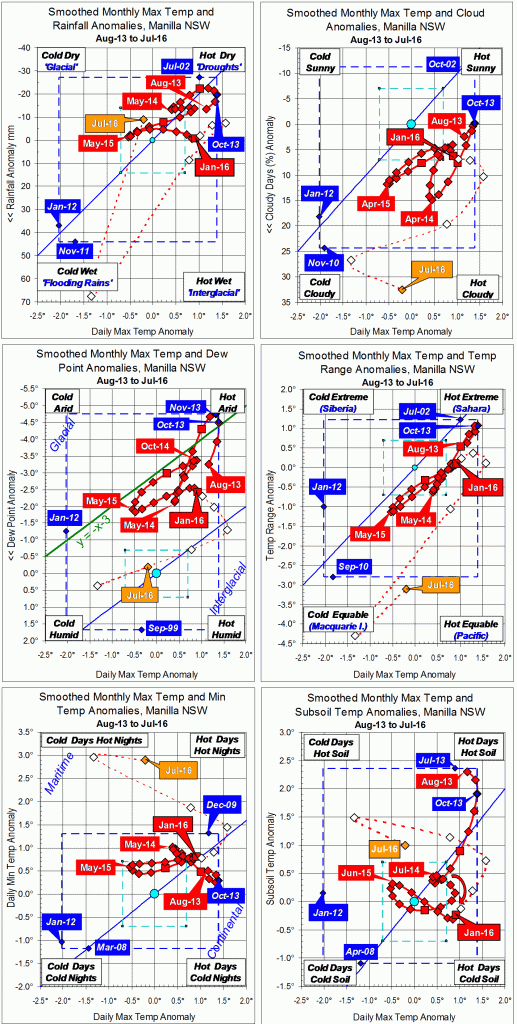
“August 2016 cool and wet”

Trends to August 2016

August raw anomaly data (orange)

August 2016 was marked by low mean daily maximum temperature and high total rainfall. On the first graph the data point is in the cold wet “flooding rains” corner. However, the other five variables are close to normal.

 Fully smoothed data (red)

Fully-smoothed data is now available for the summer of 2015-16. Most variables became static in that season, but cloudiness increased, dew point fell, and subsoil temperature rose.
Most variables were close to normal: rainfall, cloudiness, daily temperature range and subsoil temperature. Daily maximum and minimum temperatures were rather high, while dew point was low. [Low dew point anomalies near the line (y = -x – 3) rather than (y = -x) may be due to an instrument error, since corrected.]


Note:

Fully smoothed data – Gaussian smoothing with half-width 6 months – are plotted in red, partly smoothed data uncoloured, and raw data for the last data point in orange. January data points are marked by squares.
Blue diamonds and the dashed blue rectangle show the extreme values in the fully smoothed data record since September 1999.

Normal values are based on averages for the decade from March 1999.* They appear on these graphs as a turquoise (turquoise) circle at the origin (0,0). A range of anomalies called “normal” is shown by a dashed rectangle in aqua (aqua). For values in degrees, the assigned normal range is +/-0.7°; for cloudiness, +/-7%; for monthly rainfall, +/-14 mm.

 * Normal values for rainfall are based on averages for the 125 years beginning 1883.
3-year trends to July 2016

Parametric plots of smoothed climate variables at Manilla
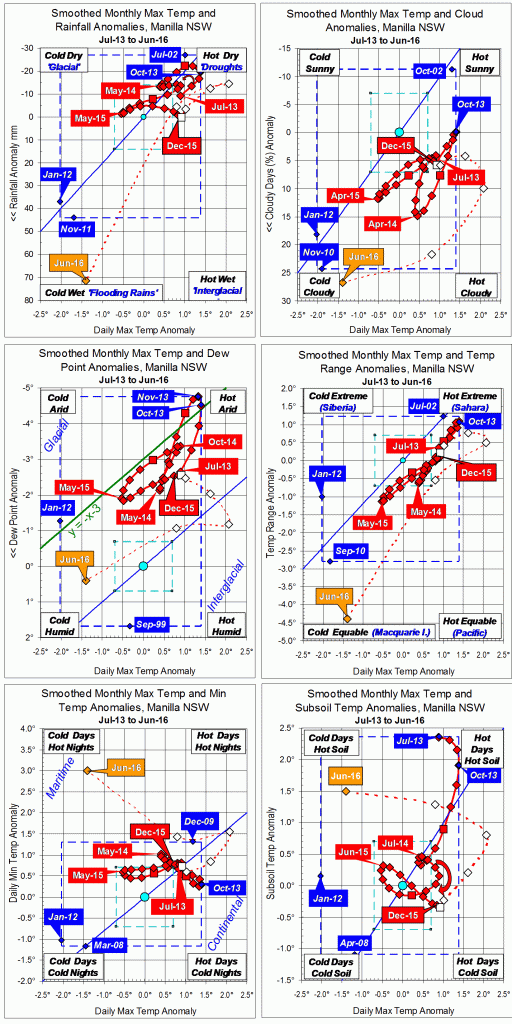
“July 2016 extreme cloudiness”

Trends to July 2016.

July raw anomaly data (orange)

In July 2016, raw anomalies for most variables returned towards normal from extreme values in June. Some now fell within the normal range: daily maximum temperature, rainfall, and dew point. Subsoil temperature remained high. Daily temperature range was still very low and daily minimum temperature very high. The variable that became even more extreme in this month was cloudiness.

 Fully smoothed data (red)

Fully-smoothed data can now be calculated up to January 2016. By that month the climate, as smoothed, was slightly warmer than in my 1999 to 2009 reference decade.


Note:

Fully smoothed data – Gaussian smoothing with half-width 6 months – are plotted in red, partly smoothed data uncoloured, and raw data for the last data point in orange. January data points are marked by squares.
Blue diamonds and the dashed blue rectangle show the extreme values in the fully smoothed data record since September 1999.

Normal values are based on averages for the decade from March 1999.* They appear on these graphs as a turquoise (turquoise) circle at the origin (0,0). A range of anomalies called “normal” is shown by a dashed rectangle in aqua (aqua). For values in degrees, the assigned normal range is +/-0.7°; for cloudiness, +/-7%; for monthly rainfall, +/-14 mm.

 * Normal values for rainfall are based on averages for the 125 years beginning 1883.
3-year trends to June 2016

Parametric plots of smoothed climate variables at Manilla
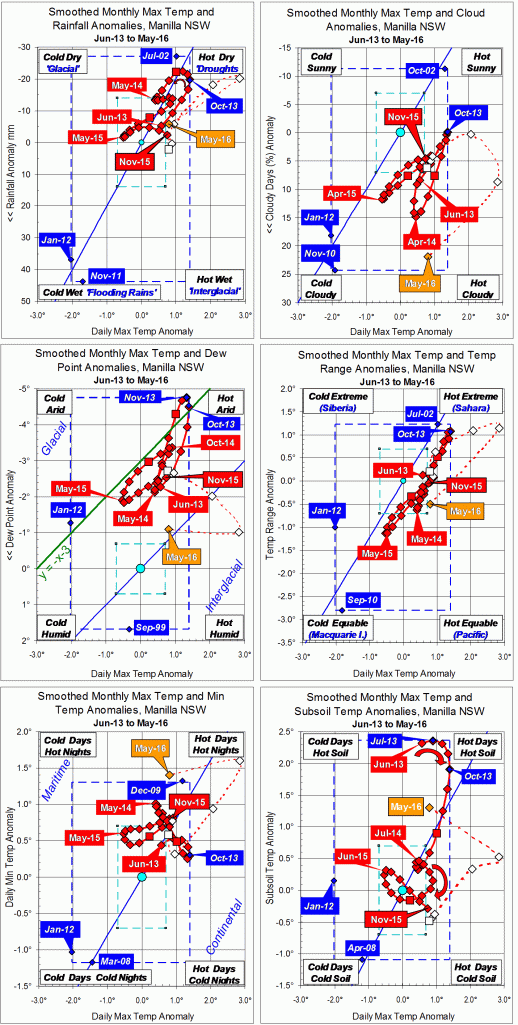
“June 2016 extreme rain”

Trends to June 2016.

June raw anomaly data (orange)

In June 2016, raw anomalies for all moisture variables became very high, while daily maximum temperature became very cool. Rainfall was more than 70 mm higher than normal (40 mm), and daily temperature range more than 4 degrees narrower than normal (15 degrees). Skies were cloudy and the dew point high. The two other temperature variables did not conform. Daily minimum temperature anomaly was very high, making the climate more coastal. Subsoil temperature anomaly was also high: the curve shows it trailing daily maximum temperature anomaly, after leading it for years.

 Fully smoothed data (red)

Fully-smoothed data are now available up to December 2015. In general, it was a time of normal climate. Anomalies were small and changing only slowly. Daily maximum temperature was rather high, and dew point rather low.


Note:

Fully smoothed data – Gaussian smoothing with half-width 6 months – are plotted in red, partly smoothed data uncoloured, and raw data for the last data point in orange. January data points are marked by squares.
Blue diamonds and the dashed blue rectangle show the extreme values in the fully smoothed data record since September 1999.

Normal values are based on averages for the decade from March 1999.* They appear on these graphs as a turquoise (turquoise) circle at the origin (0,0). A range of anomalies called “normal” is shown by a dashed rectangle in aqua (aqua). For values in degrees, the assigned normal range is +/-0.7°; for cloudiness, +/-7%; for monthly rainfall, +/-14 mm.

 * Normal values for rainfall are based on averages for the 125 years beginning 1883.
3-year trends to May 2016

Parametric plots of smoothed climate variables at Manilla
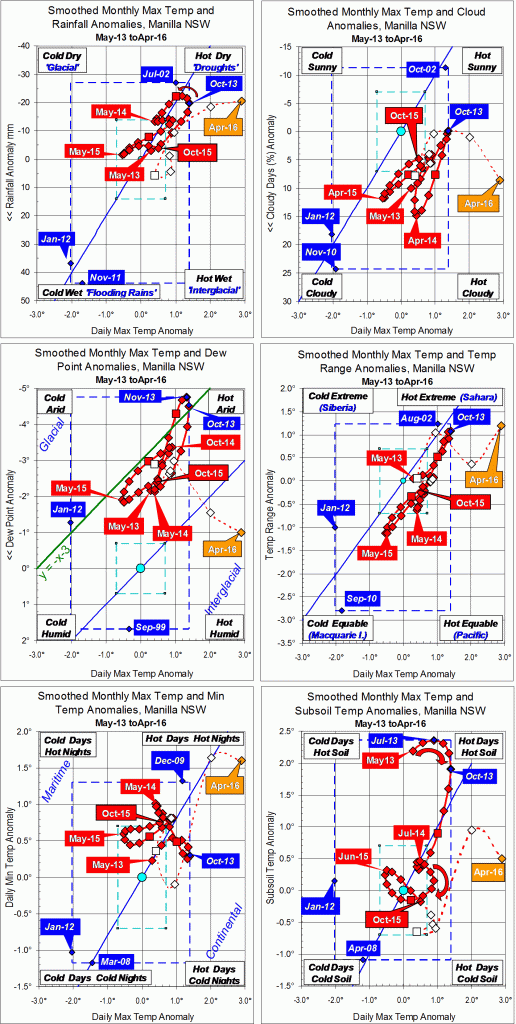
“May 2016 still warm”

Trends to May 2016

May raw anomaly data (orange)

In May 2016, the raw anomaly of daily maximum temperature fell to just above the normal range. Raw values for anomalies of all but a few variables were nearer to normal than the “droughty” partially-smoothed values of recent months. Skies became more cloudy, and subsoil temperature warmer, while the dew point stayed rather low.

 Fully smoothed data (red)

Fully-smoothed data are now available for the spring months, September, October, and November of 2015. In that season, most temperature anomalies moved higher, and most moisture anomalies moved lower towards a state of very mild drought. Moving against the trend were subsoil temperature (moving lower) and rainfall (moving higher).


Note:

Fully smoothed data – Gaussian smoothing with half-width 6 months – are plotted in red, partly smoothed data uncoloured, and raw data for the last data point in orange. January data points are marked by squares.
Blue diamonds and the dashed blue rectangle show the extreme values in the fully smoothed data record since September 1999.

Normal values are based on averages for the decade from March 1999.* They appear on these graphs as a turquoise (turquoise) circle at the origin (0,0). A range of anomalies called “normal” is shown by a dashed rectangle in aqua (aqua). For values in degrees, the assigned normal range is +/-0.7°; for cloudiness, +/-7%; for monthly rainfall, +/-14 mm.

 * Normal values for rainfall are based on averages for the 125 years beginning 1883.
3-year trends to April 2016

Parametric plots of smoothed climate variables at Manilla
“April 2016 also warm”

Trends to April 2016

April raw anomaly data (orange)

In April 2016, raw values for anomalies of daily maximum temperature (x-axis), daily minimum temperature (lower left graph), and daily temperature range (centre right graph) were high. Those of other variables were near normal, except that rainfall was rather low.

 Fully smoothed data (red)

The latest fully-smoothed data is for October 2015. Values were near normal. Temperatures trended warmer except in the subsoil, which trended cooler.


Note:

Fully smoothed data – Gaussian smoothing with half-width 6 months – are plotted in red, partly smoothed data uncoloured, and raw data for the last data point in orange. January data points are marked by squares.
Blue diamonds and the dashed blue rectangle show the extreme values in the fully smoothed data record since September 1999.

Normal values are based on averages for the decade from March 1999.* They appear on these graphs as a turquoise (turquoise) circle at the origin (0,0). A range of anomalies called “normal” is shown by a dashed rectangle in aqua (aqua). For values in degrees, the assigned normal range is +/-0.7°; for cloudiness, +/-7%; for monthly rainfall, +/-14 mm.

 * Normal values for rainfall are based on averages for the 125 years beginning 1883.