3-year trends to June 2016

Parametric plots of smoothed climate variables at Manilla
“June 2016 extreme rain”
Trends to June 2016.

June raw anomaly data (orange)

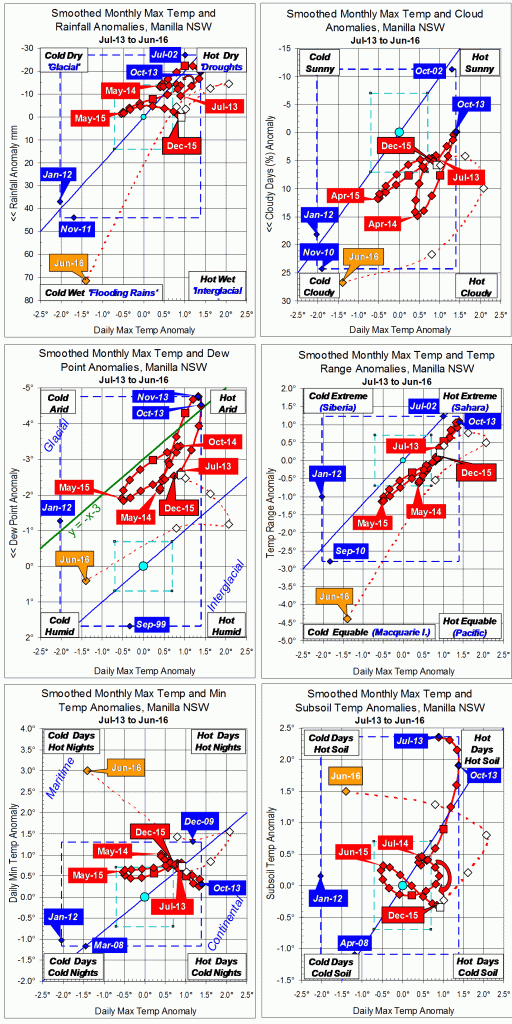
In June 2016, raw anomalies for all moisture variables became very high, while daily maximum temperature became very cool. Rainfall was more than 70 mm higher than normal (40 mm), and daily temperature range more than 4 degrees narrower than normal (15 degrees). Skies were cloudy and the dew point high. The two other temperature variables did not conform. Daily minimum temperature anomaly was very high, making the climate more coastal. Subsoil temperature anomaly was also high: the curve shows it trailing daily maximum temperature anomaly, after leading it for years.

 Fully smoothed data (red)

Fully-smoothed data are now available up to December 2015. In general, it was a time of normal climate. Anomalies were small and changing only slowly. Daily maximum temperature was rather high, and dew point rather low.


Note:

Fully smoothed data – Gaussian smoothing with half-width 6 months – are plotted in red, partly smoothed data uncoloured, and raw data for the last data point in orange. January data points are marked by squares.
Blue diamonds and the dashed blue rectangle show the extreme values in the fully smoothed data record since September 1999.

Normal values are based on averages for the decade from March 1999.* They appear on these graphs as a turquoise (turquoise) circle at the origin (0,0). A range of anomalies called “normal” is shown by a dashed rectangle in aqua (aqua). For values in degrees, the assigned normal range is +/-0.7°; for cloudiness, +/-7%; for monthly rainfall, +/-14 mm.

 * Normal values for rainfall are based on averages for the 125 years beginning 1883.
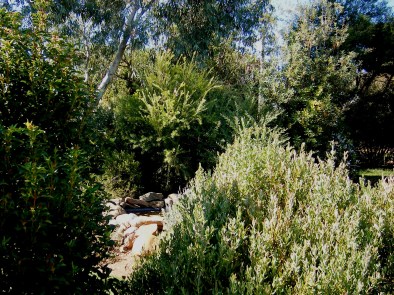
Autumn 2016 had many warm spells

Photo of a garden in Manilla NSW

Autumn Garden

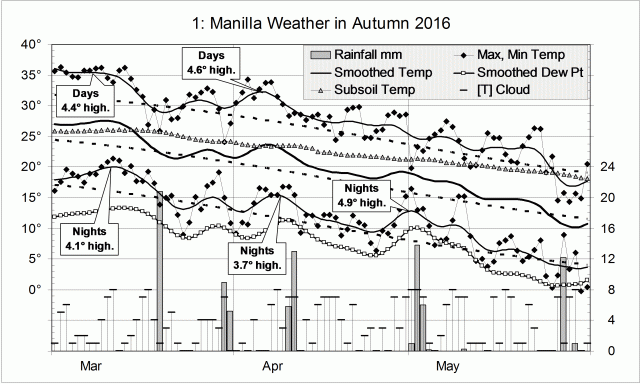
The season was marked by a series of warm spells. The three warmest, coming early in each month, reached 3° to 4° above normal. In the first two, days and nights were equally warm; in the third, nights were much higher above normal than days, making the daily temperature range narrower than normal by 4°. The only cool spells having temperatures below normal were in the third week of March and the last week of May. All three frosts of this season came in the final week .
Rain came in five episodes, spaced a week or two apart. There were 12 rain days, which is the usual number, but the highest reading was only 20.8 mm.

Weather log for autumn 2016
This was the warmest autumn in this short record. Daily maximum, mean, and minimum temperatures were all more than 1.5° above the average for the decade beginning March 1999. The subsoil temperature at 750 mm was also rather high.
The composite Moisture Index was normal, rainfall being a little low and cloudiness rather high (36%, when the autumn “normal” is 25%).
The total rainfall of 88.3 mm was below the autumn average of 134 mm, and in the 35th percentile.

Climate for autumn 2016.


All data, including subsoil at 750 mm, are from 3 Monash Street, Manilla. Rainfall data up to 26/3/15 is from Manilla Post Office, Station 055031.

May 2016: cooling down

Photo of caterpillars in procession.

White Cedar caterpillars.

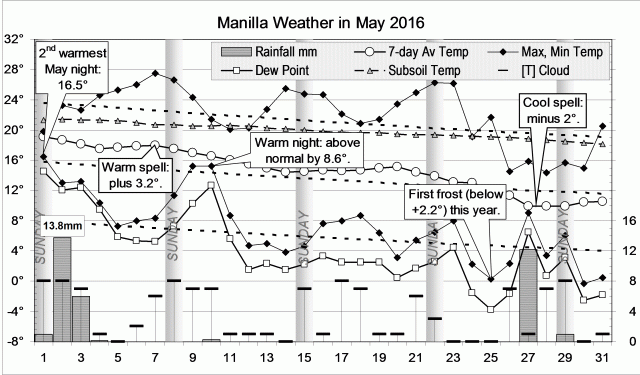
Until the last week of May, the warm weather of March and April continued. Three nights (early mornings) were more than eight degrees warmer than normal. At 16.5°, the early morning of the 1st was the second warmest for May in this century after 16.9° on 3/5/2000. The first frost (a black frost) came on the 25th, not as late as in 2014, when the first frost came on the 8th of June! (More frost information is here.)

I recorded rain on 7 days (normally 3 in May) but 4 of them had less than 2 mm. The highest reading was 13.8 mm on the 2nd. The afternoon humidity was very high (seldom below 40%) which may explain the bothersome mosquitoes.

 Weather log for May 2016

Comparing May months

The month was warm, especially at night, but not as warm as May in 2007 or 1999.
Skies were more cloudy than usual, at 45% cloudy mornings (more than 4/8 cloud). May is usually sunny, with only 24%, but both 2014 and 2015 had a record 52%
The total rainfall of 34.5 mm was near the average of 41 mm, in the 54th percentile. (Since 1998, every May rainfall except 2011 has been below average.) For the seventh month in a row, there are no serious rainfall shortages for totals for any number of months. Again, the greatest shortage is the 48-month total (2211 mm) which is now in the 14th percentile. Ponds persist in Greenhatch Creek, but a neighbour’s dam is dry.

Climate for May 2016


Data. All data, including subsoil at 750 mm, are from 3 Monash Street, Manilla. Rainfall data up to 26/3/15 is from Manilla Post Office, Station 055031.

3-year trends to May 2016

Parametric plots of smoothed climate variables at Manilla
“May 2016 still warm”

Trends to May 2016

May raw anomaly data (orange)

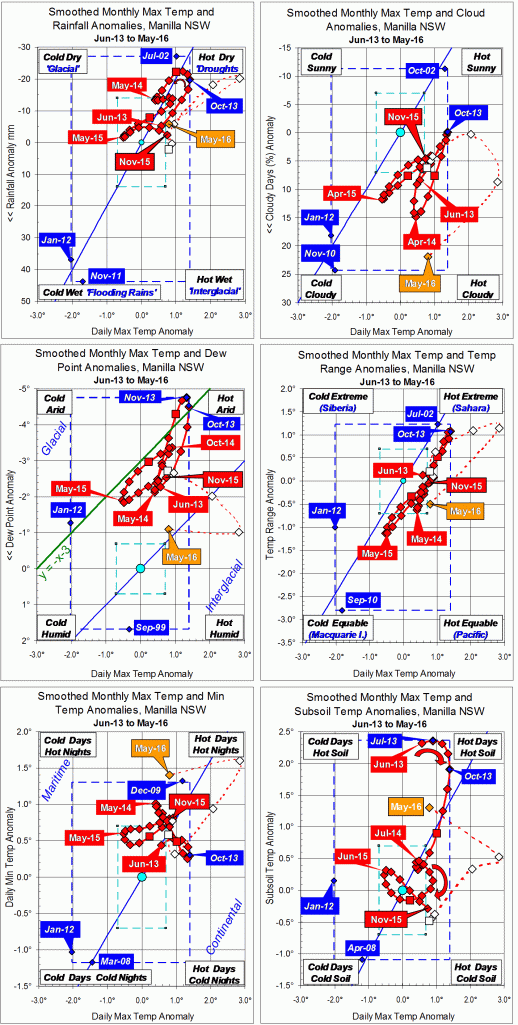
In May 2016, the raw anomaly of daily maximum temperature fell to just above the normal range. Raw values for anomalies of all but a few variables were nearer to normal than the “droughty” partially-smoothed values of recent months. Skies became more cloudy, and subsoil temperature warmer, while the dew point stayed rather low.

 Fully smoothed data (red)

Fully-smoothed data are now available for the spring months, September, October, and November of 2015. In that season, most temperature anomalies moved higher, and most moisture anomalies moved lower towards a state of very mild drought. Moving against the trend were subsoil temperature (moving lower) and rainfall (moving higher).


Note:

Fully smoothed data – Gaussian smoothing with half-width 6 months – are plotted in red, partly smoothed data uncoloured, and raw data for the last data point in orange. January data points are marked by squares.
Blue diamonds and the dashed blue rectangle show the extreme values in the fully smoothed data record since September 1999.

Normal values are based on averages for the decade from March 1999.* They appear on these graphs as a turquoise (turquoise) circle at the origin (0,0). A range of anomalies called “normal” is shown by a dashed rectangle in aqua (aqua). For values in degrees, the assigned normal range is +/-0.7°; for cloudiness, +/-7%; for monthly rainfall, +/-14 mm.

 * Normal values for rainfall are based on averages for the 125 years beginning 1883.