August 2015 normal weather

Vine blossom photo

Wonga-Wonga Vine

Up to the 24th of August, there had been no rainfall readings above 6 mm for 67 days, and none at all for 29 days. Then storms brought 34 mm one day and 4 mm the next. A little more fell on the 28th. Overcast skies came with the rain, and one morning had fog until after 9 am.
Two days were unusually cool: the 5th was 6° below normal and the 27th was 7° below normal. By contrast, the minimum temperature on the warm rainy morning of the 24th (13.5°) was 9.4° above normal. There were 15 frosts (normal), but the coldest morning, the 5th, reached only minus 2.1°.
The weekly average temperature was a little low in the sunny first half of the month. It was high just before and during the rain, then low again.
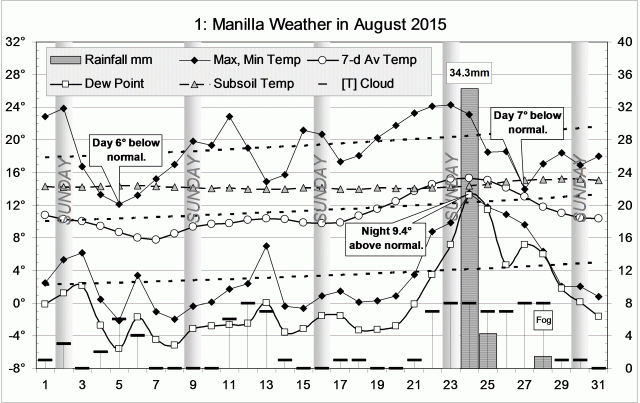
Weather log for August 2015

 Comparing August months

This month was close to normal, and very like August last year.
Days were a bit cool. That made the daily temperature range rather low, in line with rather cloudy skies.
The rainfall of 40.1 mm was on average, and in the 57th percentile. As happened last month, only one rainfall total was as low as the 9th percentile. That serious shortage had now moved back to the 30-month total (1255 mm). Water is flowing in Greenhatch Creek.

Climate for August 2015


Data. All data, including subsoil at 750 mm, are from 3 Monash Street, Manilla. Rainfall data up to 26/3/15 is from Manilla Post Office, Station 055031.
3-year trends to August 2015

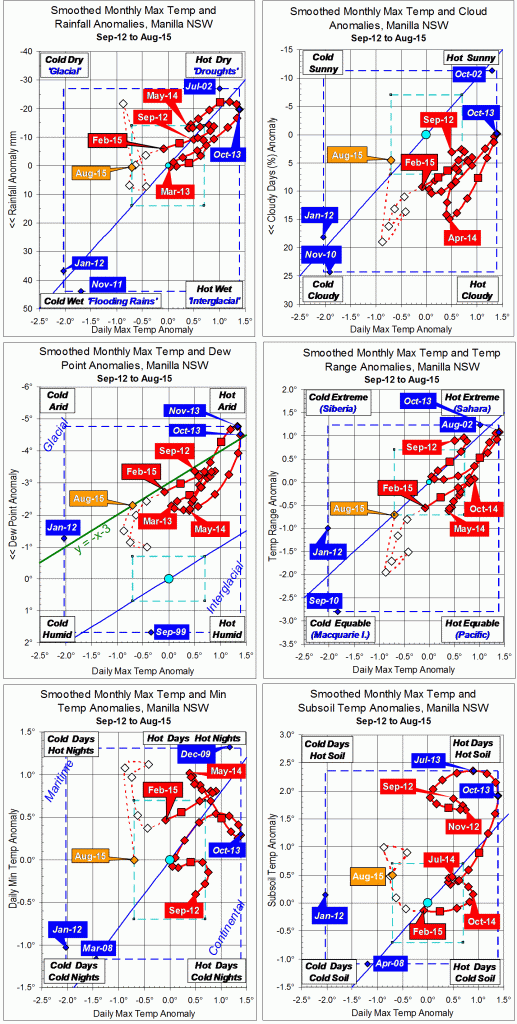
Parametric plots of smoothed climate variables at Manilla
“August 2015: cooler, moister trend persists”

Trends to August 2015

Fully smoothed data (red)

The last fully-smoothed data point (February 2015) completes the summer of 2014-15. This summer had a steady cooling and moistening trend for all variables except subsoil temperature, which passed through a minimum. Three of these seven variables were very close to normal: daily maximum temperature, rainfall, and subsoil temperature. Skies were rather cloudy, dew point was three degrees low (as is now usual), daily temperature range was half a degree low, and daily minimum temperature was half a degree high. These four variables all relate to moisture. Only the dew point shows low moisture: the others show high moisture, while the rainfall was normal.

August raw anomaly data (orange)

The partially-smoothed data points from March to July (uncoloured) show excursions, but the unsmoothed data point for August (orange) is close to the trend established in the summer. That is, cooler and moister. However, no variables had values far from normal.


Note:

Fully smoothed data – Gaussian smoothing with half-width 6 months – are plotted in red, partly smoothed data uncoloured, and raw data for the last data point in orange. January data points are marked by squares.
Blue diamonds and the dashed blue rectangle show the extreme values in the fully smoothed data record since September 1999.

Normal values are based on averages for the decade from March 1999.* They appear on these graphs as a turquoise (turquoise) circle at the origin (0,0). A range of anomalies called “normal” is shown by a dashed rectangle in aqua (aqua). For values in degrees, the assigned normal range is +/-0.7°; for cloudiness, +/-7%; for monthly rainfall, +/-14 mm.

 * Normal values for rainfall are based on averages for the 125 years beginning 1883.

July 2015 cloudy and cool

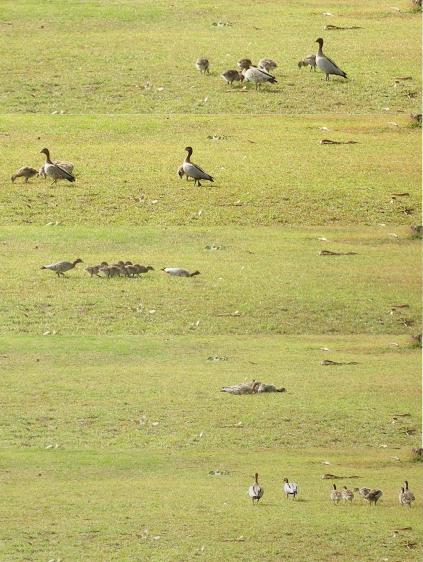
Photo sequence of Wood Ducks and ducklings

Wood Ducks Predator Drill

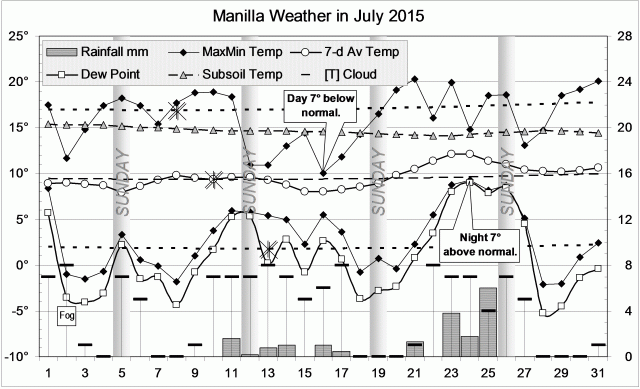
After a week of fine weather, most of the month was overcast, with cool days and warm nights. One day was very cool, 7 degrees below normal. Later, to make up for that, one night was 7 degrees above normal. There were 13 frosts (usually 17).
The news was full of items about cold weather. In fact, the weekly average temperature was not low here.
It rained on ten days, but never more than 6 mm.

Weather log for July 2015

 Comparing July months

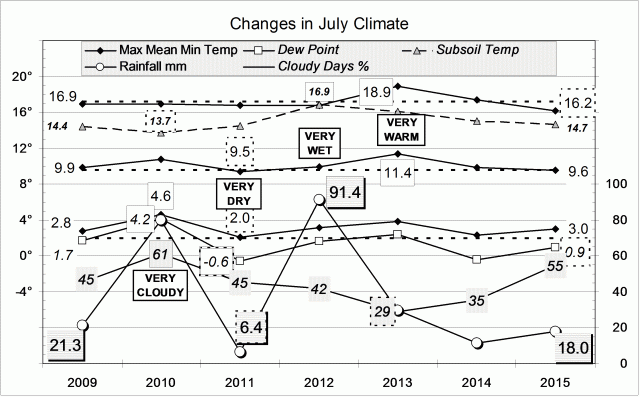
For monthly averages, the most remarkable was the cloudy mornings: 55%. Even that was not as high as in July 2010, which had 61%.
The mean daily maximum temperature was just one degree low and the mean daily minimum one degree high. That made the daily temperature range a narrow 13.2 degrees. This also was not quite as narrow as in July 2010.
The rainfall of 18.0 mm was in only the 21st percentile, but it was higher than in last July or in three other recent July months. This month, one rainfall total has fallen into the 9th percentile (a serious shortage): the 24-month total of 984 mm.

Climate for July 2015


Data. All data, including subsoil at 750 mm, are from 3 Monash Street, Manilla. Rainfall data up to 26/3/15 is from Manilla Post Office, Station 055031.
3-year trends to July 2015

Parametric plots of smoothed climate variables at Manilla
“July 2015: cooler, moister trend”

Trends to July 2015

July raw anomaly data (orange)

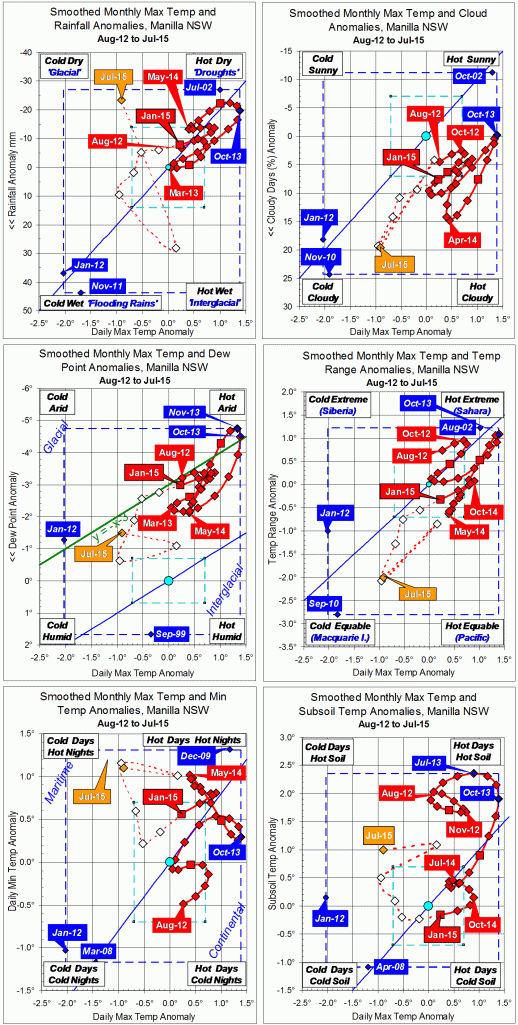
The near-normal values of June are now seen as merely interrupting a trend to cooler, moister climate. July had very low day temperature, very high cloudiness, and very low daily temperature range, but dew point was not extreme. Discordantly, rainfall, which had been very high in June, became very low in July.
Night-time and subsoil temperatures continued their trends towards higher values. (Relatively warm nights have now persisted for 17 months.)

Fully smoothed data (red)

January 2015 was relatively cooler by day than the previous month, but each of the other variables moved only slightly down the graphs.

El Niño

In this record, the last hot dry climate phase that matched an El Niño was in November-December 2009. At that time, the daily maximum temperature anomaly was very high, the rainfall anomaly was low, and the daily minimum temperature anomaly (lower left graph) was a record high.
Later, in November-December 2013, without an El Niño, Manilla had a more extreme hot dry climate phase. As seen on these graphs (marked in blue), 21st century records were set then for anomalies of high daily maximum temperature, high subsoil temperature, and low dew point.
Now, in July 2015, an El Niño is forecast, but these Manilla graphs show no movement as yet away from cool moist climate.


Note:

Fully smoothed data – Gaussian smoothing with half-width 6 months – are plotted in red, partly smoothed data uncoloured, and raw data for the last data point in orange. January data points are marked by squares.
Blue diamonds and the dashed blue rectangle show the extreme values in the fully smoothed data record since September 1999.

Normal values are based on averages for the decade from March 1999.* They appear on these graphs as a turquoise (turquoise) circle at the origin (0,0). A range of anomalies called “normal” is shown by a dashed rectangle in aqua (aqua). For values in degrees, the assigned normal range is +/-0.7°; for cloudiness, +/-7%; for monthly rainfall, +/-14 mm.

 * Normal values for rainfall are based on averages for the 125 years beginning 1883.

June 2015 rather wet

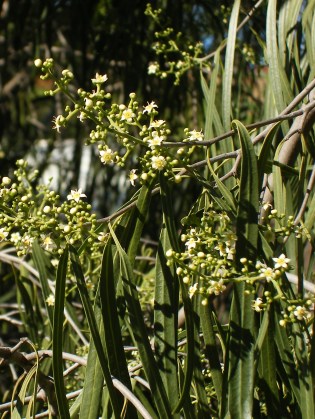
Photo of the tiny blossoms of the Wilga, an Australian shrub

Wilga blossoms in June

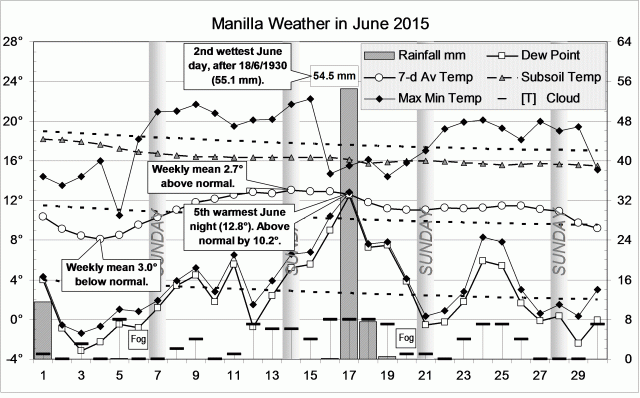
The first week of June was cold but sunny, the second warm, and the rest not quite so warm. Rain registered (unofficially) on the 17th was 54.5 mm. That was close to the record June day of rainfall at Manilla Post Office: 55.1 mm on 18/6/1930.
The early morning minimum of the 17th was extremely warm, at 12.8°: the fifth warmest for June. There were 12 frosts (as usual) but none was severe. On two mornings, fog persisted past nine o-clock.

Weather log for June 2015

 Comparing June months

Most monthly averages were near normal. Daily minima were up one degree, and morning dew points down one degree.
While lower than in June 2013, the total rainfall of 74.4 mm is high: in the 82nd percentile. Among rainfall totals for more than one month, there are no serious shortages. The lowest percentile value (11th) is for the 24-month total of 996 mm.

Climate for June 2015


Data. All data, including subsoil at 750 mm, are from 3 Monash Street, Manilla. Rainfall data up to 26/3/15 is from Manilla Post Office, Station 055031.