January 2016: moist again

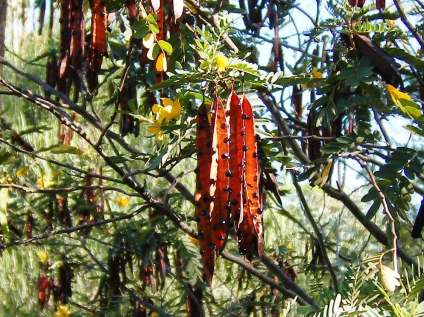
Photo of Senna-bush

Jewel-box Cassia

Unlike December, this month saw varying temperatures. The week around the 7th was quite cool. The maximum on the 3rd reached only 22.3°, but worse was to come. The 15th reached only 21.1°: equal coldest January day in the new century (with 31/1/2001). It was more than 12° below normal, and that happens less than once in a year. There was also one very hot day above 40°, which is the normal number for January.
Rain fell, mainly as showers, on ten days spaced through the month. The higher readings were 28.4 mm on the 6th, 24.2 mm on the 23rd, and 27.6 mm on the 24th.
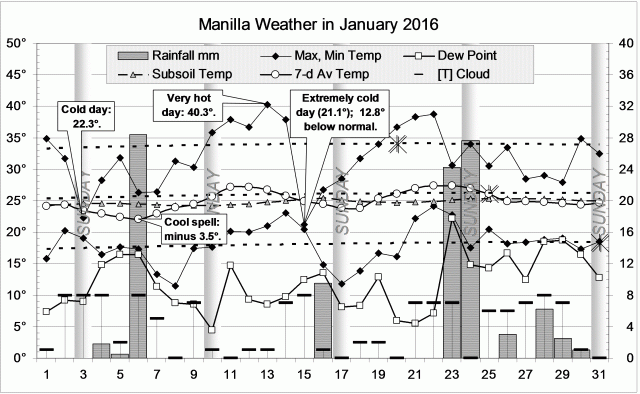
Weather log January 2016.

Comparing January months

Like January last year, this month could be called “moist”. It was cloudy, and the rather cool days were only 14° warmer than the nights.
The total rainfall of 104.7 mm was well above the average of 87 mm, and in the 72nd percentile. Again, there are no serious rainfall shortages for totals for any number of months. In fact, totals for 2-, 3-, 4-, 5-, and 6-months are very high.

El Niño

Manilla’s climate is now out of step with the El Niño – Southern Oscillation (ENSO). This “super” El Niño has not brought dryness here, and the dryness in January 2014 (for example) came at a time without an El Niño.
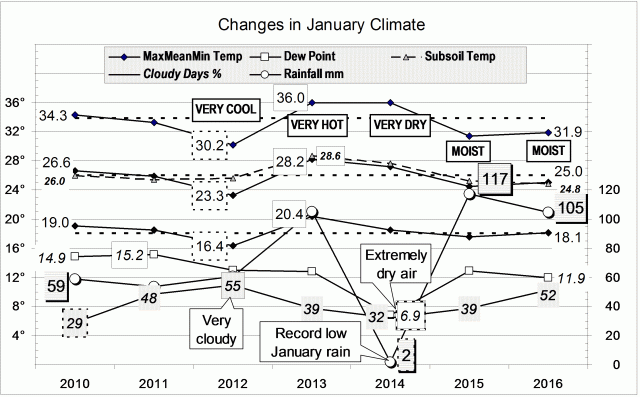
Climate for January 2016


Data. All data, including subsoil at 750 mm, are from 3 Monash Street, Manilla. Rainfall data up to 26/3/15 is from Manilla Post Office, Station 055031.

December 2015: normal month, normal year

Senna bush photo

Senna-leaf circles

Very few days or nights were more than four degrees from normal this month. The coldest day (the 23rd) was 24.9°, only 7.6° below normal.
Rain fell, mainly as showers, on nine days spaced through the month. The highest reading was 31 mm on the 10th.

Weather log December 2015

 Comparing December months

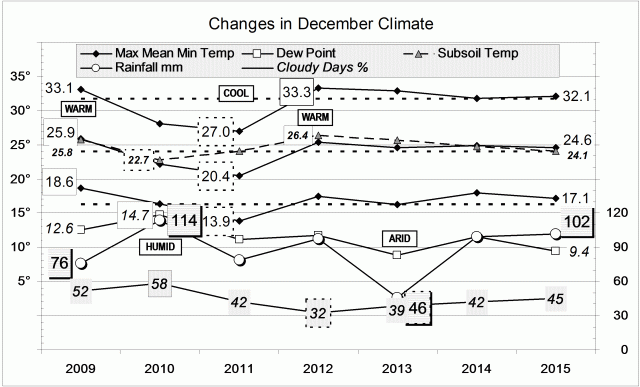
Nearly all climate variables were very close to normal. Those furthest from normal were:
Early morning dew point, 9.4°, below normal by 3.9°;
Daily minimum temperature, 17.1°, above normal by 0.7°;
Cloudy days percent, 45%, above normal by 14%.
The total rainfall of 101.9 mm was well above the average of 74 mm. It was almost the same as in last December (99 mm): in the 74th percentile, The two-month total for November and December was also high (176 mm). There are no serious rainfall shortages for totals for any number of months.

Climate for December 2015

The Year 2015

Compared to other years in the new century, this year had day temperatures that were on the average (25.6°), and nights (10.8°) that were just 0.6° above average. The subsoil temperature (20.1°) was also near average.
Like last year, the percentage of mornings with more than four octas of cloud (37%) was close to the recent average (40%) for 2007 to 2014, but much more cloudy than the earlier average (26%) for 2000 to 2006.
The rainfall, 621 mm, was only 31 mm below the long-term rainfall average of 652 mm.


Data. All data, including subsoil at 750 mm, are from 3 Monash Street, Manilla. Rainfall data up to 26/3/15 is from Manilla Post Office, Station 055031.
November 2015 had warm days and nights

Photo of seeding clematis

“Old Man’s Beard”

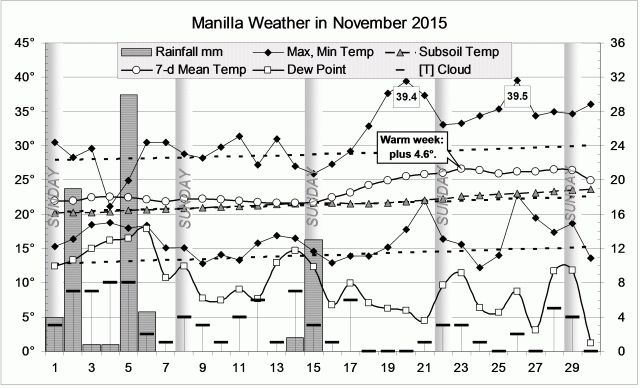
By the last week of October, the weather had cooled down to normal. In November, this continued until the 15th, with rain falling on eight of the days. The highest rainfall reading was 30.0 mm on the 5th.
After that, the weather was fine. Both days and nights were warm, but no day got to 40°. The weekly average temperature reached about four degrees above normal, as it had done early in October.

Weather log November 2015

 Comparing November months

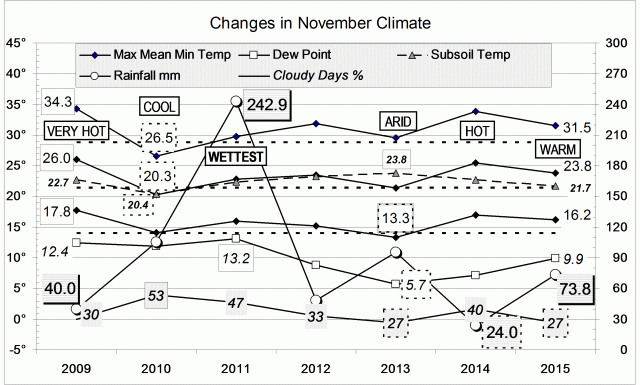
This was a warm November, by day and by night. However, November 2014 had been hotter, and November 2009 very much hotter. The average daily maximum temperature in November 2009 (34.3°) was nearly 3° higher than in this month (31.5°).
Moisture indicators for this month were close to normal, although there was not much cloud. The dew point is no longer very low, as in the last three Novembers.
The rainfall of 73.8 mm was above average, in the 63rd percentile. The climate graph still includes the phenomenally high rainfall of November 2011: 242.9 mm, the highest November rainfall since the record began in 1883. (The next highest was 226 mm in November 1961.)
There are now no serious shortages in rainfall totals for ANY number of months. For the last 30 years, Manilla has enjoyed rainfalls close to normal. The 30-year total of 19,449 mm to this date is within 100 mm from the median 30-year total of 19,360 mm. In all that time, the most extreme major rainfall events were the 2002 winter-spring drought, and the 2011-2012 summer deluge.

Climate for November 2015


Data. All data, including subsoil at 750 mm, are from 3 Monash Street, Manilla. Rainfall data up to 26/3/15 is from Manilla Post Office, Station 055031.
October 2015 very warm

Photo of native jasmine

Sweetest Jasmine

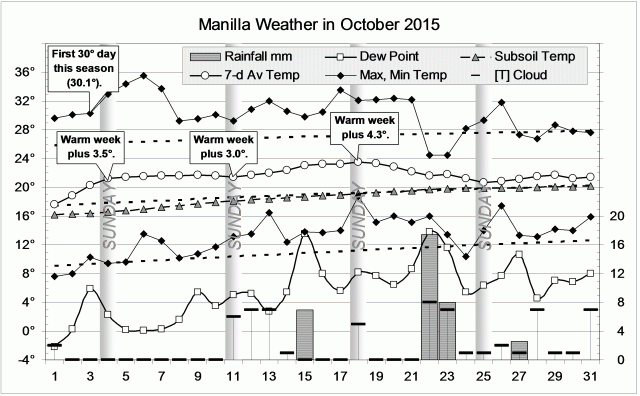
The first 30-degree day of the season came on the 3rd. That was ten days late, but the first 35-degree day followed soon after, on the 6th. Most days and nights were warm through the month, and the weekly mean temperature was three or four degrees above normal until the last week.
Ten sunny days were followed by days with much more cloud, and four rain days (usually seven). On the 22nd and 23rd, I recorded 17.4 and 8.0 mm.

Weather log for October

 Comparing October months

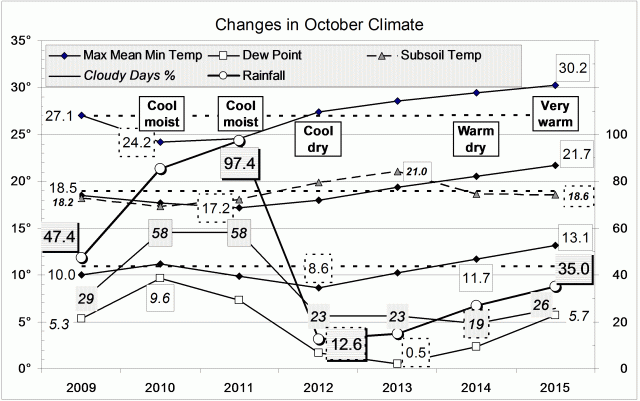
This was the warmest October of the new century for all daily temperatures: maximum, mean and minimum. The mean temperature of 21.7° was 3° above average, and much higher than in the other warm Octobers of 2014 (20.6°) and 2007 (20.4°).
The graph shows the curious fact that October months have warmed steadily since 2011. Since 2012, Octobers have not become drier: rainfall, cloudiness and humidity have increased rather than decreased.
The rainfall of 35.0 mm was below average, in the 29th percentile. As in last month’s report, there are no serious shortages in rainfall totals for small numbers of months. The only serious shortages are in the 30 month total (6th percentile) and in the 42 month total (7th percentile). There are still deep ponds in Greenhatch Creek.

Climate for October 2015


Data. All data, including subsoil at 750 mm, are from 3 Monash Street, Manilla. Rainfall data up to 26/3/15 is from Manilla Post Office, Station 055031.
September 2015 cold and dry

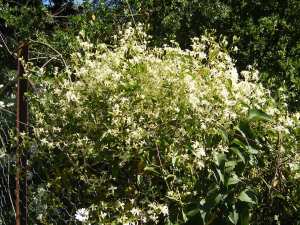
Photo of native clematis

Native clematis

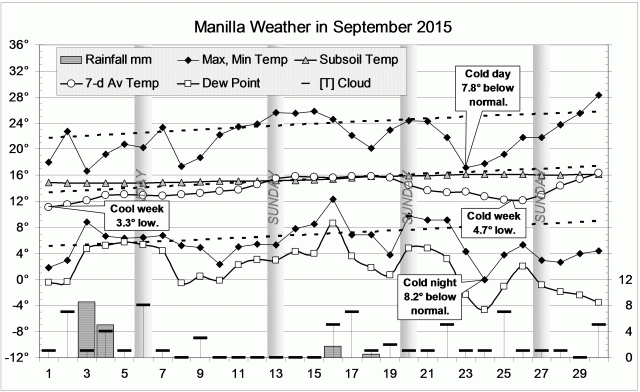
Few days or nights in September were warmer than normal. The 23rd was a very cold day (17.1°) and the 24th had a very cold morning (-0.1°). The weekly temperature was near normal in the third week, but it had been cool in the first. It was cold (4.7 below normal) in the fourth week, and was rising through normal at the month’s end.
As is usual in September, most days were fine, and they were much warmer than the nights. The afternoon humidity was low (24%), but not nearly as low as in 2013 (15%).
Rain fell on only four days, with the highest reading 8.6 mm on the 4th.

Weather log for September 2015

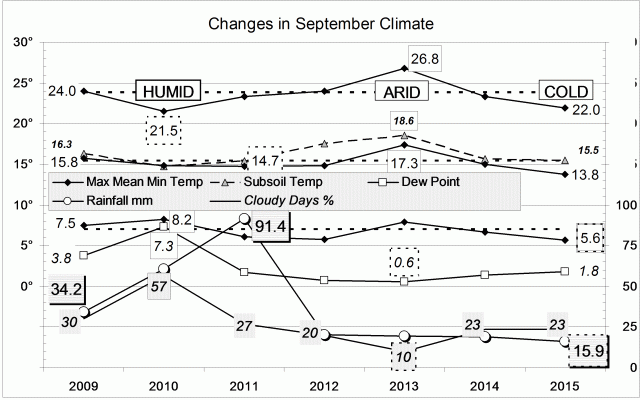
 Comparing September months

In a dramatic change from August, both days and nights were very cold, as they were in September 2004.
The aridity was not quite as bad as in 2013, when the dew point was lower and there was less cloud.
Such cold, dry conditions are not those of an El Niño event (hot and dry) or of a La Niña event (cold and wet). If more extreme, they would be those of a glacial period.
The rainfall of 15.9 mm was well below average, in the 22nd percentile. There are still no serious shortages in rainfall totals for small numbers of months. A severe shortage (4th percentile) has appeared in the 30 month total (1186 mm). There are still deep ponds in Greenhatch Creek.

Climate for September 2015


Data. All data, including subsoil at 750 mm, are from 3 Monash Street, Manilla. Rainfall data up to 26/3/15 is from Manilla Post Office, Station 055031.