3-year trends to March 2020

March continued cool
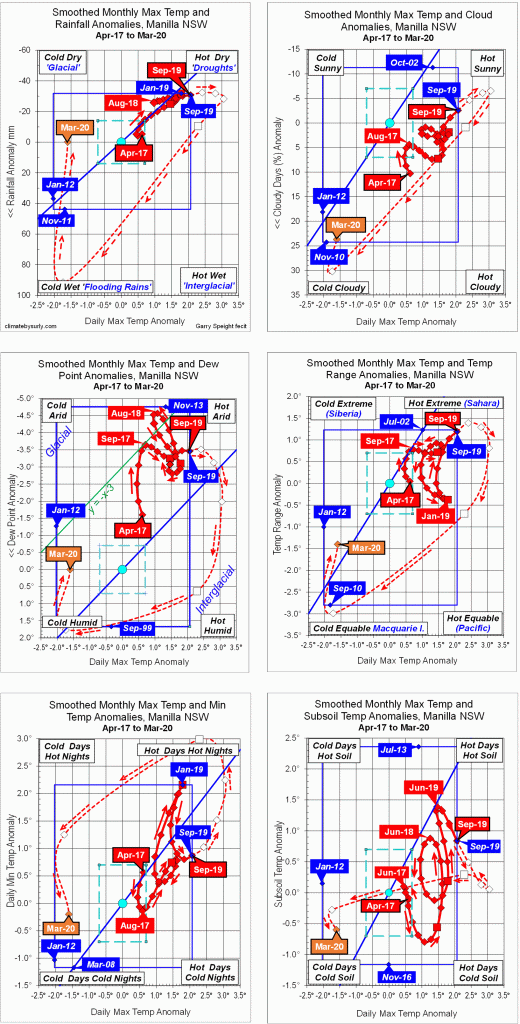
March raw anomaly data (orange)

Temperatures

Daily maximum temperature anomaly (all x-axes), which had been very high until January, remained below -1.5°.
Daily minimum temperature anomaly (lower left): fell to just below normal.
Subsoil temperature anomaly (lower right): was still near normal.

Moistures (moist is at the bottom)

Rainfall anomaly (upper left) fell from plus 100 mm/month to normal.
Cloudiness anomaly (upper right): remained high.
Dew point anomaly (middle left): returned to normal.
Daily temperature range anomaly (middle right) returned from -3.0° to -1.5°.

 Fully smoothed data values (red) 

Most smoothed anomaly values for September 2019 moved a little further towards drought. Smoothed daily maximum temperature anomaly reached a new 21st century record of +2.07° above normal in September, with a higher record to be expected in October or later.

[Note.
Due to illness, 45 days were missed for some Manilla values, beginning from 23/3/20. No values were noted for cloud or soil temperature; daily maximum and minimum air temperatures were estimated by regression on values from Tamworth Airport Automatic Weather Service.]


Notes:

January data points are marked by squares.

Smoothing Continue reading

2019-20 summer hot and moist

Sef-sown senna plants

Pepper-leaf Senna

Through December and January, this summer had a series of heat waves perhaps worse than those of the previous two summers, and rainfall and humidity were low. Similar droughty weather elsewhere brought catastrophic bushfires.
On the 3rd of February the weather changed dramatically. Heat waves were replaced by spells of cool or normal temperature, with high humidity, overcast days, and rain. Up to that date, cool spells had not occurred since November 2018, 15 months earlier. During those 15 months, regardless of the season, the weekly mean temperature often rose several degrees above normal, but never fell below normal.
Coincidentally, there were 14 rain days in both the hot-dry part of the season (65 days) and in the cool-wet part (26 days).

Weather log summer 2019-20

Seasonal average or total figures for this summer mean little because of the climatic break from 3 February.
Mean temperatures (max, mean, min) were close to the records set in the summers of 2017 and 2019, which they would have exceeded if February had not become cooler. Subsoil temperature remained normal.
In summer 2018-19, two of the moisture measures (daily temperature range and cloudiness) had been near normal, while rainfall and dew point had been low. Now, in 2019-20, rainfall and dew point were higher, making all four moisture measures normal.
The summer rainfall total of 232 mm is at the 55th percentile, very close to the average (227 mm).

Manilla summer climate


Data. A Bureau of Meteorology automatic rain gauge operates in the museum yard. From 17 March 2017, 9 am daily readings are published as Manilla Museum, Station 55312.  These reports use that rainfall data when it is available. I have used it since 20 July, when the Museum gauge began recording again.  Unfortunately, the gauge failed during this season (25/02/2020 ). Pending repair, I am using my own gauge. My estimates of early morning dew point have become anomalously low. From 1 August 2019, I use values taken from Tamworth Airport graphs at the time of minimum temperature.
All other data, including subsoil at 750 mm, are from 3 Monash Street, Manilla.

February 2020: one drought record left

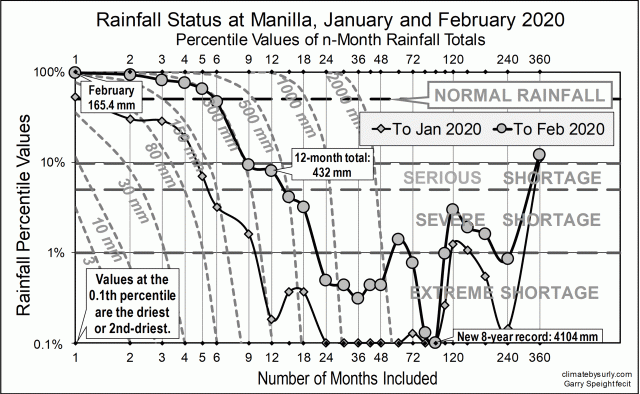
Rainfall status Manilla Jan-Feb 2020

Changing shortages

Very high February rainfall of 165.4 mm further reduced nearly all rainfall shortages, especially short-term ones. The 12-month rainfall total (432 mm) now just qualifies as a “serious shortage” below the 10th percentile.
Despite the general improvement, 10 of the longer-term totals are still extreme shortages, below the 1st percentile. However, only one breaks a record.

One record low rainfall

Only one rainfall total was a new record low value: the 96-month (8-year) total of 4104 mm. This record, having stood at 4405 mm since November 1919, was broken successively in November and December 2019 and January and February 2020.

Record-breaking low rainfall totals from 2018

Until 2018, no new records for low rainfall had been set since 1971. Most records had stood since the droughts of the 1940’s, more than 70 years ago.
In September 2018, a new record was set for the 15-month total (400 mm).
Since then (to include February 2020), new records have been set for 12-, 15-, 18-, 24-, 30-, 36-, 42-, 48-, 60-, 72-, 84-, and 96-months. That is, at 12 of the 25 selected durations. Some records have been broken repeatedly; five times in the case of the 15-month duration.
To judge by records broken, this drought is by far the worst at Manilla since readings began (1883).

How to read the graph

This graph shows all the present rainfall shortages at Manilla, short term and long term, as percentile values. The latest values, as at the end of February 2020, are shown by a thick black line with large circles. Those from one month earlier are shown by a thinner line with small diamonds. [The method is described in “Further Explanation” below.]


Further Explanation

The following notes explain aspects of this work under these listed headings:

Data analysis

Cumulative rainfall totals
Percentile values
Severity of rainfall shortages

Limitations of this analysis

Monthly rainfalls form a single population
Observations are not retrospective
The rain gauge failed

Data analysis

Continue reading

February 2020: wet, humid, cool

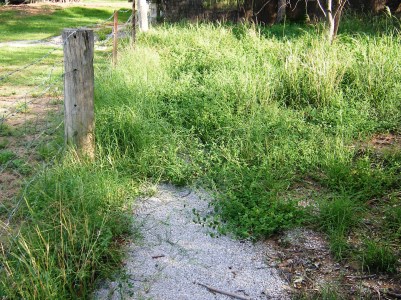
Garden path suddenly overgrown.

Overgrown Path

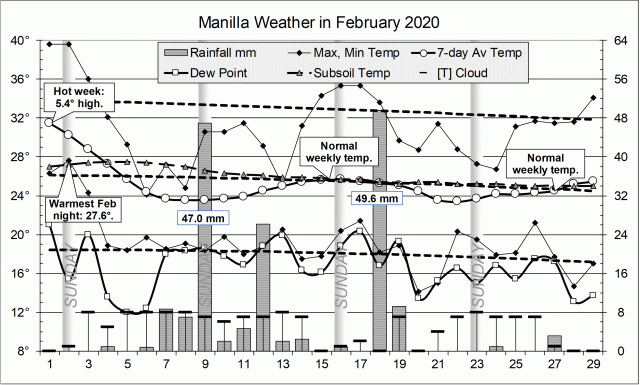
High weekly temperature persisted only a few days into February. After that, the temperature was normal or below normal. Day temperatures varied, without reaching extremes. Although the warmest February night (27.6°) came on the 2nd, most nights were near normal (18.0°).
After the first days, the dew point was high, making for very humid mornings, which were also overcast.
There were fourteen rain days, over twice the usual number.
Two days had over 40 mm of rain, causing local erosion and flooding. For Manilla, these are not very wet days. [See note below: “Very Wet Days”.]

Weather log for Feb 2020.

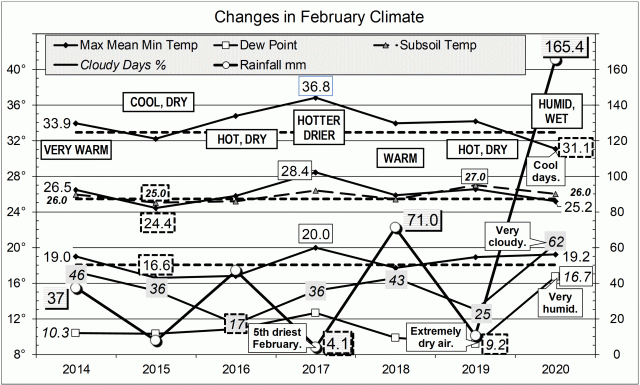
Comparing February months

The mean monthly temperature, at 25.2°, is near normal, and cooler than the last four February months. More dramatic is the low mean daily maximum temperature (31.1°), which is fourth coolest for February in the new century.
All moisture indicators were extremely high. Compared to 21st century February values, they were:

Cloudy days percent (62%): highest.
Daily temperature range (11.9°): lowest.
Dew point (16.7°): 2nd highest.
Rainfall total (165.4 mm): 2nd highest.

The rainfall total of 165.4 mm is at the 92nd percentile for February, well above the average of 67 mm. The previous eight months all had rainfall below average.

Clime to Feb 2020.

Drought

I will report separately on the on-going drought that has again broken a low-rainfall record for a duration of 96-months.


NOTE.
Very Wet Days

I have a blog post that shows the 125 rain days at Manilla that exceeded 50 mm.
From time to time, there is a period of years without extreme daily rainfalls: when no day has more than 80 mm of rain. We are in the longest such period, beginning 21 years ago, on 7 September 1998. [That day was the 5th wettest, at 112 mm, which filled Split Rock Dam.] See the “Comments” section in the linked post.


Data. A Bureau of Meteorology automatic rain gauge operates in the museum yard. From 17 March 2017, 9 am daily readings are published as Manilla Museum, Station 55312.  These reports use that rainfall data when it is available. Recording resumed on 20 July 2019. Unfortunately, the gauge failed during this month (25/02/2020 ). Pending repair, I am using my own gauge.
My estimates of early morning dew point have drifted anomalously low. From August 2019, I use data from the Tamworth Airport published graphs.
All other data, including subsoil at 750 mm, are from 3 Monash Street, Manilla.

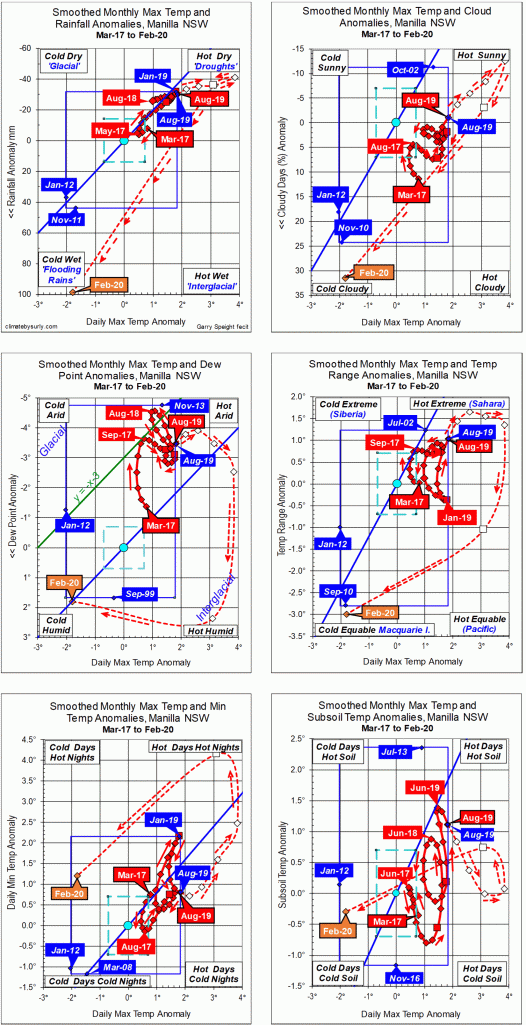
3-year trends to February 2020

February suddenly cool and wet

3-year climate trends to Feb 2020

February raw anomaly data (orange)

Temperatures

Daily maximum temperature anomaly (all x-axes) suddenly fell by 5° to -2°.
Daily minimum temperature anomaly (lower left): fell from extremely high to normal.
Subsoil temperature anomaly (lower right): still near normal.

Moistures (moist is at the bottom)

Rainfall anomaly (upper left) suddenly rose by 130 mm/month to plus 100 mm/month.
Cloudiness anomaly (upper right): rose from normal to +32%.
Dew point anomaly (middle left): remained rather high (humid).
Daily temperature range anomaly (middle right) reached -3°.

 Fully smoothed data values (red) 

Smoothed anomaly values now include the winter season (JJA) of 2019. From the rather static values of the autumn, nearly all smoothed values for winter moved steadily in the direction towards drought that seems to have prevailed through spring.
There were two exceptions. Daily minimum temperature anomaly steadily fell. Subsoil temperature anomaly fell from a peak value in June.

The August 2019 daily maximum temperature anomaly of +1.83° just exceeded the previous record value.


Notes:

January data points are marked by squares.

Smoothing Continue reading