3-year trends to June 2010

Parametric plots of smoothed climate variables at Manilla
“Back from a very mild drought.”

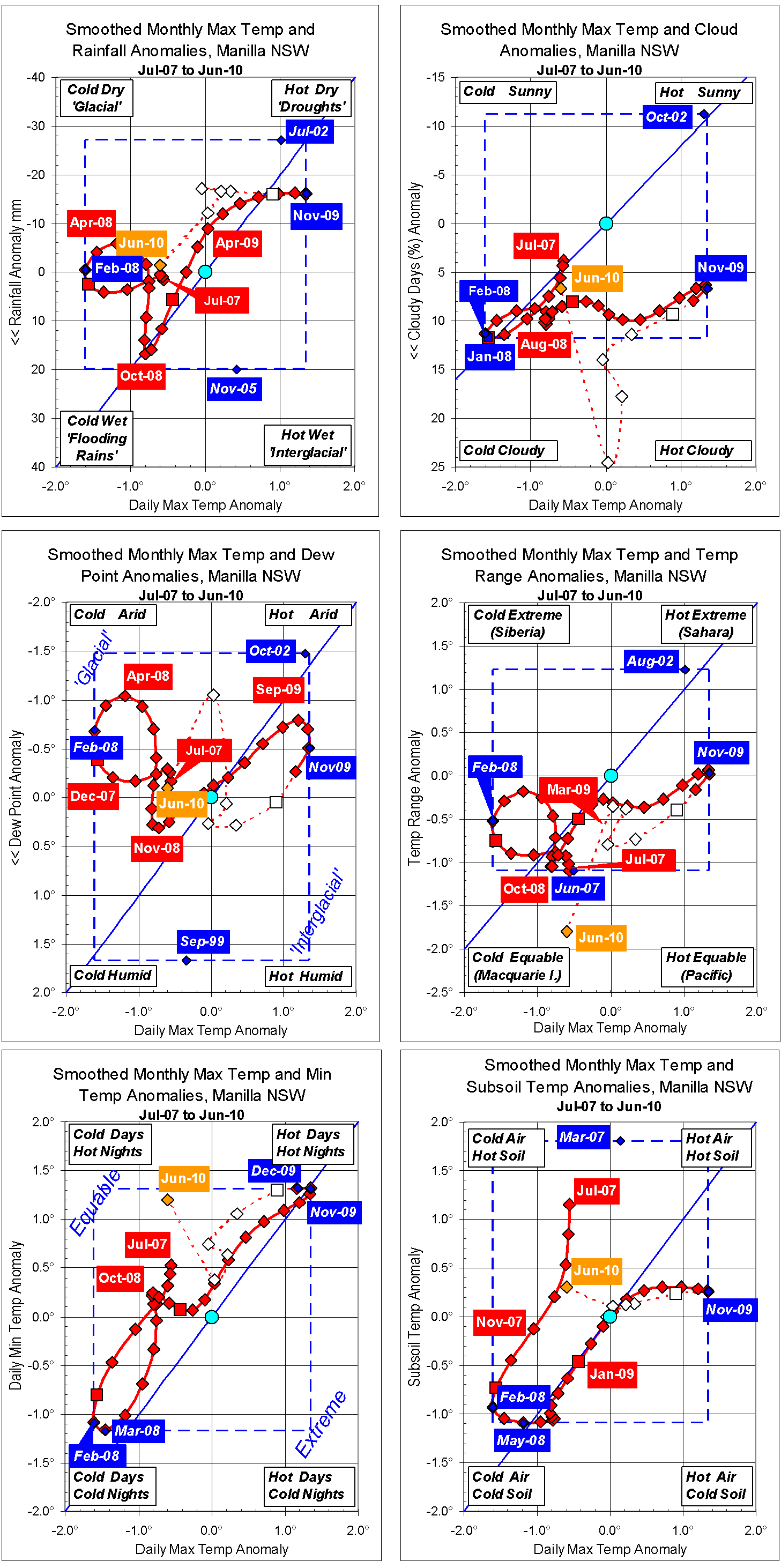
Trends to June 2010

Raw data for June 2010 (orange) are mainly near the smoothed values for January 2009, 17 months earlier. As an exception, the minimum temperature anomaly was very high, making the daily temperature range very low.

The last fully-smoothed data point, December 2009 (red), had hot days with a slightly lower daily maximum temperature anomaly than the record set the month before. Rainfall anomaly during this “drought” peak was not very low at all (-16 mm). Other variables for November 2009 were near normal, except daily minimum temperature anomaly, which was a record high value of +1.31 degrees.

Note:
Fully smoothed data – Gaussian smoothing with half-width 6 months – are plotted in red, partly smoothed data uncoloured, and raw data for the last data point in orange. January data points are marked by squares.
Blue diamonds and the dashed blue rectangle show the extreme values in the fully smoothed data record since September 1999.

3-year trends to May 2010

Parametric plots of smoothed climate variables at Manilla
“Temperatures normal”

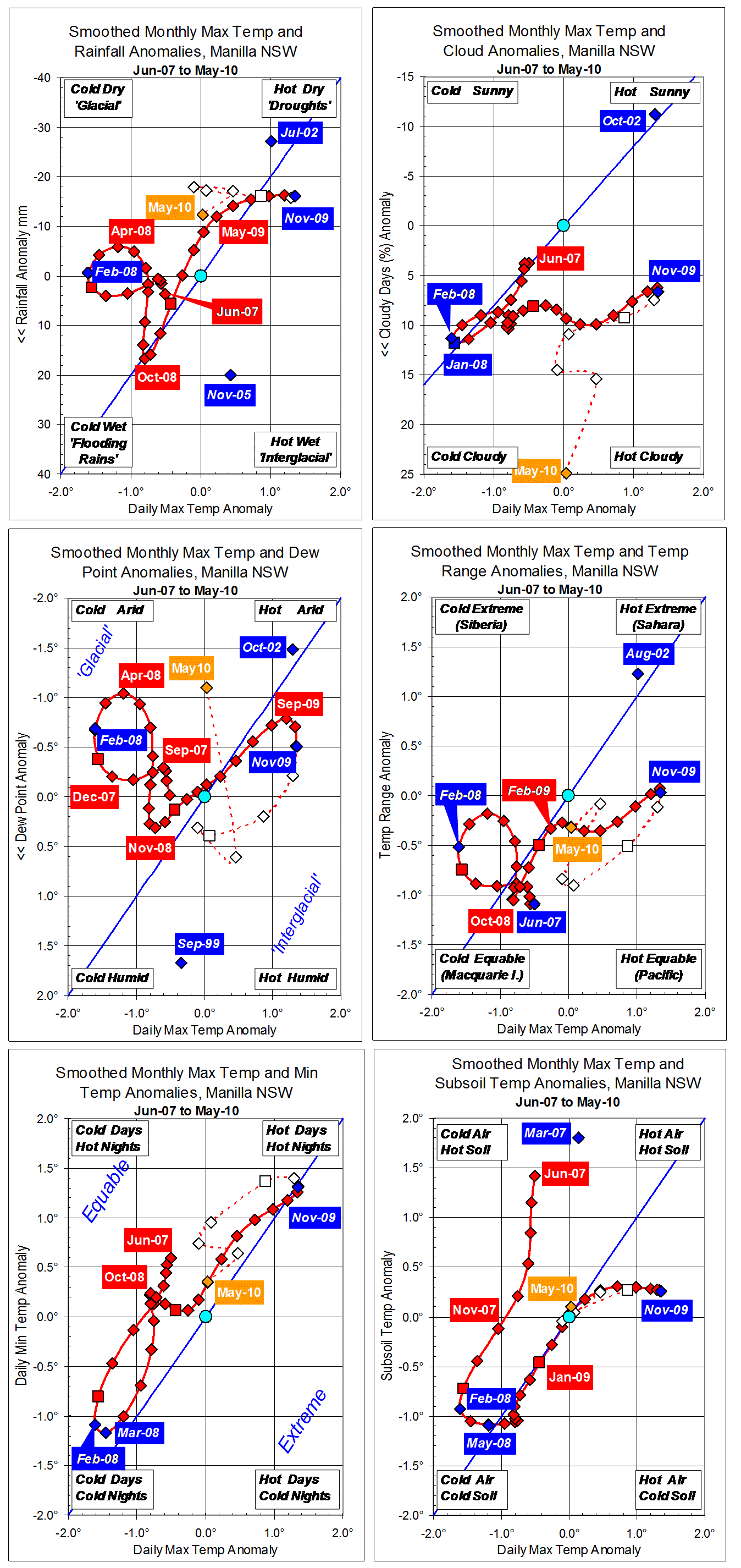
Trends to May 2010

Manilla’s climate in the last three years has been marked mainly by cloudier skies and a narrower daily temperature range.

Raw anomaly values for climate variables for May 2010 (orange) were normal for daily maximum, daily minimum, and subsoil temperatures and for daily temperature range. Rainfall and humidity (dew point) were rather low, but skies were very cloudy.
Fully-smoothed data (red) for November 2009 showed a record value for daily maximum temperature anomaly, which seemed likely to be a peak value.

Note:
Fully smoothed data – Gaussian smoothing with half-width 6 months – are plotted in red, partly smoothed data uncoloured, and raw data for the last data point in orange. January data points are marked by squares.
Blue diamonds and the dashed blue rectangle show the extreme values in the fully smoothed data record since September 1999.


(Note added in May 2014:

This post titled “3-year trends to May 2010” is the first of a consecutive series of parametric plots, updated monthly at the time of observation and originally posted elsewhere.
Data exists back to March 1999, but the earlier data was not edited in this form at the time.
To display all existing fully-smoothed data points at least once, I have prepared back-dated posts in this same format for:
“3-year trends to August 2002” which includes smoothed data September 1999 to February 2002, covering the calendar years 2000 and 2001.
“3-year trends to August 2004” which includes smoothed data September 2001 to February 2004, covering the calendar years 2002 and 2003.
“3-year trends to August 2006” which includes smoothed data September 2003 to February 2006, covering the calendar years 2004 and 2005.
“3-year trends to August 2008” which includes smoothed data September 2005 to February 2008, covering the calendar years 2006 and 2007.)

3-year trends to August 2008

Parametric plots of smoothed climate variables at Manilla
“Years with unusual trends”

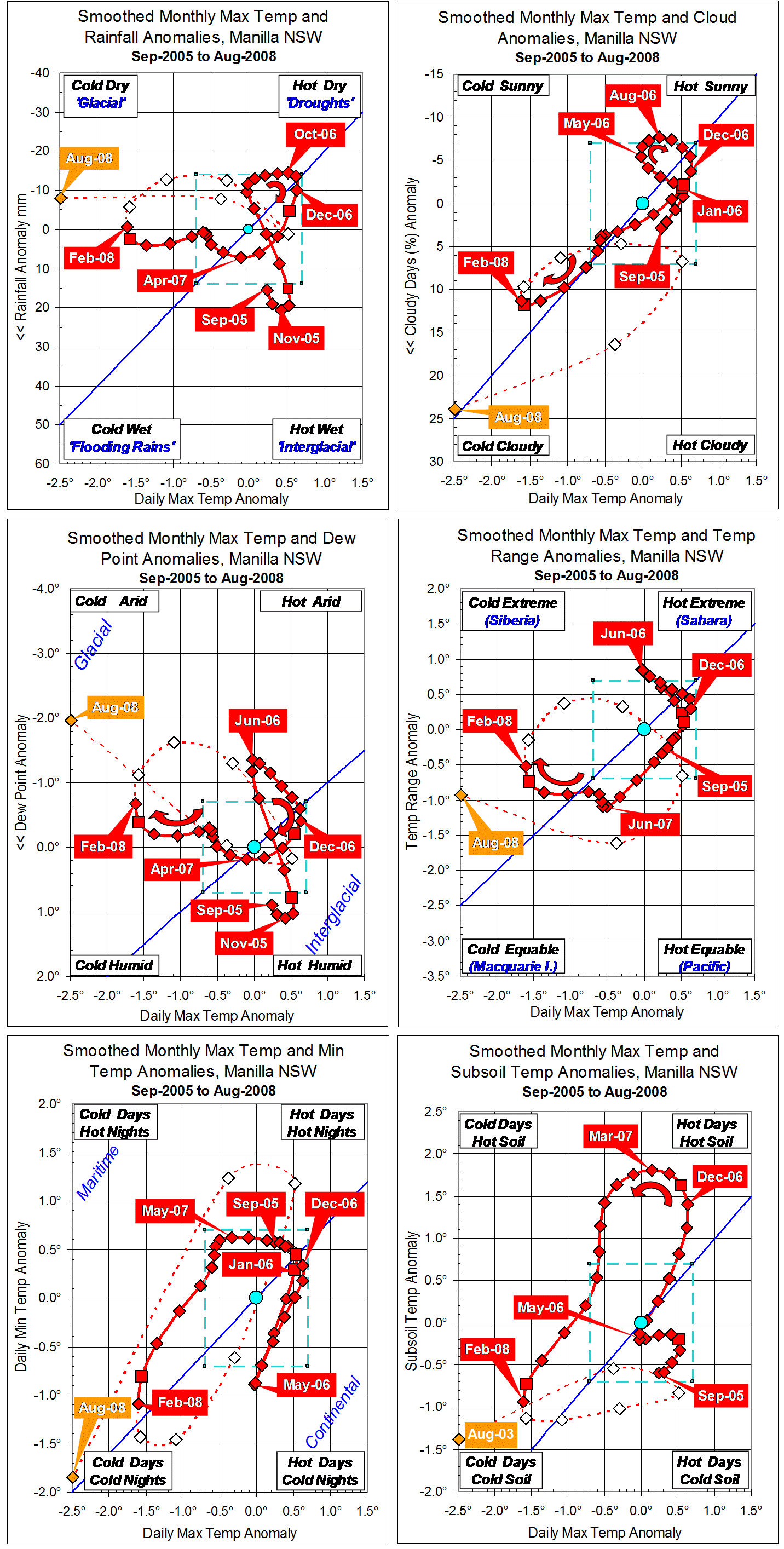
Trends to August 2008

These graphs, ending with raw data for August 2008, show fully-smoothed data from September 2005 to February 2008. They include all months of the calendar years 2006 and 2007.
Smoothed daily maximum temperature anomaly (X-axis on all graphs) began 2006 high in the “normal” range, fell to normal by June, and rose again to +0.63°  in November and December. It then fell from high to very low through 2007, reaching the record low value of -1.61°  by February 2008. (Note added: This record low maximum temperature anomaly stood for only 19 months, until September 2010.)
Smoothed rainfall anomaly peaked at +20.6 mm in November 2005, fell rapidly to -11.7 mm in June 2006 and slowly to -14.6 mm in October 2006. It rose again to just above normal by February 2007, and changed little in the following year.
Smoothed percent cloudy mornings followed a similar course to that of rainfall but, as temperature fell through 2007, cloudiness (unlike rainfall) increased, as is normal,  along the blue trend-line.
(Note added in May 2014: Although the minimum value of the cloudiness anomaly in August 2006 (-7.7%) is less negative than the record minimum in August 2002 (-11.3%) (or even than the minimum in February 2005 (-9.1%)) it is more negative than any later value. No smoothed negative values at all were recorded in almost seven years between February 2007 and October 2013.)
Smoothed dew point anomaly also followed a similar course to that of rainfall but, unlike cloudiness, actually declined as temperature fell during 2007. Temperature range anomaly moved like dew point anomaly.
Daily minimum temperature mainly varied in the same sense as daily maximum temperature, but at a higher rate. As an exception, from January to June 2007, it rose slightly as maximum temperature fell. That moved the curve towards a more “maritime” climate for the rest of the time. Subsoil temperature anomaly moved in a similar pattern.

Unusual trends

Through the years 2006 and 2007 shown here, the climate moved as much along the axis from top left to bottom right, as along the usual axis from top right to bottom left. It departed from the typical Quasi-biennial oscillation of “droughts and flooding rains”*. (Note added: The extreme negative maximum temperature anomaly of February 2008 was the only one on this record that was not linked to an extreme positive rainfall anomaly.)
(Note added concerning global temperature: At this time there was a sudden major cooling in mean air temperature, both locally and globally. This linked post  shows that, when 37-month averages of global and local values are plotted, mean temperature fell from a peak in April or May 2006 to a trough in October 2007, breaking the global warming trend. The global (GISS) value fell by 0.074° (and the Manilla value by 0.48°). The connection is enigmatic. The unusual trends shown here do not match the dates of the cooling event, but come mainly before or after it.)

* By arrangement with the Licensor, The Dorothea Mackellar Estate, c/- Curtis Brown (Aust) Pty Ltd.

Note:
Fully smoothed data – Gaussian smoothing with half-width 6 months – are plotted in red, partly smoothed data uncoloured, and raw data for the last data point in orange. January data points are marked by squares.
Normal values are based on averages for the decade from March 1999. They appear on these graphs as a turquoise (turquoise) circle at the origin (0,0). A range of anomalies called “normal” is shown by a dashed rectangle in aqua (aqua). For values in degrees, the assigned normal range is +/-0.7°; for cloudiness, +/-7%; for monthly rainfall, +/-14 mm.

(Note added in May 2014: A much later post titled “3-year trends to May 2010” is the first of a consecutive series of parametric plots, updated monthly at the time of observation and originally posted elsewhere.
This earlier data was not edited in this form at the time.
To display all existing fully-smoothed data points at least once, I have prepared these back-dated posts in the same format for:
“3-year trends to August 2002” which includes smoothed data September 1999 to February 2002, covering the calendar years 2000 and 2001.
“3-year trends to August 2004” which includes smoothed data September 2001 to February 2004, covering the calendar years 2002 and 2003.
“3-year trends to August 2006” which includes smoothed data September 2003 to February 2006, covering the calendar years 2004 and 2005.
“3-year trends to August 2008” (this post) which includes smoothed data September 2005 to February 2008, covering the calendar years 2006 and 2007.
In these back-dated posts the anomaly values depend on climate normals that are based on the decade ending February 2009, and were thus not available until after that date. I have written the posts as if they were available at the time.
In places I have written some “Notes added in May 2014” (like this) commenting on how values observed at that time relate to more recent events.)


3-year trends to August 2006

Parametric plots of smoothed climate variables at Manilla
“Two more years of stable climate”

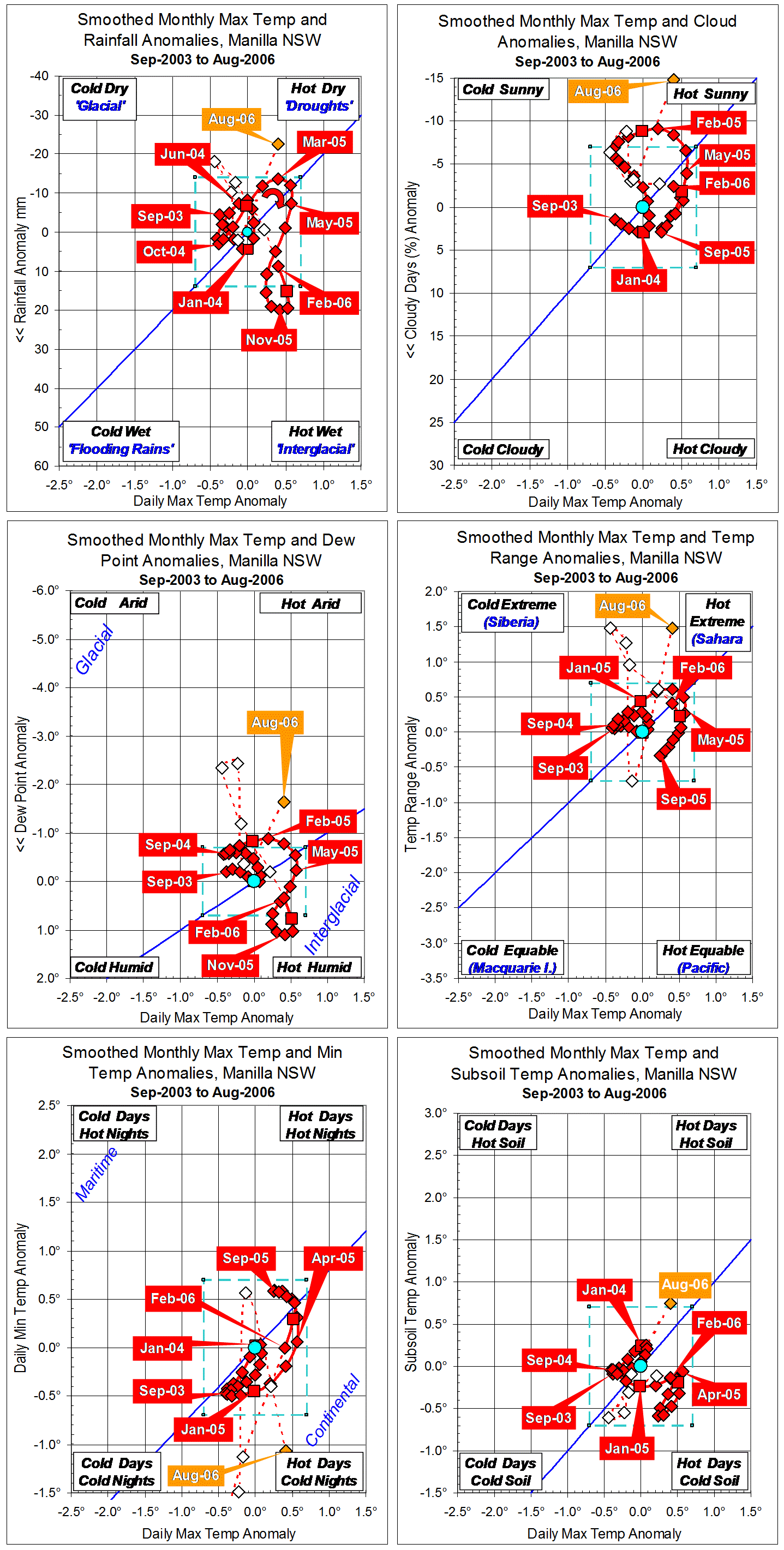
Trends to August 2006

These graphs, ending with raw data for August 2006, show fully-smoothed data from September 2003 to February 2006. They include all months of the calendar years 2004 and 2005.
The climate at Manilla was stable during this time, with few smoothed data points falling beyond the “normal” range as specified in the note below.
The daily maximum temperature anomaly (X-values on all graphs) rose during the sunny ( low cloudiness) summer of 2004-05 and remained only half a degree above normal for the rest of 2005. While the maximum temperature was rising, rainfall was falling, reaching a smoothed anomaly of -13.5 mm in March 2005. Then, with maximum temperature steady, the rainfall anomaly increased at 4 mm per month to reach +20.0 mm by November 2005. (Note added in May 2014: It is unusual for rainfall to increase at constant temperature.)
The dew point rose with the rainfall, to reach a maximum smoothed anomaly of +1.09 degrees in November 2005.
Other variables moved very little in the whole period.

Note:
Fully smoothed data – Gaussian smoothing with half-width 6 months – are plotted in red, partly smoothed data uncoloured, and raw data for the last data point in orange. January data points are marked by squares.
Normal values are based on averages for the decade from March 1999. They appear on these graphs as a turquoise (turquoise) circle at the origin (0,0). A range of anomalies called “normal” is shown by a dashed rectangle in aqua (aqua). For values in degrees, the assigned normal range is +/-0.7°; for cloudiness, +/-7%; for monthly rainfall, +/-14 mm.

(Note added in May 2014: A much later post titled “3-year trends to May 2010” is the first of a consecutive series of parametric plots, updated monthly at the time of observation and originally posted elsewhere.
This earlier data was not edited in this form at the time.
To display all existing fully-smoothed data points at least once, I have prepared these back-dated posts in the same format for:
“3-year trends to August 2002” which includes smoothed data September 1999 to February 2002, covering the calendar years 2000 and 2001.
“3-year trends to August 2004” which includes smoothed data September 2001 to February 2004, covering the calendar years 2002 and 2003.
“3-year trends to August 2006” (this post) which includes smoothed data September 2003 to February 2006, covering the calendar years 2004 and 2005.
“3-year trends to August 2008” which includes smoothed data September 2005 to February 2008, covering the calendar years 2006 and 2007.
In these back-dated posts the anomaly values depend on climate normals that are based on the decade ending February 2009, and were thus not available until after that date. I have written the posts as if they were available at the time.
In places I have written some “Notes added in May 2014” (like this) commenting on how values observed at that time relate to more recent events.)

3-year trends to August 2004

Parametric plots of smoothed climate variables at Manilla

“An extreme 1-year drought”
Trends to August 2004

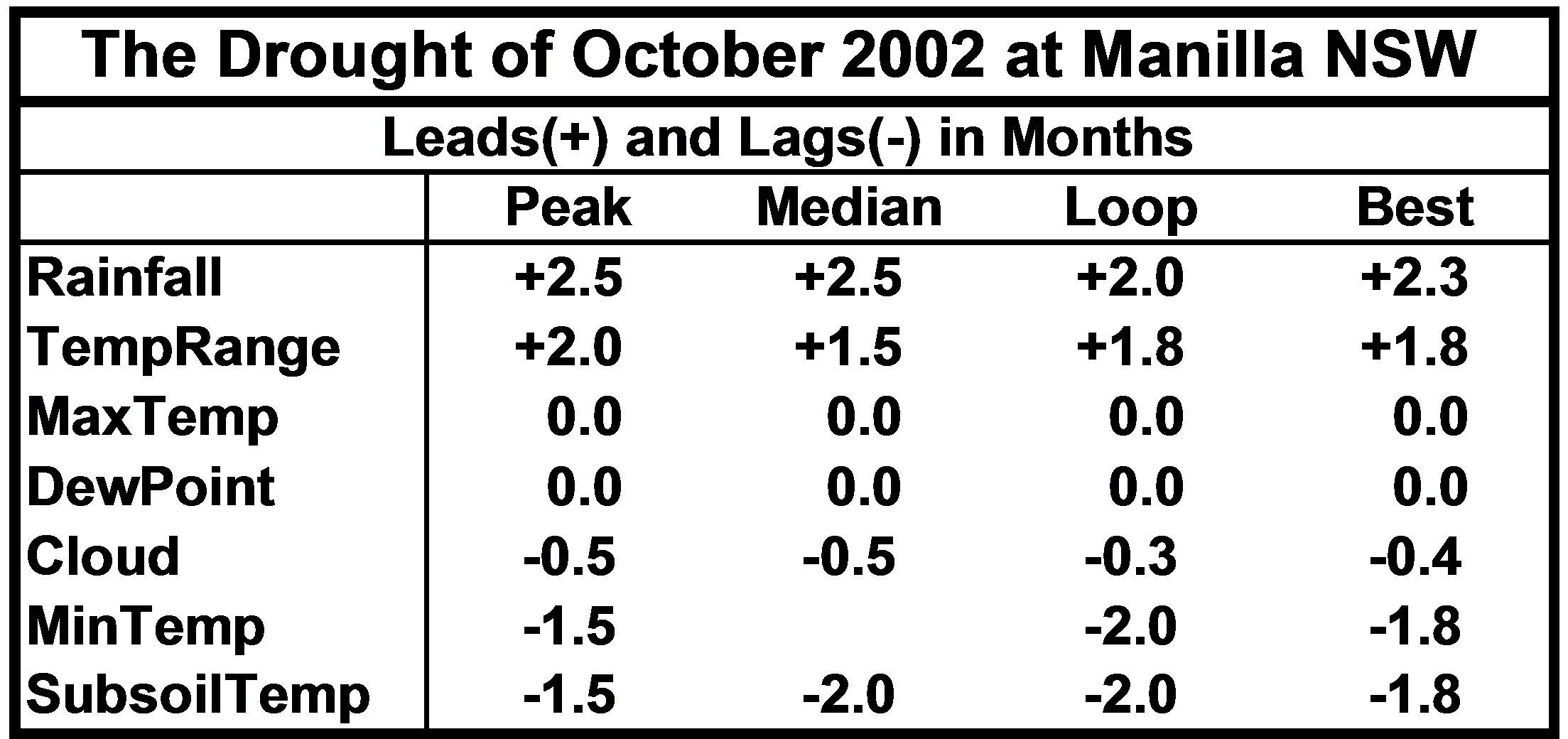
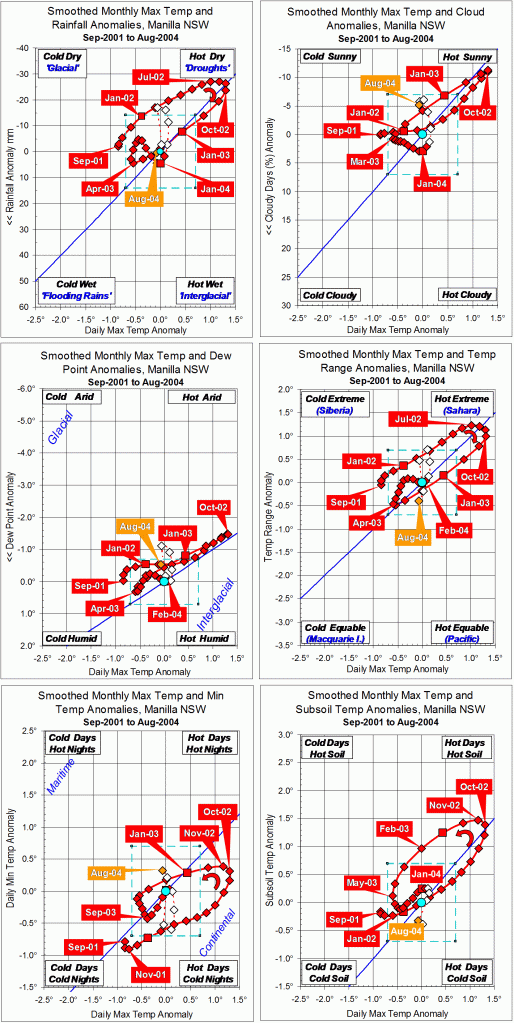
At Manilla a sudden extreme drought peaked in winter and spring of 2002. Each of seven climate variables went through a large cycle, with a peak at the top right-hand corner of its graph.

(Note added in May 2014: This 2002 event is the most extreme rainfall drought at Manilla so far in the 21st century. Current conditions may perhaps be similar.)

Extreme values of anomalies.

The smoothed anomaly of daily maximum temperature (X-axis on all graphs) exceeded +0.7° in June 2002, and remained above that value until December. It peaked at +1.30° in September-October 2002. (Note added: This stood as a record high value for seven years until October 2009.)
Smoothed monthly rainfall anomaly fell below -14 mm in February 2002, and remained below that value until November. It peaked (negative) at -27.1 mm in July 2002. (Note added: In May 2014 this still stands as a record low value.)
The smoothed anomaly of percent cloudy mornings (more than 4 octas) fell below -7% in July 2002, and remained below that value until December 2002. It peaked (negative) at -11.3% in October 2002. (Note added: In May 2014 this still stands as a record low value. More cloud in recent years has made negative anomalies rare.)
The smoothed anomaly of early morning dew point fell below -0.7° in May 2002, and remained below that value until January 2003. It peaked (negative) at -1.48°  in September-October 2002. (Note added: This stood as a record low value until June 2011. Since then, the air has become much drier, taking anomaly values three times as low.)
The smoothed anomaly of daily temperature range, like that of daily maximum temperature, was positive during the drought. It exceeded +0.7° in April 2002, and remained above that value until November. It peaked at +1.23°  in July-August 2002. (Note added: In May 2014 this still stands as a record high value.)
Smoothed daily minimum temperature anomaly reached a maximum of only +0.38° at the peak of the drought in November 2002. It had risen smoothly from the strongly negative value of -0.91° in November 2001. Through 2002, the rise in daily minimum temperature lagged behind that of daily maximum temperature, resulting in a “continental” type of climate with wide daily temperature range. (Note added: Higher daily minimum temperature anomalies occurred in winter 2007, and much higher ones in spring 2009.)
The smoothed anomaly of subsoil temperature, like that of daily maximum temperature, was positive during the drought. It exceeded +0.7° in August 2002, and remained above that value until February 2003. It peaked at +1.48°  in November 2002. (Note added: This value was exceeded from January to May 2007, and further exceeded in winter 2013.)

Leads and lags.

The climate variables did not all peak at once: some led, and some lagged. In the table below I show three estimates of lead or lag (in months):

  1. I identified dates of peak value on the graphs;
  2. I noted a point mid-way between the date of departure from normal and that of return to normal as the median date;
  3. Where the line on the graph formed a hysteresis loop (shown by a curved arrow), I drew other graphs with a lead or lag imposed to compensate for the actual lead or lag. I estimated the amount of lead or lag that would make the loop into a straight line.
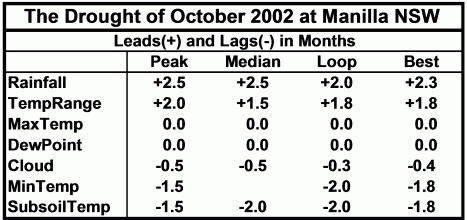
Table of leads and lags of climate anomaly variables

In the table, I take the dates for highest excess of daily maximum temperature as the standard, to show the pattern of leads and lags of the other variables. Rainfall deficit led by 2.3 months and daily temperature range excess led by 1.8 months. Early morning dew point deficit (dry air) did not lead or lag. The deficit in cloud amount lagged by 0.4 months, and the excess of both daily minimum temperature and subsoil temperature lagged by 1.8 months.
(Note added: Leads and lags in more recent climate events at Manilla have a pattern that is similar, but not the same.)

Note:
Fully smoothed data – Gaussian smoothing with half-width 6 months – are plotted in red, partly smoothed data uncoloured, and raw data for the last data point in orange. January data points are marked by squares.
Normal values are based on averages for the decade from March 1999. They appear on these graphs as a turquoise (turquoise) circle at the origin (0,0). A range of anomalies called “normal” is shown by a dashed rectangle in aqua (aqua). For values in degrees, the assigned normal range is +/-0.7°; for cloudiness, +/-7%; for monthly rainfall, +/-14 mm.

(Note added in May 2014: A much later post titled “3-year trends to May 2010” is the first of a consecutive series of parametric plots, updated monthly at the time of observation and originally posted elsewhere.
This earlier data was not edited in this form at the time.
To display all existing fully-smoothed data points at least once, I have prepared these back-dated posts in the same format for:
“3-year trends to August 2002” which includes smoothed data September 1999 to February 2002, covering the calendar years 2000 and 2001.
“3-year trends to August 2004” (this post) which includes smoothed data September 2001 to February 2004, covering the calendar years 2002 and 2003.
“3-year trends to August 2006” which includes smoothed data September 2003 to February 2006, covering the calendar years 2004 and 2005.
“3-year trends to August 2008” which includes smoothed data September 2005 to February 2008, covering the calendar years 2006 and 2007.
In these back-dated posts the anomaly values depend on climate normals that are based on the decade ending February 2009, and were thus not available until after that date. I have written the posts as if they were available at the time.
In places I have written some “Notes added in May 2014” (like this) commenting on how values observed at that time relate to more recent events.)