Winter came very late in 2008*

Weather log winter 2008

The daily weather log

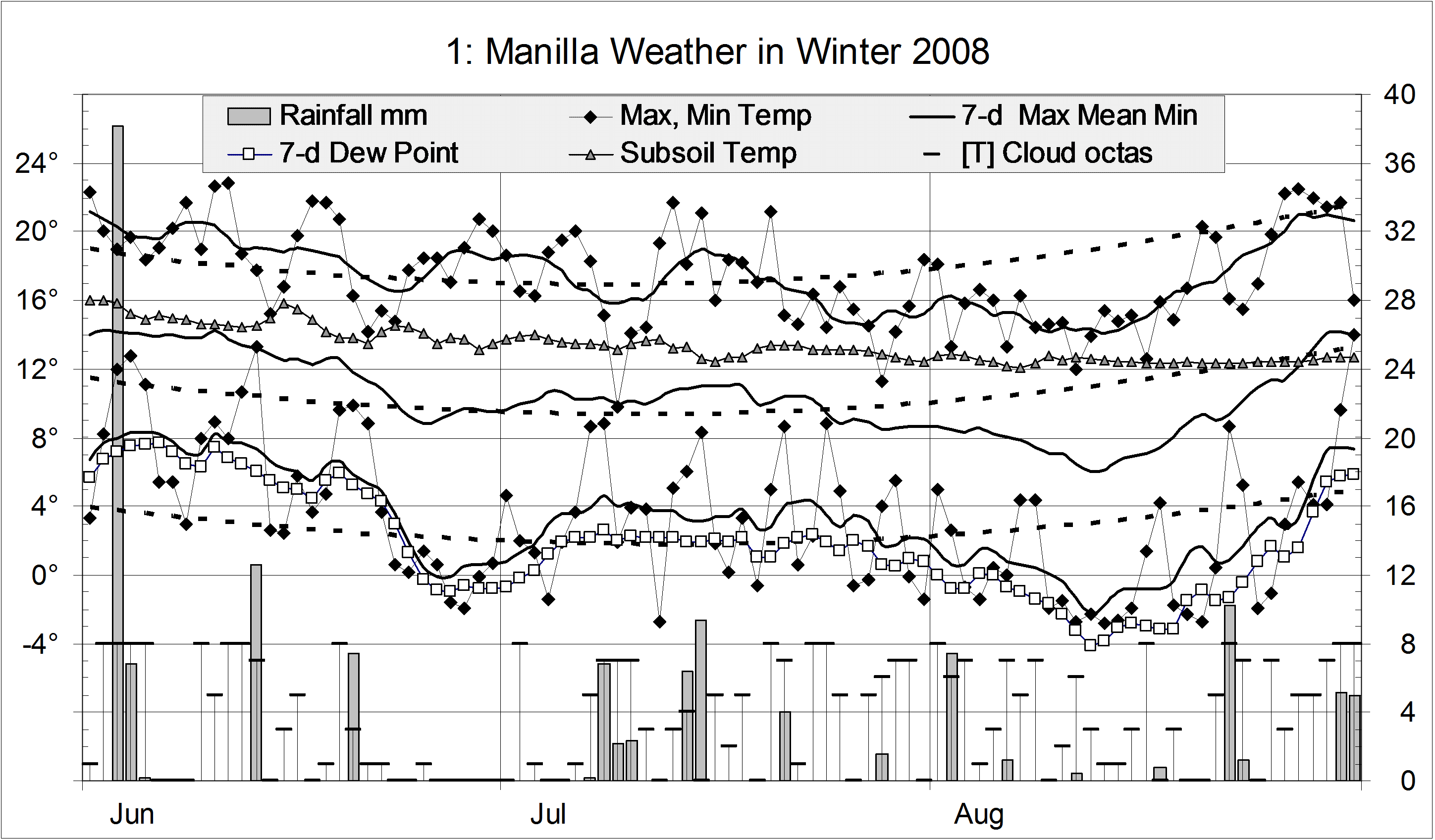
For most of June and July, temperatures were warmer than normal, especially at night. There were a couple of severe frosts in late June, and one in mid-July. The coldest part of winter, however, came extremely late. In the second week of August, both days and nights were six degrees colder than normal. There were more sub-zero nights in August than in June and July together.
Early morning dew points above 7° in early June showed high humidity. Later, dew points below zero showed the air was extremely dry in late June and almost all of August.
The winter was a little less frosty than usual, with 40 frosts rather than the usual 44. There were 24 readings below zero and 7 below minus two, but none below minus four.
There were 21 rain days, totaling 136 mm. Most rain came early in the season. The first rain day, with 38.2 mm, was the wettest winter day in ten years.
July and August were extremely cloudy months, with 52% and 55% cloudy mornings. June, at 37%, was also cloudy.

Comparing winter seasons

Mean daily temperatures (daily maximum, minimum, and mean) were close to normal this winter. Because the maximum was slightly down, and the minimum slightly up, the daily temperature range was reduced. At 14.1°, it was narrower than the normal 15.3° but not extreme like the 13.2° of last winter.
The mean dew point of 1.9° was normal for winter.
The rainfall total of 134 mm is above the long-term average for winter (125 mm). The graph includes the ninth driest winter, 2002. Just ten years ago, 304 mm of rain in the winter of 1998 made it the second wettest on record.
This was the cloudiest winter of the decade. Forty-eight percent of the mornings had more than 4/8 cloud. The winter average is thirty-one percent. The graph suggests a trend to more cloudy winters since 2002.

Climate winter 2008

Data. Rainfall data is from Manilla Post Office, courtesy of Phil Pinch. Dew Point values before August 2005 are from Tamworth Airport 6 am data supplied by the Bureau of Meteorology. Temperatures, including subsoil at 750 mm, and other data are from 3 Monash Street, Manilla.

* The title is a rhyming anapestic tetrameter. With the original “by”-line, it was a rhyming  anapestic hexameter. No-one noticed.

August 2008 very cold and cloudy

The daily weather log

Weather log August 2008

The second week of August was the coldest week of the year. Temperatures by day and night were six degrees below normal. In the whole month few temperatures were above normal. Only six days got above 20°, compared to the usual twelve. The very last night soared to nine degrees above normal.
However, no days or nights were particularly cold. Although the 13th was the coldest morning of the winter at -2.8°, it was only a little lower than -2.7° on the 11th and 20th (and also on the 12th of July).
Most days had very dry air, with morning dew points below zero. Despite that, there was a lot of cloud. The number of mornings free of cloud was only five, the fewest in ten Augusts.
There were nine rain days spaced through the month, totalling 31.6 mm.

 Comparing August months

Climate August 2008

All the mean temperatures (daily maximum, daily mean, and daily minimum) were the lowest for August in a decade. The mean was over two degrees below normal.

It was a frosty month. In ten Augusts, none had as many minima below -2° (6) or below zero (14) as this one, but August 2005 had more total frosts (21 versus 18) counting minima below +2.2° in the screen.
Mean humidity (morning dew point) was extremely low. At -0.4°, it was over two degrees below normal. In the decade, only July 2002 had drier air, with a mean morning dew point of -3.1°.
There were more cloudy mornings (55%) than in any August of the decade. Five of the seven cloudiest months of the decade have come within the last ten months: Nov ’07, Dec ’07, Feb ‘08, Jul ’08, and Aug ’08. All had 50% or more cloudy mornings, almost twice the decade median of 27%.
The rainfall total, 31.6 mm, is on the 46th percentile for August, and below the average (40 mm). Totals for several months together are much the same as a month ago, but the serious shortage has moved back to the six-month total. The total for 2 months (July and August) is in the 28th percentile, 3 months in the 41st, 4 months in the 25th, 5 months in the 17th, and 6 months in the 7th percentile . Rainfall totals for longer periods are normal.


Data. Rainfall data is from Manilla Post Office, courtesy of Phil Pinch. Dew point values before August 2005 are from Tamworth Airport 6 am data supplied by the Bureau of Meteorology. Temperature and other data are from 3 Monash Street, Manilla.


July 2008: more cloud, less frost

The daily weather log

Weather log July 2008

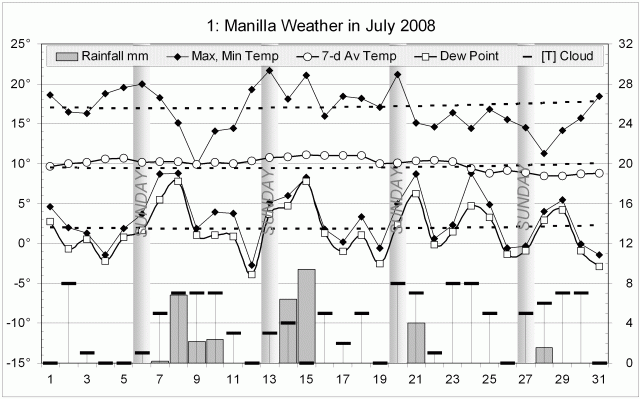
With 52% cloudy mornings, this was the cloudiest July (and the fifth cloudiest month) in a decade.
There were no long warm or cold spells, so the seven-day mean temperature scarcely changed until the cooler final days. Yet each day’s temperatures were quite different from the day before. Wednesday the 9th was the 4th coldest day of the decade. It reached only 9.8°, and Monday the 28th, at 11.3°, was not much warmer.
Five nights were warmer than 8°. They were separated by cold nights, but there were only fourteen frosts, the coldest, on the 12th, being 2.7°. Widespread fog on the 15th did not lift until 11 am, and there was thick fog in the valley on the 26th.
Eight rain days were scattered through the month. The wettest day had 9.4 mm, and the total was 33 mm.

 Comparing July months

Climate July 2008

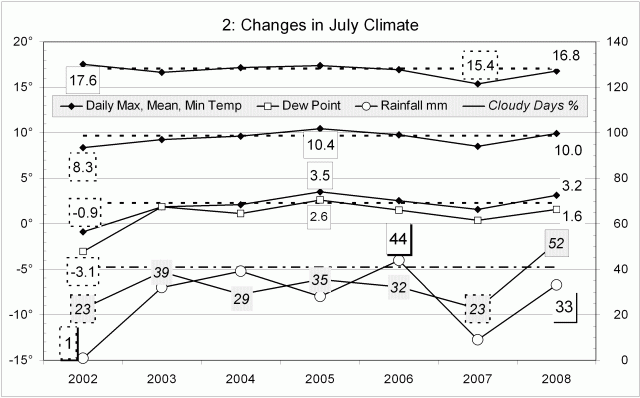
The mean daily maximum and daily mean temperatures for the month were normal but, on the average, nights were warm. As a result, the mean daily temperature range, 13.6°, was the narrowest in ten July months. Sunny, frosty, droughty July 2002 had a range of 18.5°: more than 30% wider! (The month with the narrowest mean temperature range for the decade was June 2007, with 10.9°. That was also the cloudiest month.)

July usually has about 17 frosts. This month’s total of 14 made it the least frosty July this century. July 1999 had only 13 frosts, with none below -2°.
Humidity (early morning dew point) was normal for the time of year.
The rainfall total is not far below the average: 33 mm is in the 46th percentile for July. The total for this June and July together (98 mm) is better than usual: in the 52nd percentile of two-monthly totals. Not so good are the three-monthly total (112 mm) in the 30th percentile and the four-monthly total (132 mm) in the 20th percentile. Worse, the five-month total (134 mm) is only in the 8th percentile, due to the 2 mm rainfall of March. The six-month total is much better (in the 29th percentile). Rainfall totals for longer periods are normal.


Data. Rainfall data is from Manilla Post Office, courtesy of Phil Pinch. Dew point values before August 2005 are from Tamworth Airport 6 am data supplied by the Bureau of Meteorology. Temperature and other data are from 3 Monash Street, Manilla.


June 2008 warm, with rain

The daily weather log

Weather log June 2008

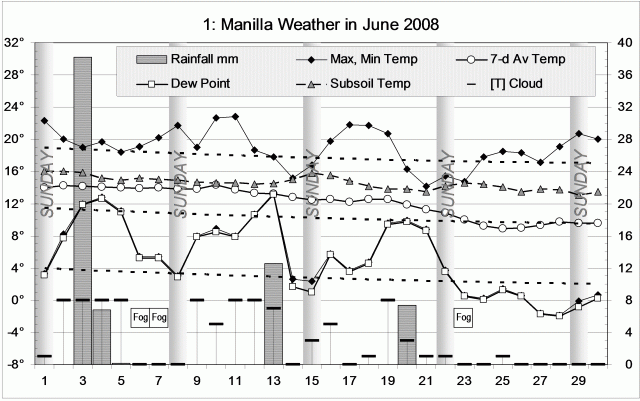
Most of June was very warm. The 7-day average temperature stayed three degrees above normal for the first three weeks. All five rain days came during that time. The first, with 38.2 mm, was the wettest June day in a decade. By the 4th of the month the average rainfall for June (44 mm) had already been beaten. Sadly, the total rose only to 65.2 mm, the same as last year. Around the rainy days the nights were about 7° warmer than usual, and humidity was high (morning Dew Points near 10°). There were frequent fogs, including one on Saturday the 7th that was widespread and thick, and lasted a long time.

The fourth week saw a return to normal June temperatures, with sunny cloudless days. Frosts came back, but there were only eight altogether instead of the usual thirteen.

 Comparing June months

Climate June 2008

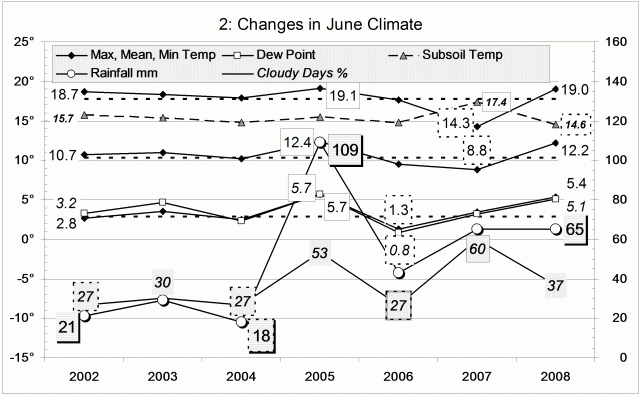
This June was warm and humid. However, due to the cool, dry change in the fourth week, it was no warmer or more humid than June of 2005. The graph shows that June 2005 had very high rainfall. It was the sixth wettest June on record.

While this month had more cloud than usual, June last year was much cloudier, and had bitterly cold days – nearly five degrees colder! By contrast, sunny June 2006 had very cold nights, including 21 frosts.
The rainfall total of 65 mm is high. It is in the 78th percentile for June, and nearly twice the median value (36 mm).
The rainfall total for this May and June together (79 mm) is in the 38th percentile of two-monthly totals, while the three-monthly total (99 mm) is in the 23rd percentile. Being above the tenth percentile, these do not count as “serious” shortages of rainfall. The four-month total (101 mm) is a serious shortage: it is only in the 9th percentile. The five-month total is much better (in the 35th percentile). Rainfall totals for longer periods are all normal, that is, near the median.


Data. Rainfall data is from Manilla Post Office, courtesy of Phil Pinch. Dew point values before August 2005 are from Tamworth Airport 6 am data supplied by the Bureau of Meteorology. Temperature and other data are from 3 Monash Street, Manilla.


Autumn 2008 was dry and cool

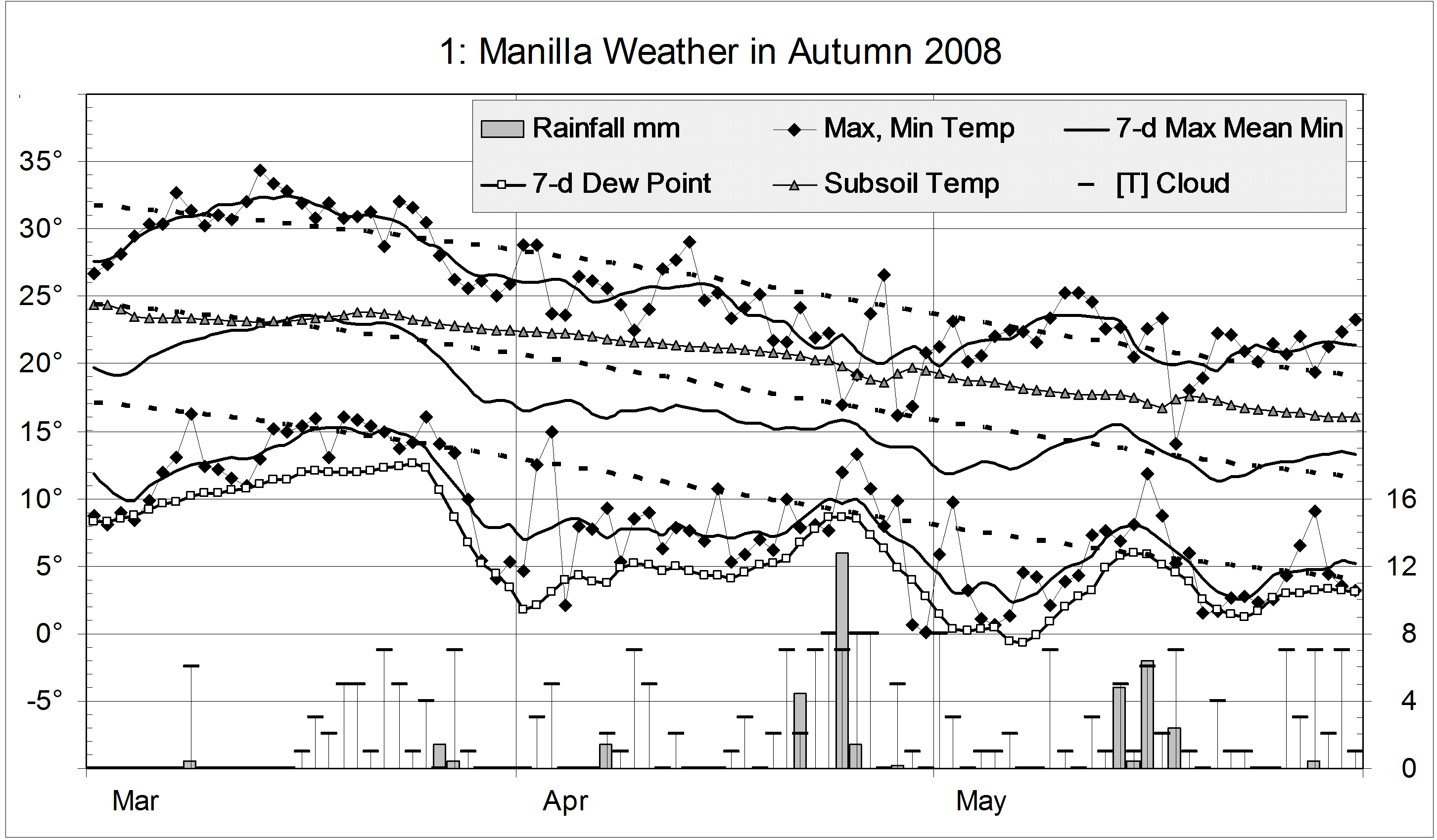
Weather log autumn 2008

The daily weather log

Temperatures were about normal in mid-March and again during parts of May. Otherwise they were low. The daily temperature range was generally higher than usual, but was less on rainy days.
There were nine mild frosts, which is near the average.
Humidity was very low in early April and early May.
There were 13 rain days, which is normal. They were mainly in late April and mid-May, for a very low total of 37 mm. April the 24th was the wettest day, with 12.8 mm.
Cloud varied a lot from day to day. Clear skies were common in March.

Comparing autumn seasons

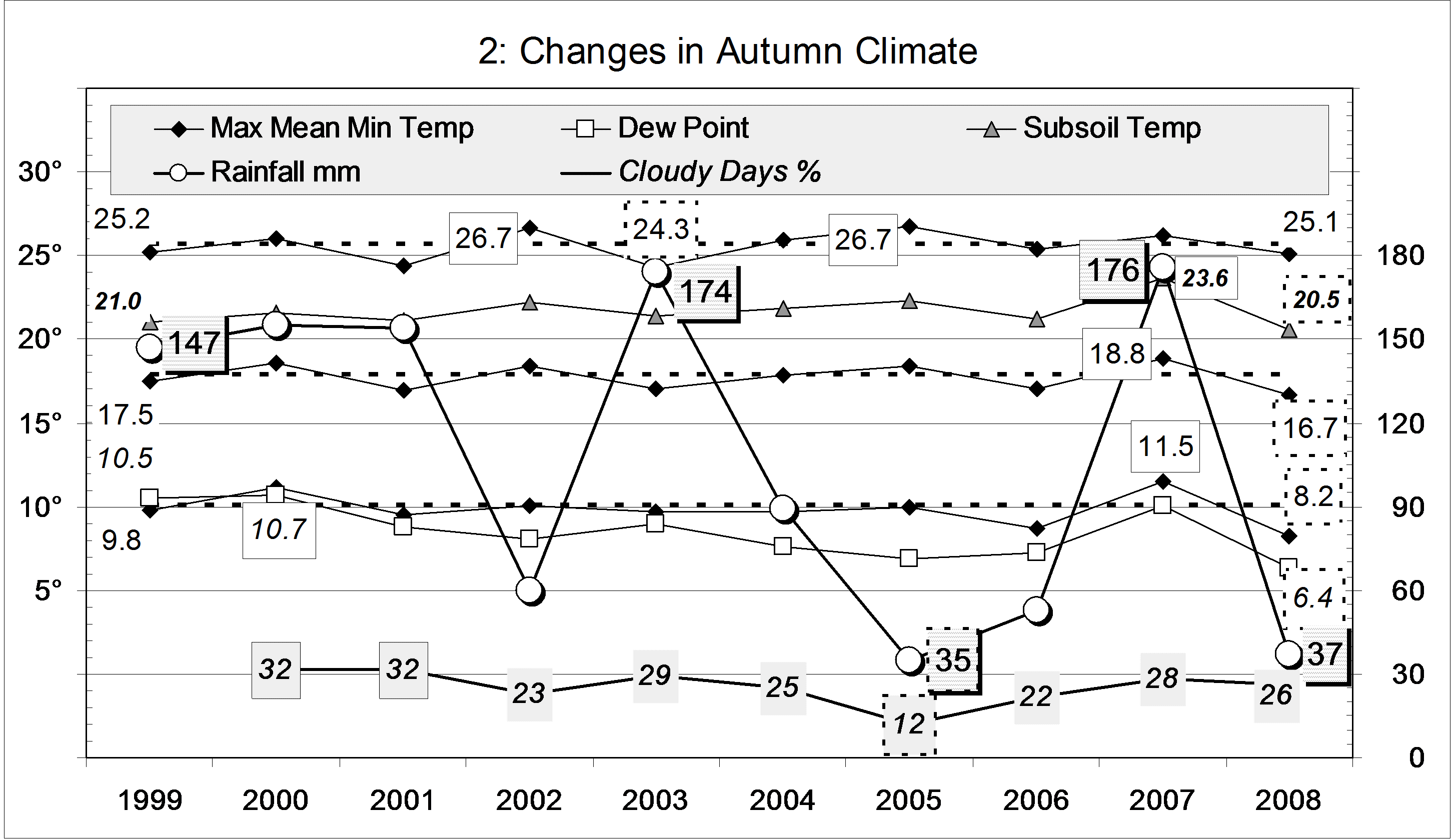
This autumn was very cool: mean daily mean temperature and minimum temperature are the lowest in the ten year record. Mean daily maximum temperature was lower in 2003, which is one of three autumns sharing the next coolest mean temperature.
This autumn’s very cool nights (8.2°) caused the largest daily temperature range on the graph (16.9°), similar to the 16.8° of 2005. Both came with very low rainfall,
Autumn humidity seems to have decreased through the decade, with this autumn’s Dew Point of 6.4° the lowest.
This graph includes some very dry autumns. Autumn 2005 was the 7th driest on record, in the 6th percentile for autumn rainfall. This autumn was similar, in the 7th percentile. Autumn 2002 was in the 18th percentile, as that year’s drought had not fully developed. By contrast, autumn 2003 and 2007 were wet, in the 72nd and 75th percentiles.
(Contrary to the forecast, this autumn was dry. It was one of twelve autumns on record that had less than one fifth of the preceding summer’s rainfall. Three of the twelve were 2005, 2006, and 2008. This is amazing: something that usually happens one year in ten happened three years in four! Another three of the twelve were 1971, 1973, and 1976. At that time it was three years in six.)
At 26% cloudy mornings, this autumn was normal.

Climate autumn 2008

Data. Rainfall data is from Manilla Post Office, courtesy of Phil Pinch. Dew Point values before August 2005 are from Tamworth Airport 6 am data supplied by the Bureau of Meteorology. Temperatures, including subsoil at 750 mm, and other data are from 3 Monash Street, Manilla.