Warm February 2011 with a very wet day

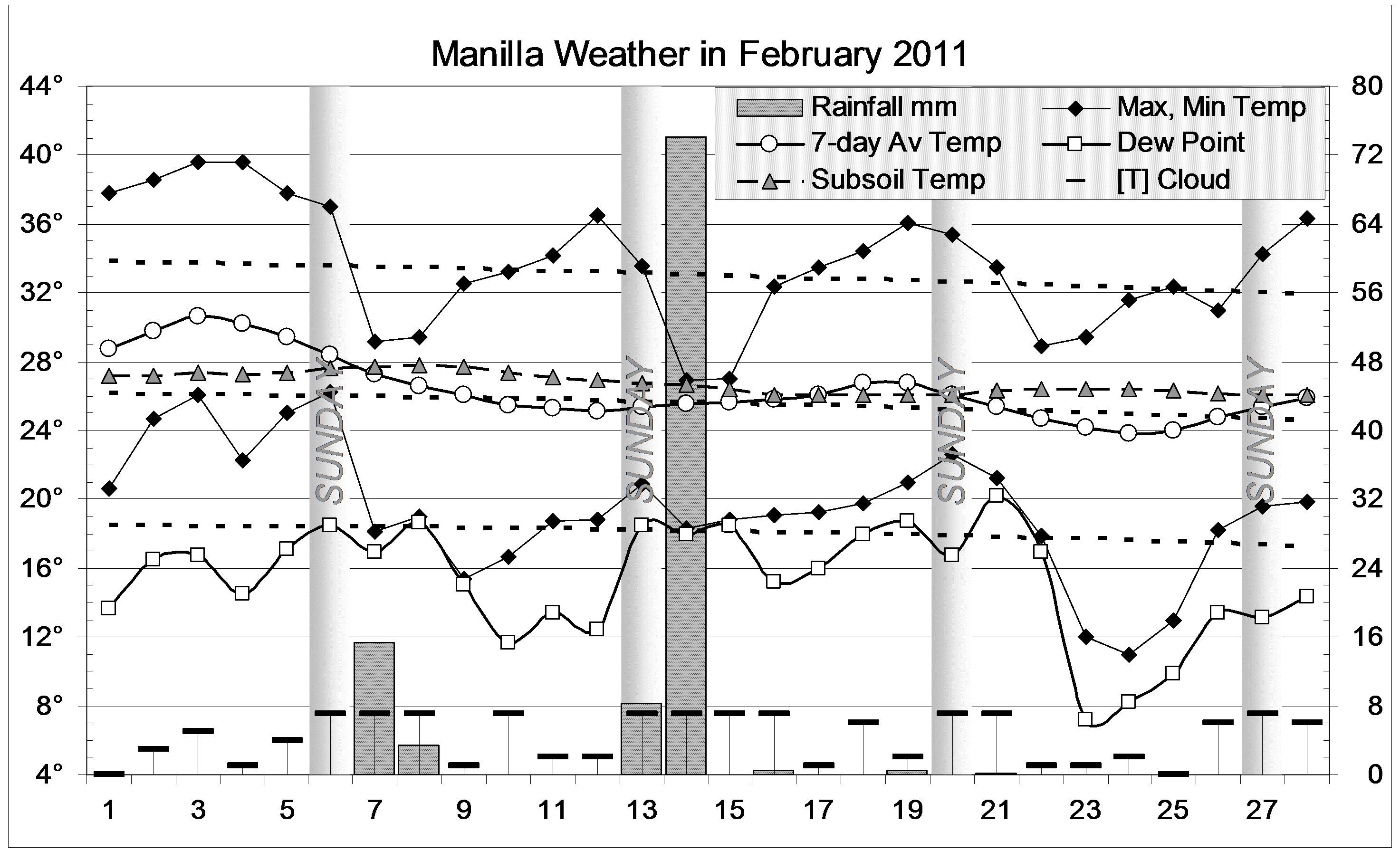
The daily weather logWeather log February 2011.
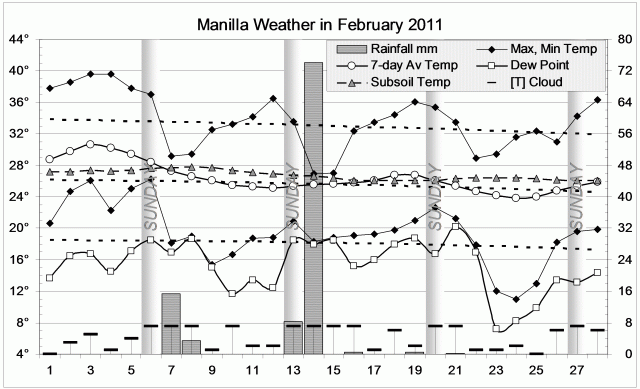
Several Mondays and Tuesdays this month were cool, while most other days were warm. Nights in the first week were warm, lifting the seven-day average. Three nights in the last week were very cool, at a time of very dry air.
Rain on the 7th (15.4 mm) ended a three-week dry spell, but really heavy rain was recorded on the 14th. That reading of 74.2 mm was the 29th heaviest daily fall in more than a century.

 Comparing February monthsClimate February 2011.

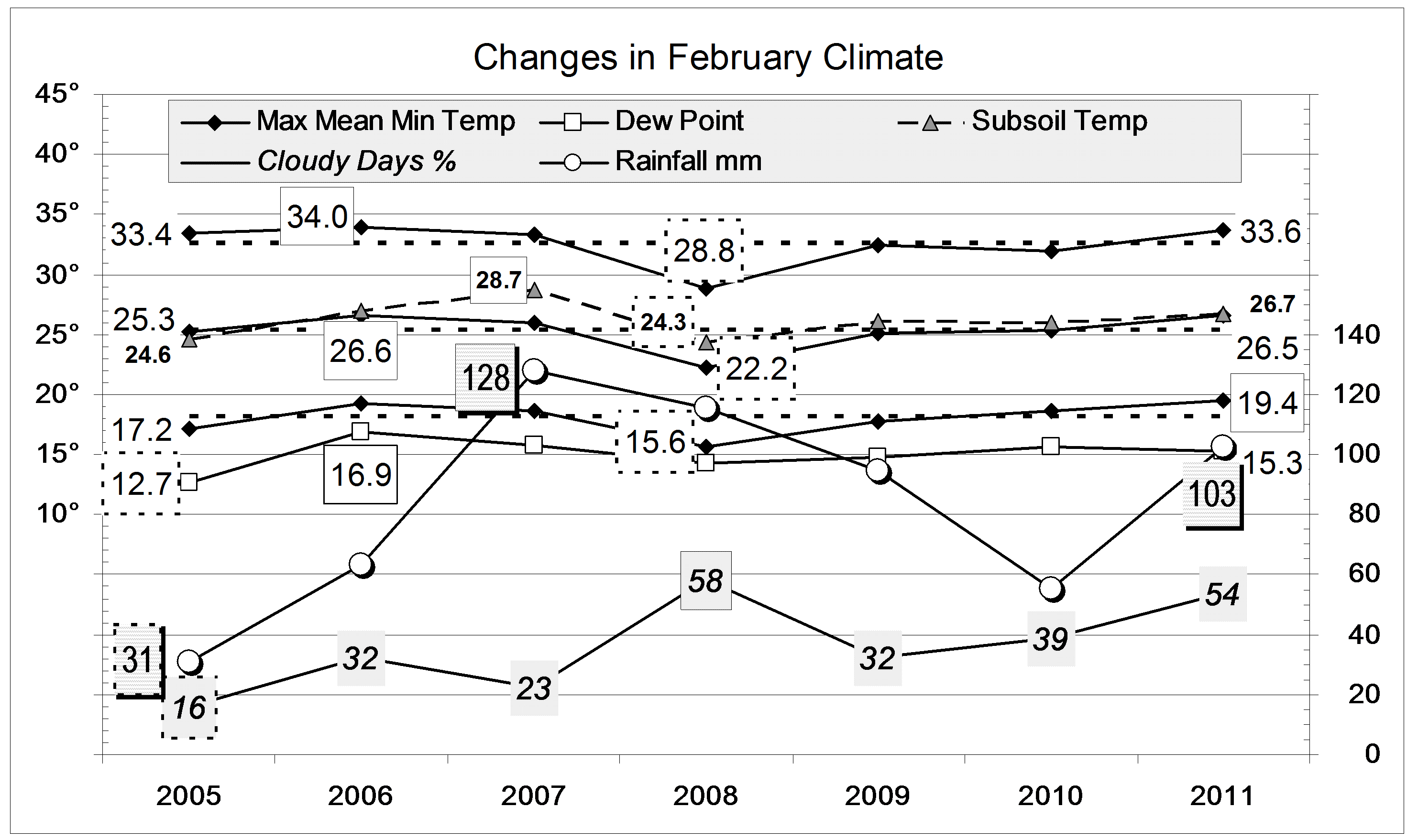
Mean maximum, mean, and minimum temperatures and mean soil temperature were all about a degree above average. The mean Dew Point was average, and cloudiness high (54%).
The rainfall of 102.6 mm is in the 77th percentile for February, far above the long-term average of 67 mm. Rainfall totals for groups of months are very high: above the 70th percentile for all periods up to 15 months, and above the 90th percentile for periods of 4-, 5-, and 6-months.


Data. Rainfall data is from Manilla Post Office, courtesy of Phil Pinch. Temperatures, including subsoil at 750 mm, and other data are from 3 Monash Street, Manilla.


April 2010 rather warm and dry

The daily weather logWeather log April 2010

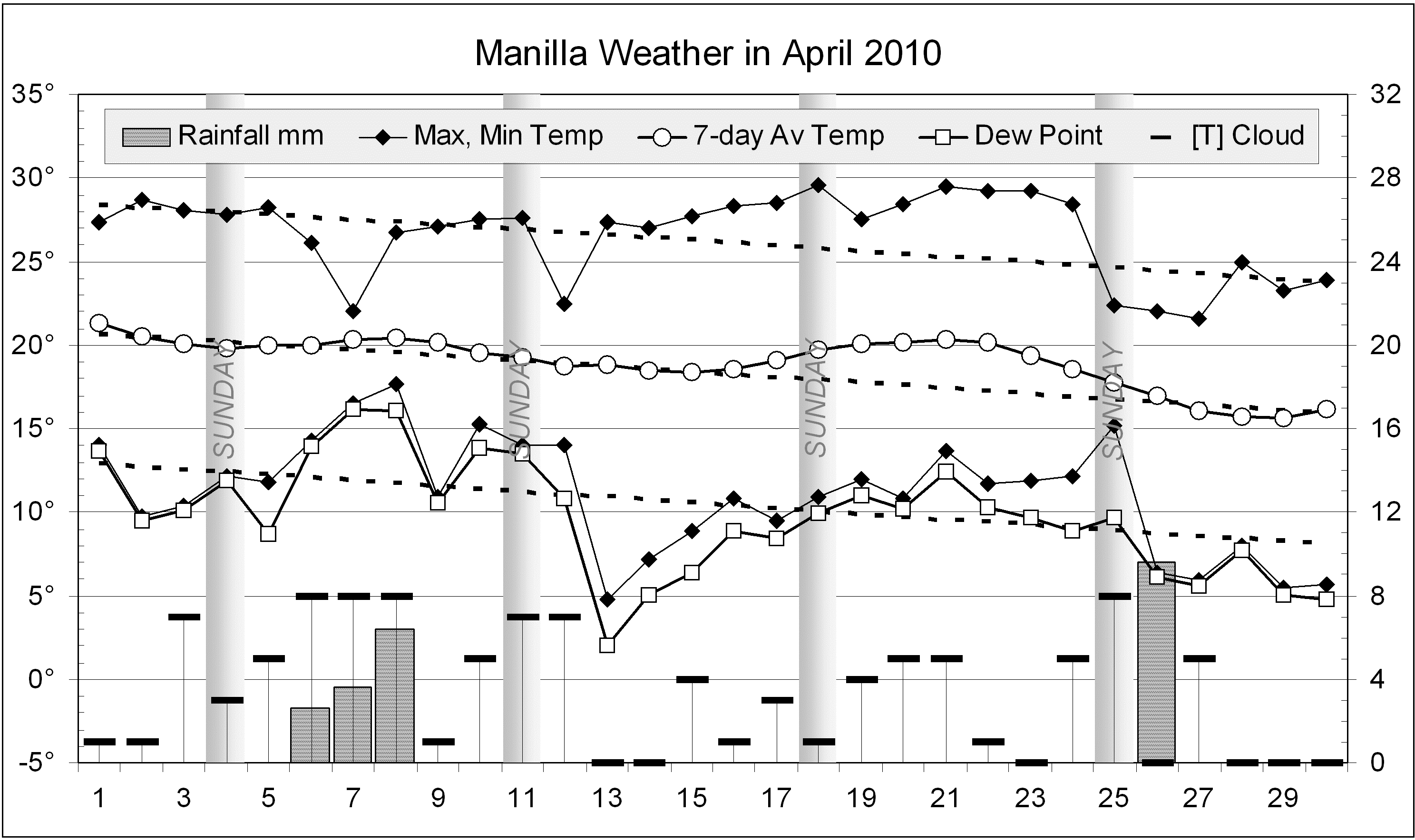
Although the month began with normal temperatures and some rain, the third week became warm, and gardens dried out. On the 26th 9.6 mm of rain was recorded, bringing the monthly total to 22.2 mm in four rain days (the usual number). The month ended sunny with nights that were cooler, but far from frosty.

 Comparing April monthsClimate April 2010

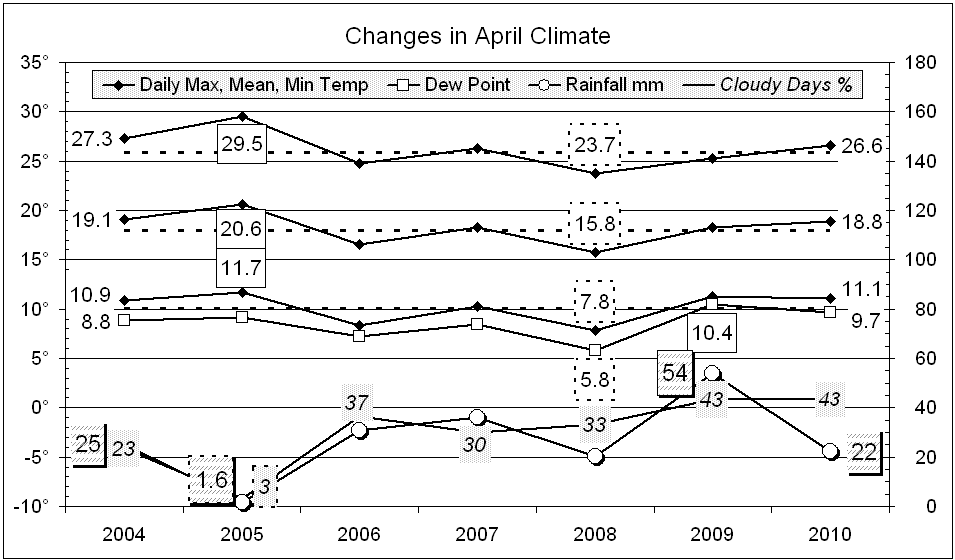
This April was rather warm and dry, but not nearly as warm and dry as April 2005. That month was three degrees warmer than normal and had only 1.6 mm of rain! It had just one cloudy morning, compared to thirteen this month.

The rainfall of 22.2 mm is in the 36th percentile for April, below the long-term average of 38 mm. Rainfall totals for groups of months have fallen, but there are still no serious shortages.. The 12-month total (448 mm) is now down to the 11th percentile: just above the “serious” level.


Data. Rainfall data is from Manilla Post Office, courtesy of Phil Pinch. Temperature and other data are from 3 Monash Street, Manilla.


Late March 2010 Warmth

The daily weather logWeather log March 2010

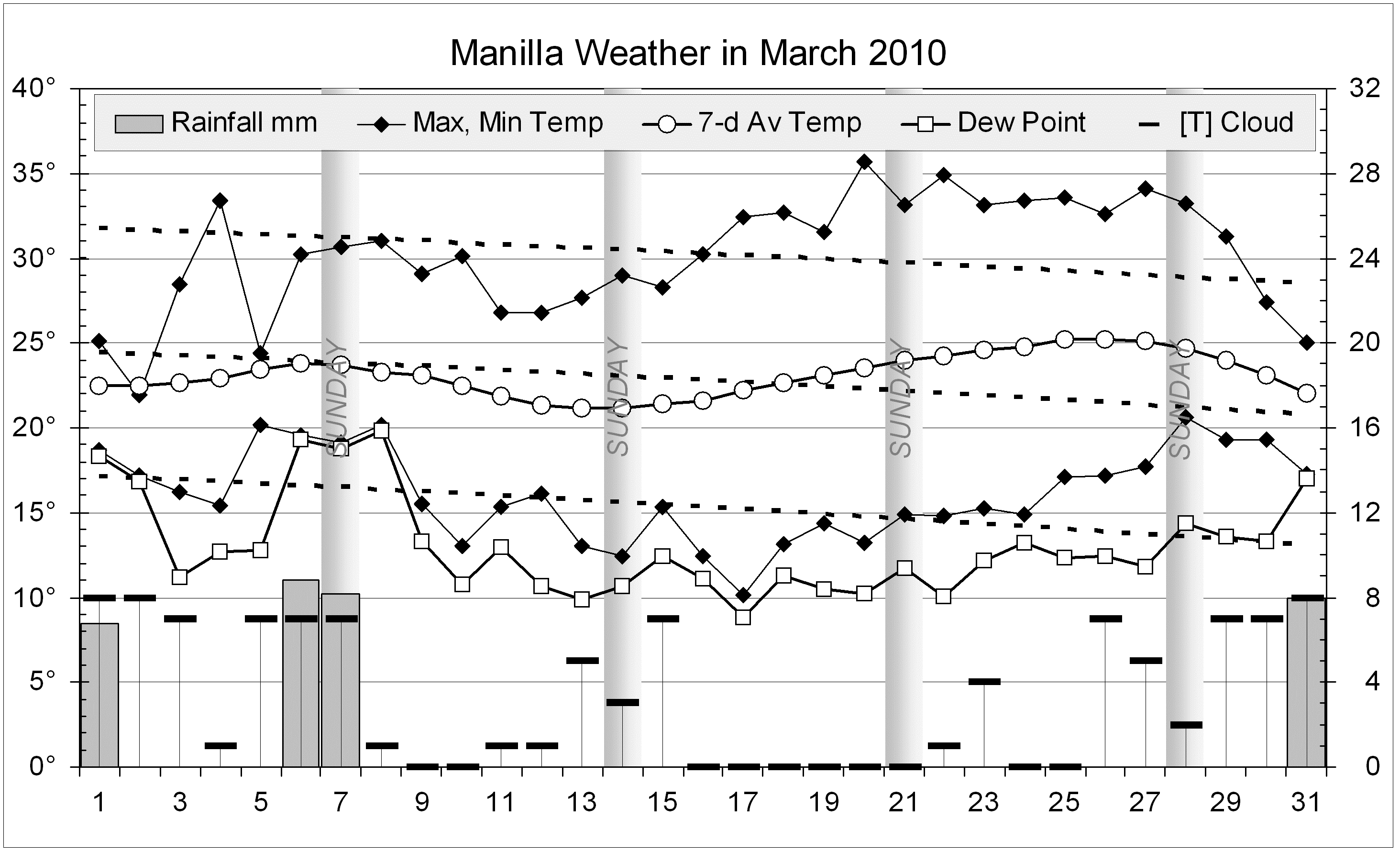
After three early rain days, there was a long spell of warm sunny weather. From the middle of the month, all temperatures rose well above normal. The maximum on the 20th went to 35.7° and the minimum on the 28th to 20.6°. A rain-band in the district in the last days yielded only 8 mm, bringing the month’s total to 31.8 mm in four rain days.

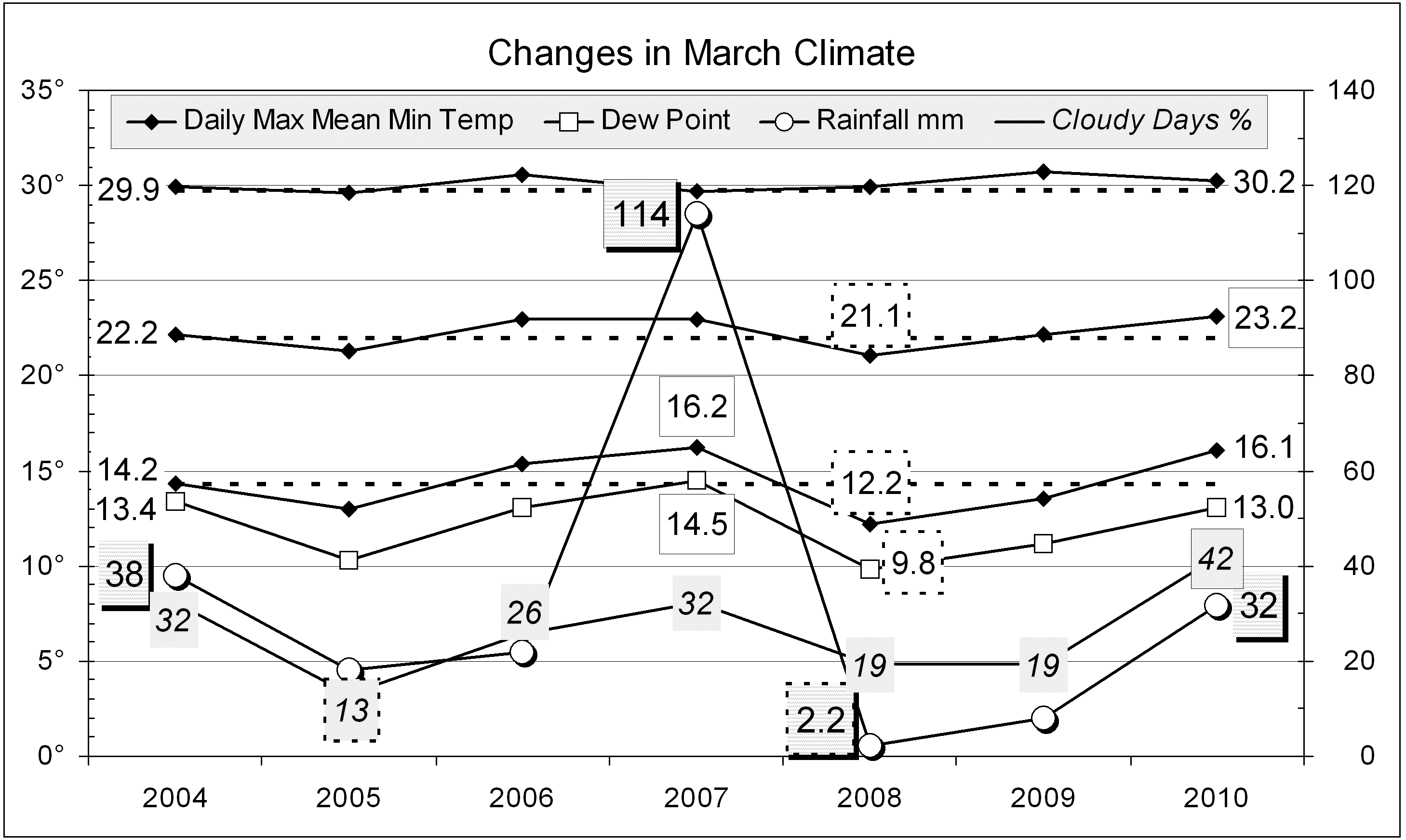
 Comparing March monthsClimate March 2010

While the average maximum and Dew Point readings were near normal, the mean and minimum readings were very high. There were more cloudy mornings than any March in the 11-year record, and the daily temperature range (14.1°) was narrow – not much wider than the 13.5° recorded in March 2007. This month was very like that one, but the rain then was four times as heavy.
The rainfall of 31.8 mm is in the 43rd percentile for March, below the long-term average of 51 mm. There are no serious shortages in rainfalls for groups of months. The worst are the 12-month total of 480 mm (16th percentile) and the nine-year total of 5388mm (12th percentile), which is just under 600 mm/year. (The 125-year average is 652 mm/year, and the median (50th percentile) is 627 mm/year.)


Data. Rainfall data is from Manilla Post Office, courtesy of Phil Pinch. Temperature and other data are from 3 Monash Street, Manilla.


Spring 2009 warm and dry

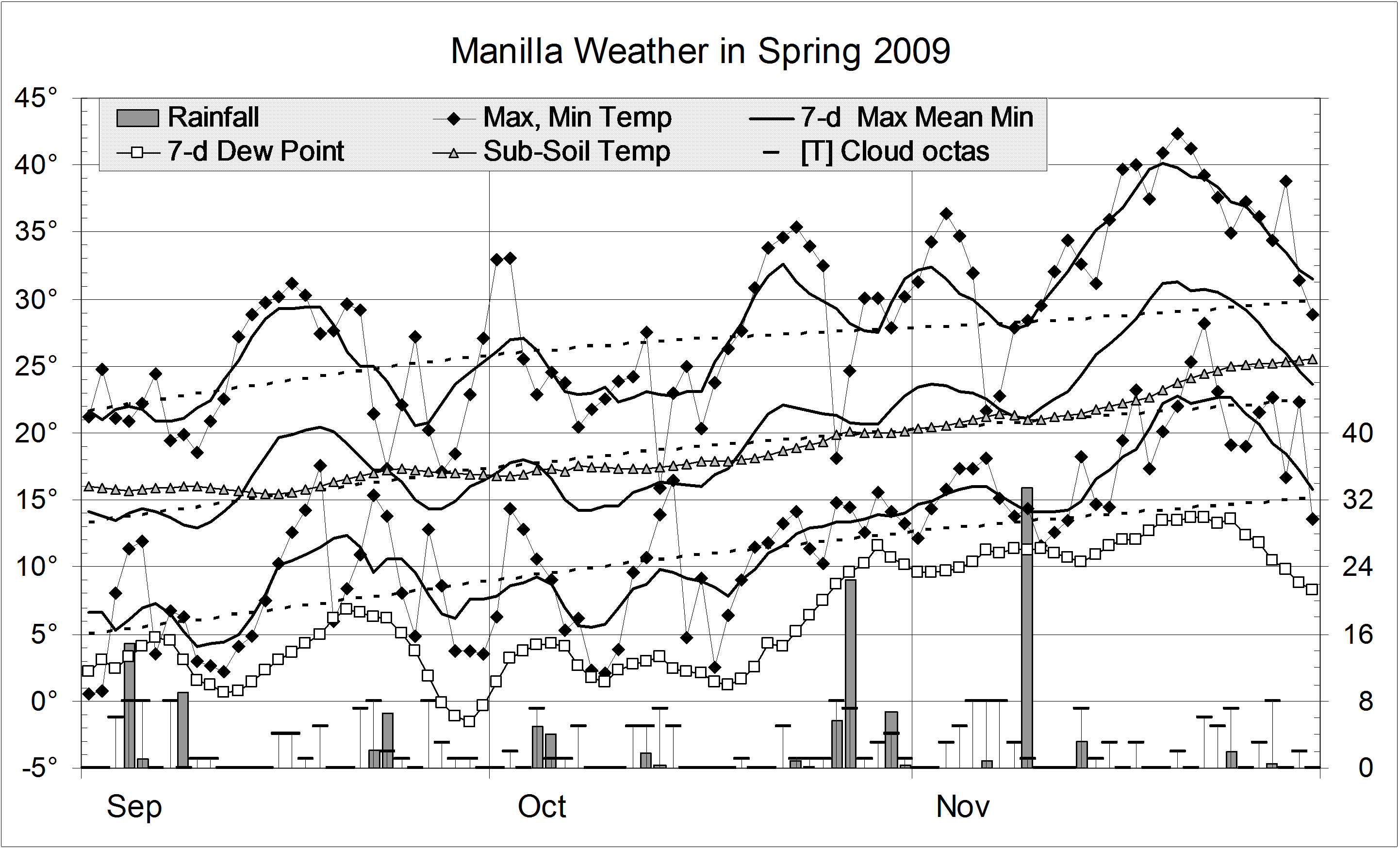
Weather log spring 2009

This spring was warm and dry, partly due to the extreme heat wave in the final two weeks. In that period, records were broken for the highest temperature in any month: highest daily maximum (42.6°), highest daily maximum temperature anomaly (+13.5°), highest daily minimum (27.8°), and highest weekly average (31.3°).


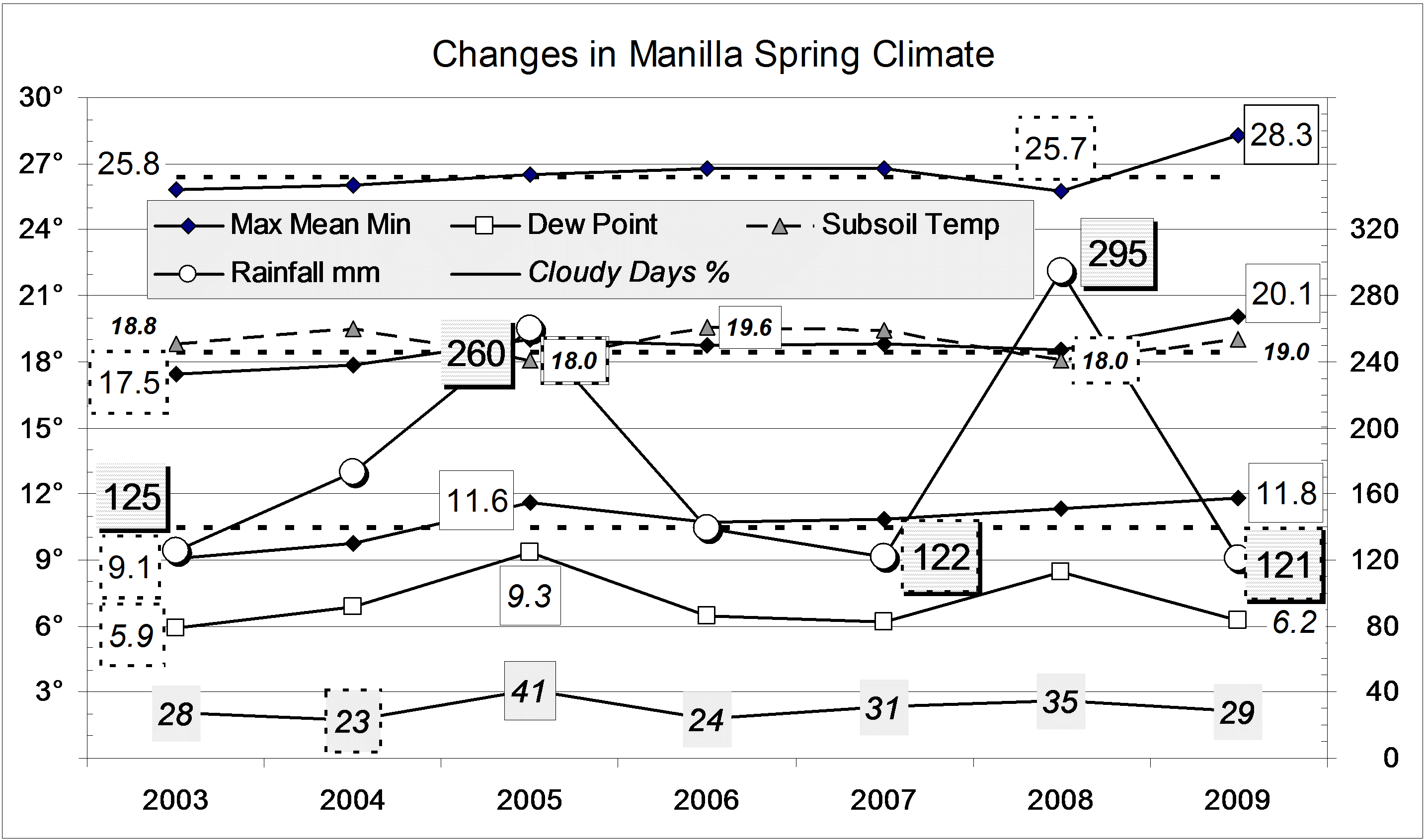
Compared to decade averages, the mean maximum (28.4°) was up 2.1° and the mean minimum (11.7°) up 1.3°. For dryness, the morning Dew Point (6.0°) was down 1.5°, and cloudiness (29%) down 1%. Although this spring was very warm and dry, spring 2002 had been much warmer and drier. Values then were: max 29.2°, min 12.1°, Dew Point 5.4° and cloudiness 19%.
In spring 2002 there had been only 66 mm of rain: the fifth lowest on record. Rainfall this spring was 121 mm. Similar spring totals were seen in 2007 (122 mm), 2006 (139 mm), and 2003 (125 mm). These values are on the 30th percentile (which is not very low), but seem low compared to recent extremely wet springs in 2008 (295 mm), 2005 (260 mm) and 1999 (262 mm). The long-term spring median is 156 mm.

Climate spring 2009

Data. Rainfall data is from Manilla Post Office, courtesy of Phil Pinch. Temperatures, including subsoil at 750 mm, and other data are from 3 Monash Street, Manilla.

September 2009 warm and dusty

The daily weather log
Weather log September 2009

Two large dust storms from South Australia filled the sky on the 23rd and 26th, reducing visibility to about 600 metres. (The dust was reported, with a photo, in the “Manilla Express” for 29/9/09.) There was a brown dust haze also on the 2nd, 13th, 14th, 16th, and 17th, and on three days in August and one in July..
The dust storms put an end to a week of very warm days and nights. The cooler air was dry, with Dew Points below zero.
On the 3rd 14.8 mm of rain fell, after 43 days without 5 mm of rain. Six rain days brought 34.2 mm for the month.

 Comparing September months

Climate September 2009

Mean temperatures were all about half a degree above normal, but not as high as in September 2006. The humidity (early morning Dew Point: 2.7°) was a little low, and the percentage of cloudy mornings (30%) a little high.
The rainfall total, 34 mm, is on the 47th percentile for September, very close to the median (37 mm). As a result, rainfall totals have improved. Serious shortages, below the 10th percentile, now affect only the 3-, 4-, 5-, and 6-month totals. The 5-month total (117 mm), being in the 5th percentile, could be called a severe shortage. Totals for longer periods are normal.


Data. Rainfall data is from Manilla Post Office, courtesy of Phil Pinch. Temperature and other data are from 3 Monash Street, Manilla.