3-year trends to March 2015

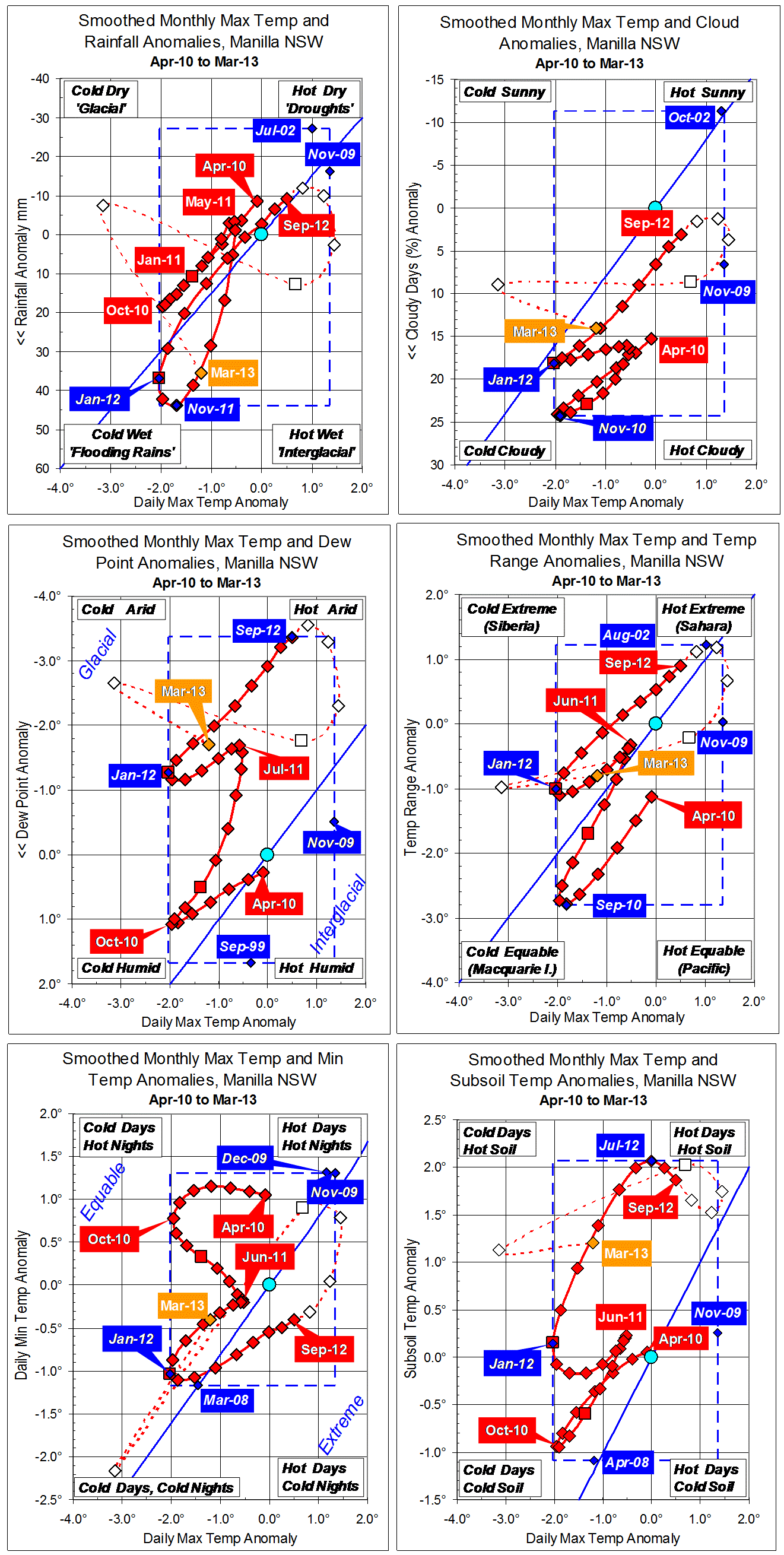
Parametric plots of smoothed climate variables at Manilla
“March 2015: hot”

Trends to March 2015

 March raw anomaly data (orange)

In March, the daily maximum temperature anomaly became very high (+1.6 degrees), but not nearly as high as the raw value had been in November (+5.1 degrees). Most other anomalies moved up the graphs towards “droughts” but not beyond normal values. Dew point remained as low as in February, and rainfall returned from very low to normal.

Fully smoothed data (red)

The latest fully-smoothed data anomalies (September 2014) moved a little towards “droughts” from the near-normal values of the winter.


Note:

Fully smoothed data – Gaussian smoothing with half-width 6 months – are plotted in red, partly smoothed data uncoloured, and raw data for the last data point in orange. January data points are marked by squares.
Blue diamonds and the dashed blue rectangle show the extreme values in the fully smoothed data record since September 1999.

Normal values are based on averages for the decade from March 1999.* They appear on these graphs as a turquoise (turquoise) circle at the origin (0,0). A range of anomalies called “normal” is shown by a dashed rectangle in aqua (aqua). For values in degrees, the assigned normal range is +/-0.7°; for cloudiness, +/-7%; for monthly rainfall, +/-14 mm.

 * Normal values for rainfall are based on averages for the 125 years beginning 1883.

March Climate Anomalies Log

Heat Indicators log for March months

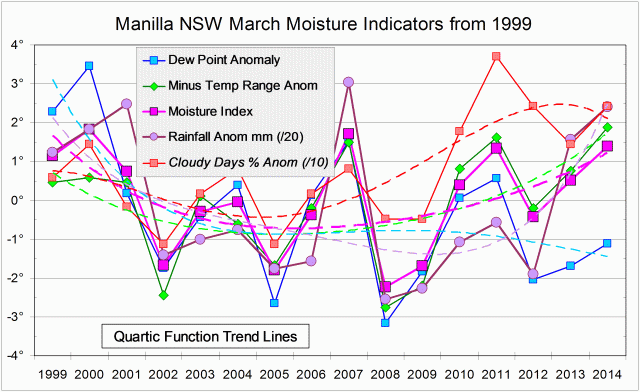
This post is the first in a set for the 12 calendar months. Graphs are sixteen-year logs of the monthly mean anomaly values of nine climate variables for Manilla, NSW, with fitted trend lines. I have explained the method in notes at the foot of the page.

Raw anomaly values for March

Extreme values for March anomalies in this period were:
Daily Minimum Temperature anomaly -2.9°: March 2008;
Morning Dew Point Anomaly +3.5°: March 2000;
Morning Dew Point Anomaly -3.2°: March 2008;
Rainfall anomaly +61 mm: March 2007;
Percent cloudy mornings anomaly +37%: March 2011.

Trend lines for March

Heat Indicators

Daily maximum temperature showed minima about -1 deg in 2001 and 2014, and a maximum about zero in 2007.
Daily minimum showed a minimum two years later, about 2003, then rose in parallel with daily maximum, but ended very high.
Subsoil temperature did not agree, and varied less. It had maxima in 2002 and 2012. It may show a lag of five years behind daily maximum.

Moisture Indicators log for March months

Continue reading

3-year trends to March 2014

Parametric plots of smoothed climate variables at Manilla

“Plunge toward ‘flooding rains’ *Trends to March 2014.

Raw values of climate anomalies for March 2014 are nearly all in the bottom left corner “flooding rains” after months in the opposite corner “droughts”. Daily minimum temperature remains high: nights are warm.
Fully-smoothed values for September 2013 show that the drought was becoming as severe as in 2002. The dew point anomaly reached a new record low value of -3.94°.


* By arrangement with the Licensor, The Dorothea Mackellar Estate, c/- Curtis Brown (Aust) Pty Ltd.


Note: Fully smoothed data – Gaussian smoothing with half-width 6 months – are plotted in red, partly smoothed data uncoloured, and raw data for the last data point in orange. January data points are marked by squares. Blue diamonds and the dashed blue rectangle show the extreme values in the fully smoothed data record since September 1999.

Rainy March 2014

The daily weather log

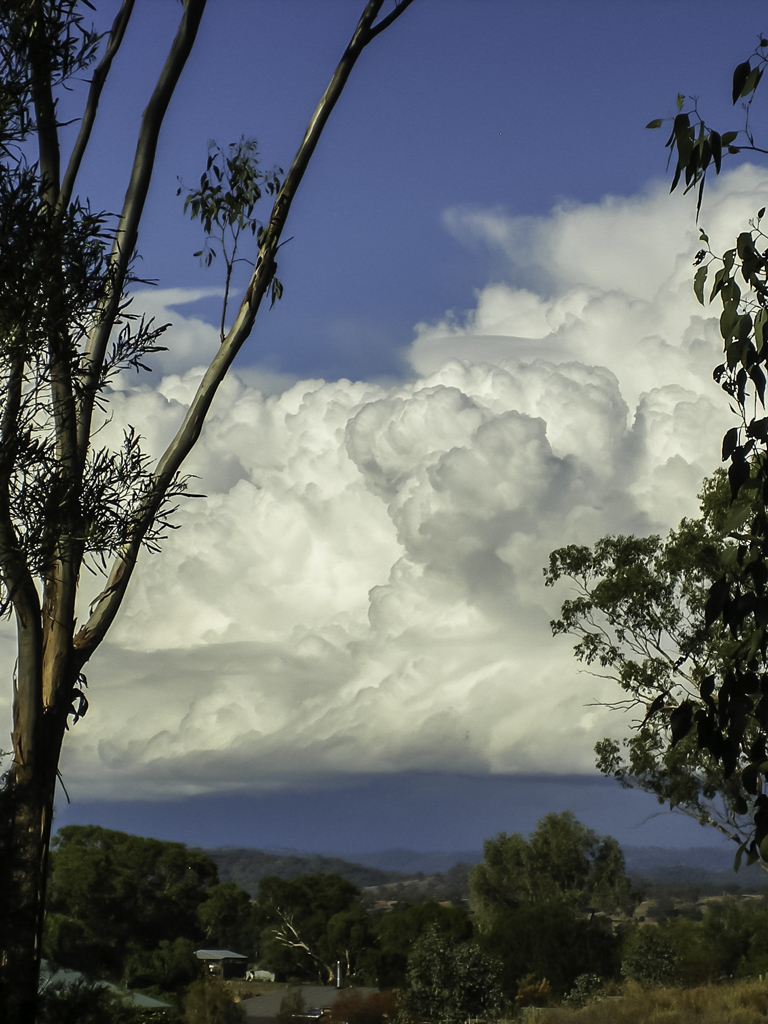
Towering cumulus cloud.

Shower on the Tablelands

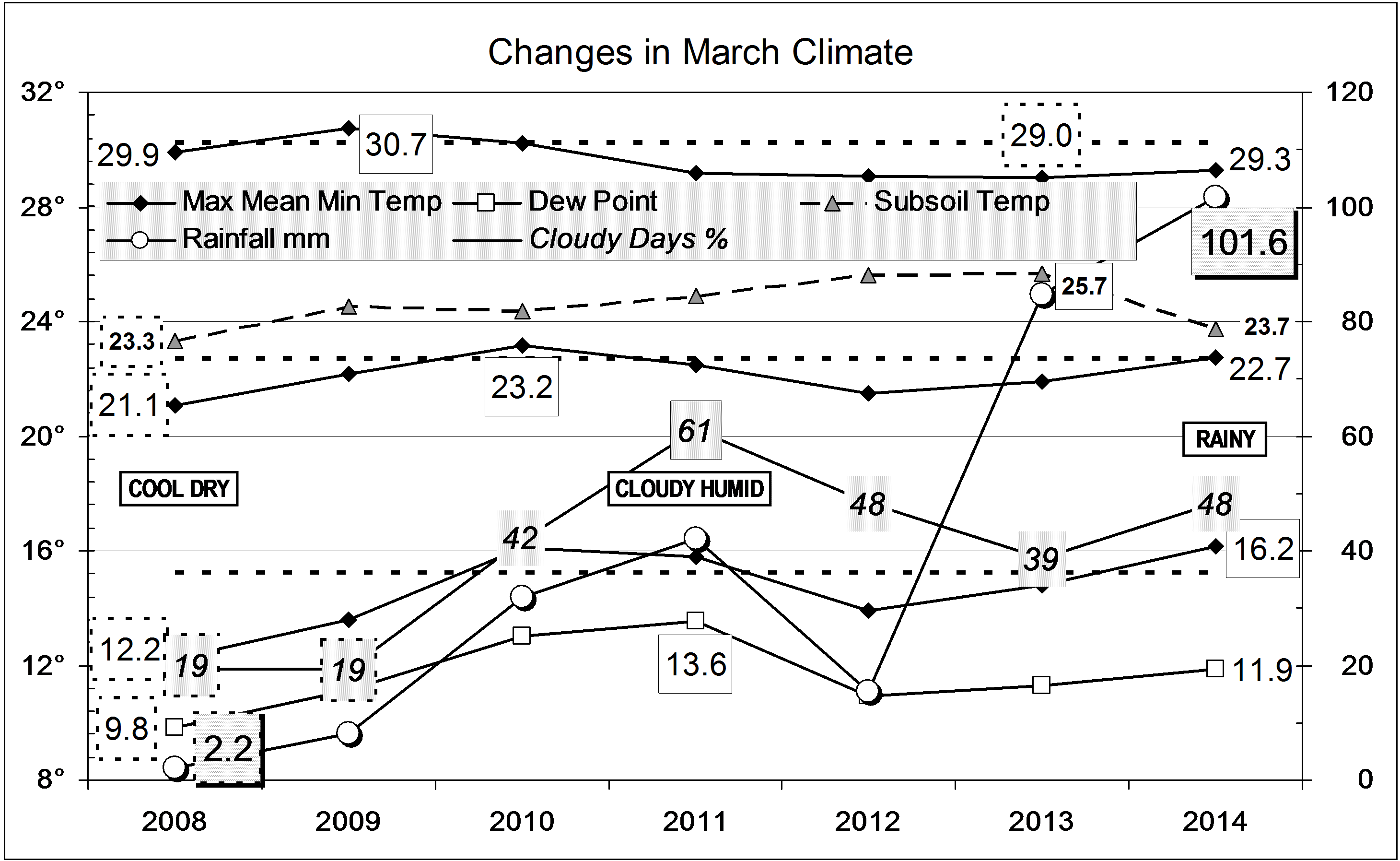
Three weeks of normal March weather were followed by six days that were cool, humid, overcast and rainy. While the wettest day had only 26.4 mm, the 14 rain days would be a record for March, but for the 16 rain days in March 1894. (Manilla never had a month with more rain days than June 1950, which had 18.)Weather log March 2014.

Comparing March months

Unlike recent arid months, March was near normal in day-time temperature, humidity and cloudiness. Nights were very warm, however .

The total rainfall of 101.6 mm is almost twice the March average of 53 mm, and in the 85th percentile. March has been wetter in nineteen years, including 2001 (103 mm) and 2007 (114 mm). Taking rainfall totals for more than one month, the greatest shortages are not serious (i.e. not below the 10th percentile). The twelve-month total (469 mm) is in the 14th percentile. Other totals have higher percentile values, and most totals for 30 months or more are above normal.

Climate March 2014


Data. Rainfall data is from Manilla Post Office, courtesy of Phil Pinch. Temperatures, including subsoil at 750 mm, and other data are from 3 Monash Street, Manilla.


3-year trends to March 2013

Parametric plots of smoothed climate variables at Manilla

“Now cool and wet”Trends to March 2013.

While raw values of temperature anomalies were not as low as in February, March was further towards cool, moist conditions than December or January, or any months since July.

Fully-smoothed data points (red) for September 2012 continued to move towards drought. The dew point anomaly reached a seventh successive new record low: -3.37 degrees.

Note: Fully smoothed data – Gaussian smoothing with half-width 6 months – are plotted in red, partly smoothed data uncoloured, and raw data for the last data point in orange. January data points are marked by squares. Blue diamonds and the dashed blue rectangle show the extreme values in the fully smoothed data record since September 1999.