October 2007 warm, with rain

The daily weather logWeather log October 2007
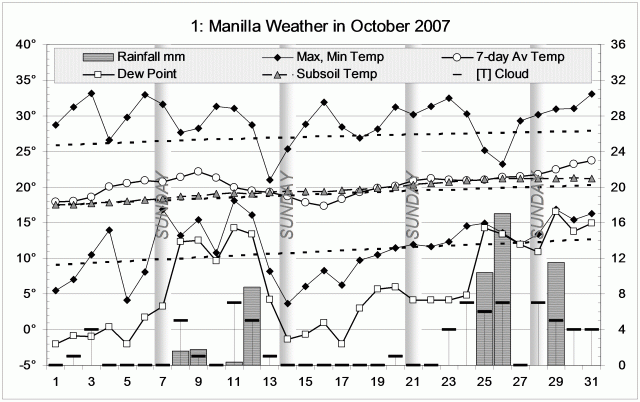
October was very warm. All but four days had daily maximum temperatures above normal. Night time minima varied at first, and then settled on the warm side. As a result, the seven-day mean temperature was a couple of degrees above normal nearly all the time.

The month began in a dry spell that reached 50-days before good rain fell on the 12th. After that, there was another 12-day dry spell. The dry spells had clear skies, very low humidity, and high daily temperature ranges of around 20°.
By the end of the month, however, a lot of rain had fallen, totalling 52 mm. It fell mainly in four days, with 17 mm on the 26th. The final wet spell was uncomfortably humid.

 Comparing October monthsClimate October 2007
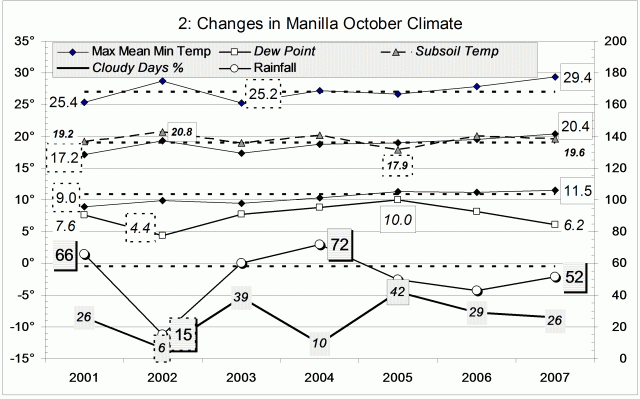
This October was the warmest in nine years. Daily minima were 1.2° above average, daily means were 1.7° above average, and daily maxima were 2.3° above average. The high daily maximum value of 29.4° is usually seen in November, not October.

The rainfall of 52 mm was near the long-term average of 58 mm for October. Similar amounts fell in October 2005 and 2006. October 2000 had been wet (110 mm) and October 2002 dry (15 mm).
The total rainfall for the two months ending in October 2007 was rather low compared to the same two months in other years. At 54 mm, it was on the 19th percentile: that is, there has been less than 54 mm rainfall in September-October about one year in five. By contrast, the three months ending in October had rainfall above normal, and the last nine month period had rainfall well above normal. Most other periods, up to 48 months, have been slightly drier than normal. Just 2 mm extra per month would have made these last four years wetter than normal.


Data. Rainfall data is from Manilla Post Office, courtesy of Phil Pinch. Dew point values before August 2005 are from Tamworth Airport 6 am data supplied by the Bureau of Meteorology. Temperature and other data are from 3 Monash Street, Manilla.
 

September 2007 fine and dry

The daily weather logWeather log September 2007

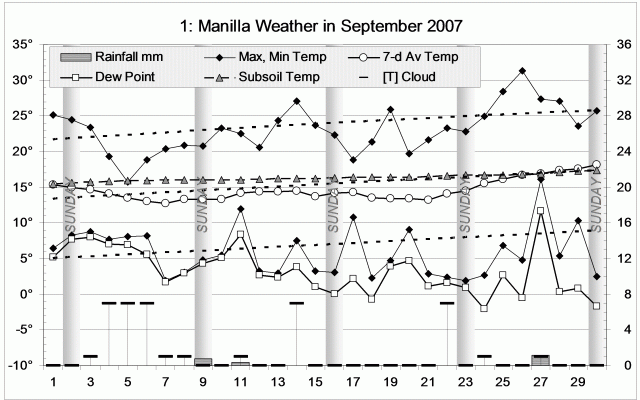
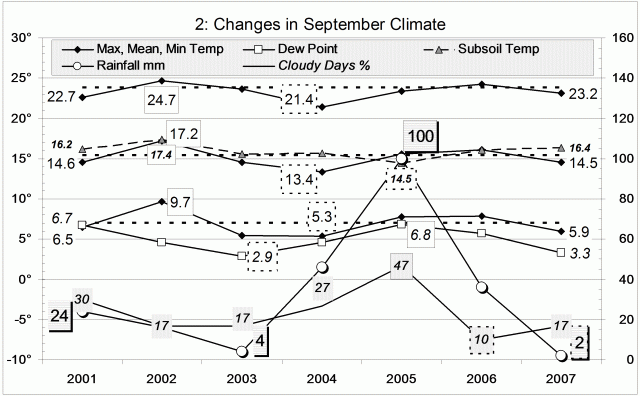
Very light rain fell on three days in September, for a total of only 2.4 mm. By the end of the month, it had been 40 days since good rain. Such dry Septembers occurred only in 1914 and 1919, and drier ones in 1925 (1 mm) and 1980 (0 mm).

Although this month’s rainfall was in the 3rd percentile of monthly values, rainfall in recent months has not been far below normal. The two-month rainfall ending this month was in the 41st percentile and the nine-month rainfall was actually above the median, in the 53rd percentile. Low rainfalls near the 20th percentile are seen for groups of 3, 5, 6, and 18 months. Other groups of months, (4, 12, 15, 24, 30, 36, 42, and 48 months) are not so bad. They had rainfalls from the 30th to the 45th percentile.
September days and nights were a little cooler than normal. As in some other years, the 7-day mean temperature did not rise until late in the month. The 5th was a very cold day, with daily maximum 7° below normal; the 27th was a very warm night, with daily minimum 7° above normal. Two mornings (7th and 23rd) were as cold as 1.9°, qualifying as “frosts”.
There were only 5 cloudy mornings. All the others were fine, with 1/8 cloud or less.Climate September 2007


Data. Rainfall data is from Manilla Post Office, courtesy of Phil Pinch. Dew point values before August 2005 are from Tamworth Airport 6 am data supplied by the Bureau of Meteorology. Temperature and other data are from 3 Monash Street, Manilla.
 

In 2007: Rainy warm August nights

The daily weather logWeather log August 2007

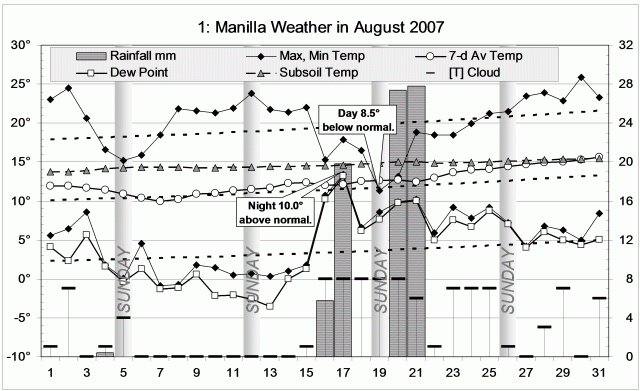
Nearly all of the welcome rain this month fell on only four days. Most of it (55 mm) was steady soaking rain through the 20th and 21st. At Tamworth airport there was rain in every hour for 37 hours.

Daily average temperatures were close to normal for August, rising slowly from 11 to 15 degrees. There were wild swings in daily maxima and minima, though. In the first half of the month, with clear skies nearly every morning, days were very warm, mainly above 20 degrees, and nights were cold, hovering around zero. There was seldom frost on the grass because the air was extremely dry. Two days had extreme temperature ranges: over 22 degrees.
That desert-like weather suddenly stopped. The overcast, rainy days from the 16th to the 21st had day-time and night-time temperatures that were almost the same. One night was 10° warmer than normal, and one day was 8.5° cooler than normal.
After the rain, the days slowly warmed up, the nights cooled down, and the skies cleared, until the 30th was desert-like again.

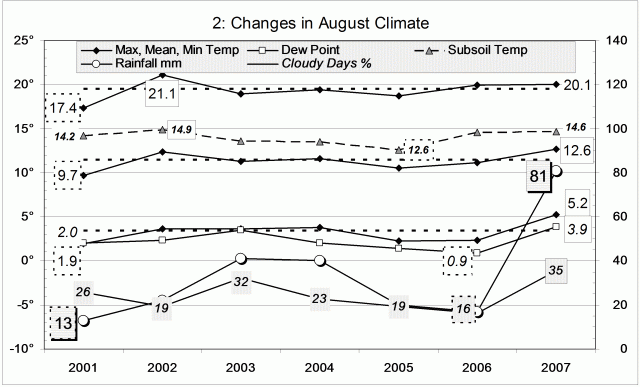
 Comparing August monthsClimate August 2007

Compared with Augusts since 2000, this August had the warmest nights by far: 5.2° compared to an average of 3.2°. This raised the daily mean temperature as well, so that it was also the warmest. However, daily maximum temperatures were not as high as they were in 2002. The August of 2001 was colder than the others; its daily maxima were especially cold.

This month was cloudy (35% mornings >4 octas) and humid (mean morning dew point 3.9°) as well as rainy.  Manilla’s total rainfall of 81 mm this month is in the 90th percentile: the fourteenth wettest August on record. Rainfall totals for more than one month are near normal.


Data. Rainfall data is from Manilla Post Office, courtesy of Phil Pinch. Dew point values before August 2005 are from Tamworth Airport 6 am data supplied by the Bureau of Meteorology. Temperature and other data are from 3 Monash Street, Manilla.
 

Fine cold days in July 2007

The daily weather logWeather log July 2007

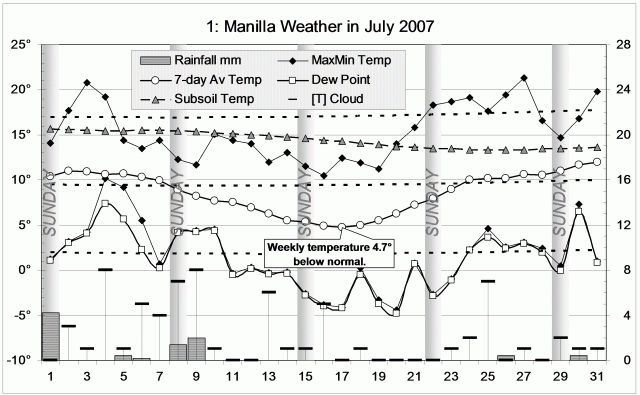
Most days in July were cooler than normal. The first chart shows cold days persisted for more than a fortnight. The coldest, on the 16th, reached only 10.5°, which is 5° below normal. However, the weather was mainly pleasant, with more fine days and fewer cloudy days than usual.

There were warm nights at each end of the month, including one 7° above normal. In the middle, there were thirteen frosty nights in a row (below +2.2 degrees in the thermometer screen). The lowest temperature for the month was minus 4.4°. There were 17 frosts in total; far fewer than the 28 frosts of July 2002. (Note added in 2014: Up to, and including 2011, minima have been below minus 4° only sixteen times:  June 2000 (5), June 2002 (1), July 2002 (6), July 2003 (2) and July 2007 (2).)

With both days and nights being so cold, the weekly average temperature went as low as 4.7° below normal on the 17th.

There were seven rain days, which is normal, but the highest reading (on the 1st) was only 4.2 mm.

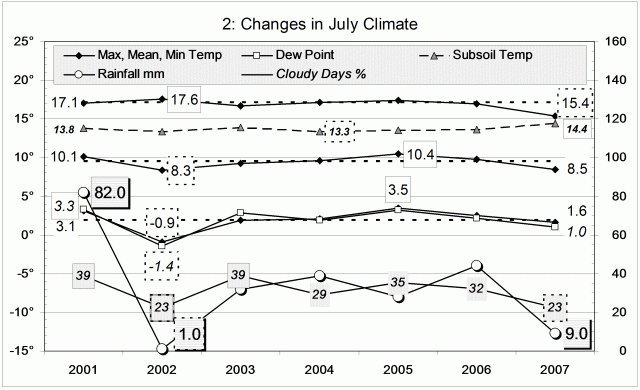
 Comparing July monthsClimate July 2007

This July had colder daytime maximum temperatures than any July in the last seven. Night-time minimum temperatures were also a bit on the low side. July 2002 stands out from the others. It had by far the lowest night-time temperatures in these years: three degrees below the average. Cloudiness was low in both 2002 and 2007.

The month’s rainfall of 9.0 mm is quite low, in the 12th percentile for July. However, there have been few dry months recently, so no totals for more than one month are as low as the 20th percentile.


Data. Rainfall data is from Manilla Post Office, courtesy of Phil Pinch. Dew point values before August 2005 are from Tamworth Airport 6 am data supplied by the Bureau of Meteorology. Temperature and other data are from 3 Monash Street, Manilla.
 

June 2007 had two very cold days

The daily weather logWeather log June 2007

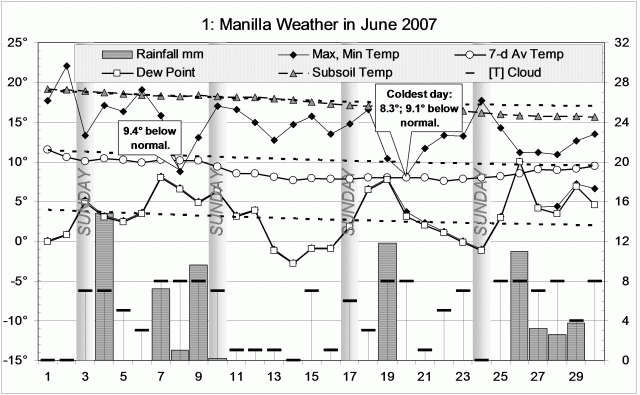
This month had two remarkably cold days: 8.8° on Friday the 8th, just before Queen’s Birthday, and 8.3° on Wednesday the 20th. (Note added: in 2014 these stand as the coldest on the record from 1999.) Nearly all days were cooler than normal. Nights varied, with one above 10 degrees and 10 frosts. The weekly mean temperature was below normal except on the first and last days.
Nine days were completely overcast, and rain fell on 10 days (usually 6) with the highest reading 14.8 mm on the 4th.

The first very cold day was related to a severe “East Coast Low” (990 hPa) that caused widespread damage and major flooding in the Hunter region. Gales and high seas caused the freighter “Pasha Bulker” to run aground.

 Comparing June monthsClimate June 2007

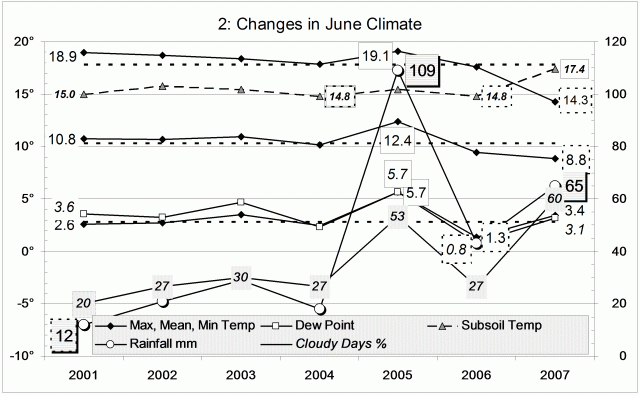
The mean daily maximum (14.3°) and mean (8.8°) temperatures this month were much lower than in the previous six June months. The daily minimum (3.4°), however, was higher than last year (1.3°). (Note added. The maximum and mean temperatures stand in 2014 as record low values for June.)

The mean daily temperature range this June month (normally 15.0°) was extremely narrow: only 10.9°. (Note added. In September 2014, this stands as a record for any calendar month. The only other months with a mean daily temperature range narrower than 13° were all in late 2010 (expressing that La Niña event): July 2010, 12.3°; August 2010, 11.9°; November 2010, 12.4°; December 2010, 11.8°.)
With 60% of mornings having more than 4 octas of cloud, this was a very cloudy month. (Note added. The only month much more cloudy than this has been June 2013, with 75% cloudy mornings.)
The total rainfall of 65 mm is in the 78th percentile for June (June 2005, with 109 mm, was in the 96th percentile). Rainfall totals for more than one month show no shortages.


Note: Although there were brief reports in the “Manilla Express” dated 10/7/07 and 17/7/07, this report in standard format was written in 2014, with the benefit of hindsight. In particular, it uses normal curves that are based on data for the decade from March 1999 to February 2009.

Data. Rainfall data is from Manilla Post Office, courtesy of Phil Pinch. Dew point values before August 2005 are from Tamworth Airport 6 am data supplied by the Bureau of Meteorology. Temperature and other data are from 3 Monash Street, Manilla.