Decadal and Inter-decadal changes in rainfall: I.

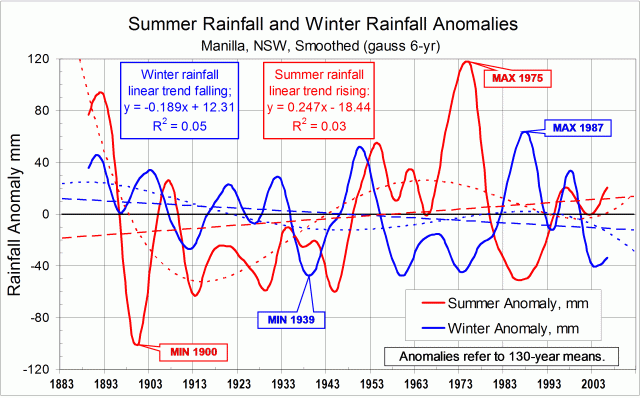
Log of smoothed summer and winter rainfall anomalies.

Part 1 of 3: The whole 130-year record

(See Notes below for data and plotting details.)

Anomalies of smoothed summer and winter rainfall

Episodes of high or low summer rainfall do not coincide with those of winter rainfall (except in 1891). Nor do they consistently oppose each other, although this is common. The summer rainfall anomaly (red) was extremely low (-101 mm) about 1900, and extremely high (+119 mm) about 1975. The winter rainfall anomaly (blue) had lower extreme values: 1939 (-48 mm) was the lowest of several low values, and 1987 (+63 mm) the highest of several high ones.

Seasonal sums and differences

I plotted the smoothed yearly value of rainfall anomaly as the sum (purple) of a winter anomaly value and that of the following summer. There was an extreme maximum in 1891 (+139 mm!), and minimal values in 1899 (-79 mm) and 1913 (-87 mm), among others.
The difference between summer and winter seasonal anomalies (orange) shows as an extreme summer excess in 1974 (+163 mm), and extreme winter excesses in 1900 (-126 mm) and 1987 (-114 mm).
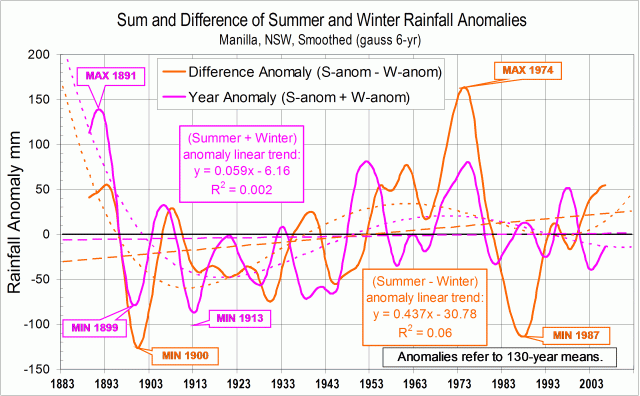
Log of smoothed sum and difference of summer and winter rainfall anomalies.

“Dreadful Thirst”

Banjo Paterson’s comic verse “City of Dreadful Thirst” refers to the town of Narromine, 300 kilometres west of Manilla.
Continue reading
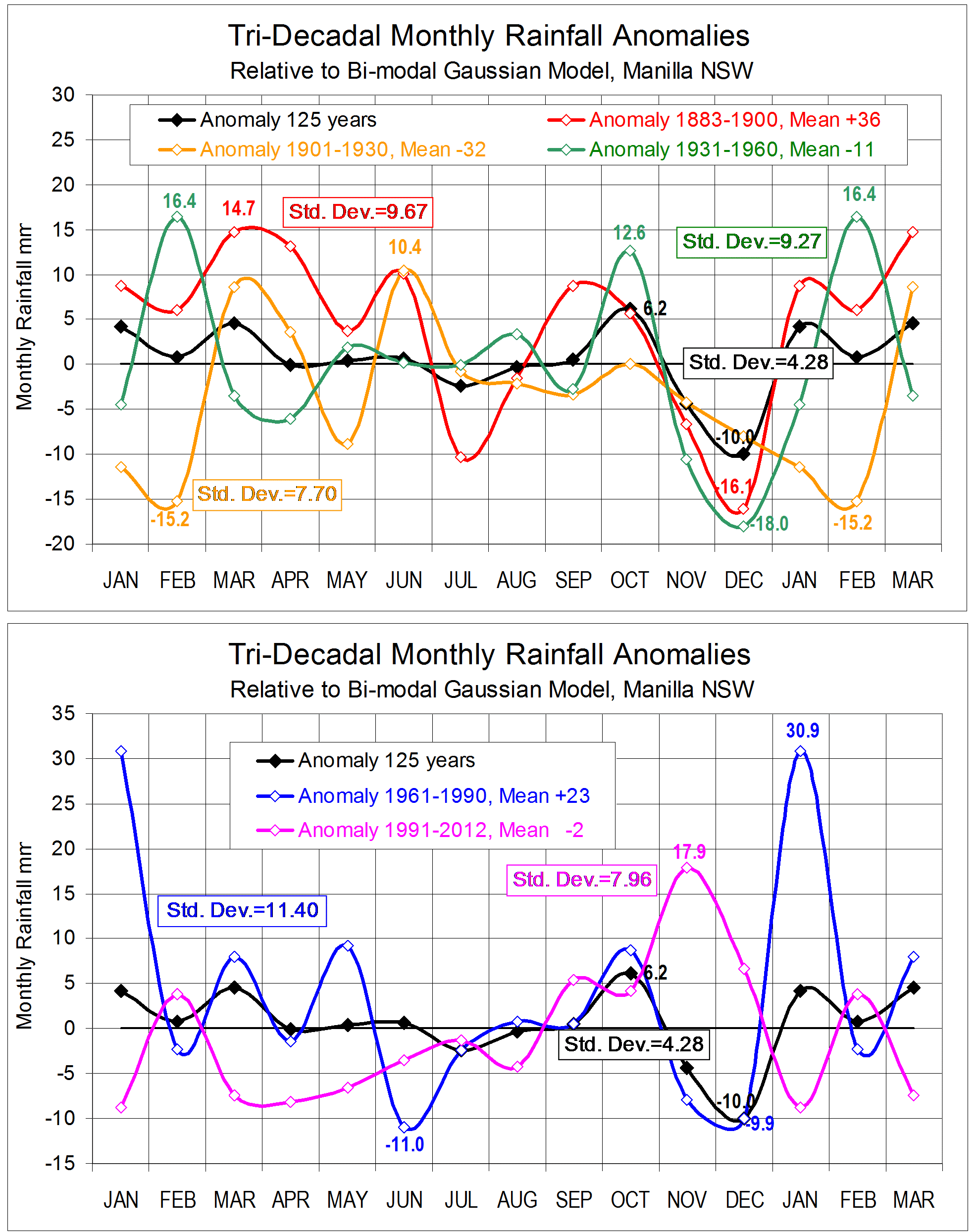
Manilla 30-year Monthly Rainfall Anomalies

Manilla 30-year Monthly Rainfall Anomalies

In an earlier post I modelled the seasonal distribution of rainfall at Manilla, NSW, as a bi-modal Gaussian distribution with a higher Gaussian peak very close to the summer solstice and a lower one very close to the winter solstice.
Monthly discrepancies of the 125-year average from the model are small. They are plotted in black on each of the two graphs here. Only two months could not be made to fit the model well: October has 6.2 mm more rain than expected, and December has 10.0 mm less.
The graphs show anomalies from the model for each of five “epochs” of three decades (or less). They are:
1883 to 1900 – “19th Century” (19thC)
1901 to 1930 – “World War I” (WW I)
1931 to 1960 – “World War II” (WW II)
1961 to 1990 – “BoM Normal Period” (BoM)
1991 to 2012 – “21st Century” (21stC)
Continue reading

A Seasonal Rainfall Model for Manilla, NSW

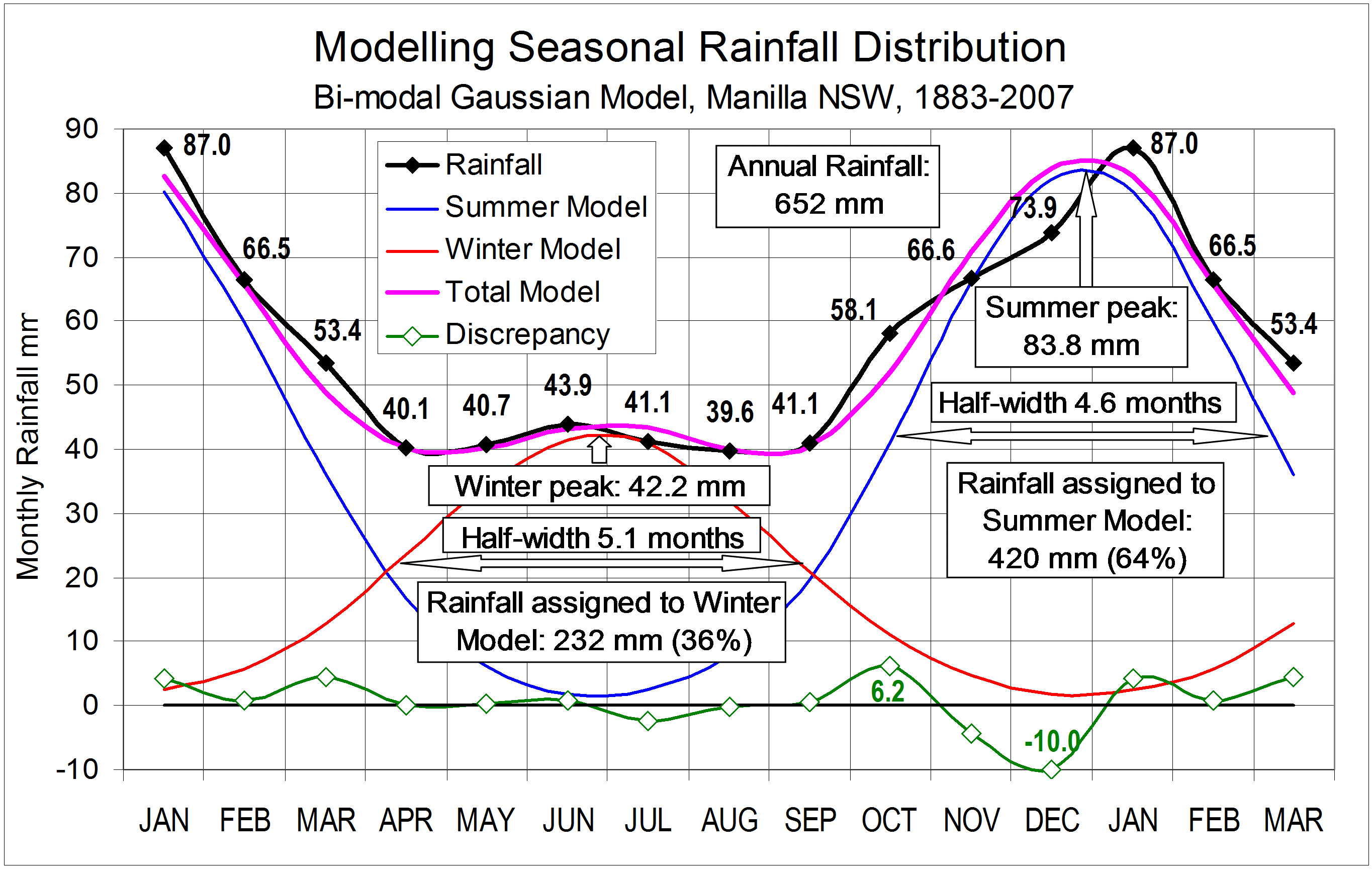
Model of seasonal rainfall, Manilla

At 31 degrees south latitude, Manilla, in eastern Australia, lies between the winter rainfall regime of the westerly belt and the summer regime of the monsoon. Much more rain falls at Manilla in summer than in winter.
On this graph, the rainfall distribution by calendar months is shown by the black line and numbers (mm) . This is the average curve for the 125-year period from the first observations in 1883 up to 2007. For any shorter period the curve is not smooth. This record is scarcely long enough to yield a stable estimate of the seasonal pattern. Continue reading