November 2019: one warm week

Bushfire smoke

Manilla View 18-11-2019

One week, beginning on the 20th, was 5.4° warmer than normal. The night of the 22nd did not get cooler than 24.0°, making it the 5th warmest November night in this century. (One night in November 2009 had been 27.8°, the warmest night of any month.) In other weeks of this month, temperatures were normal.
Most days were dry and sunny. However, days early and late in the month were cloudy, with high dew points and narrow daily temperature ranges. Six of these days had rain, with the highest reading 16.4 mm on the 4th.
Smoke from coastal bushfires reduced visibility from the 17th to the 29th. On the 18th, visibility was only one kilometre, as shown in the photo.
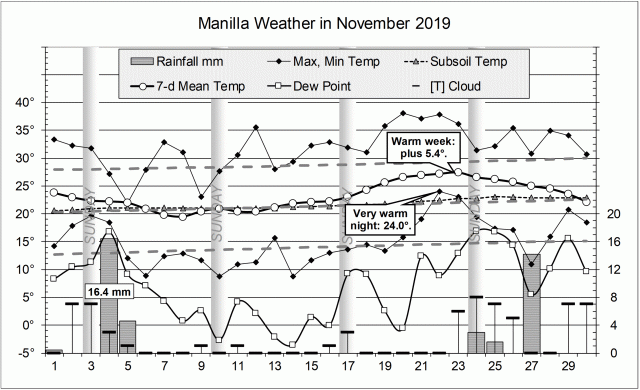
November 2019 weather log

Comparing November months

Although this month was warm. other November months have been warmer: in 2002, 2009, 2012, and 2014. All of these had especially warm days. While days this month averaged 31.8°, days in November 2009 averaged 34.3°. The coolest recent November was in 2017.
This was a dry month but, by various measures, not as dry as in 2002, 2009, 2014 or 2016. The rainfall total of 40.2 mm is in the 27th percentile.
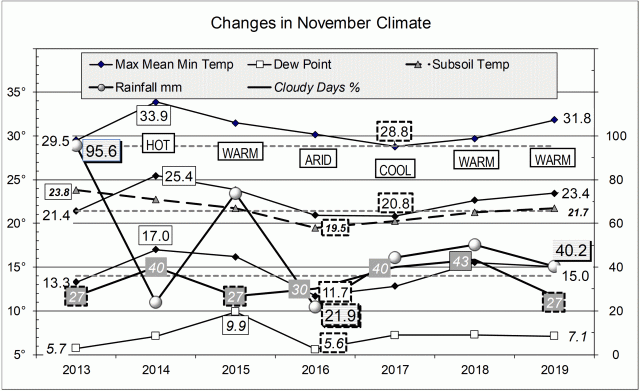
November climate

Drought

I will report separately on the on-going drought that continues to break low-rainfall records at durations of 15-months and longer.


Data. A Bureau of Meteorology automatic rain gauge operates in the museum yard. From 17 March 2017, 9 am daily readings are published as Manilla Museum, Station 55312.  These reports use that rainfall data when it is available. Recording resumed on 20 July 2019.
My estimates of early morning dew point have drifted anomalously low. From August 2019, I use data from the Tamworth Airport published graphs.
All other data, including subsoil at 750 mm, are from 3 Monash Street, Manilla.
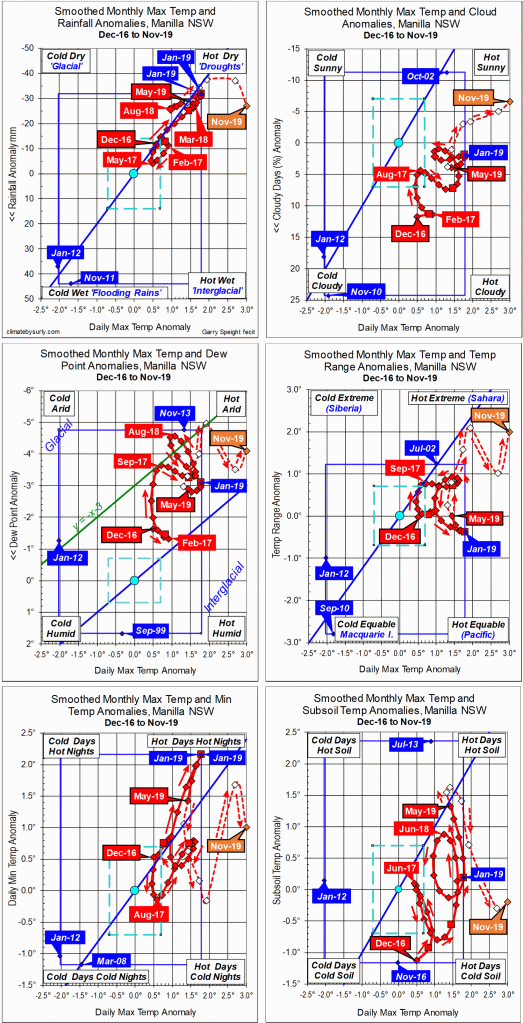
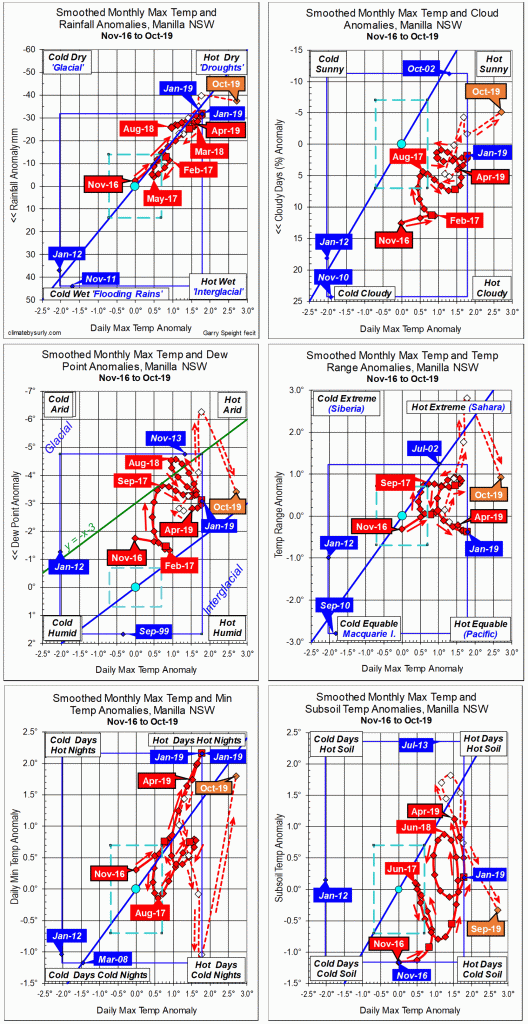
3-year trends to November 2019

November just like October

3-year trends to November 2019

November raw anomaly data (orange)

Temperatures

Daily maximum temperature anomaly (all x-axes): now three degrees above normal.
Daily minimum temperature anomaly (lower left): remains high.
Subsoil temperature anomaly (lower right): still near normal.

Moistures (moist is at the bottom)

Rainfall anomaly (upper left): still very low.
Cloudiness anomaly (upper right): still normal.
Dew point anomaly (middle left): still rather low.
Daily temperature range anomaly (middle right): has risen back to high.

 Latest fully smoothed data (red) includes autumn 2019

Smoothed anomaly values are now available for the autumn (MAM) of 2019. Generally they show a steady retreat from the extreme (smoothed) anomaly values of January. Rainfall anomaly rose, while daily maximum temperature anomaly fell. Daily minimum temperature anomaly fell rapidly, and subsoil temperature anomaly rose rapidly. Cloudiness and dew point changed little. Temperature range anomaly, which had decreased slowly to January, began to increase again.


Notes:

January data points are marked by squares.

Smoothing Continue reading

3-year trends to October 2019

October hot days and nights

3-year trends to October 2019

October raw anomaly data (orange)

Temperatures

Daily maximum temperature anomaly (all x-axes): one degree above the maximum for smoothed values.
Daily minimum temperature anomaly (lower left): has jumped from very low to very high.
Subsoil temperature anomaly (lower right): back to normal again.

Moistures (moist is at the bottom)

Rainfall anomaly (upper left): extremely low.
Cloudiness anomaly (upper right): normal.
Dew point anomaly (middle left): now not very low.
Daily temperature range anomaly (middle right): has fallen from extremely high to near normal.

 Latest fully smoothed data (red), for April 2019

The latest smoothed anomaly values (April 2019) all show a further retreat from the extreme drought values of the summer of 2018-19.

Rainfall and temperature trajectory Sep2016 toFeb 2019The situation is little different from two months ago, as I discussed with an enlarged graph of temperature and rainfall anomalies in the post “Hot and dry records in January 2019”.


Notes:

January data points are marked by squares.

Smoothing Continue reading

Warm, dry October 2019

White box tree

My old E. albens.

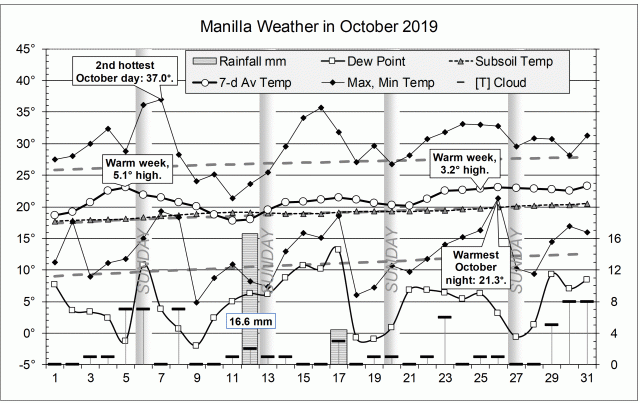
The first week was 5 deg warmer than average, and the fourth and fifth weeks were also warm. The 7th of the month, at 37°, was the second hottest October day in this century, then the night of the 25th, at 21.3°, was the warmest October night.
Most days were sunny. Rain was recorded on the 12th (16.6 mm) and the 17th (4.4 mm).

October 2019 weather log

Comparing October months

This was the second-warmest October of the new century by all three temperature measures: daily max: 29.7°; daily mean: 21.2°; and daily min: 12.7°. The warmest had been October 2015, with 30.2°, 21.7°, and 13.1°.
It was a dry month but, by various measures, not as dry as in 2013 or 2014.
The rainfall total of 21.0 mm is in the 16th percentile, and the 20th driest on record.

October climate

Drought

I will report separately on the on-going drought that continues to break low-rainfall records at durations of 15-months and longer.


Data. A Bureau of Meteorology automatic rain gauge operates in the museum yard. From 17 March 2017, 9 am daily readings are published as Manilla Museum, Station 55312.  These reports use that rainfall data when it is available. Recording resumed on 20 July 2019.
My estimates of early morning dew point have drifted anomalously low. From August 2019, I use data from the Tamworth Airport published graphs.
All other data, including subsoil at 750 mm, are from 3 Monash Street, Manilla.

3-year trends to September 2019

September extreme and arid

3-year climate trends to September 2019

September raw anomaly data (orange)

Temperatures

Daily maximum temperature anomaly (all x-axes): near the maximum for smoothed values.
Daily minimum temperature anomaly (lower left): has rapidly fallen very low.
Subsoil temperature anomaly (lower right): near normal again.

Moistures (moist is at the bottom)

Rainfall anomaly (upper left): extremely low.
Cloudiness anomaly (upper right): normal.
Dew point anomaly (middle left): now very low (arid).
Daily temperature range anomaly (middle right): extremely high.

 Latest fully smoothed data (red), for March 2019

Latest smoothed anomaly values (March 2019) all show a retreat from the extreme drought values of the summer of 2018-19.


Notes:

January data points are marked by squares.

Smoothing Continue reading