March 2016 had a warm dry spell

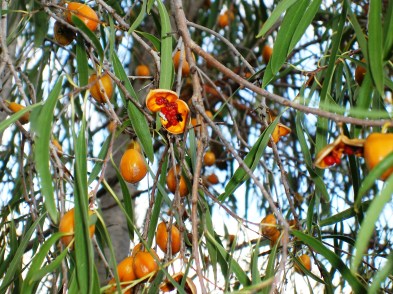
Photo of Pittosporum berries

“Native Apricots”

In the first half of March the average weekly temperature was more than three degrees above normal. Nine days had maxima above 35°, when the month usually has only one. However, no day reached 40°, as happened in March last year (20/03/15).
No rain fell in this time: the period of 43 days between February 4 and March 19 may have been the seventh longest rain-free period in 133 years. (No official record is now kept.)
Normal weather returned in the second half of the month. I recorded 20.8 mm of rain on the 19th, and further rain on the 30th and 31st.
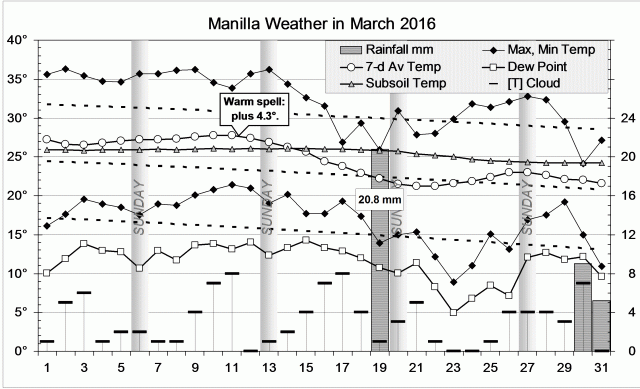
Weather log for March 2016

Comparing March months

Despite the cool change, this was the warmest March of the new century. Daily maxima, minima, and means were all 2° above average. The subsoil temperature was also 1° high, as in March 2012 and 2013, but not as high as in 2007 (2° high).
This was not a dry month. The moisture indicators cloudiness, humidity, and (low) daily temperature range were just slightly on the dry side.
The total rainfall of 35mm was below the average of 53 mm, but in the 46th percentile, not far below the median. Again, there are no serious rainfall shortages for totals for any number of months. In fact, the five-month total of 362 mm is high, in the 81st percentile. Ponds persist in Greenhatch Creek.
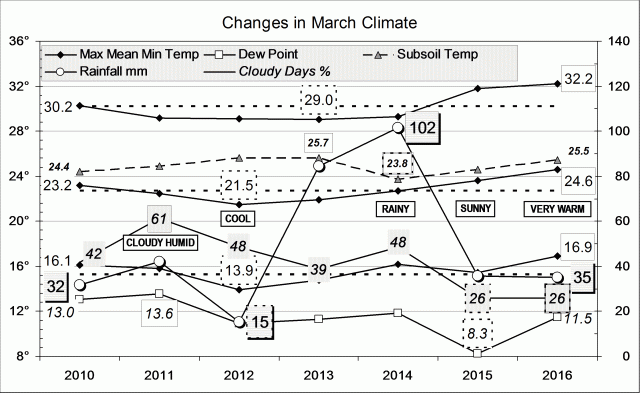
Climate graph for March 2016.


Data. All data, including subsoil at 750 mm, are from 3 Monash Street, Manilla. Rainfall data up to 26/3/15 is from Manilla Post Office, Station 055031.
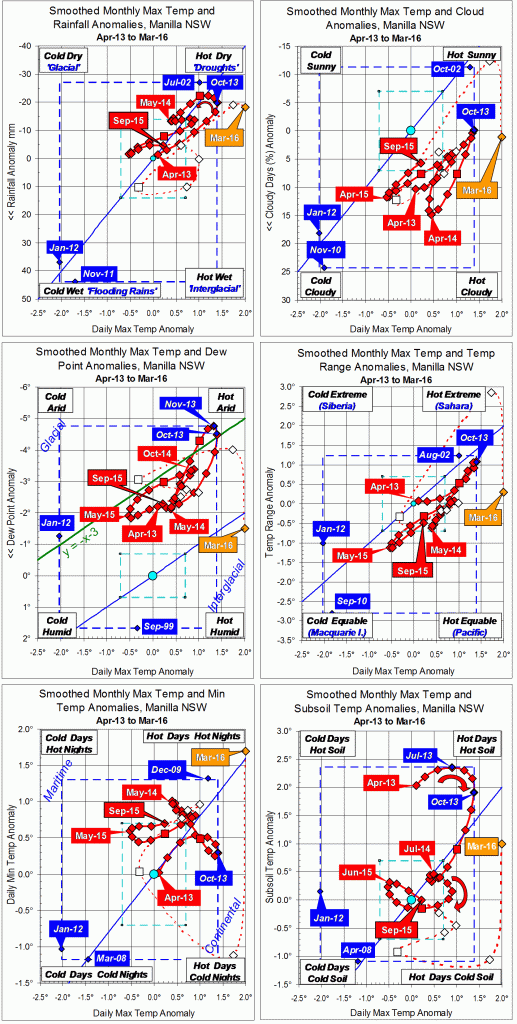
3-year trends to March 2016

Parametric plots of smoothed climate variables at Manilla
“March 2016 like March 2015”

Trends to March 2016

March raw anomaly data (orange)

In March 2016, raw values for nearly all measured climate anomalies moved close to normal. The exceptions were daily maximum temperature (x-axis), which remained very high as in February, and daily minimum temperature (lower left graph), which rose from very low to very high. Raw anomaly values for this month are similar to those of March 2015, a year ago. This is not evident on these graphs. As March 2015 came in a cool period, smoothed values of its temperatures are low. The original raw values are shown in the graphs for that earlier date.

 Fully smoothed data (red)

The latest fully-smoothed data is for September 2015. Values were near normal and trending warmer and perhaps drier.


Note:

Fully smoothed data – Gaussian smoothing with half-width 6 months – are plotted in red, partly smoothed data uncoloured, and raw data for the last data point in orange. January data points are marked by squares.
Blue diamonds and the dashed blue rectangle show the extreme values in the fully smoothed data record since September 1999.

Normal values are based on averages for the decade from March 1999.* They appear on these graphs as a turquoise (turquoise) circle at the origin (0,0). A range of anomalies called “normal” is shown by a dashed rectangle in aqua (aqua). For values in degrees, the assigned normal range is +/-0.7°; for cloudiness, +/-7%; for monthly rainfall, +/-14 mm.

 * Normal values for rainfall are based on averages for the 125 years beginning 1883.

Summer 2015-16 cool then warm

Photo of San Pedro cactus blooming

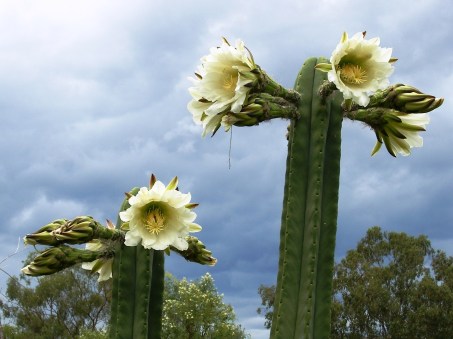
San Pedro cactus blooms

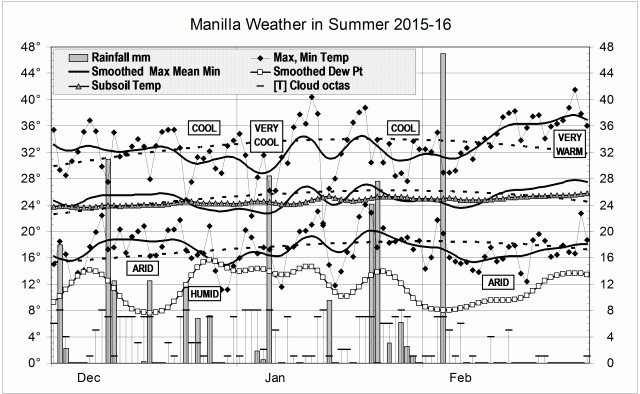
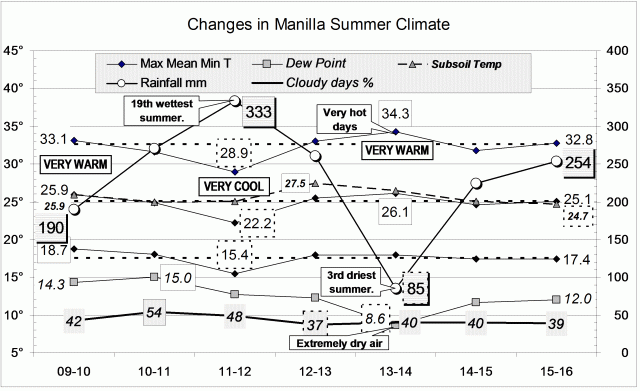
Taken as a whole, this summer was nearer to normal than last summer. Several numbers were close to average: daily maximum temperature, daily mean temperature, daily minimum temperature, and daily temperature range. The mean early morning dew point was rather low, while the cloudiness and total rainfall were a little high.
There were two very hot days over 40° (the usual number) and 29 hot days over 35° (just 6 more than usual).

Weather log for summer 2015-16A very cool spell came in early December, between other cool spells in late November and late December. Then, from mid-February through to early autumn, the weather was very warm. With this warmth came dry air, a wide daily temperature range, and sunny skies.
The total rainfall of 253.6 mm was above the summer average of 227 mm. After 20 rain days (the usual number), rainfall ceased on the 4th of February. Had it continued, the total might have reached a very wet 350 mm.

Climate log for summer 2015-16.


All data, including subsoil at 750 mm, are from 3 Monash Street, Manilla. Rainfall data up to 26/3/15 is from Manilla Post Office, Station 055031.
February 2016: hot, dry days

Photo of cooba blossom

Cooba in February

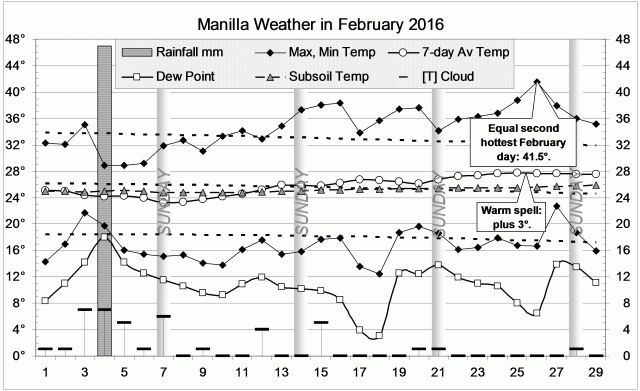
Weekly average temperatures began 2 or 3 degrees low, but ended with a long warm spell 3 degrees high, that extended into March. Days were especially hot, with the 26th reaching 41.5°, the equal second hottest February day. Nights were seldom very warm, and the early morning of the 26th was 25° cooler than the afternoon.
Few days were cloudy, none of them late in the month
Rain fell only on the 3rd, as three heavy showers of 7mm, 27mm and 13mm. The second shower, at 5pm, had the most intense rain of the new century: 27 mm in less than 27 minutes. Bureau of Meteorology data show that such a half-hour storm, yielding 1 mm of rain per minute, has only a 10% chance of happening here in any year. It is a “one in 10 year event”.

Weather log February 2016

Comparing February months

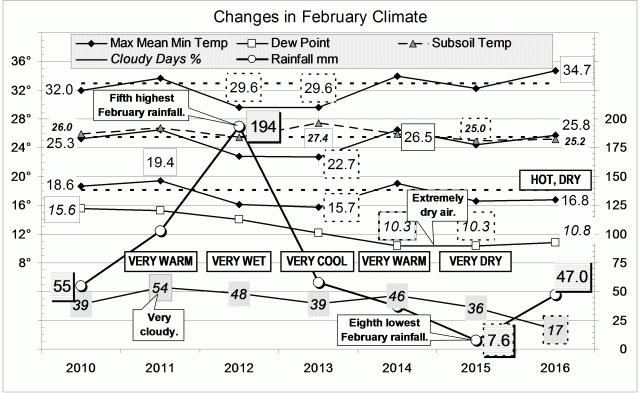
While the average temperature for the month (25.8°) was normal, the mean daily maximum, at 34.7°, was the hottest for February. A rather low mean daily minimum, (16.8°) made the daily temperature range a desert-like 17.9°. This is the widest February value, 3.5° wider than normal.
Other signs of dryness were the low early morning dew point (10.8°) and very few cloudy mornings (17%).
The total rainfall of 47mm was below the average of 67 mm, but right on the median 50th percentile: just half of all February months have been wetter. Again, there are no serious rainfall shortages for totals for any number of months.

Climate for February 2016


Data. All data, including subsoil at 750 mm, are from 3 Monash Street, Manilla. Rainfall data up to 26/3/15 is from Manilla Post Office, Station 055031.
3-year trends to February 2016

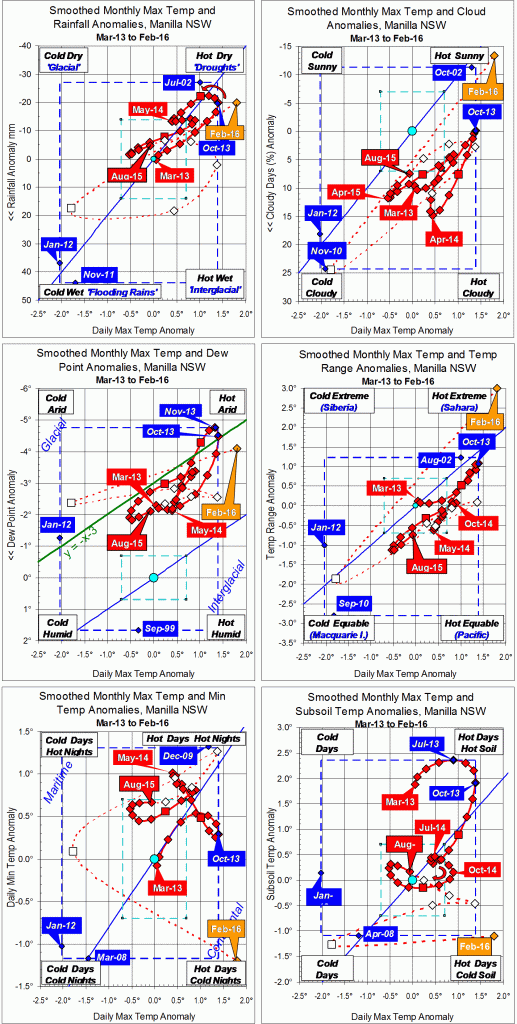
Parametric plots of smoothed climate variables at Manilla
“February 2016: suddenly dry”

Trends to February 2016

February raw anomaly data (orange)

In February 2016, raw values for anomalies moved completely across the graphs, from cool and moist in January, generally to hot and dry in February. As in a desert, days became very hot, skies very sunny, and the daily temperature range extreme. Rainfall and dew point were only moderately low, while daily minimum temperature abruptly fell very low, and subsoil temperature remained very low.

 Fully smoothed data (red)

With data for August 2015, fully smoothed data is complete for winter 2015. Most anomalies for the season were quite small, but were moving away from cool and moist.

Trend lines on the graphs

Manilla’s climate often oscillates along the blue trend lines from bottom left (cool, moist) to top right (hot, dry) on the graphs. The climate can also vary along other axes.
In this time-frame the sub-soil temperature anomaly (bottom right graph) is leading the daily maximum temperature anomaly by several months. That produces a clockwise looping pattern. The daily minimum temperature anomaly (bottom left graph) sometimes moves with the daily maximum temperature anomaly, and sometimes moves against it. When against it, as from July 2013 to October 2014, the climate swings between Continental, with hot days and cool nights (as October 2013), and Maritime, with cool days and warm nights (as May 2014). Current raw data for January and February 2016 show a large swing from Maritime to Continental.


Note:

Fully smoothed data – Gaussian smoothing with half-width 6 months – are plotted in red, partly smoothed data uncoloured, and raw data for the last data point in orange. January data points are marked by squares.
Blue diamonds and the dashed blue rectangle show the extreme values in the fully smoothed data record since September 1999.

Normal values are based on averages for the decade from March 1999.* They appear on these graphs as a turquoise (turquoise) circle at the origin (0,0). A range of anomalies called “normal” is shown by a dashed rectangle in aqua (aqua). For values in degrees, the assigned normal range is +/-0.7°; for cloudiness, +/-7%; for monthly rainfall, +/-14 mm.

 * Normal values for rainfall are based on averages for the 125 years beginning 1883.