Warm, dry October 2019

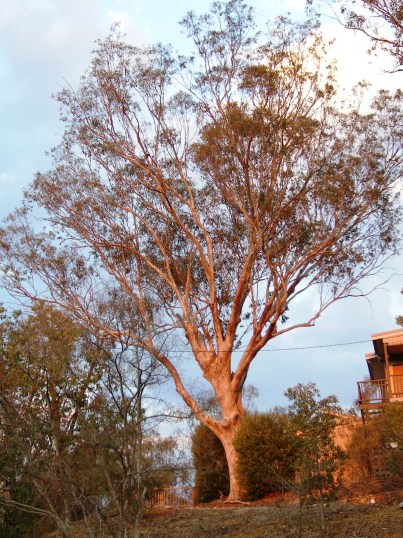
White box tree

My old E. albens.

The first week was 5 deg warmer than average, and the fourth and fifth weeks were also warm. The 7th of the month, at 37°, was the second hottest October day in this century, then the night of the 25th, at 21.3°, was the warmest October night.
Most days were sunny. Rain was recorded on the 12th (16.6 mm) and the 17th (4.4 mm).
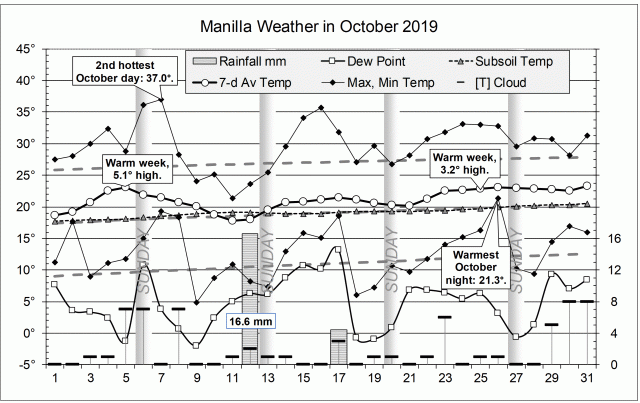
October 2019 weather log

Comparing October months

This was the second-warmest October of the new century by all three temperature measures: daily max: 29.7°; daily mean: 21.2°; and daily min: 12.7°. The warmest had been October 2015, with 30.2°, 21.7°, and 13.1°.
It was a dry month but, by various measures, not as dry as in 2013 or 2014.
The rainfall total of 21.0 mm is in the 16th percentile, and the 20th driest on record.

October climate

Drought

I will report separately on the on-going drought that continues to break low-rainfall records at durations of 15-months and longer.


Data. A Bureau of Meteorology automatic rain gauge operates in the museum yard. From 17 March 2017, 9 am daily readings are published as Manilla Museum, Station 55312.  These reports use that rainfall data when it is available. Recording resumed on 20 July 2019.
My estimates of early morning dew point have drifted anomalously low. From August 2019, I use data from the Tamworth Airport published graphs.
All other data, including subsoil at 750 mm, are from 3 Monash Street, Manilla.
Dry September 2019

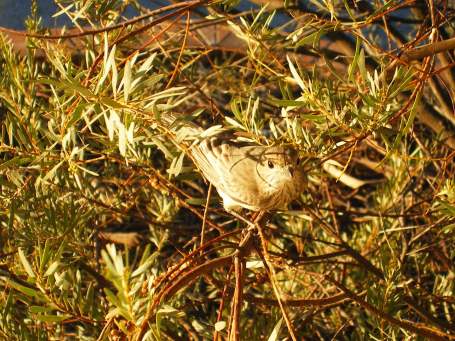
Striped Honeyeater at the Window

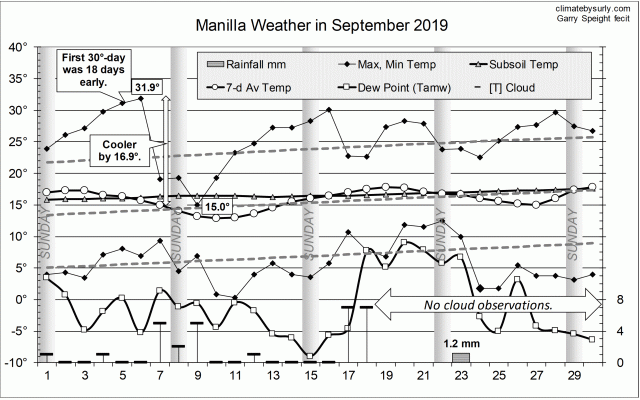
Weekly average temperatures increased slightly, as is usual in September. Unusual day temperatures came early in the month. The first 30-degree day was 18 days early, on the 5th. The next day was the hottest of the month, at 31.9°. During the next 3 days the daily maximum temperature fell by 16.9° to 15.0°, the coldest day of the month. Later, temperatures stayed closer to normal. There were 4 frosts, the usual number.
At the Manilla Museum, 1.2 mm of rain was recorded on the 23rd.

Comparing September months

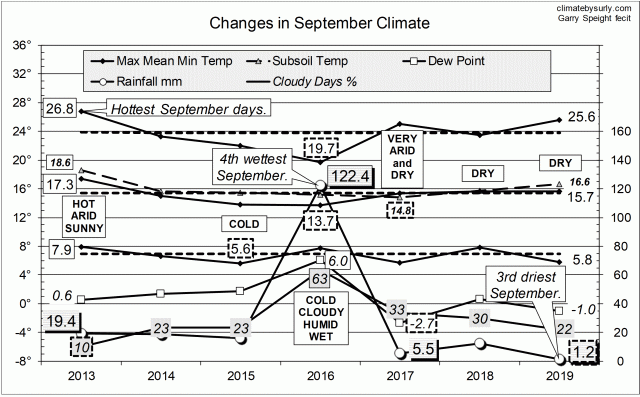
The last three September months have all been dry, with low dew points, wide daily temperature ranges and not much cloud. They have not been nearly as hot as September of 2013, however.
The rainfall total of 1.2 mm is the 3rd lowest September reading, after 0 mm in 1980 and 1 mm in 1925. By way of contrast, the second graph also includes the deluge of 122.4 mm in September 2016, the 4th wettest on record.

Drought

I will report separately on the on-going drought that continues to break low-rainfall records at durations of 15-months and longer.


Data. A Bureau of Meteorology automatic rain gauge operates in the museum yard. From 17 March 2017, 9 am daily readings are published as Manilla Museum, Station 55312.  These reports use that rainfall data when it is available. Recording resumed on 20 July 2019.
My estimates of early morning dew point have drifted anomalously low. From August 2019, I use data from the Tamworth Airport published graphs.
All other data, including subsoil at 750 mm, are from 3 Monash Street, Manilla.
Dry August 2019

Blossoms on a street tree

August Blossoms

Weekly average temperatures steadily increased as is usual in August. Day and night temperatures also were not far from normal. The warmest day reached 27.1° and the coldest night -1.4°. There were 15 frosts, the usual number.
Rain was recorded at the Manilla Museum on the 1st (1.0 mm) and the 12th (4.6 mm).

Weather log august 2019

Comparing August months

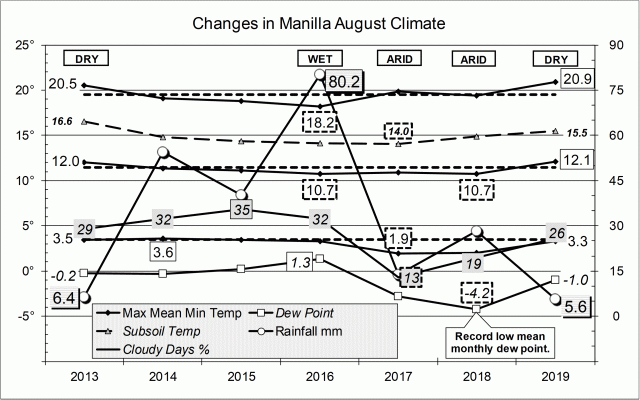
This dry month was very like August 2013, with the August months between being mainly rather cooler and wetter.
The mean maximum temperature (20.9°) was above normal by 1.4°, and the mean minimum temperature (3.3°) was near normal. The resulting temperature range (17.6°) was high, agreeing with the rather low cloudiness (26%) and dew point (-1.0°).
The rainfall total of 5.6 mm is at the 8th percentile for August.

Climate for August 2019

Drought

I have reported separately on the on-going drought that continues to break low-rainfall records at durations of 15-months and longer.


Data. A Bureau of Meteorology automatic rain gauge operates in the museum yard. From 17 March 2017, 9 am daily readings are published as Manilla Museum, Station 55312.  These reports use that rainfall data when it is available.  No 9 am readings were recorded from August 2018 to 19 July 2019. Recording resumed on 20 July 2019.
My estimates of early morning dew point have drifted anomalously low. From August 2019, I use data from the Tamworth Airport published graphs.
All other data, including subsoil at 750 mm, are from 3 Monash Street, Manilla.

July 2019 had the warmest days

Ruby Saltbush Enchylaena tomentosa

Drought-proof Ruby Saltbush

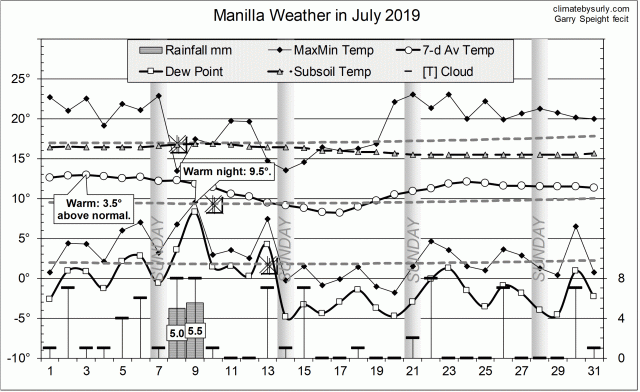
Only the middle week of July was not warmer than normal. Nearly all days and nights were above average for this coldest time of the year, but none was exceptional. No night minimum was as warm as ten degrees. There were 15 frosts (normally 17), but, as happened in July 2009 and 2010, there were no severe frosts reading below minus two degrees in the screen.
Rain was recorded on the 8th and 9th, estimated as 5.0 mm and 5.5 mm.

Weather log July 2019

Comparing July months

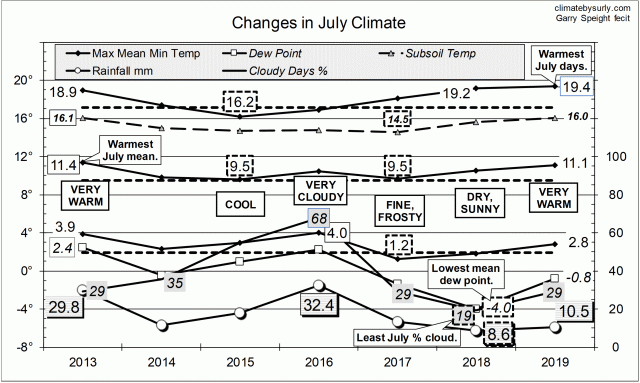
The last three July months saw maximum, mean, and minimum temperatures steadily rising, with the temperature range (17 deg) staying high. That was not true earlier in the decade: from 2008 to 2012 temperatures were steady and the daily temperature range (14 deg) was low, with cool days and warm nights. It was the case again in July 2015 and 2016, as shown here.
Indicators of moisture were again low, but not as low as in July 2018, with its record low dewpoint and cloudiness. The (estimated) rainfall total of 10.5 mm is at the 14th percentile for July.

Climate at July 2019

Drought

I have reported separately on the on-going drought that continues to break low-rainfall records at durations of 15-months and longer.


Data. A Bureau of Meteorology automatic rain gauge operates in the museum yard. From 17 March 2017, 9 am daily readings are published as Manilla Museum, Station 55312.  These reports use that rainfall data when it is available.  Since no 9 am readings have been recorded since August 2018, I have substituted my non-standard gauge readings for all days.
All other data, including subsoil at 750 mm, are from 3 Monash Street, Manilla.

June 2019 still warm and dry

Road in Manilla

The Bendemeer road

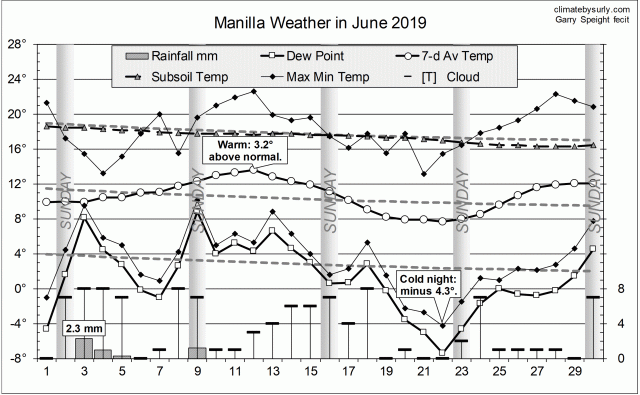
The second week was 3.2° warmer than normal, the third week cool, and the fourth warm again. There were 12 frosts (normally 13), with that on the 22nd reading minus 4.3° in the screen. It was one of only 20 readings below minus 4.0° this century.
The wettest of the four rain days registered only 2.3 mm.

Weather log June 2019

Comparing June months

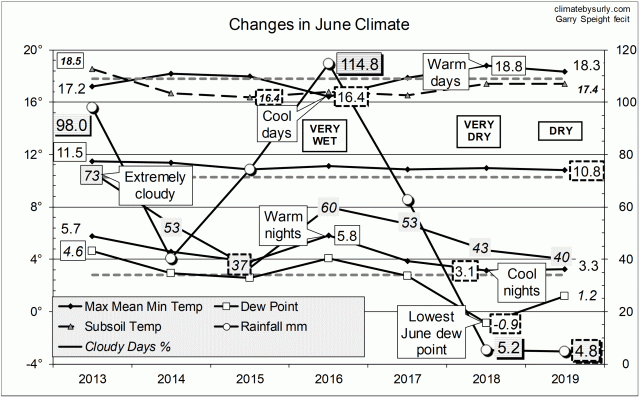
The mean temperature for June has changed little in recent years. It has slowly fallen from 11.5° in 2013 to 10.8°. That is higher by 0.5° than the 10.3° that was normal in the first decade of this century. This month’s mean daily maximum (18.3°) and mean daily minimum (3.3°) were also just 0.5° above normal.
This June was a little more moist than last June in its higher dew point and narrower daily temperature range but less moist in cloudiness and rainfall. The low total rainfall of 4.8 mm (est.) is at the 8th percentile, the 12th driest June on record.
Climate for June 2019

Drought

The on-going unprecedented drought is reported in another post.


Data. A Bureau of Meteorology automatic rain gauge operates in the museum yard. From 17 March 2017, 9 am daily readings are published as Manilla Museum, Station 55312.  These reports use that rainfall data when it is available.  Since no 9 am readings have been recorded since August 2018, I have substituted my non-standard gauge readings for all days.
All other data, including subsoil at 750 mm, are from 3 Monash Street, Manilla.