
Droughts and flooding rains at Manilla NSW were related in a way that is remarkable and unexpected.
Part 1. Graphical logs
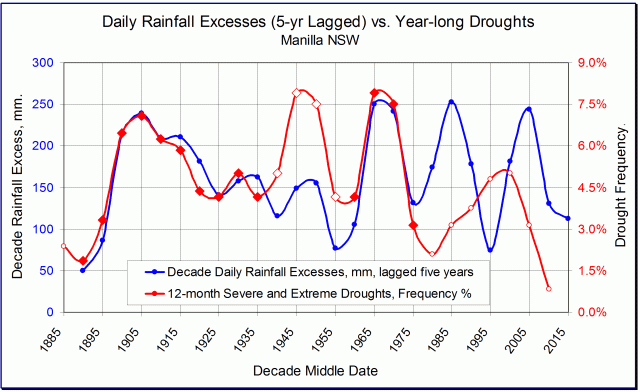
As the first graph shows, for most of the 130-year record year-long droughts came in direct proportion to very heavy daily rainfall five years earlier. (For data details, see Note 1, below.)
The match between these two variables is astonishing. Both are based on rainfall readings, but they are scarcely related. Excessive daily rainfalls are transient extreme weather events; 12-month droughts are an aspect of climate.
Mackellar’s “Droughts and flooding rains”
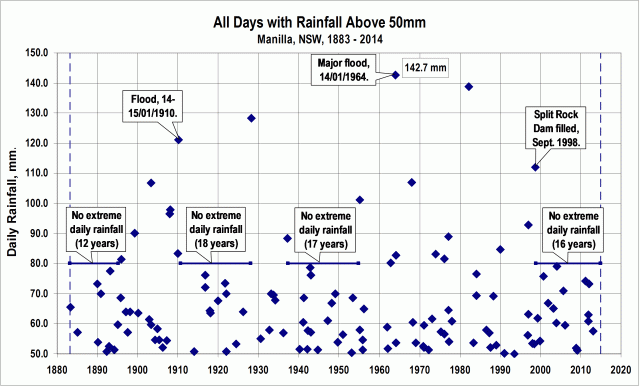
Dorothea Mackellar’s famous line * is more apt for this graph than for other graphs where I use “flooding rains” to mean periods unlike drought. (See Note 2. below.) The rains and droughts that I plot here both bring hardship. Severe droughts lasting one year are among the worst of droughts: long enough to use up reserves, and not so long as to be eased by periods of rain. The daily rainfall events plotted are the ones that cause damaging floods.
Features of the graphical log

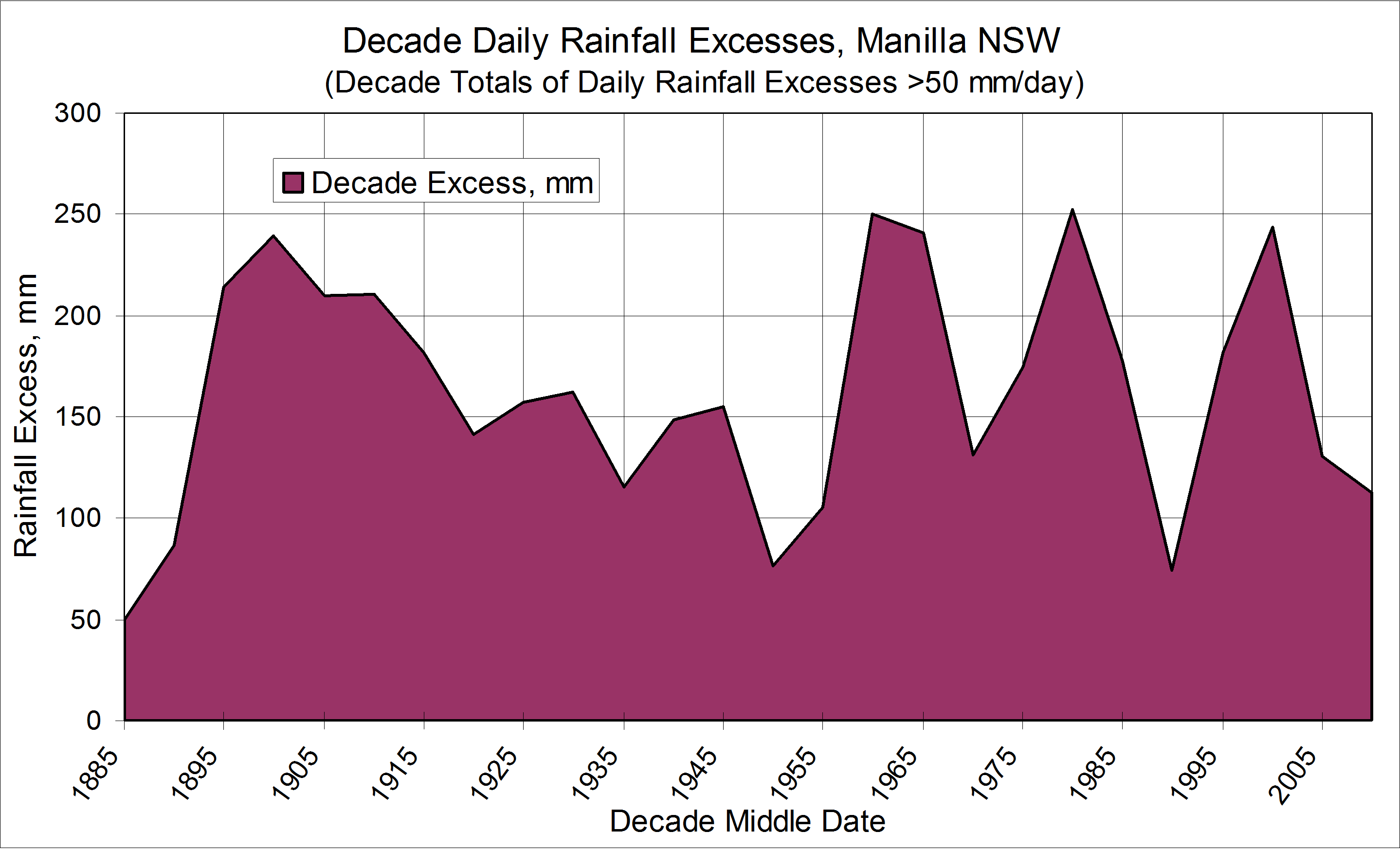
This second graph shows the data at the actual dates. Although the data points for the decade excess of heavy daily rainfall and those for frequency % of 12-month droughts have a matching pattern for much of the record, the pattern is offset. Heavy rainfall points come five years earlier than corresponding drought points. Notice that the heavy rainfalls do not (except in 1980) come squarely in gaps between droughts.
Lagging the rainfall points by five years (as in the first graph) makes some matches almost exact. Such matches occur at all data points from 1890 to 1975, except those from 1940 to 1955, where drought frequencies are relatively higher. Both variables show a two-decade-long, slow decline from 1905 to 1925. At the chosen scales, the amplitude of corresponding rises and falls are usually similar as well.
After 1975, daily rainfall oscillates through a wide amplitude with a twenty-year period, while the frequency % of drought varies Continue reading


 climate by surly