Dry, Warm August 2013

The daily weather logWeather log August 2013.

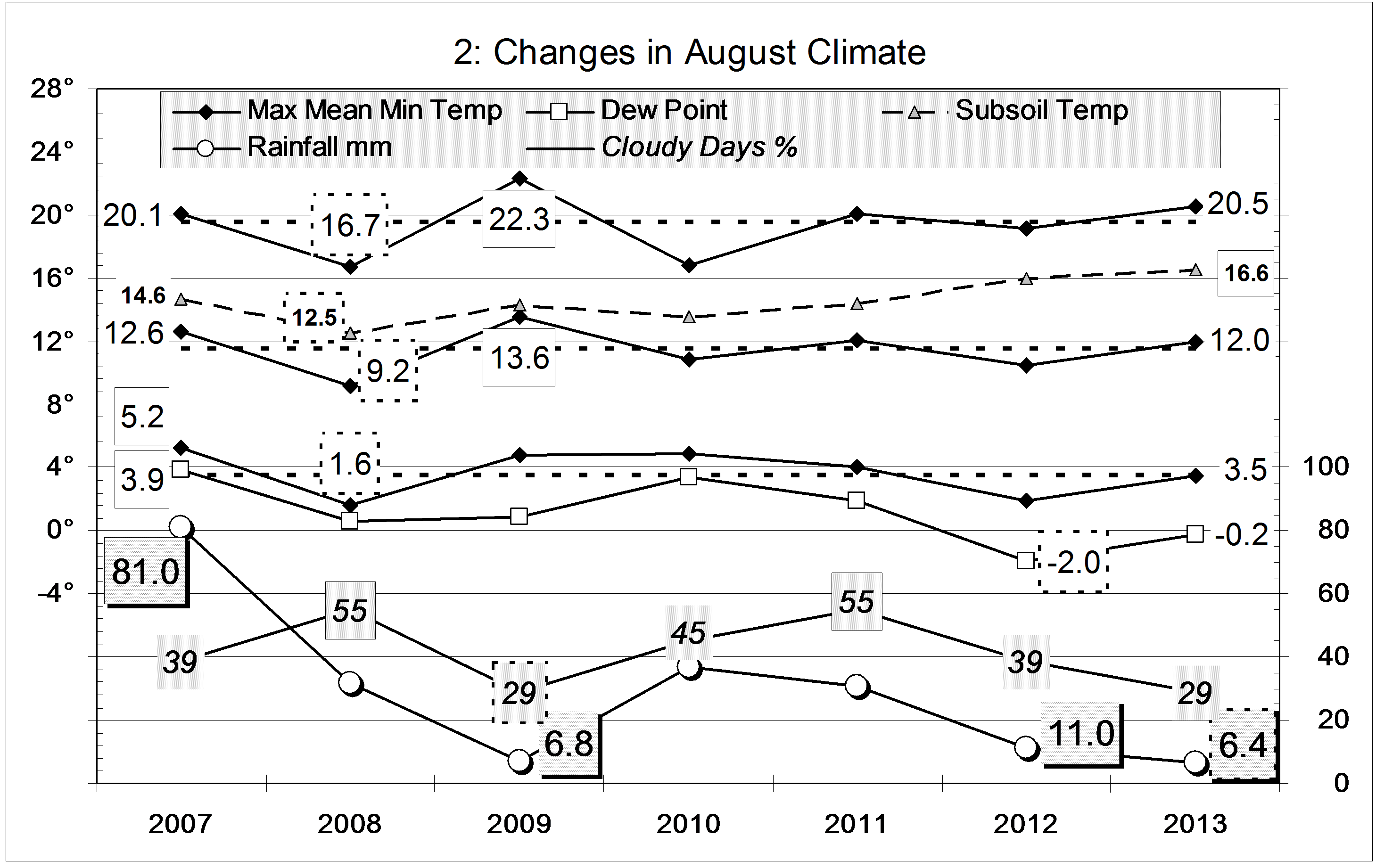
The month had no extremes of heat or cold. Frosts (10) were almost as rare as in August 2011 (9). Some overcast skies came with 5.8 mm of rain on the 17th then, from the 25th, there were five cloudless mornings bringing very warm weather. Altogether, only three days had rain (usually 6).

Comparing August monthsClimate August 2013.
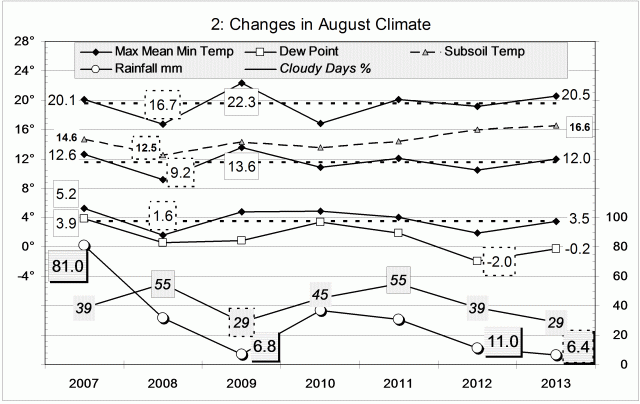
After July having temperatures two degrees above normal, this month’s maximum was only one degree up, and the minimum just on normal. While the air was not as extremely dry as it was last August, the morning dew point was still very low: 2.7 degrees below normal. In contrast, the subsoil temperature remained extremely high, at 16.6°, 2.7° above normal.
Total rainfall is far below the average of 39.5 mm. At 6.4 mm, it is in the 9th percentile: since 1888, only 10 August months have been drier. In totals for two months and more, there is no serious shortage of rainfall, although nearly all totals up to 18 months are now below the median. Totals for all longer periods (up to 360 months) are above the median.


Data. Rainfall data is from Manilla Post Office, courtesy of Phil Pinch. Temperatures, including subsoil at 750 mm, and other data are from 3 Monash Street, Manilla.

July Warmth in an Unheated House

Solar-Passive House from the NW

House at Monash St Manilla from NW

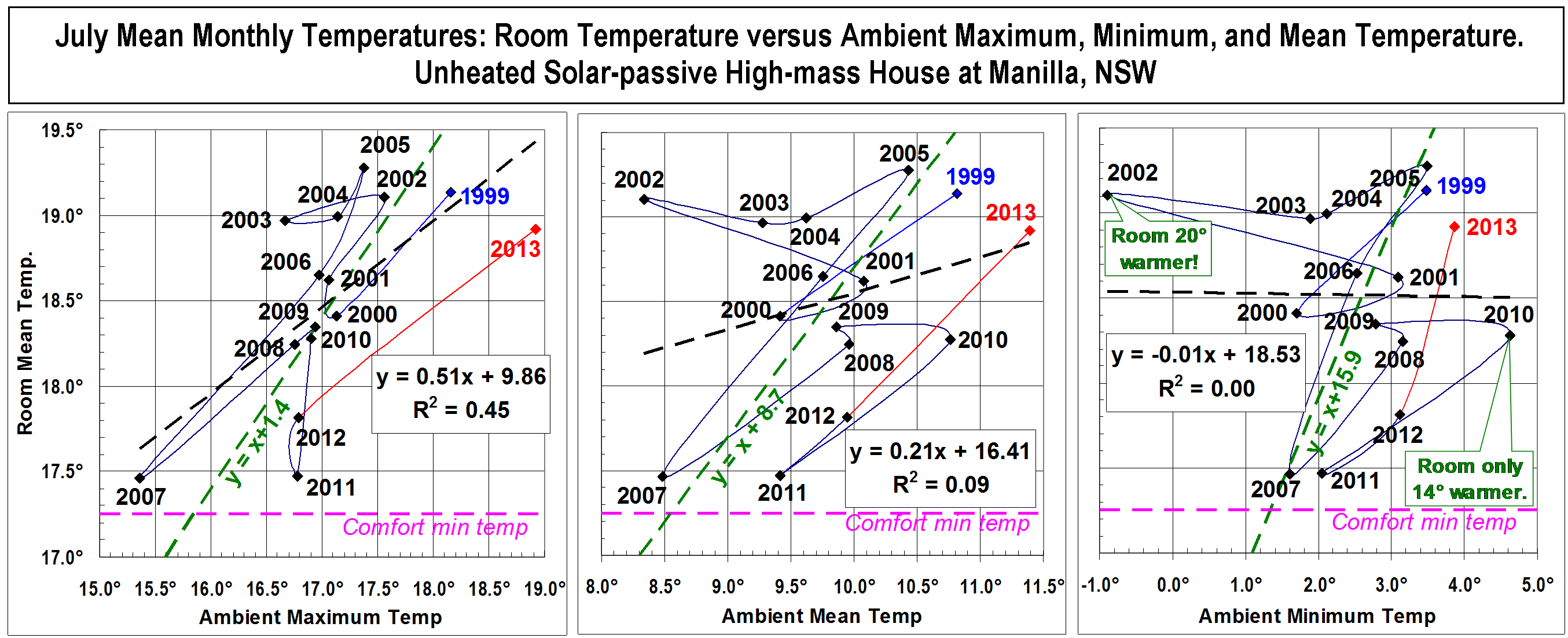
I have fifteen years of temperature data for my high-mass, solar passive, unheated house at Manilla, NSW, Australia. This article has been posted previously here. These graphs show how July temperatures indoors relate to those outdoors. Indoor maxima and minima are not shown, because they are consistently between one and two degrees above and below the indoor mean.

House and ambient temperatures, 15 July months. The house is much warmer (dashed green lines)

In July, the rooms* in this solar-passive house, heated only by the sun, are much warmer than outdoors. This is shown by the green lines on the graphs, which are drawn to pass through the middle of each cloud of data points. The middle graph shows that, as an average over 15 July months, the rooms have been 8.7 degrees warmer than outdoors. The left graph shows that the rooms have even been 1.4 degrees warmer than the daily maximum outdoor temperatures. The right graph shows that the rooms have been nearly sixteen degrees warmer than the daily minimum overnight temperatures. To stay warm in this way the house must have absorbed many hundreds of kilowatt hours of heat from the sun. I have burned a few kilowatt hours of grid power to maintain my comfort, but this cannot have warmed the house by as much as one tenth of a degree in any month. Continue reading

3-year trends to July 2013

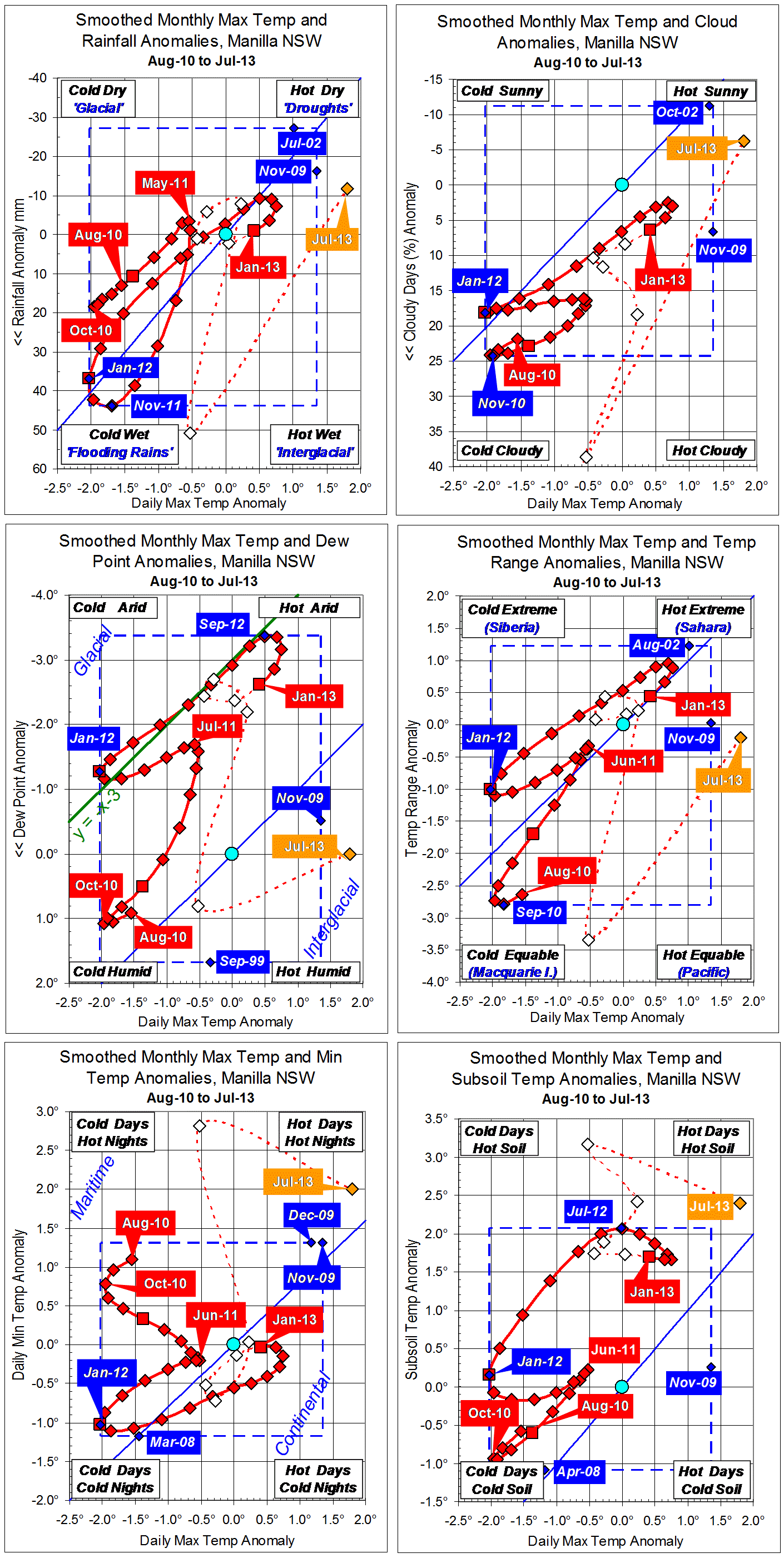
Parametric plots of smoothed climate variables at Manilla
“Very warm days and nights”Trends to July 2013.

Raw values for July showed a big jump towards hot and dry for most variables, but dew point anomaly fell only to zero. Minimum temperature and subsoil temperature fell back a little from extremely high anomaly values in June.

The fully-smoothed data point for January 2013 continues a drift towards normal from the mild drought of October.

Note:
Fully smoothed data – Gaussian smoothing with half-width 6 months – are plotted in red, partly smoothed data uncoloured, and raw data for the last data point in orange. January data points are marked by squares.
Blue diamonds and the dashed blue rectangle show the extreme values in the fully smoothed data record since September 1999.

Extremely warm July 2013

The daily weather logWeather log July 2013.

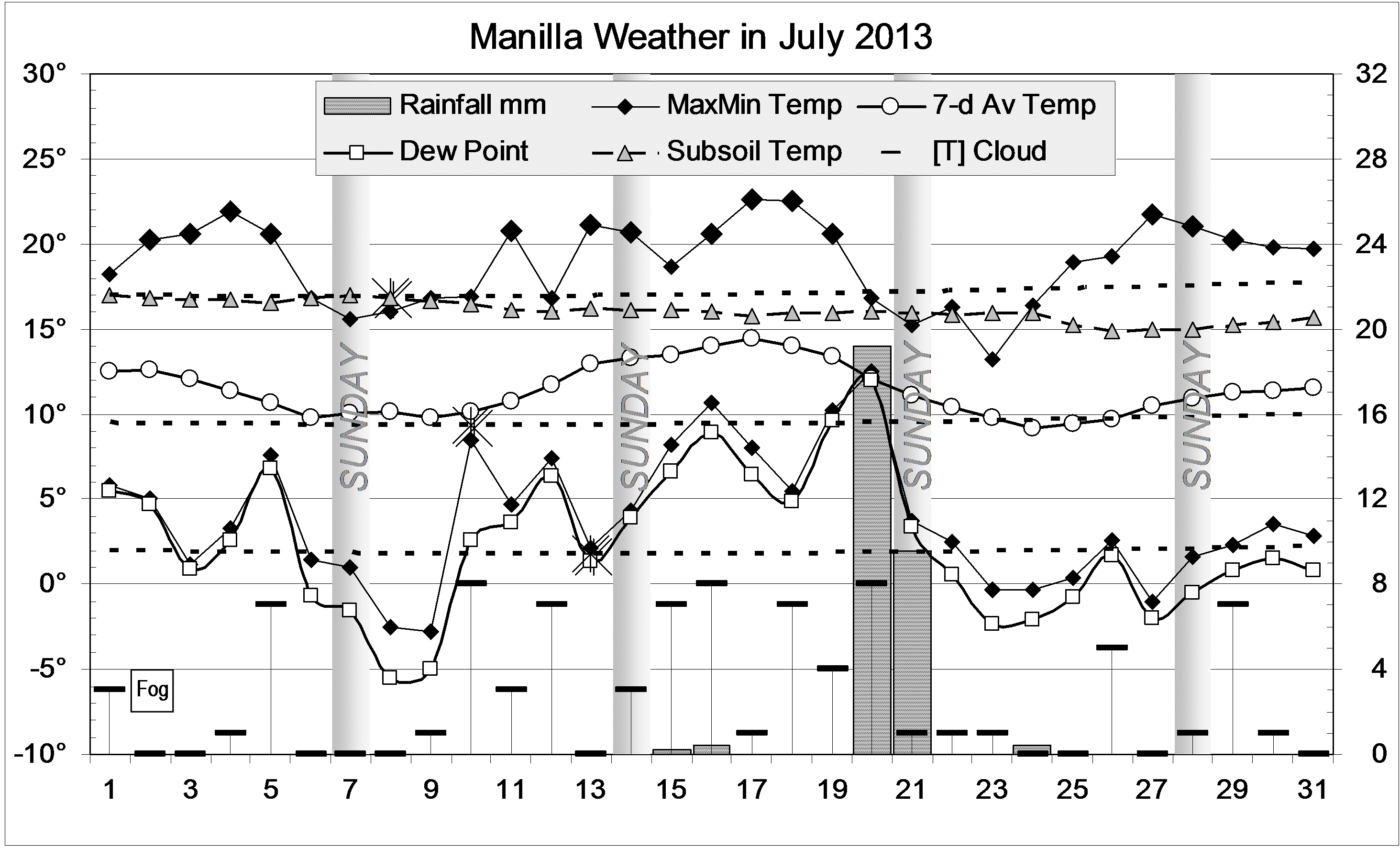
There were three warm spells and no cold spells in July. Fourteen days went over 20 degrees, instead of the usual four. There were only eleven frosts, the fewest in 15 July months (usually 17). In five rain days, two high rainfall figures came on the 20th (19.2mm) and the 21st (9.6mm).

Comparing July monthsClimate July 2013.

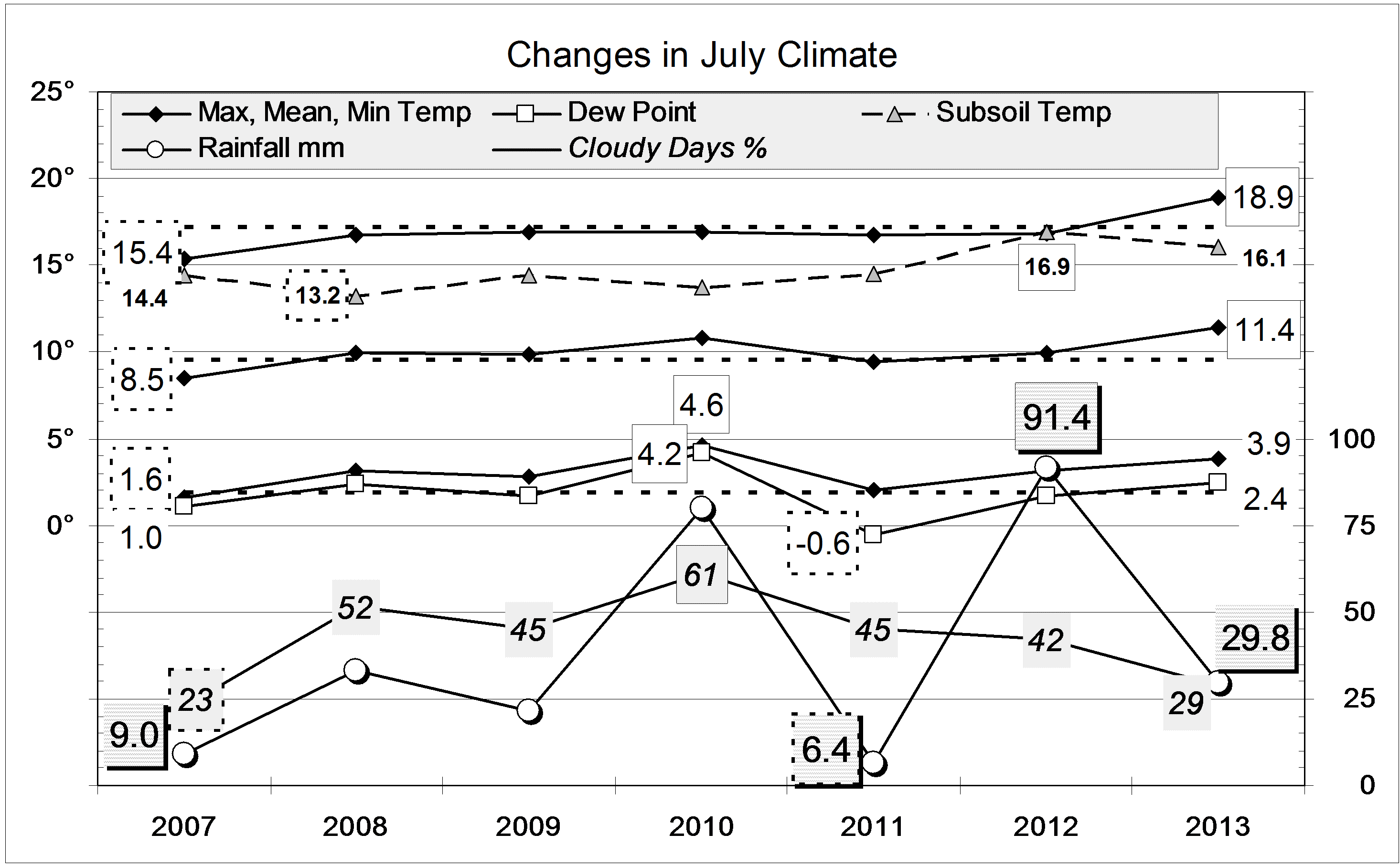
After June’s extreme cloudiness and rain, July was very near to normal in everything but temperature. The average values of daily maximum, daily minimum, and daily mean temperature were all just under two degrees above normal. The daily maximum and daily mean are 15-year record high values, but the daily minimum had been higher in July 2010: 2.4 degrees above normal.
(Note: My “normal” is the ten year average from March 1999. For the official normal period 1961-1990 there are no Manilla figures (except rainfall). This month’s very high temperatures would be (perhaps) just over 2 degrees above the 1961-1990 average.)
Rainfall, at 29.8 mm, is in the 43rd percentile, a bit below the average (41.1mm). Rainfall totals for 24 months and more are very high. This accounts for the rare appearance of water flowing locally in Greenhatch Creek.


Data. Rainfall data is from Manilla Post Office, courtesy of Phil Pinch. Temperatures, including subsoil at 750 mm, and other data are from 3 Monash Street, Manilla.
Manilla 30-year Monthly Rainfall Anomalies

Manilla 30-year Monthly Rainfall Anomalies

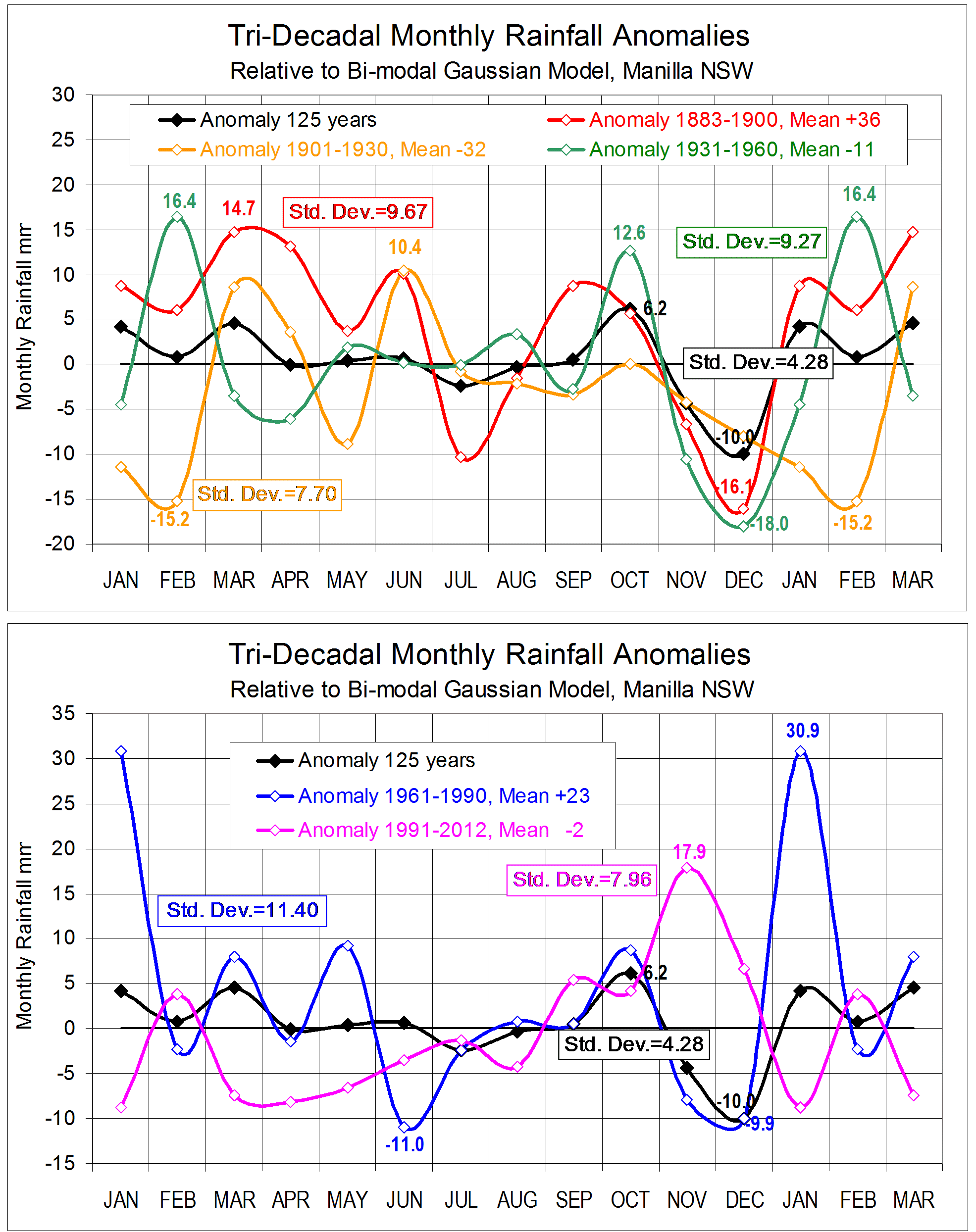
In an earlier post I modelled the seasonal distribution of rainfall at Manilla, NSW, as a bi-modal Gaussian distribution with a higher Gaussian peak very close to the summer solstice and a lower one very close to the winter solstice.
Monthly discrepancies of the 125-year average from the model are small. They are plotted in black on each of the two graphs here. Only two months could not be made to fit the model well: October has 6.2 mm more rain than expected, and December has 10.0 mm less.
The graphs show anomalies from the model for each of five “epochs” of three decades (or less). They are:
1883 to 1900 – “19th Century” (19thC)
1901 to 1930 – “World War I” (WW I)
1931 to 1960 – “World War II” (WW II)
1961 to 1990 – “BoM Normal Period” (BoM)
1991 to 2012 – “21st Century” (21stC)
Continue reading