Very Wet July 2012

The daily weather logWeather log July 2012.
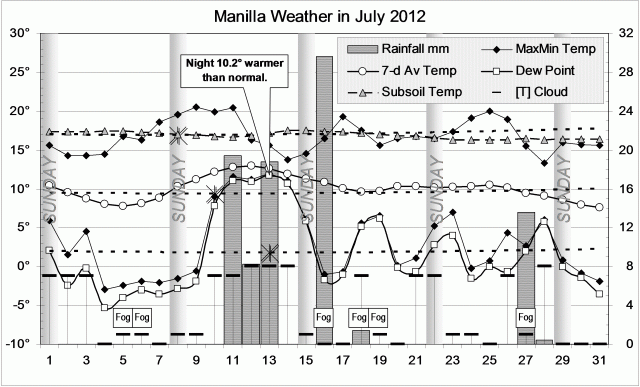
As in June, most weather features in July were normal, except for very warm nights with the heavy rain in the second week. Sixteen mornings were frosty, one down to minus three degrees. There were several early fogs in the valley.
Of seven rain readings, most were heavy. But the 29.6 mm value included three days.

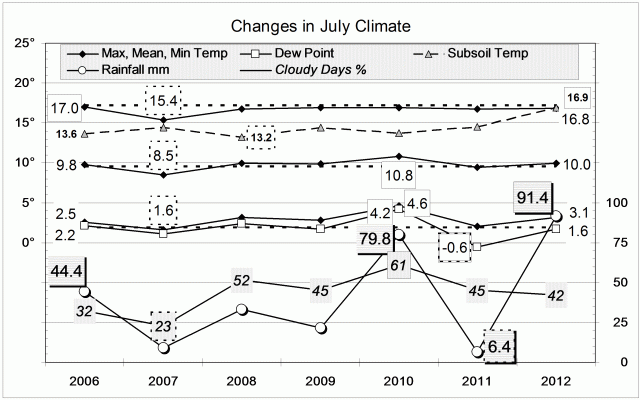
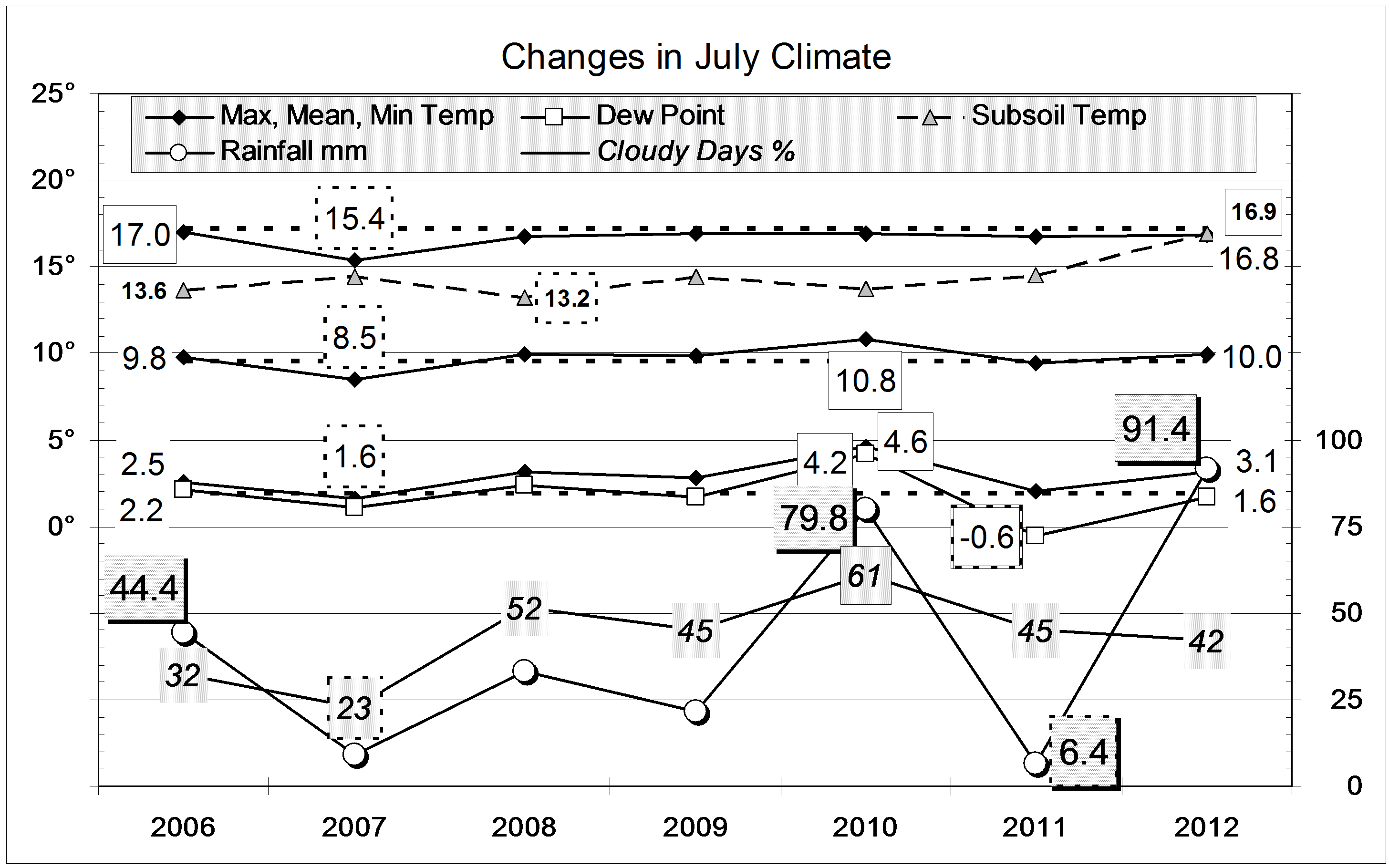
 Comparing July monthsClimate July 2012.

Other than rainfall, there is only one variable that is not on the July average: the subsoil temperature at 750 mm is again extraordinarily warm, at 16.9°, 3.2° above normal.
The rainfall total of 91.4 mm is in the 94th percentile. Only eight July months have ever been wetter. However, July 1984, at 171 mm, was nearly twice as wet. The 12-month total to the end of July (1020 mm) is extreme. In the last 50 years, only three 12-month totals have been higher: September and October 1998 and February 1984.


Data. Rainfall data is from Manilla Post Office, courtesy of Phil Pinch. Temperatures, including subsoil at 750 mm, and other data are from 3 Monash Street, Manilla.


April 2012 cloudy and wet

The daily weather logWeather log April 2012.

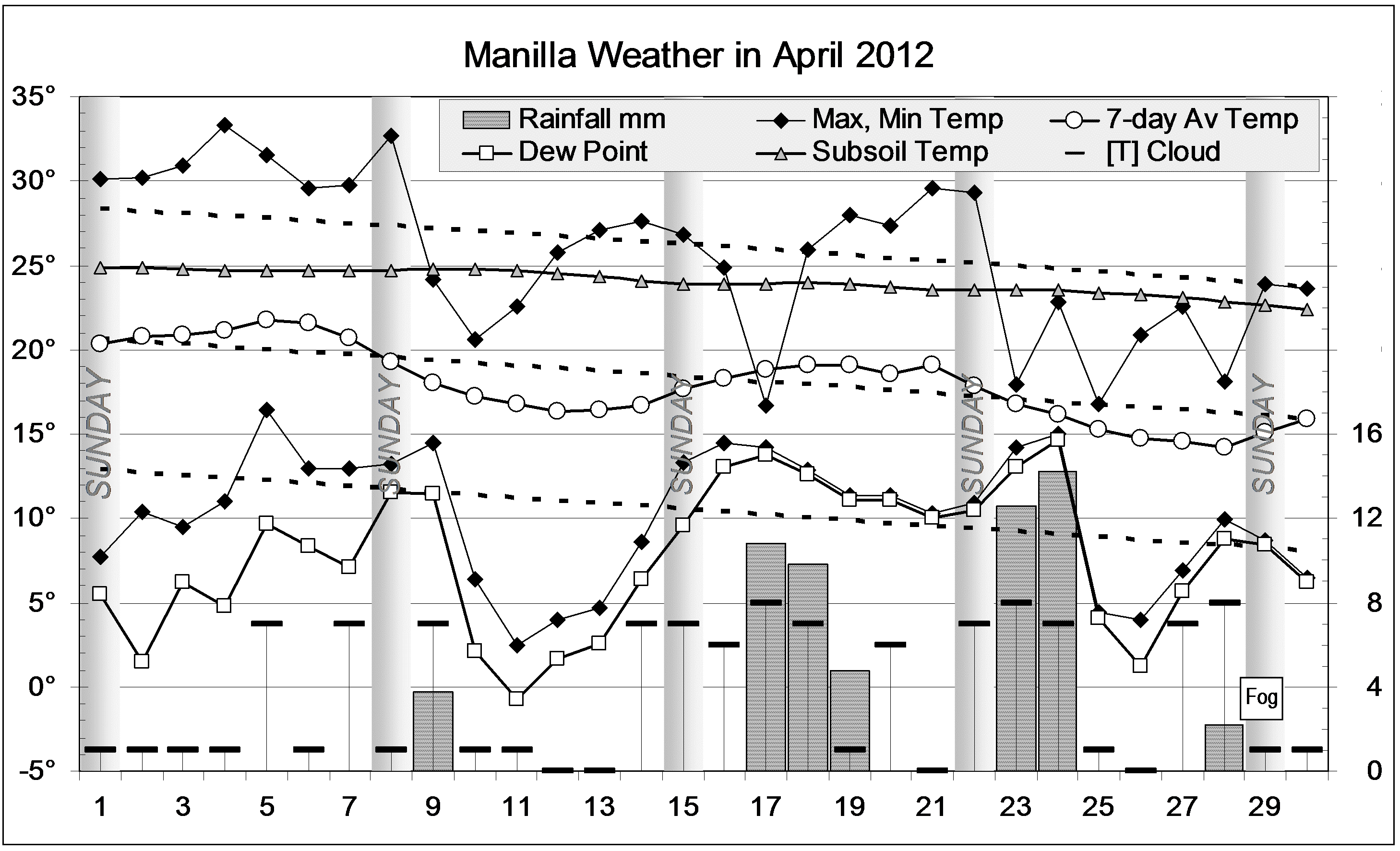
Most days had normal temperatures, but several were cool and overcast. Cold nights came during sunny spells, the coldest, on the 11th, being nine degrees below normal, but not a frost. Rain totalling 58.2 mm fell on seven rain days, mainly late in the month, with a maximum reading of 14.2 mm on the 24th.

 Comparing April monthsClimate April 2012.

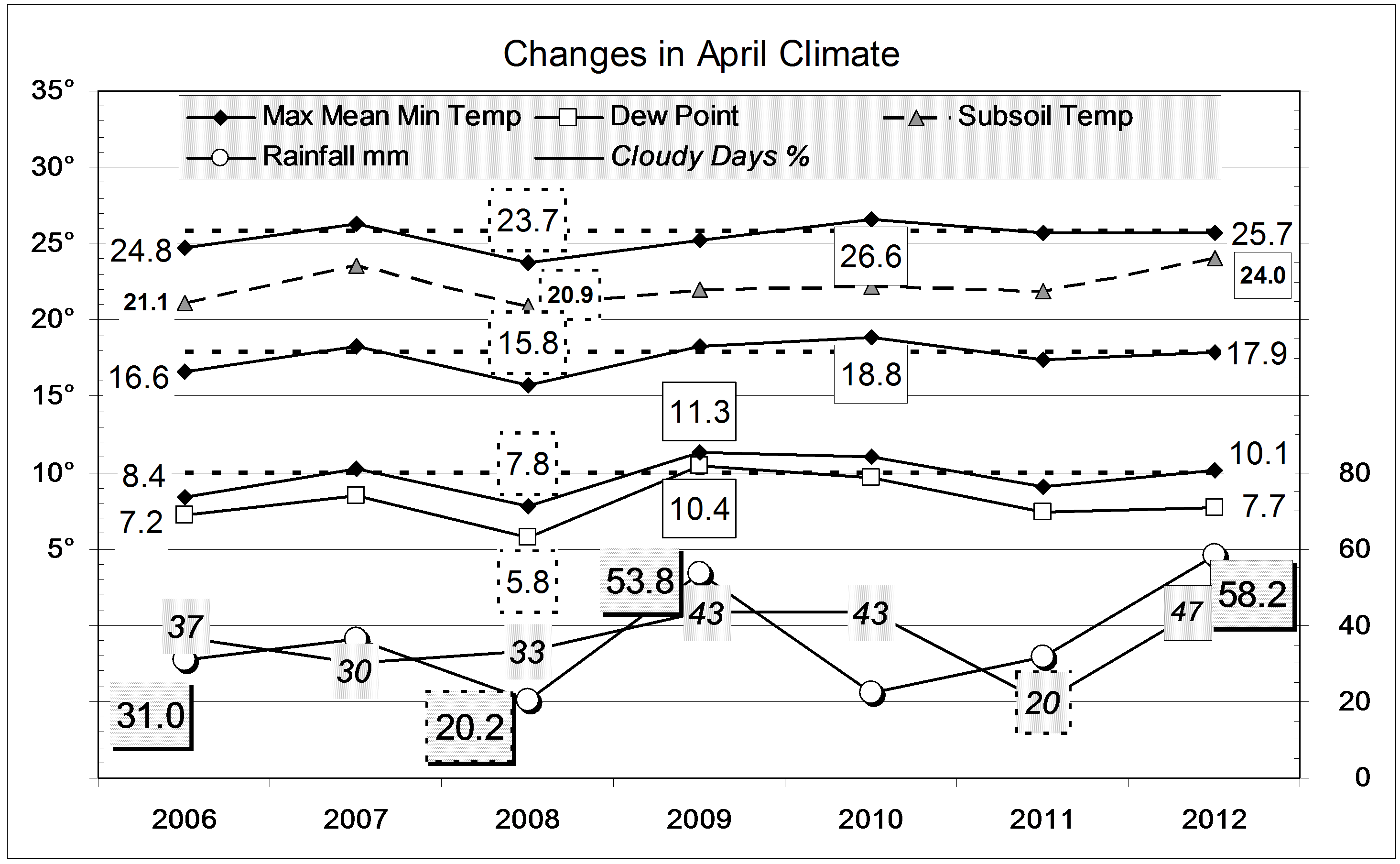
All the mean temperatures were near normal, except that subsoil temperature was the highest for April on this record: 2.1 degrees above normal.

There were more cloudy days than recorded in earlier Aprils.
The rainfall total of 58.2 mm is well above the April average of 39.3 mm: it is in the 80th percentile. The total for March and April taken together (73.6 mm) is exactly on the average. As in March, totals for periods from five months to twenty-four months are still near record high values, and no totals up to the thirty-year total are below normal.


Data. Rainfall data is from Manilla Post Office, courtesy of Phil Pinch. Temperatures, including subsoil at 750 mm, and other data are from 3 Monash Street, Manilla.


2011-12 Summer Cold and Wet

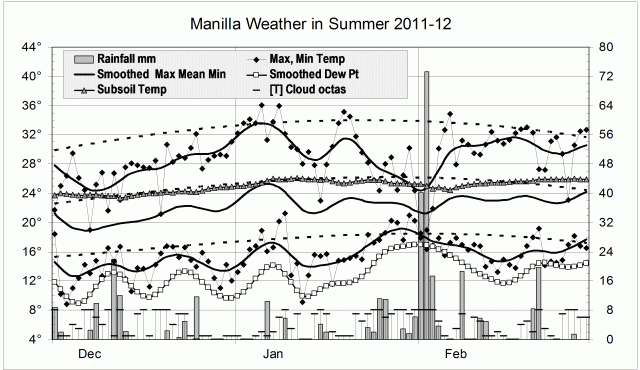
Weather log summer 2011-12.In the whole of this summer, only 3 days went over 35° (usually 23) and only 5 nights went over 20° (usually 19).

The smoothed curves of temperature reached up as high as normal only twice. In early January both days and nights were normal. Later, with persistent rain around the 1st of February, nights warmed to normal, but days were extremely cold.
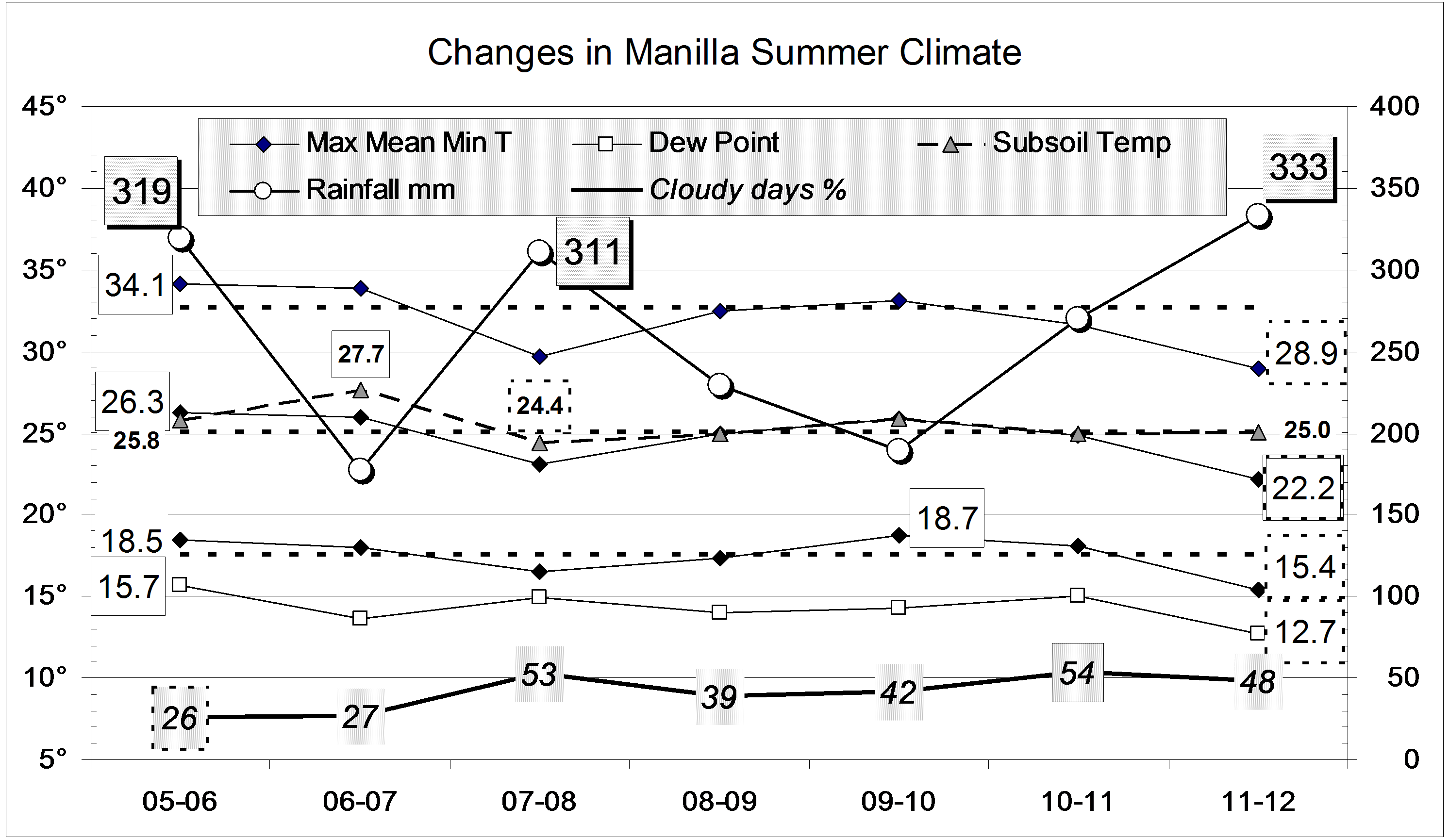
All the mean daily temperatures were the lowest in 13 summers: maximum 28.9°, mean 22.2°, and minimum 15.4°. Summer ’07-’08 had been just slightly warmer.
Daily temperature range this summer (13.5°) was very narrow, as in ’07-’08 and ’10-’11; all wet summers with very cloudy skies. Strangely, this cloudy wet summer had very low humidity, with morning Dew Point (12.7°) the lowest on this record.
While this was a very wet summer, at 333 mm, it was only the 19th wettest (86th percentile), and not much wetter than summers 4, 6, and 8 years ago.Climate summer 2011-12.

Data. Rainfall data is from Manilla Post Office, courtesy of Phil Pinch. Temperatures, including subsoil at 750 mm, and other data are from 3 Monash Street, Manilla.

Spring 2011 the wettest by far


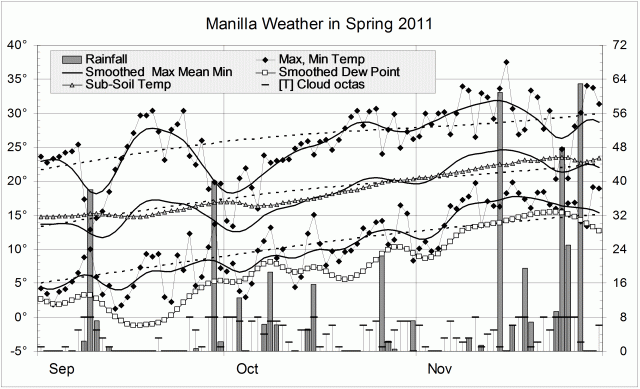
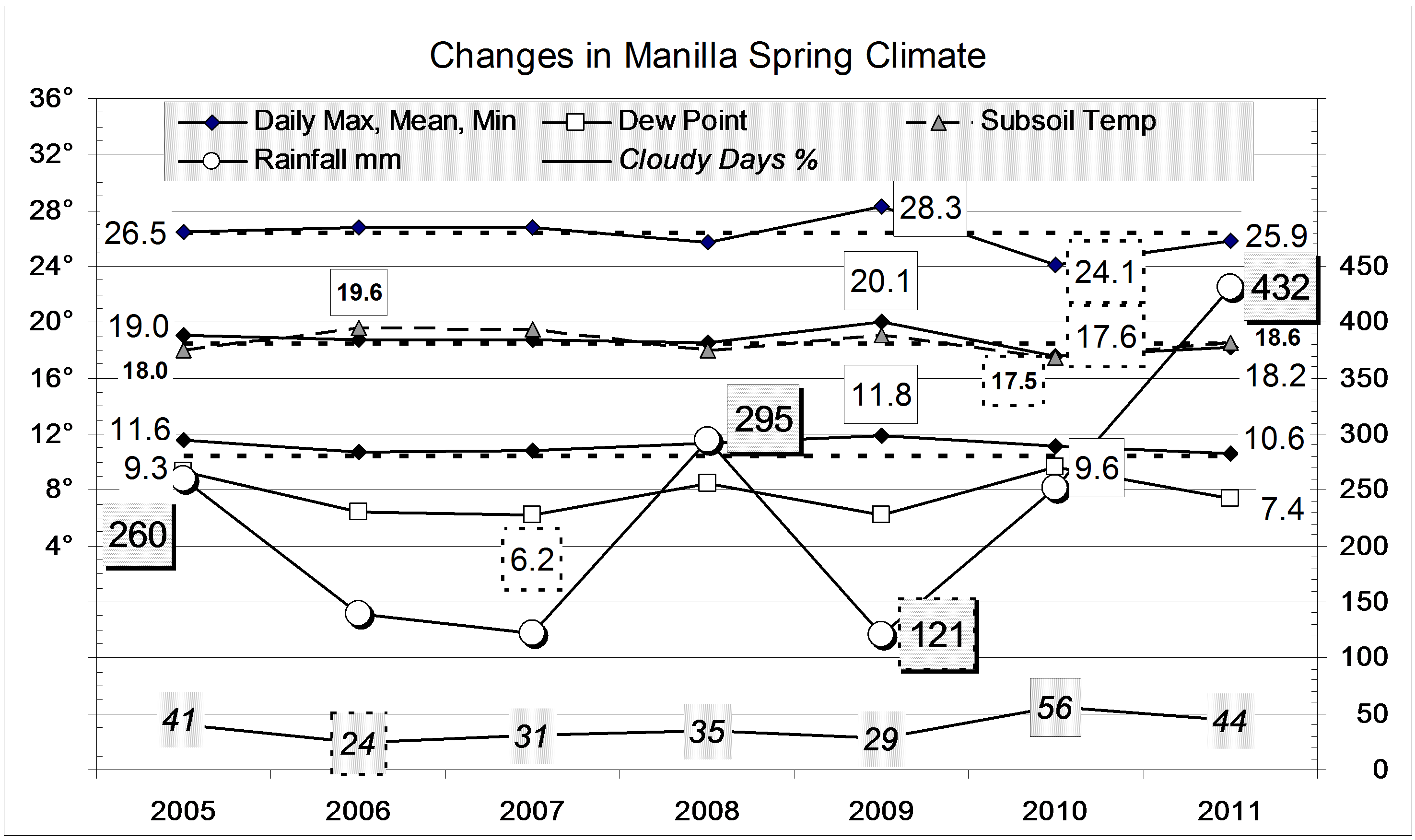
Weather log spring 2011This spring’s rainfall of 431.7 mm far exceeded that of any other spring in the record from 1883. Winter had been very dry, with only 55 mm. While there was a lot of rain in September (91.4 mm) and October (97.4 mm), much more fell in November (242.9 mm), mainly in the second half.
The only other springs with more than 300 mm were in two small groups: 1916 (326 mm) and 1917 (327 mm); and 1949 (330 mm), 1950 (379 mm), 1954 (319 mm) and 1955 (321 mm).
Apart from the extreme rainfall, all other weather readings this spring were normal. By contrast, spring 2009 had been warm and sunny, and spring 2010, cool and cloudy.
During the season, there were two very cool spells, early in September and very early in October. They were separated by a sunny warm spell with very low humidity: it had people changing into summer gear (then back again!). By mid-November, both days and nights were very warm, but then returned to normal.Climate spring 2011

Data. Rainfall data is from Manilla Post Office, courtesy of Phil Pinch. Temperatures, including subsoil at 750 mm, and other data are from 3 Monash Street, Manilla.

Parched December 2009 went soggy

The daily weather log
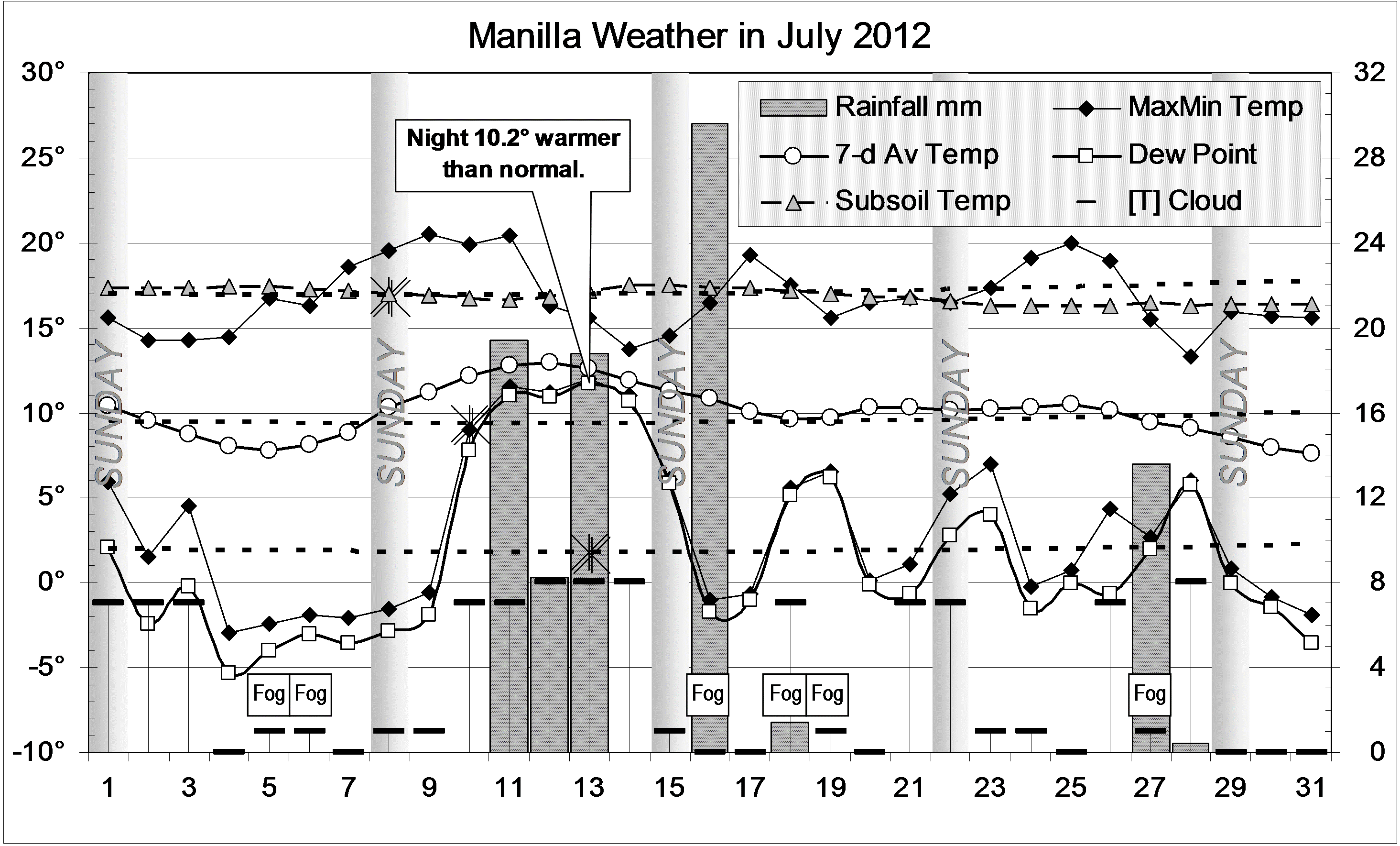
Weather log December 2009

December began dry, very warm, and almost cloudless. In all, there were fourteen days over 35°: remarkable except that it had happened in November too! Plants began dying from lack of rain and low humidity. By the 19th there had been 39 days without 5 mm of rain. The Dew Point on the 12th (-1.1°) was the lowest for a December morning.
Within a week, the sky became overcast, the days cool, and the humidity extreme: the Dew Point from the 27th on was near or above 20°. The hills were often hidden in cloud or rain. The highest rainfall reading (44.6 mm) is a total of several rain days. Heavy rain fell during Sunday the 27th.

 Comparing December months

Climate December 2009

The mean maximum temperature (33.1°) is not as high as in December 2005 (33.7°), but the mean mean (25.9°) and mean minimum (18.6°) are the highest for the decade. All are two degrees warmer than normal, but not extreme as in November.
At 52% cloudy mornings this month was very cloudy, but not as cloudy as December 2007 (58%). The mean morning Dew Point, 12.6°, was normal.
The rainfall total of 75.6 mm is in the 55th percentile, just above the median for December. Most totals for more than one month are quite good. Shortages affect the 6-, 9-, and 12-month totals, but even the 9-month total (now 334 mm) is no longer a serious shortage: it is in the 13th percentile. A shortage in the 10-year rainfall total (15th percentile) may be keeping river base-flows and deep water tables down.

The year 2009

The year 2009 was dry, with only 495 mm of rain. That is on the 16th percentile, meaning one year in six has been drier. It followed two wet years, 2007 with 741 mm (68th percentile) and 2008 with 720 mm (64th percentile).


Data. Rainfall data is from Manilla Post Office, courtesy of Phil Pinch. Temperature and other data are from 3 Monash Street, Manilla.