August 2009 HOT and dry

The daily weather log

Weather log August 2009

Nearly all the days of August were warmer than normal. While half the nights were cold, some others were very warm. A regional heat wave struck from the 22nd to the 25th, setting records for exceptionally high temperature at Manilla and many other places. The maximum on the 23rd (31.8°) was 11.4° above normal, beating +10.5° set on 11/10/02. The minimum on the morning of the 25th (18.2°) was 14.0° above normal, beating +13.1° set on 23/9/03.
Sixteen minimum temperatures qualified as frosts (usually 15) but the coldest was no lower than -1.4°. Dew Points were low, often far below the air temperature, making the air unpleasantly dry.
Very light rain fell on four days, to a total of 6.8 mm. By the end of the month, there had been forty days without 5 mm of rain.

 Comparing August months
Climate August 2009

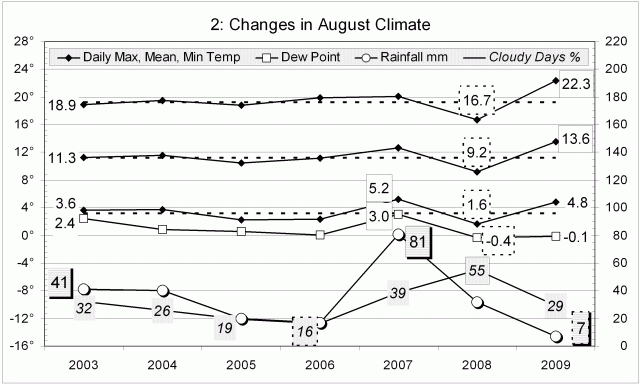
Mean daily maximum, mean, and minimum temperatures were far above normal for the month, by 3.1°, 2.5°, and 1.7° respectively. It was the warmest August in the 11-year record, and more than 4° warmer than the previous August (2008).
Manilla is very short of rain. Serious shortages (below the 10th percentile) are found not only in the August total (7 mm) but in totals for the 2, 3, 4, and 5 months to date. Worse, the 6-month total (145 mm) is a severe shortage (in the 4th percentile): it is 163 mm less than the median 6-month rainfall (308 mm). Rainfall totals for longer periods are good. The worst is the 8-year total that includes the 2002 drought: it is in the 24th percentile.


Data. Rainfall data is from Manilla Post Office, courtesy of Phil Pinch. Temperature and other data are from 3 Monash Street, Manilla.
 

July 2009 getting short of rain

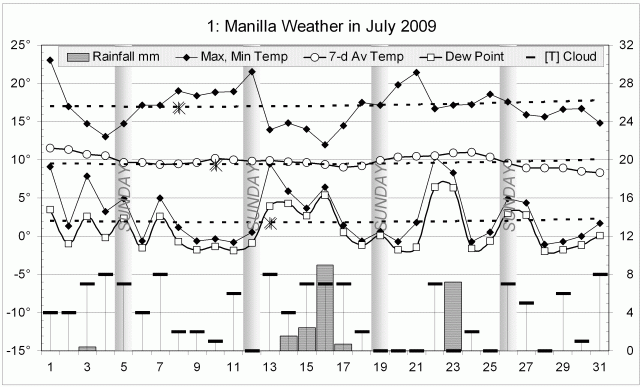
The daily weather logWeather log July 2009

Apart from a scarcity of rain, and an abundance of cloud, the weather in July was very much as usual. One day reached 23°, another only 12°. There were 18 frosts (normally 17), but no night was colder than -2° (normally 4 nights are). Fog filled the valley on the 28th.
There had been twenty-three days without 5 mm of rain when 9 mm fell on the 16th. In six rain days the month’s total was 21.3 mm. This is well below the median for July (35 mm): it is in the 25th percentile.

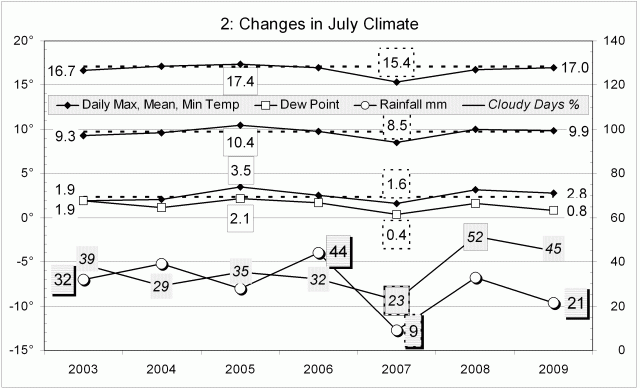
 Comparing July months

Climate July 2009

All mean daily temperatures for the month were normal.
There is a serious shortage of rain in the five months to date: the total of 138 mm is on the 10th percentile. Five-month totals below the 10th percentile are rare in recent years: July 2008 (9th percentile), August 2006 (9th), May 2005 (5th) and September 2003 (7th).
(Very much drier 5-month conditions prevailed in 2002: November had a severe rainfall shortage (in the 2nd percentile) while July, August, September and October had extreme rainfall shortages, in the first percentile. September 2002 had the lowest 5-month total (61 mm) in 75 years.)


Data. Rainfall data is from Manilla Post Office, courtesy of Phil Pinch. Dew point values before August 2005 are from Tamworth Airport 6 am data supplied by the Bureau of Meteorology. Temperature and other data are from 3 Monash Street, Manilla.
 

June 2009 cloudy, with warm nights

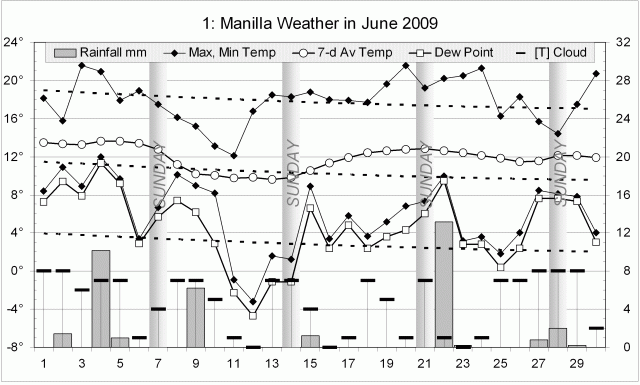
The daily weather log

Weather log June 2009

Cloudy skies kept most June nights warm. A cold snap took the minimum on the 12th down to -3.2°. As in June 2005, there were only 5 frosts, compared with 13 normally. Few days were very warm or cool, but the 11th reached only 12.1° (6° below normal). There was patchy fog in the valley on three mornings.
Ten rain days brought 36.4 mm. The wettest was the 22nd, with 13.2 mm.

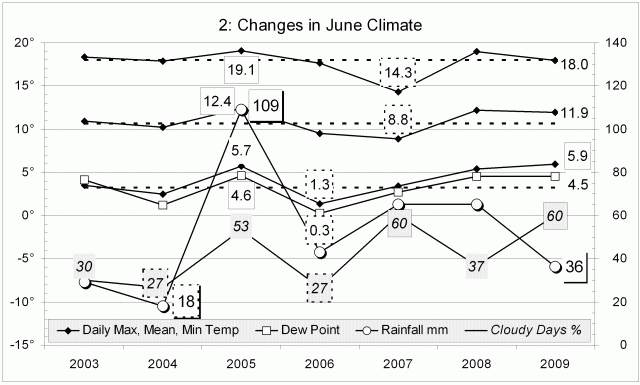
 Comparing June months

Climate June 2009

This June was very cloudy: 60% of the mornings had more than 4 octas of cloud. June 2005 (53%) and June 2007 (60%) were similar. The 11-year trend shows a big rise in June cloudy mornings: from 6 in 1999 to 16 in 2009!

The mean daily maximum temperature was normal for June. However, the mean daily minimum (5.9°) was the highest for the decade, beating other Junes that had warm nights: 2005 (5.7°) and 2008 (5.4°). The month’s mean temperature was high (like last June) and the temperature range low (12.1°). The mean humidity (early morning dew point) was also high.
The rainfall total of 36 mm is on the median (50th percentile) for June. Rainfall totals for groups of months up to six months are below the median, indicating shortages. However, even the worst is not serious: the four-month rainfall March to June (117 mm) is on the 14th percentile. Rainfall totals for longer periods up to 72 months are all above the median, except for the 36-month total, which is on the 49th percentile.


Data. Rainfall data is from Manilla Post Office, courtesy of Phil Pinch. Dew point values before August 2005 are from Tamworth Airport 6 am data supplied by the Bureau of Meteorology. Temperature and other data are from 3 Monash Street, Manilla.
 

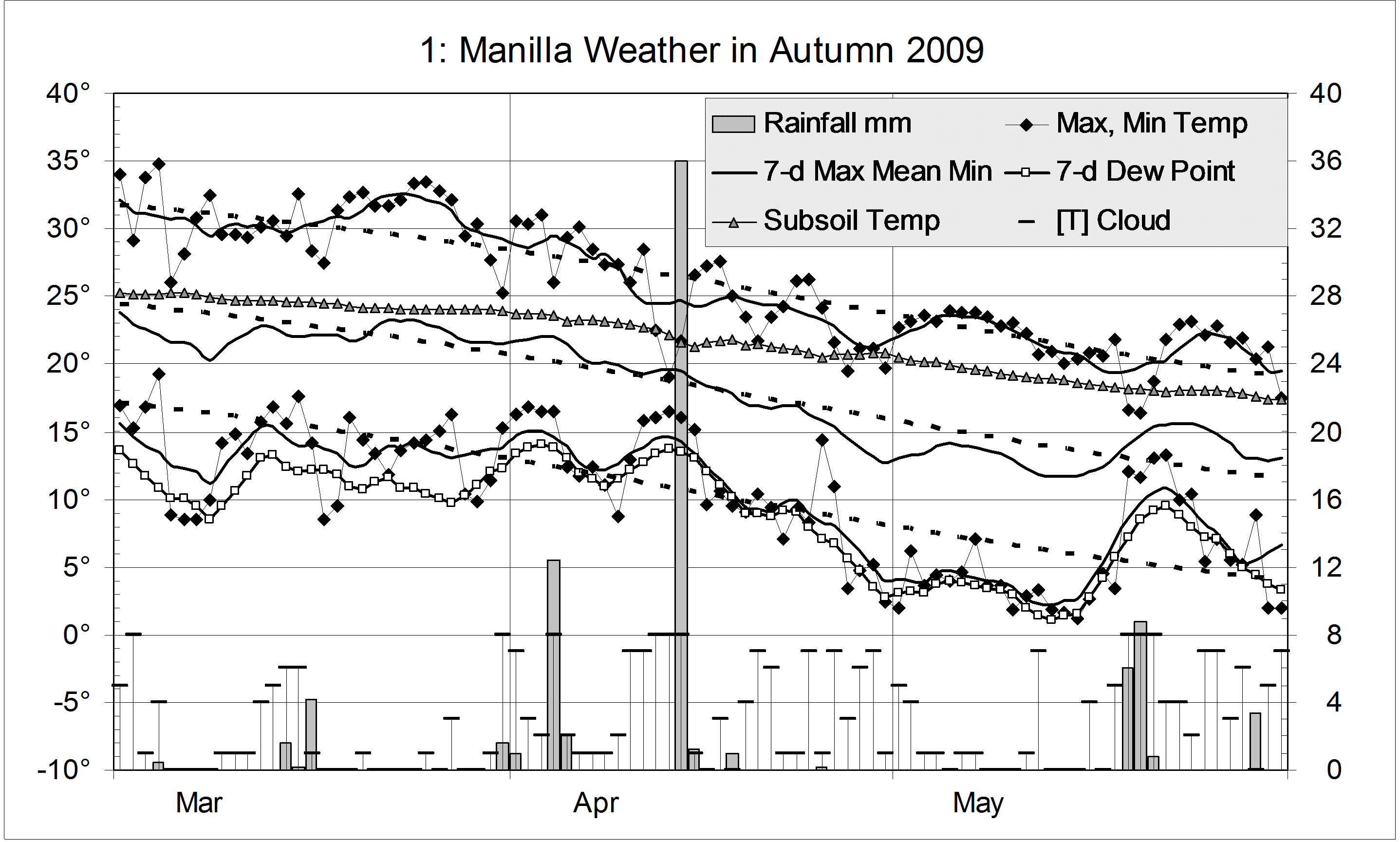
Cloudy Autumn 2009

Weather log autumn 2009

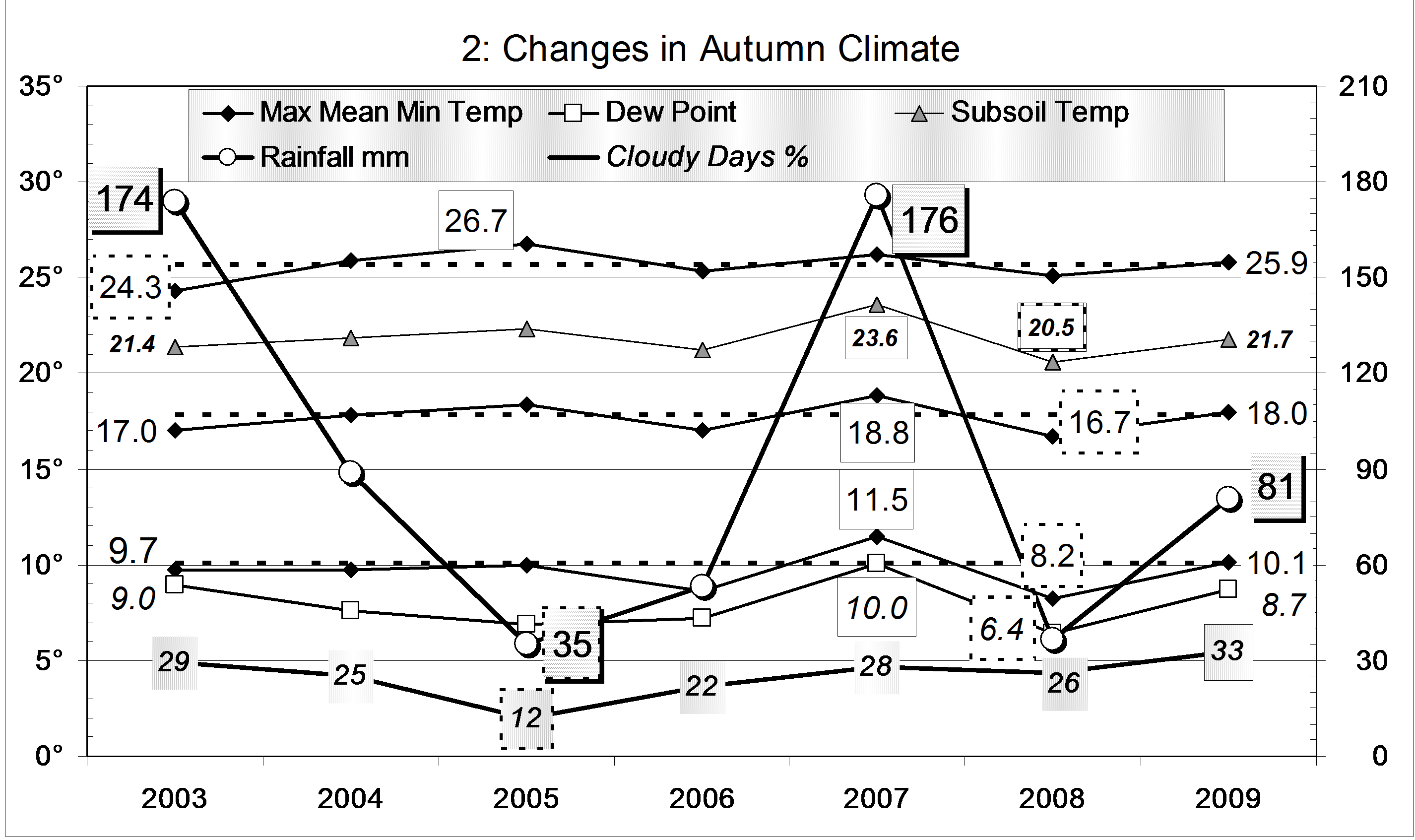
Temperatures cooled as normal in autumn, with few unusual features. Through early March and early May nights were cold, humidities were low, and skies were clear. Later in May, nights were very warm.
There were 16 rain days, which is more than normal (12), but most had very low readings. One rain day in April (36 mm) brought nearly half the season’s rain.


As in the summer, all mean temperatures (daily maximum, mean, and minimum), as well as the morning Dew Point, were normal. Neither of the previous two autumns had been normal: autumn 2008 was very cool and arid; autumn 2007 was very warm and humid.
The total rainfall of 81 mm is on the 30th percentile for autumn. It is 32 mm below the autumn median rainfall (113 mm).
At 33% cloudy mornings, this autumn was the cloudiest of the decade. Autumns average only 25% cloudy mornings, compared to 31% in winter and 30% in spring and in summer.

Climate autumn 2009

Data. Rainfall data is from Manilla Post Office, courtesy of Phil Pinch. Dew Point values before August 2005 are from Tamworth Airport 6am data supplied by the Bureau of Meteorology. Temperature and other data are from 3 Monash Street, Manilla.
May 2009 rain by-passed Manilla

The daily weather log

Weather log May 2009

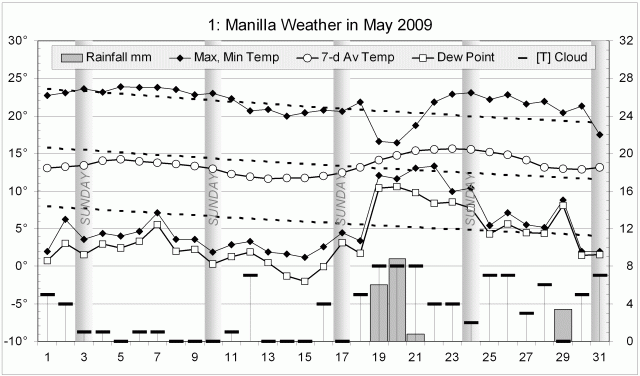
More than half the month passed with sunny days, and cool nights (3°) that kept the average temperature down. The 18th was the 34th day without 5 mm of rain.
A lot of rain then came into the region carried on easterly winds from the very warm sea. The coast had five days of heavy rain, causing severe flooding. Manilla had only three rain days, totalling less than 16 mm. At the same time, areas near Mungindi had twice as much. Instead of rain, Manilla got a week of humid overcast days and very warm nights (11°). Thick fog on the 29th did not lift until after 10 am.

 Comparing May months

Climate May 2009

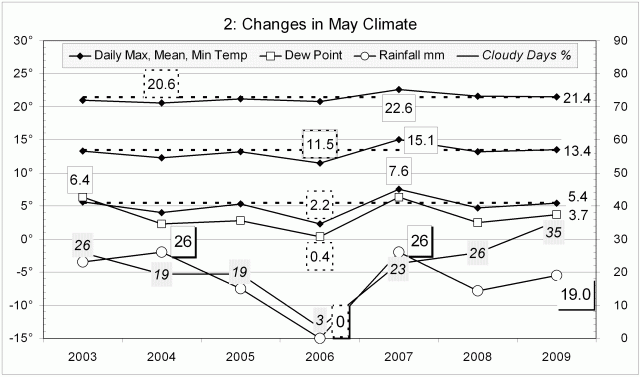
This month had normal temperatures, but it was cloudier than any May since 2001. There were seven mild frosts (normally six), but none was below zero in the screen.

(May 2007 was warm and humid; May 2006 was cool and remarkably sunny.)
The rainfall total (19.0 mm) was in the 34th percentile for the month. While this is below the May median (27 mm), it is well above the most common May reading (5 mm). The two-month total for April and May (73 mm) is on the 33rd percentile. The three-month total (81 mm) is worse: it is on the 14th percentile, but that is not a serious shortage. The four and five month rainfall totals have now fallen to 38th and 41st percentiles. Beyond that, totals are above the median for all periods up to 72 months, except for the 15-month total, which has now fallen to the 45th percentile.


Data. Rainfall data is from Manilla Post Office, courtesy of Phil Pinch. Dew point values before August 2005 are from Tamworth Airport 6 am data supplied by the Bureau of Meteorology. Temperature and other data are from 3 Monash Street, Manilla.