Spring 2009 warm and dry

Weather log spring 2009

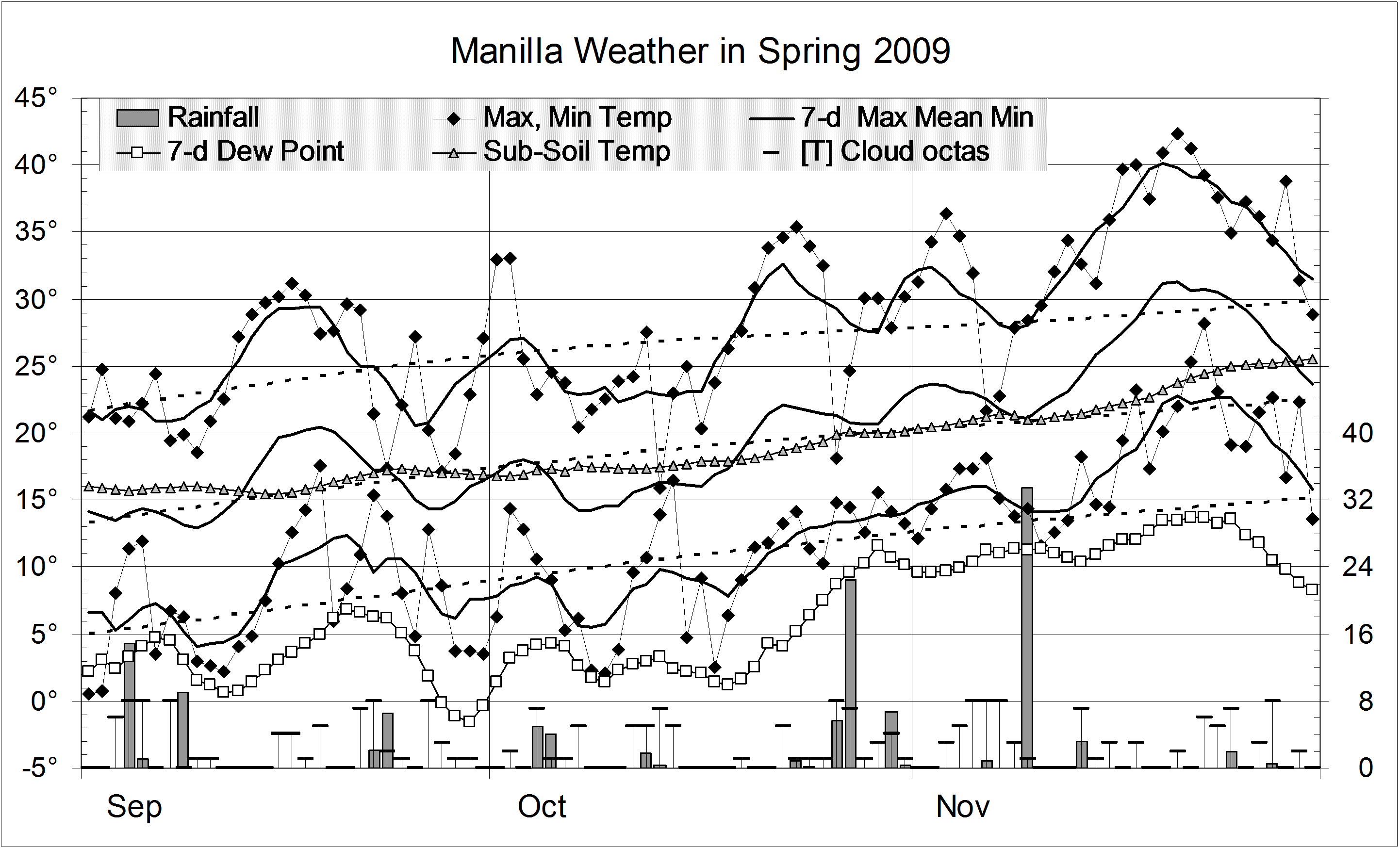
This spring was warm and dry, partly due to the extreme heat wave in the final two weeks. In that period, records were broken for the highest temperature in any month: highest daily maximum (42.6°), highest daily maximum temperature anomaly (+13.5°), highest daily minimum (27.8°), and highest weekly average (31.3°).


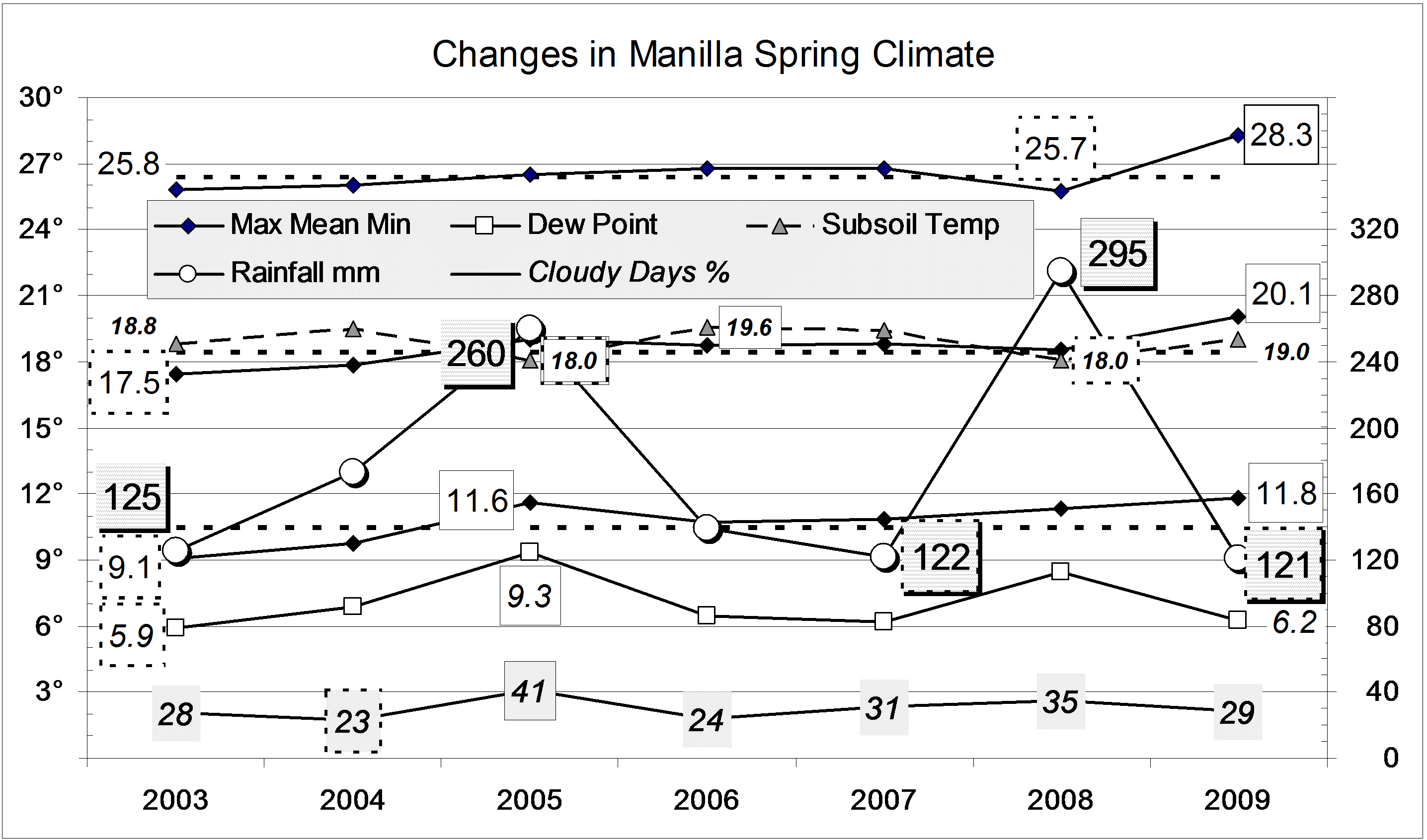
Compared to decade averages, the mean maximum (28.4°) was up 2.1° and the mean minimum (11.7°) up 1.3°. For dryness, the morning Dew Point (6.0°) was down 1.5°, and cloudiness (29%) down 1%. Although this spring was very warm and dry, spring 2002 had been much warmer and drier. Values then were: max 29.2°, min 12.1°, Dew Point 5.4° and cloudiness 19%.
In spring 2002 there had been only 66 mm of rain: the fifth lowest on record. Rainfall this spring was 121 mm. Similar spring totals were seen in 2007 (122 mm), 2006 (139 mm), and 2003 (125 mm). These values are on the 30th percentile (which is not very low), but seem low compared to recent extremely wet springs in 2008 (295 mm), 2005 (260 mm) and 1999 (262 mm). The long-term spring median is 156 mm.
Climate spring 2009

Data. Rainfall data is from Manilla Post Office, courtesy of Phil Pinch. Temperatures, including subsoil at 750 mm, and other data are from 3 Monash Street, Manilla.
November 2009 – Extreme Heat

The daily weather log

Weather log November 2009

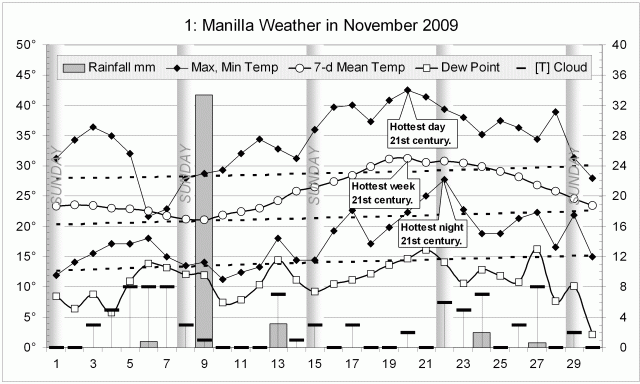
November 2009 broke records for heat at any time of year in the last decade:
Highest daily maximum temperature: 42.6° on 20/11/09;
Highest daily minimum temperature: 27.8° on 22/11/09;
Highest weekly average: 31.3° for 17-23/11/09.
The daily maximum on the 20th was a record 13.5° above normal, and the daily minimum on the 22nd was one of only three nights over 13 degrees above normal.

 Comparing November months

Climate November 2009

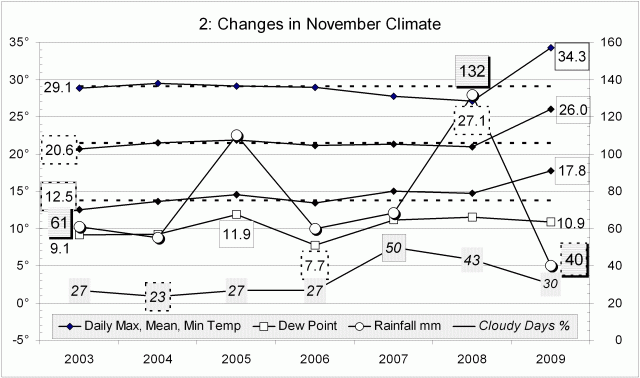
Mean monthly temperatures were the highest on record for November: mean daily maximum 34.3° (5.2° above normal); mean daily mean 26.0° (4.6° above normal) mean daily minimum 17.8° (4.0° above normal). The early morning Dew Point (10.9°) was normal, but hot air brought the Relative Humidity down.
Rainfall of 33.4 mm recorded on the 9th was welcome, but little fell later. In all, five rain days totalled 40.0 mm. This total is low: in the 28th percentile for November. Most totals for more than one month are fairly good but a severe shortage (3rd percentile) affects the 9-month total (266 mm).


Data. Rainfall data is from Manilla Post Office, courtesy of Phil Pinch. Temperature and other data are from 3 Monash Street, Manilla.


October 2009 began cool and dry

The daily weather log

Weather log October 2009

The first two weeks of October were cool – as cool as September, and no warmer than late August. There was little rain, low humidity and strong winds. The sub-soil temperature (at 750 mm) also remained low, not reaching 18° until the 18th, two weeks later than usual. Some cotton plantings suffered.
A warm spell came on the 20th, with the maximum on the 23rd (35.4°) being 8° above normal. By contrast, a rainy day on the 26th reached only 18.1°, more than 9° below normal. That day was the first in 33 days to have more than 5 mm of rain. Ten rain days (usually 7) brought 47.4 mm for the month.
Seven days began with a brown dust haze, adding to one in July, three in August, and seven in September.

 Comparing October months

Climate October 2009

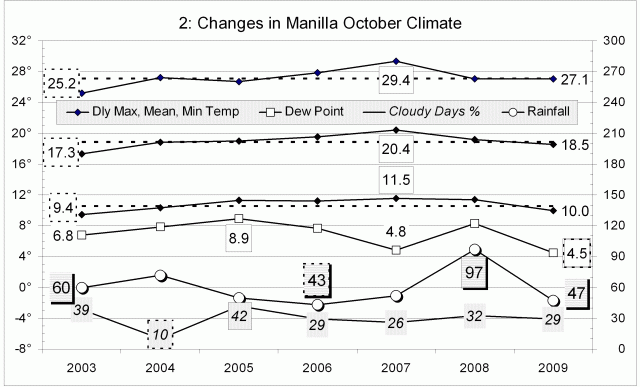
Mean temperatures were close to normal. The mean humidity (early morning Dew Point: 4.3°) was low: lower than in 2007, but higher than in 2002 (3.3°). The percentage of cloudy mornings was normal.
The rainfall total, 47 mm, is in the 39th percentile for October, just 6 mm below the median (53 mm). Despite early worries, most rainfall totals improved. The only serious shortage affects the 6-month total. At 164 mm, it is in the 7th percentile.
Totals for periods longer than nine months are normal: the lowest is the ten-year total, which is in the 21st percentile. From November 1999 Manilla has had 6133 mm of rain, against the median 6393 mm. That is a shortfall of only 26 mm per year.


Data. Rainfall data is from Manilla Post Office, courtesy of Phil Pinch. Temperature and other data are from 3 Monash Street, Manilla.
 

September 2009 warm and dusty

The daily weather log

Weather log September 2009

Two large dust storms from South Australia filled the sky on the 23rd and 26th, reducing visibility to about 600 metres. (The dust was reported, with a photo, in the “Manilla Express” for 29/9/09.) There was a brown dust haze also on the 2nd, 13th, 14th, 16th, and 17th, and on three days in August and one in July..
The dust storms put an end to a week of very warm days and nights. The cooler air was dry, with Dew Points below zero.
On the 3rd 14.8 mm of rain fell, after 43 days without 5 mm of rain. Six rain days brought 34.2 mm for the month.

 Comparing September months

Climate September 2009

Mean temperatures were all about half a degree above normal, but not as high as in September 2006. The humidity (early morning Dew Point: 2.7°) was a little low, and the percentage of cloudy mornings (30%) a little high.
The rainfall total, 34 mm, is on the 47th percentile for September, very close to the median (37 mm). As a result, rainfall totals have improved. Serious shortages, below the 10th percentile, now affect only the 3-, 4-, 5-, and 6-month totals. The 5-month total (117 mm), being in the 5th percentile, could be called a severe shortage. Totals for longer periods are normal.


Data. Rainfall data is from Manilla Post Office, courtesy of Phil Pinch. Temperature and other data are from 3 Monash Street, Manilla.


Winter 2009 was very warm and dry

Weather log winter 2009

Daily maximum temperatures were mainly above normal throughout the season, except in the second week of June and in mid-July. The values of 31.8° and 30.5° on the 23rd and 24th of August were the hottest winter days in this 11-year record. Many such records were set at that time in Central Australia, southern Queensland and northern NSW. Similarly, daily minimum temperatures were mainly above normal, except in early August. The night-time minimum of 18.2° on 25/8/09 was 2° warmer than the warmest previous winter minimum of 30/8/04.
Early morning Dew Points remained a degree or two below the daily minimum temperature through June and July. In August, they remained low while the temperature soared, so that the air became uncomfortably dry.
There were 20 rain days (usually 18). Most rain came early in the season, with the maximum daily reading only 13.2 mm.
Cloudy mornings declined sharply during the season: June had 60%, July 45%, and August only 29%


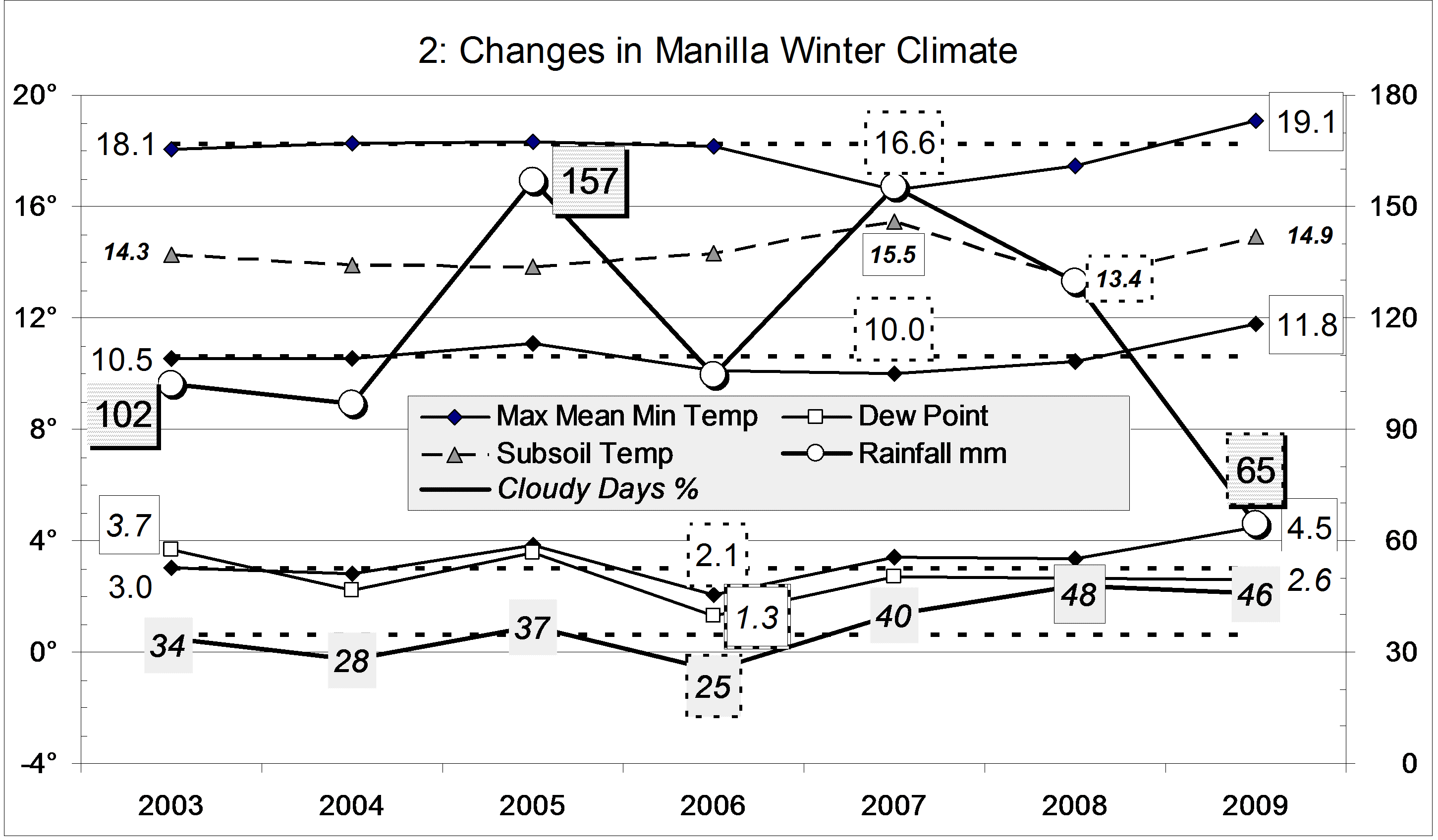
Of the last eleven winters, this was the warmest. The daily mean temperature, 11.8°, was 1.2° above normal. The daily minimum, 4.5°, was also the warmest, but the daily maximum, 19.1°, did not reach the 19.2° of winter 2002.

This winter was one of the least frosty, with 39 frosts rather than the usual 44. There was only one reading below minus two, while other winters had from three to nineteen! The mean Dew Point of 1.7° was normal for winter.
The rainfall total of 65 mm is well below average for winter (125 mm). It is in the 13th percentile, much wetter than winter 2002 which, at 45 mm, was in the 7th percentile.
This was the second cloudiest winter of the decade. Forty-six percent of the mornings had more than 4/8 cloud. Last winter was a little cloudier, at 48%.

Climate winter 2009

Data. Rainfall data is from Manilla Post Office, courtesy of Phil Pinch. Dew Point values before August 2005 are from Tamworth Airport 6am data supplied by the Bureau of Meteorology. Temperature and other data are from 3 Monash Street, Manilla.