March Climate Anomalies Log

Heat Indicators log for March months

This post is the first in a set for the 12 calendar months. Graphs are sixteen-year logs of the monthly mean anomaly values of nine climate variables for Manilla, NSW, with fitted trend lines. I have explained the method in notes at the foot of the page.

Raw anomaly values for March

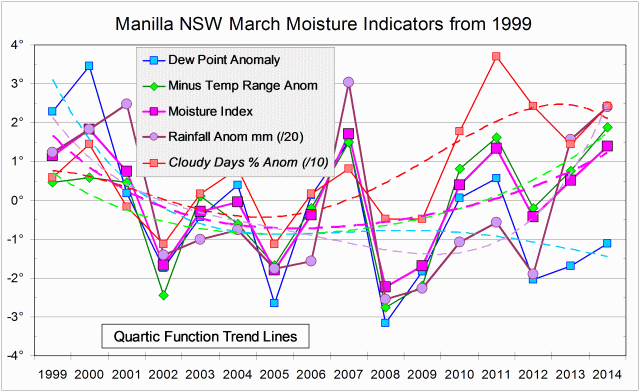
Extreme values for March anomalies in this period were:
Daily Minimum Temperature anomaly -2.9°: March 2008;
Morning Dew Point Anomaly +3.5°: March 2000;
Morning Dew Point Anomaly -3.2°: March 2008;
Rainfall anomaly +61 mm: March 2007;
Percent cloudy mornings anomaly +37%: March 2011.

Trend lines for March

Heat Indicators

Daily maximum temperature showed minima about -1 deg in 2001 and 2014, and a maximum about zero in 2007.
Daily minimum showed a minimum two years later, about 2003, then rose in parallel with daily maximum, but ended very high.
Subsoil temperature did not agree, and varied less. It had maxima in 2002 and 2012. It may show a lag of five years behind daily maximum.
Moisture Indicators log for March months

Continue reading

January “Coolth” in a House without Air-Conditioning

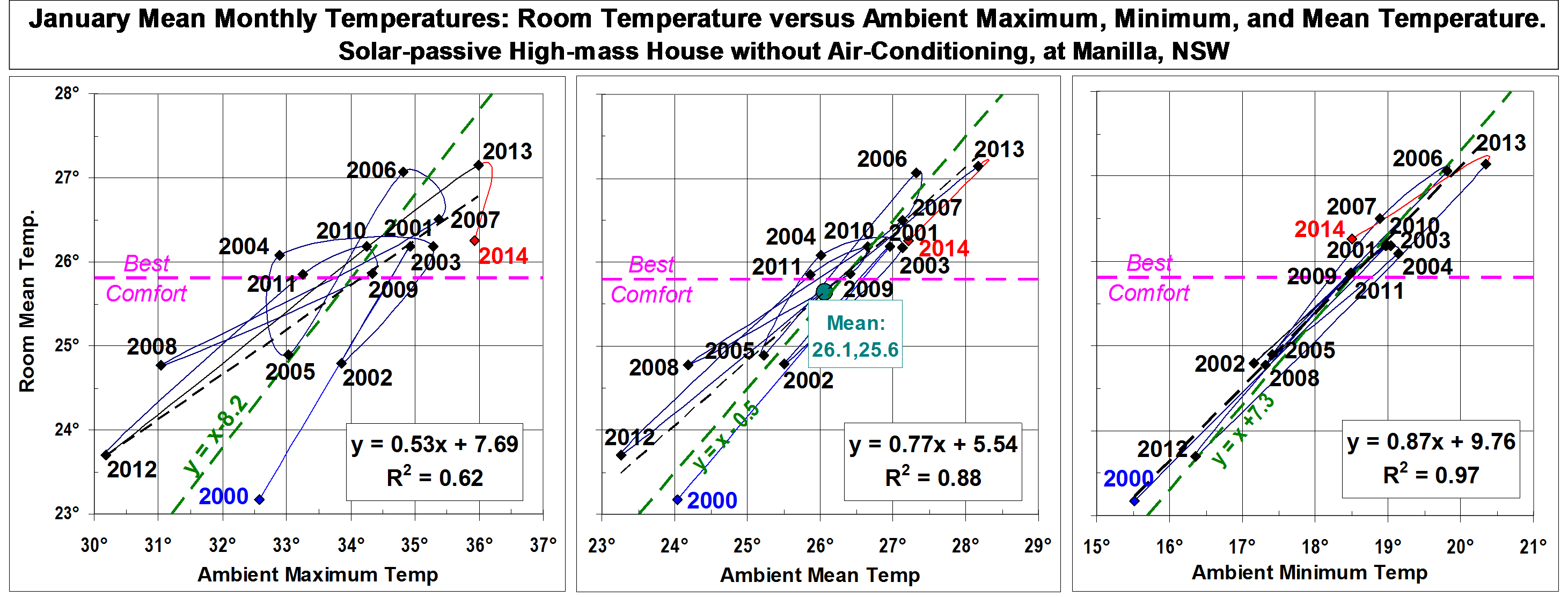
I have now 15 years of January average temperature data for my house at Manilla, North-west Slopes, NSW. These graphs show how the house temperature relates to the outdoor (or ambient) maximum, mean, and minimum temperatures.Regression graphs of indoor on outdoor temp in the hottest month

The house is not too hot and not too cold

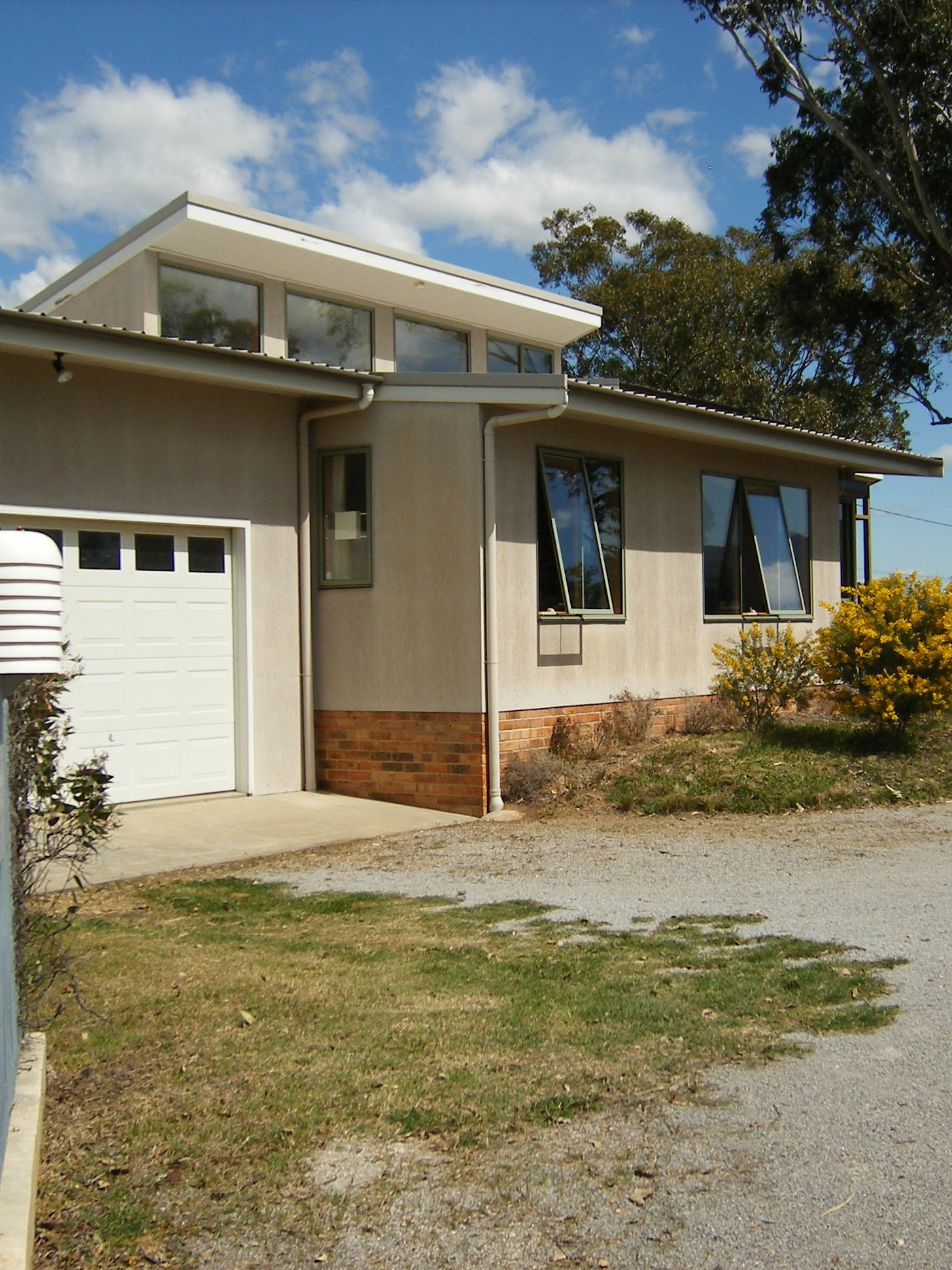
Solar-Passive House from the NE.

House at Monash St Manilla from NE

In January (the hottest month) the rooms* in this solar-passive house do not heat up much during the day, nor do they cool down much at night. Since the indoor temperature always rises and falls just one or two degrees from the mean, only the mean is shown. Green lines on the graphs, which are drawn to pass through the middle of each cloud of data points, show by how much (on the average) the indoor temperatures have differed from the outdoor maximum, mean, and minimum temperatures. On the middle graph the green line shows that the rooms have been 0.5° cooler than the mean temperature outdoors. The left graph shows that the rooms have been 8.2° cooler than the daily maximum outdoor temperatures. The right graph shows that the rooms have been 7.3° warmer than the daily minimum overnight temperatures.

The design of the house aimed to protect those living there from excessive summer heat. It may seem that reducing the mean temperature by only half a degree is a failure. Not so! The January mean temperature at this site (26.1°) is near the middle of the adaptive comfort zone for this month, and so is the indoor mean temperature (25.6°). The house succeeds in keeping the indoor temperature comfortable in the heat of the day, when that outdoors is an uncomfortable 34 degrees. The high thermal mass that achieves this has the unfortunate result that the minimum indoor temperature overnight (not shown) is some five degrees warmer than the outdoor minimum. However, on average, it is still a comfortable 23.5 degrees. (Curiously, no-one knows the best room temperature for sleep.) Continue reading

July Warmth in an Unheated House

Solar-Passive House from the NW

House at Monash St Manilla from NW

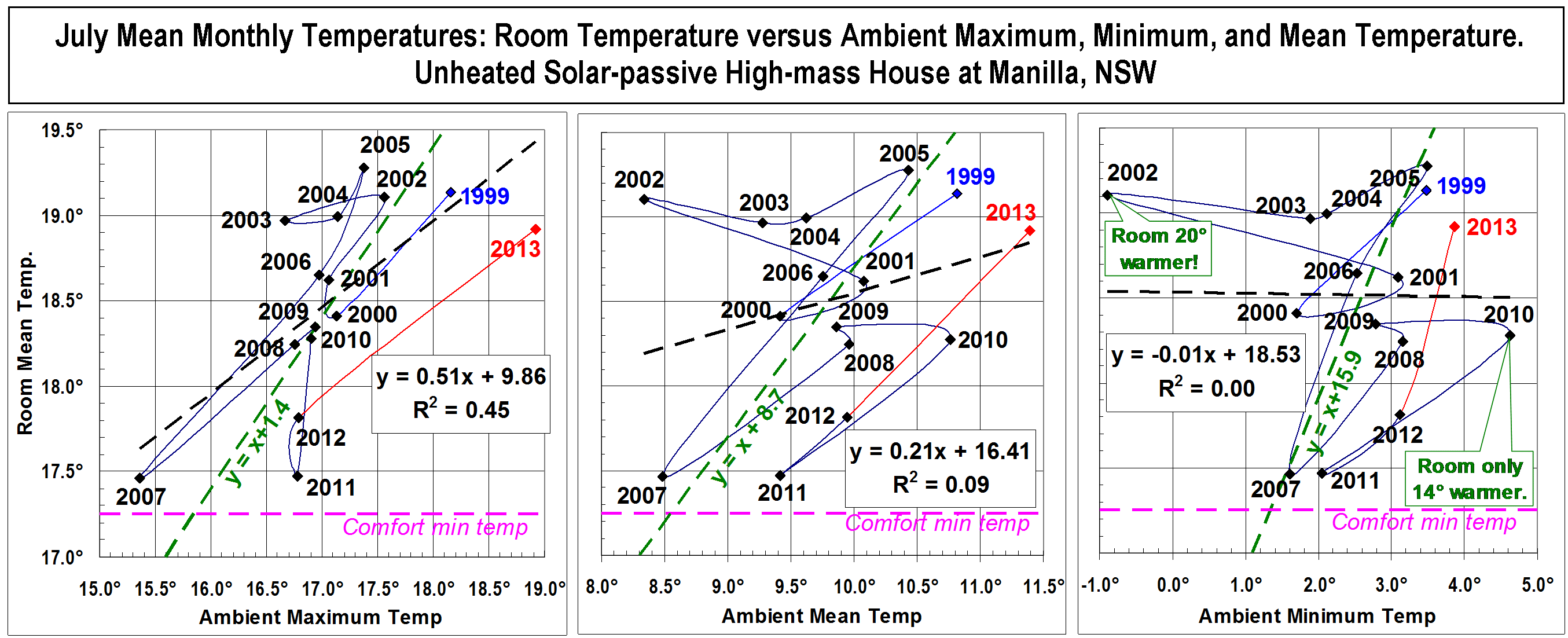
I have fifteen years of temperature data for my high-mass, solar passive, unheated house at Manilla, NSW, Australia. This article has been posted previously here. These graphs show how July temperatures indoors relate to those outdoors. Indoor maxima and minima are not shown, because they are consistently between one and two degrees above and below the indoor mean.

House and ambient temperatures, 15 July months. The house is much warmer (dashed green lines)

In July, the rooms* in this solar-passive house, heated only by the sun, are much warmer than outdoors. This is shown by the green lines on the graphs, which are drawn to pass through the middle of each cloud of data points. The middle graph shows that, as an average over 15 July months, the rooms have been 8.7 degrees warmer than outdoors. The left graph shows that the rooms have even been 1.4 degrees warmer than the daily maximum outdoor temperatures. The right graph shows that the rooms have been nearly sixteen degrees warmer than the daily minimum overnight temperatures. To stay warm in this way the house must have absorbed many hundreds of kilowatt hours of heat from the sun. I have burned a few kilowatt hours of grid power to maintain my comfort, but this cannot have warmed the house by as much as one tenth of a degree in any month. Continue reading

One year of House Performance: II

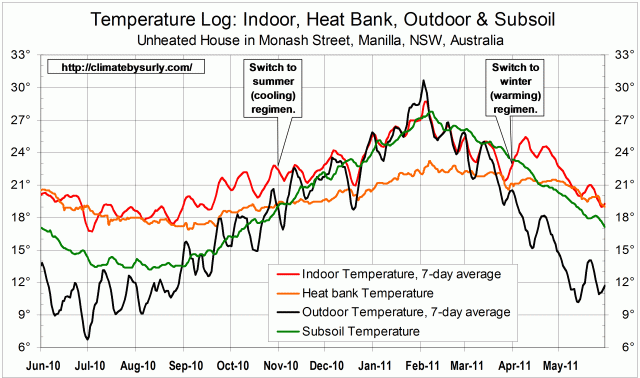
Graphical 1-year record of outdoor and indoor mean temperatures, subsoil and heat bank.

See also “One Year of House Performance: I”.

Like the graph in the post linked above, this is a log of indoor and outdoor 7-day mean temperatures at my low-energy solar-passive house at Manilla, NSW.
In place of the curves for normal air temperature and comfort zone limits, this graph includes two (raw value) logs of subsoil temperature at 750 mm below the surface. The green trace is the subsoil temperature outdoors in the garden. The orange trace is that below the middle of the main floor slab. The mass of material below the slab is surrounded by insulation at the edge so as to form a “heat bank”.

Continue reading

One year of House Performance: I

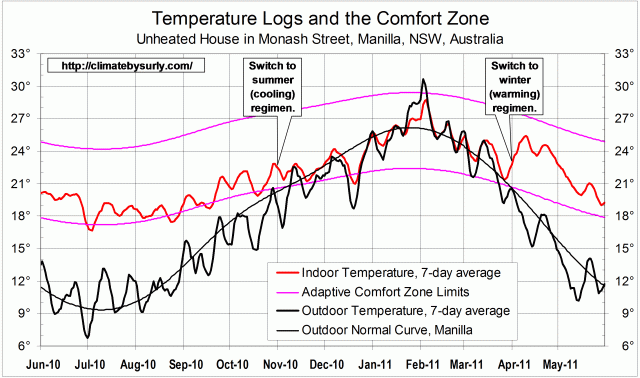
Graphical 1-year record of outdoor and indoor mean temperatures with the comfort zone

This graph is a log of indoor and outdoor 7-day mean temperatures at my low-energy solar-passive house at Manilla, NSW. Indoor mean temperatures are in red, and outdoor mean temperatures in black. Both logs show the same cycles of temperature with a period of two to three weeks. Indoor cycles have a much smaller amplitude.

Continue reading