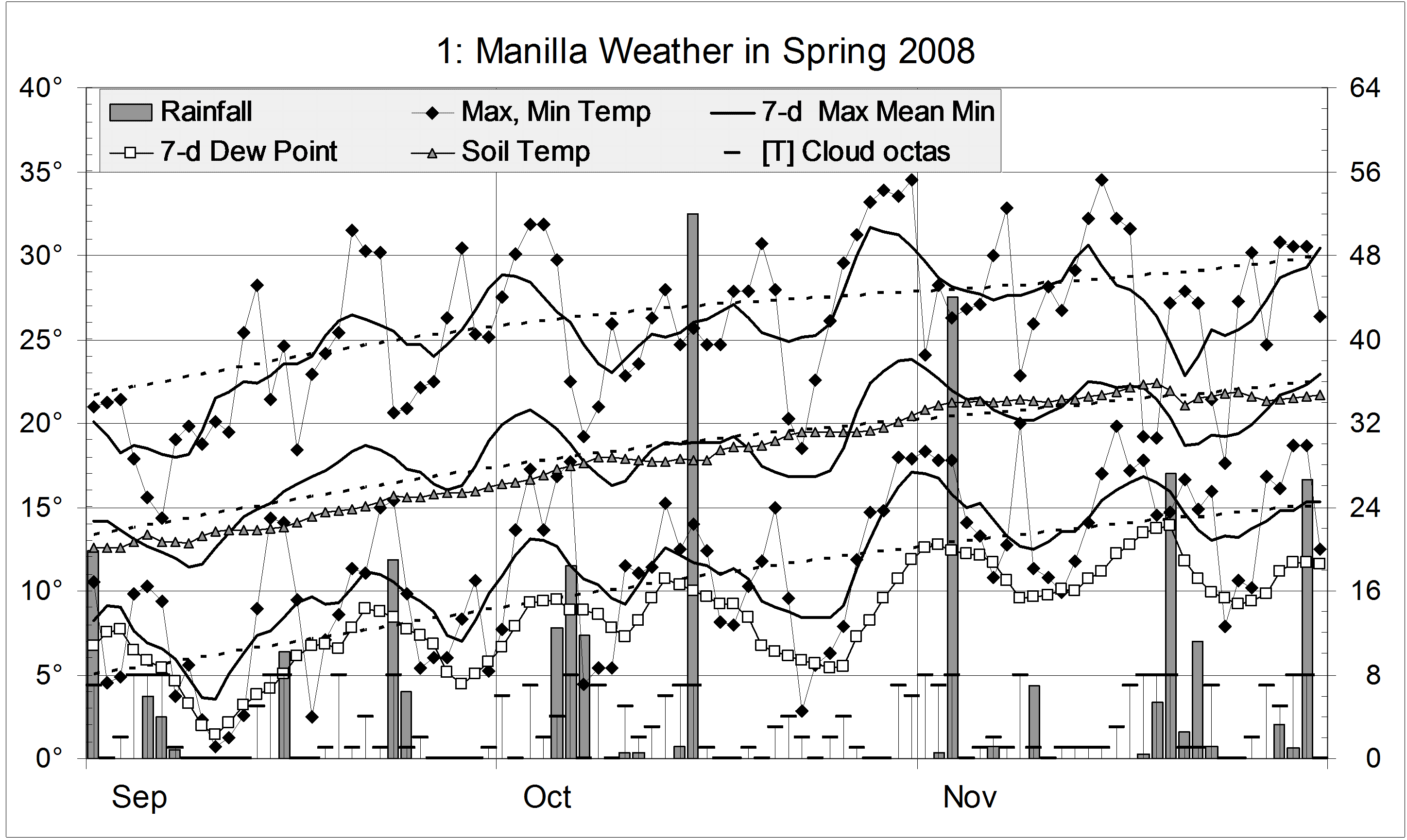
Spring 2008 was the seventh wettest

Weather log spring 2008

There were about six cycles of low and high temperature during spring. The third week of October was particularly cool, with dry air. By contrast, days and nights were more than seven degrees warmer by the end of the month.
There were 27 rain days, eight more than usual. Although the total rainfall (295 mm) was extremely high, the highest daily fall was only 52 mm. There were only two mild frosts early in the season.


The mean temperature was normal for spring. Rather cool days and rather warm nights combined to make the daily temperature range (14.4°) the narrowest for the decade, well below the average of 15.9°.(Note added. The mean daily temperature range for spring 2010 was far narrower: 12.9°.)
This spring was rather more humid, and had rather more cloud than usual.
This was the seventh wettest spring in the 126-year record, equal with 1973. Wetter springs occurred only in two clusters. The first cluster was 1916 (326 mm) and 1917 (327 mm); the second was 1949 (330 mm), 1950 (379 mm), 1954 (319 mm) and 1955 (321 mm). (Note added. Spring 2011 was very much wetter, with a record spring rainfall of 431.7 mm.)

Climate spring 2008

Data. Rainfall data is from Manilla Post Office, courtesy of Phil Pinch. Dew Point values before August 2005 are from Tamworth Airport 6 am data supplied by the Bureau of Meteorology. Temperatures, including subsoil at 750 mm, and other data are from 3 Monash Street, Manilla.
Spring 2007 climate much as usual

Weather log spring 2007

The daily weather log

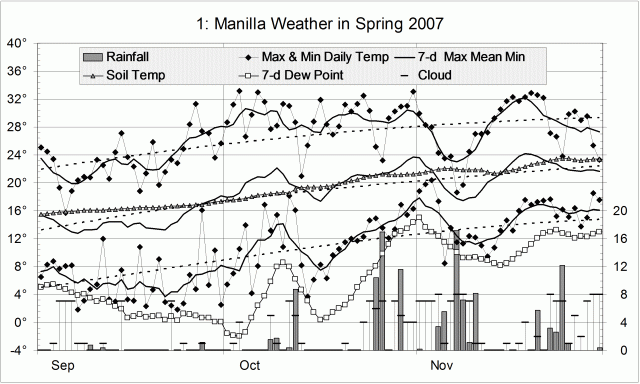
As sometimes happens, temperatures did not rise in September until late in the month. They then rose to several degrees above normal and stayed there until the end of October. Early November was very cool, and mid-November warm. The daily temperature range increased in dry periods and decreased in rainy periods.
There were two late frosts below 2.2° in September.

Only 2.2 mm of rain fell in September. Much more fell later, in short wet spells around October 12th and 26th, and November 7th and 24th. The two best daily falls were 17 mm each. Total spring rainfall was 122 mm, falling on 23 rain days.

Very cloudy or overcast skies became common in November.

Comparing spring seasons

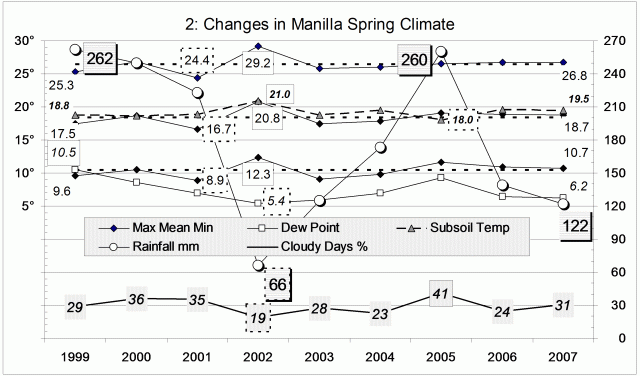
Although each month this spring had unusual temperatures, the three months taken together did not. Daily maximum, minimum and mean temperatures for the spring, as well as the daily temperature range (16.0°), were all normal. In the extreme drought of spring 2002, the values had been two degrees higher, and the daily temperature range 17.1°. The spring of 2001 had the lowest temperatures in this record.

Two frosts this spring compare with three on the average. Spring 2004 had 10 frosts, including one in mid-October, and one on 3rd November!

Spring rainfall in 2007 (122 mm) fell 44 mm short of the long-term average (166 mm), due to September being 39 mm down. October was only 6 mm down, and November 2 mm up. Spring rainfall averaged over the last nine years is above the long-term average, because the droughty spring of 2002 is more than balanced by the very wet springs of 1999, 2000, and 2005. These were in the ninth decile for spring rainfall.

Climate spring 2007

Data. Rainfall data is from Manilla Post Office, courtesy of Phil Pinch. Dew Point values before August 2005 are from Tamworth Airport 6 am data supplied by the Bureau of Meteorology. Temperatures, including subsoil at 750 mm, and other data are from 3 Monash Street, Manilla.