October Climate Anomalies Log

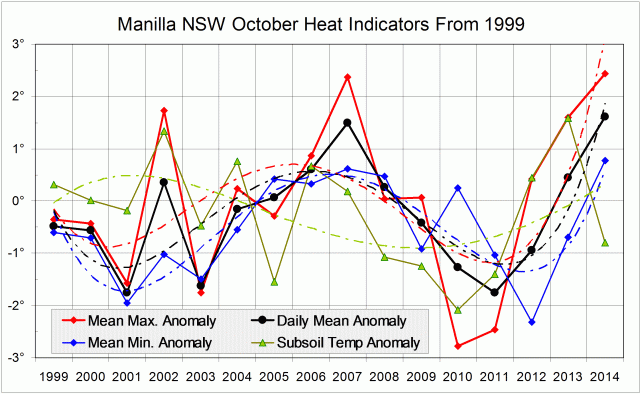
Heat Indicators log for October months

This post is the eighth in a set for the 12 calendar months that began with March. Graphs are sixteen-year logs of the monthly mean anomaly values of nine climate variables for Manilla, NSW, with fitted trend lines. I have explained the method in notes at the foot of the page.

This series of posts gets more than its share of views. This is strange, as they contain little information. Comparing graphs for adjacent months shows widely different values and trends. In due course, I will compare all twelve months with each other. Perhaps that will yield interesting results, or perhaps not.

Raw anomaly values for October

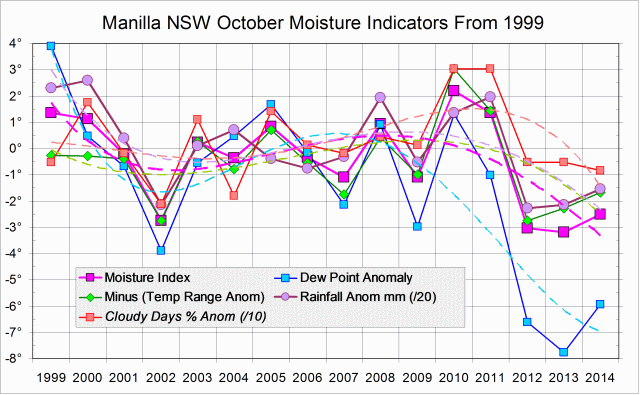
Extreme values of October anomalies in this period were all in the “Moisture Indicators” group:

Cloudy days % anomalies (2) +31%: October 2010, 2011;
Dew Point Anomalies (5) +3.9°: October 1999, -3.9°: October 2002, -6.6°: October 2012, -7.8°: October 2013, -5.9°: October 2014.
Moisture Index (2) -3.1°: October 2012, -3.2°: October 2013.

Trend lines for October

Heat Indicators

The trend lines of daily maximum, mean and minimum temperature anomalies all had an early trough in 2001, a peak near 2006, and a trough near 2011. The daily minimum trend had the longer period and the larger amplitude. The subsoil temperature trend peaked early, in 2001, and had a very broad trough around 2009.

Moisture Indicators log for October months

Continue reading

Extremely Arid October 2013

October’s climate was even more desert-like than this September or October last year. Afternoon humidity (normally 30%) was only 13.1%, which is the lowest value in ANY month in the last eight years. The early morning dew point of 0.5° was the lowest October value this century, and 7.8° below normal, a record anomaly value for any month. This very dry air often came with strong winds. Most of north-west NSW was affected.

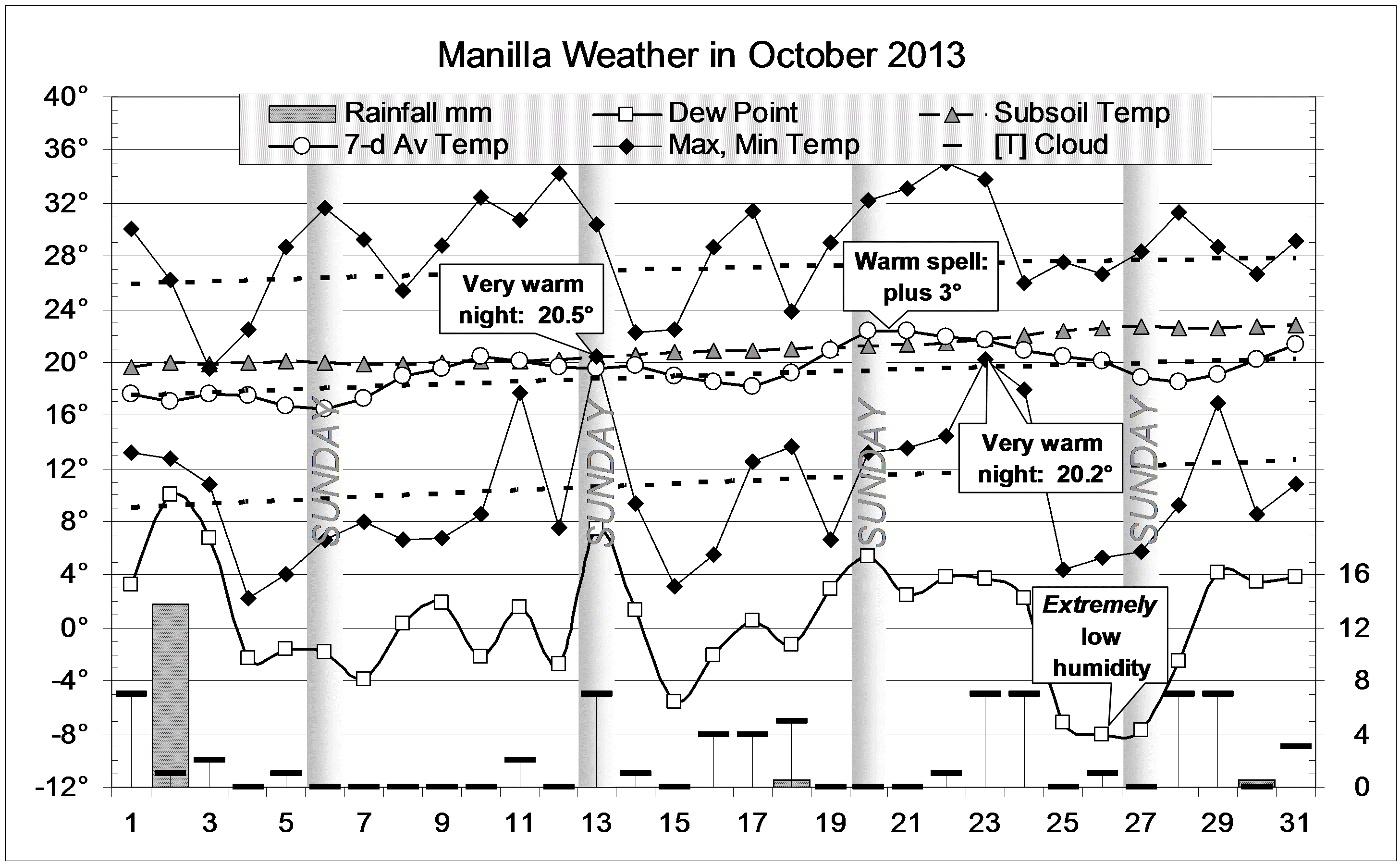
The daily weather logWeather log October 2013.

The second of two warm spells brought weekly temperatures three degrees above normal. Each warm spell ended with a night above 20°. Three mornings from the 25th were exceptionally dry, having dew points of minus 7.2°, minus 8.0°, and minus 7.6°. (The record: minus 9.3° on 17/5/11.)
There were three rain days: the 2nd with 13.8 mm, and the 18th and 30th with 0.6 mm each.

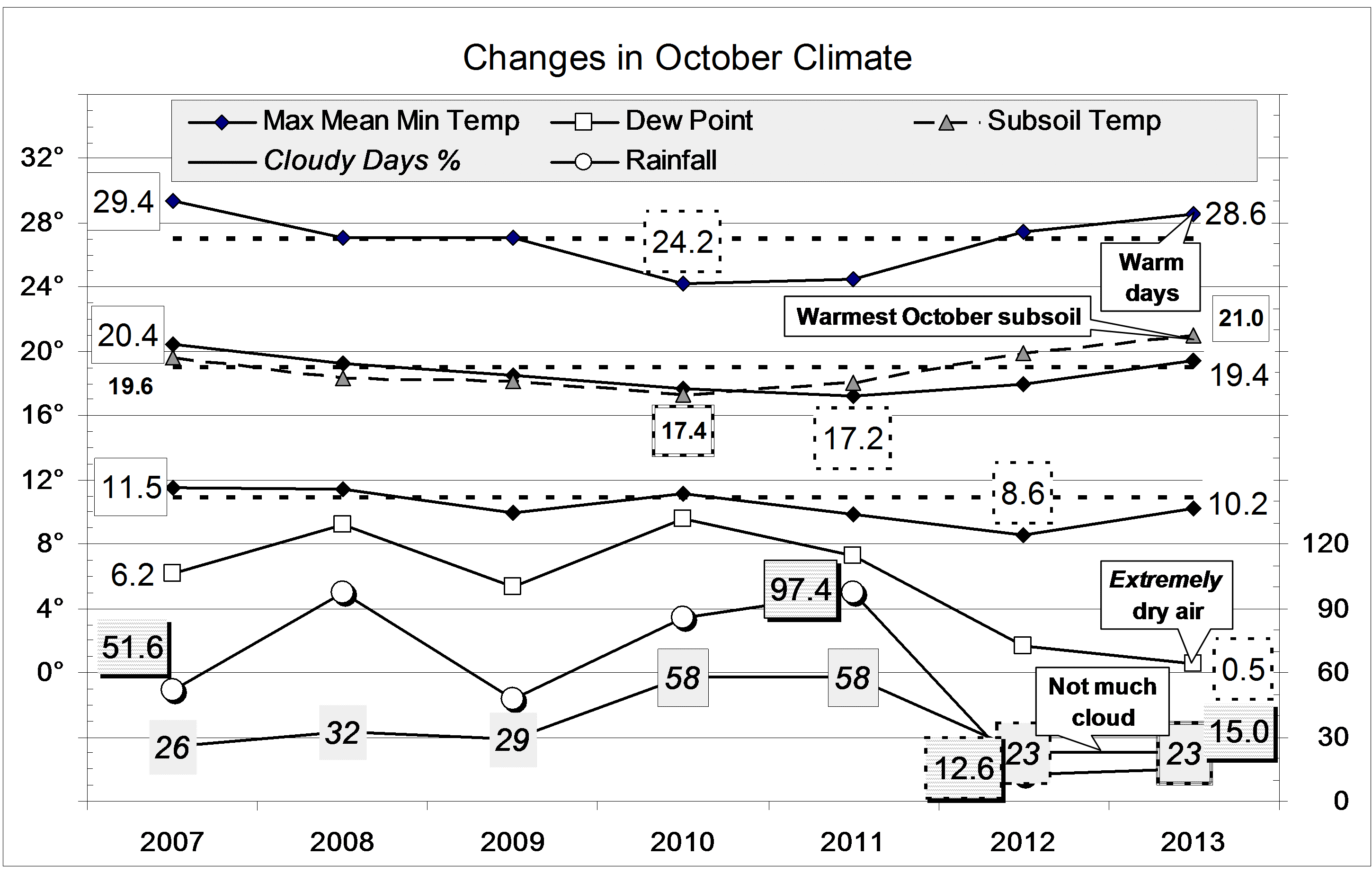
Comparing October monthsClimate October 2013.

October’s days were not quite as warm as in 2007. Dryness was marked by low rainfall, little cloud, and wide daily temperature range, but most remarkably by the record low dew point and relative humidity.
At 21.0°, the subsoil was warmer than in any other October month. It was 1.6° above normal.
The total rainfall of 15.0 mm was in only the 12th percentile, far below the average of 58 mm. The three and four month rainfall totals (41 mm; 71 mm) are now severe shortages, in the 3rd and 4th percentiles.


Data. Rainfall data is from Manilla Post Office, courtesy of Phil Pinch. Temperatures, including subsoil at 750 mm, and other data are from 3 Monash Street, Manilla.

3-year trends to October 2012

Parametric plots of smoothed climate variables at Manilla

“Rushing into drought”Trends to October 2012.

In October, while daily maximum temperature remained not far above normal, raw values of all other monthly mean anomalies (except minimum temperature and soil temperature) moved further in the “drought” direction. Most extreme was the dew point, which was nearly seven degrees below normal! Daily temperature range was also extremely wide. Rainfall was very low,and cloudiness lower than in recent months.
Minimum temperature anomaly moves erratically. October’s extremely low value resulted from moderate maximum temperature and extreme daily temperature range.
Subsoil temperature returned to normal after seven months above normal.

Fully-smoothed data (in red) now include April 2012. All variables for that month show an advance towards the top right corner of the graphs (typical of droughts).
The April 2012 value of smoothed dew point anomaly (-2.00°) is a new record low for smoothed data, beating the record of July 2011 (-1.70°).

Note: Fully smoothed data – Gaussian smoothing with half-width 6 months – are plotted in red, partly smoothed data uncoloured, and raw data for the last data point in orange. January data points are marked by squares. Blue diamonds and the dashed blue rectangle show the extreme values in the fully smoothed data record since September 1999.

Arid October 2012

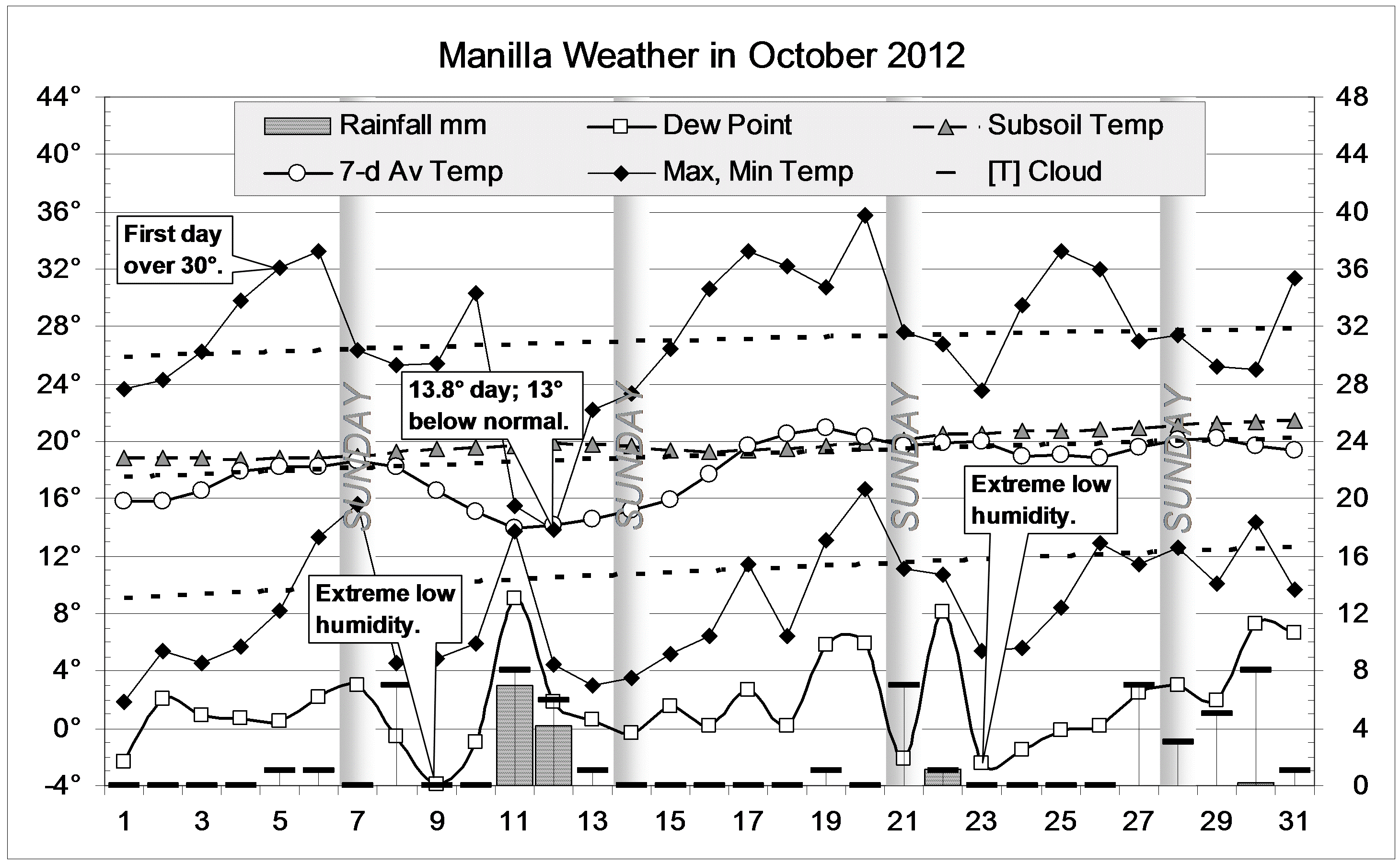
The daily weather logWeather log October 2012.

Many days this month had weather you might expect in a desert. Cold nights and warm days made the temperature range very wide. Very dry air sent morning dew points below zero several times.
Very cold cloudy weather on the 11th and 12th brought 11.2 mm of rain, but two cool cloudy spells later brought little more.

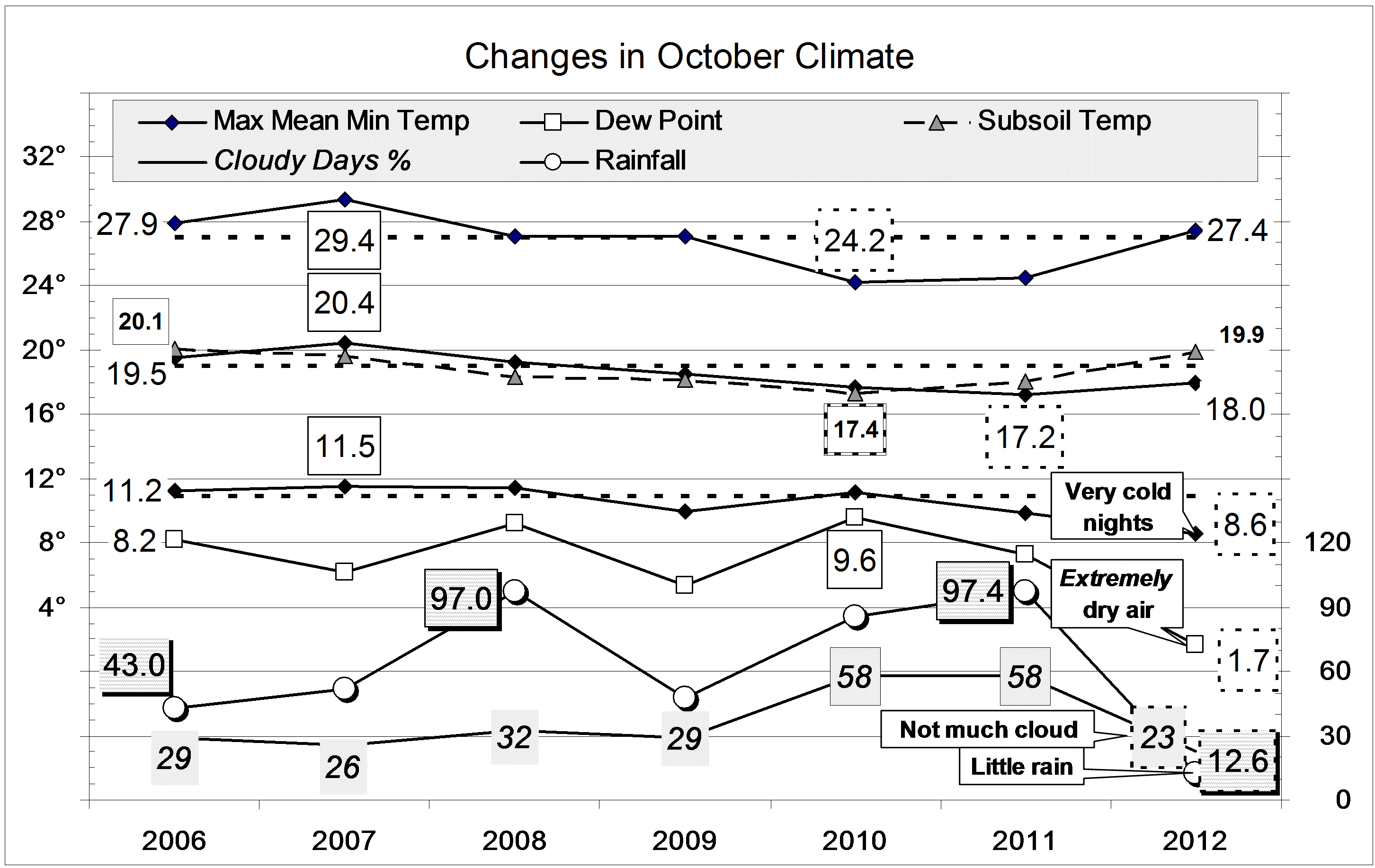
 Comparing October monthsClimate October 2012.

Nights, at 8.6°, were the coldest for October, 2.3° colder than average.
The mean morning Dew Point of 1.7° is an amazing low-humidity value for October, 6.6° below average! Low humidity brought less October cloud than seen since 2004.
The very low rainfall of 12.6 mm is in the 11th percentile for October. While rainfall totals for 12 months or more are all above normal, there has been little recent rain. The 2-month total (33 mm) is a serious rainfall shortage (9th percentile) and the 3-month total (44 mm) is a severe rainfall shortage (3rd percentile). Similar shortages of rainfall have developed in a broad band from Sydney to Perth.


Data. Rainfall data is from Manilla Post Office, courtesy of Phil Pinch. Temperatures, including subsoil at 750 mm, and other data are from 3 Monash Street, Manilla.


3-year trends to October 2011

Parametric plots of smoothed climate variables at Manilla

“Suddenly cold and wet”
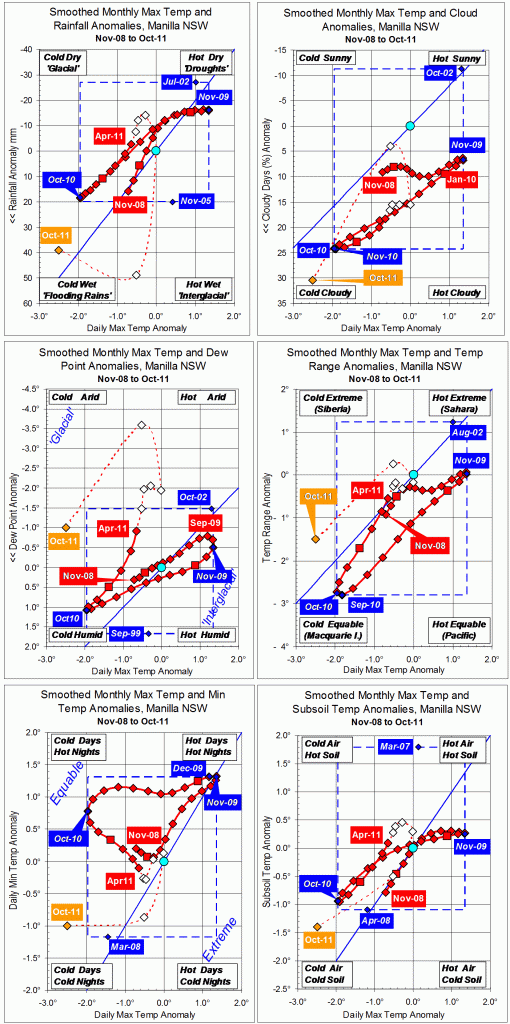
Trends to October 2011.

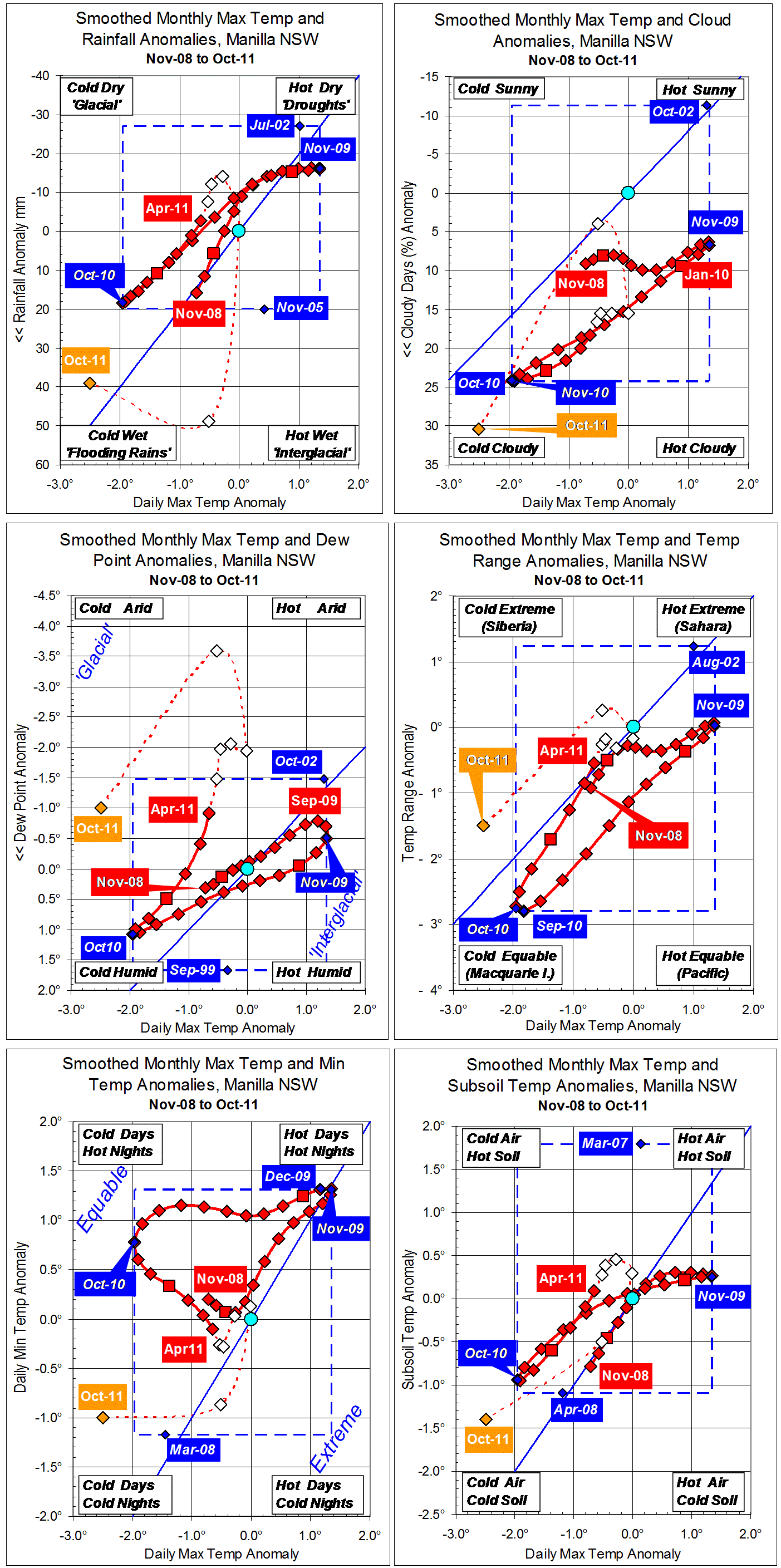
Raw values of some climate variables for October 2011 are like those of October 2010 which, when smoothed, turned out to be a record cold-wet climate peak. Using the two sets of graphs (above and below), one can see:

1. Raw data values (orange) and little-smoothed data values flail around wildly, but the fully-smoothed values (red) near October 2010 (at the left edge of each graph above) trace simpler, more regular curves with points more closely spaced.
2. The approach routes to the two sets of raw data October values were quite different.

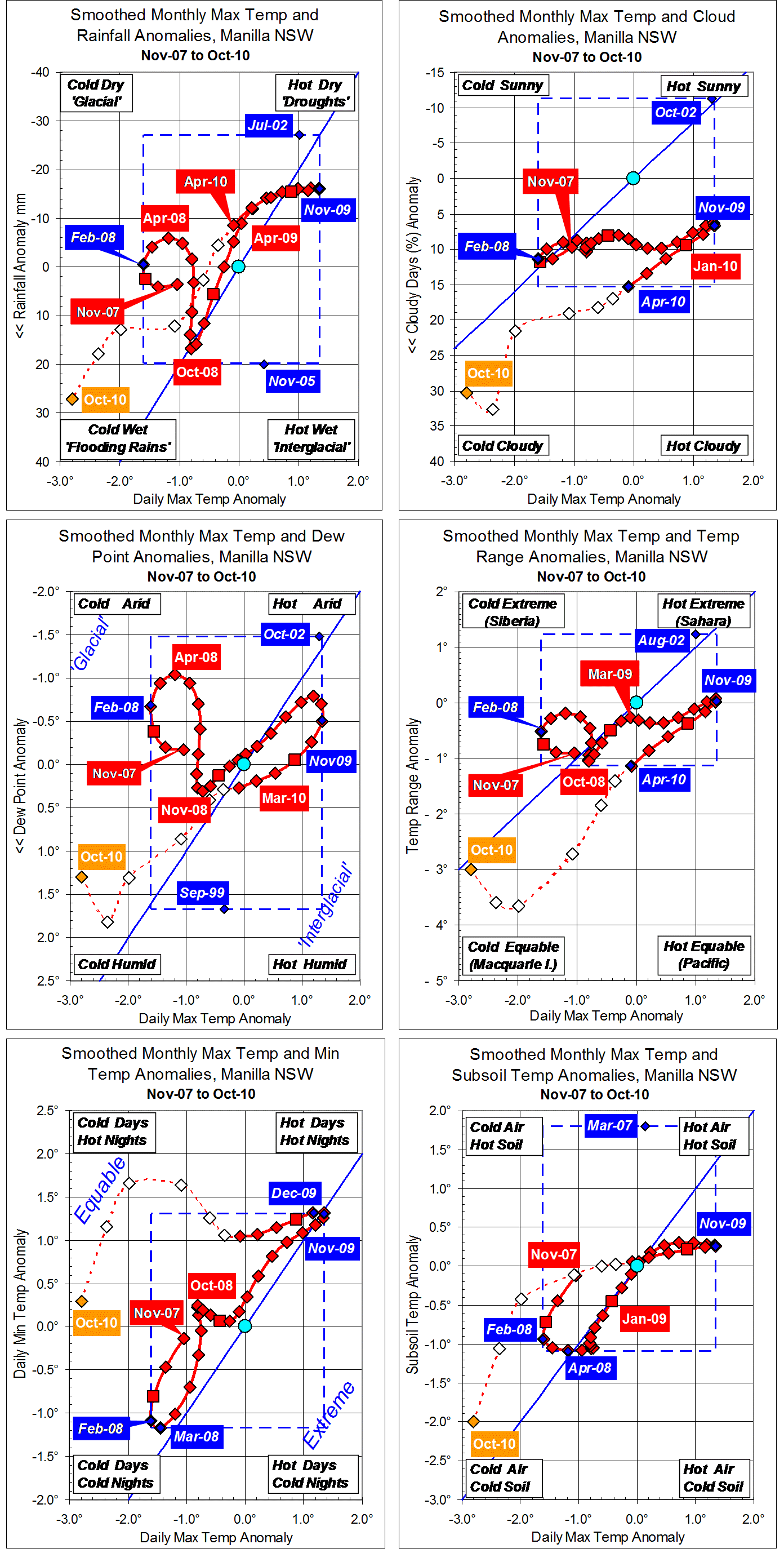
Graphs from one year earlier: October 2010.
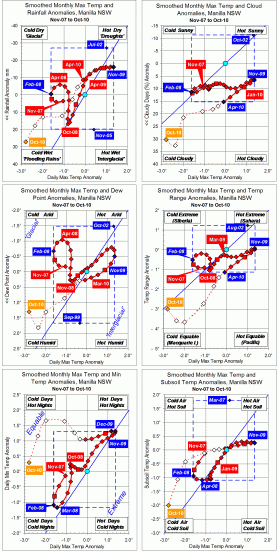
Trends to October 2010.Maximum temperature anomaly values (x-axis, all graphs)

(a) Maximum temperature partly-smoothed values in 2010 fell from normal to extremely low values taking six months;
(b) The maximum temperature smoothed value for October 2010 became the peak of a cold time: a new record low;
(c) Maximum temperature partly-smoothed values in 2011 fell from normal to extremely low values (LIKE 2010) taking only two months (UNLIKE 2010).

Rainfall anomaly values (y-axis, top left graphs)

(a) Extremely high rainfall in October 2010 followed values that had been rising steadily for eight months;
(b) The smoothed rainfall value for October 2010 became the peak of a wet time: a near-record wet;
(c) Extremely high rainfall in October 2011 (UNLIKE 2010) followed even higher rainfall in September, but normal rainfall just before that.

Cloud anomaly values (y-axis, top right graphs)

(a) Extreme cloudiness in October 2010 followed values that had been rising steadily for ten months;
(b) The smoothed cloudiness value for October 2010 was near the November 2010 peak of a cloudy time: a record for smoothed cloudiness;
(c) Extremely cloudiness in October 2011 (UNLIKE 2010) broke a 10-month trend towards LESS cloudiness.

Dew Point anomaly values (y-axis, centre left graphs)

(a) Very high Dew Points in Aug-Sep-Oct 2010 followed values that had been rising steadily for almost a year;
(b) The smoothed Dew Point value for October 2010 became the peak of a humid time: a near-record;
(c) The Dew Point in October 2011 (UNLIKE 2010) was NOT very high: it was still below normal (i.e. arid) following five months of even lower values.

Temperature Range anomaly values (y-axis, centre right graphs)

(a) Extremely low temperature range in October 2010 followed even lower values;
(b) The smoothed temperature range value for October 2010 was close to the September 2010 record peak low value (-2.80 degrees), more than twice as low as the earlier record set in June 2007 (-1.09 degrees);
(c) The temperature range in October 2011 (UNLIKE 2010) was not very low, but it was much lower than the normal values of the preceding six months.

Min temp anomaly values (y-axis, bottom left graphs)

(a) The min temp in October 2010 was normal, following a full year of very high values;
(b) The smoothed min temp for October 2010 was rather high and falling steadily;
(c) The min temps in September and October 2011 (UNLIKE 2010) were very low, following six months of normal values (UNLIKE 2010).

Subsoil temp anomaly values (y-axis, bottom right graphs)

(a) Extremely low subsoil temp in October 2010 followed a rapid fall in the preceding two months;
(b) The smoothed subsoil temp value for October 2010 was near the peak (November 2010) of a near-record time of low subsoil temp;
(c) As in October 2010, extremely low subsoil temp in October 2011 followed a rapid fall in the preceding two months (LIKE 2010).

Note: Fully smoothed data – Gaussian smoothing with half-width 6 months – are plotted in red, partly smoothed data uncoloured, and raw data for the last data point in orange. January data points are marked by squares. Blue diamonds and the dashed blue rectangle show the extreme values in the fully smoothed data record since September 1999.