July 2009 getting short of rain

The daily weather logWeather log July 2009
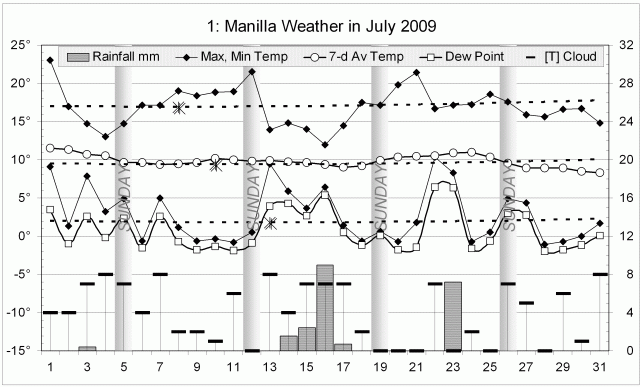
Apart from a scarcity of rain, and an abundance of cloud, the weather in July was very much as usual. One day reached 23°, another only 12°. There were 18 frosts (normally 17), but no night was colder than -2° (normally 4 nights are). Fog filled the valley on the 28th.
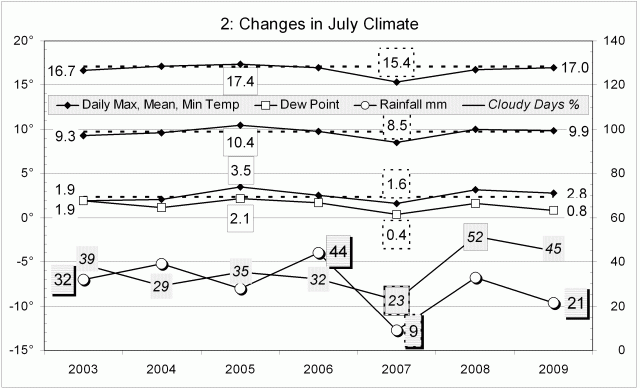
There had been twenty-three days without 5 mm of rain when 9 mm fell on the 16th. In six rain days the month’s total was 21.3 mm. This is well below the median for July (35 mm): it is in the 25th percentile.

 Comparing July months
Climate July 2009

All mean daily temperatures for the month were normal.
There is a serious shortage of rain in the five months to date: the total of 138 mm is on the 10th percentile. Five-month totals below the 10th percentile are rare in recent years: July 2008 (9th percentile), August 2006 (9th), May 2005 (5th) and September 2003 (7th).
(Very much drier 5-month conditions prevailed in 2002: November had a severe rainfall shortage (in the 2nd percentile) while July, August, September and October had extreme rainfall shortages, in the first percentile. September 2002 had the lowest 5-month total (61 mm) in 75 years.)


Data. Rainfall data is from Manilla Post Office, courtesy of Phil Pinch. Dew point values before August 2005 are from Tamworth Airport 6 am data supplied by the Bureau of Meteorology. Temperature and other data are from 3 Monash Street, Manilla.
 

Cloudy Autumn 2009

Weather log autumn 2009

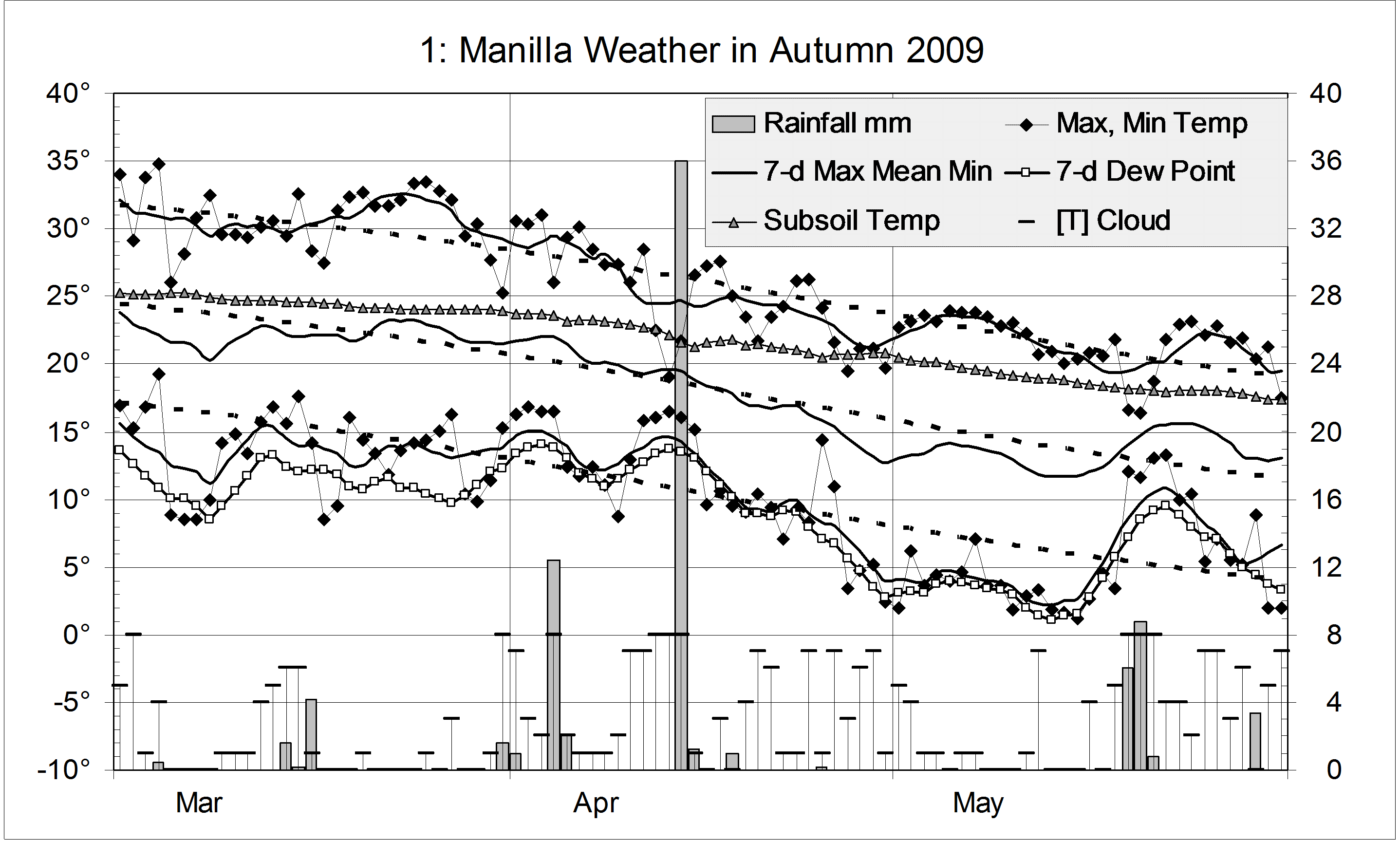
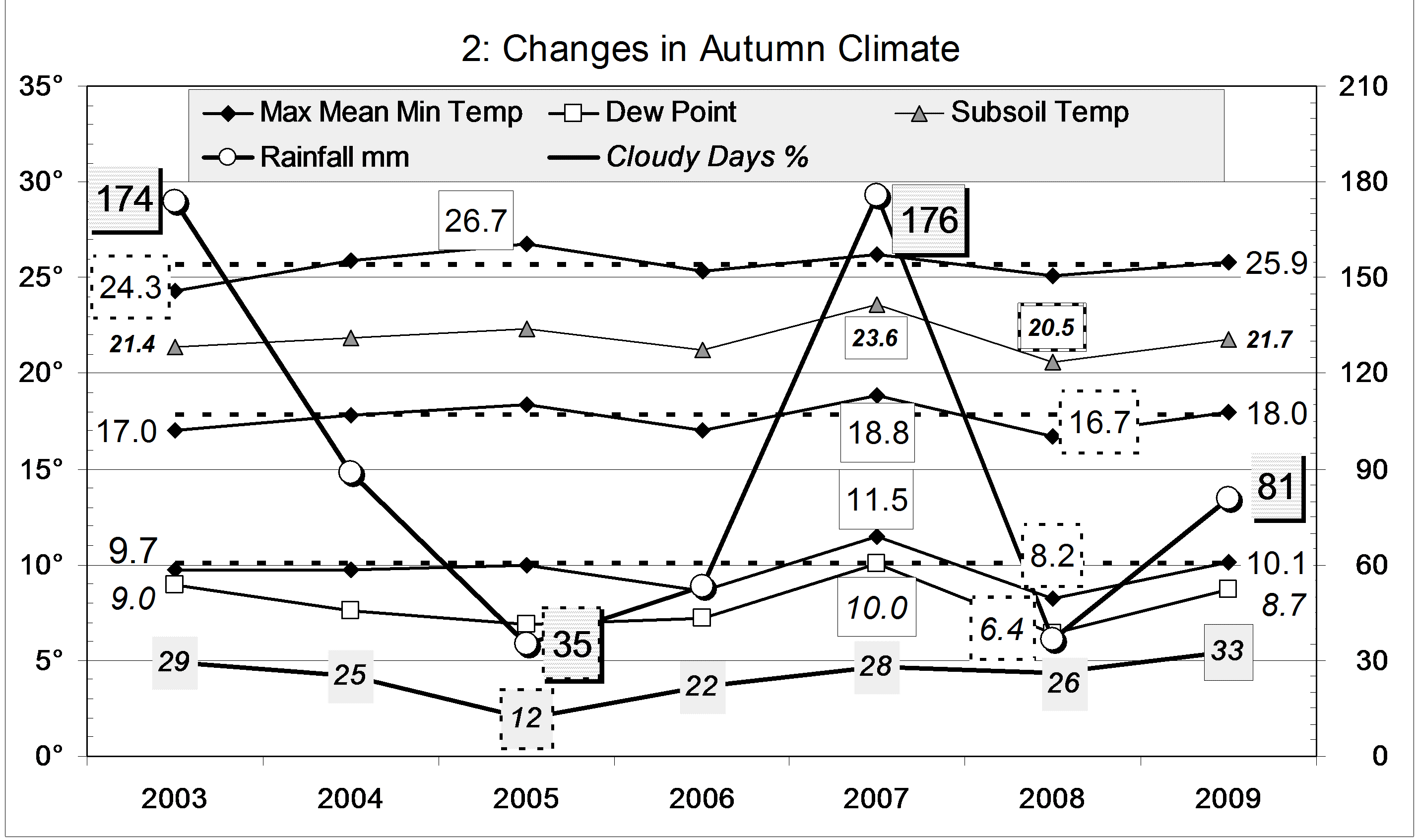
Temperatures cooled as normal in autumn, with few unusual features. Through early March and early May nights were cold, humidities were low, and skies were clear. Later in May, nights were very warm.
There were 16 rain days, which is more than normal (12), but most had very low readings. One rain day in April (36 mm) brought nearly half the season’s rain.


As in the summer, all mean temperatures (daily maximum, mean, and minimum), as well as the morning Dew Point, were normal. Neither of the previous two autumns had been normal: autumn 2008 was very cool and arid; autumn 2007 was very warm and humid.
The total rainfall of 81 mm is on the 30th percentile for autumn. It is 32 mm below the autumn median rainfall (113 mm).
At 33% cloudy mornings, this autumn was the cloudiest of the decade. Autumns average only 25% cloudy mornings, compared to 31% in winter and 30% in spring and in summer.

Climate autumn 2009

Data. Rainfall data is from Manilla Post Office, courtesy of Phil Pinch. Dew Point values before August 2005 are from Tamworth Airport 6am data supplied by the Bureau of Meteorology. Temperature and other data are from 3 Monash Street, Manilla.
May 2009 rain by-passed Manilla

The daily weather log

Weather log May 2009

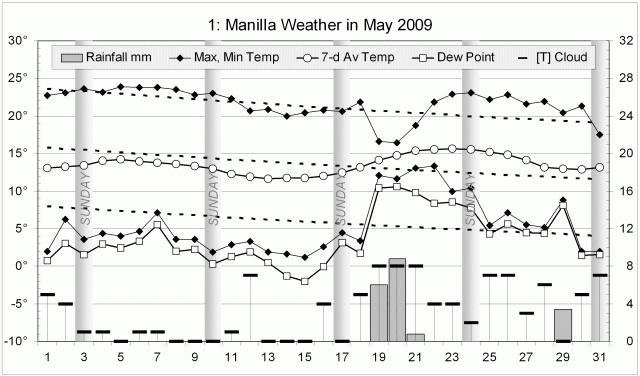
More than half the month passed with sunny days, and cool nights (3°) that kept the average temperature down. The 18th was the 34th day without 5 mm of rain.
A lot of rain then came into the region carried on easterly winds from the very warm sea. The coast had five days of heavy rain, causing severe flooding. Manilla had only three rain days, totalling less than 16 mm. At the same time, areas near Mungindi had twice as much. Instead of rain, Manilla got a week of humid overcast days and very warm nights (11°). Thick fog on the 29th did not lift until after 10 am.

 Comparing May months

Climate May 2009

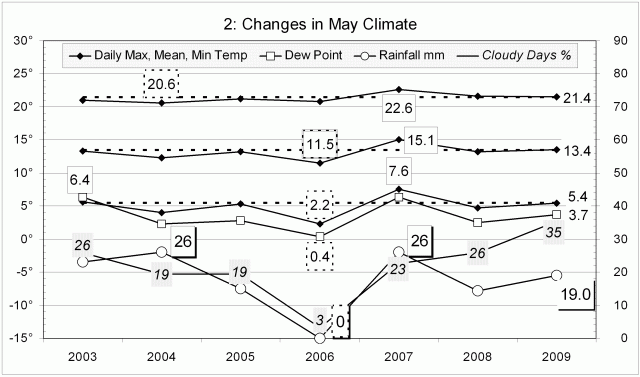
This month had normal temperatures, but it was cloudier than any May since 2001. There were seven mild frosts (normally six), but none was below zero in the screen.

(May 2007 was warm and humid; May 2006 was cool and remarkably sunny.)
The rainfall total (19.0 mm) was in the 34th percentile for the month. While this is below the May median (27 mm), it is well above the most common May reading (5 mm). The two-month total for April and May (73 mm) is on the 33rd percentile. The three-month total (81 mm) is worse: it is on the 14th percentile, but that is not a serious shortage. The four and five month rainfall totals have now fallen to 38th and 41st percentiles. Beyond that, totals are above the median for all periods up to 72 months, except for the 15-month total, which has now fallen to the 45th percentile.


Data. Rainfall data is from Manilla Post Office, courtesy of Phil Pinch. Dew point values before August 2005 are from Tamworth Airport 6 am data supplied by the Bureau of Meteorology. Temperature and other data are from 3 Monash Street, Manilla.
 

April showers in 2009

The daily weather log

Weather log April 2009

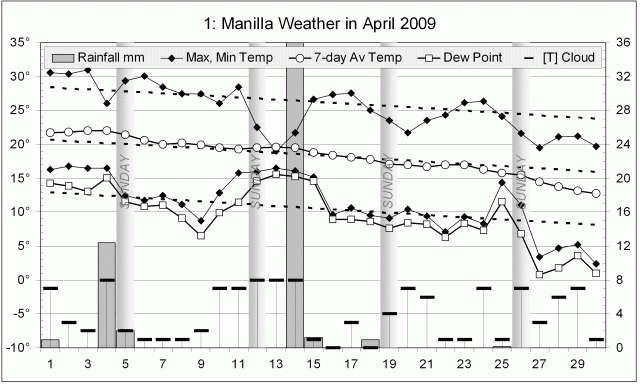
For weekly average temperatures, the month began warm, due to warm nights. Normal temperatures followed until, in the last days, cold dry winds arrived from the Southern Ocean, driving temperatures several degrees below normal. At the end, days were 20° and nights 4°, but there were no frosts.
Twelve point four millimetres of rain on the 4th was the first reading over 5 mm in 46 days. Rather more rain followed a humid, overcast spell at Easter: 36.0 mm fell on the 14th. The month’s total was 53.8 mm. There were seven Rain Days, twice as many as usual.

 Comparing April months

Climate April 2009

Of the monthly mean temperatures, only the nights were warmer than normal. The daily temperature range was rather low. This related to a high mean Dew Point and skies more cloudy than usual for April.

April last year was much cooler, and April 2005 much warmer.
The rainfall total (53.8 mm) was in the 76th percentile for the month. This is above the April median (33 mm), and over twenty times the most common April reading (2 mm). The two-month total for March and April (62 mm) is on the 26th percentile: not a serious rainfall shortage, as happened last year (22 mm; 4th percentile).Beyond the two-month figures, totals are still above the median for all periods up to 72 months, except for the 36-month total, which has risen again to the 47th percentile.


Data. Rainfall data is from Manilla Post Office, courtesy of Phil Pinch. Dew point values before August 2005 are from Tamworth Airport 6 am data supplied by the Bureau of Meteorology. Temperature and other data are from 3 Monash Street, Manilla.
 

Normal Climate in Summer 2008-09


Weather log summer 2008-09

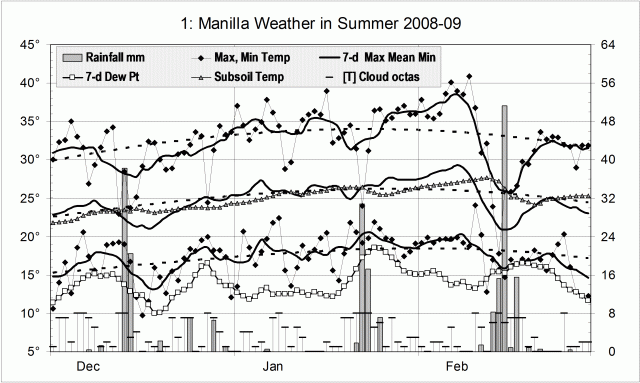
For most of the summer, 7-day average temperatures got steadily warmer. From 4° below normal in mid-December they rose to 4° above normal in early February. They then crashed to 5° below normal before recovering. Two days exceeded 40°: February 6th (40.1°) and February 9th (40.9°). In ten summers, 19 days have exceeded 40°, the hottest being 42.0° on 21/2/04.
This season had the coldest summer day so far this century: February 14th 2009, with 17.8°. That is 15.3° below normal (it would be normal in winter, not summer)!

NOTE. This is the daily maximum reading that is furthest below normal in the ten-year record from March 1999. There have been only 23 days when the maximum was more than 10° below normal. Only 18 days were more than 8° above normal. The furthest above normal (by 10.5°) was the reading of 38.8° on November 10th 2002.

Humidity was low both in the early cool spell and in the later hot spell. At both times the daily range of temperature was high (17°) and the skies mainly clear.
There were 23 rain days, which is normal and far fewer than the 33 rain days last summer. Dry spells (with falls less than 1 mm) were long: 21 days from the 30th of December, and 16 days from the 25th of January. February the 15th was the wettest day, with 51.2 mm, and the summer total was 228 mm.
The number of overcast mornings (12) was normal for summer, but the number of cloud-free mornings (17) was very low, as it was last summer (13).


All mean temperatures (daily maximum, mean, and minimum) were normal this summer. They were much higher than last summer, with the daily maximum a remarkable 2.8° higher. The mean morning Dew Point was also normal.

The total rainfall of 228 mm is very close to the long-term summer average of 227 mm. It is on the 54th percentile.
At 38% cloudy mornings, this summer was cloudy, but not extremely cloudy like last summer (53%).
The summers of 05-06 and 07-08 were both very wet (319 mm and 311 mm). They differed in other ways: summer 05-06 was hot, humid and not cloudy; summer 07-08 was cold, not humid, and extremely cloudy.

Climate for summer 2008-09


Data. Rainfall data is from Manilla Post Office, courtesy of Phil Pinch. Dew Point values before August 2005 are from Tamworth Airport 6am data supplied by the Bureau of Meteorology. Temperature and other data are from 3 Monash Street, Manilla.