3-year trends to May 2013

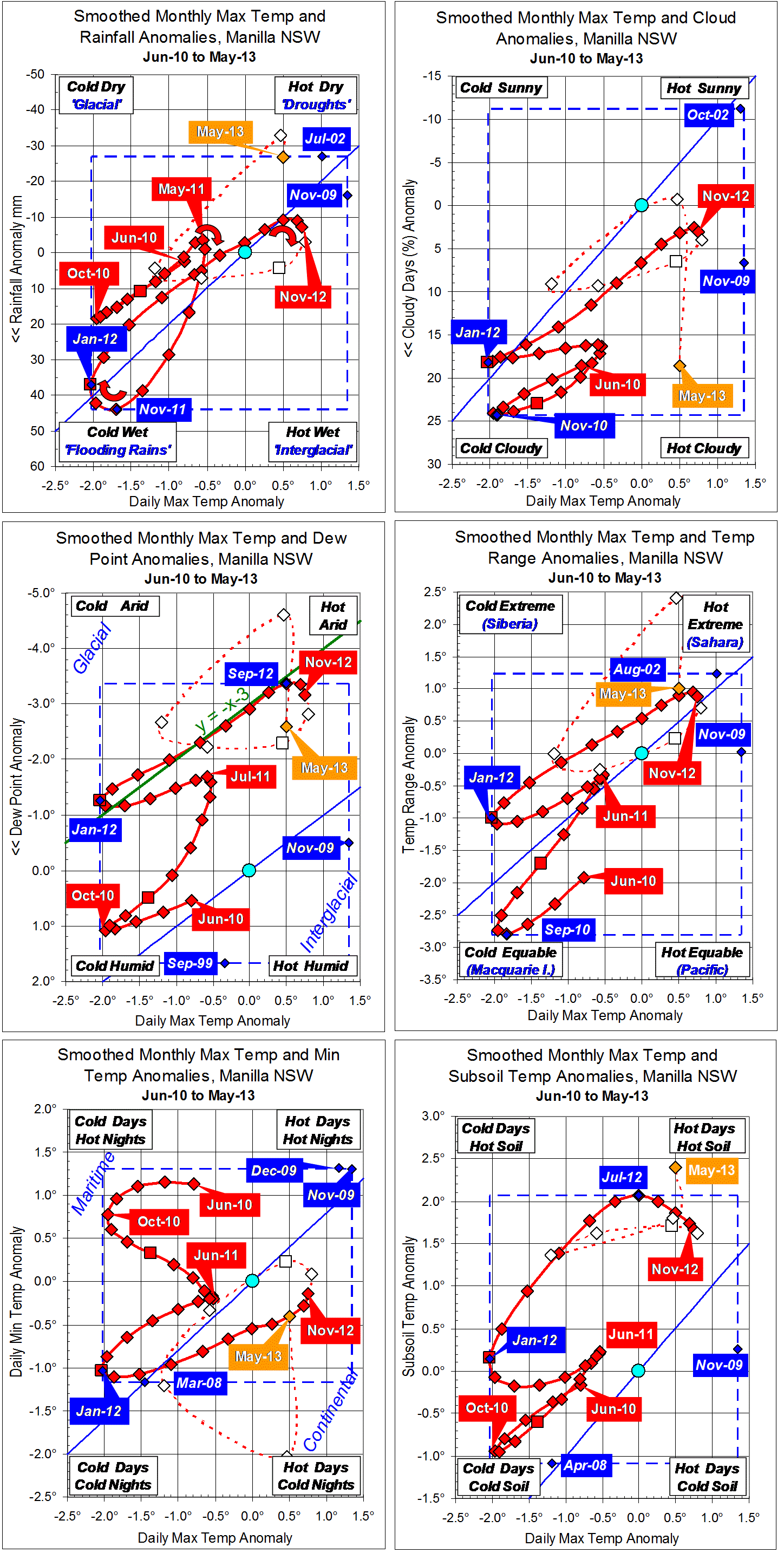
Parametric plots of smoothed climate variables at Manilla

“Still warm; not quite so dry”Trends to May 2013.
May continued warm, but not quite so dry. Skies became cloudy again, and minimum temperature rose back to normal.

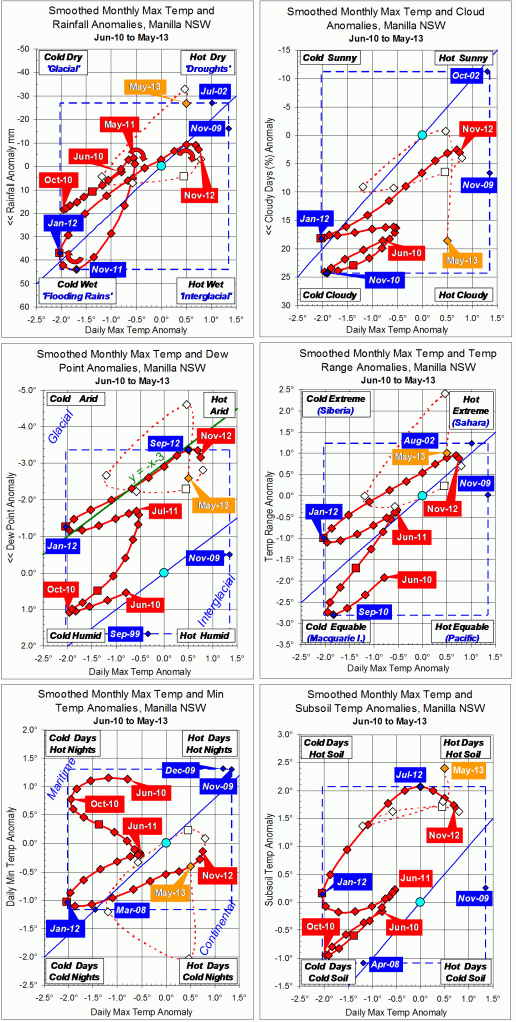
Points in red for November 2012 complete fully-smoothed data for spring 2012. They define a reversal of climate. Anomalies of moisture variables (rainfall, cloud, dew point, and (minus) temperature range) peaked in the “drought” sense in September or October. The anomaly of daily maximum temperature peaked (probably) in November, and that of daily minimum temperature peaked later (date uncertain).

The curved red arrows on the first graph emphasise the fact that, for these peaks and troughs, temperature extremes came a month or more after rainfall extremes.

ENSO and this 3-year temperature-rainfall-humidity record

I discussed the match between Manilla climate variation at this time and the El Niño – Southern Oscillation in a post on the weatherzone forum thread “ENSO Discussion 2013”: Post #1195723 of 26 May 2013.

Note: Fully smoothed data – Gaussian smoothing with half-width 6 months – are plotted in red, partly smoothed data uncoloured, and raw data for the last data point in orange. January data points are marked by squares. Blue diamonds and the dashed blue rectangle show the extreme values in the fully smoothed data record since September 1999.

Another dry May in 2013

The daily weather logWeather log May 2013

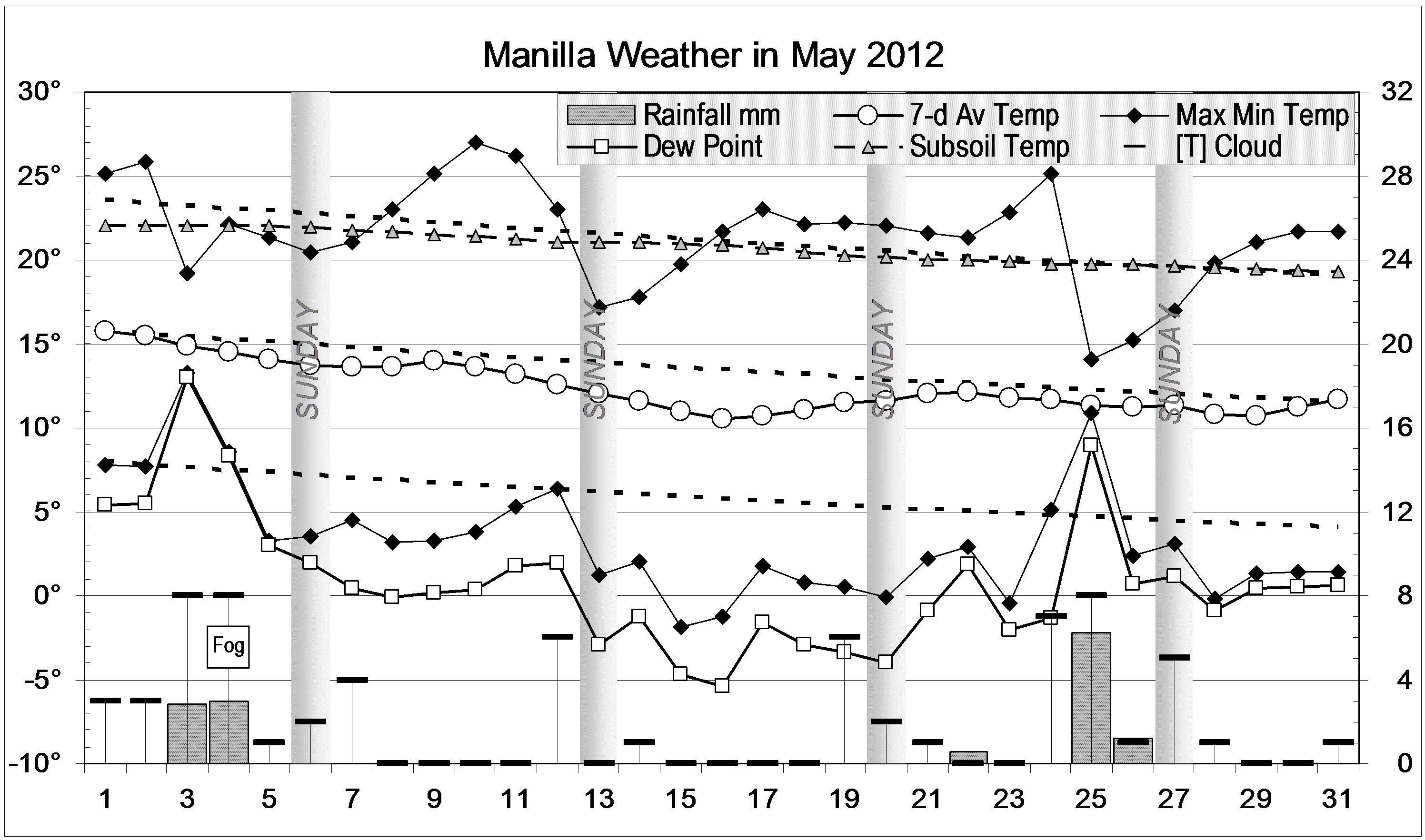
Most days were warm and sunny, but there were cold, cloudy days from the 14th to the 24th, and three of them had a little rain. By the end of the month, there had been only 26.6 mm of rain in 90 days.
There were five frosty mornings, which is normal.

 Comparing May monthsClimate May 2013.

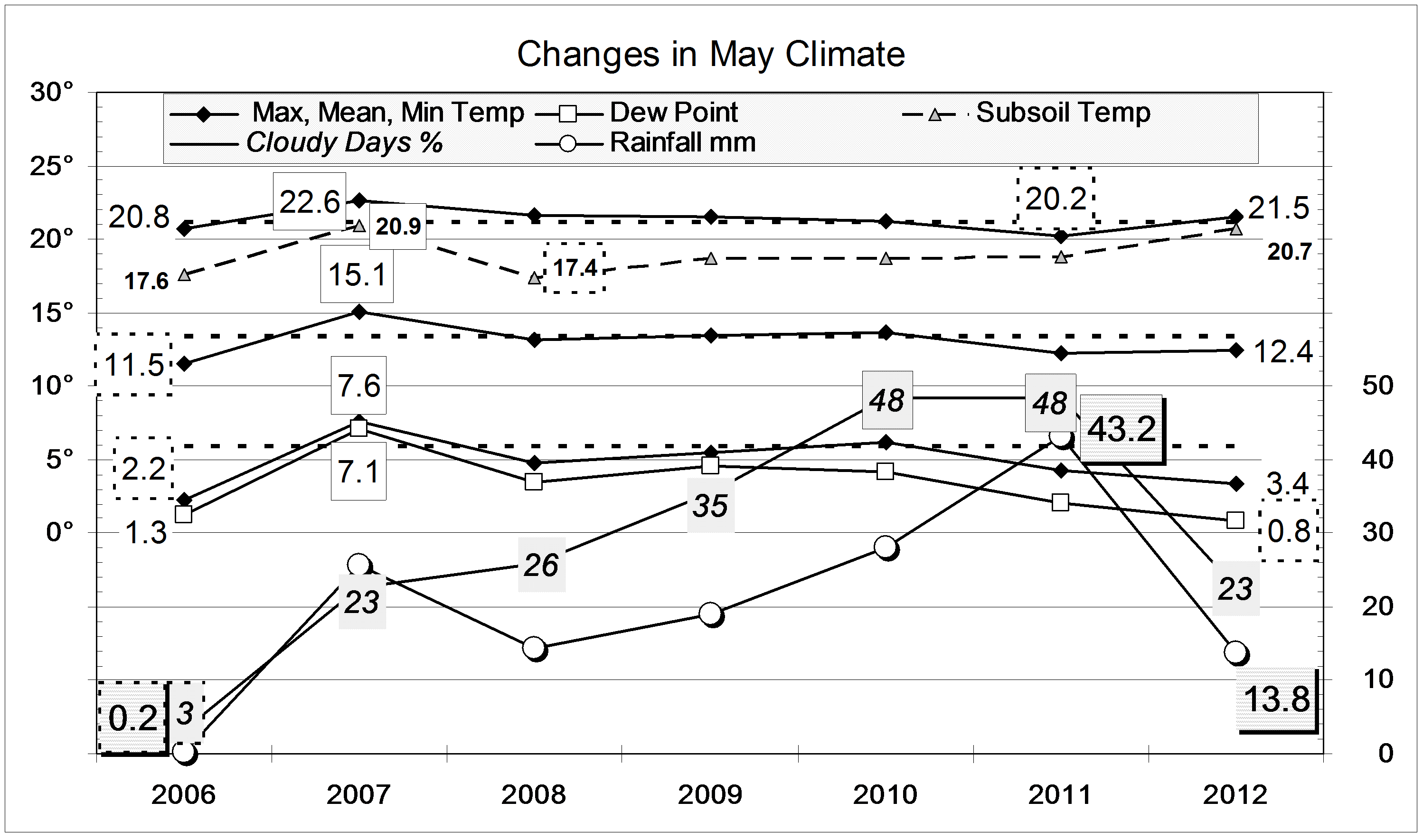
The mean maximum temperature was half a degree high and the mean minimum half a degree low. The mean early morning dew point (2.6°) showed low humidity, but it was not as low as the May record of 0.8° set last year. There were far more cloudy mornings (42%) than usual (24%), but fewer than in 2010 or 2011 (48%). The subsoil was 2.4° warmer than normal: its autumn cooling remained three weeks late.

The rainfall total of 13.6 mm was far below the average of 40.3 mm, but May has less rain than that in 23% of the years. Furthermore, Manilla’s May rainfall has been low for many years: in this century, only May 2011 (43.2 mm) beat the long-term average.
The two month total of 18 mm is now a severe shortage: in the 3rd percentile.


Data. Rainfall data is from Manilla Post Office, courtesy of Phil Pinch. Temperatures, including subsoil at 750 mm, and other data are from 3 Monash Street, Manilla.


3-year trends to May 2012

Parametric plots of smoothed climate variables at ManillaTrends to May 2012.

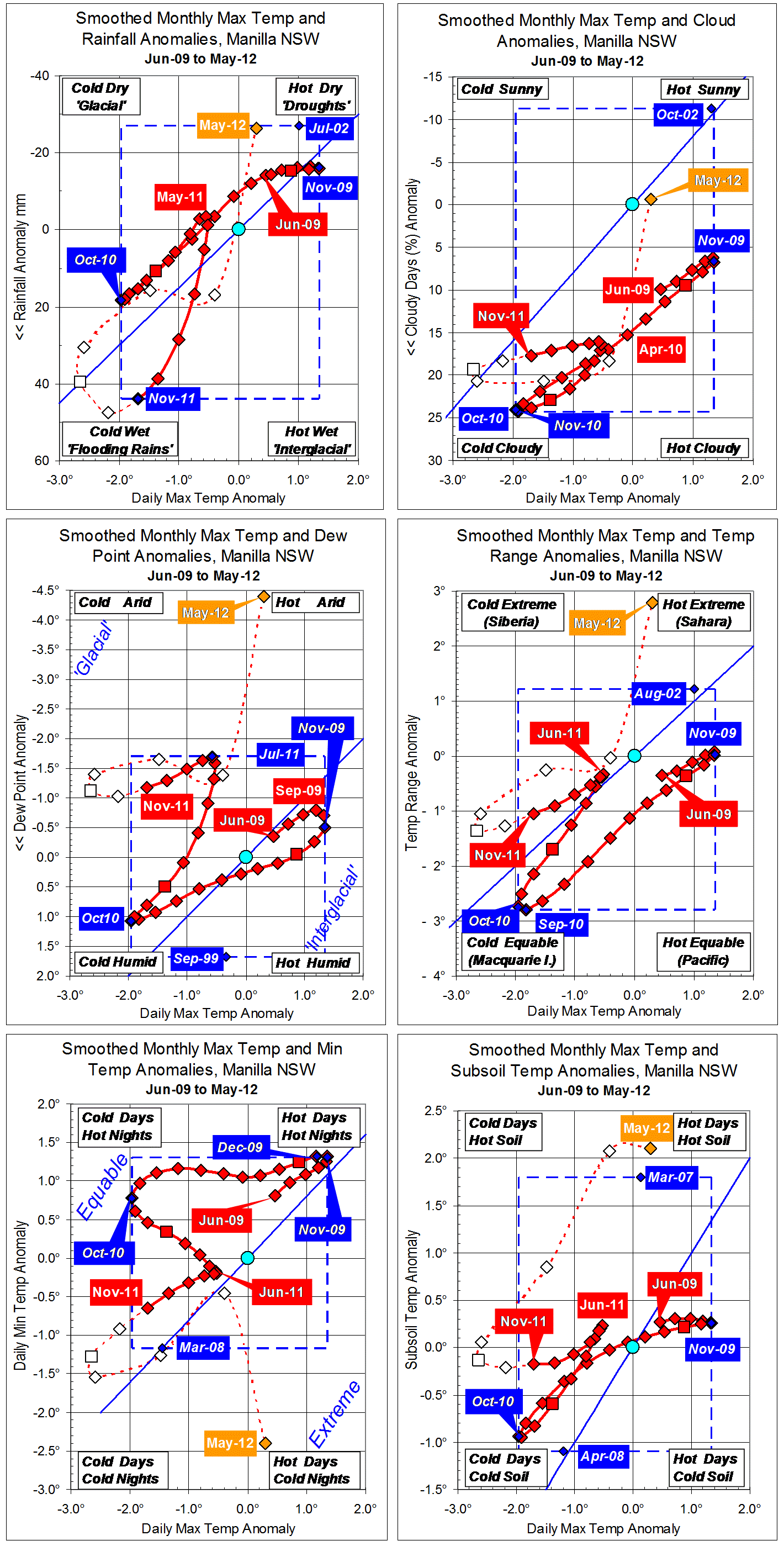
New raw data for May 2012 anomalies show a dry climate, quite unlike the extremely wet and very cold summer. Daily max temp was slightly above normal and rainfall well below normal. The Dew Point was extremely low, daily min temp very low, and temperature range very wide. Subsoil temperature remained high: for five months it has been two degrees warmer than might be expected from the daily maximum air temperature.

Spring (SON) 2011 anomalies (now fully smoothed) changed as follows:
Max temp fell rapidly from one degree below normal;
Rainfall began high and increased very rapidly;
Cloudiness remained rather high;
Dew Point was low, but rose slightly;
Temp range and Min temp were both rather low and decreasing;
Subsoil temp was normal.

A new 13-year record high monthly rainfall anomaly of +43.8 mm came in November. This beats the record set the previous month by 5 mm, but it may be beaten the following month.

Note: Fully smoothed data – Gaussian smoothing with half-width 6 months – are plotted in red, partly smoothed data uncoloured, and raw data for the last data point in orange. January data points are marked by squares. Blue diamonds and the dashed blue rectangle show the extreme values in the fully smoothed data record since September 1999.
Very dry air in May 2012

The daily weather logWeather log May 2012.

Most days were fine, and only two or three were cool and overcast. There were 13 frosts, twice the usual number, but May 2006 had 14. Rain totalling 13.8 mm fell on five rain days, with a maximum reading of 6.2 mm on the 25th.

 Comparing May monthsClimate May 2012.

This was a very dry month, marked by dew points four degrees below normal, but it was not as dry as May 2006, as is clear from the graph.
The rainfall total is well below the May average of 40.3 mm: it is in the 24th percentile (3/4 of May months have been wetter). In extreme contrast, the nine-month rainfall total of 852 mm is extra-ordinarily high. Only 13 nine-month totals have been higher, and then only in the four years 1890, 1928, 1956 and 2012 (April). The record for a nine-month rainfall total was 1030 mm, set in June 1956.


Data. Rainfall data is from Manilla Post Office, courtesy of Phil Pinch. Temperatures, including subsoil at 750 mm, and other data are from 3 Monash Street, Manilla.


3-year trends to May 2011

Parametric plots of smoothed climate variables at Manilla

“Flooding rains climate peaked here in October 2010”Trends to May 2011.

Smoothed data for spring 2010

Fully smoothed data points for spring (SON) of 2010 are plotted in red on the left edge of the graphs. They show that several variables reached peak values during the season. First, temperature range anomaly reached a minimum in September. Next, in October, daily maximum temperature anomaly reached a minimum, rainfall anomaly a maximum, and Dew Point anomaly a maximum. In November, subsoil temperature anomaly reached a minimum. Cloudiness anomaly may have reached a maximum in that month, but perhaps smoothed December or January values will be higher. Daily minimum temperature anomaly did not peak. Through spring it fell steadily from a high positive value.
In a “weatherzone” post, I noted a tendency for variables to peak in a particular order.
“For a “flooding-rains” peak:

  • First: Daily Temperature Range (min);
  • One month later: Rainfall (max), Cloud (max);
  • Two months later: Daily Maximum Temperature (min), Dew Point (max);
  • Four months later: Daily Minimum Temperature (min), Subsoil Temperature (min).”

Not much is different in this case. In particular, daily temperature range was the first to peak (WHY?), and subsoil among the last. However, the time of rainfall maximum did not precede the time when daily maximum temperature reached a minimum.

Data after November 2010

During summer (DJF) most variables seemed to be moving towards “droughts” but this pattern broke down in autumn:

  • Maximum temperature anomaly did not quite reach normal before falling again;
  • Rainfall anomaly became negative then returned to positive;
  • Cloud anomaly had just one negative value before returning to record cloudiness;
  • Dew Point anomalies accelerated to extremely low values;
  • Temperature range anomaly went very positive before falling slightly;
  • Minimum temperature anomaly fell rapidly, independent of maximum temperature anomaly;
  • Subsoil temp anomaly stabilised at a slightly positive value.

I am surprised that extreme cloudiness and extreme low humidity occur together. I am also puzzled about the weak association between daily maximum and minimum temperatures. This is a worry because daily minimum temperatures provide the most consistent signal of climate change during the last century.

Note: Fully smoothed data – Gaussian smoothing with half-width 6 months – are plotted in red, partly smoothed data uncoloured, and raw data for the last data point in orange. January data points are marked by squares. Blue diamonds and the dashed blue rectangle show the extreme values in the fully smoothed data record since September 1999.