3-year trends to September 2012

Parametric plots of smoothed climate variables at Manilla

“Still Very Dry Air”Trends to September 2012.
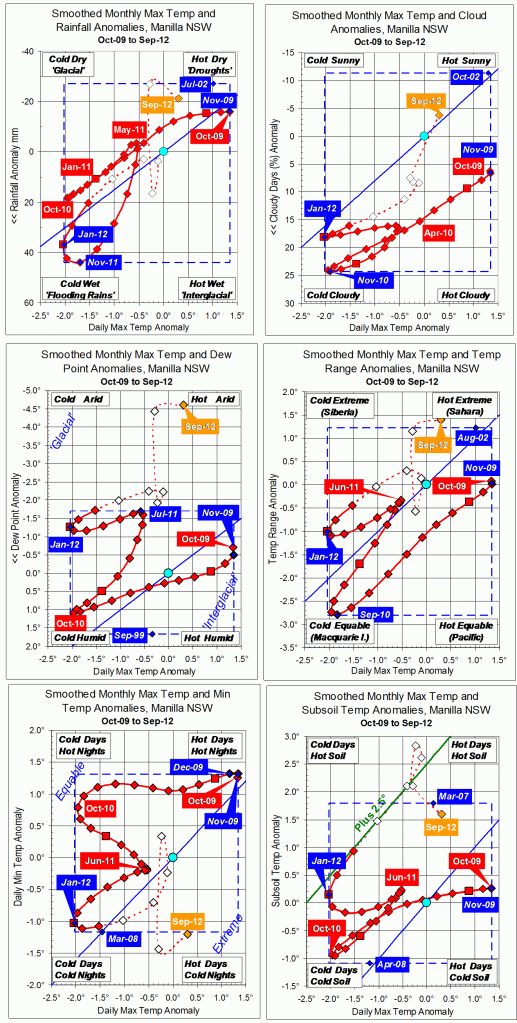
In September, daily maximum temperatures finally rose above normal. As in August, Dew Points (humidity) remained extremely low, daily minimum temperature very low, rainfall low, and daily temperature range very high. Cloudiness finally fell below normal, and subsoil temperature fell towards normal.

Fully-smoothed data (in red) now include March 2012. All variables for that month show a retreat from the “flooding rains” climate peak. Because the daily minimum temperature anomaly did not reach a minimum in March as I expected, the sequence of peaks for individual variables must be amended as follows:
Nov-11: Rainfall (max); Subsoil temp (min);
Dec-11: Temp range (min); Dew Pt (max);
Jan-12: Temp max (min);
Feb-12: Temp min (min).
The February 2012 value of smoothed minimum daily temperature anomaly (-1.11 degrees) was not quite as low as the record set in March 2008 (-1.17 degrees).

Note: Fully smoothed data – Gaussian smoothing with half-width 6 months – are plotted in red, partly smoothed data uncoloured, and raw data for the last data point in orange. January data points are marked by squares. Blue diamonds and the dashed blue rectangle show the extreme values in the fully smoothed data record since September 1999.
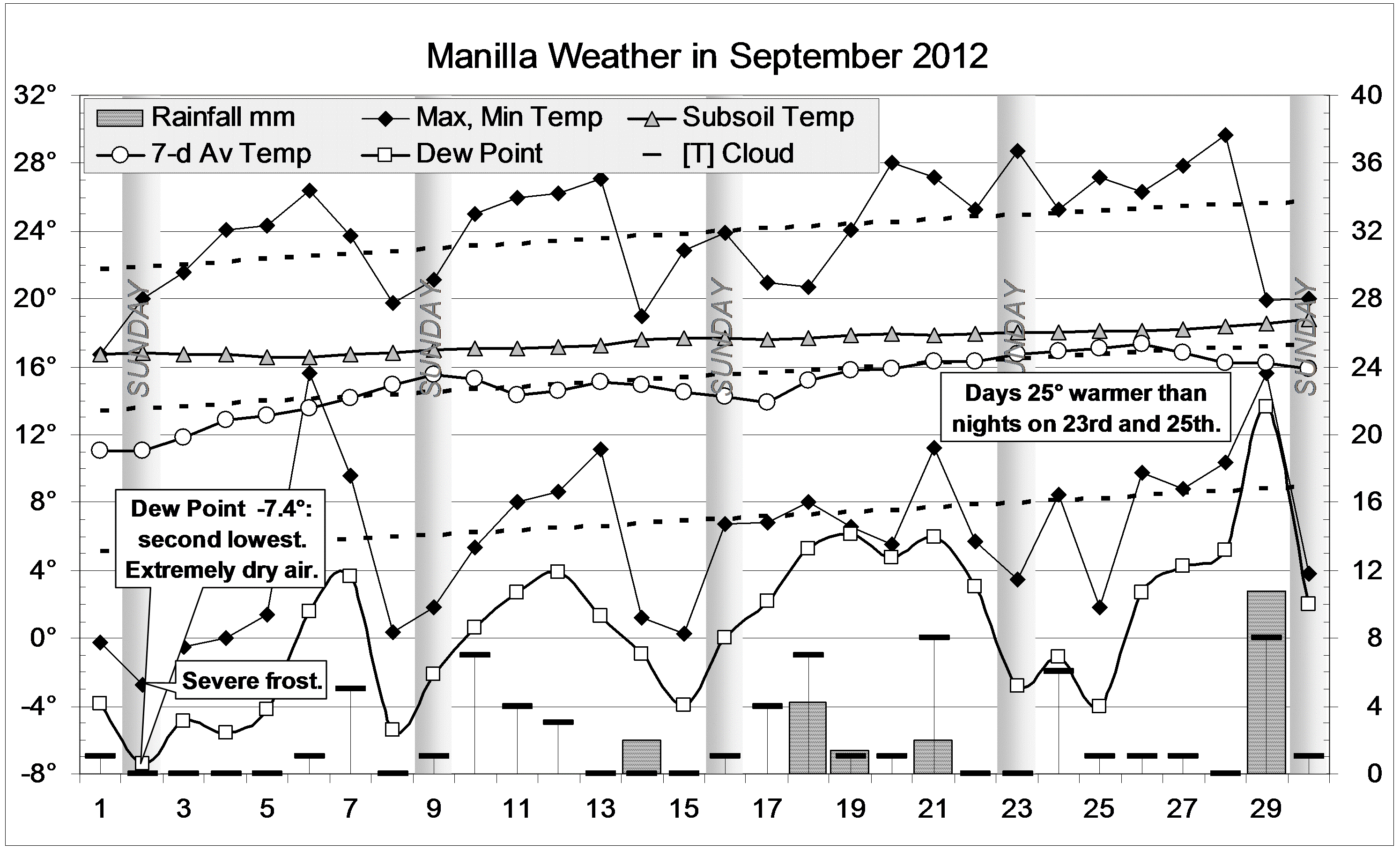
Frosty Dry September 2012

The daily weather logWeather log September 2012.

The severe frost of -2.7° on the 2nd was the coldest September night on this 14-year record. Having ten frosts in the month had not happened before, either. Most were “black frosts” because there was no dew to freeze. The extremely low Dew Point of minus 7.4° on the 2nd has been exceeded only once: minus 9.3 on 17/5/11.
With such dry air, two of the sunniest days had maximum temperatures more than 25° above the night-time minima.
Rain showers occurred on 5 days (normal), but the total was only 20.4 mm.

 Comparing September monthsClimate September 2012.

Days (24.0°) were 0.2° warmer than average, and nights (5.8°) were 1.2° colder than average.
The mean Dew Point of 0.8° is a new record low-humidity value for September, beating last year’s value of 1.7°. Low humidity brought less September cloud than in the last four years.
The low rainfall of 20.4 mm is in the 29th percentile for September. While the 12-month rainfall total to date is still extremely high (over 900 mm), the 2-month total (31 mm) is now a serious rainfall shortage, in the 9th percentile of 2-month totals.


Data. Rainfall data is from Manilla Post Office, courtesy of Phil Pinch. Temperatures, including subsoil at 750 mm, and other data are from 3 Monash Street, Manilla.


3-year trends to August 2012

Parametric plots of smoothed climate variables at Manilla

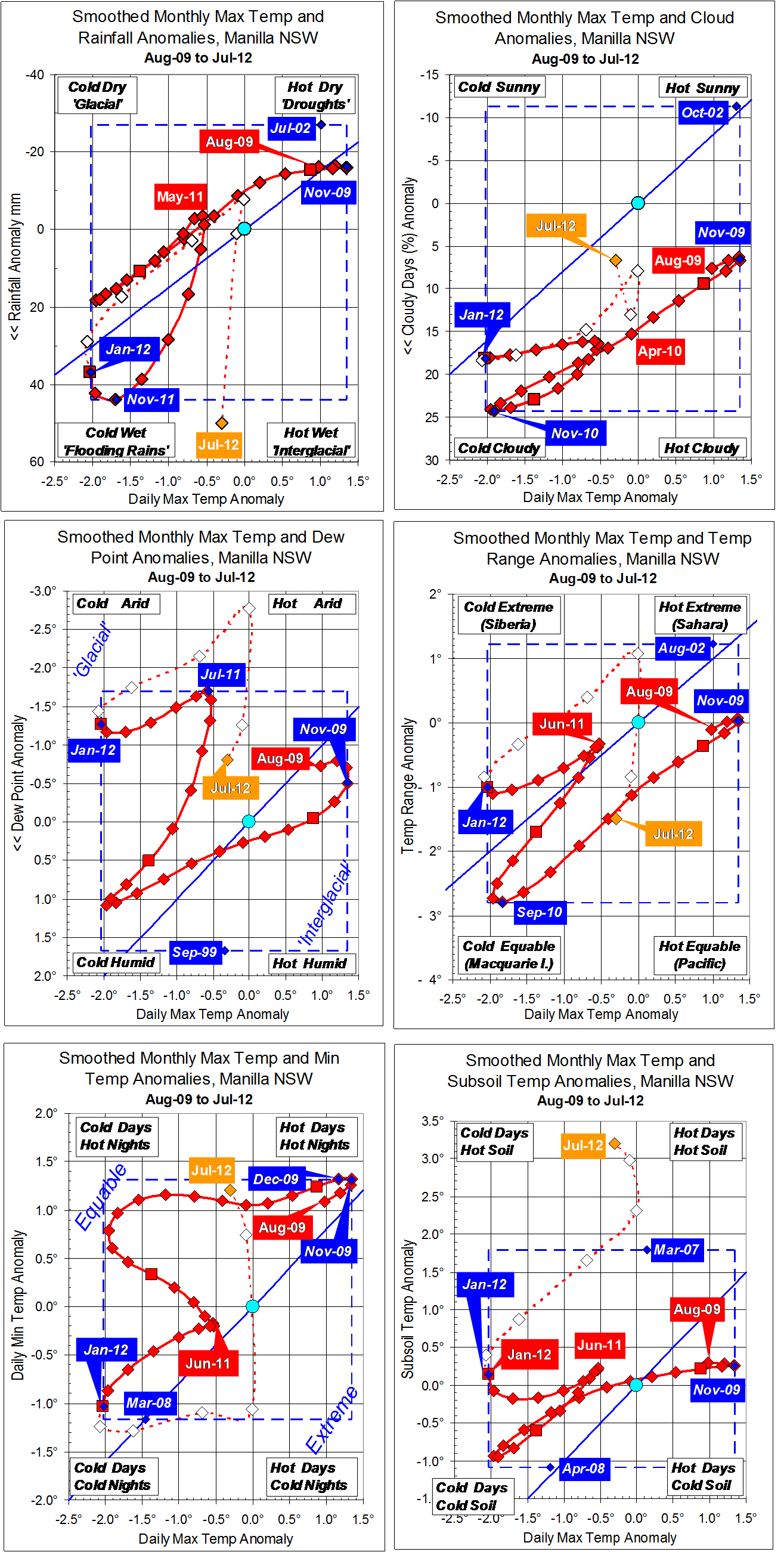
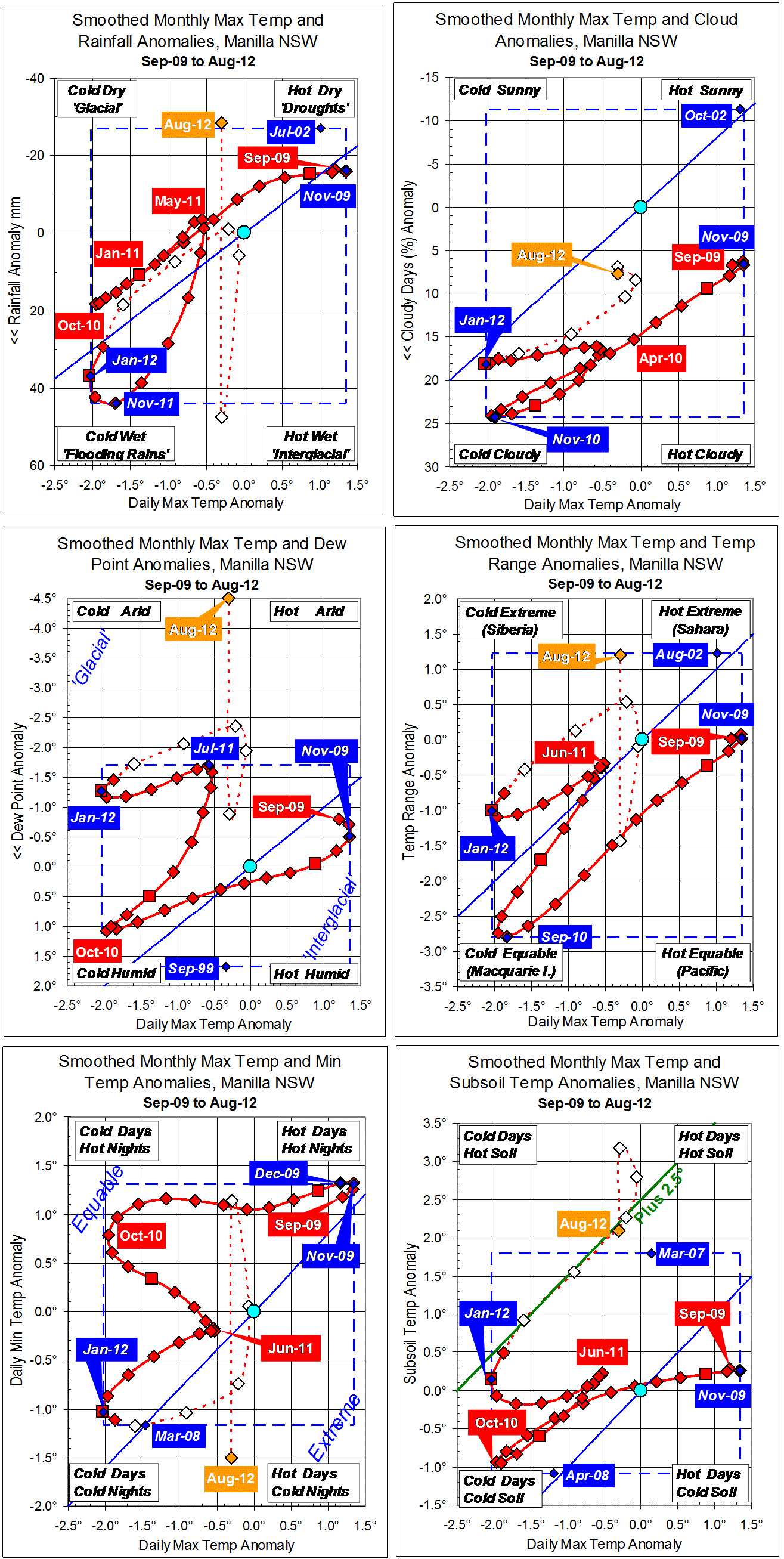
“Dry Air: Warm Soil”Trends to August 2012.

Daily maximum temperatures remained just below normal in August, as in May, June, and July. Cloudiness was also stable, at about 8% above normal.
From July to August:
* Rainfall went from very high to very low;
* Dew Point went from low to extremely low;
* Temperature Range went from low to high;
* Daily min temps went from very high to very low;
* The subsoil remained extraordinarily warm.
The subsoil temperature anomaly has moved with the anomaly of maximum air temperature for eight months, but is tracking 2.5 degrees higher. This relation is shown by a green line on the bottom left graph.

Fully-smoothed data (in red) now include the whole summer season ending February 2012. At Manilla, this covered a “flooding rains” climate peak that was very much wetter, and somewhat cooler than that a year earlier. The variables reached peaks in sequence as follows:
Nov-11: Rainfall (max); Subsoil temp (min);
Dec-11: Temp range (min); Dew Pt (max);
Jan-12: Temp max (min);
Mar-12: Temp min (min).
Peaks for some variables are not in the usual sequence.

Note: Fully smoothed data – Gaussian smoothing with half-width 6 months – are plotted in red, partly smoothed data uncoloured, and raw data for the last data point in orange. January data points are marked by squares. Blue diamonds and the dashed blue rectangle show the extreme values in the fully smoothed data record since September 1999.
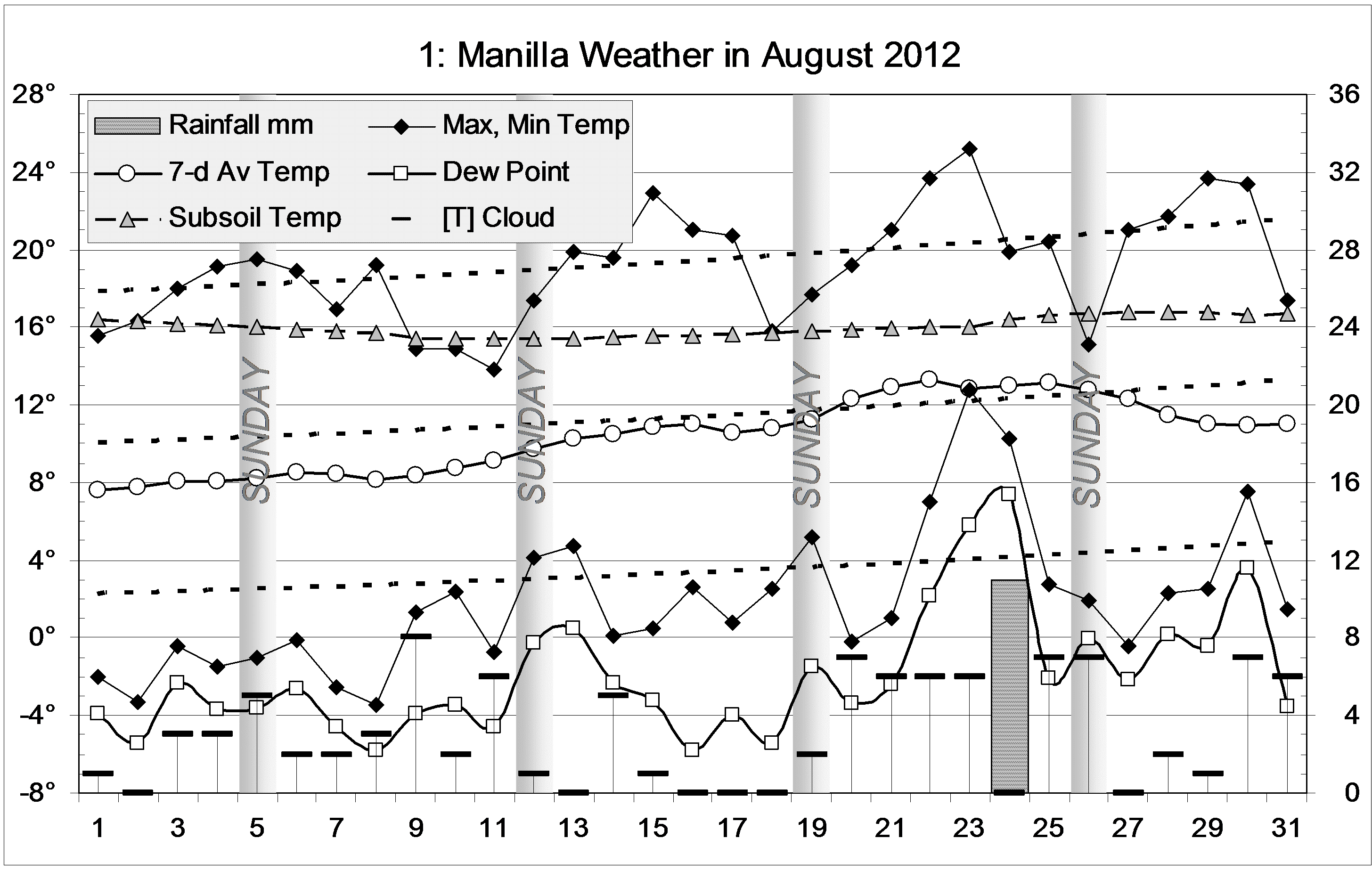
Extremely Dry Air in August 2012

The air in August was drier than in any month on this 14-year record. Relative humidity in the afternoons was only about 25%, well below the usual 37%. The air has been very dry here for more than a year. The record rainfall last spring may have prevented serious bush-fires, but this year could be different.

The daily weather logWeather log August 2012.

Days were not very warm or cold. Most nights were cold, with 18 frosts (usually 15). Two frosts were severe (below minus 3°), but there was also one night as warm as 12.8°.
Extremely low Dew Points (dry air) of minus 5.8° were recorded on the mornings of the 8th and 16th. Only seven lower values have occurred in 14 years.
The only rainfall (11.0 mm) was recorded on the 24th.

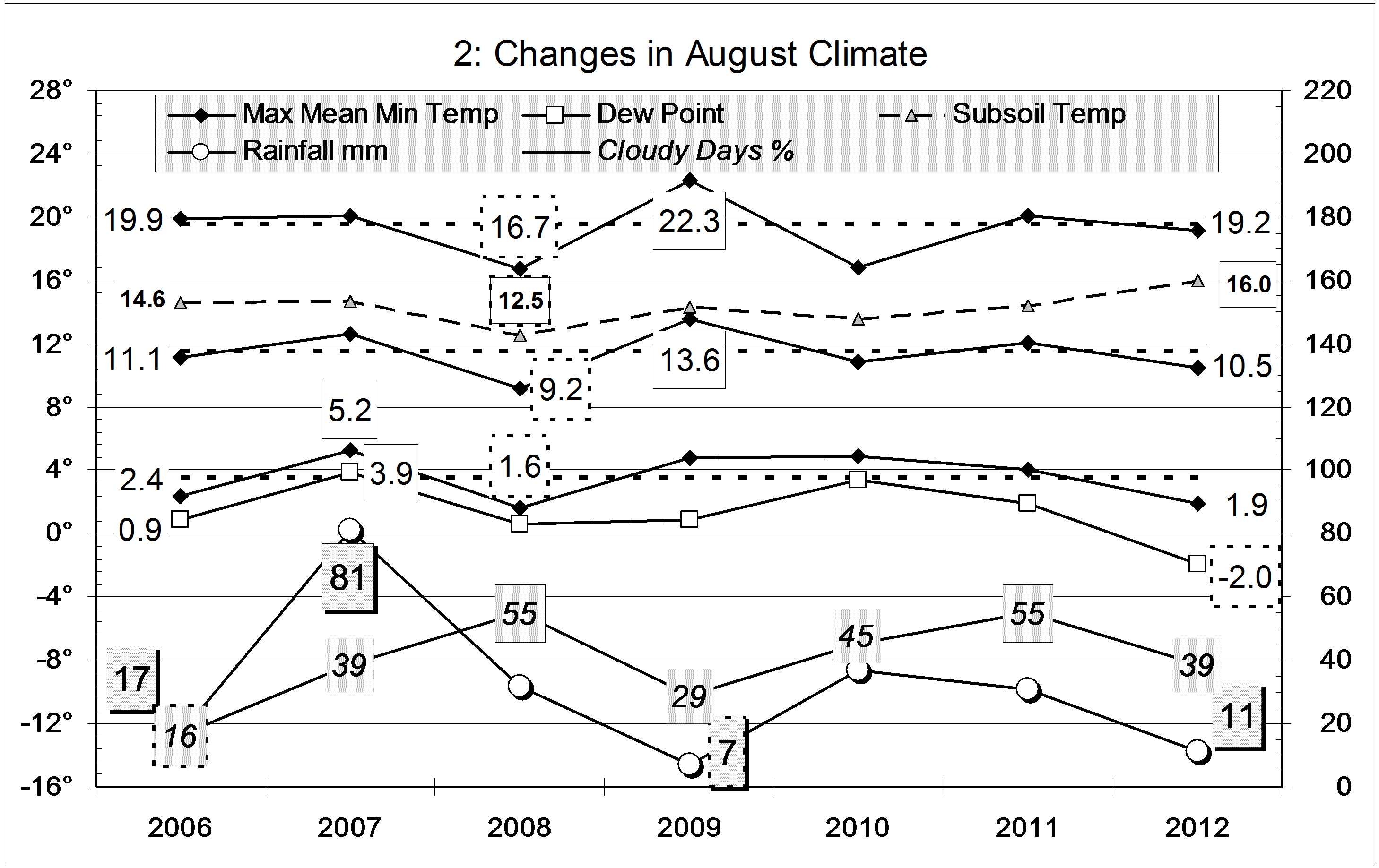
 Comparing August monthsClimate August 2012.

The monthly mean temperature was a bit low, while the mean night-time minimum was very low: 1.9°, not quite as low as the 1.6° of August 2008. The mean early morning Dew Point (-2.0°) was a new record low humidity for any month, beating easily the drought month of July 2002 (-1.4°).
Thirty-nine percent cloudy mornings is a retreat from the August record of 55%, set in 2008 and 2011.
The rainfall of 11.0 mm is very low, in the 15th percentile for August. While the 12-month rainfall total to date is still extremely high (1 metre), the 6-month total is now low (236 mm).


Data. Rainfall data is from Manilla Post Office, courtesy of Phil Pinch. Temperatures, including subsoil at 750 mm, and other data are from 3 Monash Street, Manilla.


3-year trends to July 2012

Parametric plots of smoothed climate variables at Manilla

“Back towards very wet”Trends to July 2012.

Most July 2012 anomalies are close to normal, and like those of the month before. Rainfall, however, is again very high, as in the spring and summer, and daily min temp has gone from very low in May to very high.
The subsoil remained extraordinarily warm. (Why?)

Fully-smoothed data (in red) show that the 13-year record low monthly max temp anomaly of October 2010 (-1.96 degrees) was beaten in January 2012, with a new low value of -2.03 degrees, perhaps to be beaten in the following month. At Manilla, the “flooding rains” climate phase of 2011-12 was very much wetter, and somewhat cooler than that of 2010-11.

Note: Fully smoothed data – Gaussian smoothing with half-width 6 months – are plotted in red, partly smoothed data uncoloured, and raw data for the last data point in orange. January data points are marked by squares. Blue diamonds and the dashed blue rectangle show the extreme values in the fully smoothed data record since September 1999.