Warm Dry February 2014

The daily weather logWeather log February 2014.
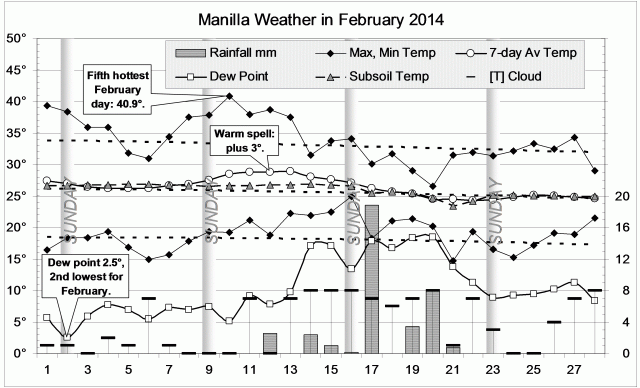
The month began sunny and dry, with extremely low humidity. The second week brought a warm spell, which became humid and cloudy, leading to rain. There were eight rain days, with 18.8 mm recorded on the 17th. The fourth week was fine, with normal temperatures.

Comparing February monthsClimate February 2014.

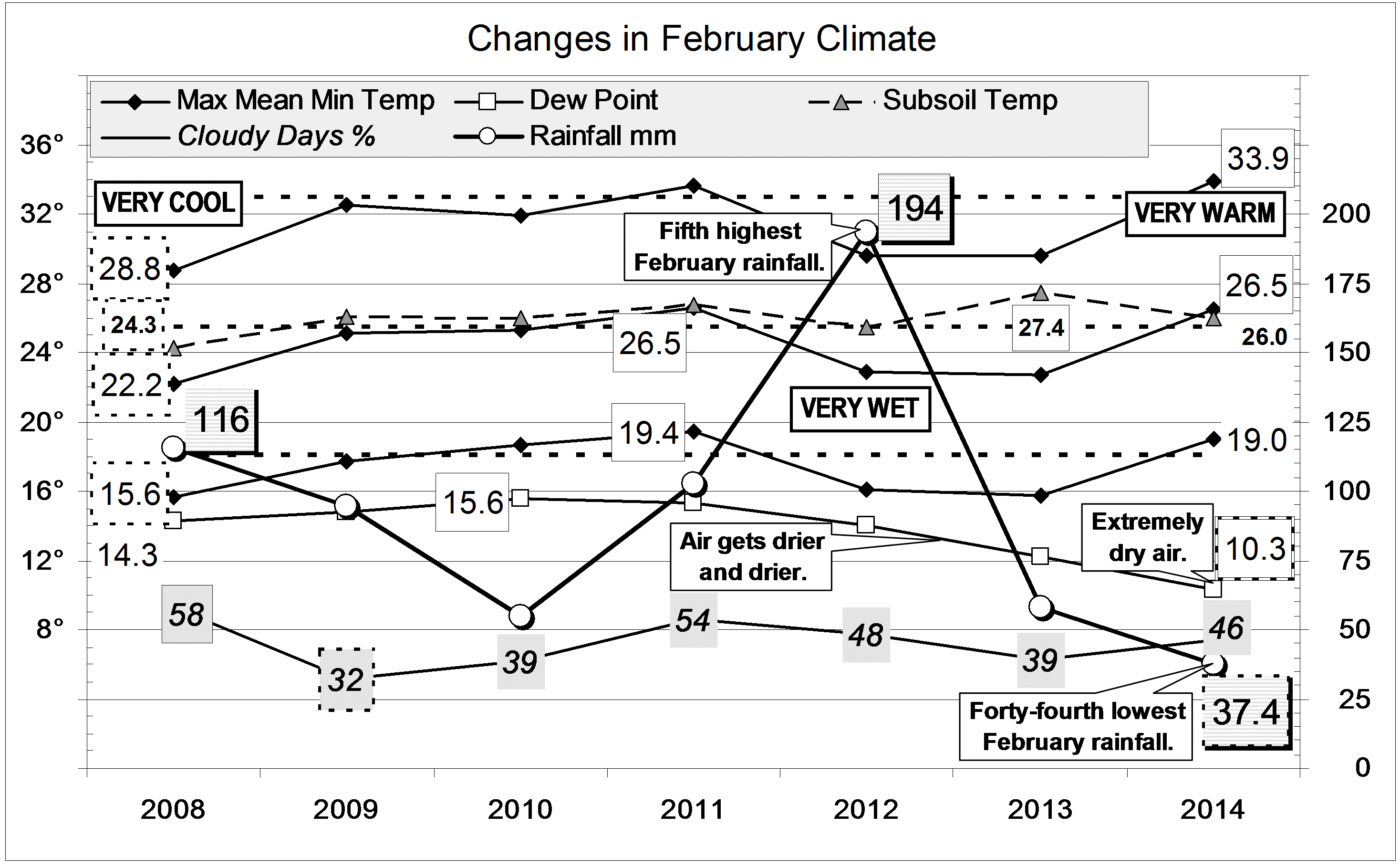
Like February 2011, this month was very warm, but not quite as warm as February 2006. February 2008 had been five degrees cooler, and February 2012 and 2013 also very cool.
The humidity, shown by early morning dew point, has fallen steadily for four February months. It was 15.6° in 2010, and is now a record low of 10.3°. February mean relative humidity values, which had been steady from 2006 to 2013, fell sharply to 2014: afternoon values fell from 31% to 16% and morning values from 80% to 58%.
The total rainfall of 37.4 mm is well below the February average of 67 mm and far below that for February 2012 (194 mm), the fifth wettest on record. This is the forty-fourth driest, and in the 35th percentile. Taking rainfall totals for more than one month, the greatest shortages are not serious (i.e. not below the 10th percentile). The two month total (39 mm) and the twelve-month total (452 mm) are both in the 12th percentile. Other totals have higher percentile values, and most totals for 30 months or more are above normal. Pools survive in Greenhatch Creek.


Data. Rainfall data is from Manilla Post Office, courtesy of Phil Pinch. Temperatures, including subsoil at 750 mm, and other data are from 3 Monash Street, Manilla.
3-year trends to January 2014

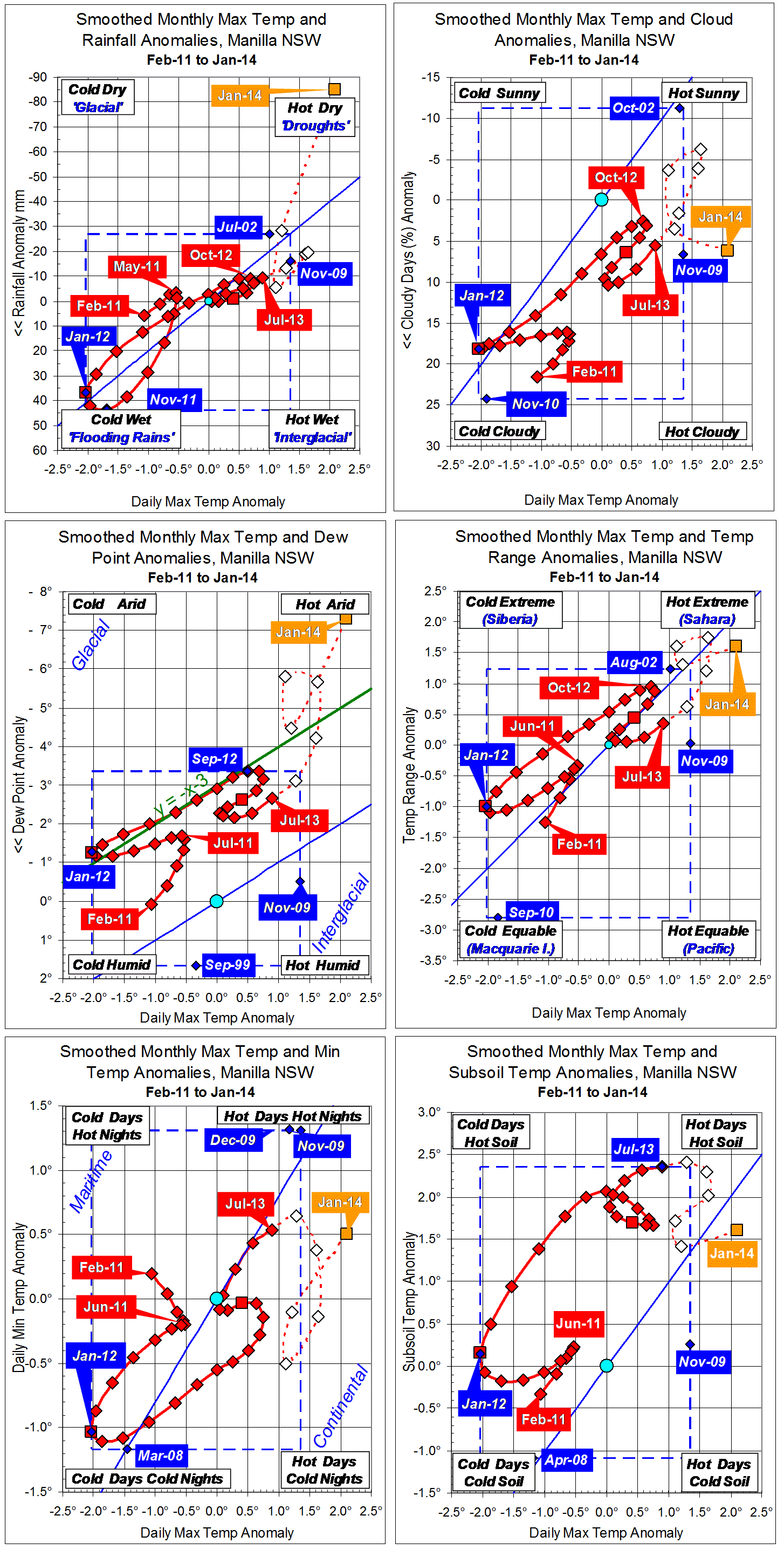
Parametric plots of smoothed climate variables at Manilla

“January rain fails”Trends to January 2014

Raw values for several climate anomalies in January 2014 were extreme: daily maximum temperature: plus 2.1°, rainfall: minus 85 mm, dew point: minus 7.3°, and temperature range: plus 1.5°.
Fully-smoothed values for July 2013 move in the direction of “droughts”.
Subsoil temperature reaches a new record for fully-smoothed data of plus 2.36°, beating the record set a month earlier.

Note: Fully smoothed data – Gaussian smoothing with half-width 6 months – are plotted in red, partly smoothed data uncoloured, and raw data for the last data point in orange. January data points are marked by squares. Blue diamonds and the dashed blue rectangle show the extreme values in the fully smoothed data record since September 1999.

January 2014 the driest !

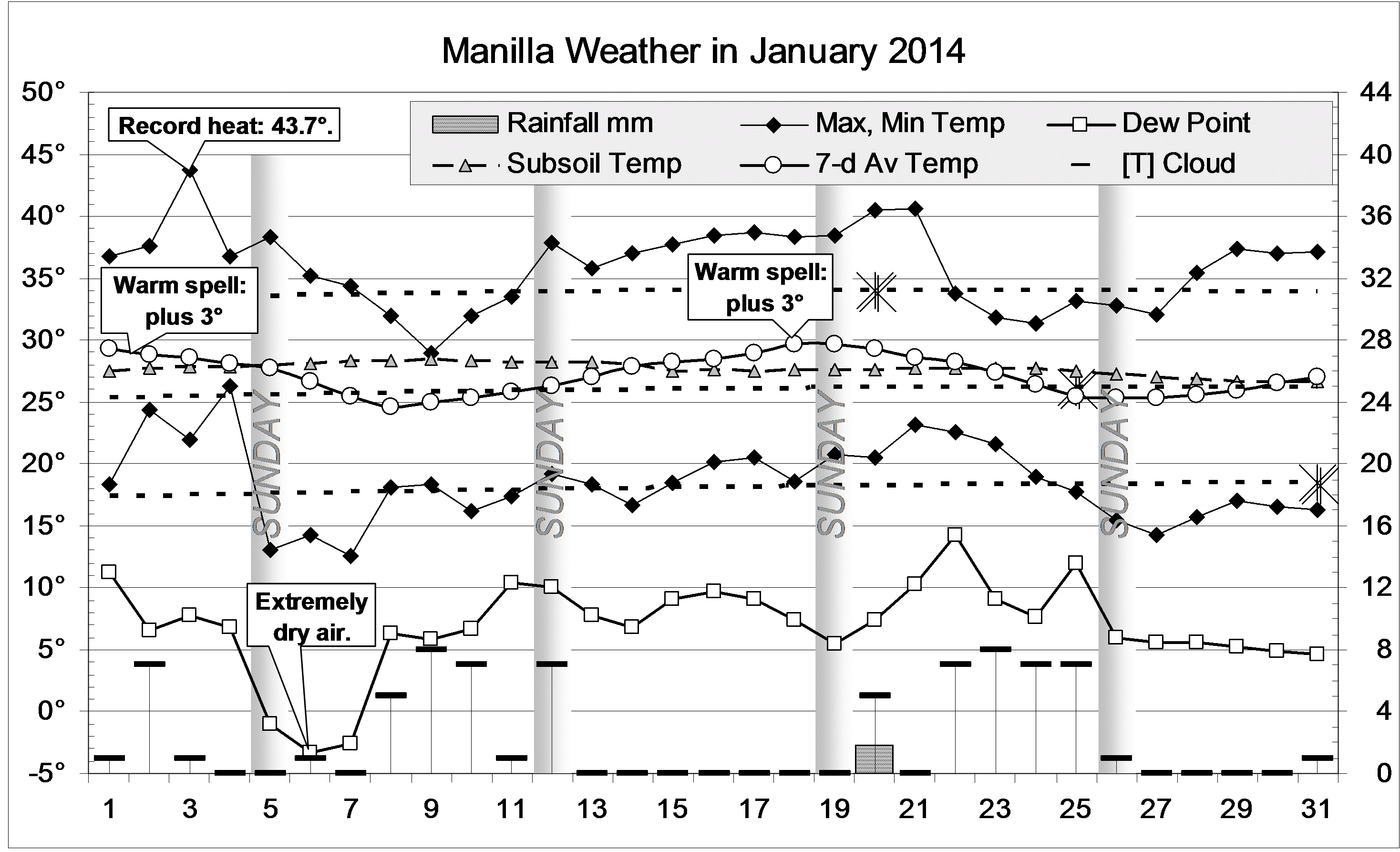
The daily weather logWeather log January 2014.

Two 21st century records were broken on the 3rd: the daily maximum was 43.7°, and the relative humidity fell to 2%. A west wind of 30 km/hr blew all that day. The early morning dew point on the 6th was a record January low of minus 3.3 degrees. A second warm spell came about the 15th. Subsoil temperature fell from high to normal during the month.
Rain of 1.8 mm was recorded on the 20th.

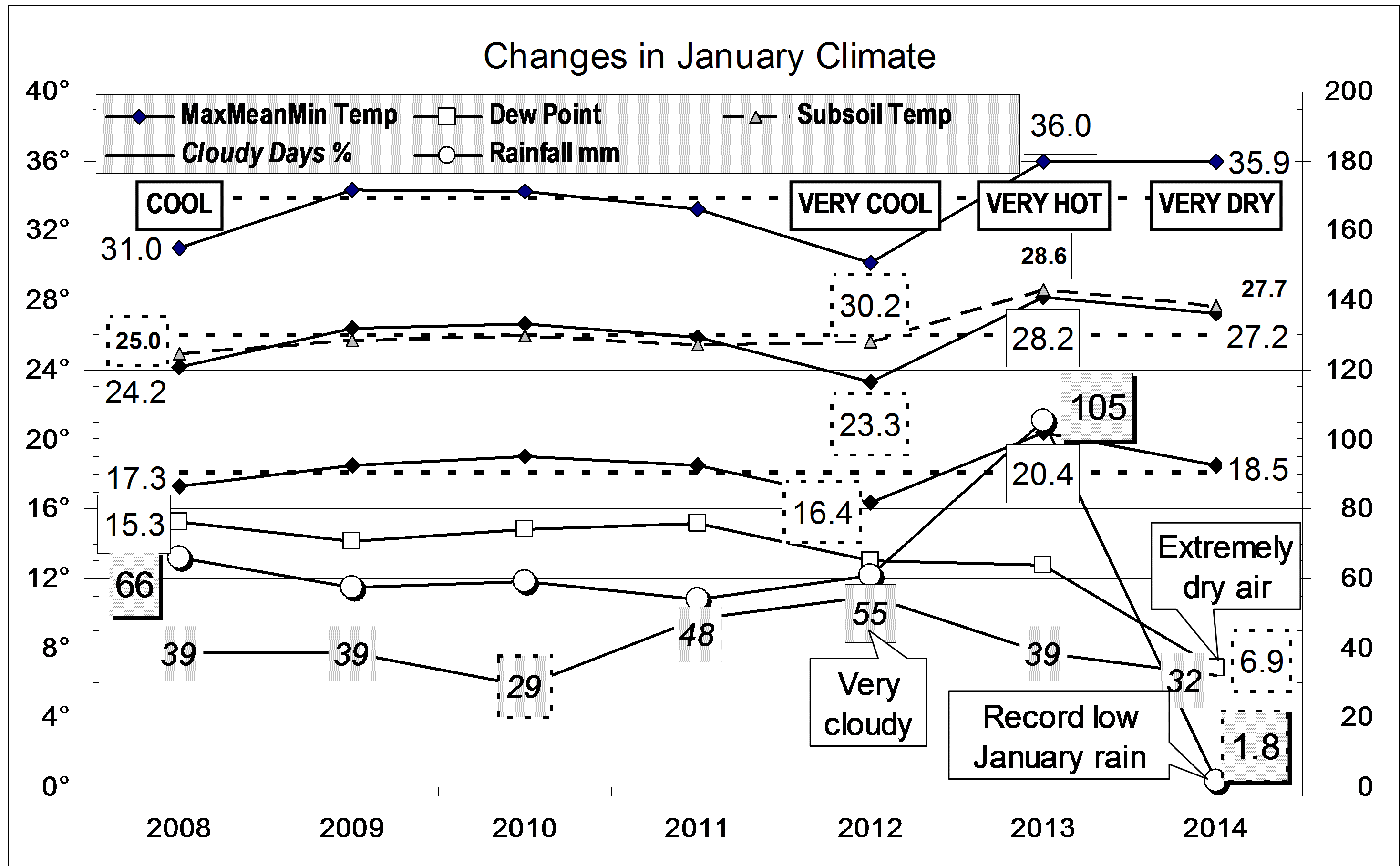
Comparing January monthsClimate January 2014.

As well as having almost no rain, this month had by far the lowest January dew point of the century: 6.9°, which is 7.3° below normal! Compared to January 2013, which was very hot, days were much the same (35.9°), but nights were cooler (18.5°). By contrast, January 2012 had been very cool and cloudy.
The total rainfall of 1.8 mm was the lowest January value in the 131-year record. The next lowest was 7 mm in January 1940.
Counting more than one month, the six-month rainfall total of 184 mm is the worst shortage at this time. It is in the 11th percentile of all six-monthly totals. However, such low totals usually come in August or September. It is rare for six-monthly totals as low as 184 mm to come in a summer month: it has happened only thirteen times. The lowest six-monthly total for a summer month was 145 mm for December 1946. Next was 151 mm for December 1951.


Data. Rainfall data is from Manilla Post Office, courtesy of Phil Pinch. Temperatures, including subsoil at 750 mm, and other data are from 3 Monash Street, Manilla.
3-year trends to December 2013

Parametric plots of smoothed climate variables at Manilla
“Still in drought”Trends to December 2013.

Raw anomaly values for climate variables for December 2013 are nearly all in the top right “droughts” corner.

Six months earlier, the fully-smoothed data point for June 2013 also moved towards drought. The value for subsoil anomaly reached a new record of 2.31 degrees.

Note:
Fully smoothed data – Gaussian smoothing with half-width 6 months – are plotted in red, partly smoothed data uncoloured, and raw data for the last data point in orange. January data points are marked by squares.
Blue diamonds and the dashed blue rectangle show the extreme values in the fully smoothed data record since September 1999.

December 2013: air still dry

The daily weather logWeather log December 2013.

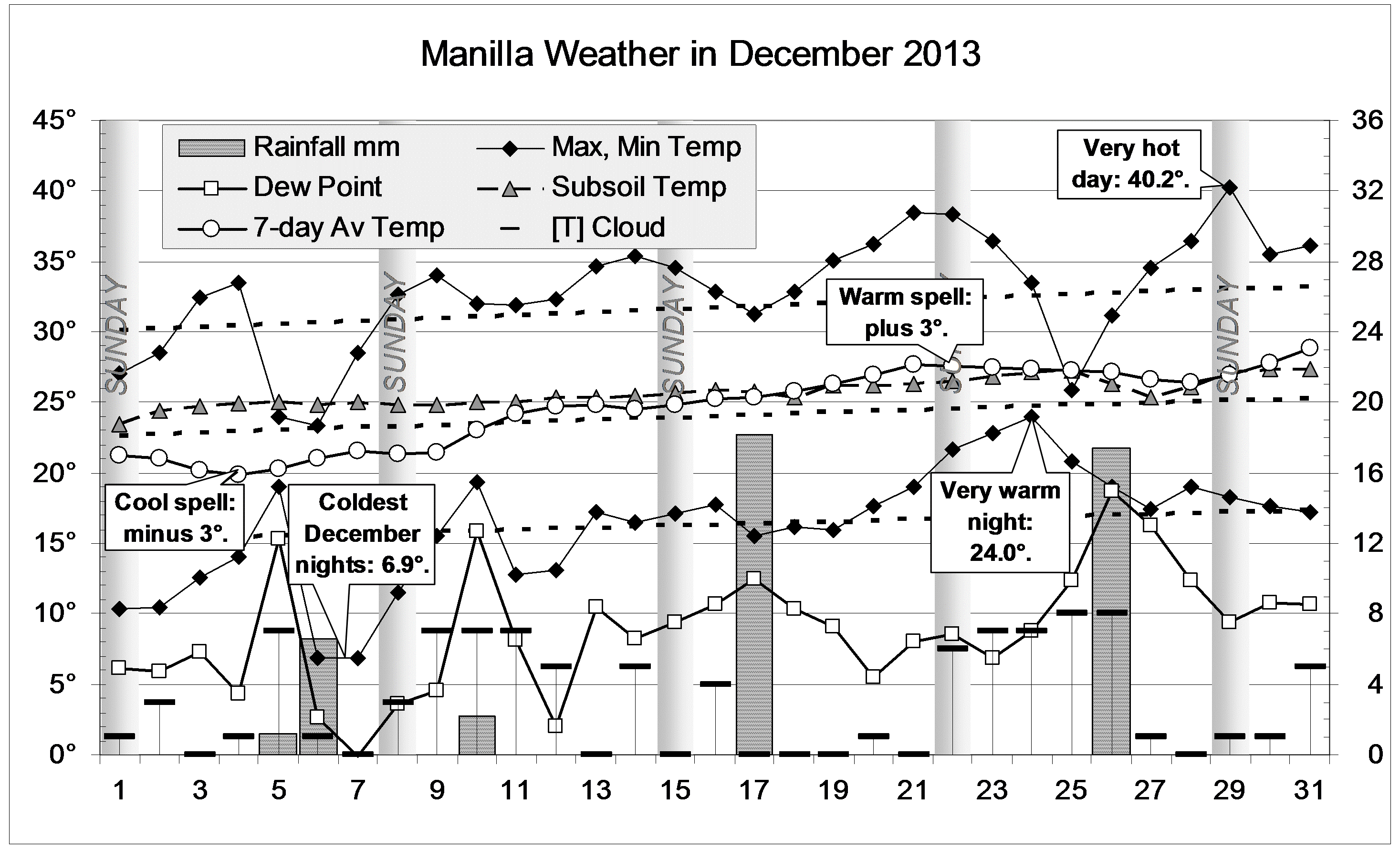
The month began cool, including two nights at 6.9°, the coldest December nights in this record. Later it became very warm, with one night of 24.0° and one day of 40.2°. Spells of sunny weather were separated by five rainy days.
The relative humidity on the afternoon of the 29th was the record low value of 4%, as on 10/1/13 and 13/8/13. (These values may be wrong. Few hygrometers can be read so low.)

Comparing December monthsClimate December 2013

This December was warm: just slightly cooler than December last year, and very much warmer than those of 2010 and 2011. Extremely dry air brought a new record low December mean morning dew point of 8.8°.
Subsoil temperature (25.7°) remained 1.5° above normal.
The total rainfall of 45.6 mm was in the 28th percentile, well below the average of 74 mm. However, there are still no serious shortages in rainfall totals for more than one month.

The Year 2013

This was one of the warmer years in the new century (but much cooler than 2009). It had the driest air, with a mean early morning dew point of 5.4°, 1.5° below average. The air has become drier each year since 2010.

This year also had the highest subsoil temperature: 22.1°, 1.9° above average.
Extremely high rainfall in June (98mm) was balanced by very low rainfall in August (6.4mm) and October (15mm), for a low annual total of 576 mm, in the 37th percentile.


Data. Rainfall data is from Manilla Post Office, courtesy of Phil Pinch. Temperatures, including subsoil at 750 mm, and other data are from 3 Monash Street, Manilla.