Extremely warm July 2013

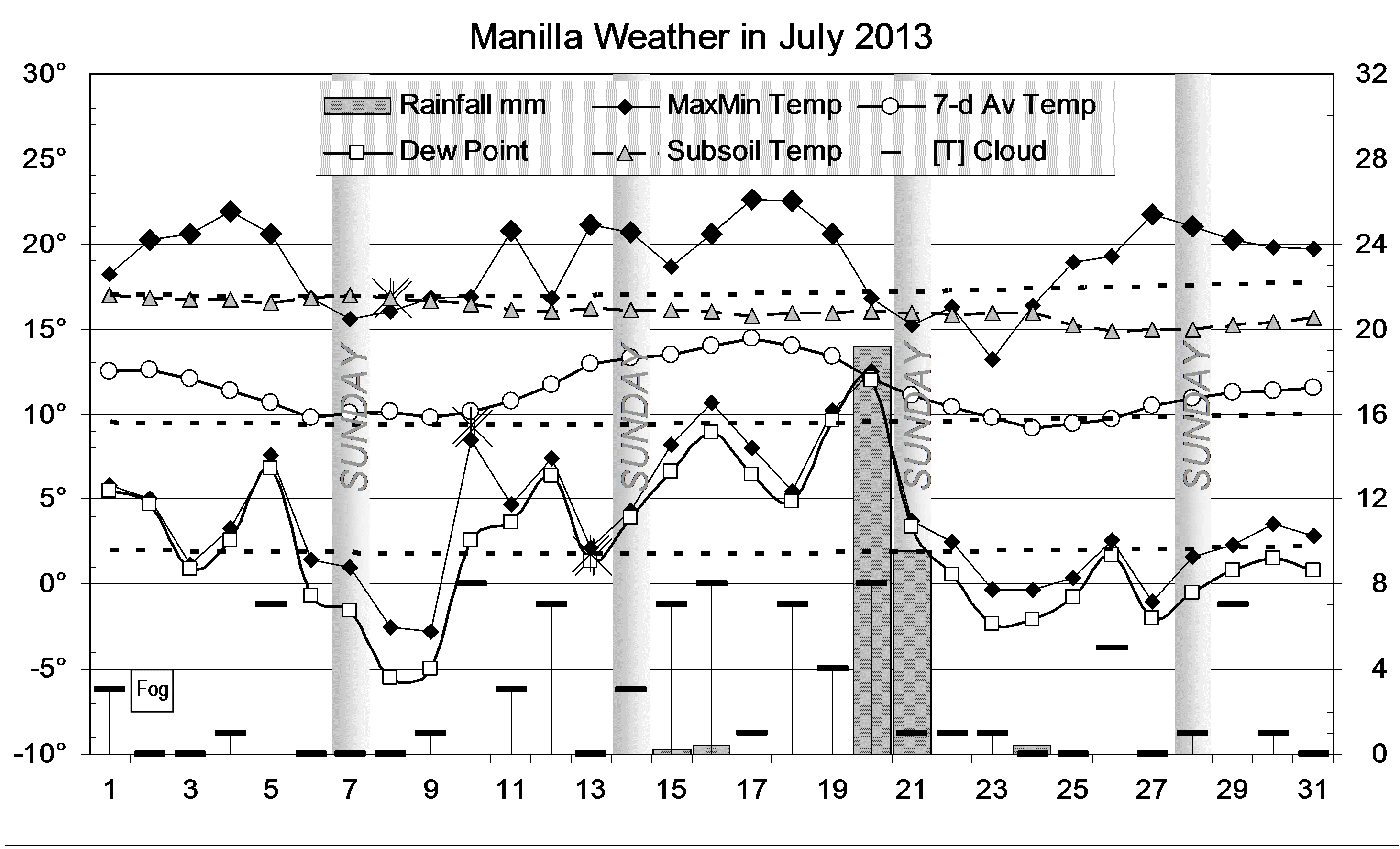
The daily weather logWeather log July 2013.
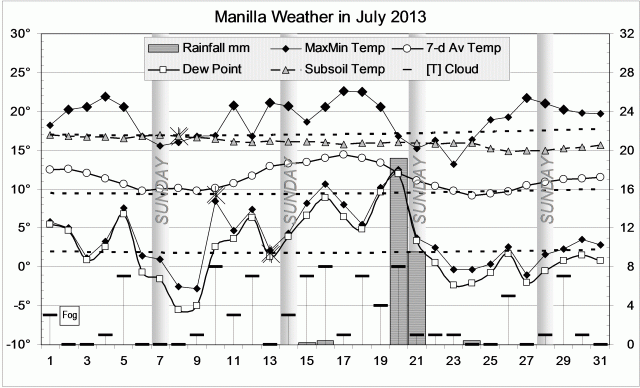
There were three warm spells and no cold spells in July. Fourteen days went over 20 degrees, instead of the usual four. There were only eleven frosts, the fewest in 15 July months (usually 17). In five rain days, two high rainfall figures came on the 20th (19.2mm) and the 21st (9.6mm).

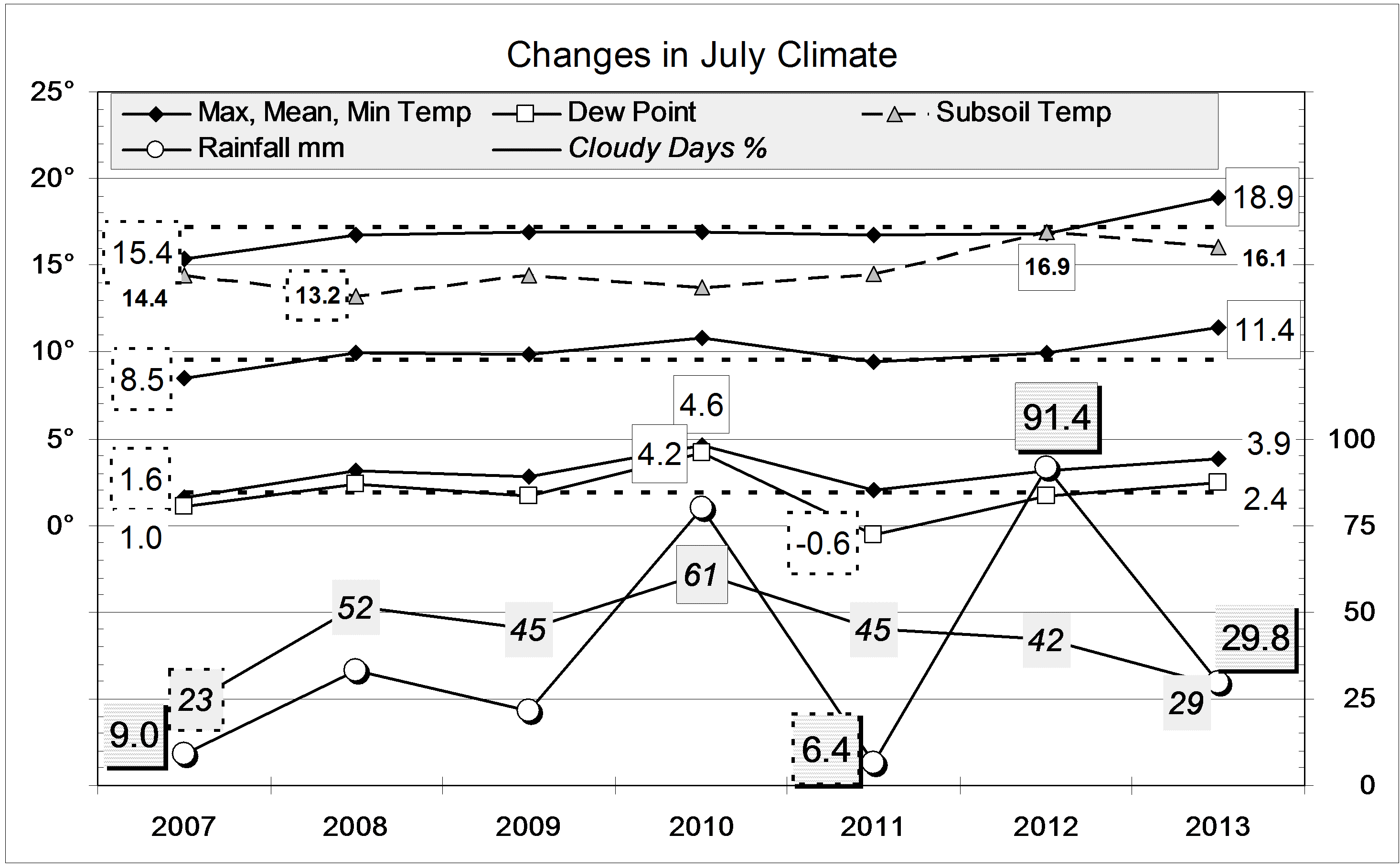
Comparing July monthsClimate July 2013.
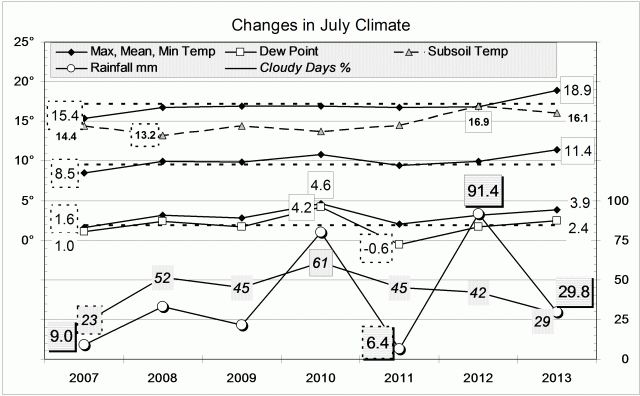
After June’s extreme cloudiness and rain, July was very near to normal in everything but temperature. The average values of daily maximum, daily minimum, and daily mean temperature were all just under two degrees above normal. The daily maximum and daily mean are 15-year record high values, but the daily minimum had been higher in July 2010: 2.4 degrees above normal.
(Note: My “normal” is the ten year average from March 1999. For the official normal period 1961-1990 there are no Manilla figures (except rainfall). This month’s very high temperatures would be (perhaps) just over 2 degrees above the 1961-1990 average.)
Rainfall, at 29.8 mm, is in the 43rd percentile, a bit below the average (41.1mm). Rainfall totals for 24 months and more are very high. This accounts for the rare appearance of water flowing locally in Greenhatch Creek.


Data. Rainfall data is from Manilla Post Office, courtesy of Phil Pinch. Temperatures, including subsoil at 750 mm, and other data are from 3 Monash Street, Manilla.
3-year trends to July 2012

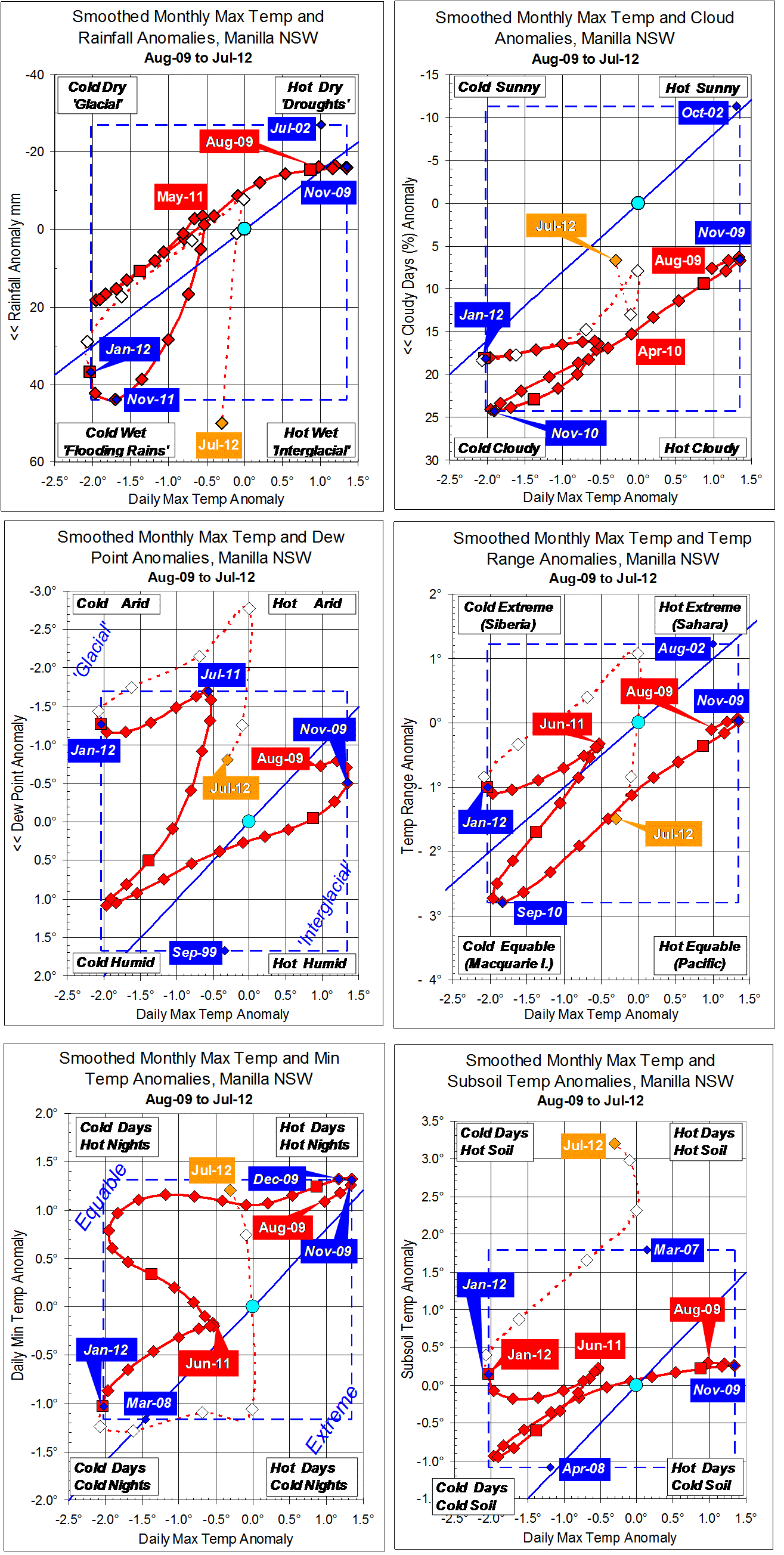
Parametric plots of smoothed climate variables at Manilla

“Back towards very wet”Trends to July 2012.

Most July 2012 anomalies are close to normal, and like those of the month before. Rainfall, however, is again very high, as in the spring and summer, and daily min temp has gone from very low in May to very high.
The subsoil remained extraordinarily warm. (Why?)

Fully-smoothed data (in red) show that the 13-year record low monthly max temp anomaly of October 2010 (-1.96 degrees) was beaten in January 2012, with a new low value of -2.03 degrees, perhaps to be beaten in the following month. At Manilla, the “flooding rains” climate phase of 2011-12 was very much wetter, and somewhat cooler than that of 2010-11.

Note: Fully smoothed data – Gaussian smoothing with half-width 6 months – are plotted in red, partly smoothed data uncoloured, and raw data for the last data point in orange. January data points are marked by squares. Blue diamonds and the dashed blue rectangle show the extreme values in the fully smoothed data record since September 1999.

Very Wet July 2012

The daily weather logWeather log July 2012.

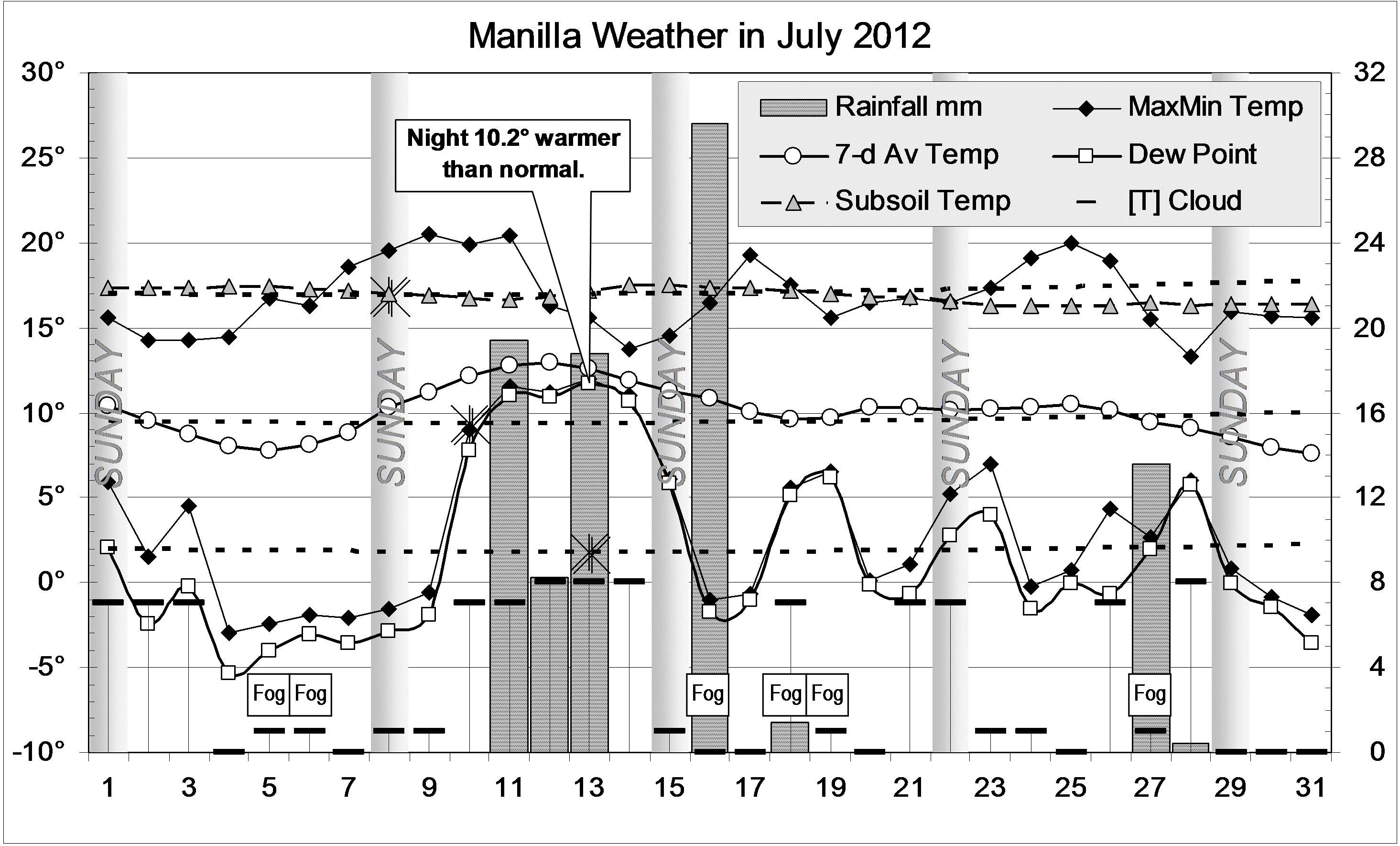
As in June, most weather features in July were normal, except for very warm nights with the heavy rain in the second week. Sixteen mornings were frosty, one down to minus three degrees. There were several early fogs in the valley.
Of seven rain readings, most were heavy. But the 29.6 mm value included three days.

 Comparing July monthsClimate July 2012.

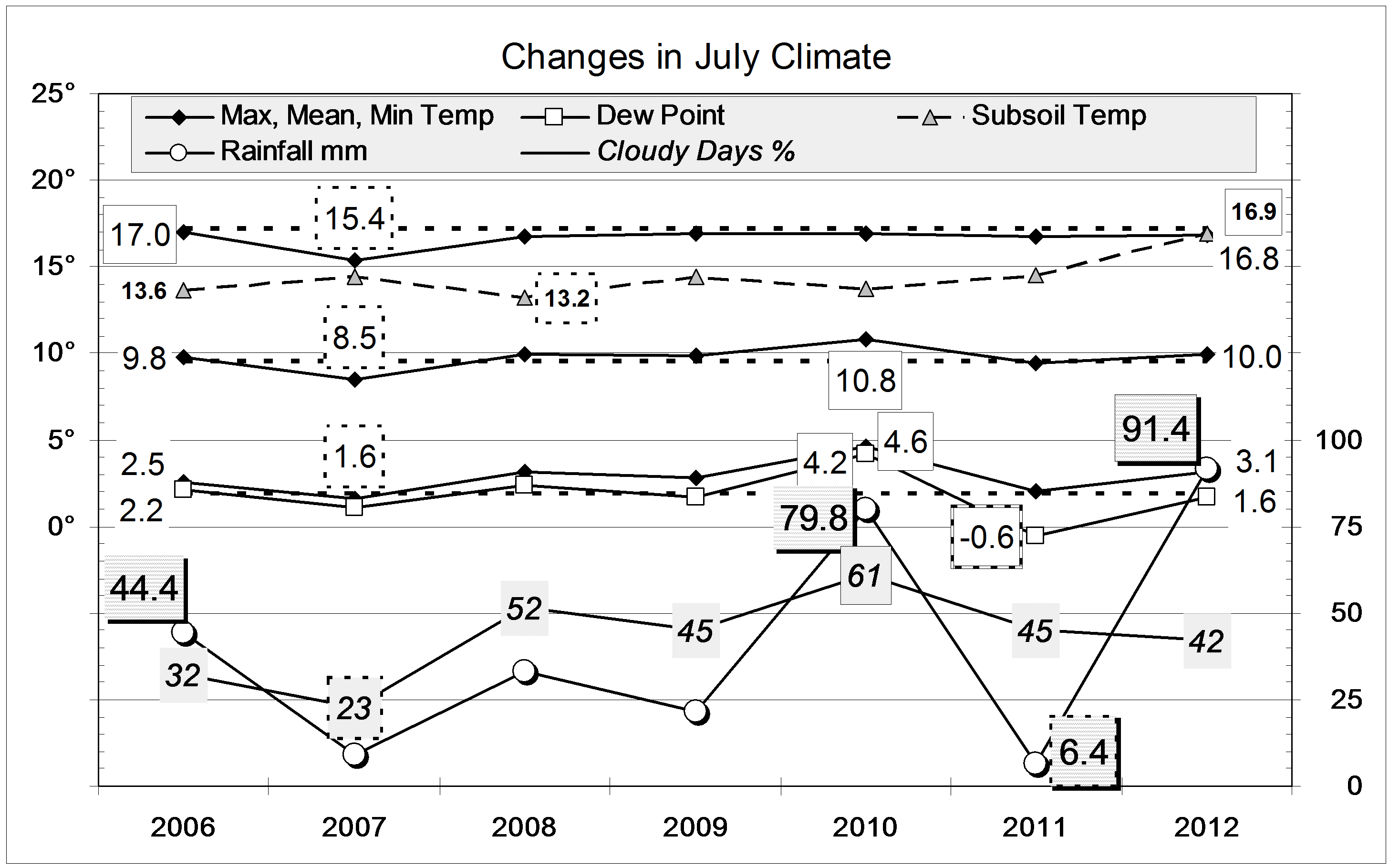
Other than rainfall, there is only one variable that is not on the July average: the subsoil temperature at 750 mm is again extraordinarily warm, at 16.9°, 3.2° above normal.
The rainfall total of 91.4 mm is in the 94th percentile. Only eight July months have ever been wetter. However, July 1984, at 171 mm, was nearly twice as wet. The 12-month total to the end of July (1020 mm) is extreme. In the last 50 years, only three 12-month totals have been higher: September and October 1998 and February 1984.


Data. Rainfall data is from Manilla Post Office, courtesy of Phil Pinch. Temperatures, including subsoil at 750 mm, and other data are from 3 Monash Street, Manilla.
 

3-year trends to July 2011.

Parametric plots of smoothed climate variables at Manilla

“Dry air and little rain”Trends to July 2011.

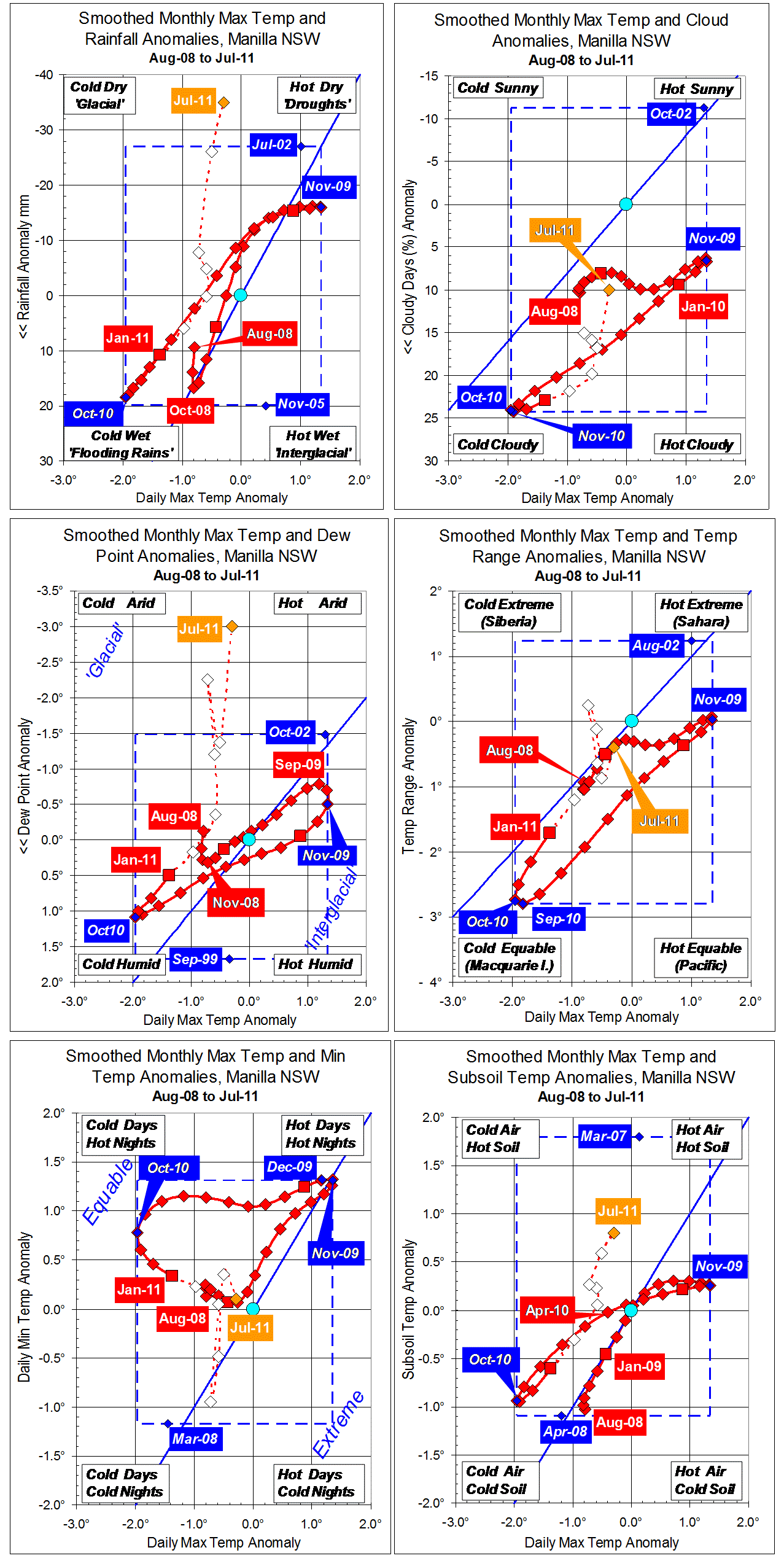
These graphs have data points for the last 36 months. In that time, the climate at Manilla, NSW has experienced a cycle from near-normal (Aug-08), through very warm and dry (Nov-09), then very cool and wet (Oct-10) , and back to near normal (Jul-11). For most variables, the raw anomaly values of July 2011 are near the smoothed anomaly values for August 2008.

Three variables have not returned to normal. Rainfall and Dew Point are far below normal, as typical in drought, and Subsoil temperature is high.
Cloudiness is “normal” in the new cloudy regimen in place since September 2007.

Note: Fully smoothed data – Gaussian smoothing with half-width 6 months – are plotted in red, partly smoothed data uncoloured, and raw data for the last data point in orange. January data points are marked by squares. Blue diamonds and the dashed blue rectangle show the extreme values in the fully smoothed data record since September 1999.

Dry air and little rain in July 2011

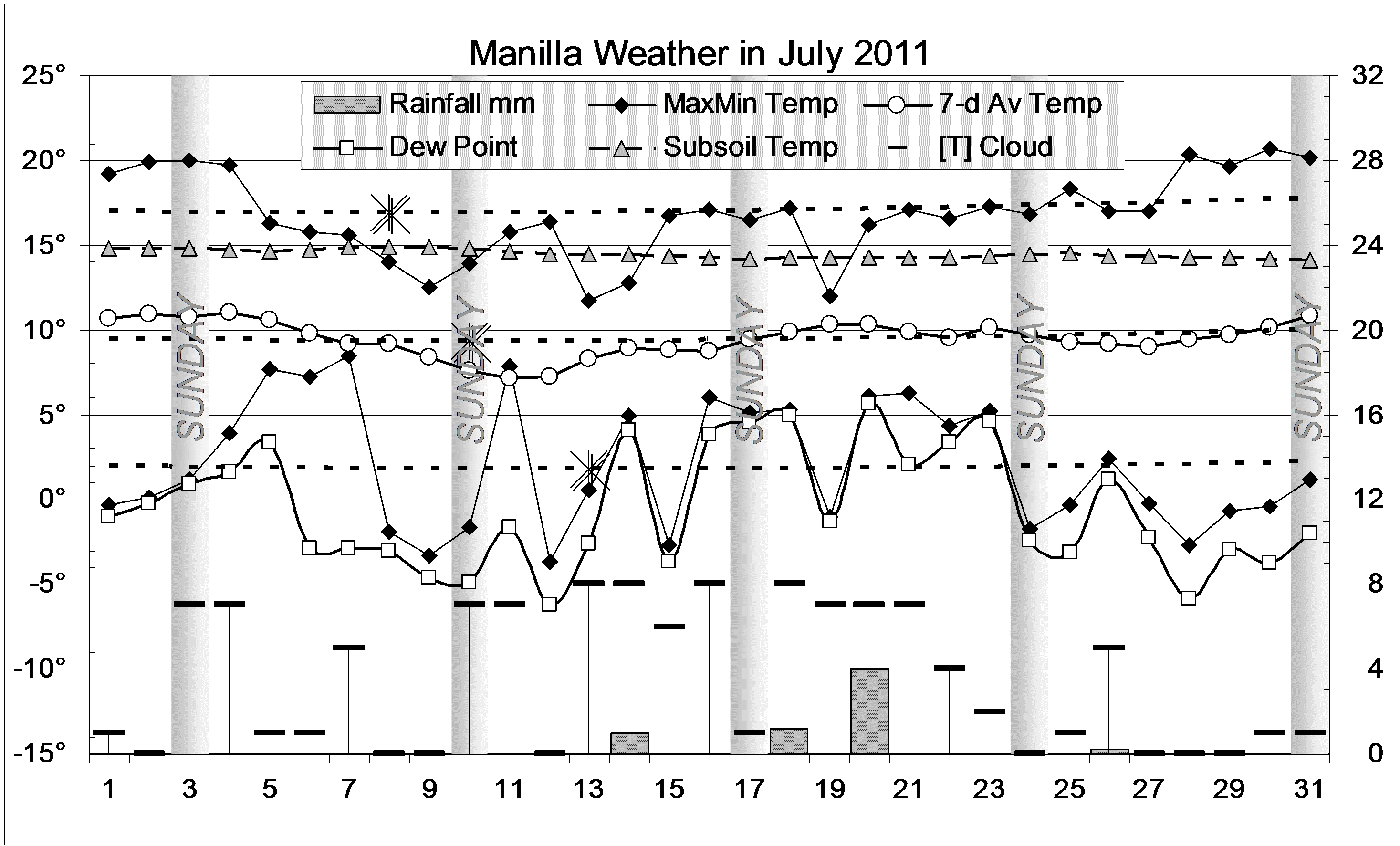
The daily weather logWeather log July 2011.

Despite a series of cloudy cold days in the middle of the month, most features of the weather in July were normal. Days got as warm as 20° at each end of the month, and never went lower than 11.7°. Nights were neither very warm nor very cold. There were 17 frosts, the coldest being -3.7°.
Humidity and rainfall recall the drought year of 2002.
Extremely low humidity was shown by the early morning Dew Point on the 12th, of 6.2°. This was the lowest July value since 2002, which had four lower values, down to 6.7°.
The highest rainfall reading was only 4 mm, recorded on the 20th. Four rain days totalled 6.4 mm.By the end of the month there had been 39 days with less than 5 mm of rain.

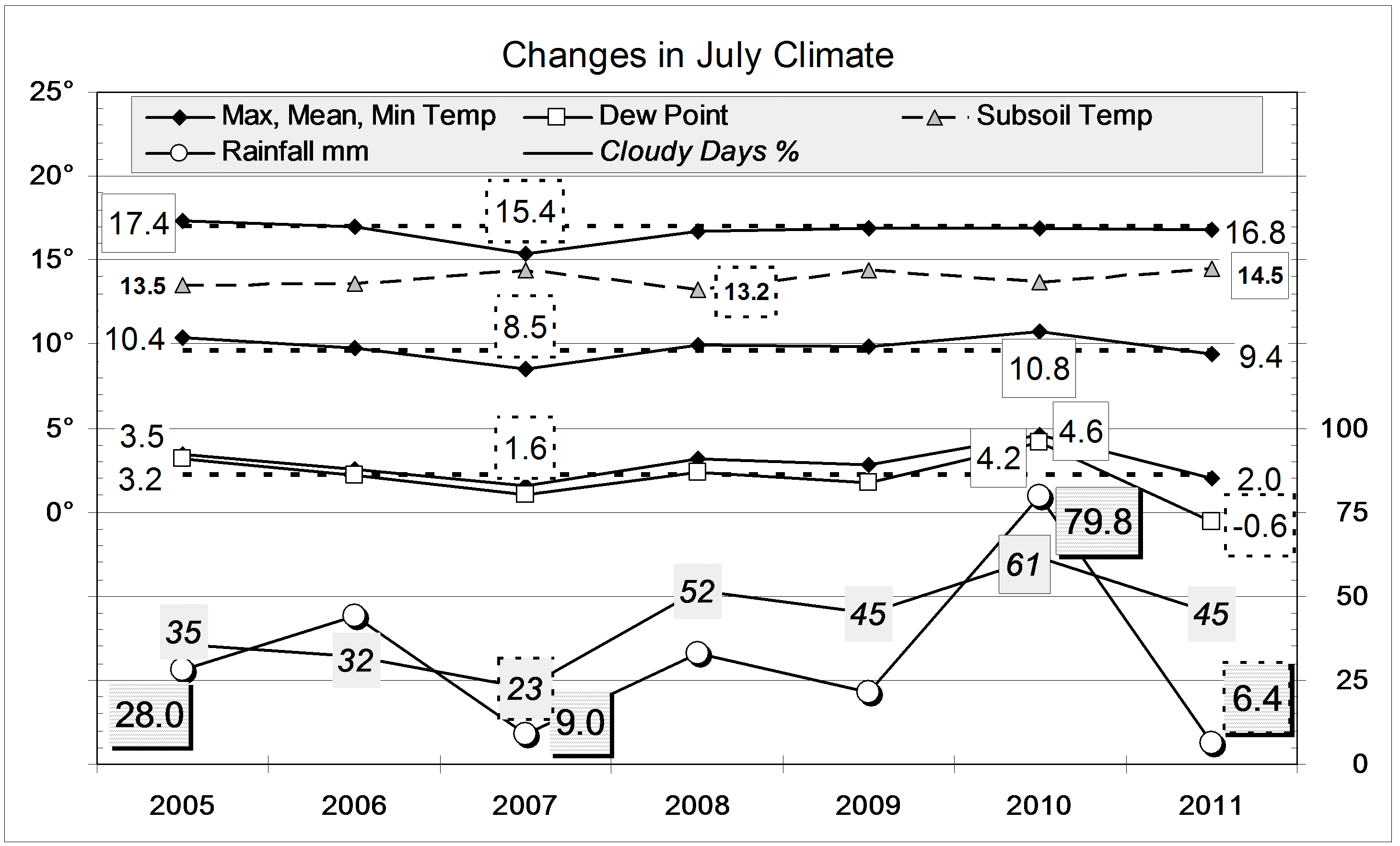
 Comparing July monthsClimate July 2011.

Mean temperature readings were normal. The mean early morning Dew Point (- 0.6°) was the lowest July value since 2002 (- 1.4°).
For frosts, this month was normal. Since 1999, the most frosty July was in 2002, with 27 frosts, down to -5.1°. The least frosty was 2010, with 12 frosts, down to only -1.4°.
The rainfall of 6.4 mm is very low: on the 8th percentile for July. Only ten Julies in 127 years have been drier. (July 2002 and July 1940 were equal driest, at 1 mm.) Rainfall totals for 2, 3, 4 and 5 months are in the 5th, 10th, 9th and 10th percentiles respectively. Percentile values lower than 10 are serious rainfall shortages. Totals for larger groups of months continue to be near normal.


Data. Rainfall data is from Manilla Post Office, courtesy of Phil Pinch. Temperatures, including subsoil at 750 mm, and other data are from 3 Monash Street, Manilla.