3-year trends to October 2012

Parametric plots of smoothed climate variables at Manilla

“Rushing into drought”Trends to October 2012.
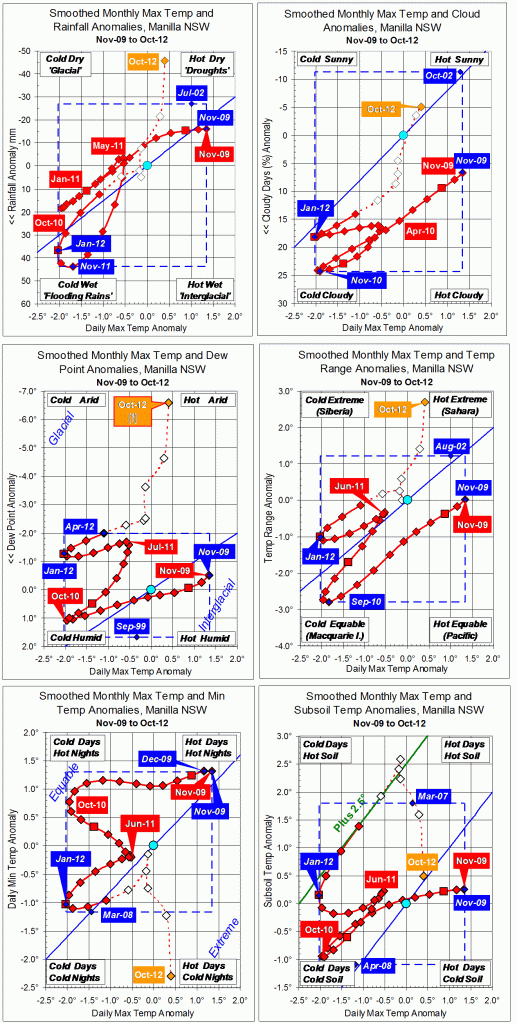
In October, while daily maximum temperature remained not far above normal, raw values of all other monthly mean anomalies (except minimum temperature and soil temperature) moved further in the “drought” direction. Most extreme was the dew point, which was nearly seven degrees below normal! Daily temperature range was also extremely wide. Rainfall was very low,and cloudiness lower than in recent months.
Minimum temperature anomaly moves erratically. October’s extremely low value resulted from moderate maximum temperature and extreme daily temperature range.
Subsoil temperature returned to normal after seven months above normal.

Fully-smoothed data (in red) now include April 2012. All variables for that month show an advance towards the top right corner of the graphs (typical of droughts).
The April 2012 value of smoothed dew point anomaly (-2.00°) is a new record low for smoothed data, beating the record of July 2011 (-1.70°).

Note: Fully smoothed data – Gaussian smoothing with half-width 6 months – are plotted in red, partly smoothed data uncoloured, and raw data for the last data point in orange. January data points are marked by squares. Blue diamonds and the dashed blue rectangle show the extreme values in the fully smoothed data record since September 1999.

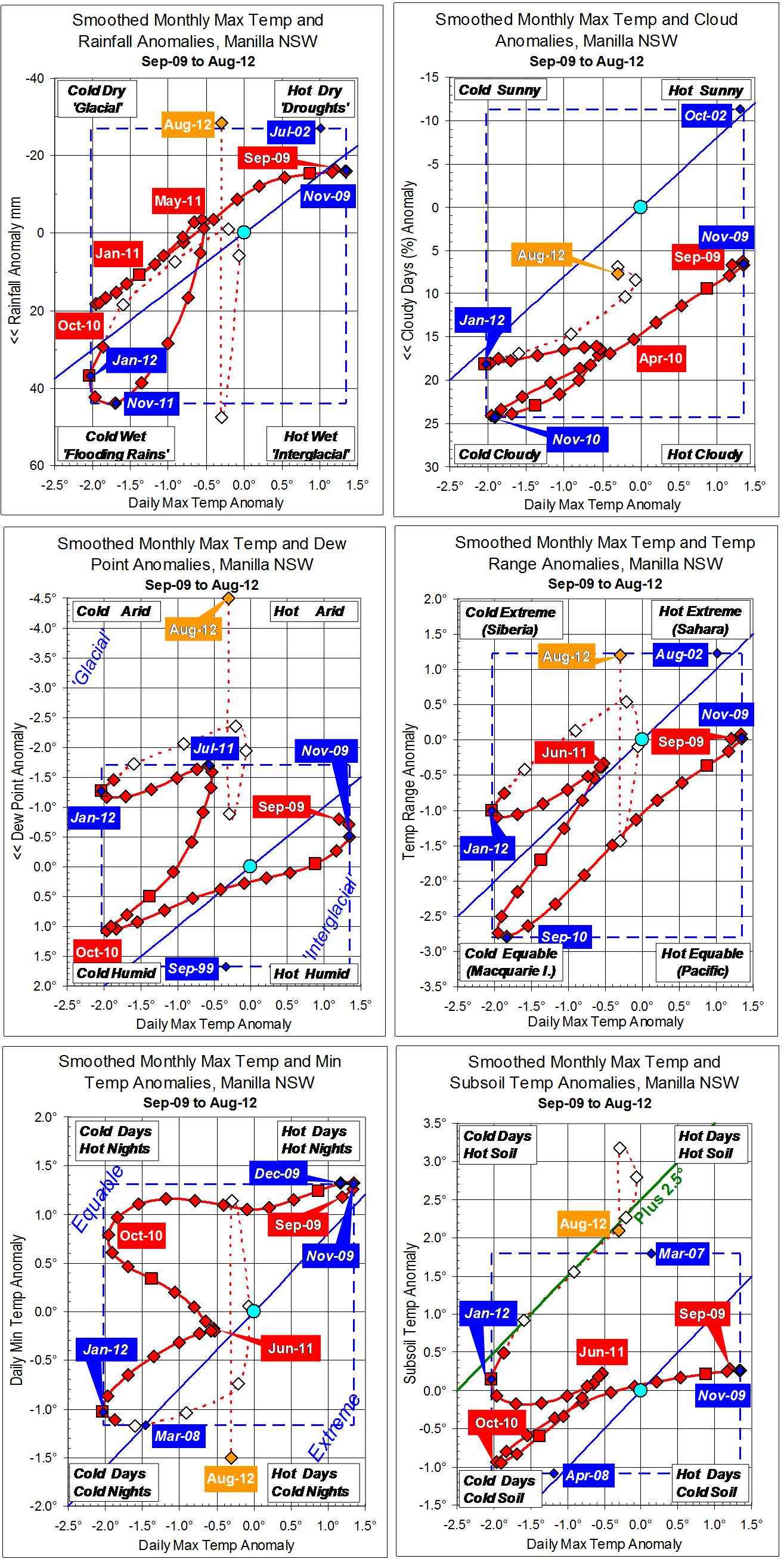
3-year trends to September 2012

Parametric plots of smoothed climate variables at Manilla

“Still Very Dry Air”Trends to September 2012.

In September, daily maximum temperatures finally rose above normal. As in August, Dew Points (humidity) remained extremely low, daily minimum temperature very low, rainfall low, and daily temperature range very high. Cloudiness finally fell below normal, and subsoil temperature fell towards normal.

Fully-smoothed data (in red) now include March 2012. All variables for that month show a retreat from the “flooding rains” climate peak. Because the daily minimum temperature anomaly did not reach a minimum in March as I expected, the sequence of peaks for individual variables must be amended as follows:
Nov-11: Rainfall (max); Subsoil temp (min);
Dec-11: Temp range (min); Dew Pt (max);
Jan-12: Temp max (min);
Feb-12: Temp min (min).
The February 2012 value of smoothed minimum daily temperature anomaly (-1.11 degrees) was not quite as low as the record set in March 2008 (-1.17 degrees).

Note: Fully smoothed data – Gaussian smoothing with half-width 6 months – are plotted in red, partly smoothed data uncoloured, and raw data for the last data point in orange. January data points are marked by squares. Blue diamonds and the dashed blue rectangle show the extreme values in the fully smoothed data record since September 1999.

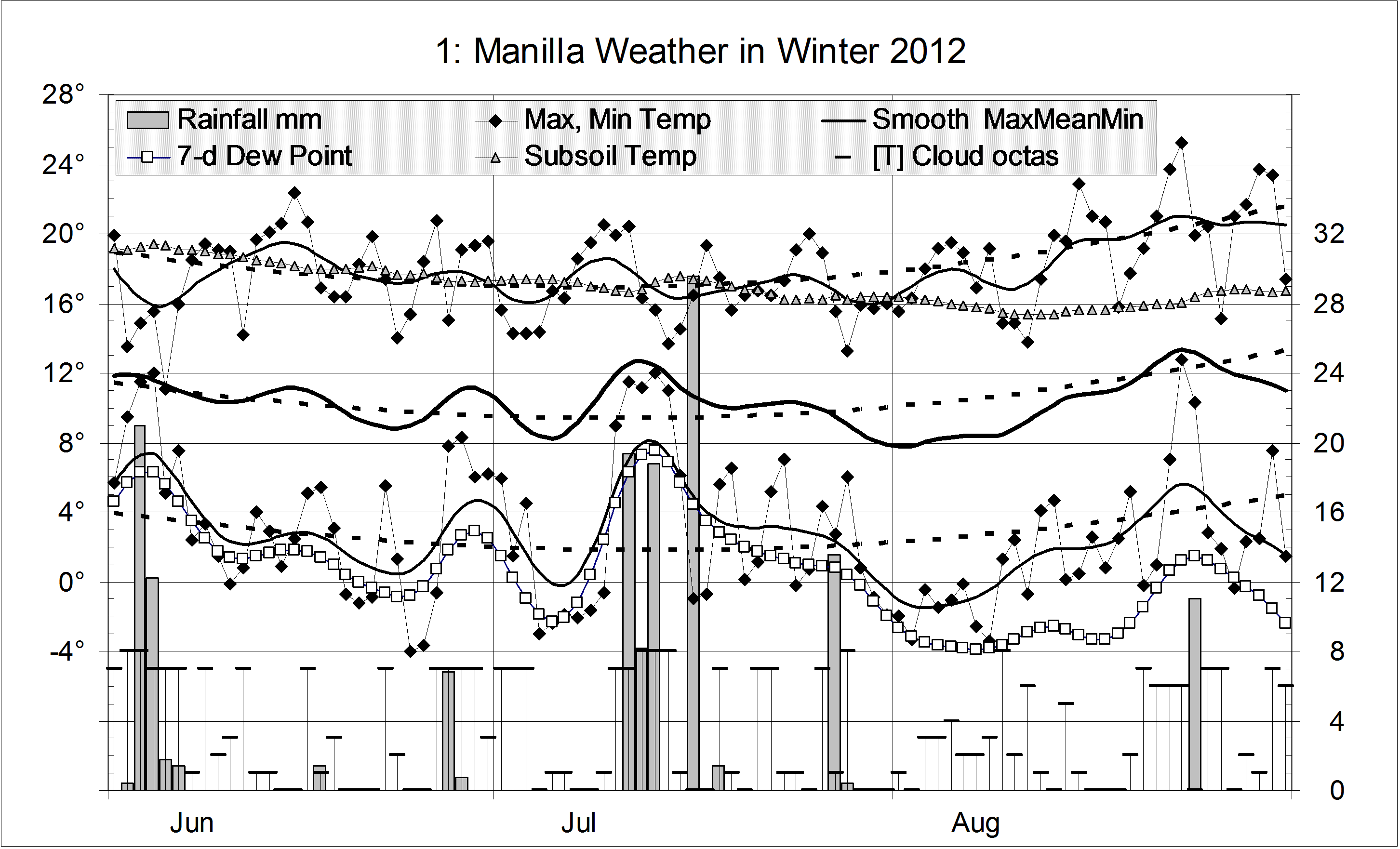
Winter 2012: very dry air

Weather log winter 2012

There were two spells of cloudy very wet weather with warm nights, one in the first week of June and one in the second week of July. By contrast, the first week of August was sunny, but with cool days and very cold nights.

Early valley fogs were common in June and July. The total number of frosts (45) was normal, as was the number of severe frosts below minus two degrees (8).
Like last winter, this winter had normal air temperature. Unlike last winter, rainfall was not low, nor the skies extremely cloudy.
Humidity, however, was even lower, marked by a mean early-morning Dew Point of 0.7° (2.2° lower than normal), a new winter record for dry air.
Subsoil temperature was a new winter record high value: 17.1°.
There were 16 rain days, which is just below normal. The winter total of 148.2 mm is in the 66th percentile.Climate winter 2012

Data. Rainfall data is from Manilla Post Office, courtesy of Phil Pinch. Temperatures, including subsoil at 750 mm, and other data are from 3 Monash Street, Manilla.

3-year trends to August 2012

Parametric plots of smoothed climate variables at Manilla

“Dry Air: Warm Soil”Trends to August 2012.

Daily maximum temperatures remained just below normal in August, as in May, June, and July. Cloudiness was also stable, at about 8% above normal.
From July to August:
* Rainfall went from very high to very low;
* Dew Point went from low to extremely low;
* Temperature Range went from low to high;
* Daily min temps went from very high to very low;
* The subsoil remained extraordinarily warm.
The subsoil temperature anomaly has moved with the anomaly of maximum air temperature for eight months, but is tracking 2.5 degrees higher. This relation is shown by a green line on the bottom left graph.

Fully-smoothed data (in red) now include the whole summer season ending February 2012. At Manilla, this covered a “flooding rains” climate peak that was very much wetter, and somewhat cooler than that a year earlier. The variables reached peaks in sequence as follows:
Nov-11: Rainfall (max); Subsoil temp (min);
Dec-11: Temp range (min); Dew Pt (max);
Jan-12: Temp max (min);
Mar-12: Temp min (min).
Peaks for some variables are not in the usual sequence.

Note: Fully smoothed data – Gaussian smoothing with half-width 6 months – are plotted in red, partly smoothed data uncoloured, and raw data for the last data point in orange. January data points are marked by squares. Blue diamonds and the dashed blue rectangle show the extreme values in the fully smoothed data record since September 1999.
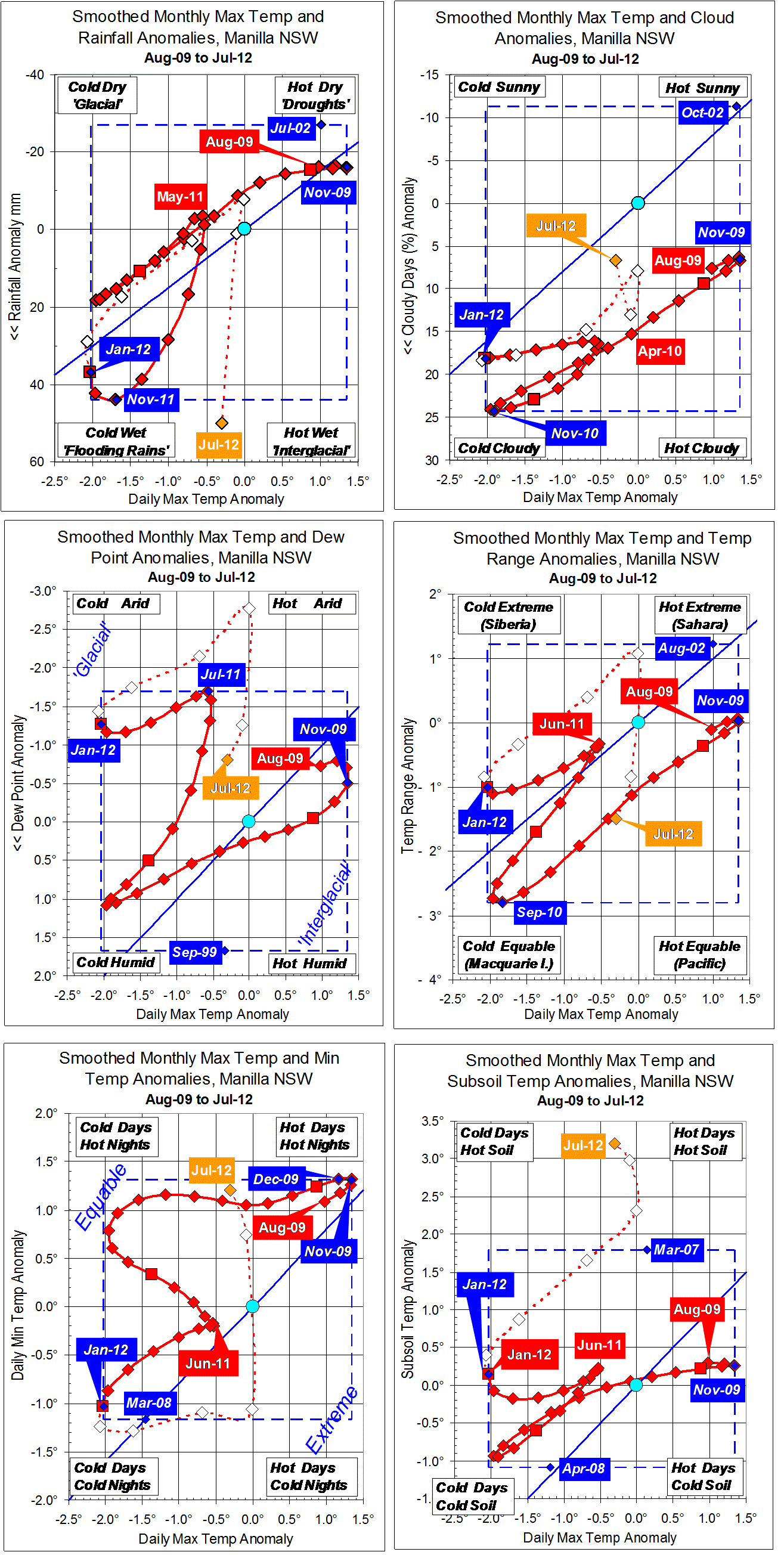
3-year trends to July 2012

Parametric plots of smoothed climate variables at Manilla

“Back towards very wet”Trends to July 2012.

Most July 2012 anomalies are close to normal, and like those of the month before. Rainfall, however, is again very high, as in the spring and summer, and daily min temp has gone from very low in May to very high.
The subsoil remained extraordinarily warm. (Why?)

Fully-smoothed data (in red) show that the 13-year record low monthly max temp anomaly of October 2010 (-1.96 degrees) was beaten in January 2012, with a new low value of -2.03 degrees, perhaps to be beaten in the following month. At Manilla, the “flooding rains” climate phase of 2011-12 was very much wetter, and somewhat cooler than that of 2010-11.

Note: Fully smoothed data – Gaussian smoothing with half-width 6 months – are plotted in red, partly smoothed data uncoloured, and raw data for the last data point in orange. January data points are marked by squares. Blue diamonds and the dashed blue rectangle show the extreme values in the fully smoothed data record since September 1999.