Manilla’s Hot Days

I have used my 13-year weather record to find the number of hot days in each year and in each month. Earlier I did the same for frosty mornings. Because the summer, which has the most hot days, crosses from one calendar year to the next, I have begun each year at July.
I have called days warmer than 35° “hot days”, and days warmer than 40° “very hot days”.

Total hot days

The first graph shows the number of hot and very hot days in each year. The most hot days were in the year ’09-’10, which had 44; the fewest were in the year ’11-’12, which had only 4. The 13-year average is 26, but the number of hot days is quite different from year to year.

Counting only the very hot days, ’03-’04 had the most (6), and four years had none at all. On the average, two days exceeded 40° in a year.
Hot days each year, and seasonal distribution.

Months with hot days

The second graph shows how the number of hot and very hot days peaks strongly in January, with very few earlier than November or later than March. On average, Manilla’s summer has about 22 days warmer than 35°, while spring has 3, and autumn only 1.


The other graphs show how each year had a different pattern of hot days. The highest monthly peaks, each 19 hot days, came in January 2003 (following drought) and January 2007. Annual peaks also came in January in 2008 and 2012, but these peaks were extremely low: only 4 and 3 hot days. Continue reading
Manilla’s Frosts

I have a 13 year record that shows how frosty Manilla is, and how some years are frostier than others. My thermometer is on high ground, so people living where cold air collects will have had more frosts. However, my readings show changes from one time to another. As I do not have a thermometer in the grass, I have recorded a frost when my screen reading is below +2.2°.

There is a matching post for Manilla’s hot days.

Total frosts

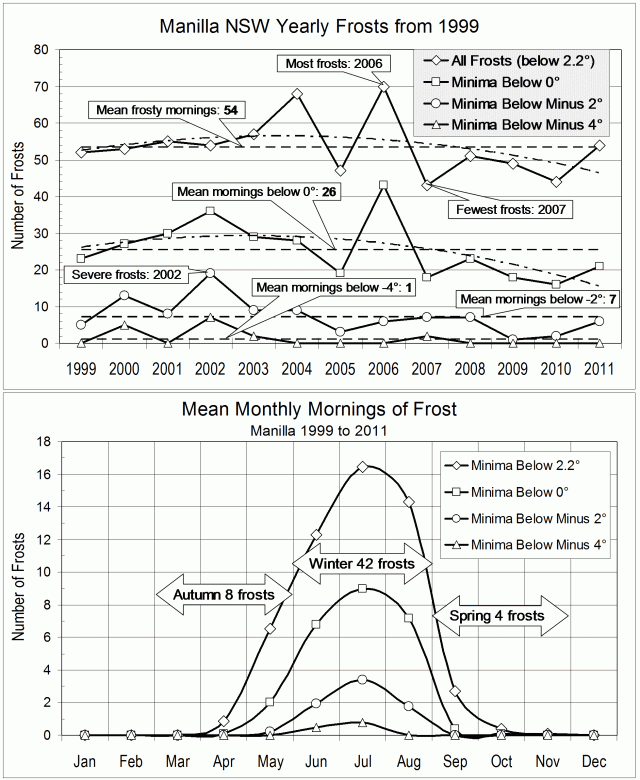
The first graph shows the number of frosty mornings in each year. The most frosts were in the years 2004 (68) and 2006 (70); the fewest were in the years 2007 (43) and 2010 (44). The 13-year average is 54.
The graph also shows the number of mornings colder than zero, minus two, and minus four degrees. On the average, these occurred on 26, 7, and 1 mornings per year. For those colder than zero degrees, 2006 was again the frostiest, but 2002 was also very frosty. Counting only the most severe frosts (below minus two or minus four degrees) 2002 was the frostiest year. It had the coldest mornings: -5.1° on both the 2nd and 11th of July.Frosts each year, and seasonal distribution.

Frosty months

The second graph shows how most frosts come in the winter months, especially July, with some frosts in autumn, but few in spring and none in summer. Few come before Anzac Day (25th April) or after Labour Day (first Monday in October in NSW).


The graphs below show that each year was different. The drought year 2002 had the highest number of frosts in a single month: 27 in July – half of all frosts in that year. By contrast, the 70 frosts of 2006 were spread through the months of winter and autumn: there were more frosts in June and August than in July. Continue reading

In 2012, Autumn Weather Normal Again

Weather log autumn 2012.
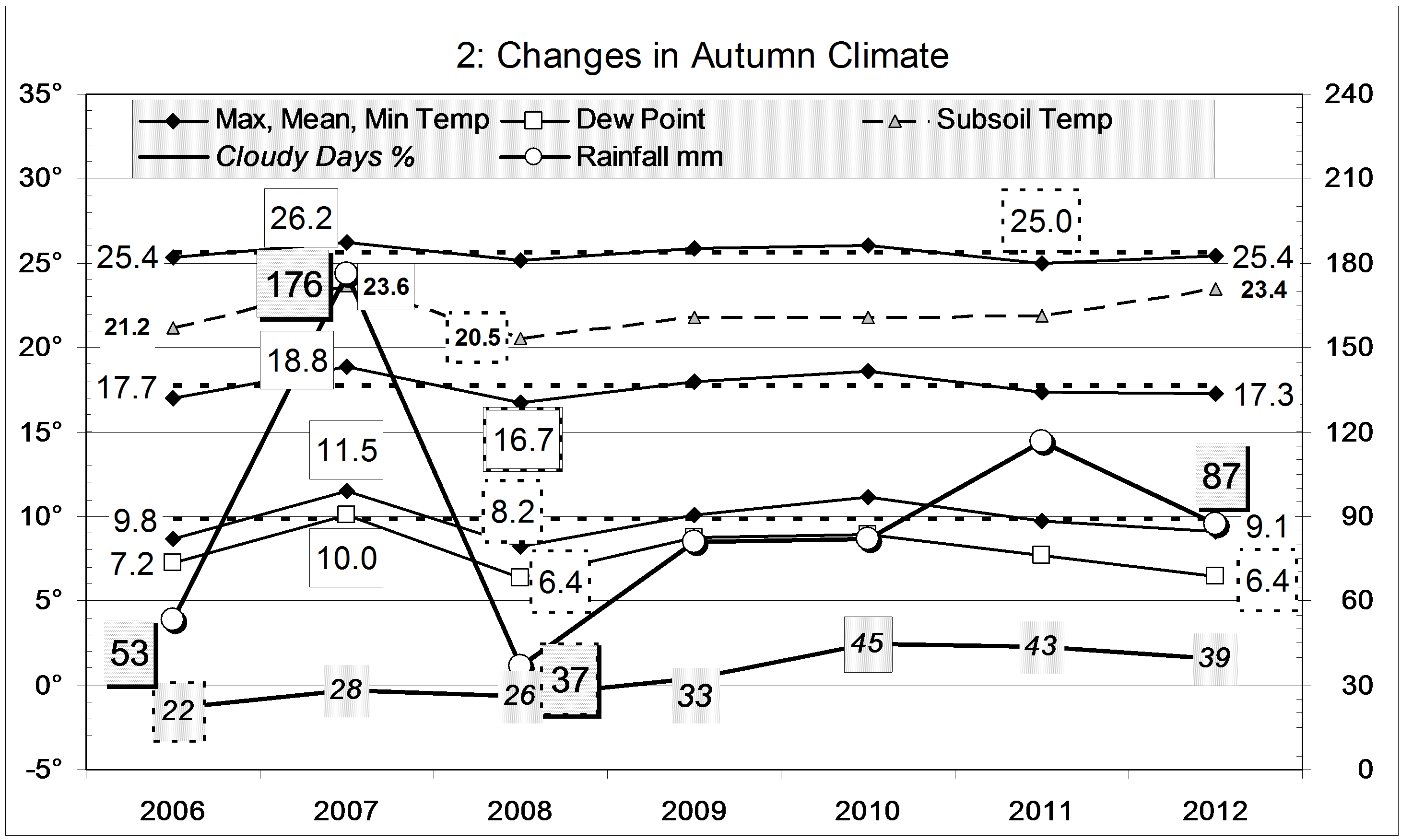
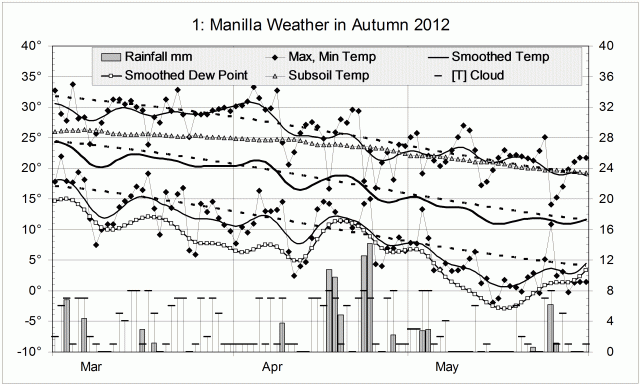
After the cold, wet summer, autumn weather was normal, like last year. Days were warm in early April, and nights cold in mid-May. Rain was rather light: the four days with more than 10 mm of rain came in late April.
Average air temperatures were close to normal, but the early morning Dew Point was 2.1 degrees down, showing very dry air, as in autumn 2008. The subsoil was very warm.
While the percentage of mornings with more than 4/8 cloud (39%) was lower than in the last two autumns, it is still nearly twice that of autumns in the previous decade, which averaged just 25%.
Rain fell on 16 days (normally 12), but the total rainfall of 87.4 mm is only on the 35th percentile for autumn. Like autumns in 2009 and 2010, it is about 45 mm below the average (133 mm). Nevertheless, an enormous amount of rain fell in spring, summer, and autumn taken together: 852 mm! Only 1956 and 1890 had more rain in those three seasons: 1012 mm and 939 mm.Climate autumn 2012

Data. Rainfall data is from Manilla Post Office, courtesy of Phil Pinch. Temperatures, including subsoil at 750 mm, and other data are from 3 Monash Street, Manilla.

Very dry air in May 2012

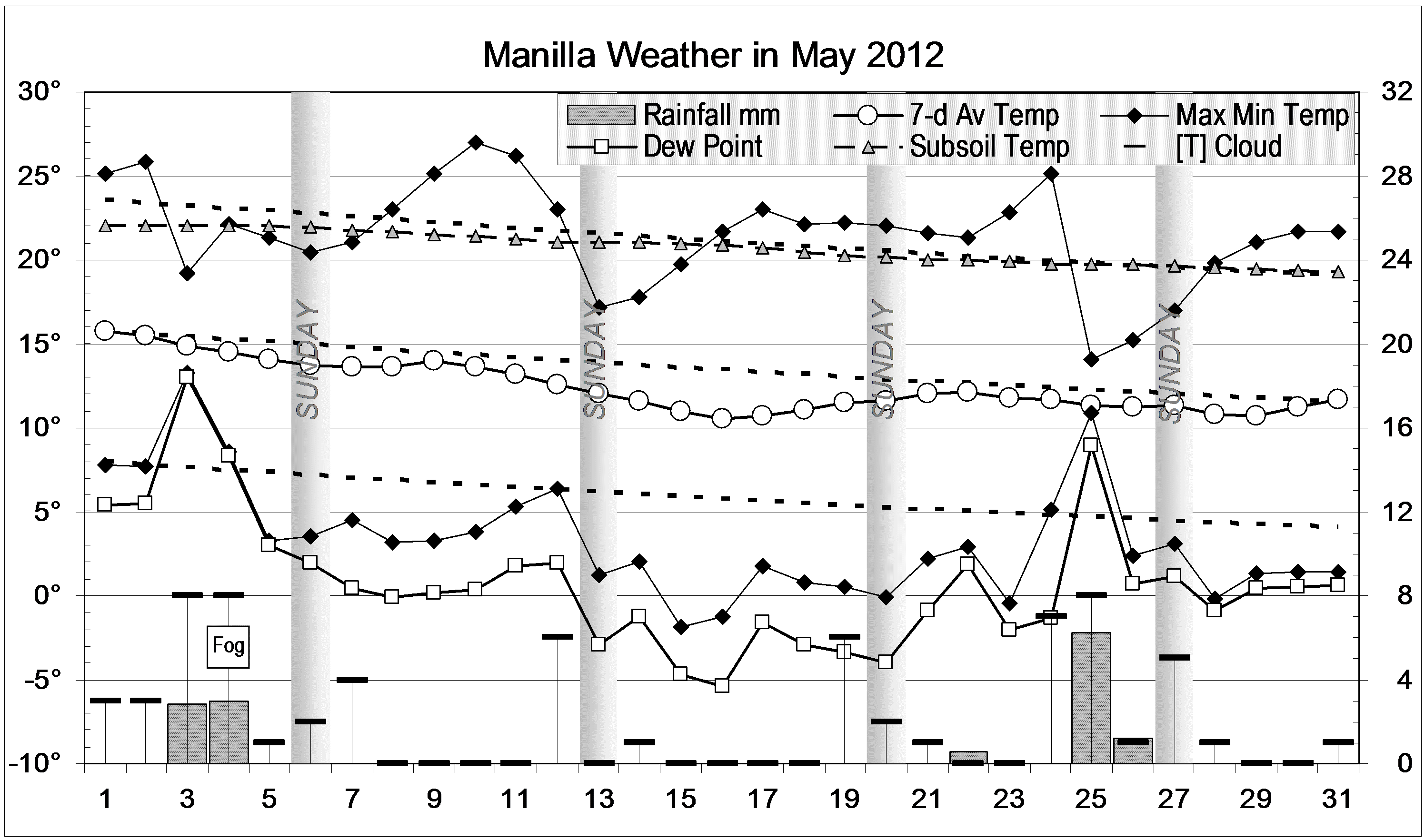
The daily weather logWeather log May 2012.

Most days were fine, and only two or three were cool and overcast. There were 13 frosts, twice the usual number, but May 2006 had 14. Rain totalling 13.8 mm fell on five rain days, with a maximum reading of 6.2 mm on the 25th.

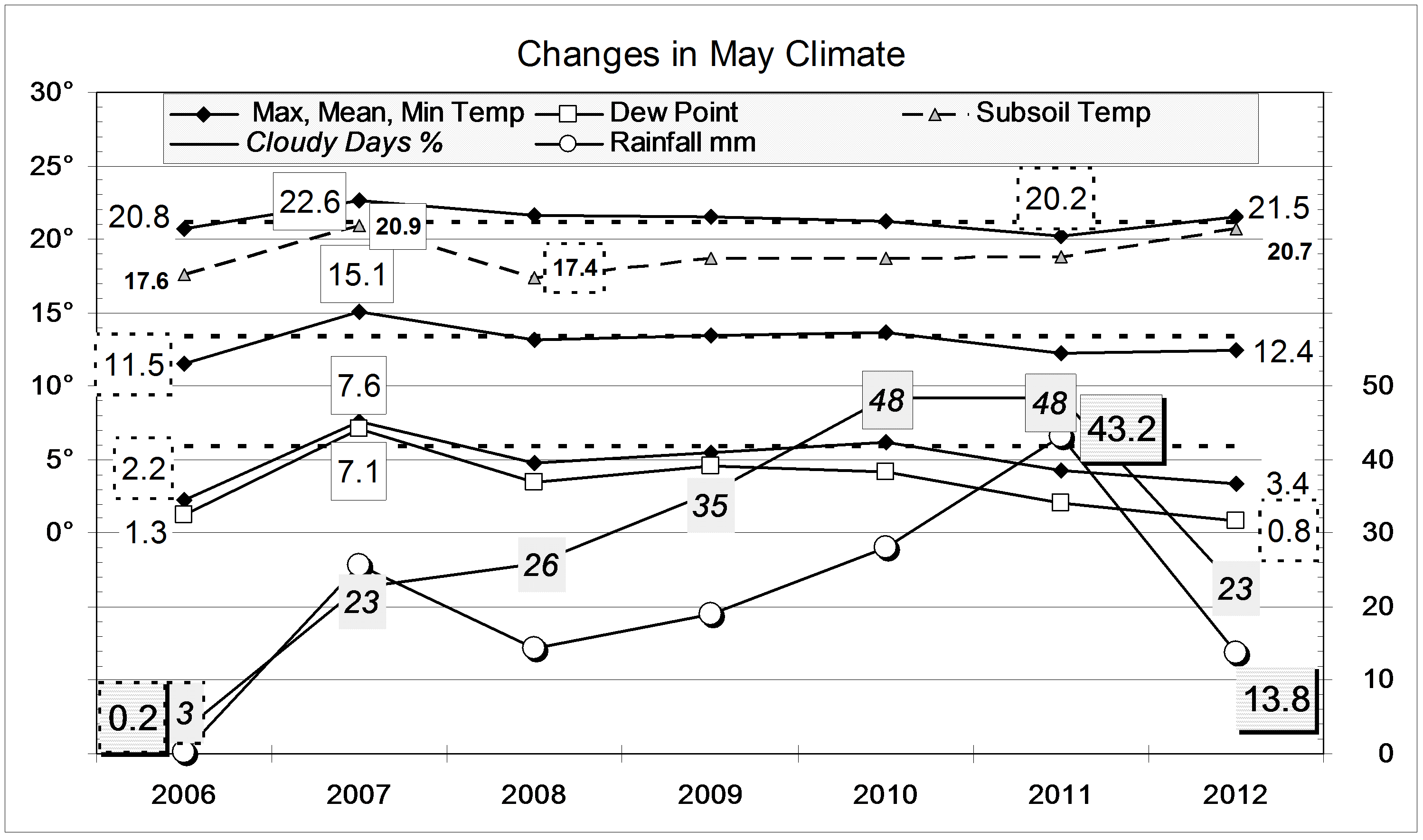
 Comparing May monthsClimate May 2012.

This was a very dry month, marked by dew points four degrees below normal, but it was not as dry as May 2006, as is clear from the graph.
The rainfall total is well below the May average of 40.3 mm: it is in the 24th percentile (3/4 of May months have been wetter). In extreme contrast, the nine-month rainfall total of 852 mm is extra-ordinarily high. Only 13 nine-month totals have been higher, and then only in the four years 1890, 1928, 1956 and 2012 (April). The record for a nine-month rainfall total was 1030 mm, set in June 1956.


Data. Rainfall data is from Manilla Post Office, courtesy of Phil Pinch. Temperatures, including subsoil at 750 mm, and other data are from 3 Monash Street, Manilla.


April 2012 cloudy and wet

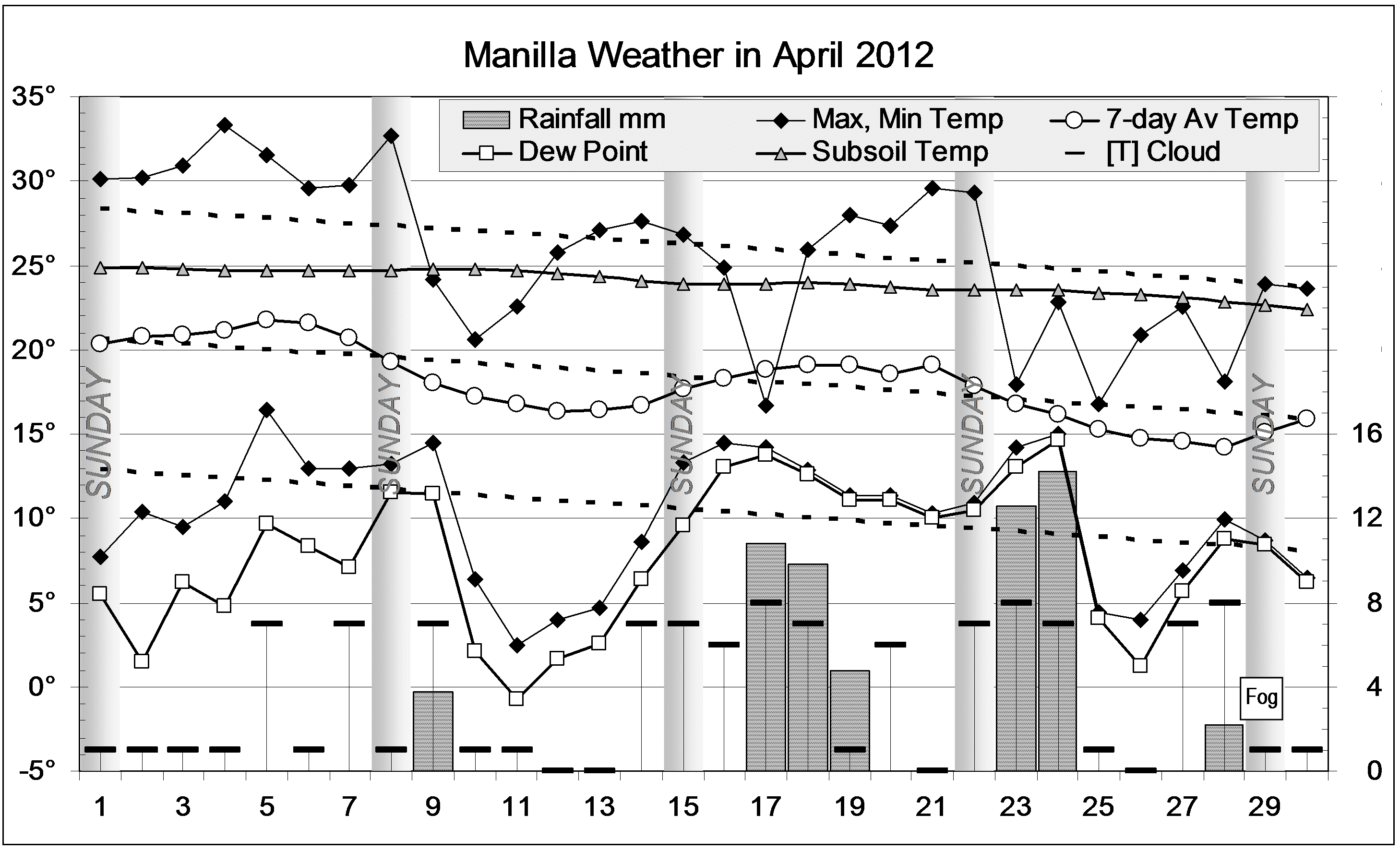
The daily weather logWeather log April 2012.

Most days had normal temperatures, but several were cool and overcast. Cold nights came during sunny spells, the coldest, on the 11th, being nine degrees below normal, but not a frost. Rain totalling 58.2 mm fell on seven rain days, mainly late in the month, with a maximum reading of 14.2 mm on the 24th.

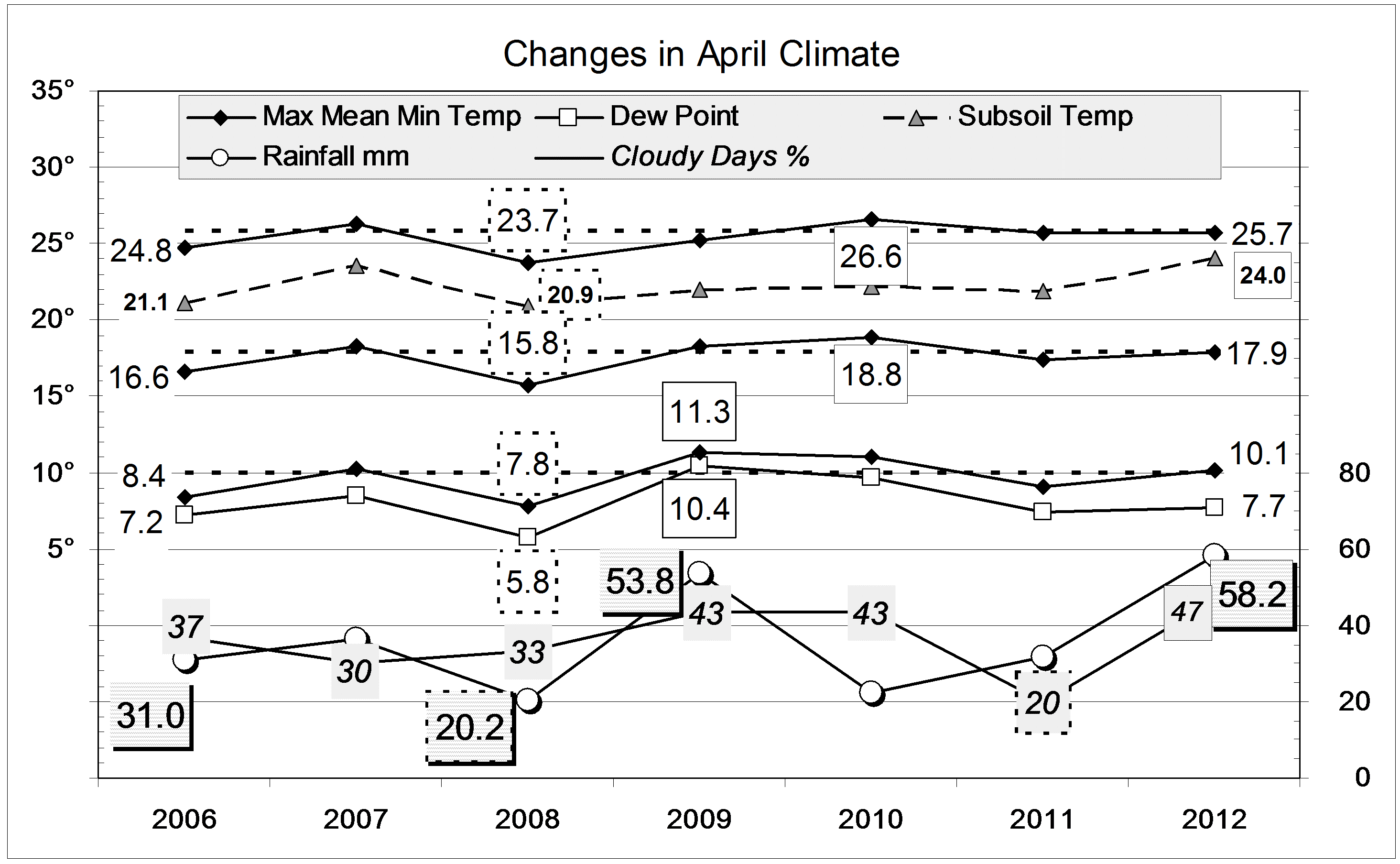
 Comparing April monthsClimate April 2012.

All the mean temperatures were near normal, except that subsoil temperature was the highest for April on this record: 2.1 degrees above normal.

There were more cloudy days than recorded in earlier Aprils.
The rainfall total of 58.2 mm is well above the April average of 39.3 mm: it is in the 80th percentile. The total for March and April taken together (73.6 mm) is exactly on the average. As in March, totals for periods from five months to twenty-four months are still near record high values, and no totals up to the thirty-year total are below normal.


Data. Rainfall data is from Manilla Post Office, courtesy of Phil Pinch. Temperatures, including subsoil at 750 mm, and other data are from 3 Monash Street, Manilla.