3-year trends to September 2011

Parametric plots of smoothed climate variables at Manilla

“Paradoxical Trends.”Trends to September  2011.
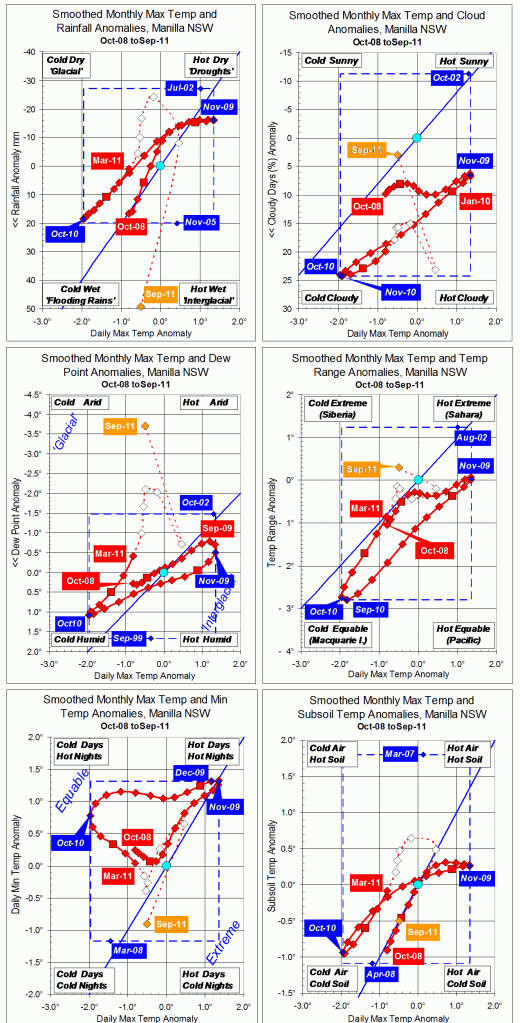
September values are paradoxical.They show sudden reversals of trend and unusual relationships between the attributes.

Daily maximum temperature anomaly (x-axis, all graphs), which had been accelerating upwards, fell suddenly below normal.

Monthly rainfall anomaly (y-axis, top left graph), from very low in July, became extremely high.

Cloudiness (top right graph) fell suddenly to a value that was normal three years ago, but not since.

Dew Point anomaly (centre left), having been briefly near normal in August, resumed a trend to extreme aridity.

Temperature range anomaly (centre right) hovered near normal.

Daily minimum temperature anomaly (bottom left) suddenly fell even faster than that of daily maximum temperature

Subsoil temperature anomaly (bottom right), which had been above normal, fell along with daily maximum temperature anomaly.

Note: Fully smoothed data – Gaussian smoothing with half-width 6 months – are plotted in red, partly smoothed data uncoloured, and raw data for the last data point in orange. January data points are marked by squares. Blue diamonds and the dashed blue rectangle show the extreme values in the fully smoothed data record since September 1999.
3-year trends to August 2011.

Parametric plots of smoothed climate variables at Manilla

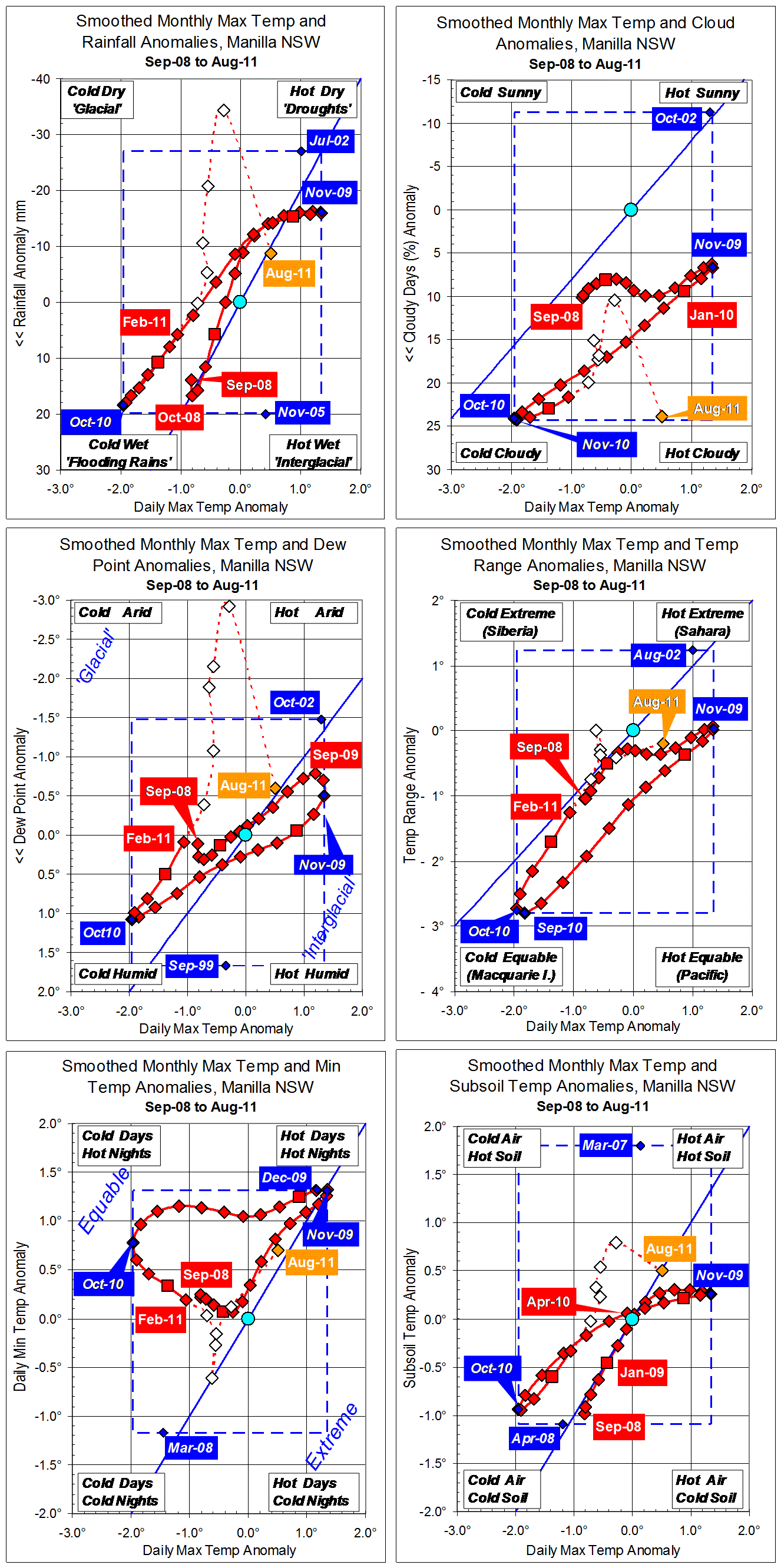
“Summer showed warming and drying”Trends to August 2011.

New fully-smoothed data for summer 2010-11

Daily maximum temperature anomalies (x-axis, all graphs) are more clearly shown on the top right graph. They rose at 0.3° per month: about the same rate as they had fallen in the winter. From the extreme cold (-1.96°) of October 2010, the February value was half-way back to normal.

Monthly rainfall anomalies (y-axis, top left graph) decreased through summer, exactly reversing the winter trend.

Cloudiness (top right graph) also reversed the trend seen in winter but, for a given temperature value, there was now more cloud.

Dew Point anomaly (centre left) fell much more rapidly than it had risen in winter. It was near normal by February.

Temperature range anomaly (centre right) rose much more rapidly during summer than that of maximum temperature, and reached higher values. As has appeared persistently in this data series, temperature range is the first variable to reach a positive or negative peak anomaly value. Here, its minimum value was in September, a month before the minimum value of daily maximum temperature. On these axes, the curve loops clock-wise as a result.
Daily minimum temperature anomaly (bottom left) fell steadily towards normal through spring and summer, completing a broad 30-month loop with daily maximum temperature anomaly.

Subsoil temperature anomaly (bottom right) fell along with daily maximum temperature anomaly.

Partially smoothed and unsmoothed data since February

Early winter 2011 had very low rainfall, very low Dew Points, and warm subsoil. Raw anomaly values for August suggest that the climate has since returned to normal, if somewhat warm and dry.

Note: Fully smoothed data – Gaussian smoothing with half-width 6 months – are plotted in red, partly smoothed data uncoloured, and raw data for the last data point in orange. January data points are marked by squares. Blue diamonds and the dashed blue rectangle show the extreme values in the fully smoothed data record since September 1999.
3-year trends to July 2011.

Parametric plots of smoothed climate variables at Manilla

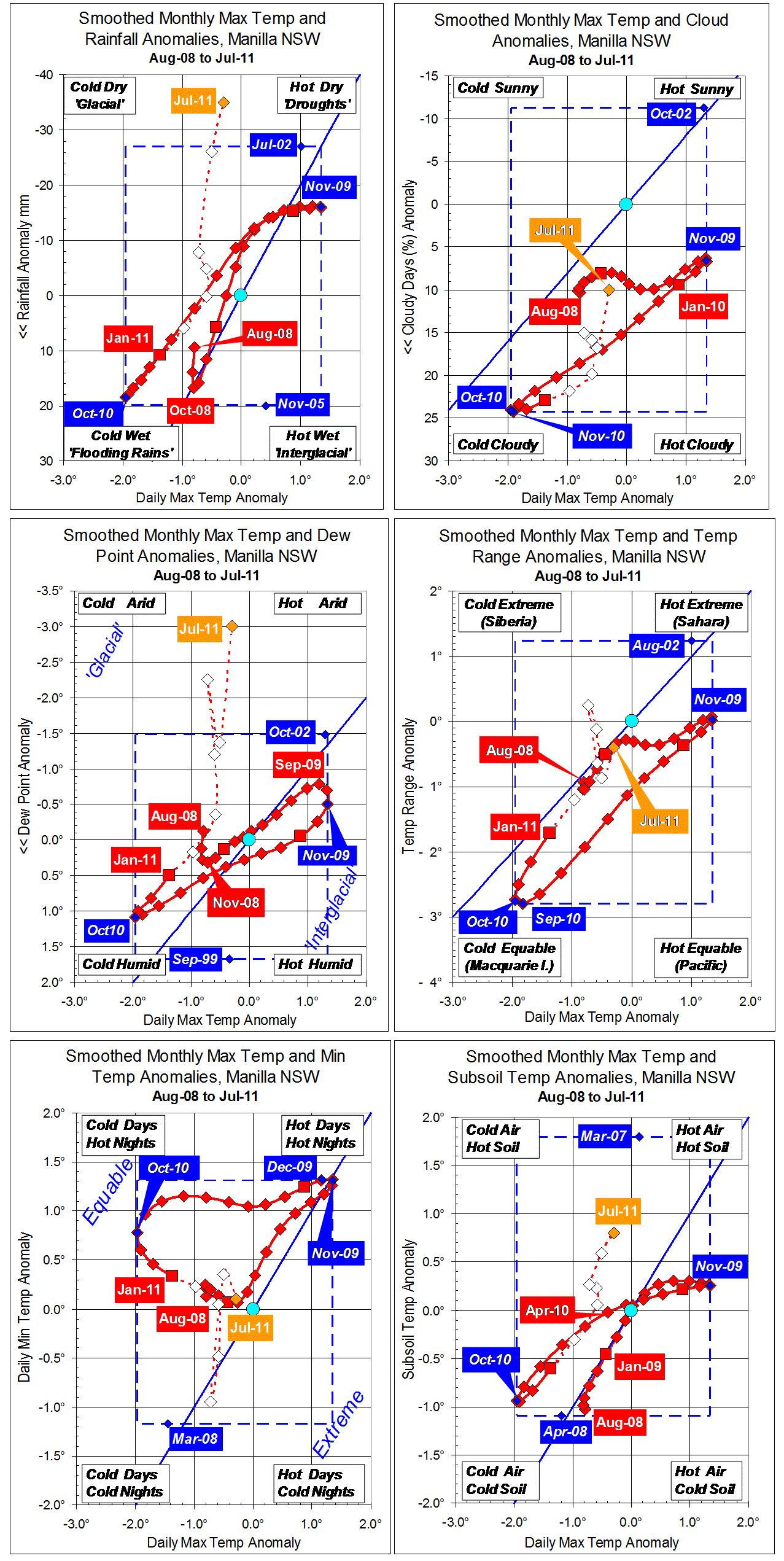
“Dry air and little rain”Trends to July 2011.

These graphs have data points for the last 36 months. In that time, the climate at Manilla, NSW has experienced a cycle from near-normal (Aug-08), through very warm and dry (Nov-09), then very cool and wet (Oct-10) , and back to near normal (Jul-11). For most variables, the raw anomaly values of July 2011 are near the smoothed anomaly values for August 2008.

Three variables have not returned to normal. Rainfall and Dew Point are far below normal, as typical in drought, and Subsoil temperature is high.
Cloudiness is “normal” in the new cloudy regimen in place since September 2007.

Note: Fully smoothed data – Gaussian smoothing with half-width 6 months – are plotted in red, partly smoothed data uncoloured, and raw data for the last data point in orange. January data points are marked by squares. Blue diamonds and the dashed blue rectangle show the extreme values in the fully smoothed data record since September 1999.

3-year trends to June 2011.

Parametric plots of smoothed climate variables at Manilla

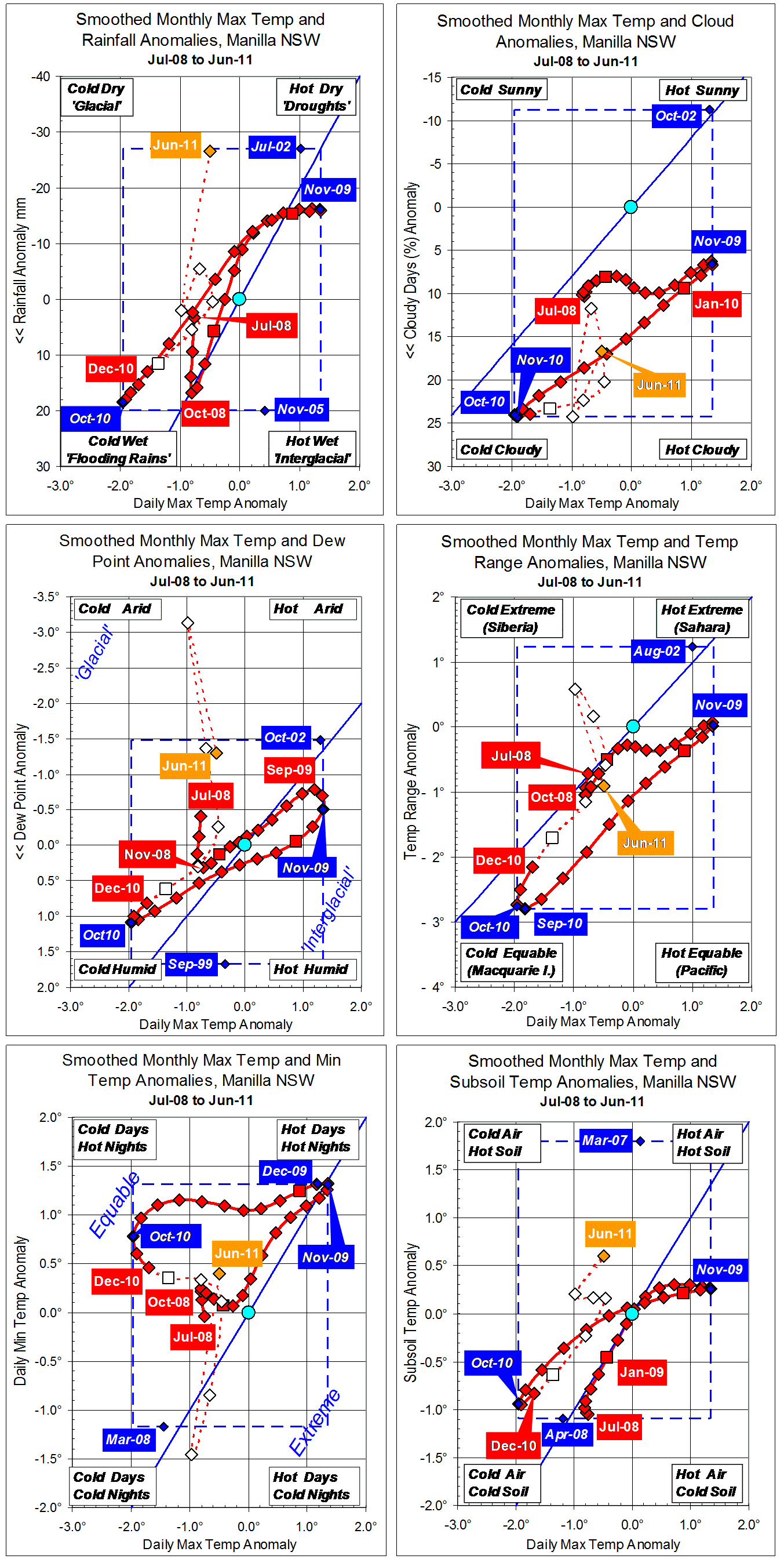
“Dry air but not warm or sunny”Trends to June 2011.

Raw anomaly data for June 2011 (shown in orange) are a little strange.
Daily max temperature, shown on the x-axis of all six graphs, has stalled without quite rising to normal from the extreme cold of last October.
Two variables indicate severe drought: Rainfall was very low, and so was the early morning Dew Point.
Most other variables are near normal, or slightly to the “flooding rains” side of normal.
Percent of cloudy mornings (>4 Octas) remains stable at a very high positive anomaly. For a calendar month that had 35% cloudy mornings in the reference decade beginning in 1999, it now has 55% cloudy mornings.

Note: Fully smoothed data – Gaussian smoothing with half-width 6 months – are plotted in red, partly smoothed data uncoloured, and raw data for the last data point in orange. January data points are marked by squares. Blue diamonds and the dashed blue rectangle show the extreme values in the fully smoothed data record since September 1999.

3-year trends to May 2011

Parametric plots of smoothed climate variables at Manilla

“Flooding rains climate peaked here in October 2010”Trends to May 2011.

Smoothed data for spring 2010

Fully smoothed data points for spring (SON) of 2010 are plotted in red on the left edge of the graphs. They show that several variables reached peak values during the season. First, temperature range anomaly reached a minimum in September. Next, in October, daily maximum temperature anomaly reached a minimum, rainfall anomaly a maximum, and Dew Point anomaly a maximum. In November, subsoil temperature anomaly reached a minimum. Cloudiness anomaly may have reached a maximum in that month, but perhaps smoothed December or January values will be higher. Daily minimum temperature anomaly did not peak. Through spring it fell steadily from a high positive value.
In a “weatherzone” post, I noted a tendency for variables to peak in a particular order.
“For a “flooding-rains” peak:

  • First: Daily Temperature Range (min);
  • One month later: Rainfall (max), Cloud (max);
  • Two months later: Daily Maximum Temperature (min), Dew Point (max);
  • Four months later: Daily Minimum Temperature (min), Subsoil Temperature (min).”

Not much is different in this case. In particular, daily temperature range was the first to peak (WHY?), and subsoil among the last. However, the time of rainfall maximum did not precede the time when daily maximum temperature reached a minimum.

Data after November 2010

During summer (DJF) most variables seemed to be moving towards “droughts” but this pattern broke down in autumn:

  • Maximum temperature anomaly did not quite reach normal before falling again;
  • Rainfall anomaly became negative then returned to positive;
  • Cloud anomaly had just one negative value before returning to record cloudiness;
  • Dew Point anomalies accelerated to extremely low values;
  • Temperature range anomaly went very positive before falling slightly;
  • Minimum temperature anomaly fell rapidly, independent of maximum temperature anomaly;
  • Subsoil temp anomaly stabilised at a slightly positive value.

I am surprised that extreme cloudiness and extreme low humidity occur together. I am also puzzled about the weak association between daily maximum and minimum temperatures. This is a worry because daily minimum temperatures provide the most consistent signal of climate change during the last century.

Note: Fully smoothed data – Gaussian smoothing with half-width 6 months – are plotted in red, partly smoothed data uncoloured, and raw data for the last data point in orange. January data points are marked by squares. Blue diamonds and the dashed blue rectangle show the extreme values in the fully smoothed data record since September 1999.