August Climate Anomalies Log

Heat Indicators log for August months

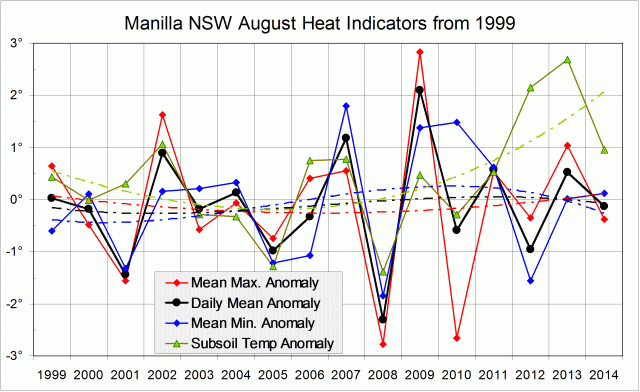
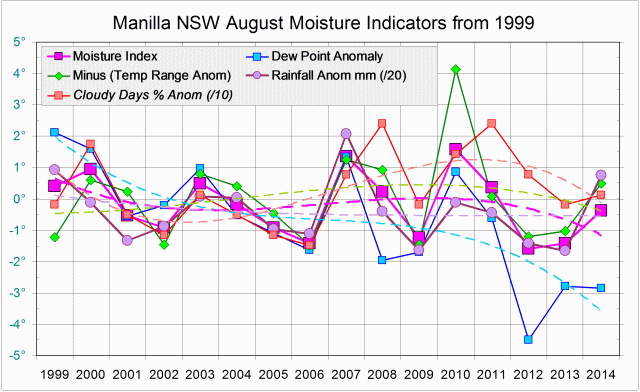
This post is the sixth in a set for the 12 calendar months. Graphs are sixteen-year logs of the monthly mean anomaly values of nine climate variables for Manilla, NSW, with fitted trend lines. I have explained the method in notes at the foot of the page.

Raw anomaly values for August

Extreme values of August anomalies in this period were:

Temperature range anomaly (minus) +4.1 deg: August 2010;
Dew Point Anomaly -4.5 deg: August 2012.

Trend lines for August

Heat Indicators

The trend of mean temperature anomalies was almost constant. The trend of daily maximum temperature anomalies was almost constant, but had a weak minimum at 2007. The trend of minimum temperature anomaly had a weak minimum in 2001 and a weak maximum in 2010. The subsoil temperature anomaly trend ended very high, after a weak minimum in 2005.

Moisture Indicators log for August months

Continue reading

Dry, Warm August 2013

The daily weather logWeather log August 2013.

The month had no extremes of heat or cold. Frosts (10) were almost as rare as in August 2011 (9). Some overcast skies came with 5.8 mm of rain on the 17th then, from the 25th, there were five cloudless mornings bringing very warm weather. Altogether, only three days had rain (usually 6).

Comparing August monthsClimate August 2013.

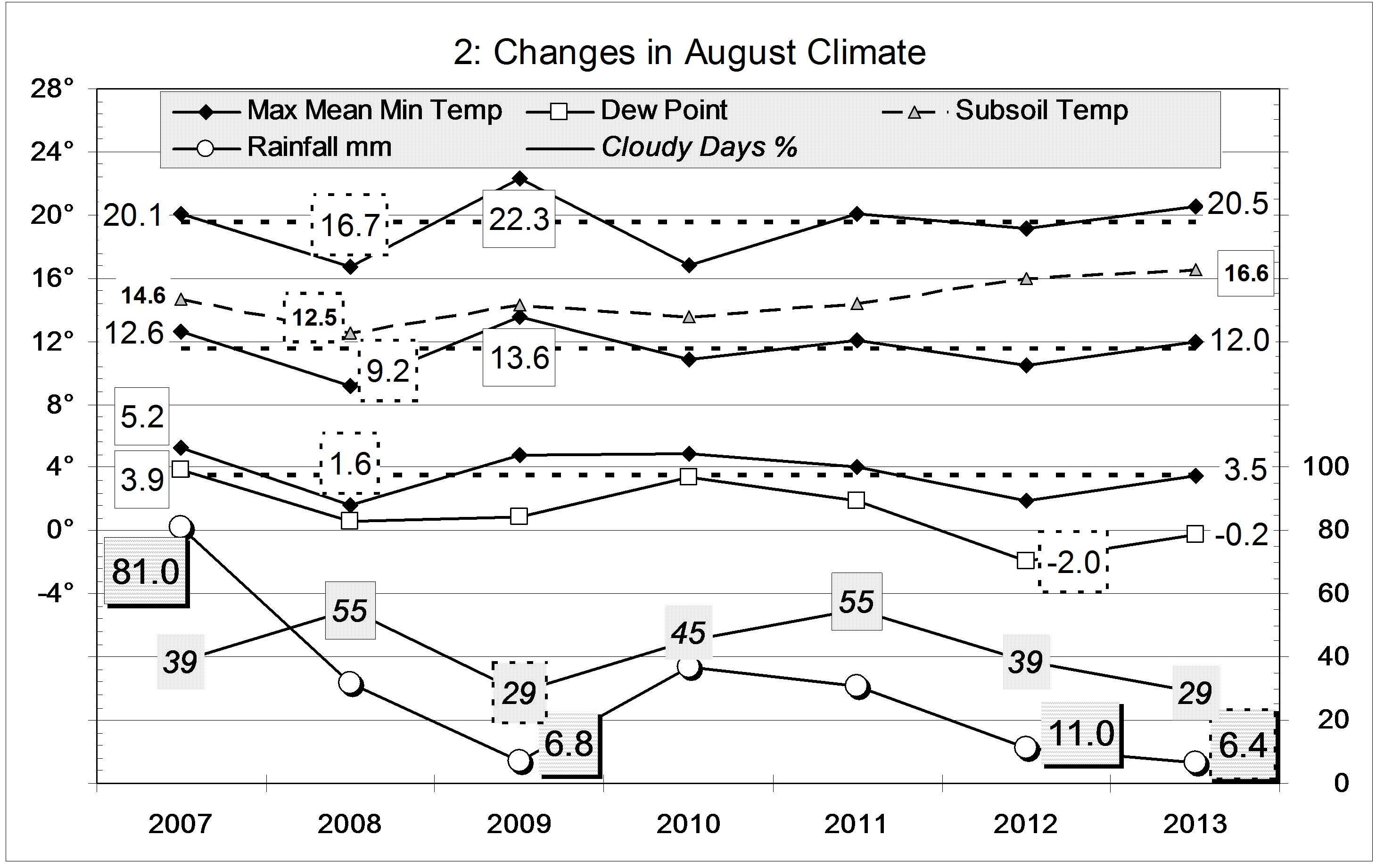
After July having temperatures two degrees above normal, this month’s maximum was only one degree up, and the minimum just on normal. While the air was not as extremely dry as it was last August, the morning dew point was still very low: 2.7 degrees below normal. In contrast, the subsoil temperature remained extremely high, at 16.6°, 2.7° above normal.
Total rainfall is far below the average of 39.5 mm. At 6.4 mm, it is in the 9th percentile: since 1888, only 10 August months have been drier. In totals for two months and more, there is no serious shortage of rainfall, although nearly all totals up to 18 months are now below the median. Totals for all longer periods (up to 360 months) are above the median.


Data. Rainfall data is from Manilla Post Office, courtesy of Phil Pinch. Temperatures, including subsoil at 750 mm, and other data are from 3 Monash Street, Manilla.

3-year trends to August 2012

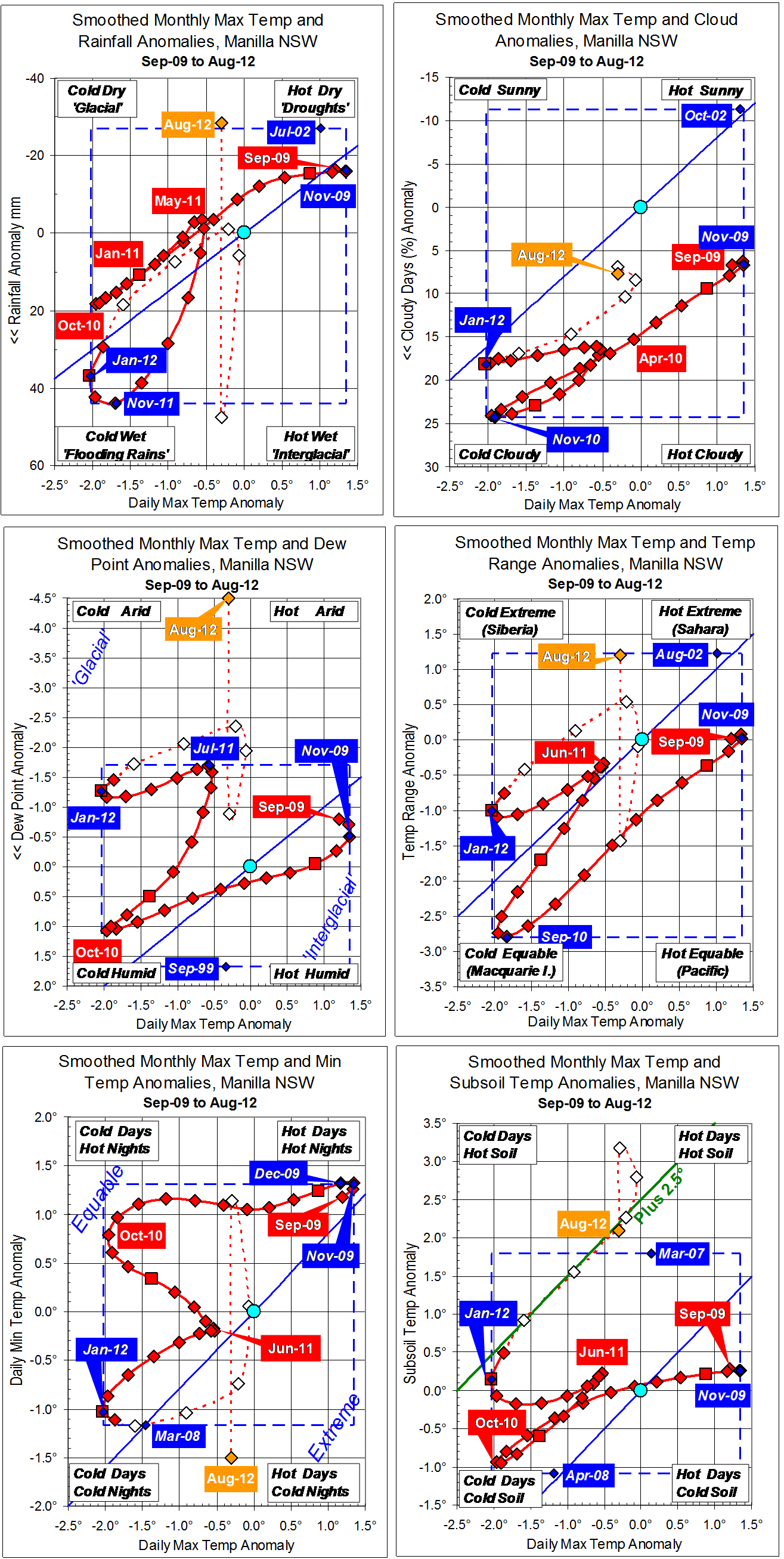
Parametric plots of smoothed climate variables at Manilla

“Dry Air: Warm Soil”Trends to August 2012.

Daily maximum temperatures remained just below normal in August, as in May, June, and July. Cloudiness was also stable, at about 8% above normal.
From July to August:
* Rainfall went from very high to very low;
* Dew Point went from low to extremely low;
* Temperature Range went from low to high;
* Daily min temps went from very high to very low;
* The subsoil remained extraordinarily warm.
The subsoil temperature anomaly has moved with the anomaly of maximum air temperature for eight months, but is tracking 2.5 degrees higher. This relation is shown by a green line on the bottom left graph.

Fully-smoothed data (in red) now include the whole summer season ending February 2012. At Manilla, this covered a “flooding rains” climate peak that was very much wetter, and somewhat cooler than that a year earlier. The variables reached peaks in sequence as follows:
Nov-11: Rainfall (max); Subsoil temp (min);
Dec-11: Temp range (min); Dew Pt (max);
Jan-12: Temp max (min);
Mar-12: Temp min (min).
Peaks for some variables are not in the usual sequence.

Note: Fully smoothed data – Gaussian smoothing with half-width 6 months – are plotted in red, partly smoothed data uncoloured, and raw data for the last data point in orange. January data points are marked by squares. Blue diamonds and the dashed blue rectangle show the extreme values in the fully smoothed data record since September 1999.

Extremely Dry Air in August 2012

The air in August was drier than in any month on this 14-year record. Relative humidity in the afternoons was only about 25%, well below the usual 37%. The air has been very dry here for more than a year. The record rainfall last spring may have prevented serious bush-fires, but this year could be different.

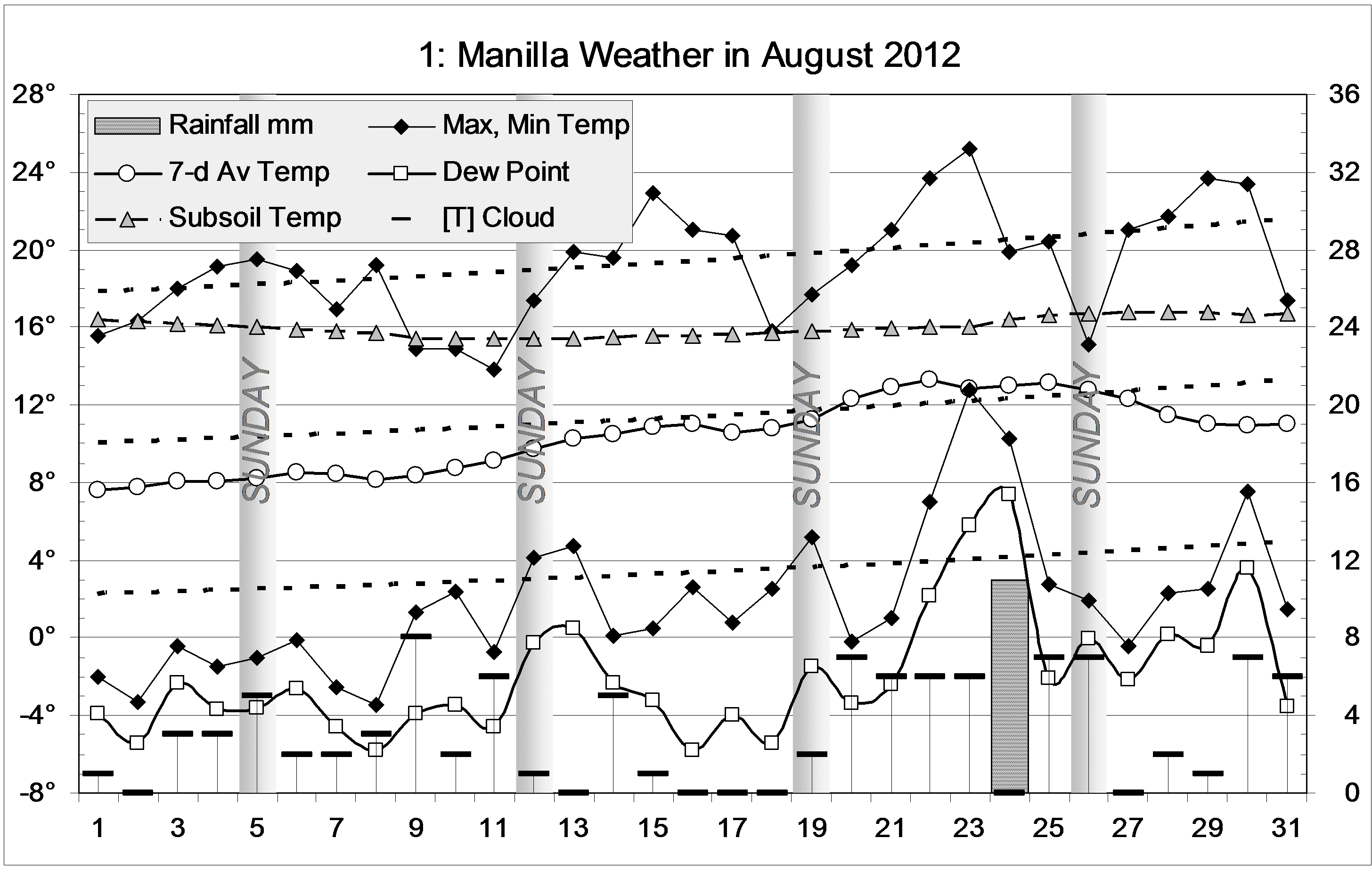
The daily weather logWeather log August 2012.

Days were not very warm or cold. Most nights were cold, with 18 frosts (usually 15). Two frosts were severe (below minus 3°), but there was also one night as warm as 12.8°.
Extremely low Dew Points (dry air) of minus 5.8° were recorded on the mornings of the 8th and 16th. Only seven lower values have occurred in 14 years.
The only rainfall (11.0 mm) was recorded on the 24th.

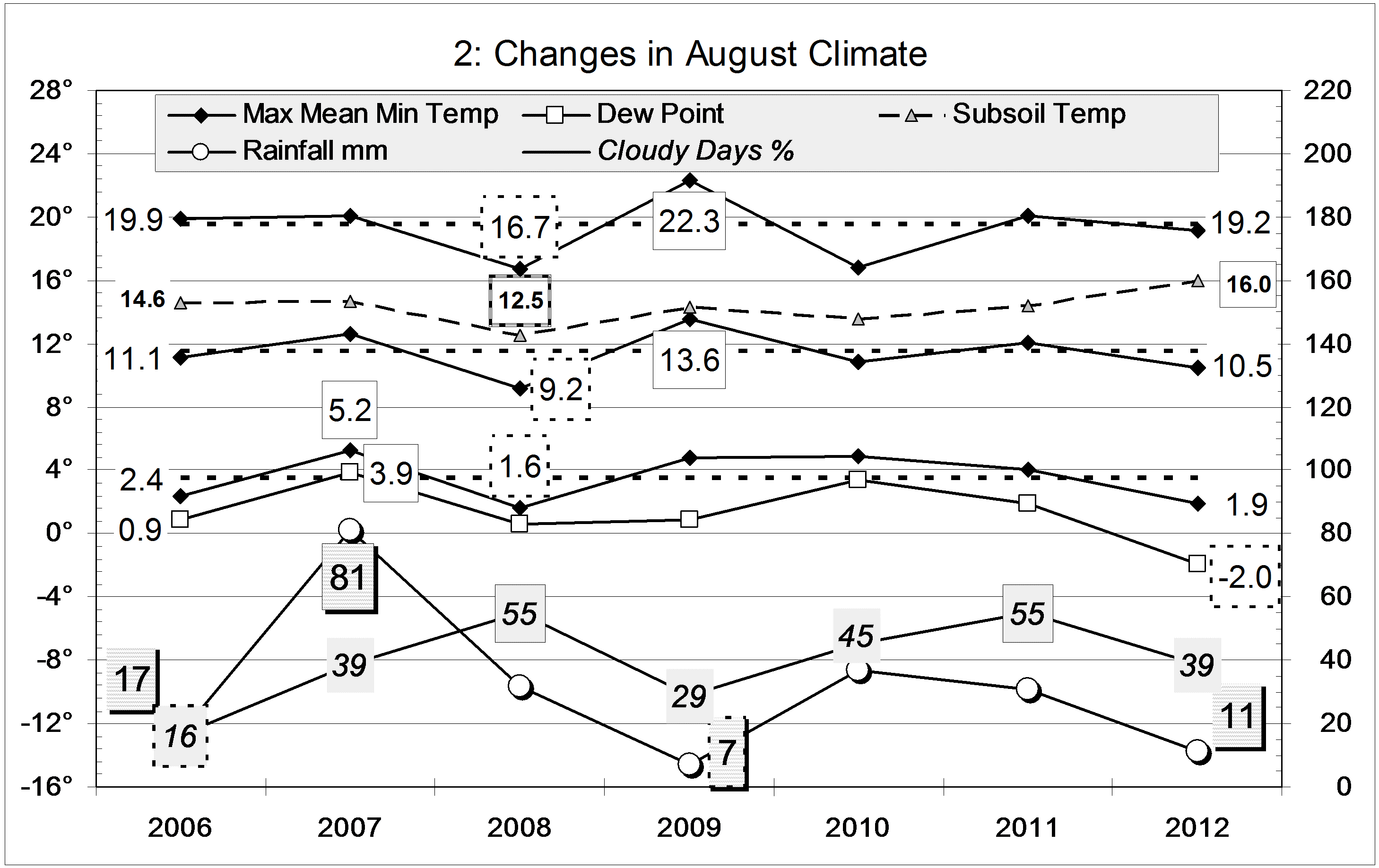
 Comparing August monthsClimate August 2012.

The monthly mean temperature was a bit low, while the mean night-time minimum was very low: 1.9°, not quite as low as the 1.6° of August 2008. The mean early morning Dew Point (-2.0°) was a new record low humidity for any month, beating easily the drought month of July 2002 (-1.4°).
Thirty-nine percent cloudy mornings is a retreat from the August record of 55%, set in 2008 and 2011.
The rainfall of 11.0 mm is very low, in the 15th percentile for August. While the 12-month rainfall total to date is still extremely high (1 metre), the 6-month total is now low (236 mm).


Data. Rainfall data is from Manilla Post Office, courtesy of Phil Pinch. Temperatures, including subsoil at 750 mm, and other data are from 3 Monash Street, Manilla.


3-year trends to August 2011.

Parametric plots of smoothed climate variables at Manilla

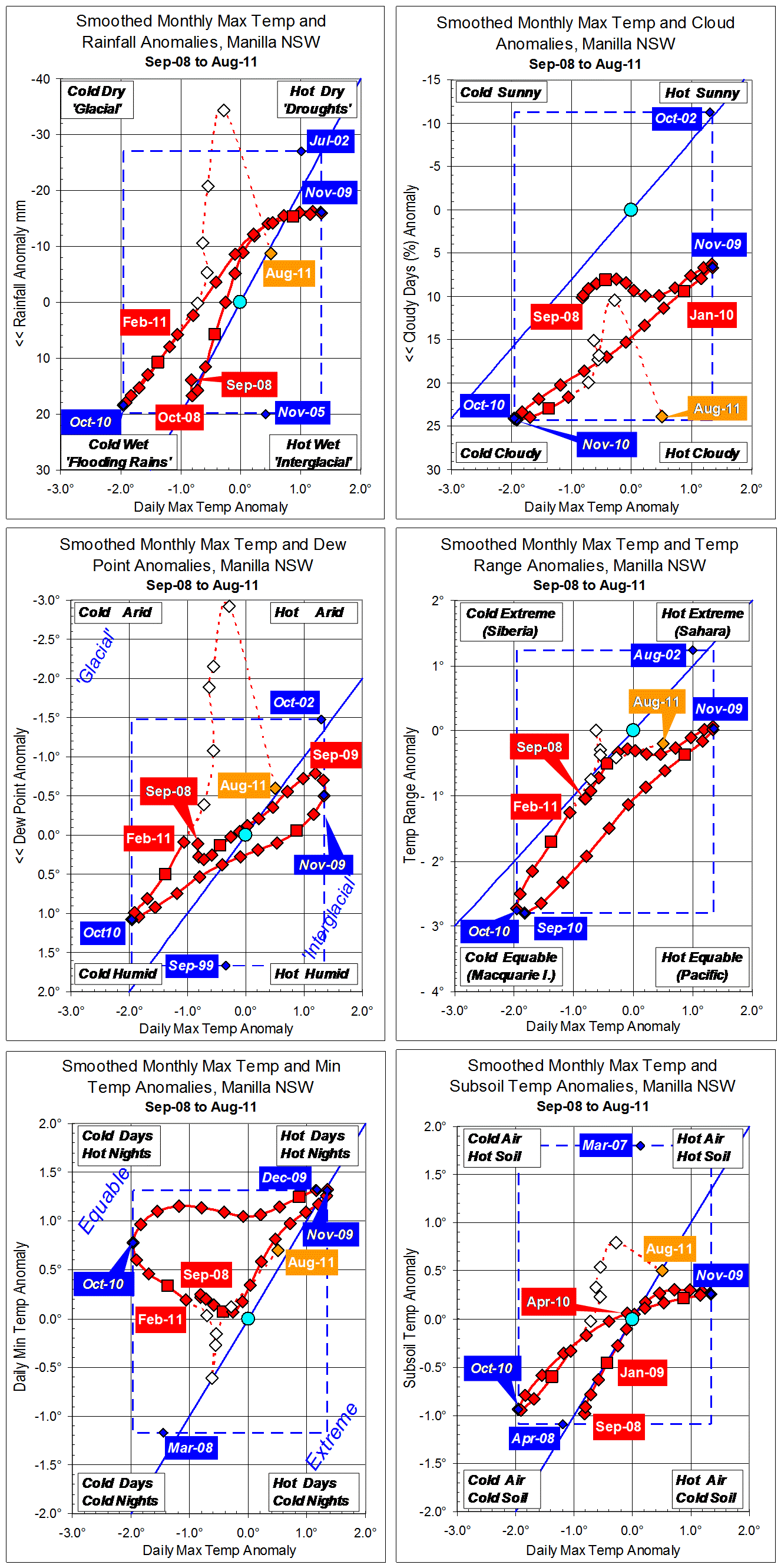
“Summer showed warming and drying”Trends to August 2011.

New fully-smoothed data for summer 2010-11

Daily maximum temperature anomalies (x-axis, all graphs) are more clearly shown on the top right graph. They rose at 0.3° per month: about the same rate as they had fallen in the winter. From the extreme cold (-1.96°) of October 2010, the February value was half-way back to normal.

Monthly rainfall anomalies (y-axis, top left graph) decreased through summer, exactly reversing the winter trend.

Cloudiness (top right graph) also reversed the trend seen in winter but, for a given temperature value, there was now more cloud.

Dew Point anomaly (centre left) fell much more rapidly than it had risen in winter. It was near normal by February.

Temperature range anomaly (centre right) rose much more rapidly during summer than that of maximum temperature, and reached higher values. As has appeared persistently in this data series, temperature range is the first variable to reach a positive or negative peak anomaly value. Here, its minimum value was in September, a month before the minimum value of daily maximum temperature. On these axes, the curve loops clock-wise as a result.
Daily minimum temperature anomaly (bottom left) fell steadily towards normal through spring and summer, completing a broad 30-month loop with daily maximum temperature anomaly.

Subsoil temperature anomaly (bottom right) fell along with daily maximum temperature anomaly.

Partially smoothed and unsmoothed data since February

Early winter 2011 had very low rainfall, very low Dew Points, and warm subsoil. Raw anomaly values for August suggest that the climate has since returned to normal, if somewhat warm and dry.

Note: Fully smoothed data – Gaussian smoothing with half-width 6 months – are plotted in red, partly smoothed data uncoloured, and raw data for the last data point in orange. January data points are marked by squares. Blue diamonds and the dashed blue rectangle show the extreme values in the fully smoothed data record since September 1999.