3-year trends to May 2016

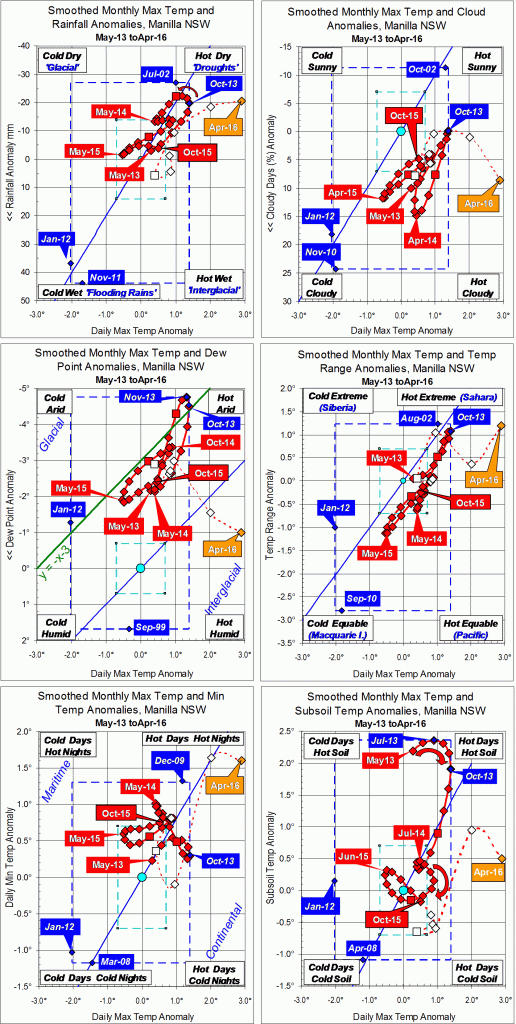
Parametric plots of smoothed climate variables at Manilla
“May 2016 still warm”
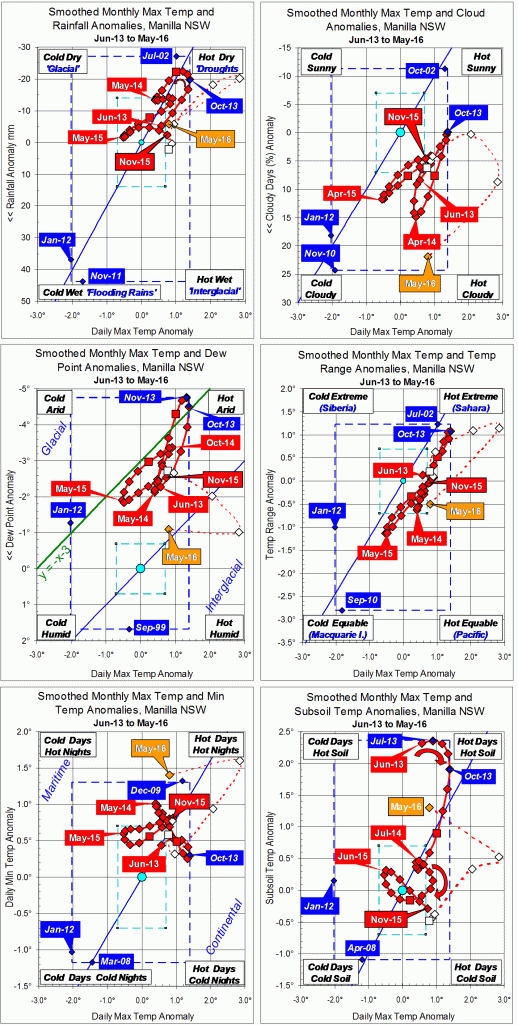
Trends to May 2016

May raw anomaly data (orange)

In May 2016, the raw anomaly of daily maximum temperature fell to just above the normal range. Raw values for anomalies of all but a few variables were nearer to normal than the “droughty” partially-smoothed values of recent months. Skies became more cloudy, and subsoil temperature warmer, while the dew point stayed rather low.

 Fully smoothed data (red)

Fully-smoothed data are now available for the spring months, September, October, and November of 2015. In that season, most temperature anomalies moved higher, and most moisture anomalies moved lower towards a state of very mild drought. Moving against the trend were subsoil temperature (moving lower) and rainfall (moving higher).


Note:

Fully smoothed data – Gaussian smoothing with half-width 6 months – are plotted in red, partly smoothed data uncoloured, and raw data for the last data point in orange. January data points are marked by squares.
Blue diamonds and the dashed blue rectangle show the extreme values in the fully smoothed data record since September 1999.

Normal values are based on averages for the decade from March 1999.* They appear on these graphs as a turquoise (turquoise) circle at the origin (0,0). A range of anomalies called “normal” is shown by a dashed rectangle in aqua (aqua). For values in degrees, the assigned normal range is +/-0.7°; for cloudiness, +/-7%; for monthly rainfall, +/-14 mm.

 * Normal values for rainfall are based on averages for the 125 years beginning 1883.
April 2016 also warm

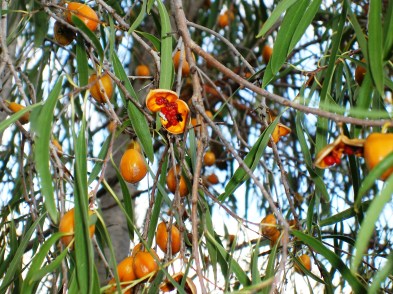
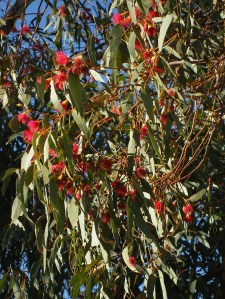
Photo of red flowers

Red flowering gum

In the whole month, only one day and seven nights were cooler than normal. Days and nights warmed together. Weekly average temperature was 4.1° above normal early in the month, and again 3.5° above normal at the very end.
Rain was recorded only on the 10th (5.8 mm) and the 11th (13.0 mm). While the early morning dew point was high only when it rained, the afternoon humidity was always high, falling below 30% only once.

Weather log for April 2016

Comparing April months

Daily maximum, minimum, and mean temperatures were all very high but not record values for April. The mean of 20.5° was beaten by 20.6° in April 2005. In that month, this month’s daily maximum (29.0°) was also beaten (29.5°). This month’s daily minimum (12.1°) was beaten by the record value of 12.2° set in 2014.
The subsoil temperature, and other variables were near normal.
The total rainfall of 18.8 mm was well below the average of 40 mm, in the 32nd percentile. However, for the sixth month in a row, there are no serious rainfall shortages for totals for any number of months. Now, the greatest shortage is the 48-month total of 2191 mm, which is in the 12th percentile. Ponds persist in Greenhatch Creek.

Climate for April 2016


Data. All data, including subsoil at 750 mm, are from 3 Monash Street, Manilla. Rainfall data up to 26/3/15 is from Manilla Post Office, Station 055031.

3-year trends to April 2016

Parametric plots of smoothed climate variables at Manilla
“April 2016 also warm”

Trends to April 2016

April raw anomaly data (orange)

In April 2016, raw values for anomalies of daily maximum temperature (x-axis), daily minimum temperature (lower left graph), and daily temperature range (centre right graph) were high. Those of other variables were near normal, except that rainfall was rather low.

 Fully smoothed data (red)

The latest fully-smoothed data is for October 2015. Values were near normal. Temperatures trended warmer except in the subsoil, which trended cooler.


Note:

Fully smoothed data – Gaussian smoothing with half-width 6 months – are plotted in red, partly smoothed data uncoloured, and raw data for the last data point in orange. January data points are marked by squares.
Blue diamonds and the dashed blue rectangle show the extreme values in the fully smoothed data record since September 1999.

Normal values are based on averages for the decade from March 1999.* They appear on these graphs as a turquoise (turquoise) circle at the origin (0,0). A range of anomalies called “normal” is shown by a dashed rectangle in aqua (aqua). For values in degrees, the assigned normal range is +/-0.7°; for cloudiness, +/-7%; for monthly rainfall, +/-14 mm.

 * Normal values for rainfall are based on averages for the 125 years beginning 1883.

March 2016 had a warm dry spell

Photo of Pittosporum berries

“Native Apricots”

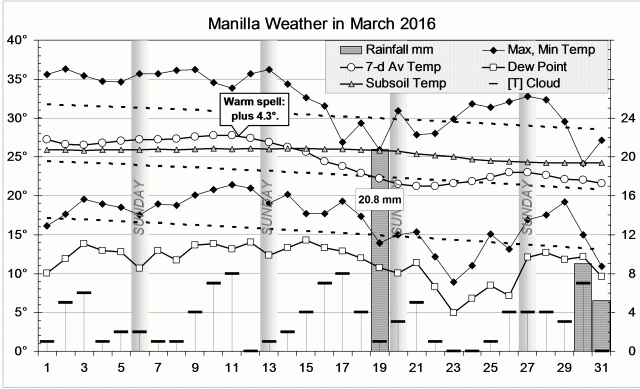
In the first half of March the average weekly temperature was more than three degrees above normal. Nine days had maxima above 35°, when the month usually has only one. However, no day reached 40°, as happened in March last year (20/03/15).
No rain fell in this time: the period of 43 days between February 4 and March 19 may have been the seventh longest rain-free period in 133 years. (No official record is now kept.)
Normal weather returned in the second half of the month. I recorded 20.8 mm of rain on the 19th, and further rain on the 30th and 31st.

Weather log for March 2016

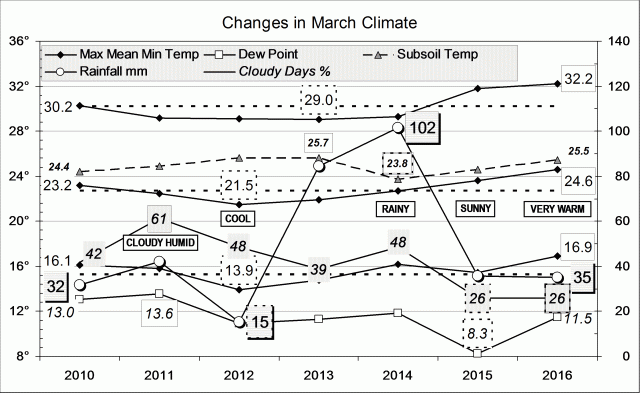
Comparing March months

Despite the cool change, this was the warmest March of the new century. Daily maxima, minima, and means were all 2° above average. The subsoil temperature was also 1° high, as in March 2012 and 2013, but not as high as in 2007 (2° high).
This was not a dry month. The moisture indicators cloudiness, humidity, and (low) daily temperature range were just slightly on the dry side.
The total rainfall of 35mm was below the average of 53 mm, but in the 46th percentile, not far below the median. Again, there are no serious rainfall shortages for totals for any number of months. In fact, the five-month total of 362 mm is high, in the 81st percentile. Ponds persist in Greenhatch Creek.

Climate graph for March 2016.


Data. All data, including subsoil at 750 mm, are from 3 Monash Street, Manilla. Rainfall data up to 26/3/15 is from Manilla Post Office, Station 055031.

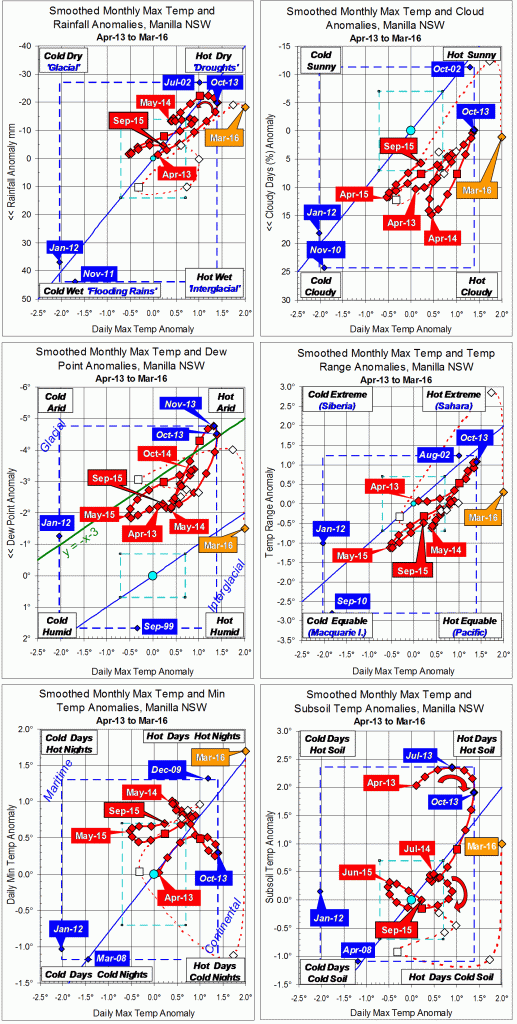
3-year trends to March 2016

Parametric plots of smoothed climate variables at Manilla
“March 2016 like March 2015”

Trends to March 2016

March raw anomaly data (orange)

In March 2016, raw values for nearly all measured climate anomalies moved close to normal. The exceptions were daily maximum temperature (x-axis), which remained very high as in February, and daily minimum temperature (lower left graph), which rose from very low to very high. Raw anomaly values for this month are similar to those of March 2015, a year ago. This is not evident on these graphs. As March 2015 came in a cool period, smoothed values of its temperatures are low. The original raw values are shown in the graphs for that earlier date.

 Fully smoothed data (red)

The latest fully-smoothed data is for September 2015. Values were near normal and trending warmer and perhaps drier.


Note:

Fully smoothed data – Gaussian smoothing with half-width 6 months – are plotted in red, partly smoothed data uncoloured, and raw data for the last data point in orange. January data points are marked by squares.
Blue diamonds and the dashed blue rectangle show the extreme values in the fully smoothed data record since September 1999.

Normal values are based on averages for the decade from March 1999.* They appear on these graphs as a turquoise (turquoise) circle at the origin (0,0). A range of anomalies called “normal” is shown by a dashed rectangle in aqua (aqua). For values in degrees, the assigned normal range is +/-0.7°; for cloudiness, +/-7%; for monthly rainfall, +/-14 mm.

 * Normal values for rainfall are based on averages for the 125 years beginning 1883.