3-year trends to August 2011.

Parametric plots of smoothed climate variables at Manilla

“Summer showed warming and drying”Trends to August 2011.

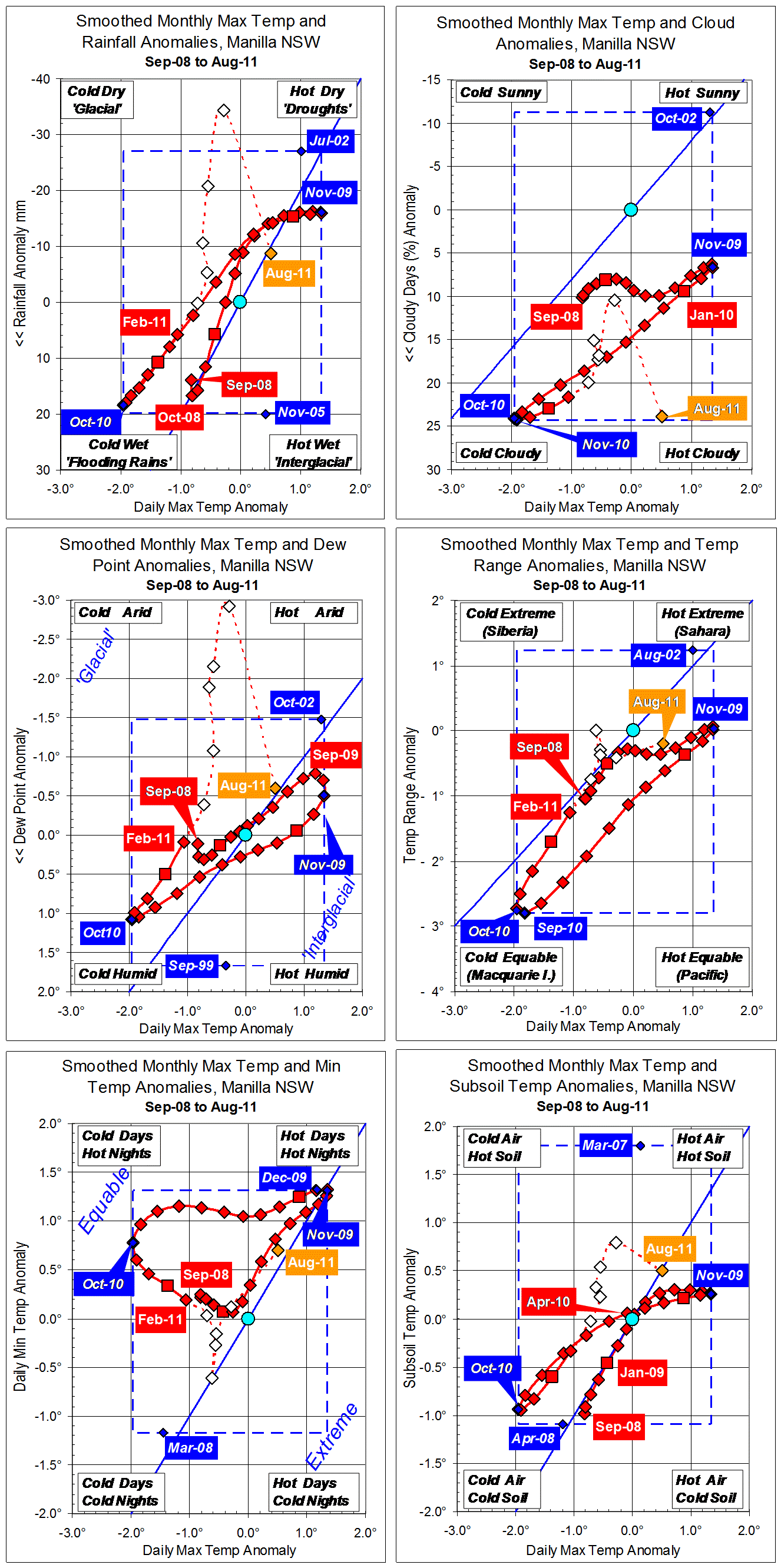
New fully-smoothed data for summer 2010-11

Daily maximum temperature anomalies (x-axis, all graphs) are more clearly shown on the top right graph. They rose at 0.3° per month: about the same rate as they had fallen in the winter. From the extreme cold (-1.96°) of October 2010, the February value was half-way back to normal.

Monthly rainfall anomalies (y-axis, top left graph) decreased through summer, exactly reversing the winter trend.

Cloudiness (top right graph) also reversed the trend seen in winter but, for a given temperature value, there was now more cloud.

Dew Point anomaly (centre left) fell much more rapidly than it had risen in winter. It was near normal by February.

Temperature range anomaly (centre right) rose much more rapidly during summer than that of maximum temperature, and reached higher values. As has appeared persistently in this data series, temperature range is the first variable to reach a positive or negative peak anomaly value. Here, its minimum value was in September, a month before the minimum value of daily maximum temperature. On these axes, the curve loops clock-wise as a result.
Daily minimum temperature anomaly (bottom left) fell steadily towards normal through spring and summer, completing a broad 30-month loop with daily maximum temperature anomaly.

Subsoil temperature anomaly (bottom right) fell along with daily maximum temperature anomaly.

Partially smoothed and unsmoothed data since February

Early winter 2011 had very low rainfall, very low Dew Points, and warm subsoil. Raw anomaly values for August suggest that the climate has since returned to normal, if somewhat warm and dry.

Note: Fully smoothed data – Gaussian smoothing with half-width 6 months – are plotted in red, partly smoothed data uncoloured, and raw data for the last data point in orange. January data points are marked by squares. Blue diamonds and the dashed blue rectangle show the extreme values in the fully smoothed data record since September 1999.
August 2011: rain still scarce

The daily weather logWeather log August 2011.

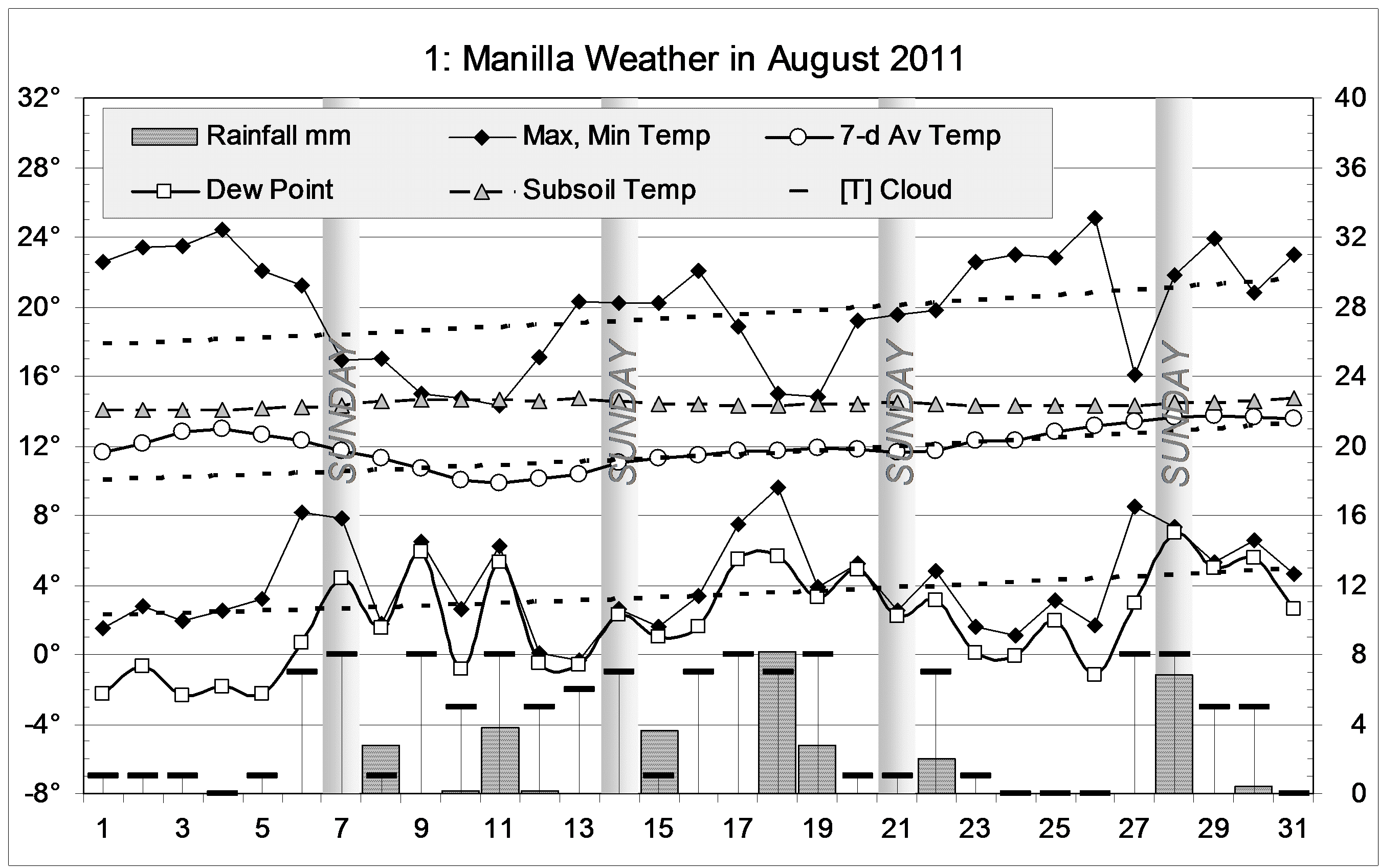
There were warm sunny days early and late in the month. Otherwise, days were often cold and cloudy, with a bit of rain. Of four foggy mornings, the 28th had fog that kept visibility below 800 metres until 11 am.
Temperatures were never far from normal. Two years ago, August 2009 had one daily maximum (31.8°) which was 11.4° above normal and one daily minimum (18.2°) which was 14.0° above normal.
The highest rainfall reading was quite low: 8.2 mm, recorded on the 18th. There were ten rain days, four more than usual, but the total was only 30.8 mm.

 Comparing August monthsClimate August 2011.

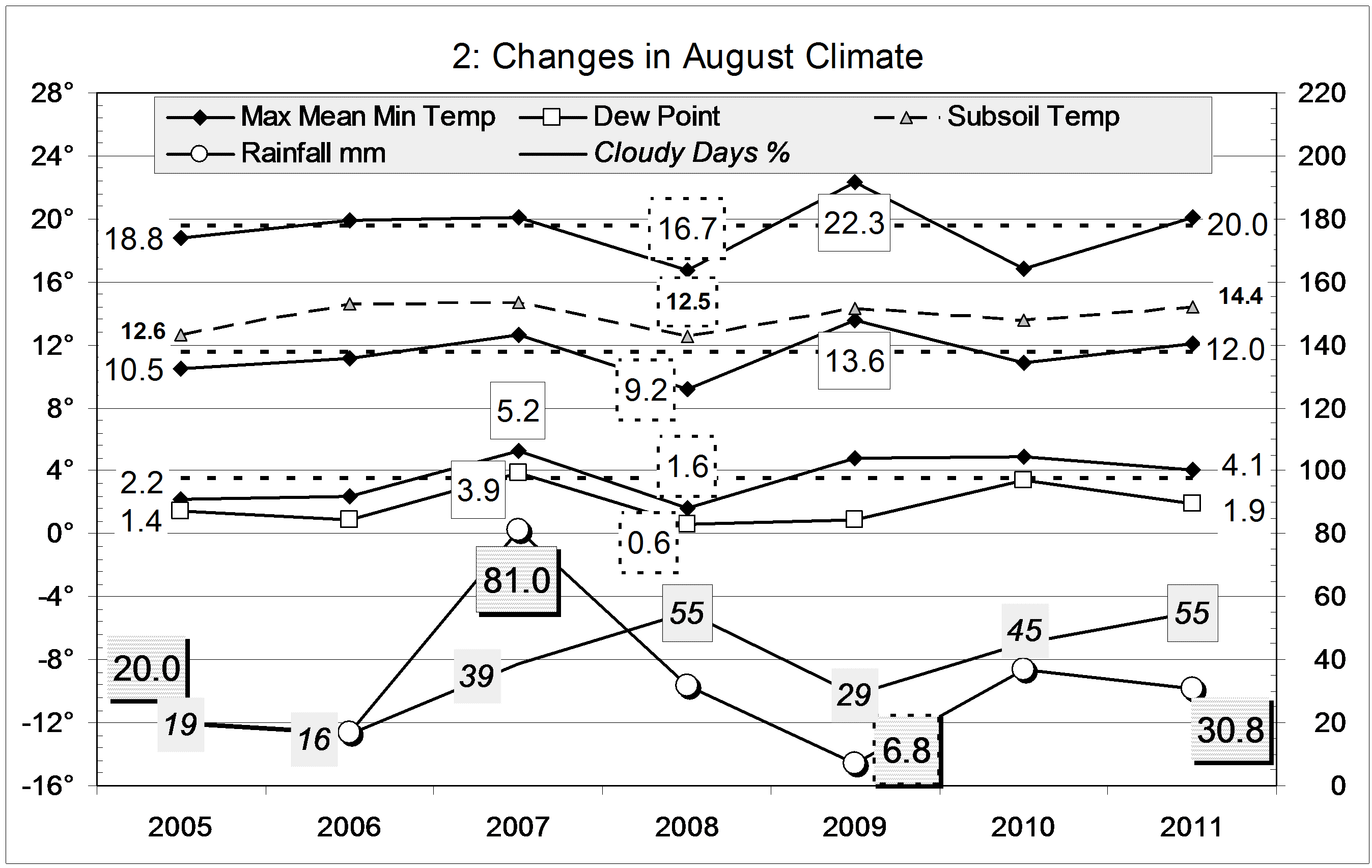
Mean temperature readings were above normal by half a degree. The mean early morning Dew Point (1.9°) was 0.6° lower than normal, indicating low humidity.
With only nine frosts (below +2.2° in the Gill screen), this was the least frosty August of thirteen.
Fifty-five percent cloudy mornings equalled the August record, set in 2008.
The rainfall of 30.8 mm is fairly low, in the 44th percentile for August. Rainfall totals for 3, 4, 5 and 6 months have percentile values lower than 10, making them serious rainfall shortages. Totals for larger groups of months continue to be near normal. The 12-month total (691 mm) is well above the median, being in the 61st percentile.


Data. Rainfall data is from Manilla Post Office, courtesy of Phil Pinch. Temperatures, including subsoil at 750 mm, and other data are from 3 Monash Street, Manilla.


3-year trends to July 2011.

Parametric plots of smoothed climate variables at Manilla

“Dry air and little rain”Trends to July 2011.

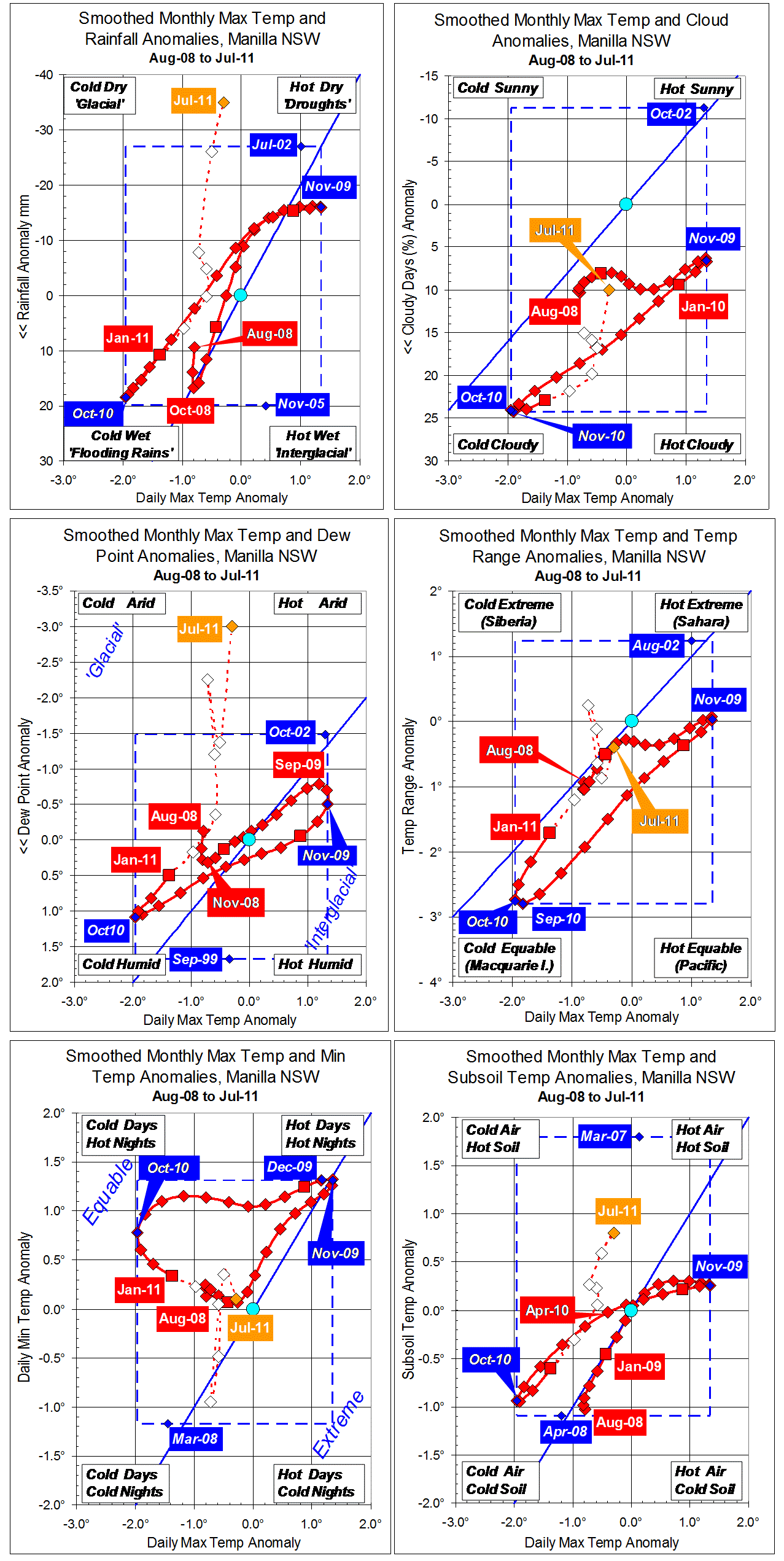
These graphs have data points for the last 36 months. In that time, the climate at Manilla, NSW has experienced a cycle from near-normal (Aug-08), through very warm and dry (Nov-09), then very cool and wet (Oct-10) , and back to near normal (Jul-11). For most variables, the raw anomaly values of July 2011 are near the smoothed anomaly values for August 2008.

Three variables have not returned to normal. Rainfall and Dew Point are far below normal, as typical in drought, and Subsoil temperature is high.
Cloudiness is “normal” in the new cloudy regimen in place since September 2007.

Note: Fully smoothed data – Gaussian smoothing with half-width 6 months – are plotted in red, partly smoothed data uncoloured, and raw data for the last data point in orange. January data points are marked by squares. Blue diamonds and the dashed blue rectangle show the extreme values in the fully smoothed data record since September 1999.
Dry air and little rain in July 2011

The daily weather logWeather log July 2011.

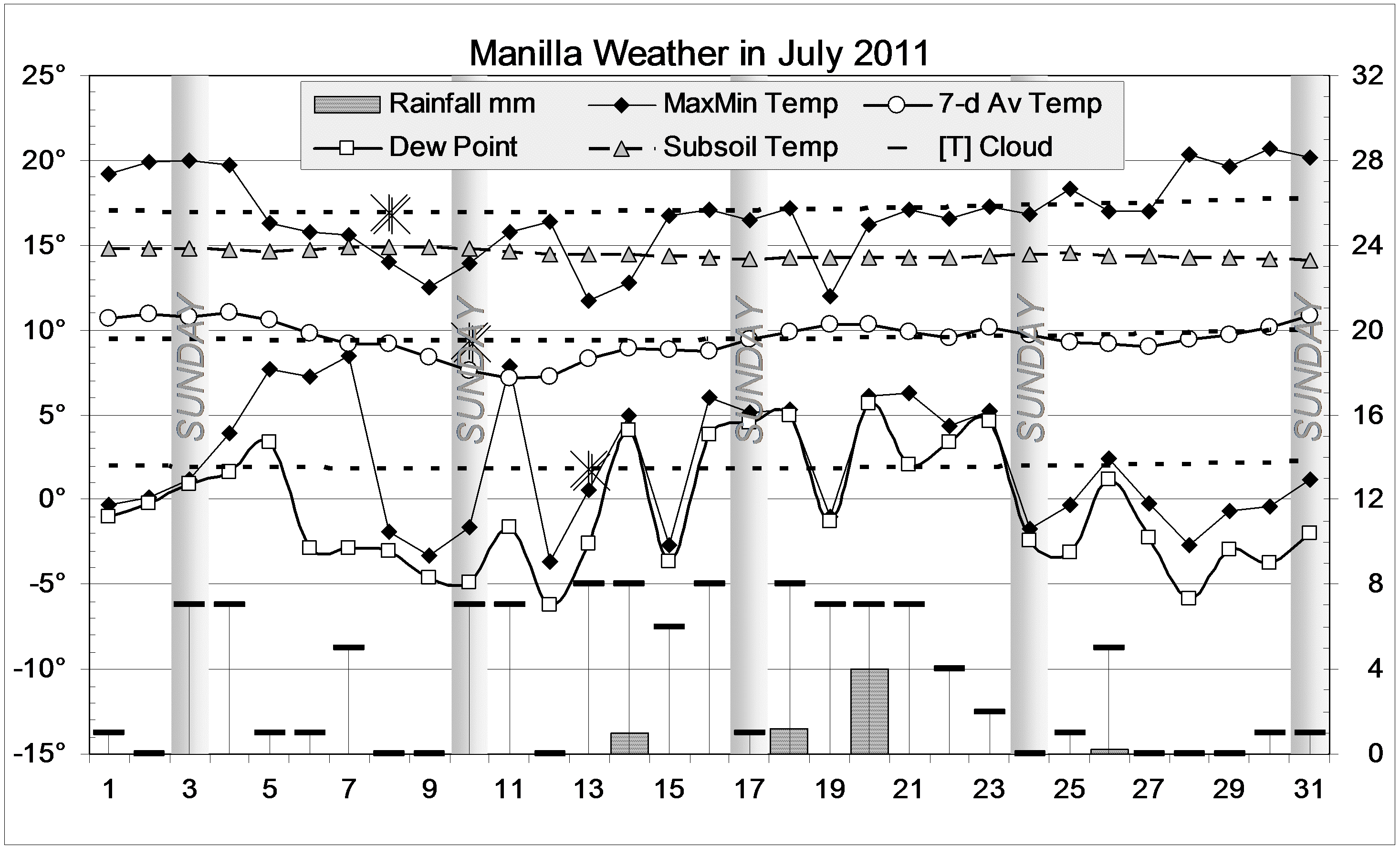
Despite a series of cloudy cold days in the middle of the month, most features of the weather in July were normal. Days got as warm as 20° at each end of the month, and never went lower than 11.7°. Nights were neither very warm nor very cold. There were 17 frosts, the coldest being -3.7°.
Humidity and rainfall recall the drought year of 2002.
Extremely low humidity was shown by the early morning Dew Point on the 12th, of 6.2°. This was the lowest July value since 2002, which had four lower values, down to 6.7°.
The highest rainfall reading was only 4 mm, recorded on the 20th. Four rain days totalled 6.4 mm.By the end of the month there had been 39 days with less than 5 mm of rain.

 Comparing July monthsClimate July 2011.

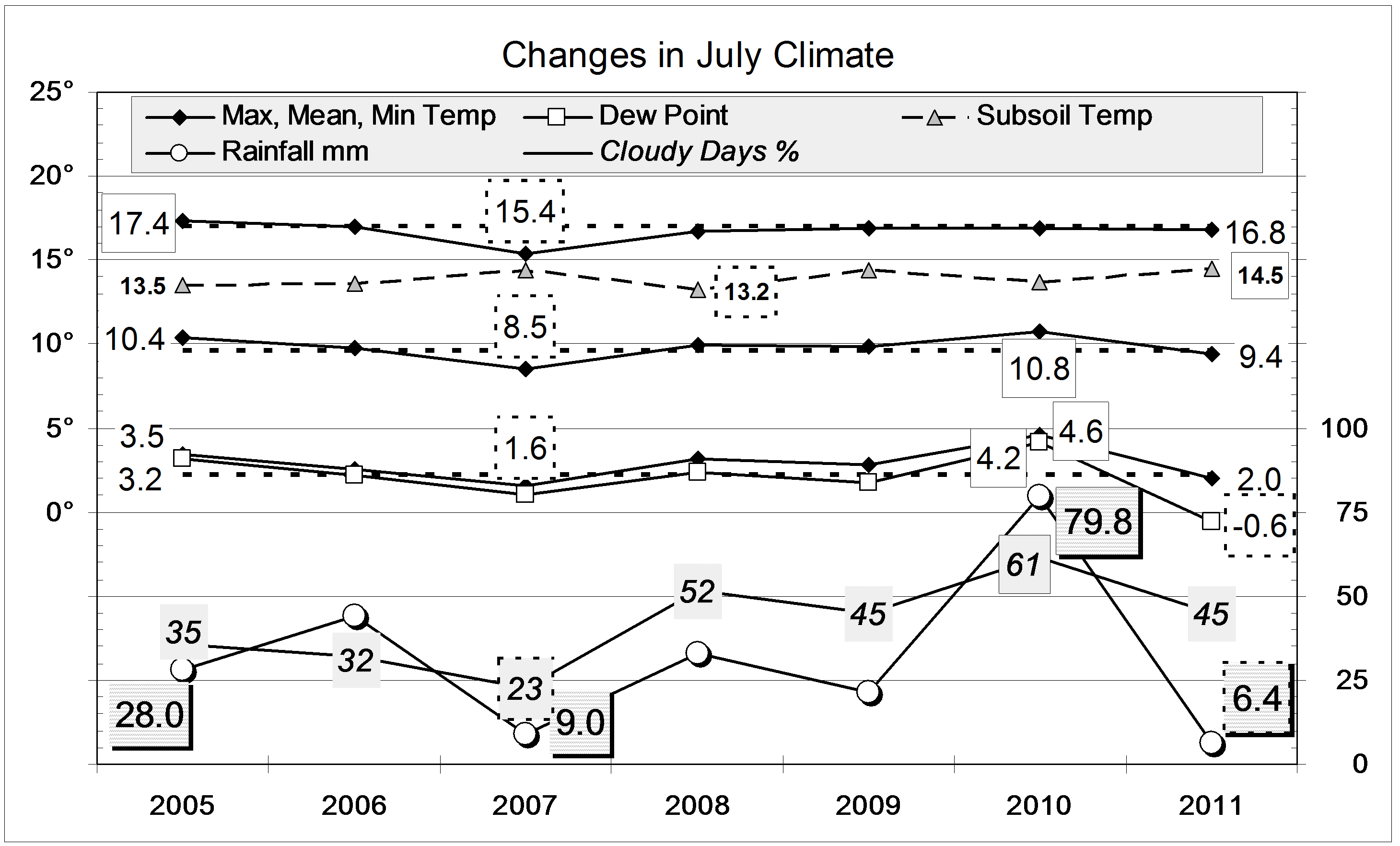
Mean temperature readings were normal. The mean early morning Dew Point (- 0.6°) was the lowest July value since 2002 (- 1.4°).
For frosts, this month was normal. Since 1999, the most frosty July was in 2002, with 27 frosts, down to -5.1°. The least frosty was 2010, with 12 frosts, down to only -1.4°.
The rainfall of 6.4 mm is very low: on the 8th percentile for July. Only ten Julies in 127 years have been drier. (July 2002 and July 1940 were equal driest, at 1 mm.) Rainfall totals for 2, 3, 4 and 5 months are in the 5th, 10th, 9th and 10th percentiles respectively. Percentile values lower than 10 are serious rainfall shortages. Totals for larger groups of months continue to be near normal.


Data. Rainfall data is from Manilla Post Office, courtesy of Phil Pinch. Temperatures, including subsoil at 750 mm, and other data are from 3 Monash Street, Manilla.


3-year trends to June 2011.

Parametric plots of smoothed climate variables at Manilla

“Dry air but not warm or sunny”Trends to June 2011.

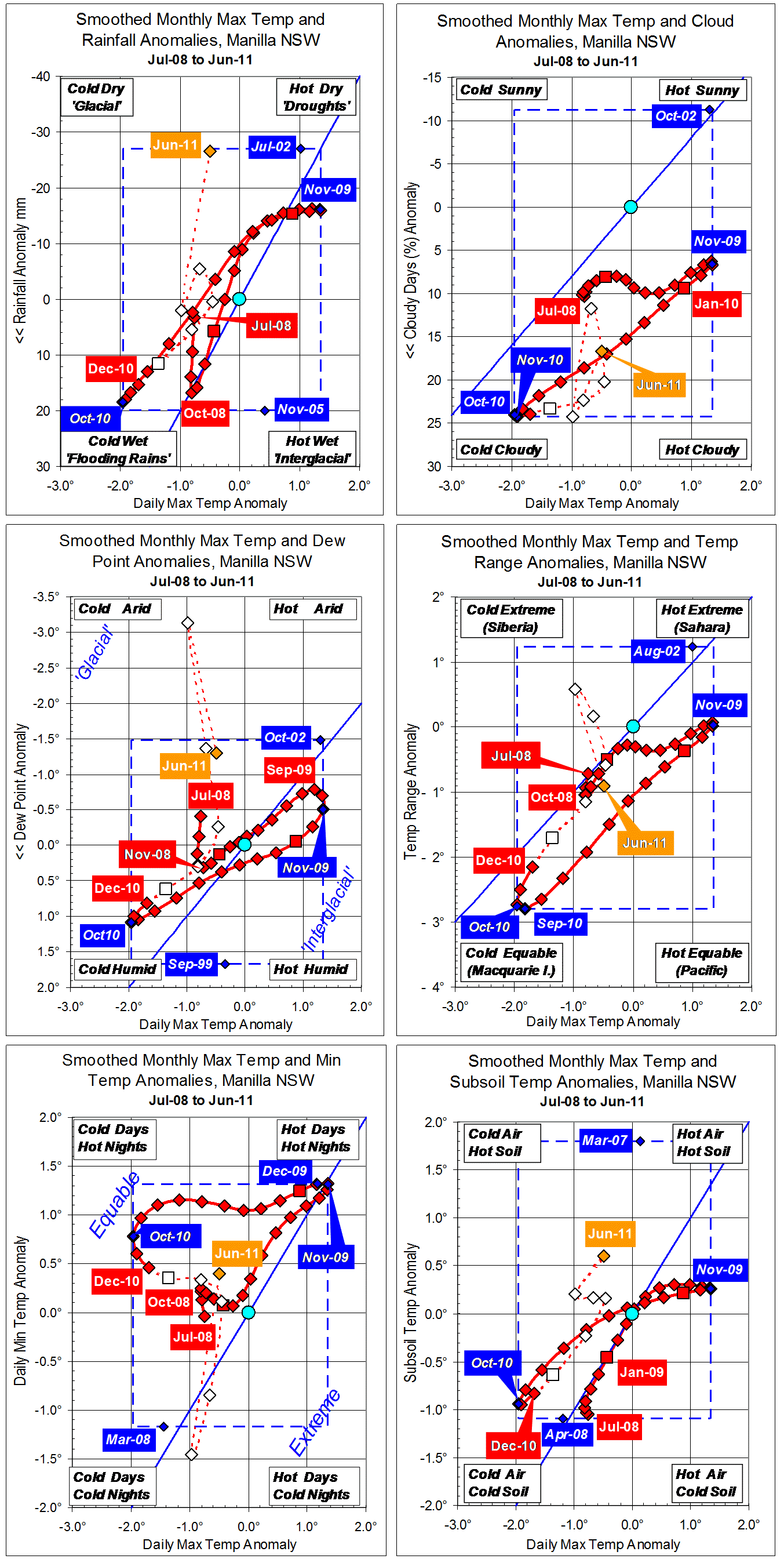
Raw anomaly data for June 2011 (shown in orange) are a little strange.
Daily max temperature, shown on the x-axis of all six graphs, has stalled without quite rising to normal from the extreme cold of last October.
Two variables indicate severe drought: Rainfall was very low, and so was the early morning Dew Point.
Most other variables are near normal, or slightly to the “flooding rains” side of normal.
Percent of cloudy mornings (>4 Octas) remains stable at a very high positive anomaly. For a calendar month that had 35% cloudy mornings in the reference decade beginning in 1999, it now has 55% cloudy mornings.

Note: Fully smoothed data – Gaussian smoothing with half-width 6 months – are plotted in red, partly smoothed data uncoloured, and raw data for the last data point in orange. January data points are marked by squares. Blue diamonds and the dashed blue rectangle show the extreme values in the fully smoothed data record since September 1999.