Cold days in 2007 winter

Weather log winter 2007

The daily weather log

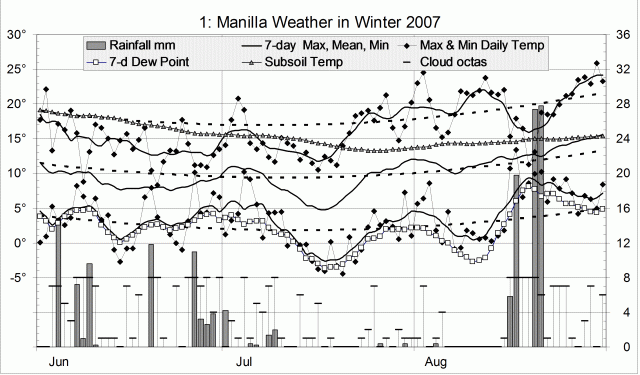
The temperature trends this winter look like a roller-coaster.
June had daily maximum temperatures about four degrees below normal. Two miserable days had maxima eight degrees below. Meanwhile, minimum temperatures were normal.
Maxima returned to normal in early July but, by that time, nightly minimum temperatures were well above normal. All temperatures then plummeted, losing 8°: by mid-July both maxima and minima were about 5° below normal.
By the end of July and early August maxima and minima had shot up again to well above normal. Next, maxima went up while minima went down, making the daily temperature range very large. This temperature range then collapsed to become very small. The winter ended with temperatures near normal.
The high ground in Manilla had 38 frosts* in June, July, and August. The nine-year average is 45. Seventeen nights went below zero and two nights below -4°.
There was quite a lot of rain, but not much fell in July. The amounts were 65 mm in June, 9 in July, and 81 in August. June was above average, July in the second decile, and August in the ninth decile.
There were ten rain days in June, seven in July, and five in August. One event was remarkable: rain fell continuously for more than 36 hours from the morning of 19th August, to a total of 55 mm.
Skies were overcast (8/8) around the periods of rain. In contrast, there were long sunny spells (0/8 or 1/8) in mid-July and the first half of August.

Comparing winter seasons

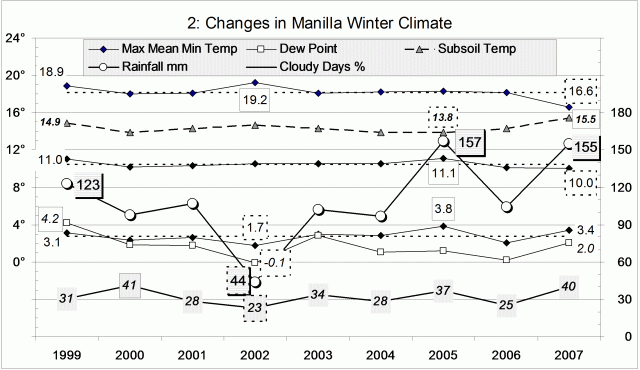
The average daily maximum temperature was the coldest in the last nine winters. At 16.6°, it was 1.6° below average.
Although the nights of 2005 were warmer, this winter also had warm nights. At 3.4°, they raised the daily mean temperature up to 10.0°, close to normal.
The daily temperature range in winter in Manilla is usually 15.4°. This winter’s cool days and warm nights made its daily range the lowest in these years. It was only 13.2°, typical of places nearer to the coast, such as Singleton.
The winter that stands out is 2002. With the warmest daily maxima (19.2°) and the coldest daily minima (1.7°) it had the remarkably high daily range of 17.5°. Such a range is found mainly in desert areas – which Manilla was at the time!.

Winter is the driest season in Manilla. The average winter rainfall, 125 mm, is just over half the average summer rainfall (227 mm).
This year’s winter rainfall (155 mm) was above average, and near that of 2005 (157 mm). None of the winters on the graph is far from the average except 2002.
The very dry winter of 2002, at 44 mm, was the ninth driest on the 124-year record. It was the driest since 1982 and 1972 (both 32 mm).
The graph just misses the very wet winter of 1998, nine years ago. Split Rock Dam suddenly filled up for the first time. At 304 mm, that was the second wettest winter on record. Only the winter of 1920 was wetter, with 318 mm.
The graph shows the peracentage of mornings with more than four octas of cloud. The winter average is 31%.
This winter, and winter 2000 were the cloudiest. The insulating blanket of cloud stopped the days from getting warm, and the nights from getting cold.
The winter of 2002 had the fewest cloudy days, another sign of how like a desert it was then.
Climate winter 2007

*Frost: A frost occurs when the temperature on the grass is below zero, causing water to freeze in the leaves. Not many stations measure grass temperature. My rule-of-thumb is to declare a frost if the temperature in the thermometer screen (at 1.5 metres) is below +2.2°.

Data. Rainfall data is from Manilla Post Office, courtesy of Phil Pinch. Dew Point values before August 2005 are from Tamworth Airport 6 am data supplied by the Bureau of Meteorology. Temperatures, including subsoil at 750 mm, and other data are from 3 Monash Street, Manilla.
In 2007: Rainy warm August nights

The daily weather logWeather log August 2007

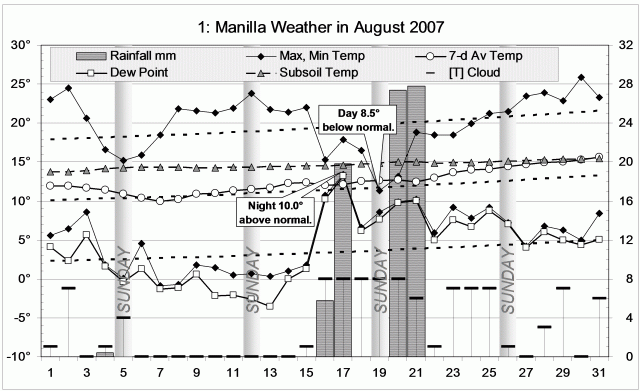
Nearly all of the welcome rain this month fell on only four days. Most of it (55 mm) was steady soaking rain through the 20th and 21st. At Tamworth airport there was rain in every hour for 37 hours.

Daily average temperatures were close to normal for August, rising slowly from 11 to 15 degrees. There were wild swings in daily maxima and minima, though. In the first half of the month, with clear skies nearly every morning, days were very warm, mainly above 20 degrees, and nights were cold, hovering around zero. There was seldom frost on the grass because the air was extremely dry. Two days had extreme temperature ranges: over 22 degrees.
That desert-like weather suddenly stopped. The overcast, rainy days from the 16th to the 21st had day-time and night-time temperatures that were almost the same. One night was 10° warmer than normal, and one day was 8.5° cooler than normal.
After the rain, the days slowly warmed up, the nights cooled down, and the skies cleared, until the 30th was desert-like again.

 Comparing August monthsClimate August 2007

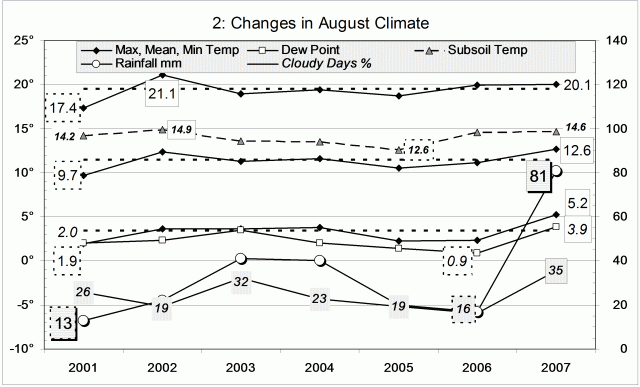
Compared with Augusts since 2000, this August had the warmest nights by far: 5.2° compared to an average of 3.2°. This raised the daily mean temperature as well, so that it was also the warmest. However, daily maximum temperatures were not as high as they were in 2002. The August of 2001 was colder than the others; its daily maxima were especially cold.

This month was cloudy (35% mornings >4 octas) and humid (mean morning dew point 3.9°) as well as rainy.  Manilla’s total rainfall of 81 mm this month is in the 90th percentile: the fourteenth wettest August on record. Rainfall totals for more than one month are near normal.


Data. Rainfall data is from Manilla Post Office, courtesy of Phil Pinch. Dew point values before August 2005 are from Tamworth Airport 6 am data supplied by the Bureau of Meteorology. Temperature and other data are from 3 Monash Street, Manilla.
 

Fine cold days in July 2007

The daily weather logWeather log July 2007

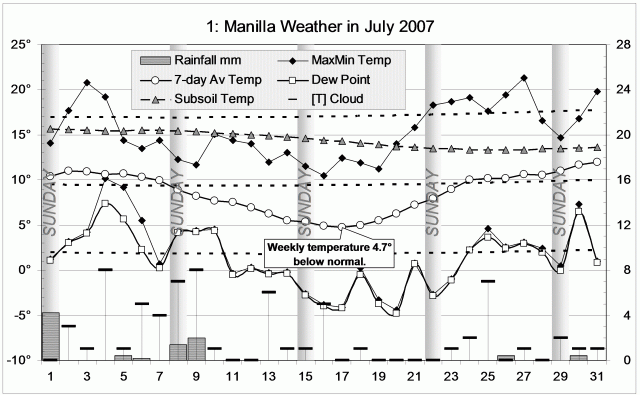
Most days in July were cooler than normal. The first chart shows cold days persisted for more than a fortnight. The coldest, on the 16th, reached only 10.5°, which is 5° below normal. However, the weather was mainly pleasant, with more fine days and fewer cloudy days than usual.

There were warm nights at each end of the month, including one 7° above normal. In the middle, there were thirteen frosty nights in a row (below +2.2 degrees in the thermometer screen). The lowest temperature for the month was minus 4.4°. There were 17 frosts in total; far fewer than the 28 frosts of July 2002. (Note added in 2014: Up to, and including 2011, minima have been below minus 4° only sixteen times:  June 2000 (5), June 2002 (1), July 2002 (6), July 2003 (2) and July 2007 (2).)

With both days and nights being so cold, the weekly average temperature went as low as 4.7° below normal on the 17th.

There were seven rain days, which is normal, but the highest reading (on the 1st) was only 4.2 mm.

 Comparing July monthsClimate July 2007

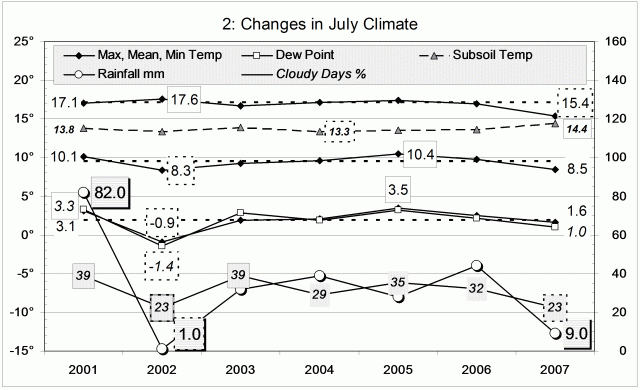
This July had colder daytime maximum temperatures than any July in the last seven. Night-time minimum temperatures were also a bit on the low side. July 2002 stands out from the others. It had by far the lowest night-time temperatures in these years: three degrees below the average. Cloudiness was low in both 2002 and 2007.

The month’s rainfall of 9.0 mm is quite low, in the 12th percentile for July. However, there have been few dry months recently, so no totals for more than one month are as low as the 20th percentile.


Data. Rainfall data is from Manilla Post Office, courtesy of Phil Pinch. Dew point values before August 2005 are from Tamworth Airport 6 am data supplied by the Bureau of Meteorology. Temperature and other data are from 3 Monash Street, Manilla.