July 2010 Rain Twice Average

The daily weather logWeather log July 2010 Manilla
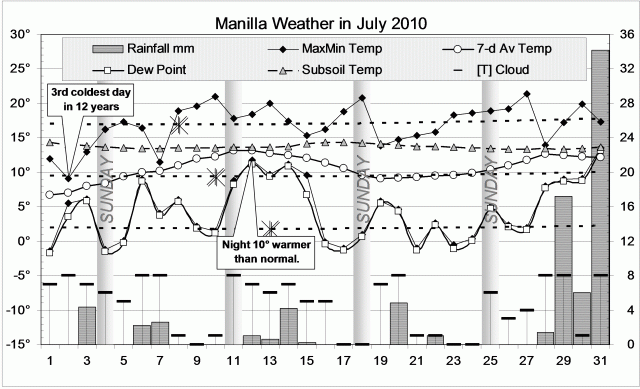
July began cold. The 2nd, with a maximum temperature of 9.1°, was the coldest July day in the record from 1999. The only two colder days were: 8/06/07 (8.8°), and 20/06/07 (8.3°).

Two warm spells followed, marked mainly by nights that were very warm for mid-winter. The minimum on the 12th (11.8°) was 10° above normal, and that on the 31st (13.5°) was 11.3° above normal. Colder nights included twelve mild frosts, the fewest on record.
There were 13 rain days spread through the month. The reading of 17.2 mm on the 29th was topped by 34.2 mm on the 31st.

“Normal Temperature”

Each Manilla monthly weather graph has dashed curves to show the temperatures that are normal for each day of the year. They are harmonic curves matching 10-year averages from March 1999. On this July graph, the lowest values are marked with a double “X”. Winter cold is due to lack of heat from the sun, which yields least heat on the 21st of June (the winter solstice). On that day the sun is lowest and shines the shortest time. However, it takes many days for the air to cool down. On average, the coldest day in Manilla comes 17 days later (July 8th) and the coldest night 22 days later (July 13th). Manilla’s coldest day and night follow the solstice with an unusually short lag time. (See Wikipedia: Seasonal lag.)

See the monthly weather report for January 2010 for the highest normal temperatures of the year. These relationships are shown on a graph here.

Comparing July monthsClimate July 2010 Manilla

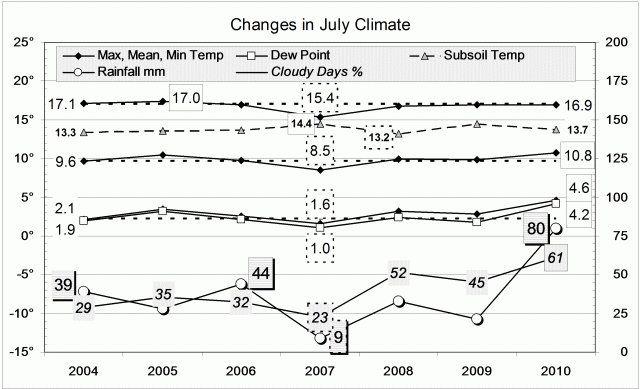
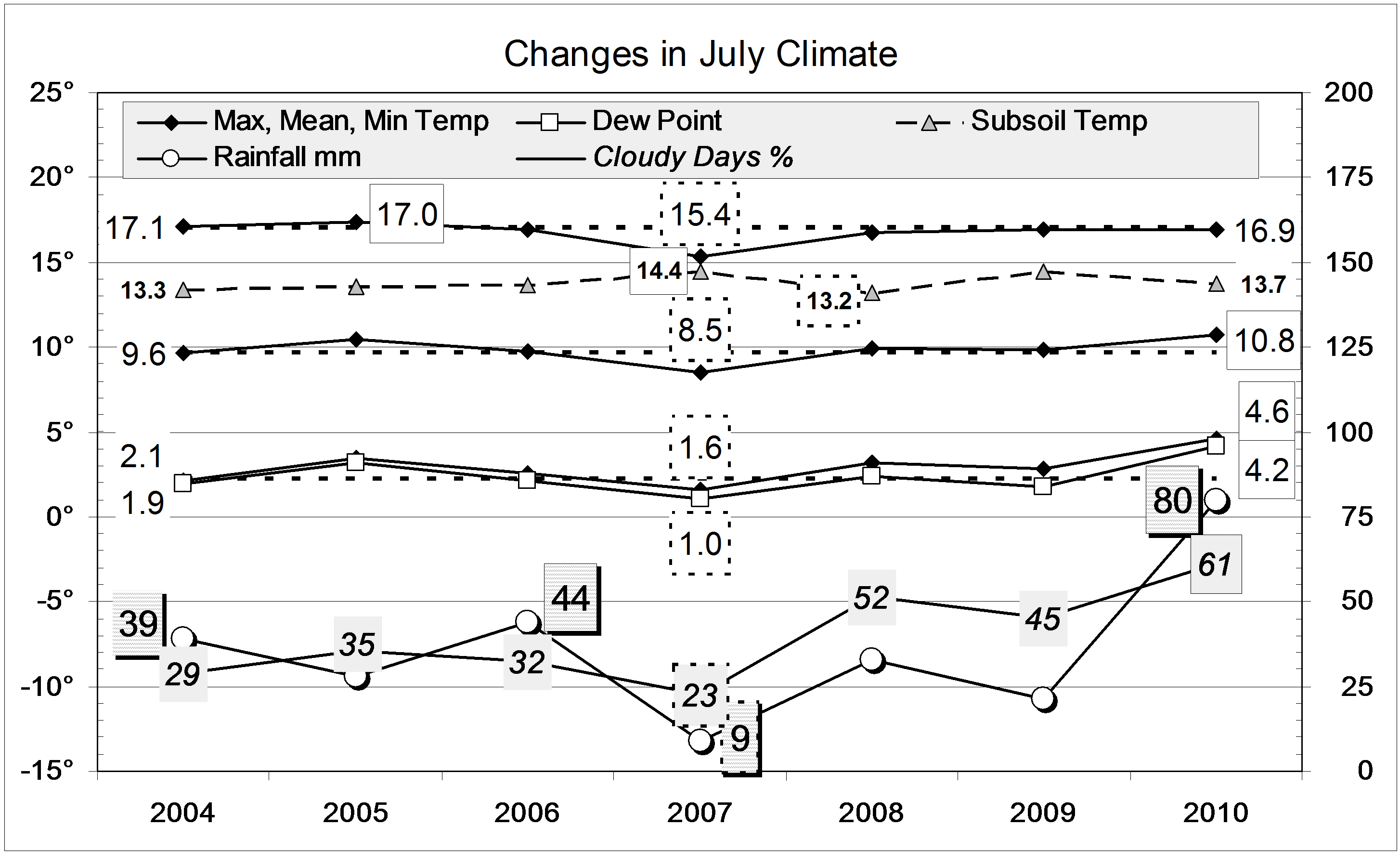
Due to cloudy nights, the mean daily minimum temperature (4.6°) was by far the highest in the 12-year record for July, and 2.4° above the average. Because the mean maximum temperature was normal (16.9°), the mean average temperature was also high (10.8°). The mean daily temperature range (12.3°) was the narrowest in the July record.

Very high humidity was shown by a mean early morning Dew Point of 4.6°, higher than any since July 1999 (5.7°). The percentage of cloudy mornings (61%) was the highest, not only for July months, but for any month in this record. Nineteen mornings were completely overcast.
The rainfall of 79.8 mm is in the 90th percentile for July: only 12 July months have been wetter. It is close to double the long-term average of 41 mm. As a result, total rainfalls for the last two months and three months are now above the median. No serious rainfall shortages remain. The worst shortages are far from serious: the 15-month and the 9-year totals are both in the 14th percentile.


Data. Rainfall data is from Manilla Post Office, courtesy of Phil Pinch. Temperatures, including subsoil at 750 mm, and other data are from 3 Monash Street, Manilla.

3-year trends to June 2010

Parametric plots of smoothed climate variables at Manilla
“Back from a very mild drought.”

Trends to June 2010

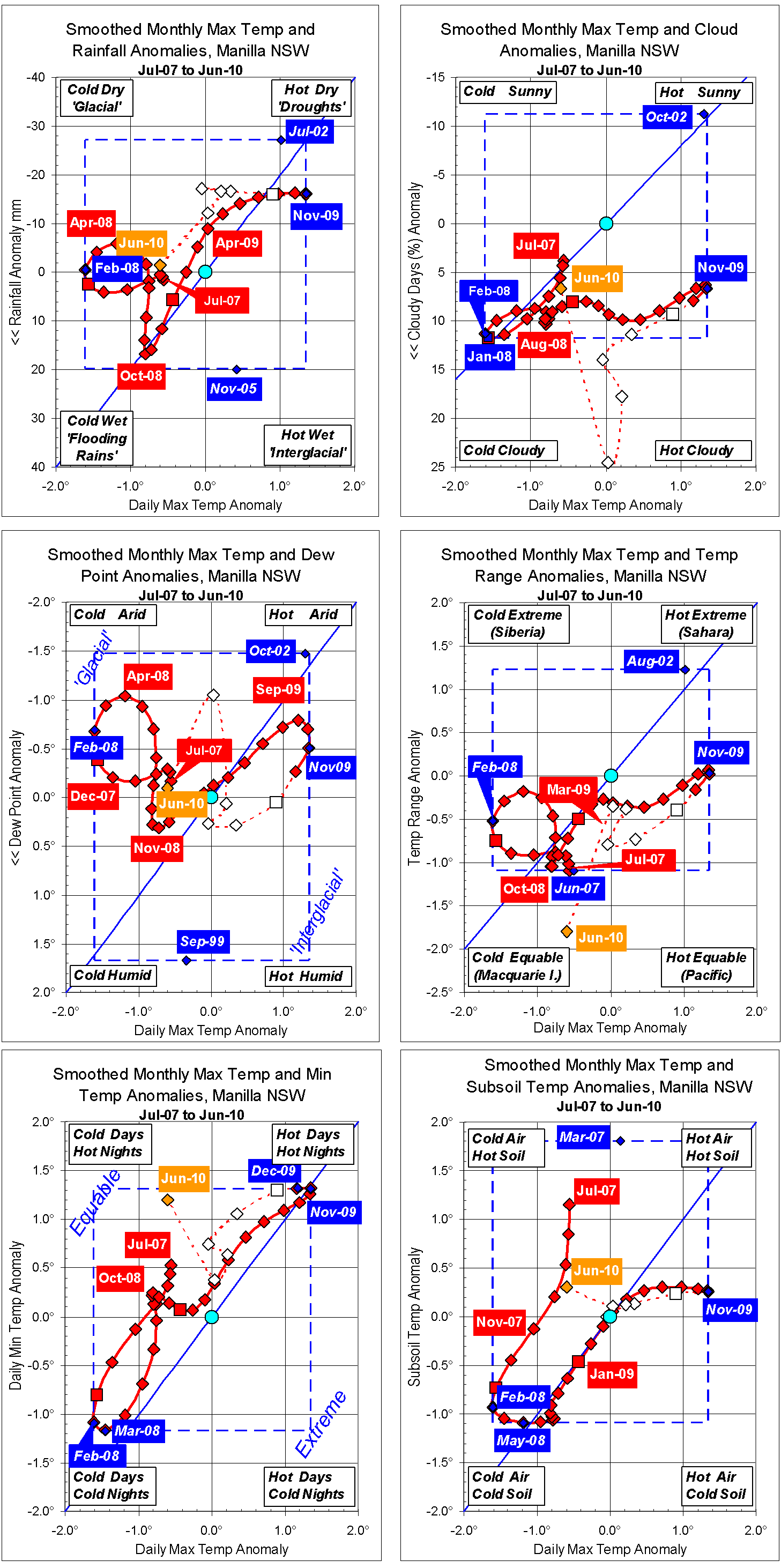
Raw data for June 2010 (orange) are mainly near the smoothed values for January 2009, 17 months earlier. As an exception, the minimum temperature anomaly was very high, making the daily temperature range very low.

The last fully-smoothed data point, December 2009 (red), had hot days with a slightly lower daily maximum temperature anomaly than the record set the month before. Rainfall anomaly during this “drought” peak was not very low at all (-16 mm). Other variables for November 2009 were near normal, except daily minimum temperature anomaly, which was a record high value of +1.31 degrees.

Note:
Fully smoothed data – Gaussian smoothing with half-width 6 months – are plotted in red, partly smoothed data uncoloured, and raw data for the last data point in orange. January data points are marked by squares.
Blue diamonds and the dashed blue rectangle show the extreme values in the fully smoothed data record since September 1999.

June 2010 Weather on Average

The daily weather log
Weather log June 2010

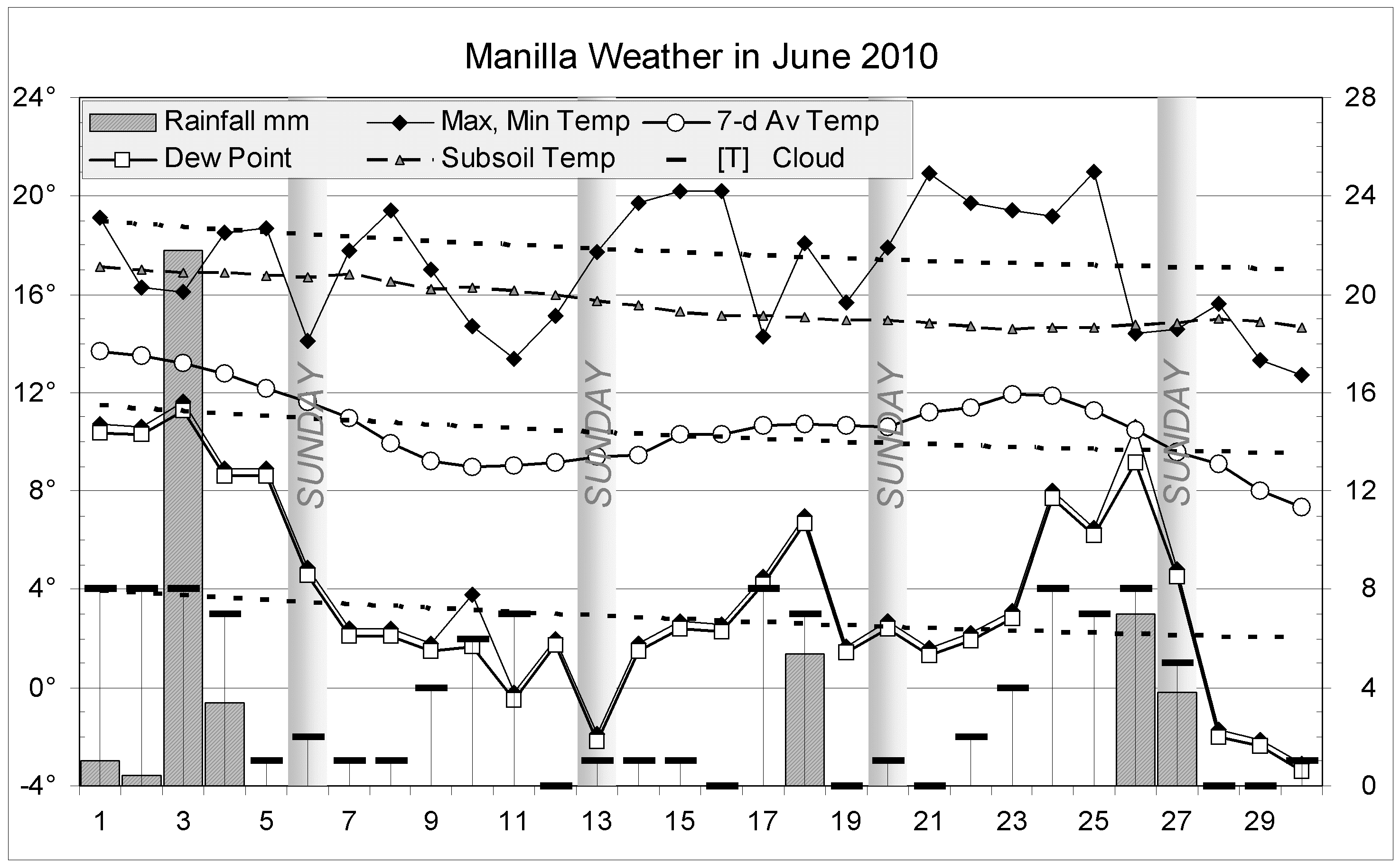
Twice the weather cycled from warm, through rain, to sunny and cold. There were 10 frosty mornings, ending with a minimum down to -3.1°. While frostier than last June, which had only 5 frosts, it was less frosty than June 2006 (21 frosts) or June 2000, which had five mornings below -4°.
A modest rainfall reading of 21.8 mm on the 3rd was the highest since December and the third highest in 12 months. Seven rain days brought 42.8 mm for the month.

 Comparing June months

Climate June 2010

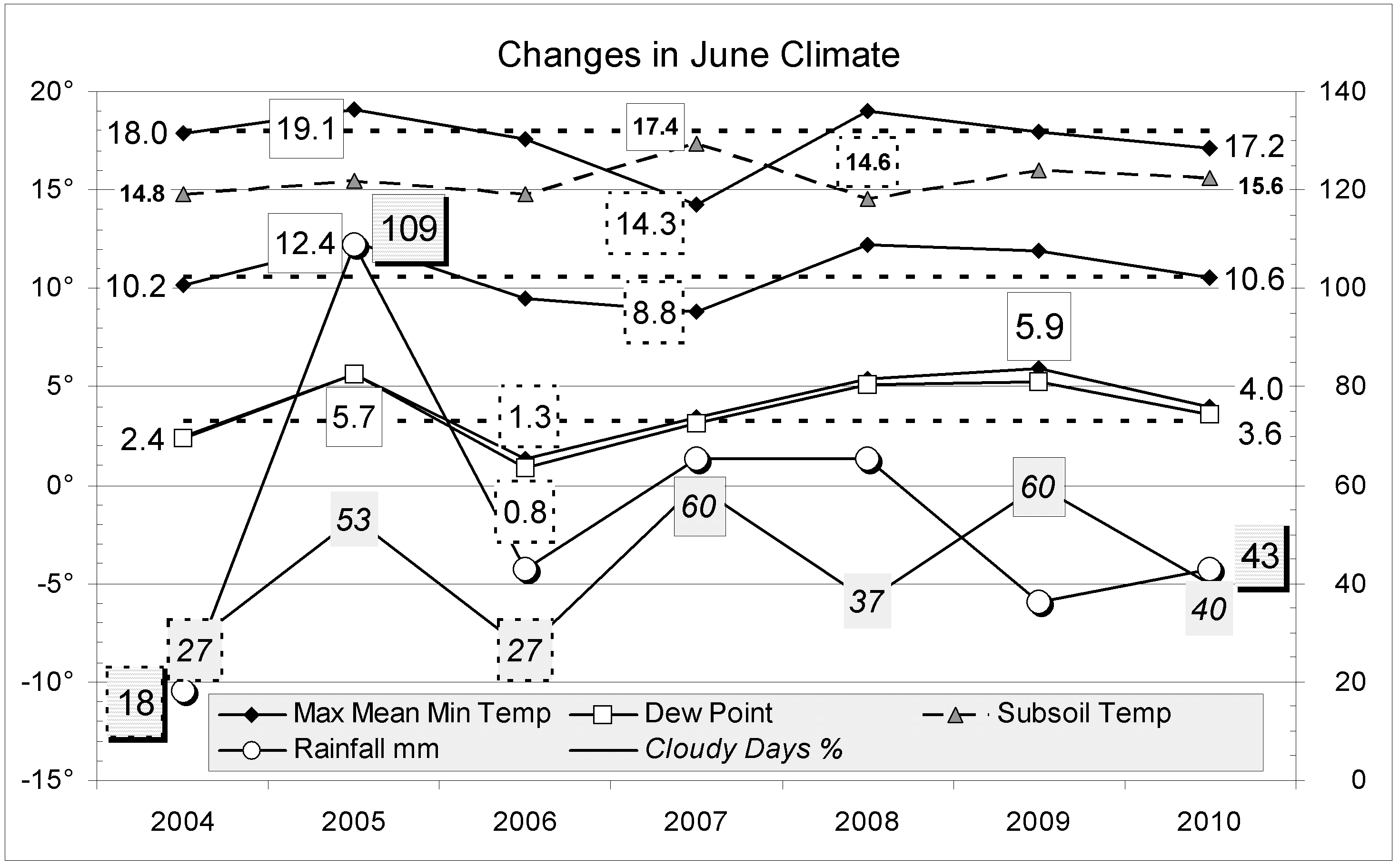
All mean temperatures, Dew Point, and cloud were close to their averages. The daily maximum temperature was 0.6° down, and the daily minimum temperature 1.1° up, making the daily temperature range (13.2°) narrower than normal by 1.7°.
The rainfall of 42.8 mm is in the 57th percentile for June. It is close to the long-term average of 44 mm. In 14 months since April 2009 no month has beaten its average. All the same, groups of months show no serious rainfall shortages. Even the 15-month total (573 mm) has now risen to the 10th percentile.


Data. Rainfall data is from Manilla Post Office, courtesy of Phil Pinch. Temperatures, including subsoil at 750 mm, and other data are from 3 Monash Street, Manilla.
 

Indoor/Outdoor Regressions for Maxima and Minima

Regressions for maximum and minimum temperatures compared

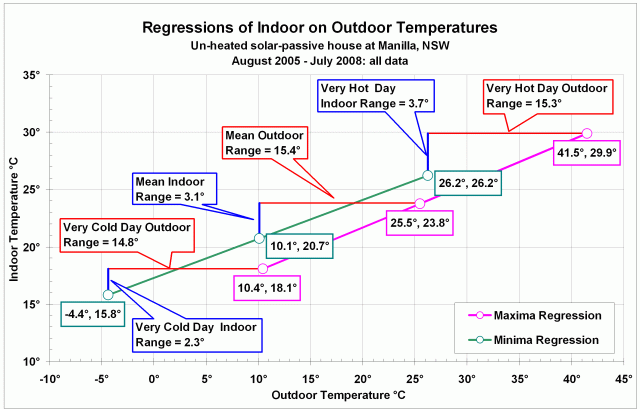
This graph shows the two regression lines for Indoor versus Outdoor daily maximum temperature (purple) and daily minimum temperature (green), taken from separate scatter-plots for maxima and minima. I have marked three points on each line: the mean temperature point and points at the extreme ends of the lines, one for a very hot day and one for a very cold day.

The interest of this graph is in the space between the regression lines. It represents the daily temperature range. I have linked each pair of points by two lines like the tread and riser of a stair. The tread (red) is the outdoor daily temperature range; the riser (blue) is the indoor daily temperature range.

The mean outdoor temperature range here is 15.4° and the mean indoor temperature range of the house is 3.1°. By this measure, the indoor temperature range is one fifth of that outdoors.
It happens that, in Manilla, the outdoor temperature ranges in the hottest and coldest parts of the year are, as shown, slightly less than for the year as a whole. Indoor temperature ranges show a clear gradient, from as much as 3.7° on a very hot day through 3.1° at the mean, to only 2.3° on a very cold day.

These very narrow temperature ranges result from the way the high thermal mass dispersed within the house allows heat to be absorbed and radiated at room temperature, eliminating extremes. Hot spots and cold spots are few and do not last long.

Adaptive Comfort

[I have re-posted the lost graph of the Adaptive Comfort Zone here.]

For comfort, we do not need indoor temperature ranges as narrow as these. Using the Adaptive Comfort Zone model we find that the neutrality temperature (for best comfort) based on Manilla’s January mean temperature of 26°  is also 26°, and the neutrality temperature based on Manilla’s July mean temperature of 10° is 21°.
According to the model, 80% of the population feel comfortable when the temperature is within 3.5° of the neutrality temperature: in January at Manilla they are comfortable up to 29.5°, and in July they are comfortable down to 17.5°.
My graph shows that the maximum indoor temperature of this house on a very hot day (29.9°)is only 0.4° above the January comfort limit, and the minimum indoor temperature on a very cold day (15.8°) is just 1.7° below the July comfort limit.
On this model, most people could live comfortably in this house using heating or cooling for only a few days in a year.
This post is one of a set of four back-dated to June 2010:
Indoor versus Outdoor Temperatures (1096 days)
Indoor versus Outdoor Minima (1096 days)
Indoor versus Outdoor Maxima (1096 days)
Indoor/Outdoor Regressions for Maxima and Minima (This post.)


This article was originally posted in the weatherzone forum thread “Indoor Climate” on 9th June 2010. It is backdated here to 19th June 2010.

Indoor versus Outdoor Maxima (1096 days)

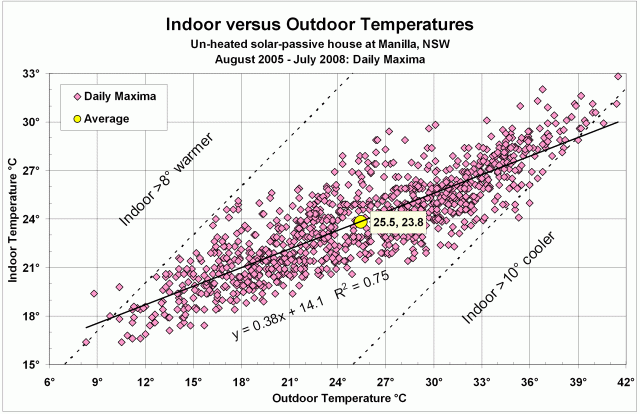
Indoor-Outdoor maximum temperature scatter-plot

This scatter-plot shows only daily maximum temperatures, indoors and outdoors, and displays the average values. The Manilla average outdoor maximum of 25.5° is already comfortable, if a little on the warm side. The average indoor maximum of 23.8° is closer to the ideal.
While this solar-passive house scarcely changes the average maximum daily temperature, it drastically reduces the extremes. The slope of the linear regression line shows that indoor maxima vary only 38% as much as outdoor maxima. This results from effective insulation and daily and seasonal storage of heat and coolness in thermal mass material through the year. In addition, the house is well shaded in summer, and catches warmth from the sun mainly in winter.

Dashed lines to the left and right show how the indoor temperature on the hottest days is reduced by up to 10 degrees, while on the coldest days it is increased by up to 8 degrees.
This post is one of a set of four back-dated to June 2010:
Indoor versus Outdoor Temperatures (1096 days)
Indoor versus Outdoor Minima (1096 days)
Indoor versus Outdoor Maxima (1096 days) (This post.)
Indoor/Outdoor Regressions for Maxima and Minima


This article was originally posted in the weatherzone forum thread “Indoor Climate” on 7th June 2010. It is backdated here to 19th June 2010.