3-year trends to March 2011.

Parametric plots of smoothed climate variables at Manilla

“Extreme cloudiness”Trends to March 2011.

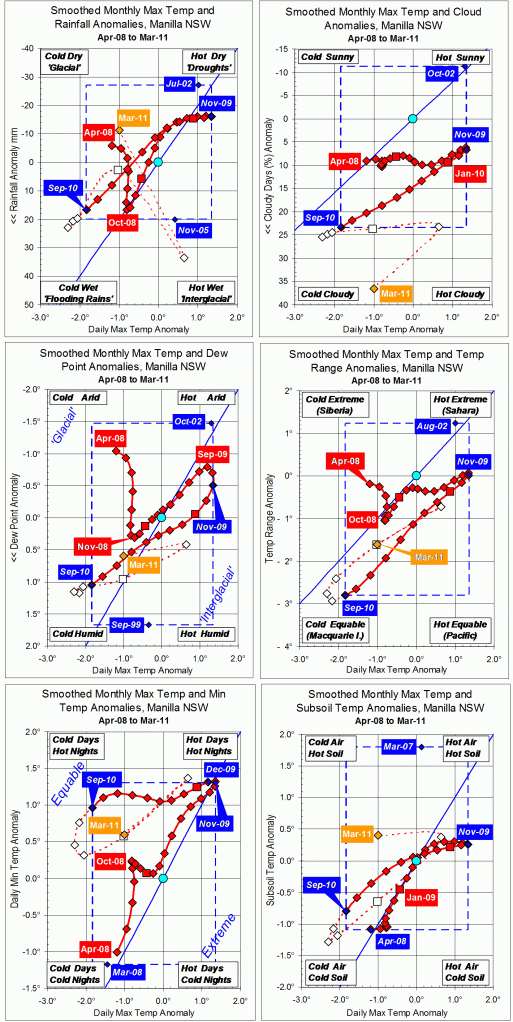
Most of the March 2011 raw data values (in orange) are nearer to normal than to recent extremes. As an exception, the March cloudiness anomaly is a record +37%: there were 19 cloudy mornings instead of 8.

Smoothed September values include new 12-year record anomalies for daily maximum temperature (low), cloudy days (high) and daily temperature range (low).

Note: Fully smoothed data – Gaussian smoothing with half-width 6 months – are plotted in red, partly smoothed data uncoloured, and raw data for the last data point in orange. January data points are marked by squares. Blue diamonds and the dashed blue rectangle show the extreme values in the fully smoothed data record since September 1999.

March 2011 still cloudy

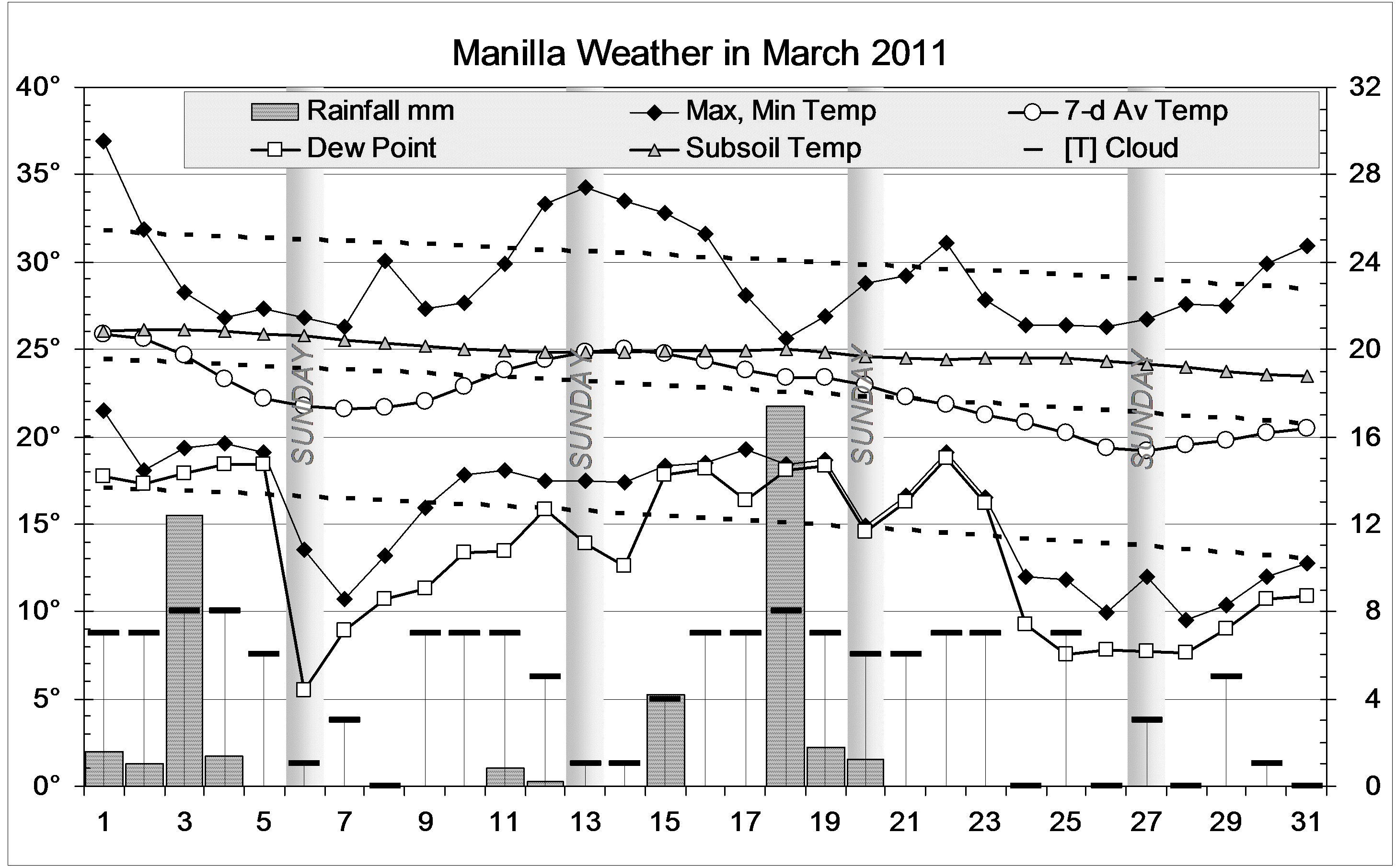
The daily weather logWeather log March 2011.

There were two warm spells and two cool spells in March, with no extreme temperatures.
Many mornings were very cloudy: fourteen had 7/8 or 8/8 cloud. In twelve years only six months have had so many. (Last December had sixteen.)
The highest rainfall reading was 17.4 mm on the 18th. In ten rain-days (twice the usual number) the total was 42.0 mm. No rain fell after the 20th.

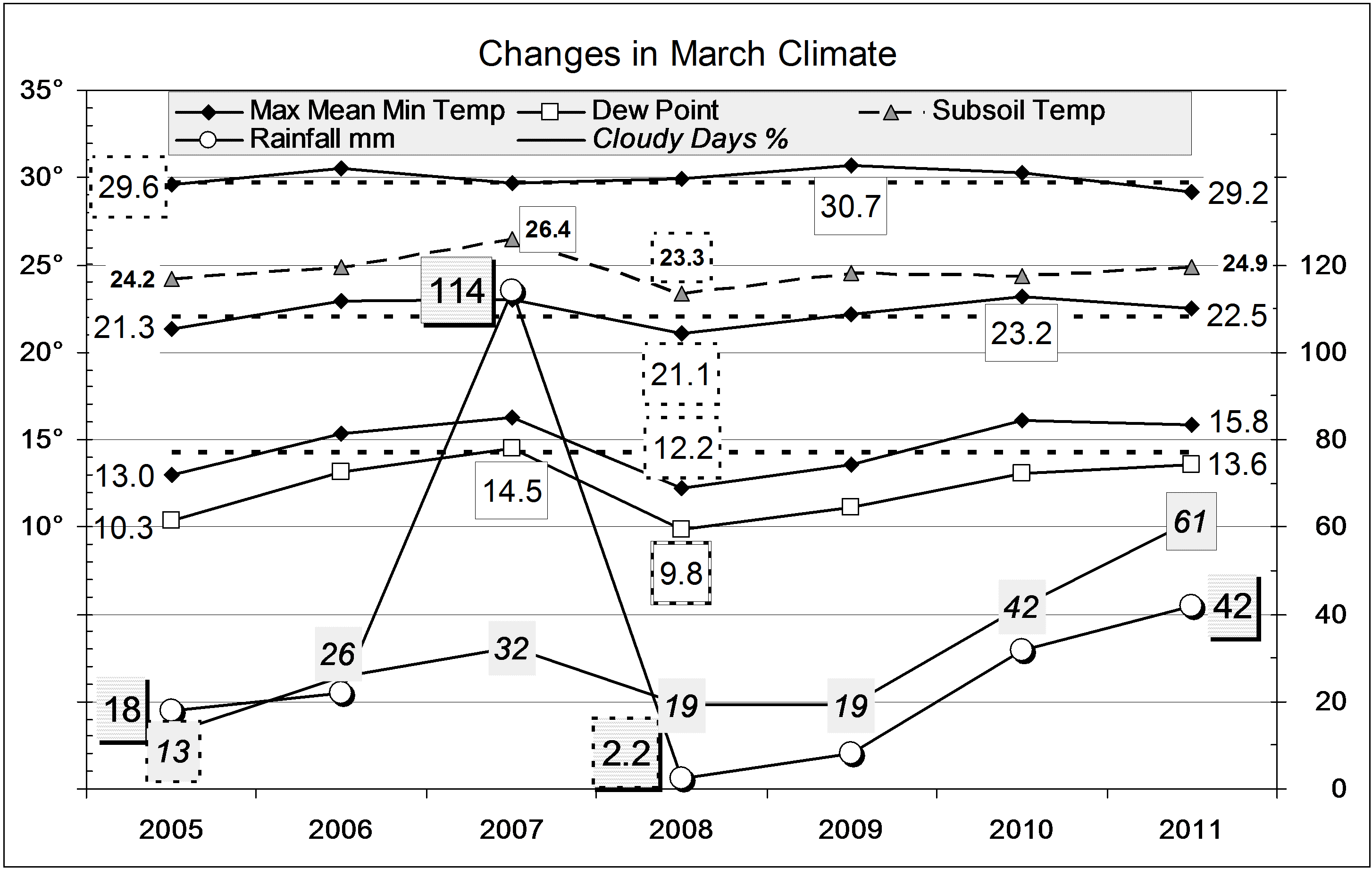
 Comparing March monthsClimate March 2011.

The mean maximum temperature was a little low and the mean minimum temperature high, making the daily temperature range nearly two degrees narrower than average. Related to this, cloudy mornings (>4/8 cloud) reached a record 61%, equal with June 2010 .
The rainfall of 42 mm is in the 54th percentile for March. While below the long-term average (53 mm), it is far above the most common March total of 11 mm. Rainfall totals for groups of months remain high: above the 70th percentile for all periods up to 15 months.


Data. Rainfall data is from Manilla Post Office, courtesy of Phil Pinch. Temperatures, including subsoil at 750 mm, and other data are from 3 Monash Street, Manilla.


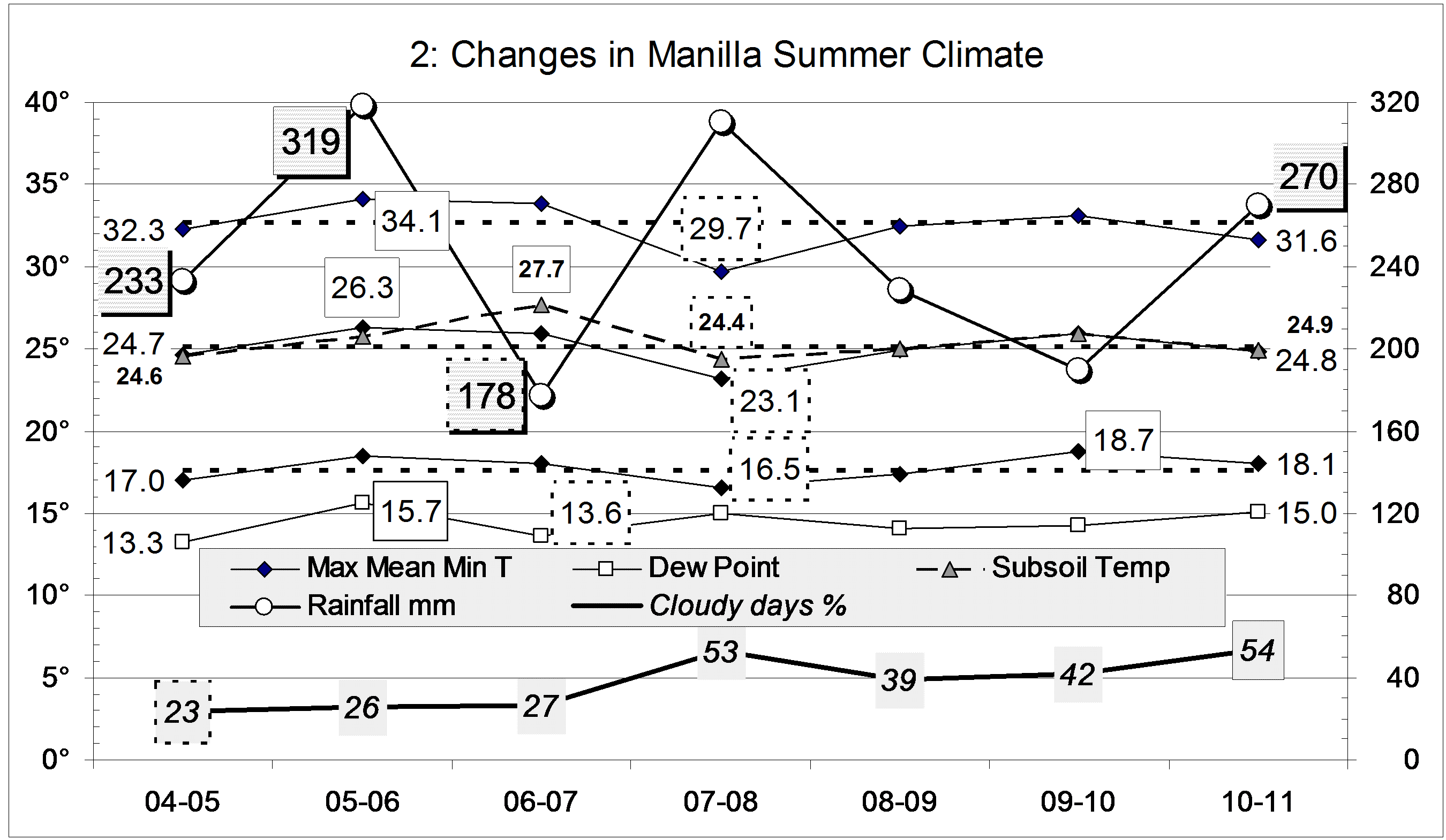
2010-11: Summer very cloudy again

Weather log summer 2010-11As in summer 2008-09, day temperatures got steadily warmer. From 8° below normal in mid-December they rose to 5° above normal in early February, and crashed to below normal before recovering. As in 2008-09, the lower temperature in mid-February came with a day of very heavy rain.

As is normal, there were two days over 40° and none below 20°.

The mean daily mean temperature was normal but, due to cloud cover, the mean maximum was rather low (31.6°) and the mean minimum rather high(18.1°), reducing the mean daily temperature range to 13.6° (normally 15.1°).
This summer was the cloudiest in this record, at 54% cloudy mornings (more than four eighths of cloud), just beating the summer of 2007-08 (53%). Given that Manilla summers averaged only 31% cloudy mornings from 1999 to 2008, this is a big change indeed.
The total rainfall of 270 mm is above the long-term summer average of 225 mm. It is in the 68th percentile.Climate summer 2010-11

Data. Rainfall data is from Manilla Post Office, courtesy of Phil Pinch. Temperatures, including subsoil at 750 mm, and other data are from 3 Monash Street, Manilla.

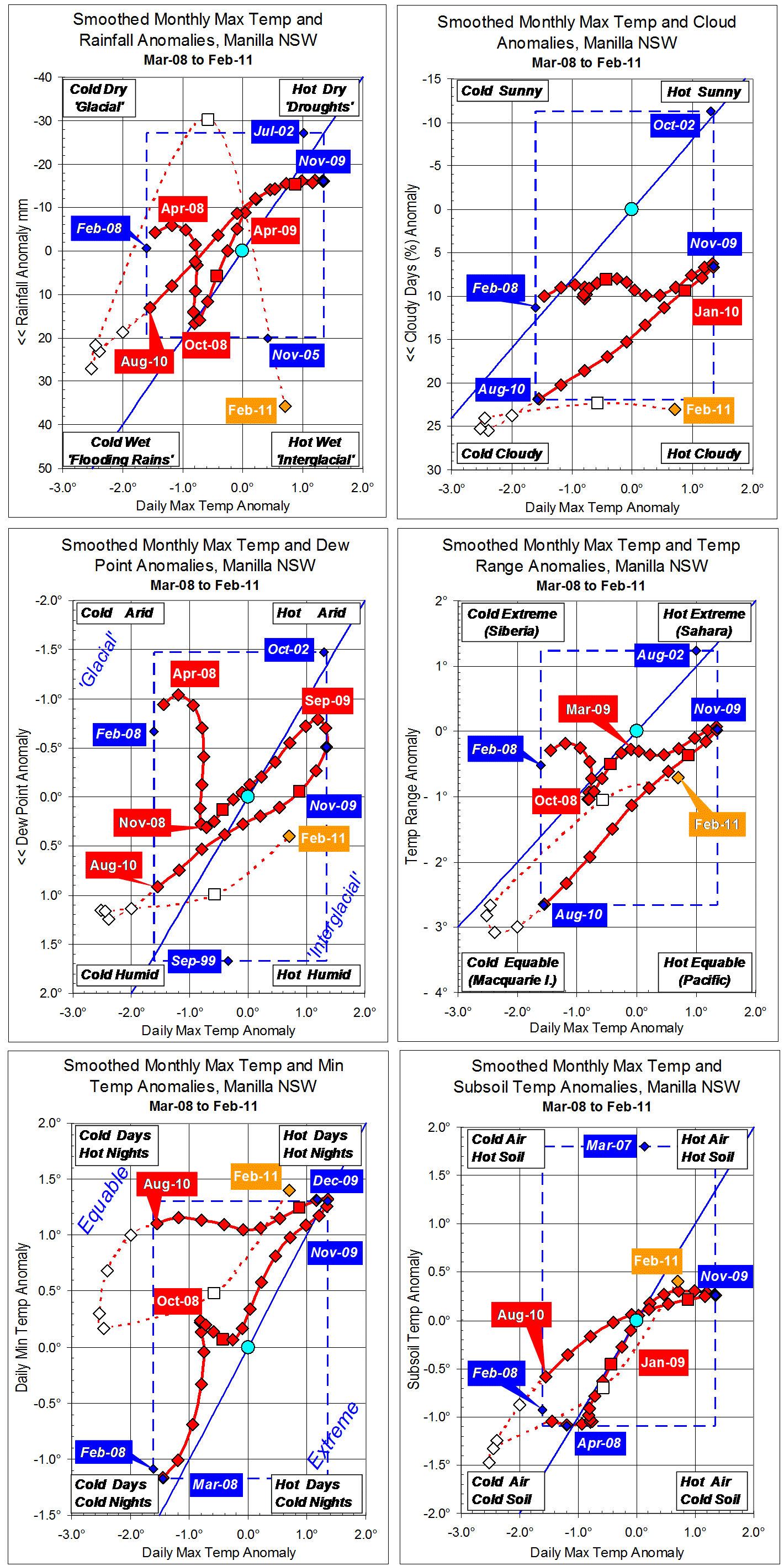
3-year trends to February 2011

Parametric plots of smoothed climate variables at Manilla

“Sudden Rise in Temperatures”Trends to February 2011.
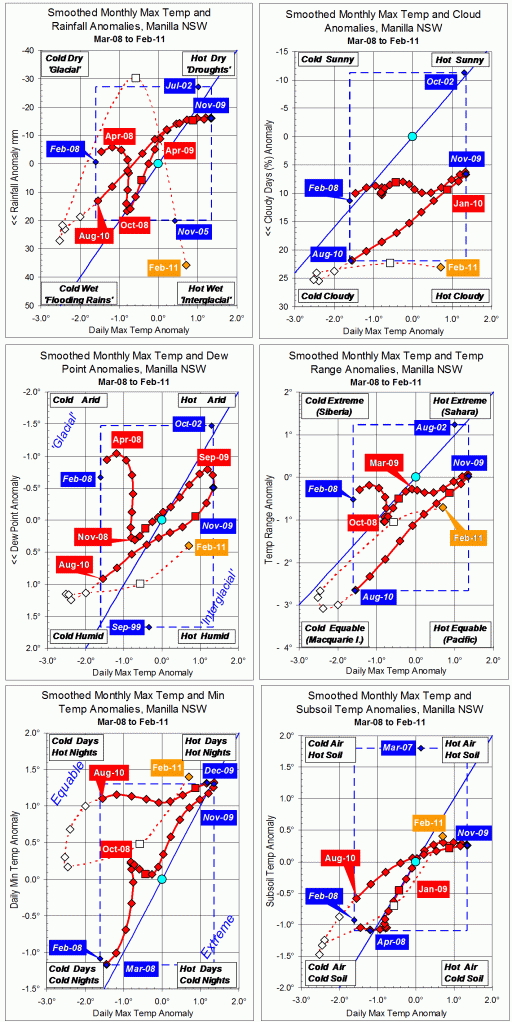
In the current plots we see final smoothed trends for the winter (JJA) of 2010.

Daily Maximum Temperature

On each plot, the x-axis has the anomaly of mean daily maximum temperature.  In winter 2010 the smoothed temperature anomaly fell very rapidly to near the earlier record low smoothed value. Partially smoothed later values suggest that an extreme negative temperature anomaly came in November 2010. The raw value for February 2011 is remarkably high.

Rainfall

Rainfall anomalies are plotted (inverted) on the y-axis of the first graph. Fully-smoothed winter values were all positive, rising with falling maximum temperature. Later values generally rose rapidly to an apparent positive extreme in November.

Cloudiness

During winter of 2010 the anomaly of percent cloudy days rose to yet a new record for fully-smoothed values. It continued to rise to an apparent extreme in October 2010, since when it has remained extremely high.

Early morning Dew Point

The Dew Point anomaly was positive and rapidly rising in winter. It seems to have peaked at less than a record value in October 2010. By February the anomaly was much less positive.

Daily Temperature Range

The temperature range anomaly fell during winter to yet a new negative record for smoothed data. It continued to fall to an apparent negative peak in October 2010. The raw value for February and the little-smoothed value for January are right back near normal.

Daily minimum temperature

Winter daily minimum anomalies remained little below the peak of December 2009. Later values traced an arc through the “Equable” zone of the graph, until February’s raw value was again near the December 2009 peak (“Hot Days; Hot Nights”).

Subsoil temperature

The winter subsoil temperature anomaly was below zero and falling quite rapidly. It then accelerated downwards to an apparent negative extreme in November 2010. By February, the raw value was back higher than any point on the 3-year trace.

Note: Fully smoothed data – Gaussian smoothing with half-width 6 months – are plotted in red, partly smoothed data uncoloured, and raw data for the last data point in orange. January data points are marked by squares. Blue diamonds and the dashed blue rectangle show the extreme values in the fully smoothed data record since September 1999.

Warm February 2011 with a very wet day

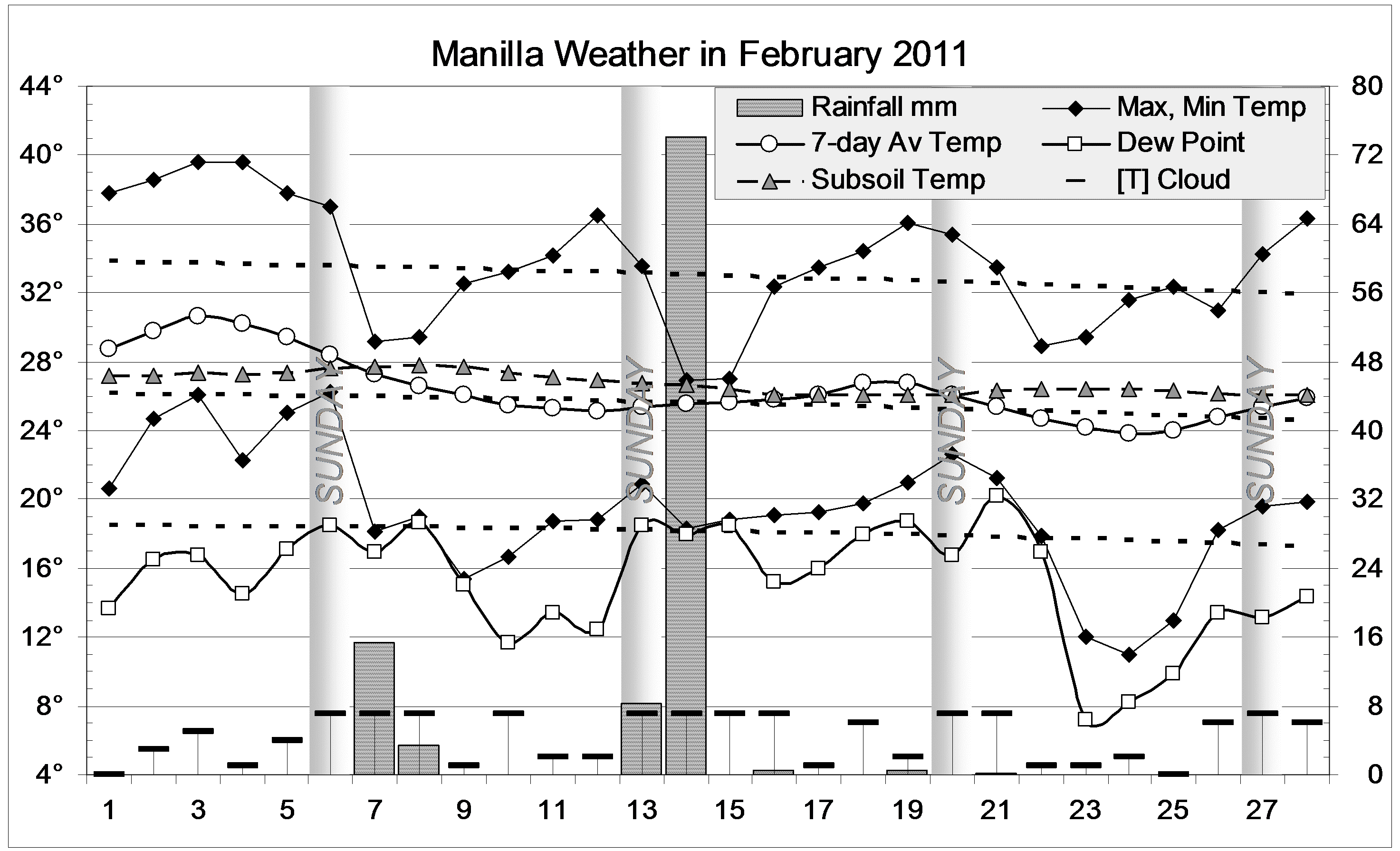
The daily weather logWeather log February 2011.

Several Mondays and Tuesdays this month were cool, while most other days were warm. Nights in the first week were warm, lifting the seven-day average. Three nights in the last week were very cool, at a time of very dry air.
Rain on the 7th (15.4 mm) ended a three-week dry spell, but really heavy rain was recorded on the 14th. That reading of 74.2 mm was the 29th heaviest daily fall in more than a century.

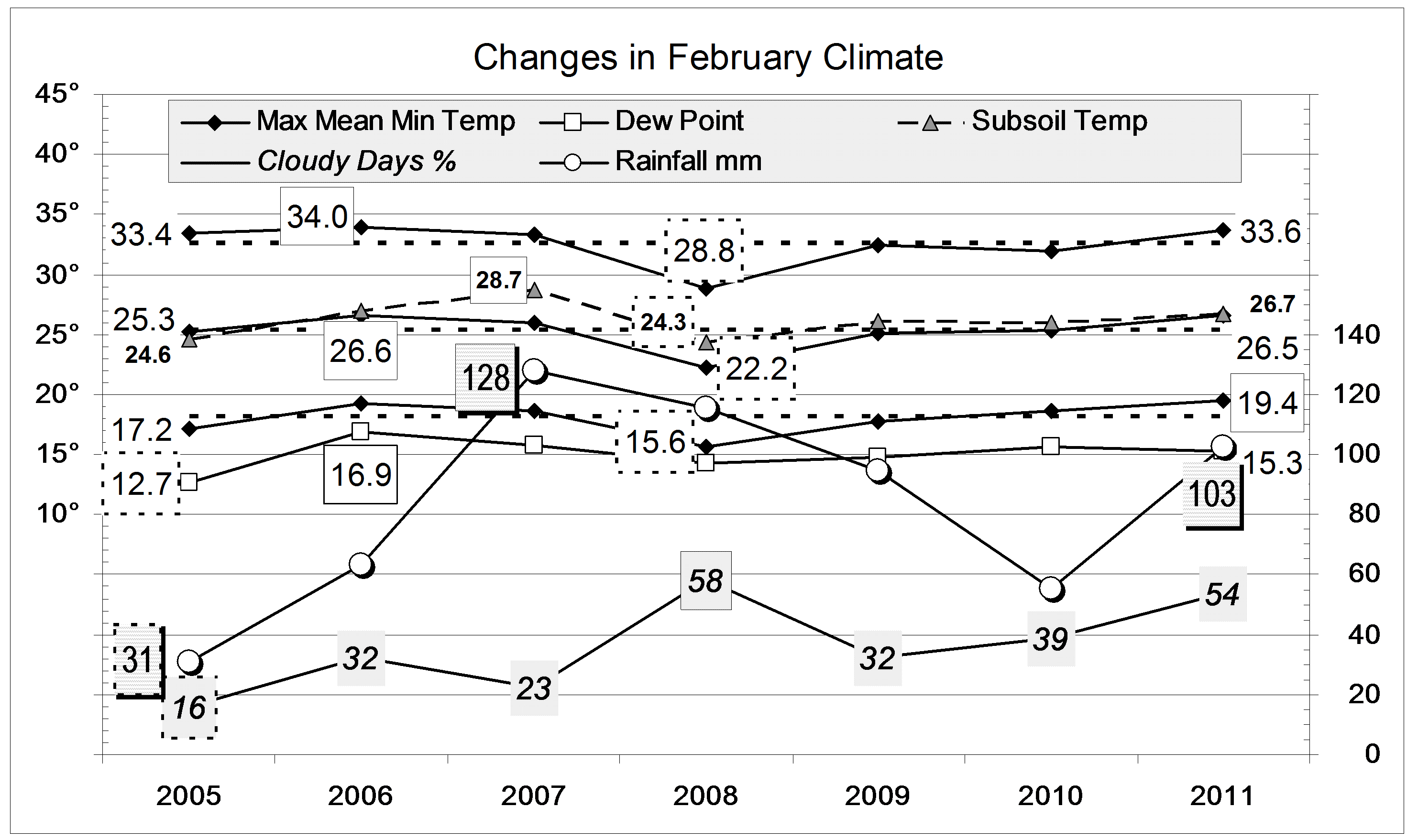
 Comparing February monthsClimate February 2011.

Mean maximum, mean, and minimum temperatures and mean soil temperature were all about a degree above average. The mean Dew Point was average, and cloudiness high (54%).
The rainfall of 102.6 mm is in the 77th percentile for February, far above the long-term average of 67 mm. Rainfall totals for groups of months are very high: above the 70th percentile for all periods up to 15 months, and above the 90th percentile for periods of 4-, 5-, and 6-months.


Data. Rainfall data is from Manilla Post Office, courtesy of Phil Pinch. Temperatures, including subsoil at 750 mm, and other data are from 3 Monash Street, Manilla.