Cool days in August 2010

The daily weather logWeather log August 2010 Manilla
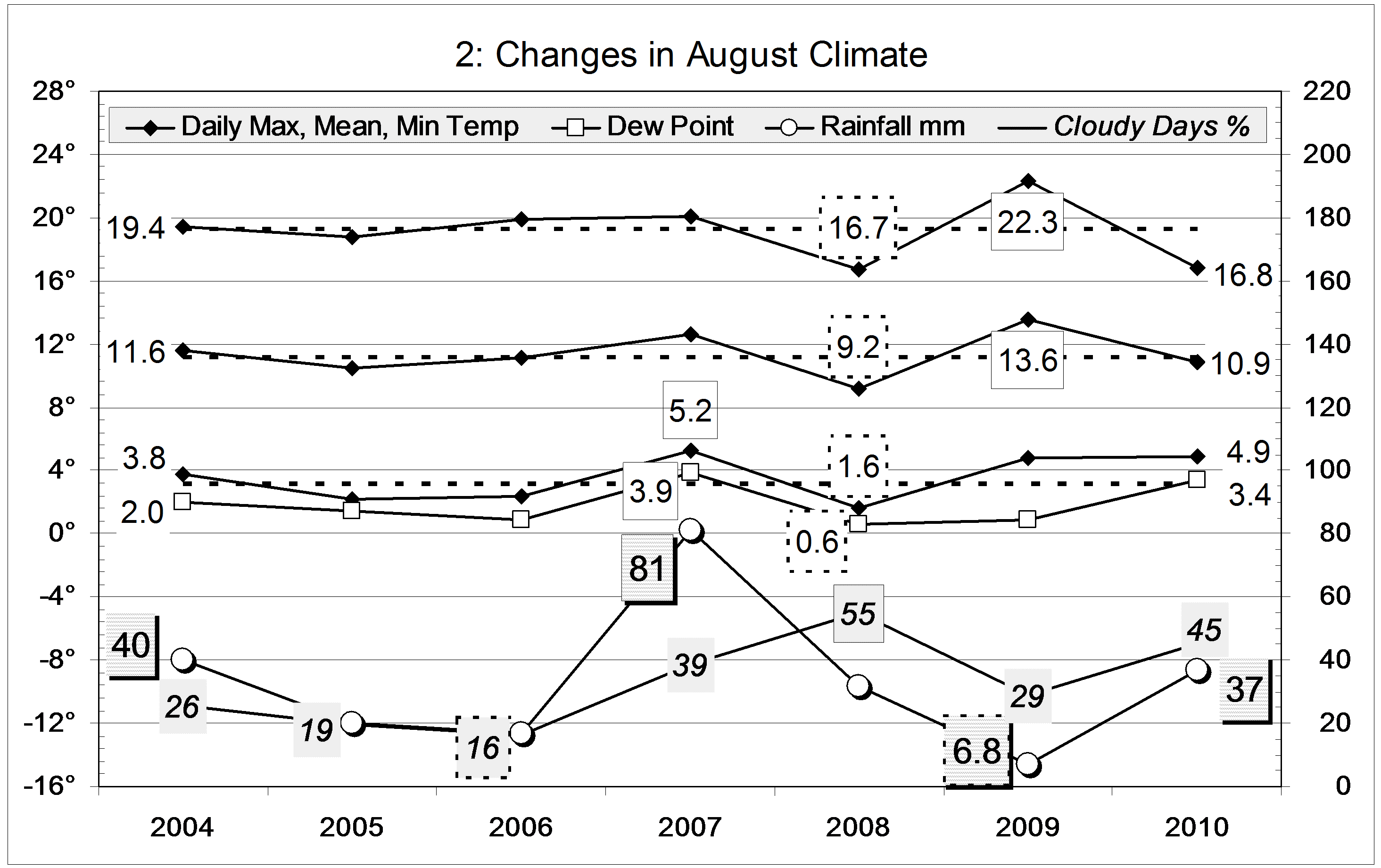
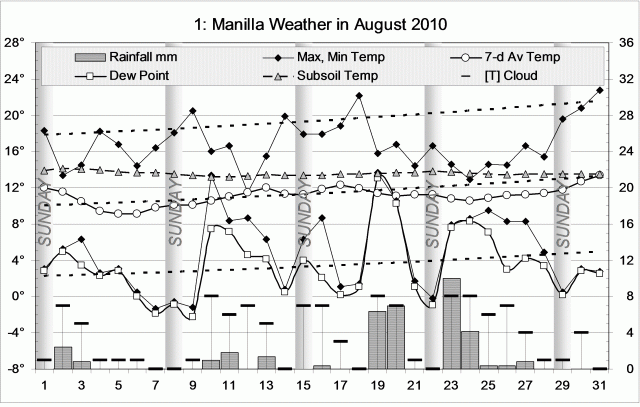
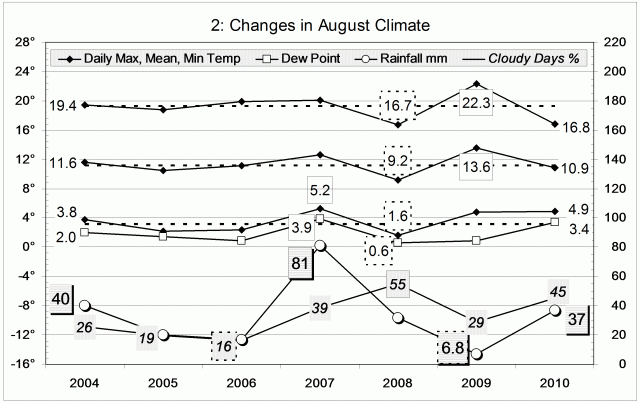
August had no extremes. Only four days exceeded 20° (usually thirteen days), and only ten nights were frosty (usually fifteen). The subsoil temperature failed to rise during the month, ending at 13.5°, which is 1.0° cooler than normal.

Rain fell on 13 days, an August record for the decade, but the highest reading was only 10 mm.

Comparing August monthsClimate August 2010 Manilla

The mean daily maximum temperature (26.5°) was the lowest for November on this 12-year record. The mean daily temperature range (12.4°) was (with November 2008) a record low value.

Mean subsoil temperature (20.4°) was the lowest since November 1999. The month ended with subsoil temperature (then 22.2°) trailing only 10 days later than its usual date. It had begun the month 22 days late.
There were more cloudy mornings (53%) than in any November on this record.
The rainfall of 105.4 mm is in the 84th percentile for November, far above the long-term average of 67 mm. Totals for groups of months up to 15 months are now all above the median, as is the thirty-year total.


Data. Rainfall data is from Manilla Post Office, courtesy of Phil Pinch. Temperatures, including subsoil at 750 mm, and other data are from 3 Monash Street, Manilla.

July 2010 Rain Twice Average

The daily weather logWeather log July 2010 Manilla

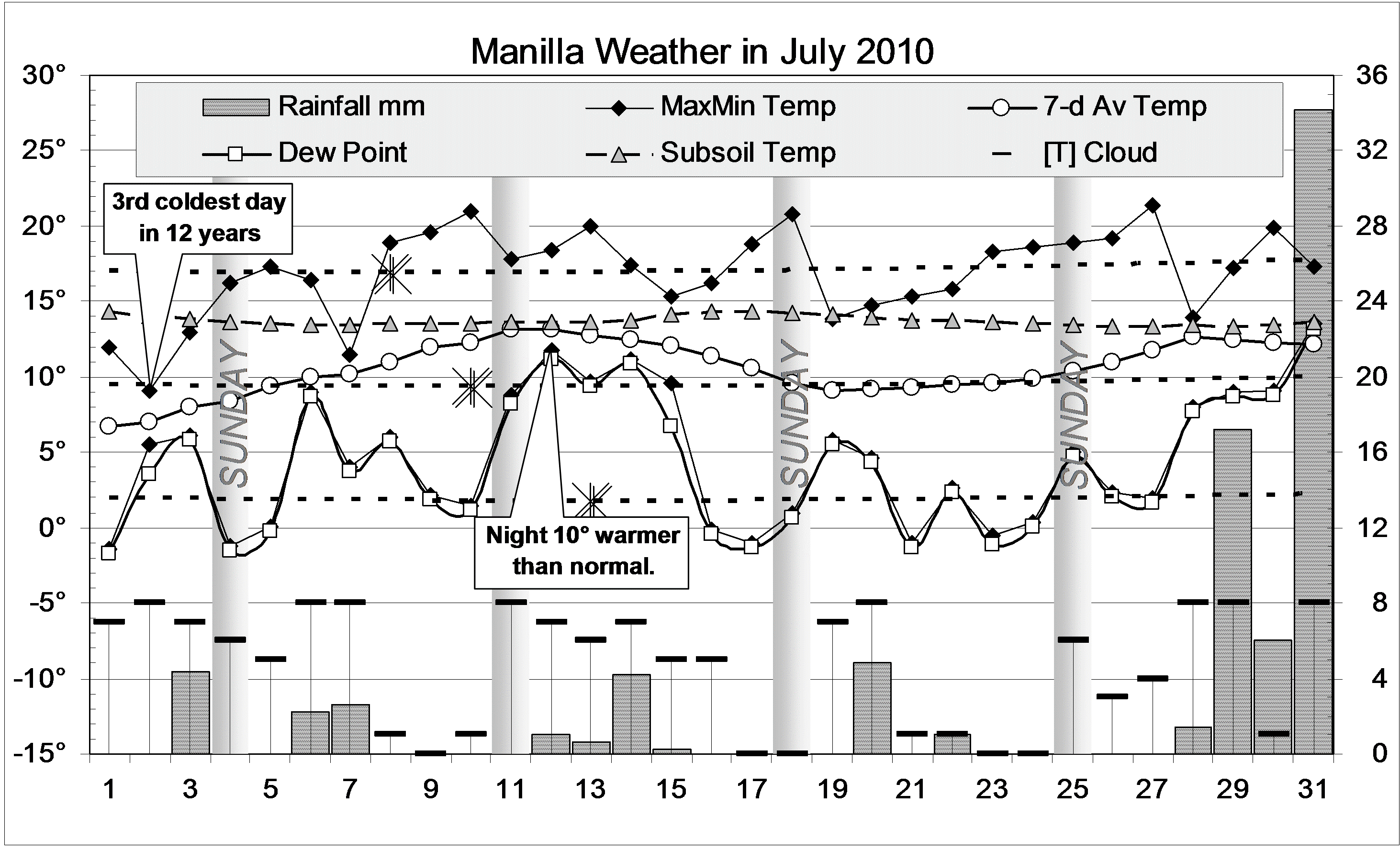
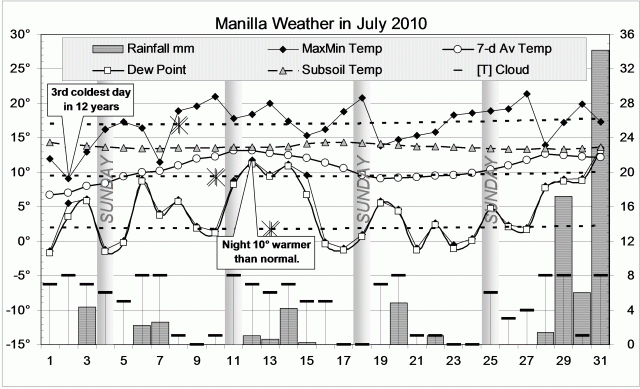
July began cold. The 2nd, with a maximum temperature of 9.1°, was the coldest July day in the record from 1999. The only two colder days were: 8/06/07 (8.8°), and 20/06/07 (8.3°).

Two warm spells followed, marked mainly by nights that were very warm for mid-winter. The minimum on the 12th (11.8°) was 10° above normal, and that on the 31st (13.5°) was 11.3° above normal. Colder nights included twelve mild frosts, the fewest on record.
There were 13 rain days spread through the month. The reading of 17.2 mm on the 29th was topped by 34.2 mm on the 31st.

“Normal Temperature”

Each Manilla monthly weather graph has dashed curves to show the temperatures that are normal for each day of the year. They are harmonic curves matching 10-year averages from March 1999. On this July graph, the lowest values are marked with a double “X”. Winter cold is due to lack of heat from the sun, which yields least heat on the 21st of June (the winter solstice). On that day the sun is lowest and shines the shortest time. However, it takes many days for the air to cool down. On average, the coldest day in Manilla comes 17 days later (July 8th) and the coldest night 22 days later (July 13th). Manilla’s coldest day and night follow the solstice with an unusually short lag time. (See Wikipedia: Seasonal lag.)

See the monthly weather report for January 2010 for the highest normal temperatures of the year. These relationships are shown on a graph here.

Comparing July monthsClimate July 2010 Manilla
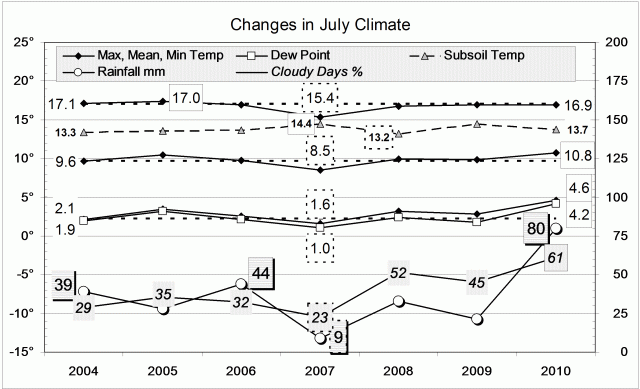
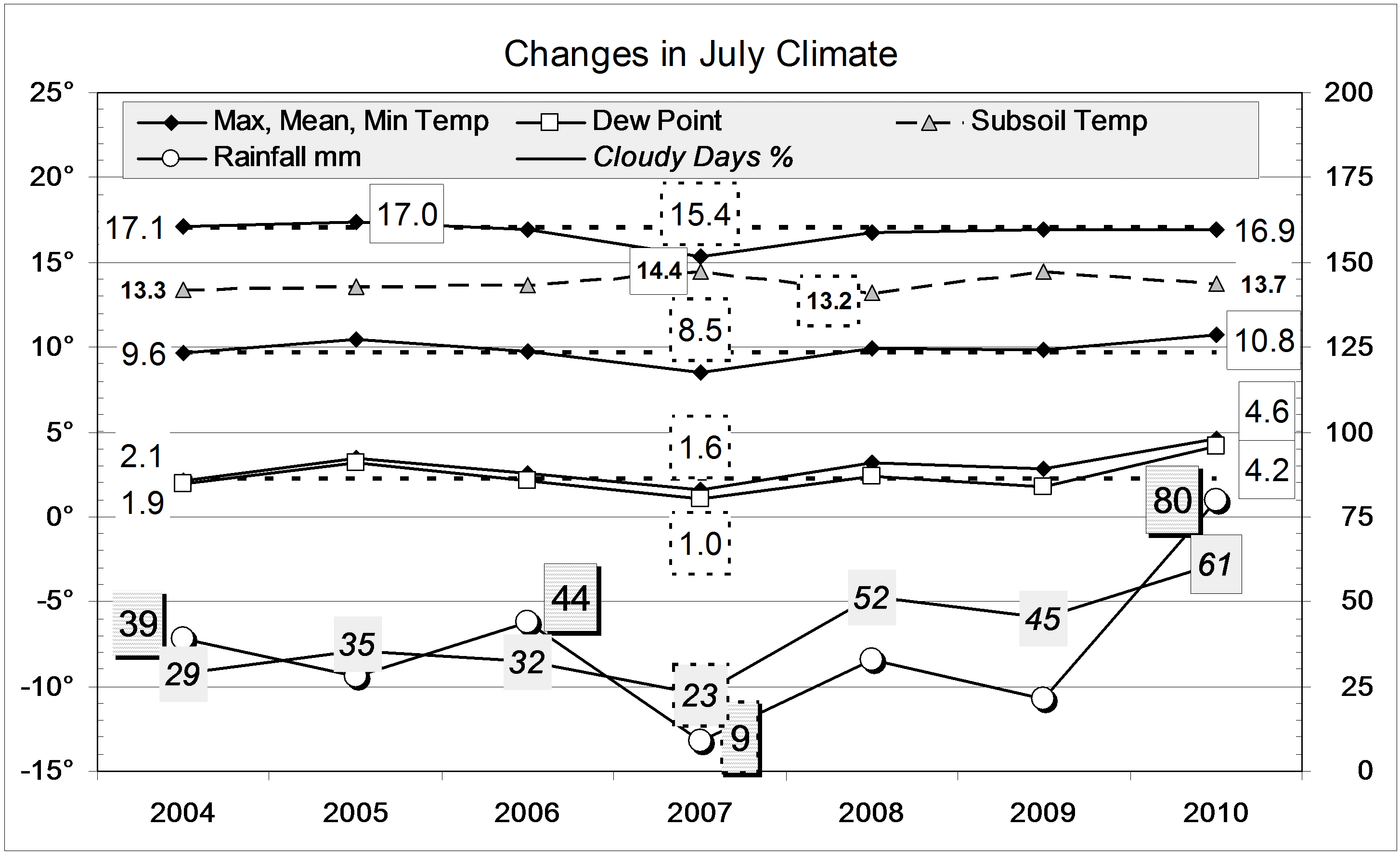
Due to cloudy nights, the mean daily minimum temperature (4.6°) was by far the highest in the 12-year record for July, and 2.4° above the average. Because the mean maximum temperature was normal (16.9°), the mean average temperature was also high (10.8°). The mean daily temperature range (12.3°) was the narrowest in the July record.

Very high humidity was shown by a mean early morning Dew Point of 4.6°, higher than any since July 1999 (5.7°). The percentage of cloudy mornings (61%) was the highest, not only for July months, but for any month in this record. Nineteen mornings were completely overcast.
The rainfall of 79.8 mm is in the 90th percentile for July: only 12 July months have been wetter. It is close to double the long-term average of 41 mm. As a result, total rainfalls for the last two months and three months are now above the median. No serious rainfall shortages remain. The worst shortages are far from serious: the 15-month and the 9-year totals are both in the 14th percentile.


Data. Rainfall data is from Manilla Post Office, courtesy of Phil Pinch. Temperatures, including subsoil at 750 mm, and other data are from 3 Monash Street, Manilla.

June 2010 Weather on Average

The daily weather log

Weather log June 2010

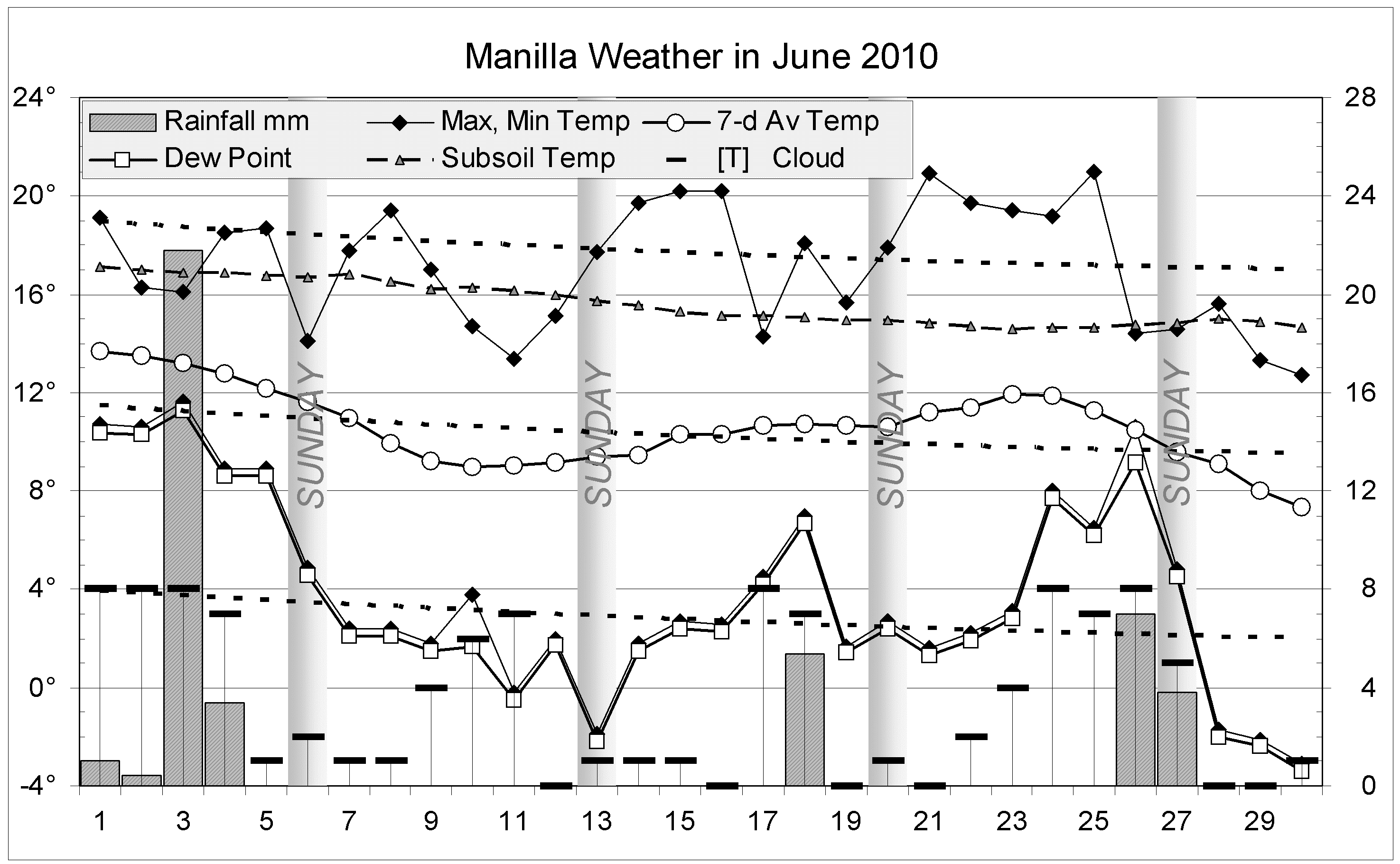
Twice the weather cycled from warm, through rain, to sunny and cold. There were 10 frosty mornings, ending with a minimum down to -3.1°. While frostier than last June, which had only 5 frosts, it was less frosty than June 2006 (21 frosts) or June 2000, which had five mornings below -4°.
A modest rainfall reading of 21.8 mm on the 3rd was the highest since December and the third highest in 12 months. Seven rain days brought 42.8 mm for the month.

 Comparing June months

Climate June 2010

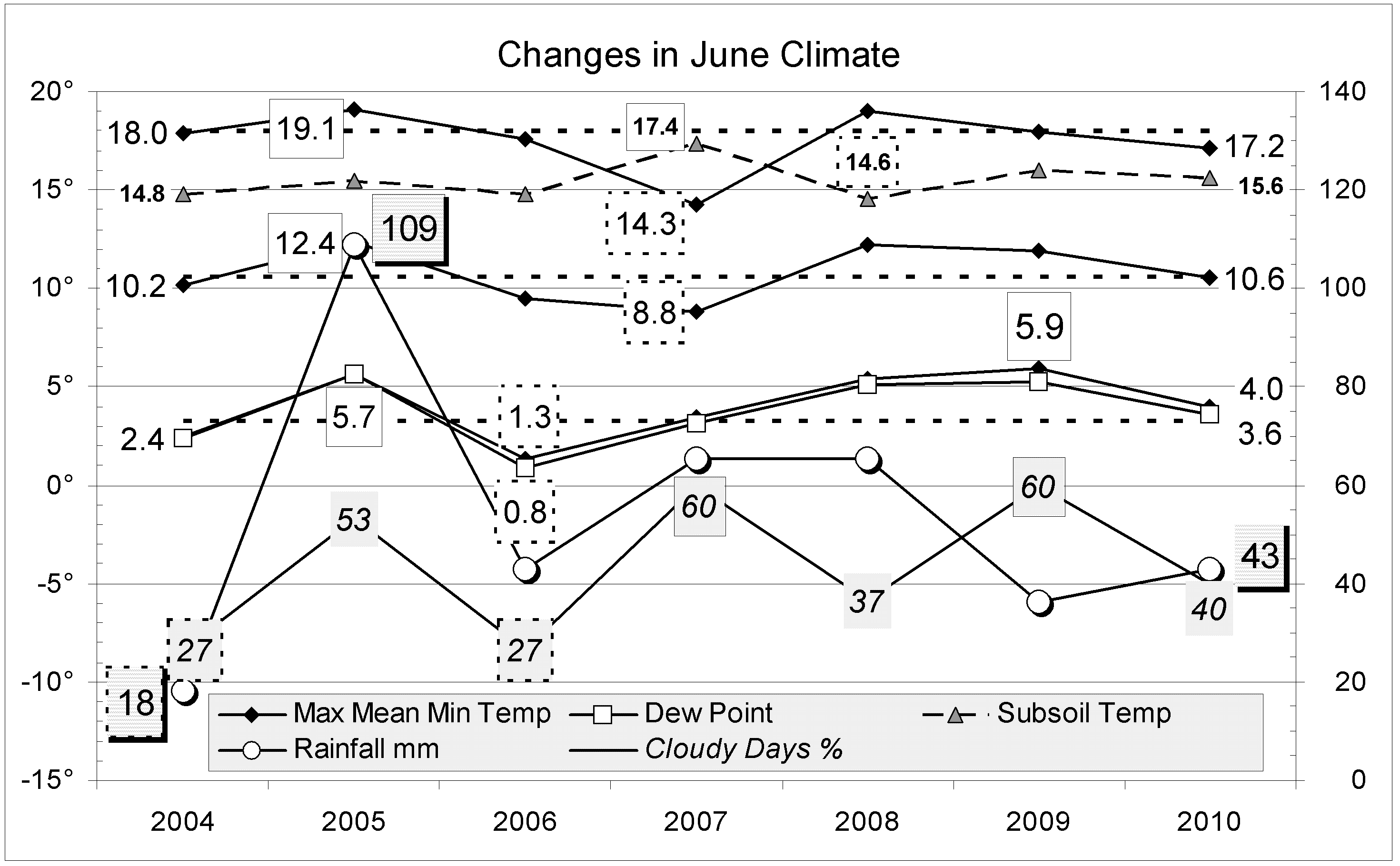
All mean temperatures, Dew Point, and cloud were close to their averages. The daily maximum temperature was 0.6° down, and the daily minimum temperature 1.1° up, making the daily temperature range (13.2°) narrower than normal by 1.7°.
The rainfall of 42.8 mm is in the 57th percentile for June. It is close to the long-term average of 44 mm. In 14 months since April 2009 no month has beaten its average. All the same, groups of months show no serious rainfall shortages. Even the 15-month total (573 mm) has now risen to the 10th percentile.


Data. Rainfall data is from Manilla Post Office, courtesy of Phil Pinch. Temperatures, including subsoil at 750 mm, and other data are from 3 Monash Street, Manilla.


Damp end to cloudy May 2010

The daily weather logWeather log May 2010

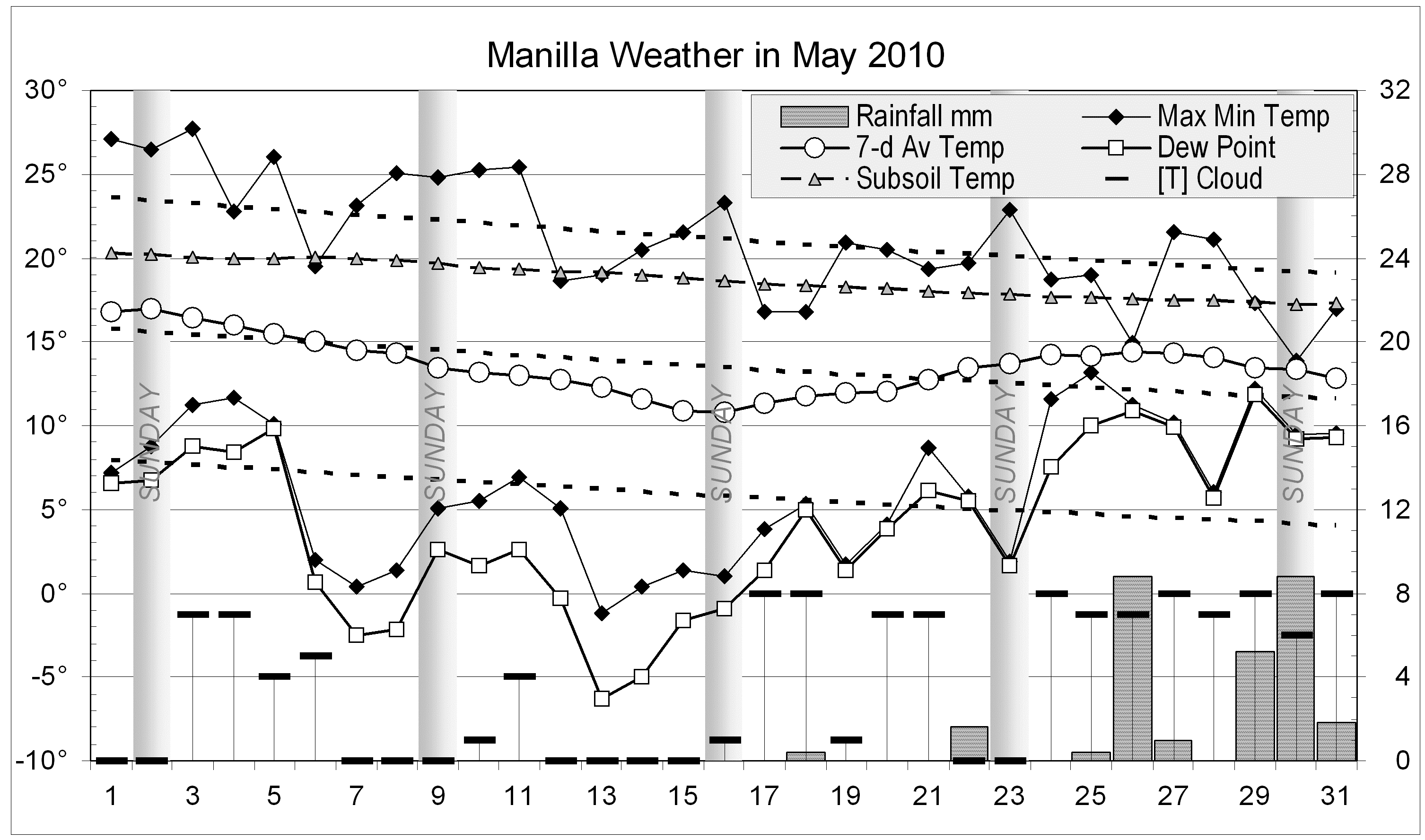
Dry weather with warm days and cool nights lasted most of the month. On the 13th the early morning Dew Point of -6.3° set a record for low humidity in May. The seven-day average temperature was quite low in the second week. Nine mild frosts (usually 6) all came about this time. By the 25th there had been only 57 mm of rain in 14 weeks: an average of barely 4 mm per week. A serious rainfall shortage was developing, despite months of cloudy weather.
Late in the month nights became very humid and warm. Mornings had fog on the 18th and 22nd and mist (visibility one kilometre) on the 27th and 31st. Three days had more than 5 mm of rain. In all, the month had 8 rain days, totalling 28.0 mm.

 Comparing May monthsClimate May 2010

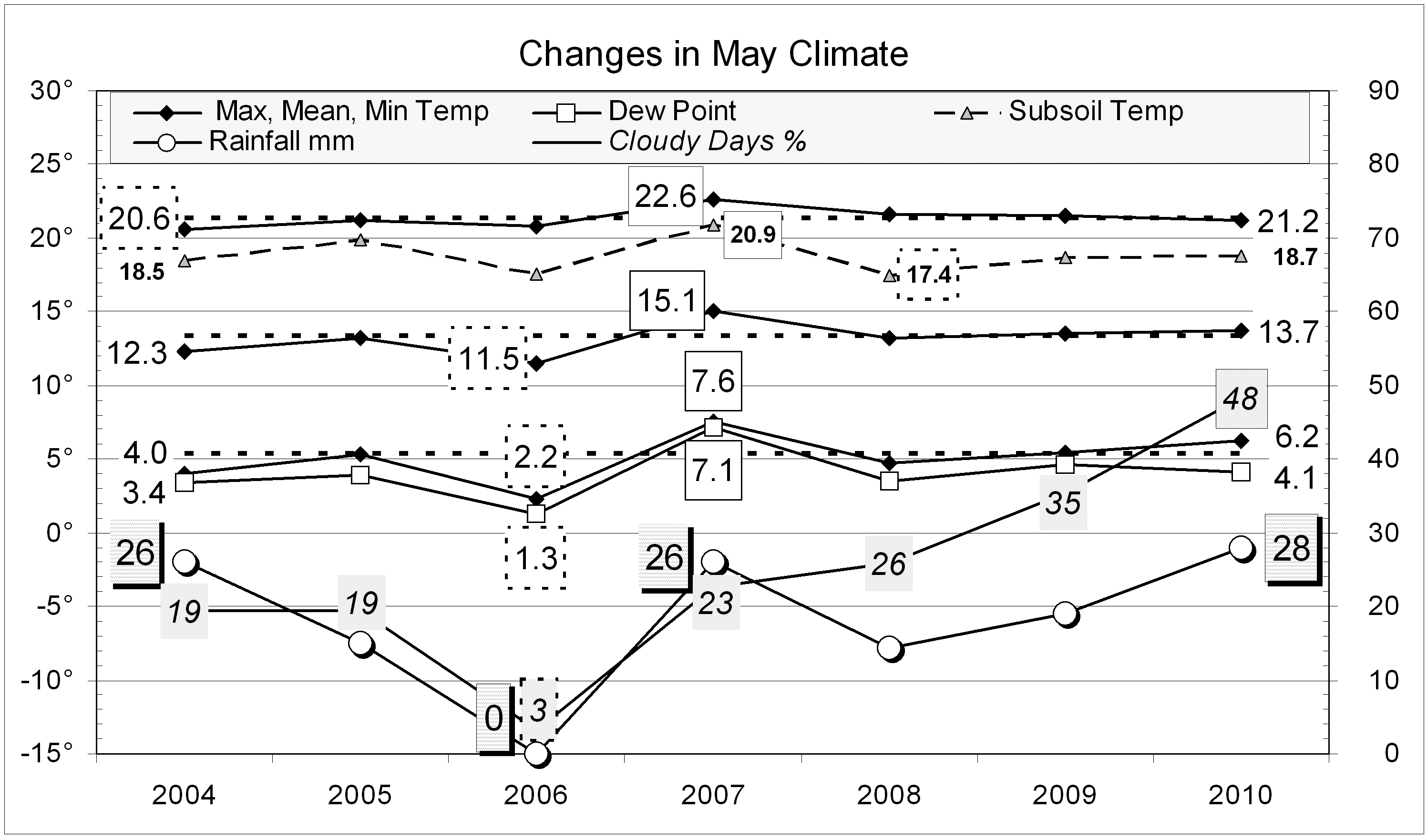
This was the cloudiest May in the 11-year record. The mean maximum temperature and the mean average were normal. The mean minimum was up, reducing the daily temperature range, and the mean Dew Point was down.
The rainfall of 28.0 mm is near the median for May (51st percentile). It is below the long-term average of 40 mm, but no May total has beaten the average since 1998! Rainfall totals for groups of months show just one serious shortage. The 15-month total (538 mm) is now down to the 7th percentile.

Subsoil Temperature

Both graphs now include subsoil temperature measured at 750 mm depth. There the temperature barely changes during a day. It changes slowly with the seasons. Usually it ranges from 26° in February to 14° in July.
As observed in Manilla, the  subsoil temperature does not relate to the normal average temperature of the air in a simple way. In May, it stays about five degrees warmer; in other autumn and winter months it is less than five degrees warmer. In spring and summer it is almost the same as the normal average air temperature.
In autumn 2007 the subsoil temperature was nearly two degrees warmer than usual; in autumn 2008 it was one degree cooler than usual. This is a puzzle, because the average air temperature did not change so much.


Data. Rainfall data is from Manilla Post Office, courtesy of Phil Pinch. Temperatures, including subsoil at 750 mm, and other data are from 3 Monash Street, Manilla.
 

April 2010 rather warm and dry

The daily weather logWeather log April 2010

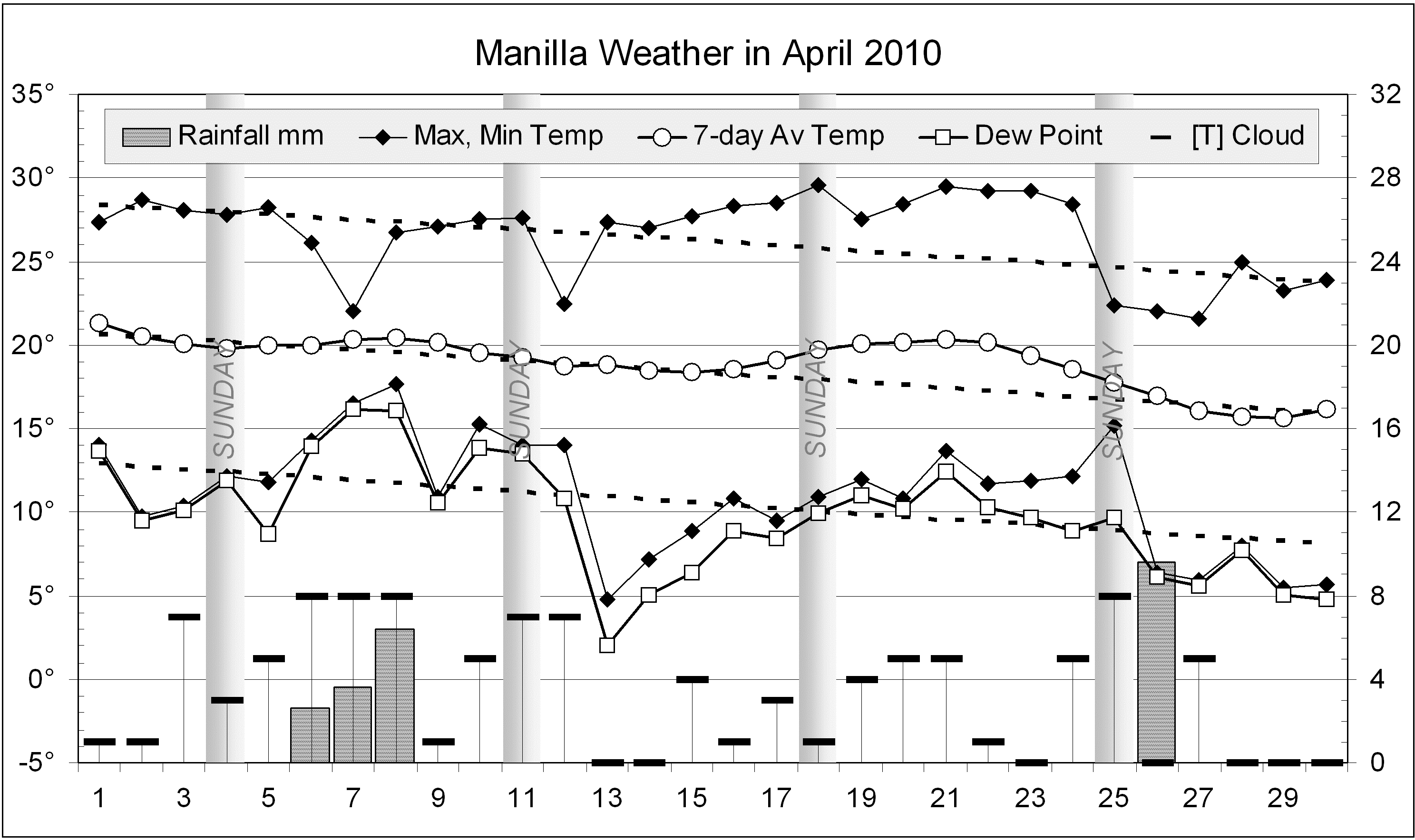
Although the month began with normal temperatures and some rain, the third week became warm, and gardens dried out. On the 26th 9.6 mm of rain was recorded, bringing the monthly total to 22.2 mm in four rain days (the usual number). The month ended sunny with nights that were cooler, but far from frosty.

 Comparing April monthsClimate April 2010

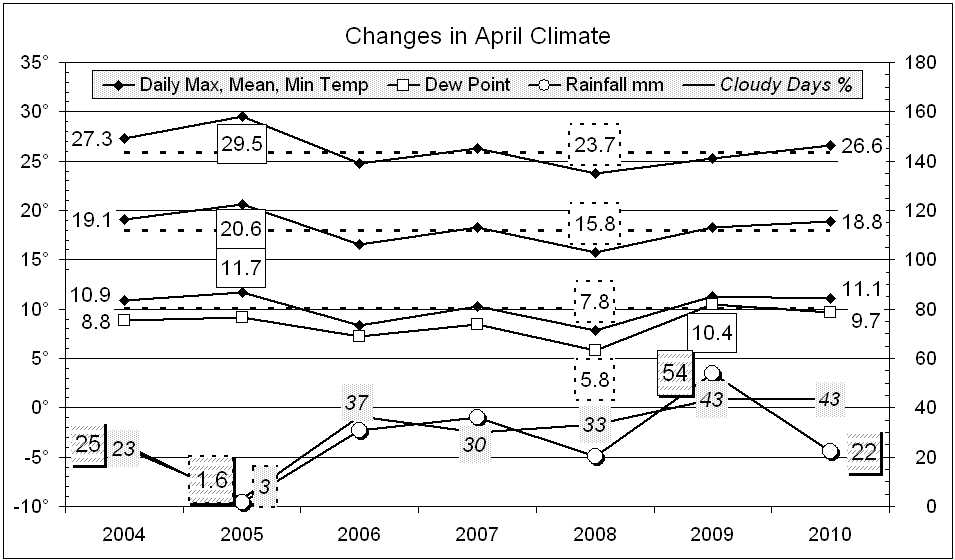
This April was rather warm and dry, but not nearly as warm and dry as April 2005. That month was three degrees warmer than normal and had only 1.6 mm of rain! It had just one cloudy morning, compared to thirteen this month.

The rainfall of 22.2 mm is in the 36th percentile for April, below the long-term average of 38 mm. Rainfall totals for groups of months have fallen, but there are still no serious shortages.. The 12-month total (448 mm) is now down to the 11th percentile: just above the “serious” level.


Data. Rainfall data is from Manilla Post Office, courtesy of Phil Pinch. Temperature and other data are from 3 Monash Street, Manilla.