November 2016 was arid

While there was some rain, measures of moisture this month were at or near their lowest November values for this century.

Photo of a yellow dragon lizard

Eastern Bearded Dragon

There were five rain days early in the month, the highest reading being 15.0 mm on the 10th. Some early days were overcast, but skies were sunny after the 15th.
Temperatures rose and fell, but few days or nights were especially hot or cold. The early morning of the 6th went as low as 5.4° , which is 7.8° below normal. Curiously, the month had a record number of cool nights: 12 nights were cooler than 10°, when there are usually only about 5.
Weekly average temperatures, which had been very low in October, were nearer to normal through this month.
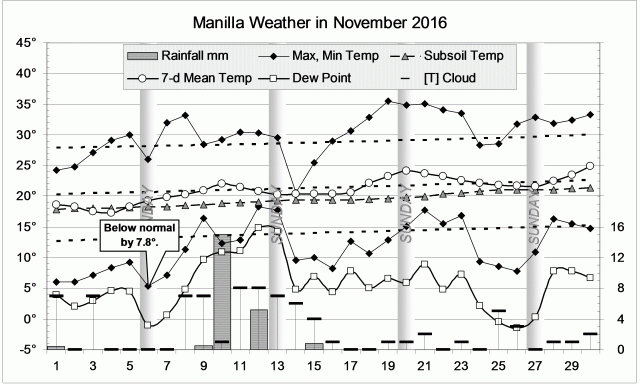
Weather log November 2016

Comparing November months

Both the mean maximum temperature (30.2°) and the mean average temperature (20.9°) were near normal, but the mean minimum temperature (11.7°) was very low. On this record, only 1999 had colder November nights (at 11.6°!). This extreme value brought a very wide mean daily temperature range of 18.5°, also a record.
The subsoil was at its coolest recorded November value: 19.5°.
A very wide daily temperature range is one of the measures of moisture showing this month to be arid. The early morning dew point of 5.6° was the lowest November value on this record, and the cloudiness (30%) was low. The monthly rainfall total of 21.9 mm, while not really low (22nd percentile), was the lowest November total in the 26 years since 1990, which had only 15 mm.

Climate for November 2016


Data. Rainfall figures are usually from the automatic rain gauge at Manilla, published on the internet by the Bureau of Meteorology as Station 55031. However, the gauge ceased recording on the 8th of October, and later readings are from my non-standard gauge. All other data, including subsoil at 750 mm, are from 3 Monash Street, Manilla.

October 2016 was cold

Photo of the bark of a Eucalyptus tree

White Box at Sunset

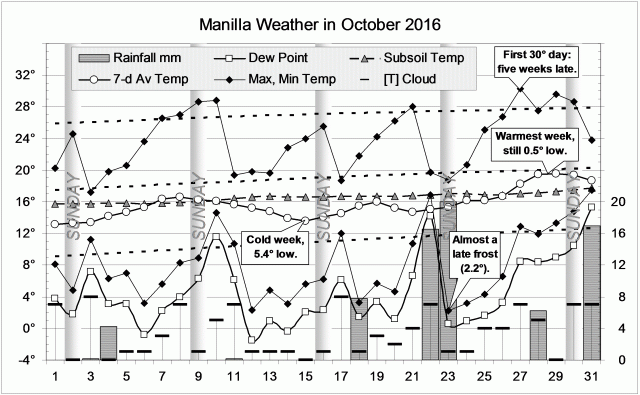
In this month, each of five sunny spells of normal temperature was followed by a cold, cloudy, humid break, generally with rain. Only a few days were warmer than normal, including the 27th. That was the first 30° day of the season, five weeks late.
The average weekly temperature was persistently three or four degrees cooler than normal. One cold week about the 15th was more than five degrees below normal, and the warmest week, about the 29th, was still half a degree low.
Most nights were very cool. I recorded no frosts, but others may have done. My most recent frost was early in September.
There were six rain days, not counting two readings of 0.2 mm. The highest reading was 20.0 mm on the 23rd.

Weather log for October 2016

Comparing October months

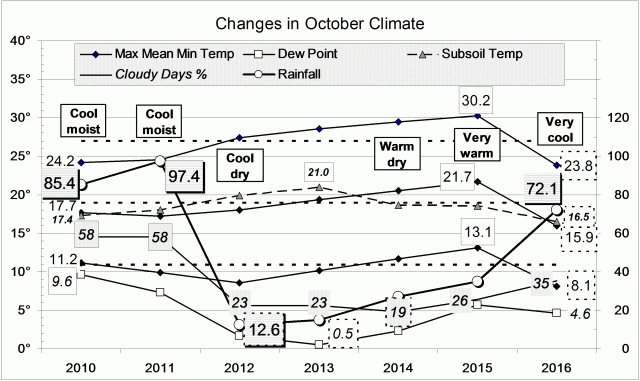
This was the coldest October on this record from 1999. That includes not only the maximum, mean, and minimum air temperatures read in the Gill Screen, but also the subsoil temperature at 750 mm. Noting that October 2015 had the highest October temperatures, the sudden collapse is astonishing. Last October was three degrees warmer than normal; this month was almost three degrees colder than normal. Put another way, the seasonal warming is a month late this year and was a month early last year.
Unlike September, there was not an unusual amount of moisture in October. Humidity, cloudiness and daily temperature range were near normal.
The monthly rainfall total of 72.1 mm was above the average of 58 mm, in the 70th percentile.
I have discussed the current drought status (that is, drought-free) in another post.

Climate for October 2016


Data. Rainfall figures are usually from the automatic rain gauge at Manilla, published on the internet by the Bureau of Meteorology as Station 55031. However, the gauge ceased recording on the 8th of October, and later readings are from my non-standard gauge. All other data, including subsoil at 750 mm, are from 3 Monash Street, Manilla.
September 2016 had near-record rain

Blooms of Acacia paradoxa

Kangaroo Thorn

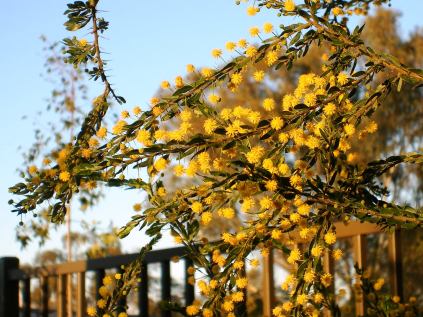
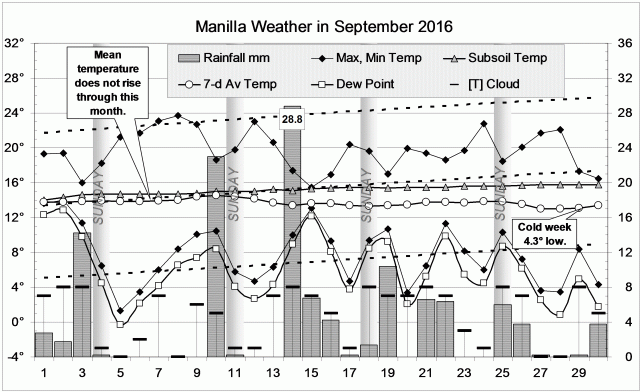
There were fourteen rainy days in a month that ended no warmer than it began. The month of September normally warms up by nearly four degrees. This time it remained near 14° all month. Some plants encouraged by the plentiful moisture were discouraged by the cold.
The highest daily rainfall reading, 28.8 mm on the 14th, hardly compares with one of 71.1 mm in 2005, or even one of 40.0 mm in 2011.
No days were warm. For the first time in this 18-year record, no September day reached 25°. More days than ever (18) were below 20° but not one was as low as 15°. Temperatures at night were near normal. A frost on the 5th was the only one. It may have been the last of the year, about a fortnight earlier than usual.
Only four mornings this month had no cloud, while seven were totally overcast.

Weather log for September 2016

Comparing September months

For monthly average temperatures, the daily maximum of 19.7° stands out as a record low, 4.1° below normal. Three indicators for moisture reached their extreme September values for the new century: rainfall, percentage of cloudy mornings (63%), and (narrowest) daily temperature range (12.0°). Dew point (6.0°) was just above normal, but very much higher than in September months since 2010.
The monthly rainfall total of 122.4 mm (amended) was one of the four highest ever September readings. The others were: 1917: 124 mm; 1949: 126 mm; 1998: 166 mm.
There are not now any noteworthy shortages in rainfall totals for any number of months, up to 360 months (thirty years).

Climate for September 2016


Data. Rainfall figures for this month are from the automatic rain gauge at Manilla, published on the internet by the Bureau of Meteorology as Station 55031. All other data, including subsoil at 750 mm, are from 3 Monash Street, Manilla.
Wet August 2016 had two cold days

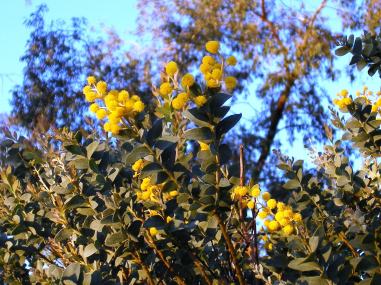
Photo of knife-leaf wattle blooms

Knife-leaf Wattle

Six days with at least eight millimetres of rain made for a very wet August.
On the average, the temperature was normal until the fourth week, which was cool. However, there were two remarkably cold days. The 3rd, at 10.6°, was the second coldest August day and the 22nd, at 11.6°, the fifth coldest. Most nights were cool, around 1°, but several were much warmer, generally with the rain. Most days were sunny, and eighteen of the mornings were frosty, about three more than usual.

Weather log for August 2016

Comparing August months

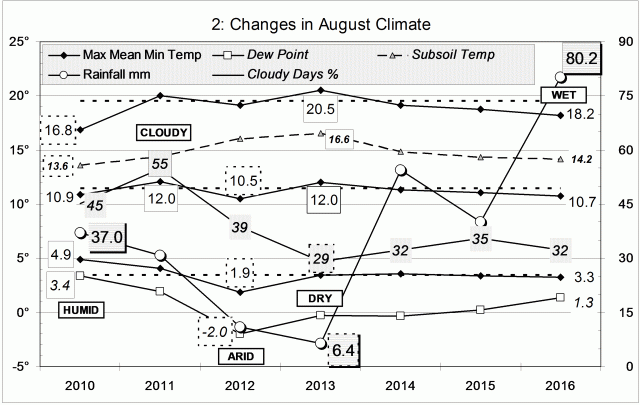
On average, the days were cold: as cold as in August 2001, but not as cold as in 2008 or 2010. The average night-time temperature, however, was normal. The dew point, while not high, was higher than in the previous four August months.
The monthly rainfall total of 80.2 mm was twice the average (40 mm), and in the 89th percentile. No rainfall total for any number of months is now below the 19th percentile. That is the 42-month total of 1949 mm, which is a mere 313 mm lower than the median 42-month value. Both Greenhatch Creek and Rushes Creek have flowed in recent weeks.

Climate for August 2016


Data. Rainfall figures for this month are from the automatic rain gauge at Manilla, published on the internet by the Bureau of Meteorology as Station 55031. All other data, including subsoil at 750 mm, are from 3 Monash Street, Manilla.
July 2016 had a record warm night

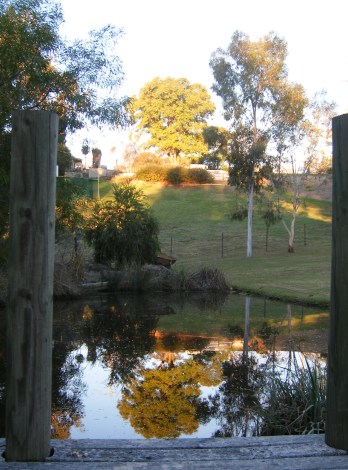
Photo of a pond at sunset

A neighbour’s dam

The second cloudiest month of this century brought the warmest July night.
There were two very warm spells in the trace of weekly average temperature. Both were due mainly to warm nights. The second spell, coming in the third week, reached nearly six degrees above normal. On the morning of Saturday the 23rd, the minimum reading on the screen thermometer, 14.4°, was the highest July minimum in the record from 1999.
Up to the 25th, the weather was changeable, with some days overcast and rainy, and others fine and sunny. A very warm sunny day on the 17th, following a frost, had the unusually wide daily temperature range of 21.9°. From the 25th, the weather settled to what is normal for July. In the whole month, there were sixteen frosts, which is normal.
The highest rainfall reading was only 11.4 mm. Ten days had rainfall recorded, but three of these had 0.2 mm, on days when rain was not seen.

Weather log for July 2016

Comparing July months

The mean daily maximum temperature (16.9°) was normal. The mean daily minimum temperature (4.0°) was two degrees above normal, making the average temperature (10.5°) one degree above normal. Similarly, the subsoil temperature (14.7°) was one degree above normal.
The daily temperature range, normally 15.0°, was 12.9°, not quite as narrow as in 2010 (12.3°). The early morning dew point was normal. At 2.2°, it was so close the the daily minimum temperature (4.0°) that fogs were to be expected.
The month was extraordinarily cloudy. Cloud cover is assessed by the number of octas (eighths) of the sky seen to be covered by cloud at 9 am. I compare cloudiness of months by the percentage of “cloudy mornings”: those when I see more than four octas of cloud. This month, with 21 cloudy mornings, had 68%. July normally has only 35%. The only month in this century with a higher value was June 2013, with 73%.
The monthly rainfall total of 32.4 mm is below the average (41 mm), in the 47th percentile. The greatest rainfall “shortage” is now in the 48-month total (2221 mm) which is in the 14th percentile. Both Greenhatch Creek and Rushes Creek are just flowing.

Climate for July 2016.


Data. Rainfall figures for this month are from the automatic rain gauge at Manilla, published on the internet by the Bureau of Meteorology as Station 55031. All other data, including subsoil at 750 mm, are from 3 Monash Street, Manilla.