3-year trends to May 2014

Parametric plots of smoothed climate variables at Manilla
“Drought status not clear”
Trends to May 2014

May data (orange)

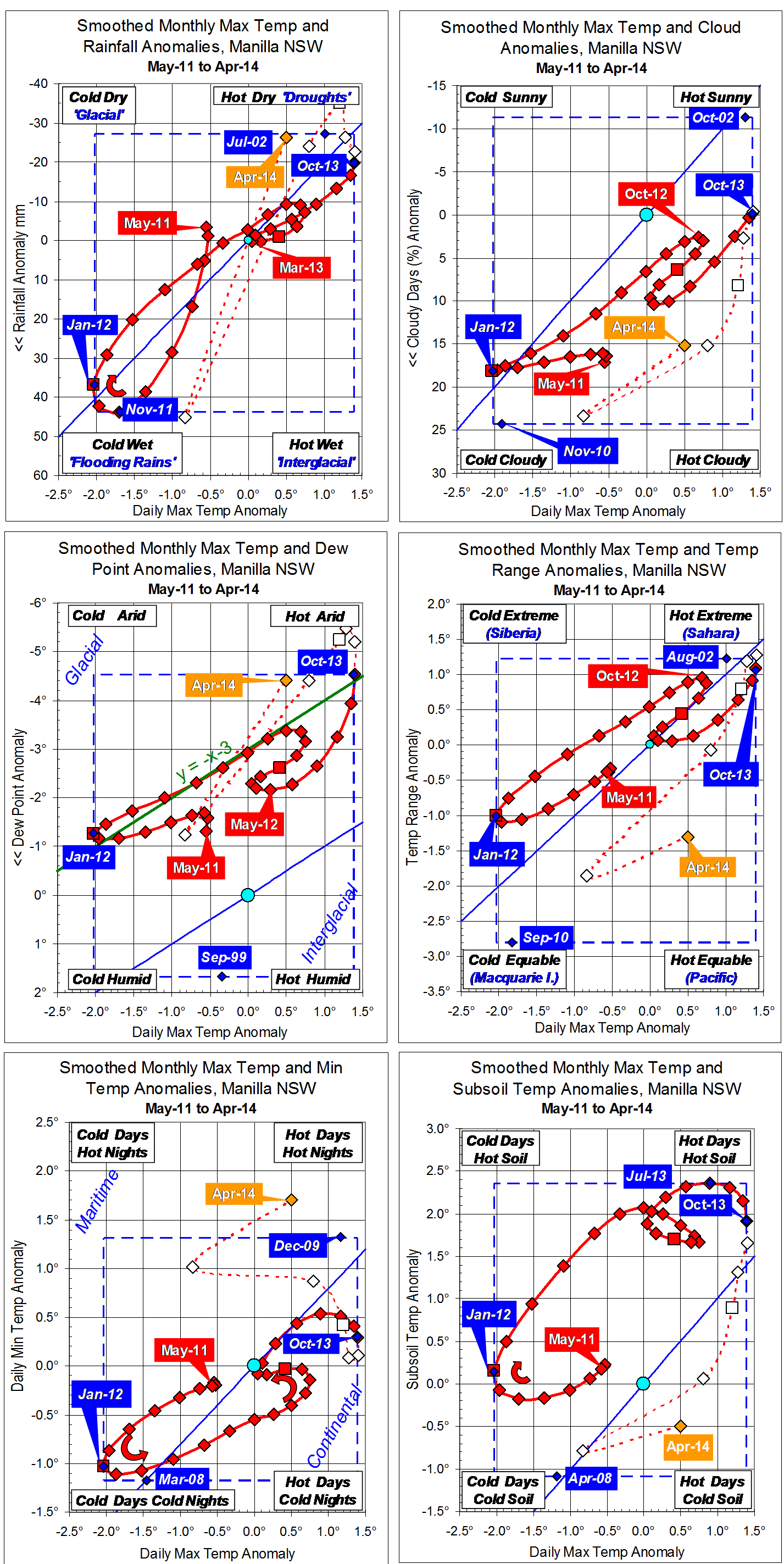
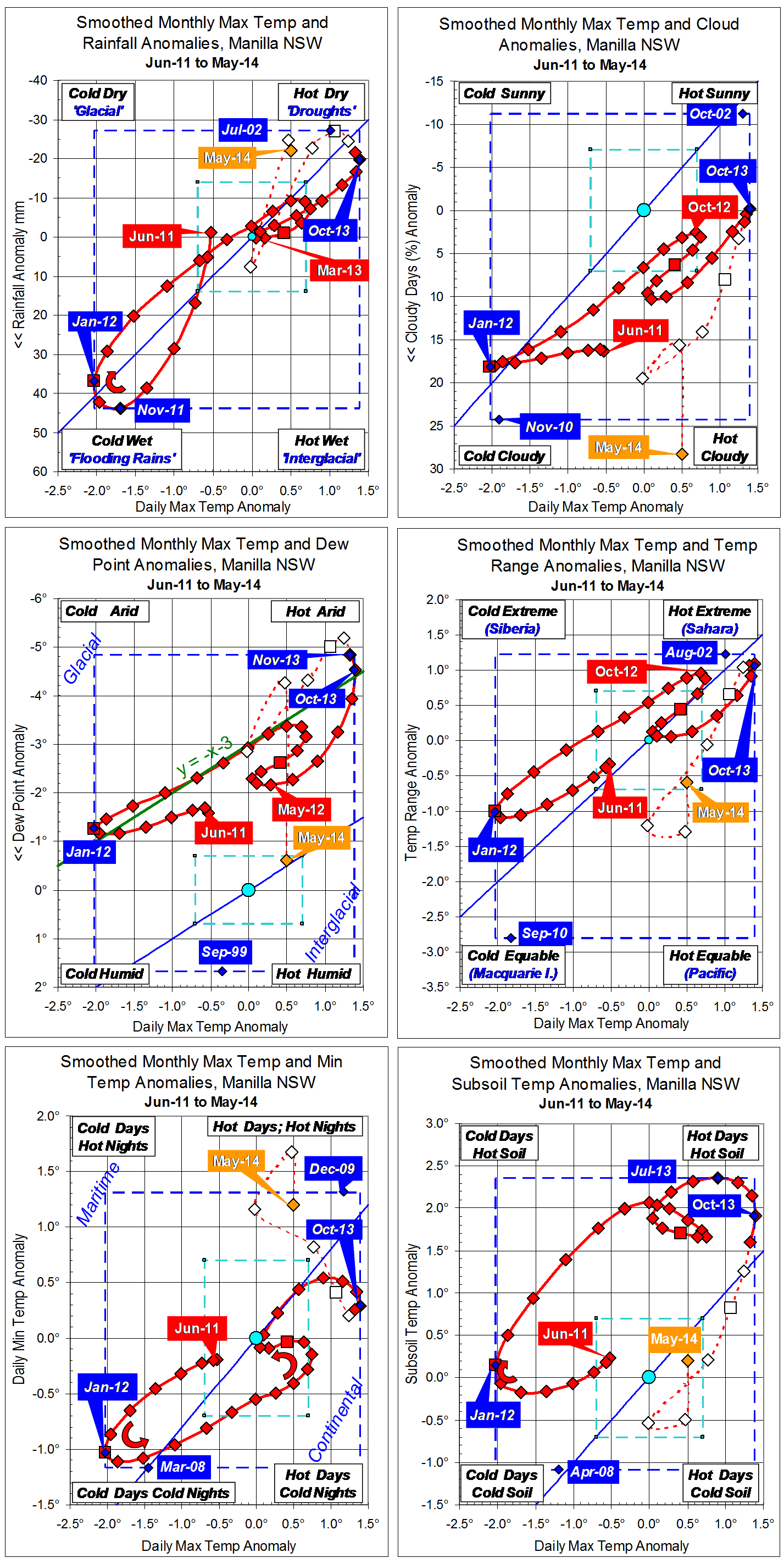
Raw data for May 2014 give mixed signals on whether the drought is fading. Daily maximum temperature is now on the high limit of the normal range and rainfall again well into the “drought” range. However, other variables do not agree: skies were very cloudy, and dew point and daily temperature range were back to normal.

Fully smoothed data (red)

The spring months (SON) of 2013 are now fully smoothed, with some variables showing a drought peak in that season.
Smoothed daily maximum temperature anomaly peaked in October, reaching a record high of +1.39°, beating +1.34° in November 2009 and +1.30° in September-October 2002. Through spring the smoothed rainfall anomaly decreased; it may have reached a minimum in January. Dew point also decreased, the smoothed anomaly reaching a new record low of -4.85° in November, and likely to reach a minimum in December.
Cloudiness reached a minimum in October, and daily minimum temperature and subsoil temperature anomalies had reached maximum values earlier, in July.

Note:
Fully smoothed data – Gaussian smoothing with half-width 6 months – are plotted in red, partly smoothed data uncoloured, and raw data for the last data point in orange. January data points are marked by squares.
Blue diamonds and the dashed blue rectangle show the extreme values in the fully smoothed data record since September 1999.

Normal values are based on averages for the decade from March 1999. They appear on these graphs as a turquoise (turquoise) circle at the origin (0,0). A range of anomalies called “normal” is shown by a dashed rectangle in aqua (aqua). For values in degrees, the assigned normal range is +/-0.7°; for cloudiness, +/-7%; for monthly rainfall, +/-14 mm.

 

May 2014 cloudy with warm nights

The daily weather log

Yellow berries  on a White Cedar in May.

White Cedar in May

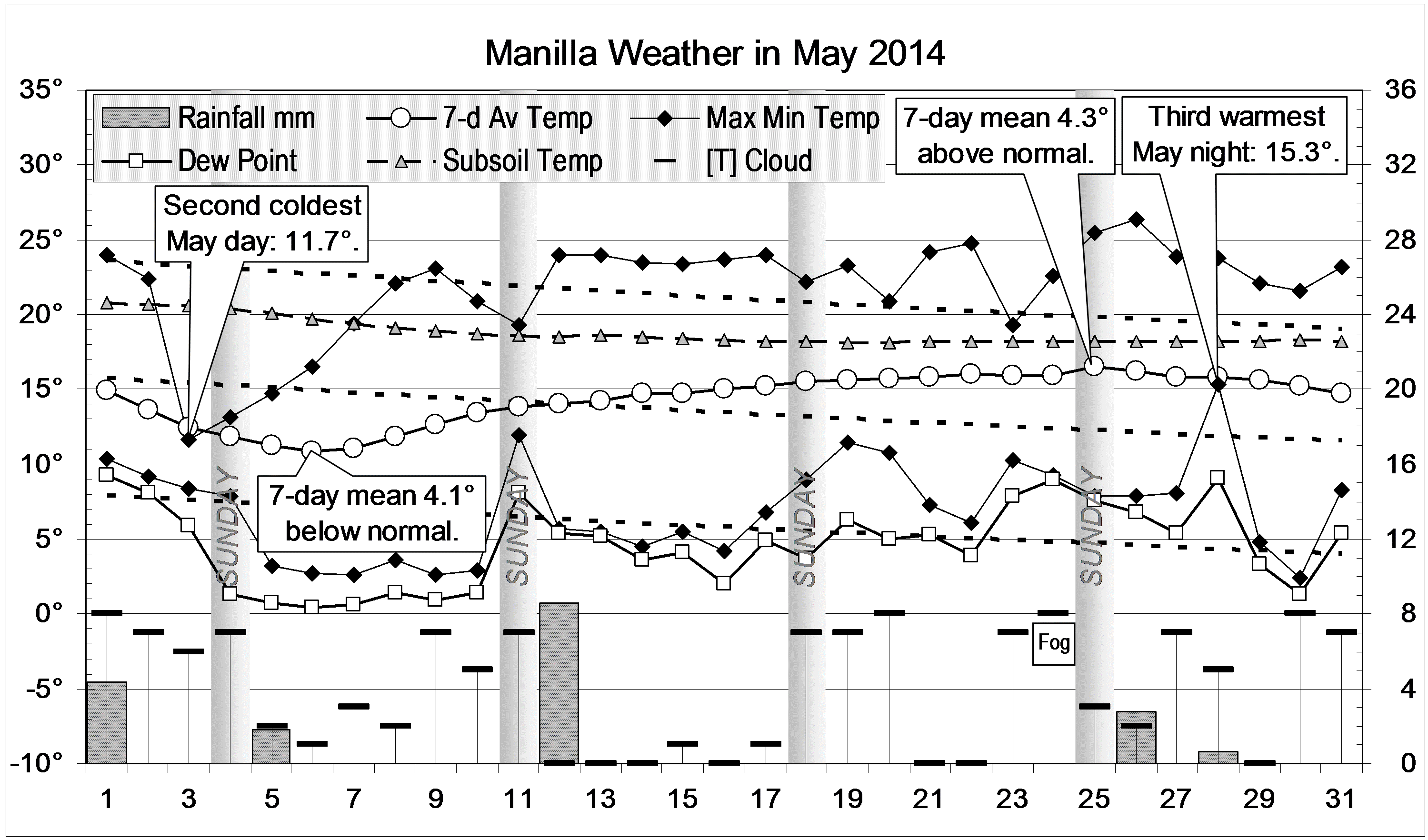
May began cold: the 3rd was the 2nd coldest May day of this century, at 11.7°. By the 6th, the 7-day mean temperature was more than four degrees below normal. Within a week, the weather became warm and, by the 25th, the 7-day mean was more than four degrees above normal. The night of the 26th (15.3°) was the 3rd warmest May night of the century. For the first time, May had no frosts at all, and more than half the mornings were cloudy (>4/8 cloud). There were five rain days, two more than usual.

Weather log May 2014

Comparing May months

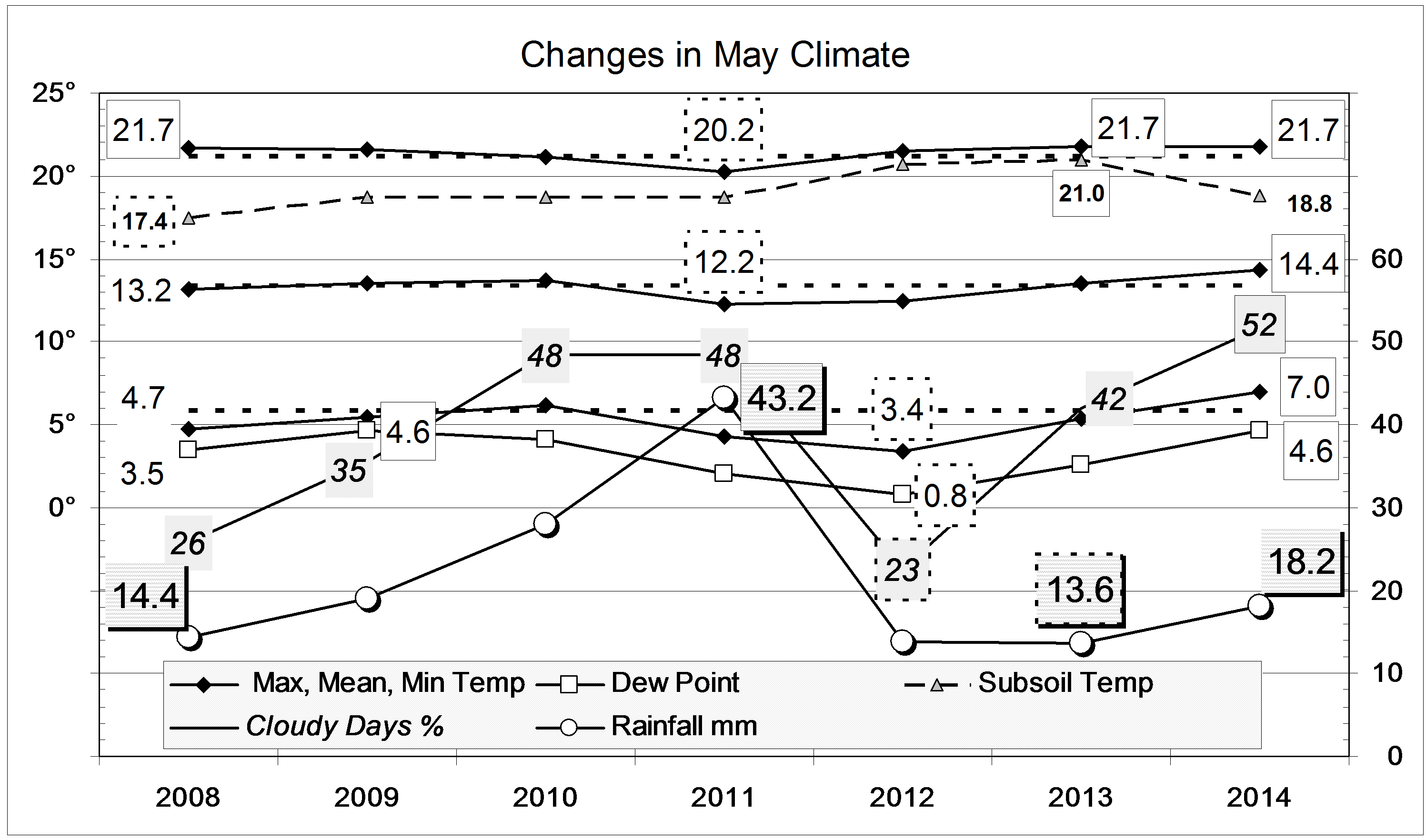
Air temperatures and the dew point were not far from normal. However, as the second graph shows, they are higher than in May months of recent years, such as 2012. Skies were extraordinarily cloudy, but the subsoil temperature was no longer high.
The total rainfall of 18.2 mm is in the 33rd percentile for May. While this is well below the long-term average of 41 mm, it is on the average for the last 15 years. Taking rainfall totals for more than one month, only the two-month total (31 mm) is a serious shortage (9th percentile). The fifteen-month total (585 mm) is in the 12th percentile. Other totals have higher percentile values, and most totals for 36 months or more are above normal. Pools still survive in Greenhatch Creek.

Climate May 2014


Data. Rainfall data is from Manilla Post Office, courtesy of Phil Pinch. Temperatures, including subsoil at 750 mm, and other data are from 3 Monash Street, Manilla.

3-year trends to April 2014

Parametric plots of smoothed climate variables at Manilla
“Are we coming out of drought?”

Trends to April 2014

After a very cool moist March, raw values of climate anomalies for April 2014 are nearly all back near the (slightly smoothed) values for February. However, neither month was as hot or dry as December or January.
Fully-smoothed values for October 2013 show the deepening drought. That month set a new 21st century record for smoothed daily maximum temperature anomaly of +1.39°, beating the value of +1.35° set in November 2009. It also set a new low record for dew point anomaly of -4.53°, far more arid than the record set the previous month: -3.53°.
These curves show clearly that the climate (at this site) consistently became warmer and drier through the two years from spring 2011 to spring 2013, except for a brief time of reversal in the six warm-season months from October 2012 to March 2013.

Note:
Fully smoothed data – Gaussian smoothing with half-width 6 months – are plotted in red, partly smoothed data uncoloured, and raw data for the last data point in orange. January data points are marked by squares.
Blue diamonds and the dashed blue rectangle show the extreme values in the fully smoothed data record since September 1999.

Warm humid nights in April 2014

The daily weather log

April-blooming Deane's wattle

April-blooming Deane’s wattle

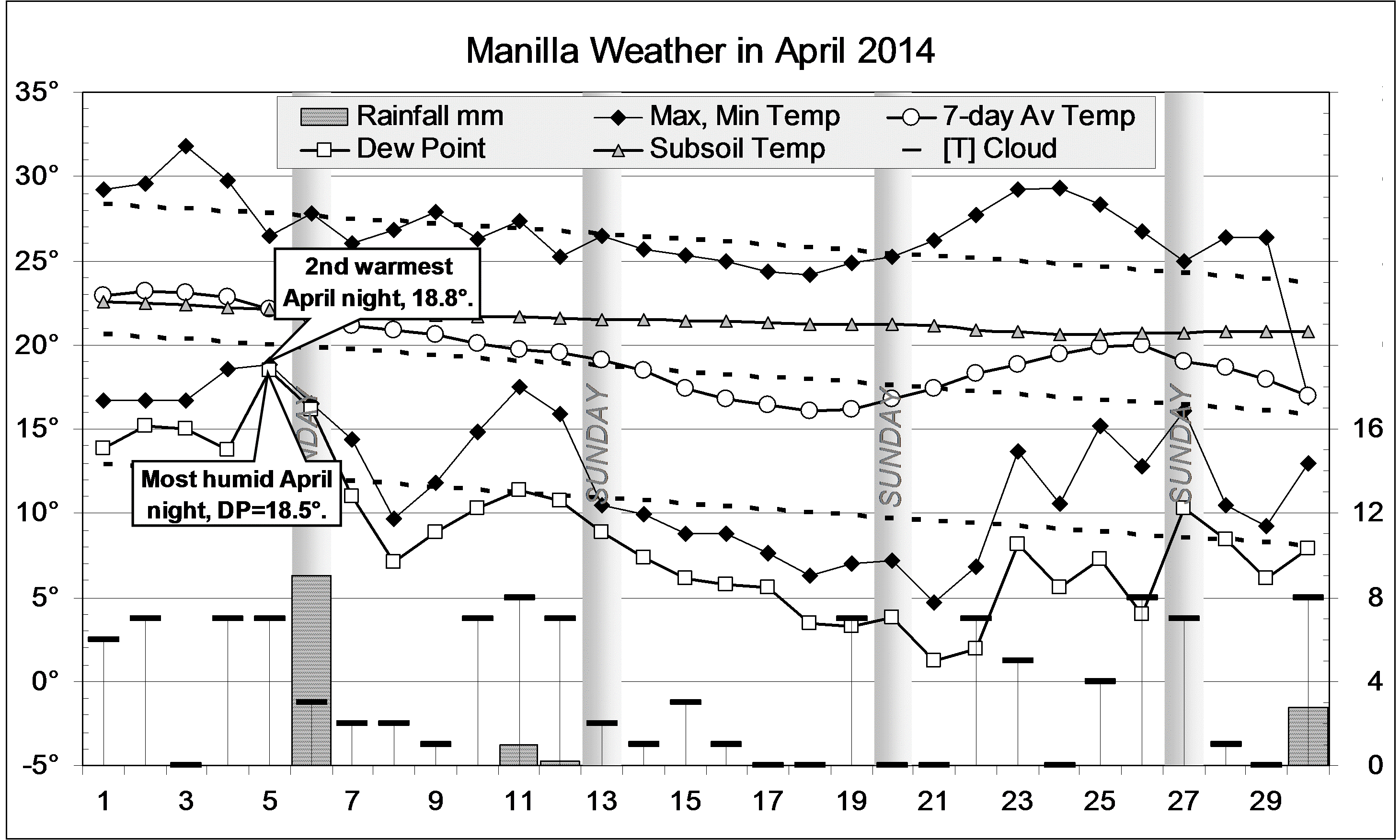
After a cool wet week at the end of March, April began warm, especially at night. The night of the 5th, at 18.8°, was the second warmest April night. Rain fell overnight, and the dew point, 18.5°, was an April record. The third week was sunny but cool, and the fourth week nearly four degrees warmer than usual. The last day of the month was suddenly cold (16.9°) and overcast, with drizzle.Weather log April 2014

Comparing April months

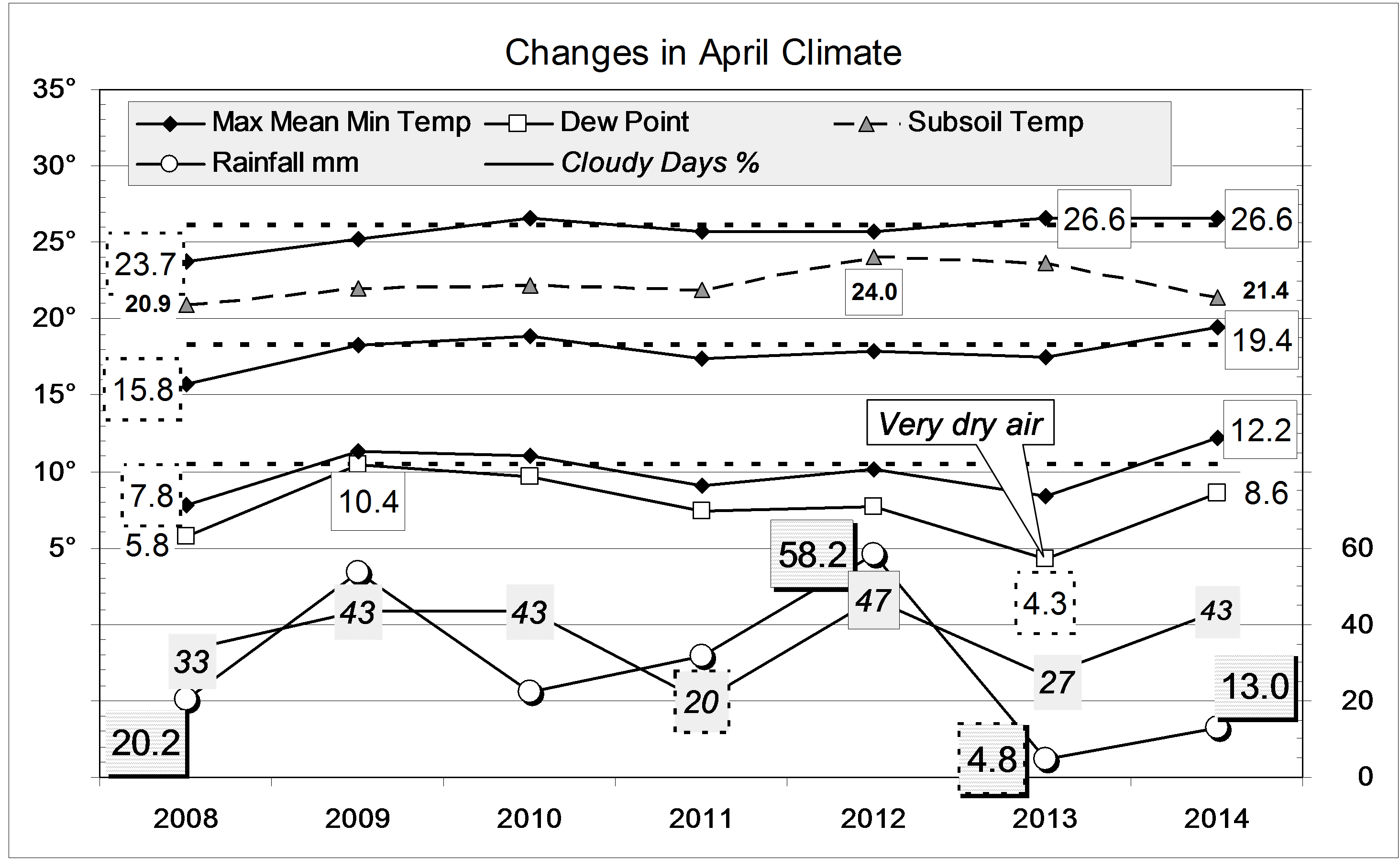
The mean minimum temperature was a record 1.7° above normal for the month, warmer than in April 2005, and the mean maximum temperature was also slightly up. The subsoil, after more than two years above normal (by as much as 2.4° in winter 2013), finally cooled down in March and April.
Moisture was near normal, with low rainfall offset by cloudy skies.
Although the total rainfall of 13.0 mm was below the April average (40 mm), it was not unusually low but in the 28th percentile. Taking rainfall totals for more than one month, the greatest shortages are not serious (i.e. not below the 10th percentile). The nine month total (336 mm) is in the 14th percentile. Other totals have higher percentile values, and most totals for 30 months or more are above normal. Pools still survive in Greenhatch Creek.Climate April 2014


Data. Rainfall data is from Manilla Post Office, courtesy of Phil Pinch. Temperatures, including subsoil at 750 mm, and other data are from 3 Monash Street, Manilla.

Manilla NSW in Global Warming Context

Logs of smoothed world and local temperatures.

[I posted an Up-dated version of this graph in July 2014]

Up-to -date data on global temperature change can easily be down-loaded from Ole Humlum’s website “climate4you“.
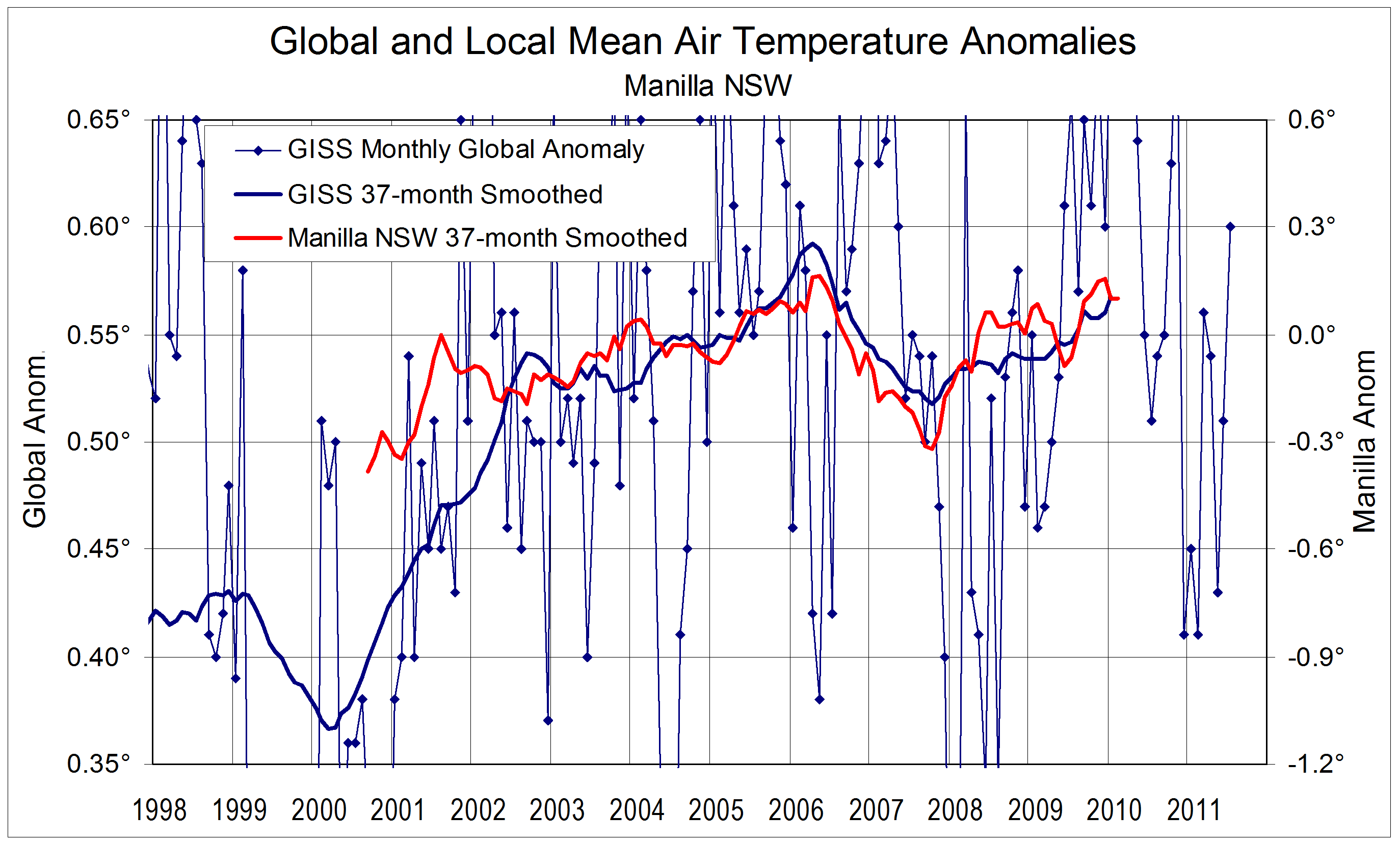
Humlum favours sampling windows 37 months wide. For my own data at Manilla, NSW, I have always used windows about six months wide, which show up Australia’s vigorous Quasi-biennial oscillations of climate. I tried Humlum’s 37-month window on my data, with quite startling results, as shown in the graph above.

Humlum re-presents three records since 1979 of global monthly air surface temperature anomalies:
* HadCRUT3: by the (UK Met Office) Hadley Centre for Climate Prediction and Research, and the University of East Anglia’s Climatic Research Unit (CRU), UK.
* NCDC: National Climatic Data Centre, NOAA, USA.
* GISS: Goddard Institute for Space Studies, Columbia University, New York, NASA, USA.
When smoothed by a 37-month running average, these data sets give very similar results. I use the GISS data because it matches my data best.

The match is very good, particularly in the sharp fall from the maximum in April 2006 to the minimum in September 2007. Where my data begins in September 2000, both curves rise steeply from low values, but mine peaks in August 2001, more than a year before a corresponding peak in global temperature (September 2002). After that, there is a plateau, where the graphs rise together to the highest peak (April 2006).
The other global data sets, HadCRUT and NCDC, have temperature falling or steady along the 2002-2006 plateau.
There are two reasons for plotting my data on a separate axis (on the right). First, the reference periods are different: GISS uses 1951-1980, while I use the decade from April 1999. Second, temperature varies much more at a single station than in the average of many stations around the world. I use a scale six times larger.

It turns out that the cold time in Manilla in late 2007, which I had mentioned in several contexts, was a cold time world-wide.

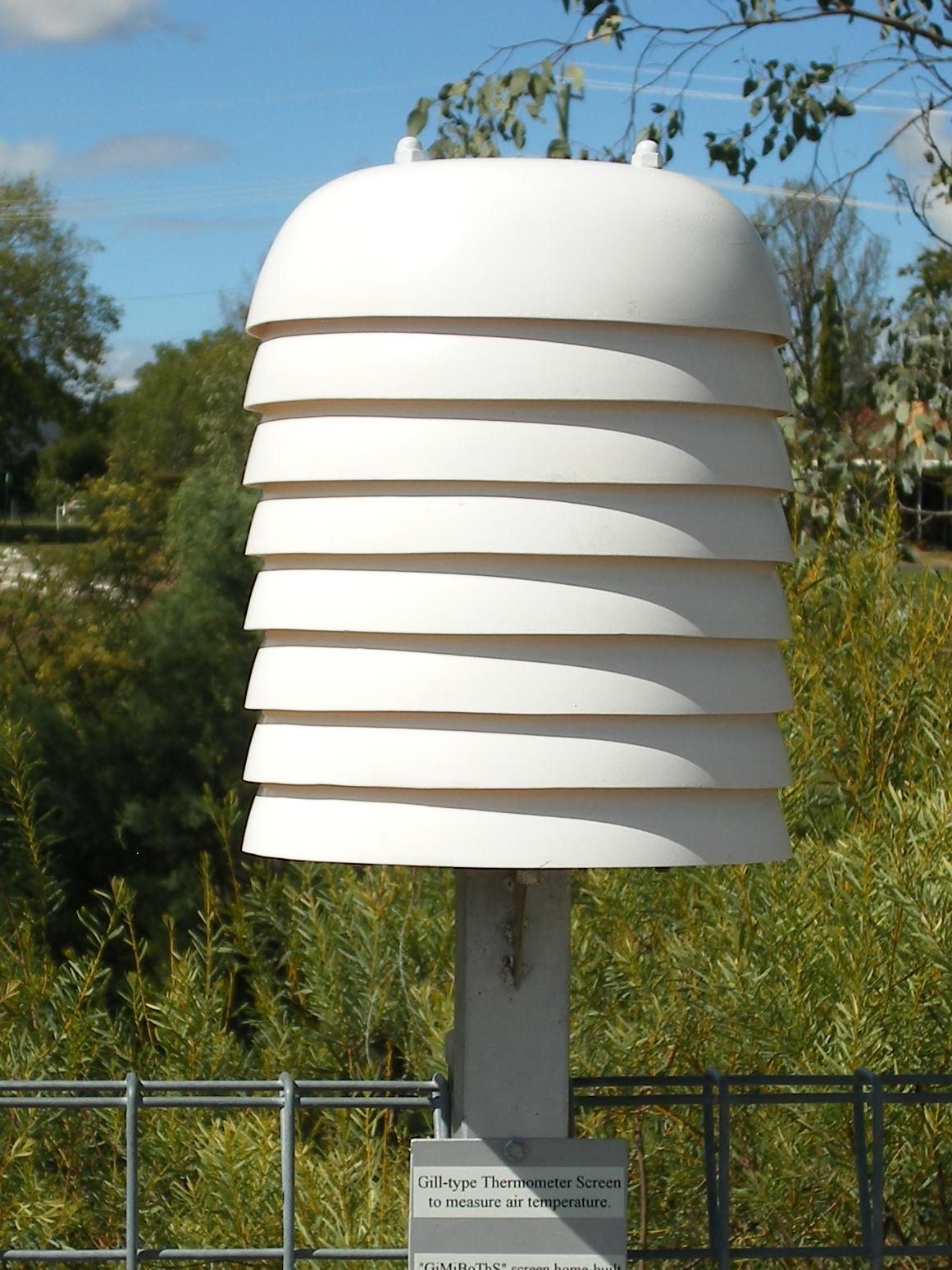
Home-made thermometer screen

Giant Mixing Bowl Thermometer Screen

I am over the moon at getting agreement between data from my home-made thermometer screen and the best that world climatologists can do. It makes me inclined to believe some of the things they say.


This article and graph were posted on 18th August 2011 in a weatherzone forum: General Weather/ Observations of Climate Variation.