One year of House Performance: II

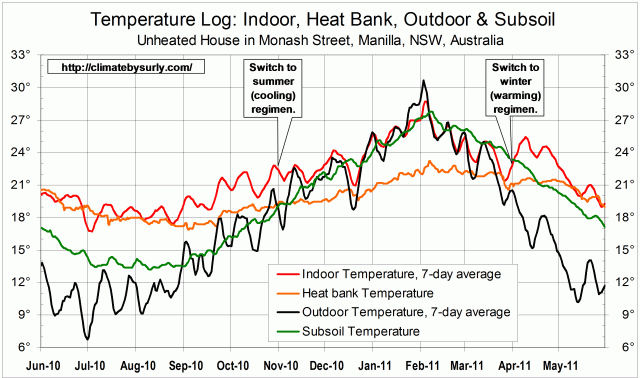
Graphical 1-year record of outdoor and indoor mean temperatures, subsoil and heat bank.

See also “One Year of House Performance: I”.

Like the graph in the post linked above, this is a log of indoor and outdoor 7-day mean temperatures at my low-energy solar-passive house at Manilla, NSW.
In place of the curves for normal air temperature and comfort zone limits, this graph includes two (raw value) logs of subsoil temperature at 750 mm below the surface. The green trace is the subsoil temperature outdoors in the garden. The orange trace is that below the middle of the main floor slab. The mass of material below the slab is surrounded by insulation at the edge so as to form a “heat bank”.

Continue reading

One year of House Performance: I

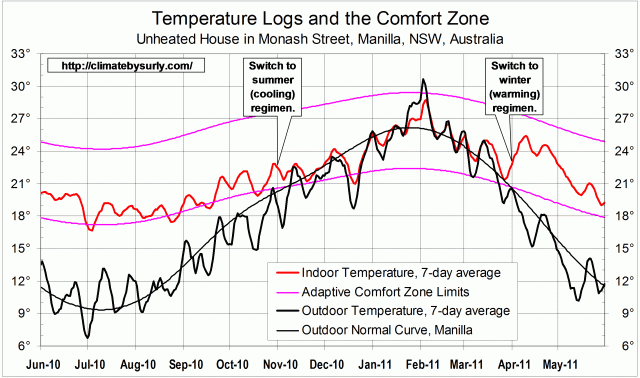
Graphical 1-year record of outdoor and indoor mean temperatures with the comfort zone

This graph is a log of indoor and outdoor 7-day mean temperatures at my low-energy solar-passive house at Manilla, NSW. Indoor mean temperatures are in red, and outdoor mean temperatures in black. Both logs show the same cycles of temperature with a period of two to three weeks. Indoor cycles have a much smaller amplitude.

Continue reading

3-year trends to June 2011.

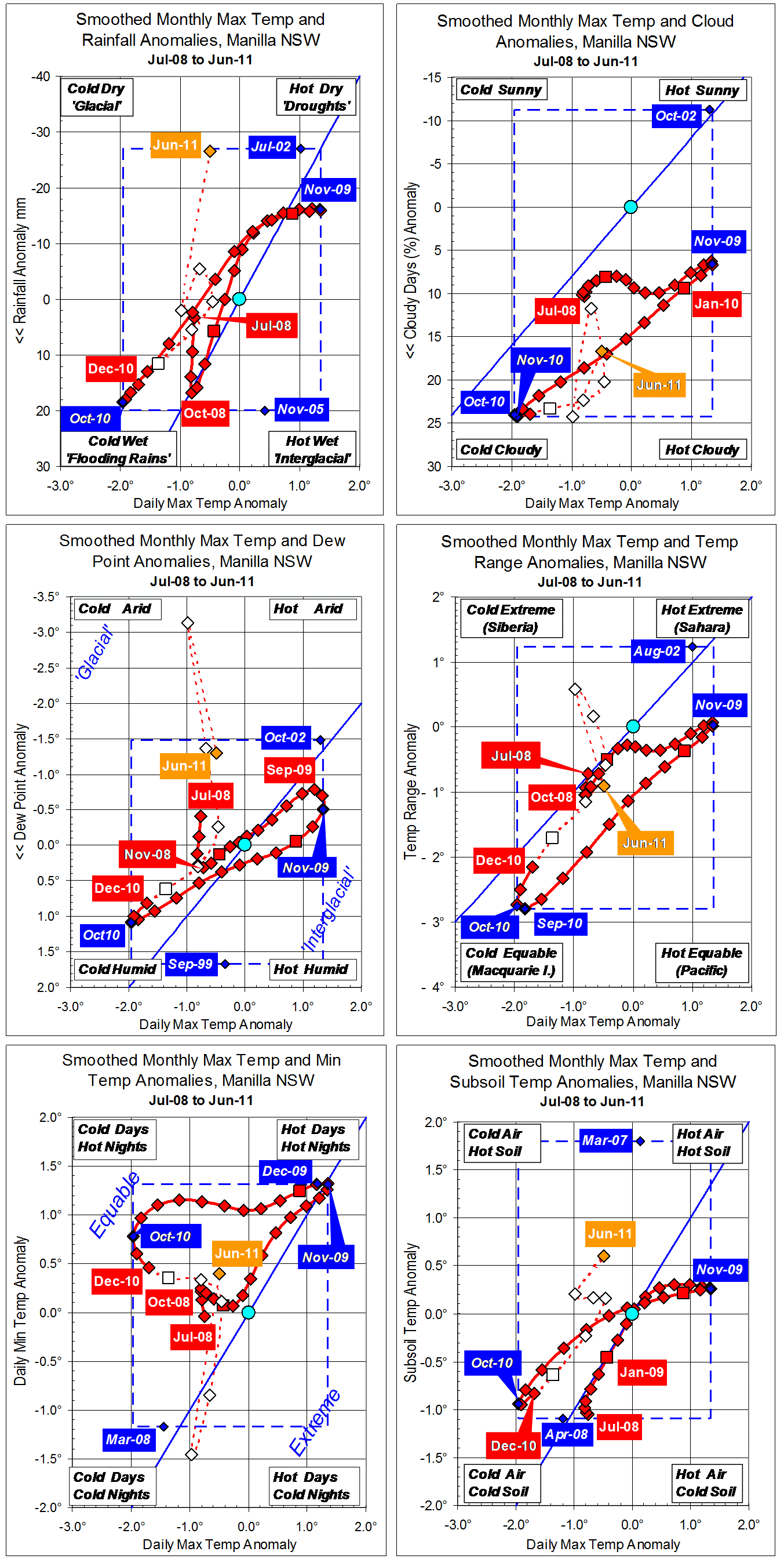
Parametric plots of smoothed climate variables at Manilla

“Dry air but not warm or sunny”Trends to June 2011.

Raw anomaly data for June 2011 (shown in orange) are a little strange.
Daily max temperature, shown on the x-axis of all six graphs, has stalled without quite rising to normal from the extreme cold of last October.
Two variables indicate severe drought: Rainfall was very low, and so was the early morning Dew Point.
Most other variables are near normal, or slightly to the “flooding rains” side of normal.
Percent of cloudy mornings (>4 Octas) remains stable at a very high positive anomaly. For a calendar month that had 35% cloudy mornings in the reference decade beginning in 1999, it now has 55% cloudy mornings.

Note: Fully smoothed data – Gaussian smoothing with half-width 6 months – are plotted in red, partly smoothed data uncoloured, and raw data for the last data point in orange. January data points are marked by squares. Blue diamonds and the dashed blue rectangle show the extreme values in the fully smoothed data record since September 1999.

June 2011 rather cool and dry

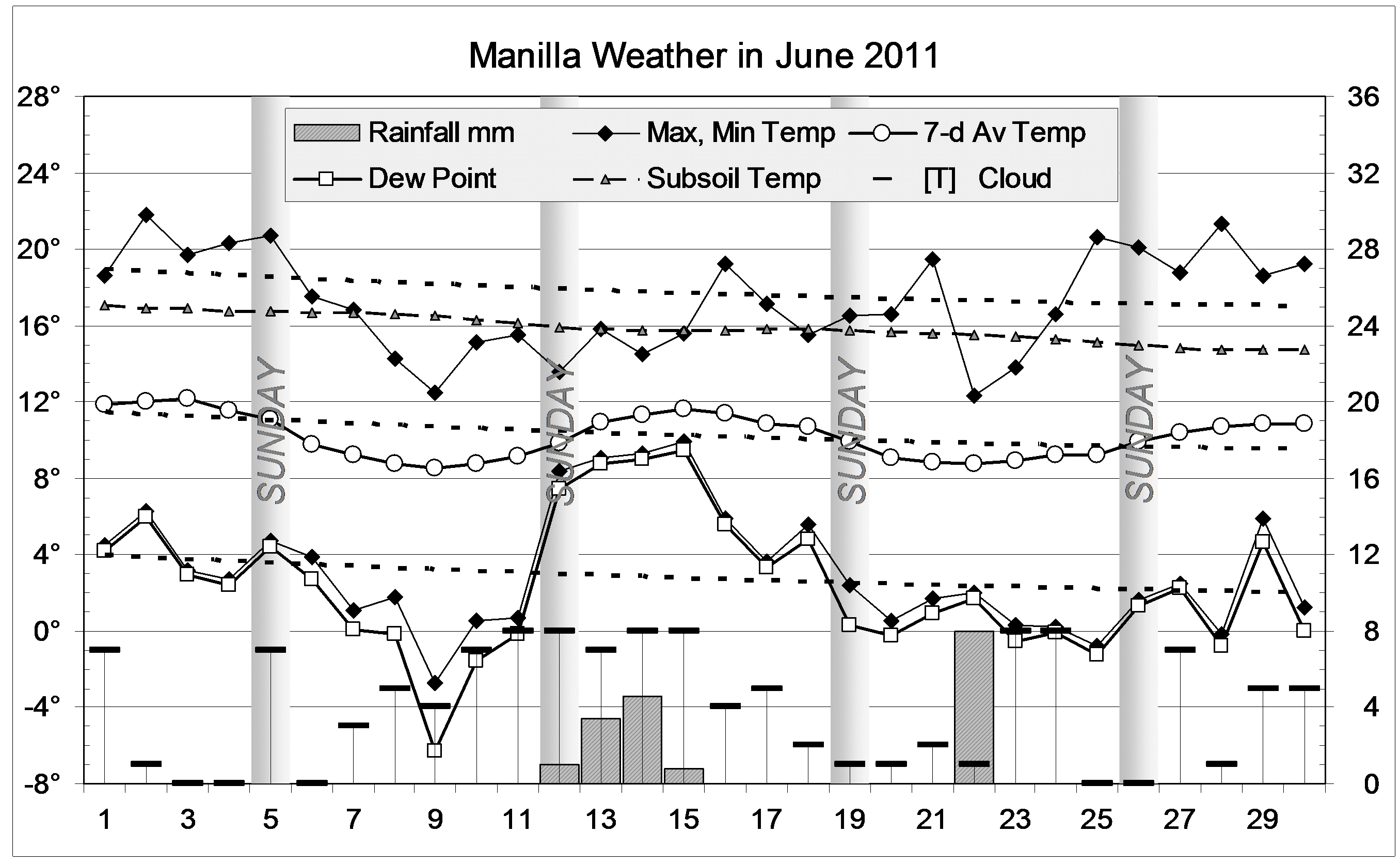
The daily weather logWeather log June 2011.
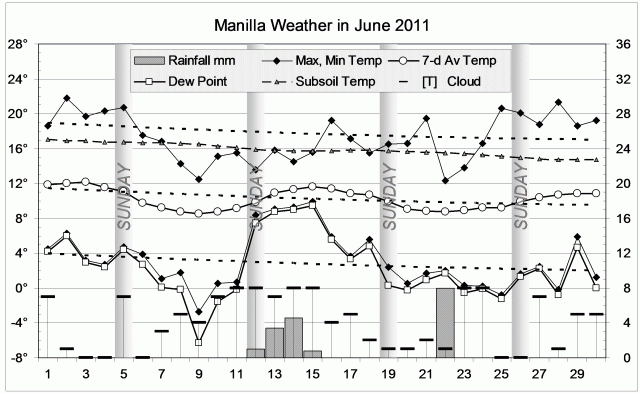
June began and ended with warm sunny days. The second week was cold: the 9th had a maximum of only 12° after a frosty night of -2.7°. Days from the 12th to the 15th were not much warmer, made miserable by overcast and rain, but the nights were warm. The 8/8 cloud recorded on the morning of the 24th was fog, which cleared to a blue sky at 10:45.
The highest rainfall reading was only 8 mm, recorded on the 22nd. Five rain days totalled 17.8 mm.

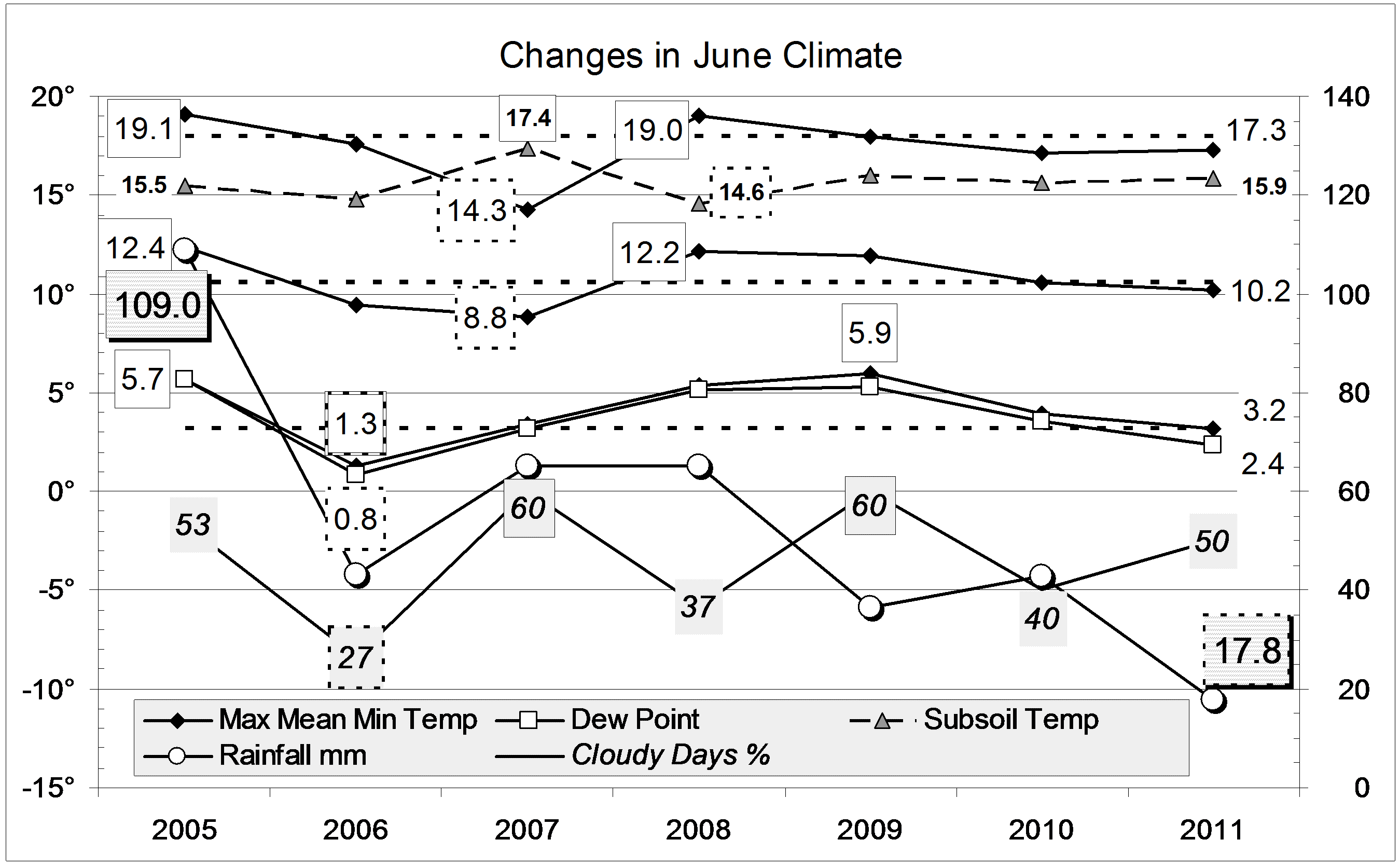
 Comparing June monthsClimate June 2011.
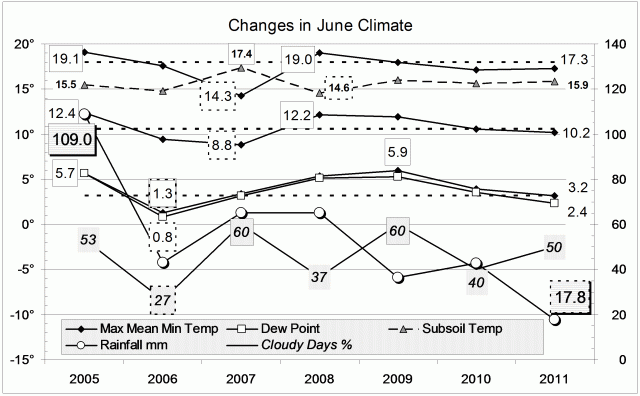
Of the mean temperature readings, only the mean daily maximum was a bit lower than usual. Days were not as cold as in June 2007. This time, there were 14 frosts, which is near the decade average.
The rainfall of 17.8 mm is rather low: on the 20th percentile for June. (The long-term June average is 44.3 mm.) June rainfalls have fallen rather steadily since June 2005, the sixth wettest on record at 109 mm. Nearly all rainfall totals for groups of months (up to 360 months) continue to be near normal. Only those for three months and four months are below the 25th percentile.


Data. Rainfall data is from Manilla Post Office, courtesy of Phil Pinch. Temperatures, including subsoil at 750 mm, and other data are from 3 Monash Street, Manilla.