Warm humid nights in April 2014

The daily weather log

April-blooming Deane's wattle

April-blooming Deane’s wattle

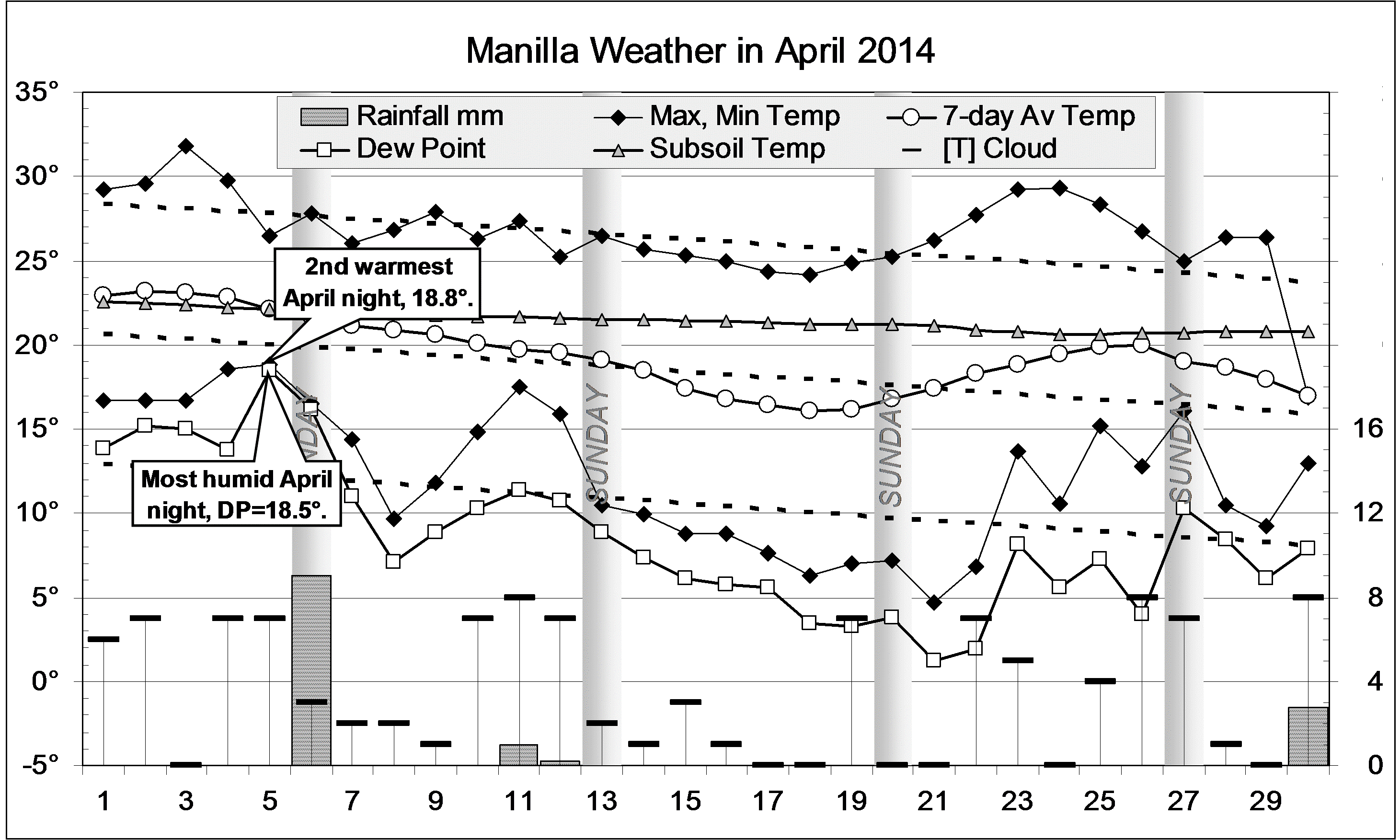
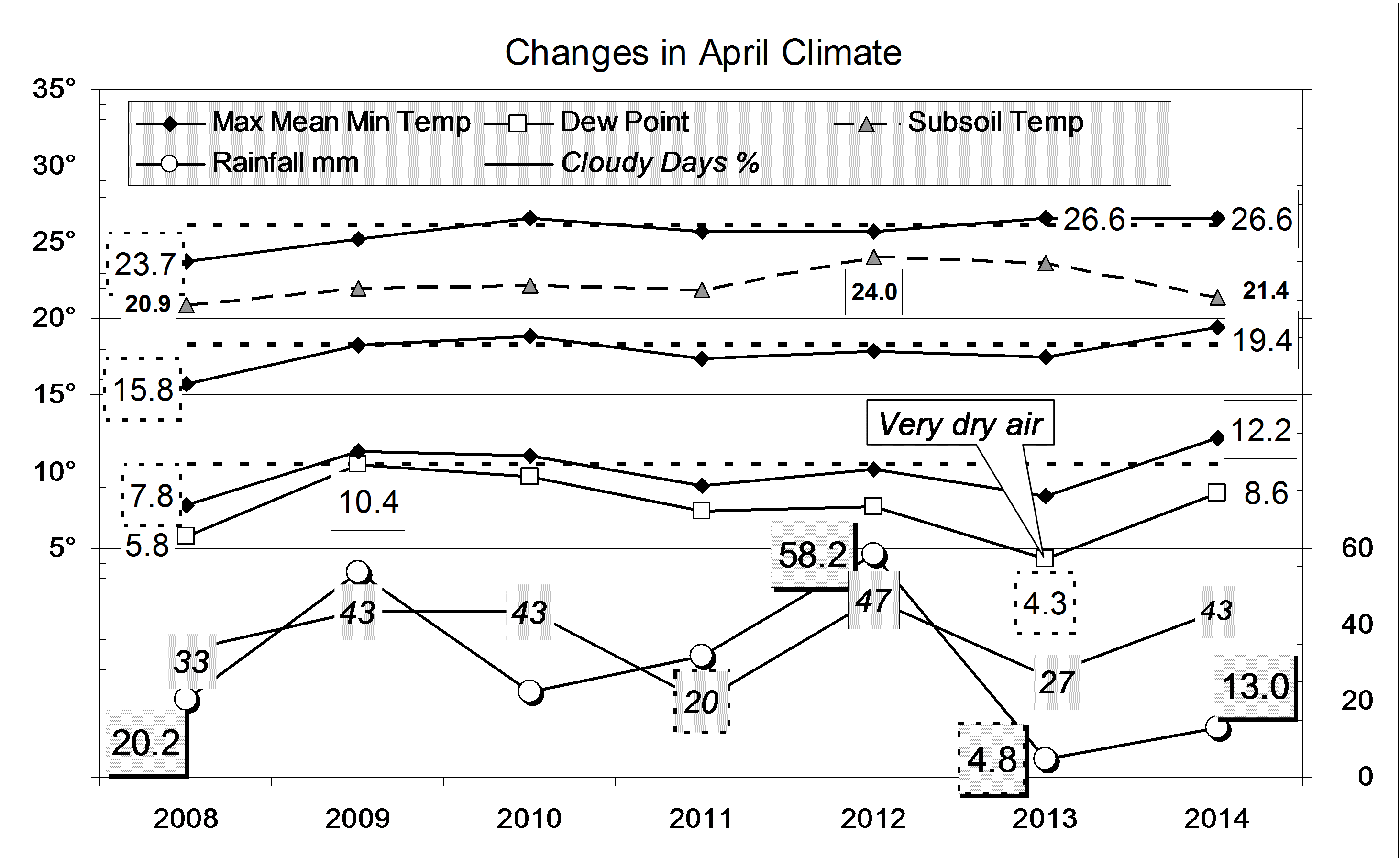
After a cool wet week at the end of March, April began warm, especially at night. The night of the 5th, at 18.8°, was the second warmest April night. Rain fell overnight, and the dew point, 18.5°, was an April record. The third week was sunny but cool, and the fourth week nearly four degrees warmer than usual. The last day of the month was suddenly cold (16.9°) and overcast, with drizzle.Weather log April 2014
Comparing April months

The mean minimum temperature was a record 1.7° above normal for the month, warmer than in April 2005, and the mean maximum temperature was also slightly up. The subsoil, after more than two years above normal (by as much as 2.4° in winter 2013), finally cooled down in March and April.
Moisture was near normal, with low rainfall offset by cloudy skies.
Although the total rainfall of 13.0 mm was below the April average (40 mm), it was not unusually low but in the 28th percentile. Taking rainfall totals for more than one month, the greatest shortages are not serious (i.e. not below the 10th percentile). The nine month total (336 mm) is in the 14th percentile. Other totals have higher percentile values, and most totals for 30 months or more are above normal. Pools still survive in Greenhatch Creek.Climate April 2014

Data. Rainfall data is from Manilla Post Office, courtesy of Phil Pinch. Temperatures, including subsoil at 750 mm, and other data are from 3 Monash Street, Manilla.
Rainy March 2014

The daily weather log

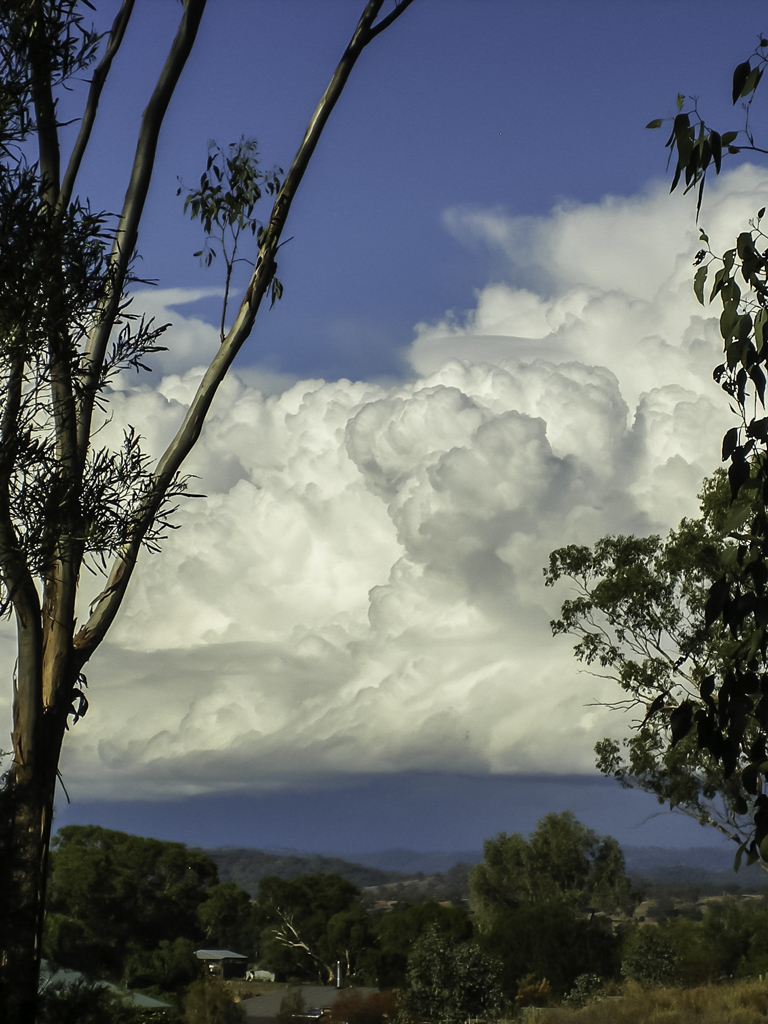
Towering cumulus cloud.

Shower on the Tablelands

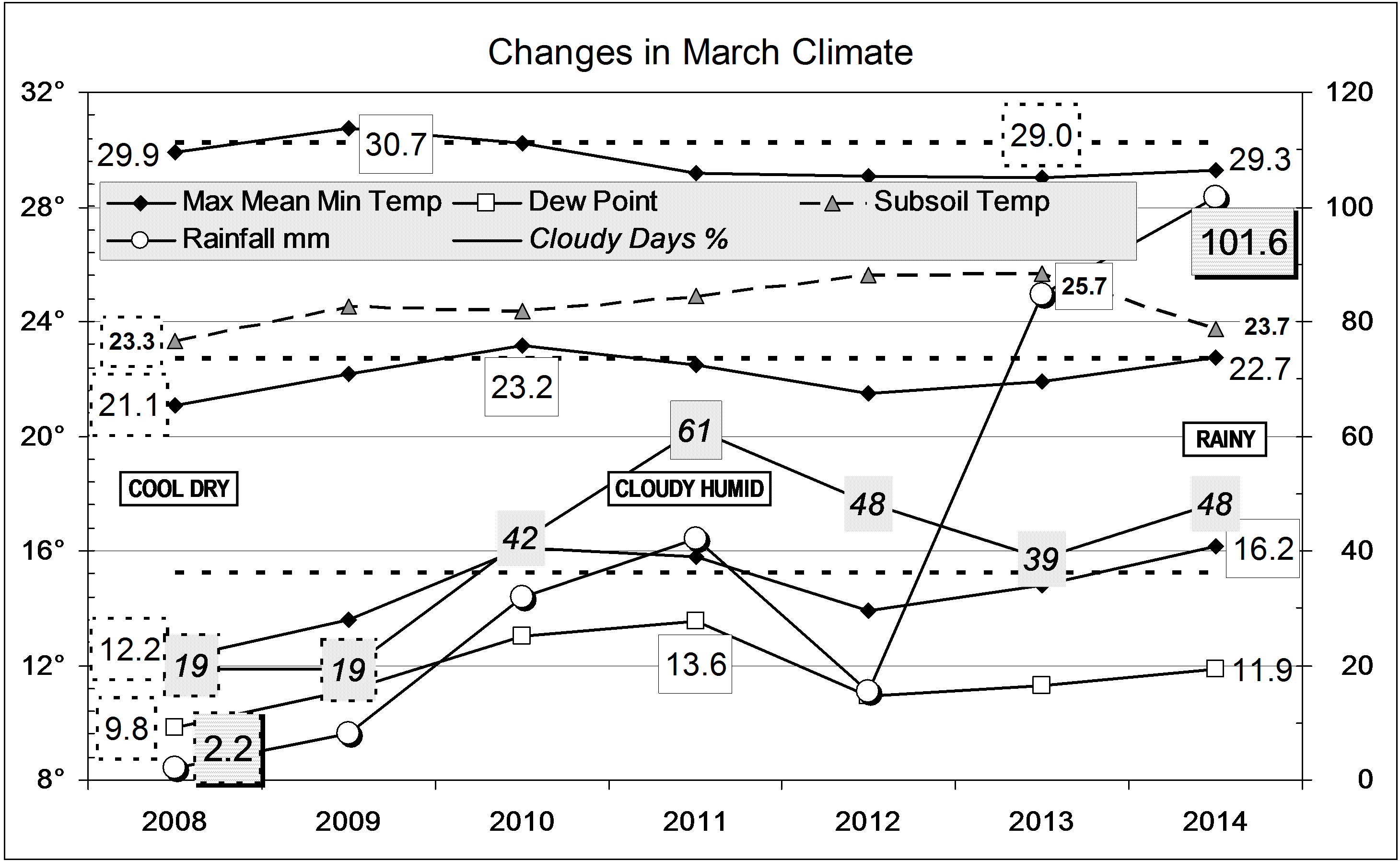
Three weeks of normal March weather were followed by six days that were cool, humid, overcast and rainy. While the wettest day had only 26.4 mm, the 14 rain days would be a record for March, but for the 16 rain days in March 1894. (Manilla never had a month with more rain days than June 1950, which had 18.)Weather log March 2014.

Comparing March months

Unlike recent arid months, March was near normal in day-time temperature, humidity and cloudiness. Nights were very warm, however .

The total rainfall of 101.6 mm is almost twice the March average of 53 mm, and in the 85th percentile. March has been wetter in nineteen years, including 2001 (103 mm) and 2007 (114 mm). Taking rainfall totals for more than one month, the greatest shortages are not serious (i.e. not below the 10th percentile). The twelve-month total (469 mm) is in the 14th percentile. Other totals have higher percentile values, and most totals for 30 months or more are above normal.

Climate March 2014


Data. Rainfall data is from Manilla Post Office, courtesy of Phil Pinch. Temperatures, including subsoil at 750 mm, and other data are from 3 Monash Street, Manilla.
 

2013-14: Third Driest Summer

Weather log summer 2013-14.

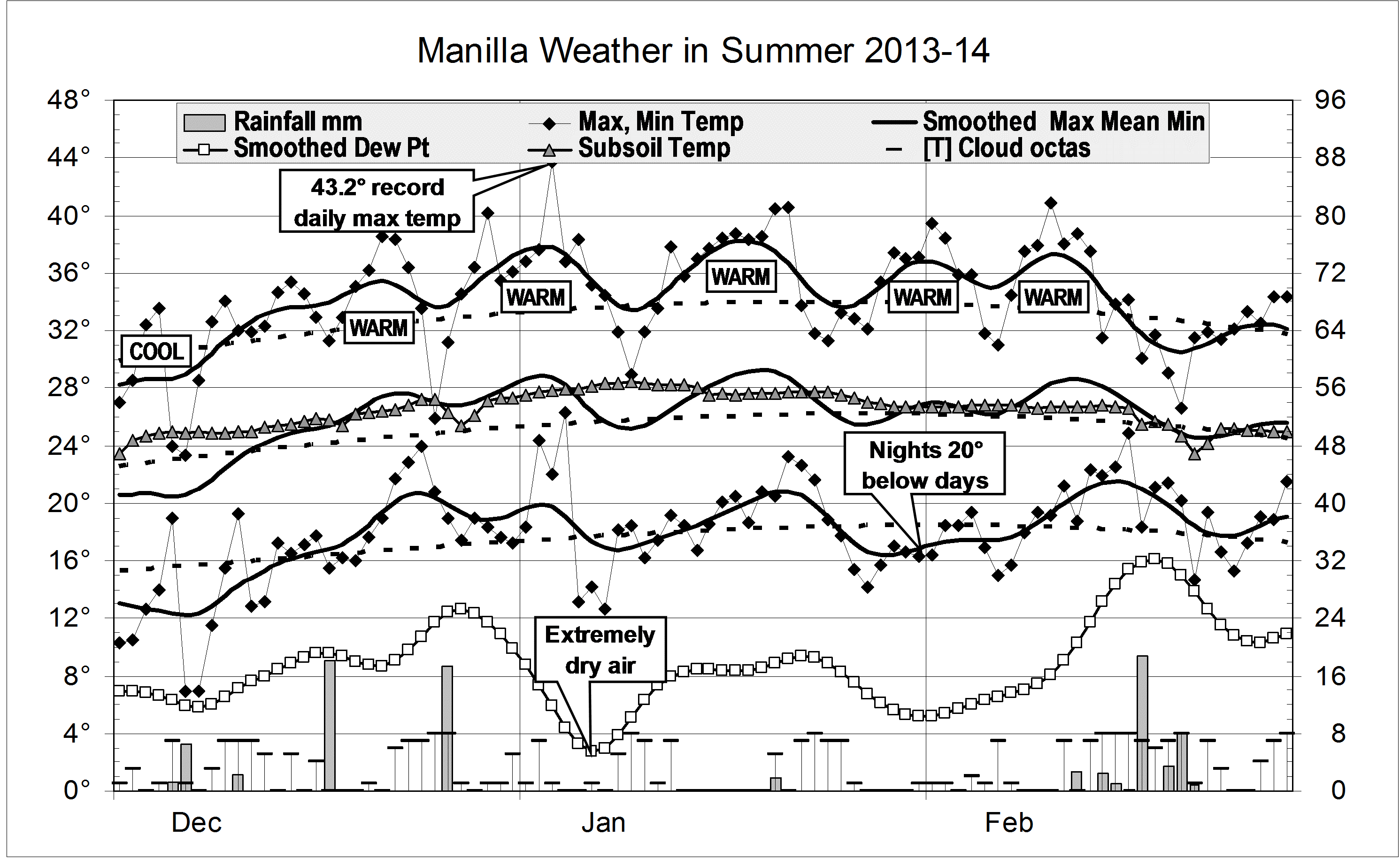
After a cool start, this summer had no more cool weather. There were five warm spells 3° to 4° warmer than normal. Days were particularly warm, with a new 21st century record high of 43.7° set on 3/1/14. During warm spells, nights were also warm, but often 17° cooler than the days. The air was phenomenally dry in early January, with morning dew points (usually 14°) falling below zero three times. There were only 14 rain days (usually 21), and the heaviest fall of 18.8 mm was a 21st century record low for summer.


Taking average values, this summer had the highest daily maximum temperature this century: the value of 34.3° beats the 34.1° of 2005-6. However, the daily mean of 26.1° does not beat the 26.3° of 2005-6. By contrast, the summer of 2011-12 was the coldest, by day and by night. The total rainfall of just 84.8 mm makes this the third driest summer in the 131-year record, after 1929-30 (66 mm) and 1964-5 (70 mm). The summers of 1999-2000 and the two following were also very dry (125 mm, 158 mm, 137 mm) but this summer had not only less rain but also very much drier air and a wider daily range of temperature. Both the low dew point, 8.6° , and the wide daily temperature range, 16.4°, were record values. The earlier dry summers were less cloudy, however.Climate summer 2013-14.

Data. Rainfall data is from Manilla Post Office, courtesy of Phil Pinch. Temperatures, including subsoil at 750 mm, and other data are from 3 Monash Street, Manilla.
Warm Dry February 2014

The daily weather logWeather log February 2014.

The month began sunny and dry, with extremely low humidity. The second week brought a warm spell, which became humid and cloudy, leading to rain. There were eight rain days, with 18.8 mm recorded on the 17th. The fourth week was fine, with normal temperatures.

Comparing February monthsClimate February 2014.

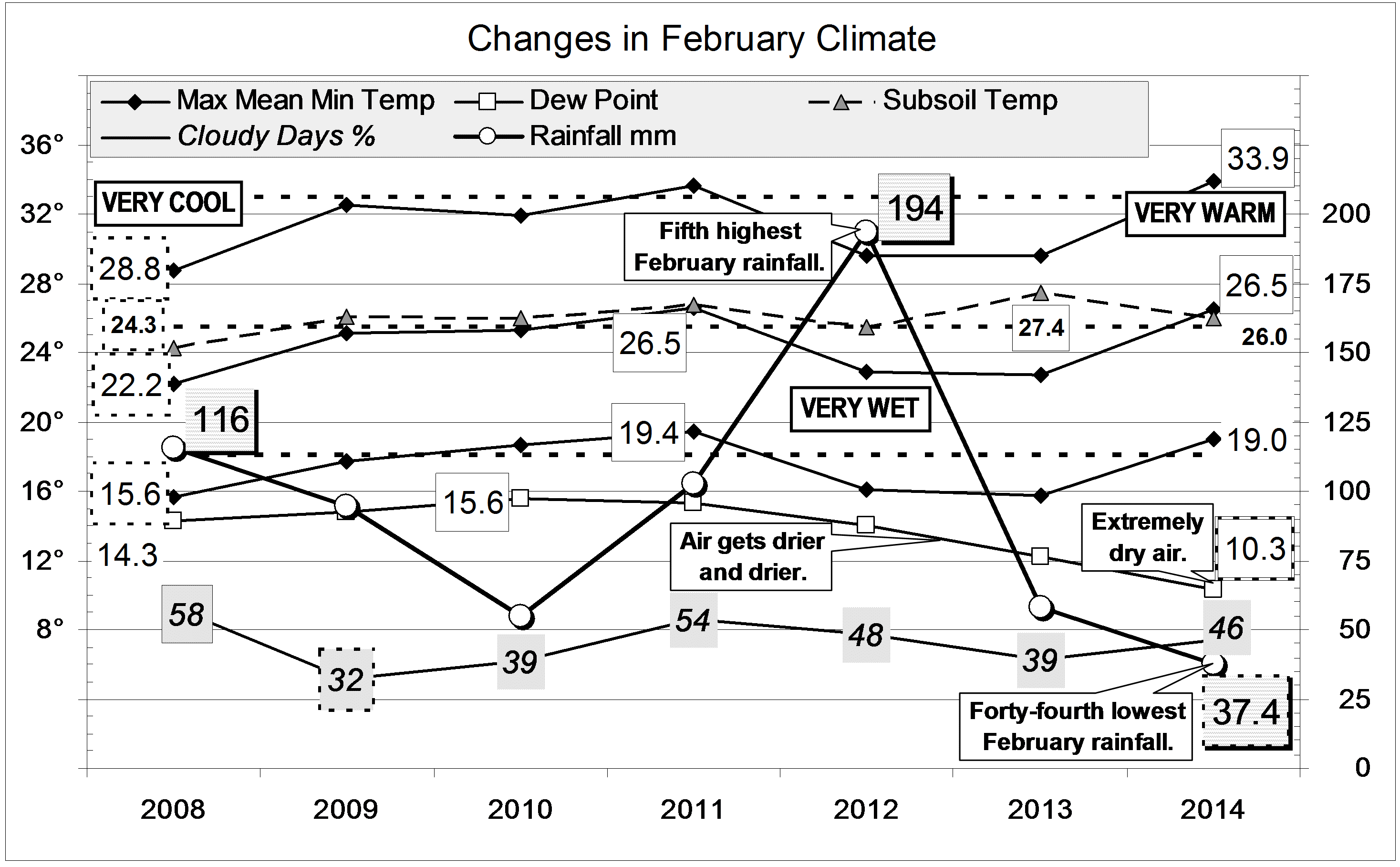
Like February 2011, this month was very warm, but not quite as warm as February 2006. February 2008 had been five degrees cooler, and February 2012 and 2013 also very cool.
The humidity, shown by early morning dew point, has fallen steadily for four February months. It was 15.6° in 2010, and is now a record low of 10.3°. February mean relative humidity values, which had been steady from 2006 to 2013, fell sharply to 2014: afternoon values fell from 31% to 16% and morning values from 80% to 58%.
The total rainfall of 37.4 mm is well below the February average of 67 mm and far below that for February 2012 (194 mm), the fifth wettest on record. This is the forty-fourth driest, and in the 35th percentile. Taking rainfall totals for more than one month, the greatest shortages are not serious (i.e. not below the 10th percentile). The two month total (39 mm) and the twelve-month total (452 mm) are both in the 12th percentile. Other totals have higher percentile values, and most totals for 30 months or more are above normal. Pools survive in Greenhatch Creek.


Data. Rainfall data is from Manilla Post Office, courtesy of Phil Pinch. Temperatures, including subsoil at 750 mm, and other data are from 3 Monash Street, Manilla.

January 2014 the driest !

The daily weather logWeather log January 2014.

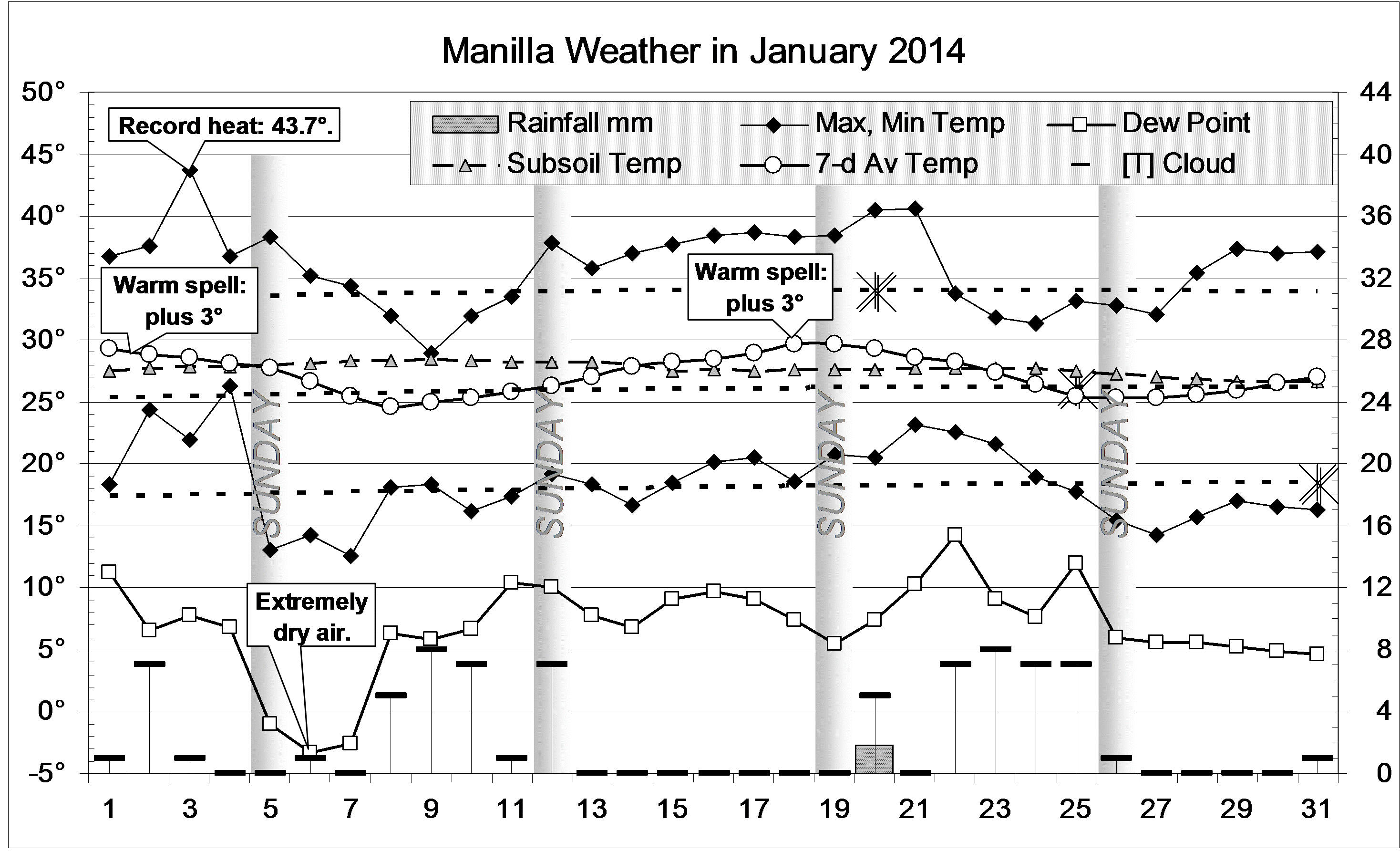
Two 21st century records were broken on the 3rd: the daily maximum was 43.7°, and the relative humidity fell to 2%. A west wind of 30 km/hr blew all that day. The early morning dew point on the 6th was a record January low of minus 3.3 degrees. A second warm spell came about the 15th. Subsoil temperature fell from high to normal during the month.
Rain of 1.8 mm was recorded on the 20th.

Comparing January monthsClimate January 2014.

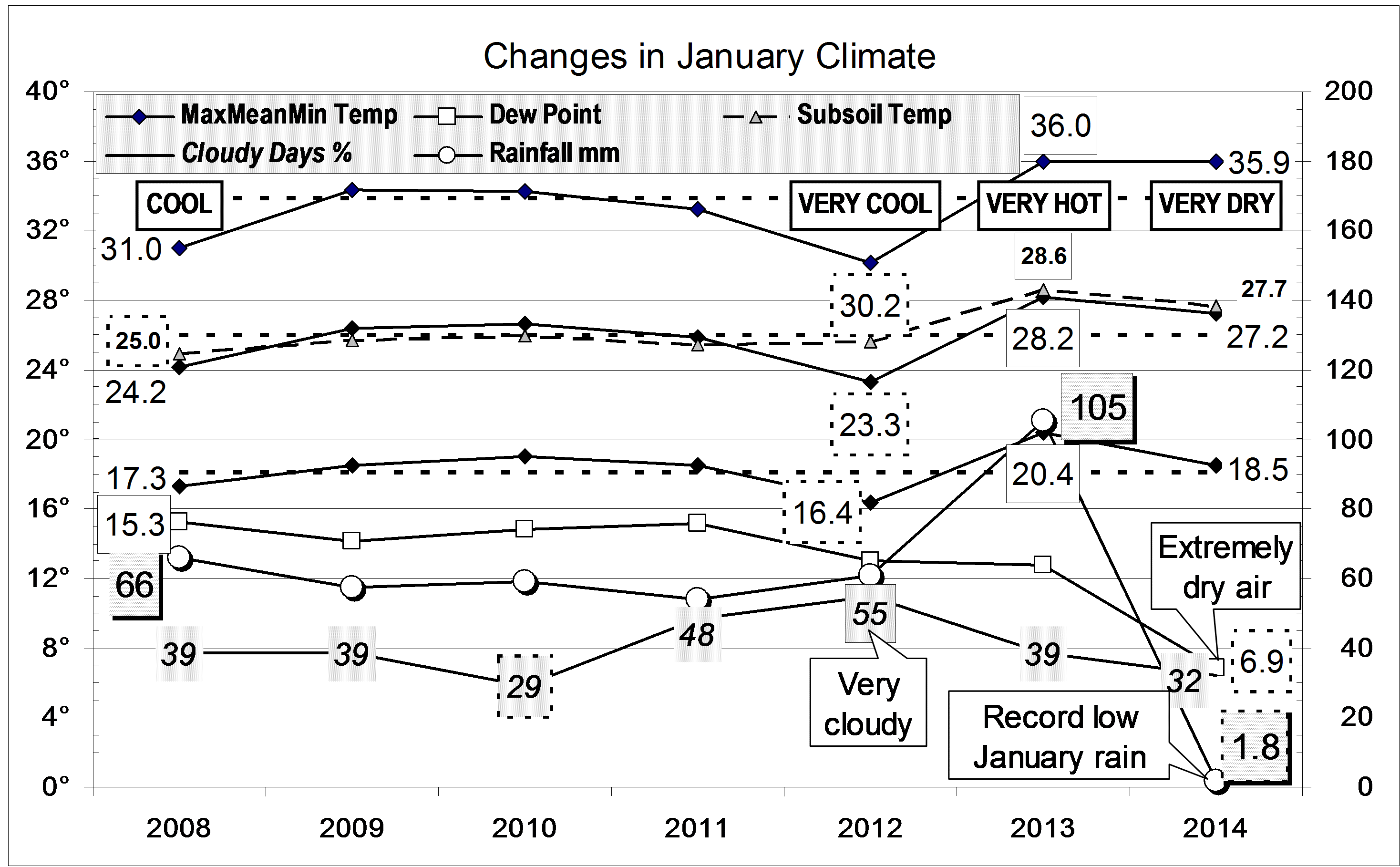
As well as having almost no rain, this month had by far the lowest January dew point of the century: 6.9°, which is 7.3° below normal! Compared to January 2013, which was very hot, days were much the same (35.9°), but nights were cooler (18.5°). By contrast, January 2012 had been very cool and cloudy.
The total rainfall of 1.8 mm was the lowest January value in the 131-year record. The next lowest was 7 mm in January 1940.
Counting more than one month, the six-month rainfall total of 184 mm is the worst shortage at this time. It is in the 11th percentile of all six-monthly totals. However, such low totals usually come in August or September. It is rare for six-monthly totals as low as 184 mm to come in a summer month: it has happened only thirteen times. The lowest six-monthly total for a summer month was 145 mm for December 1946. Next was 151 mm for December 1951.


Data. Rainfall data is from Manilla Post Office, courtesy of Phil Pinch. Temperatures, including subsoil at 750 mm, and other data are from 3 Monash Street, Manilla.