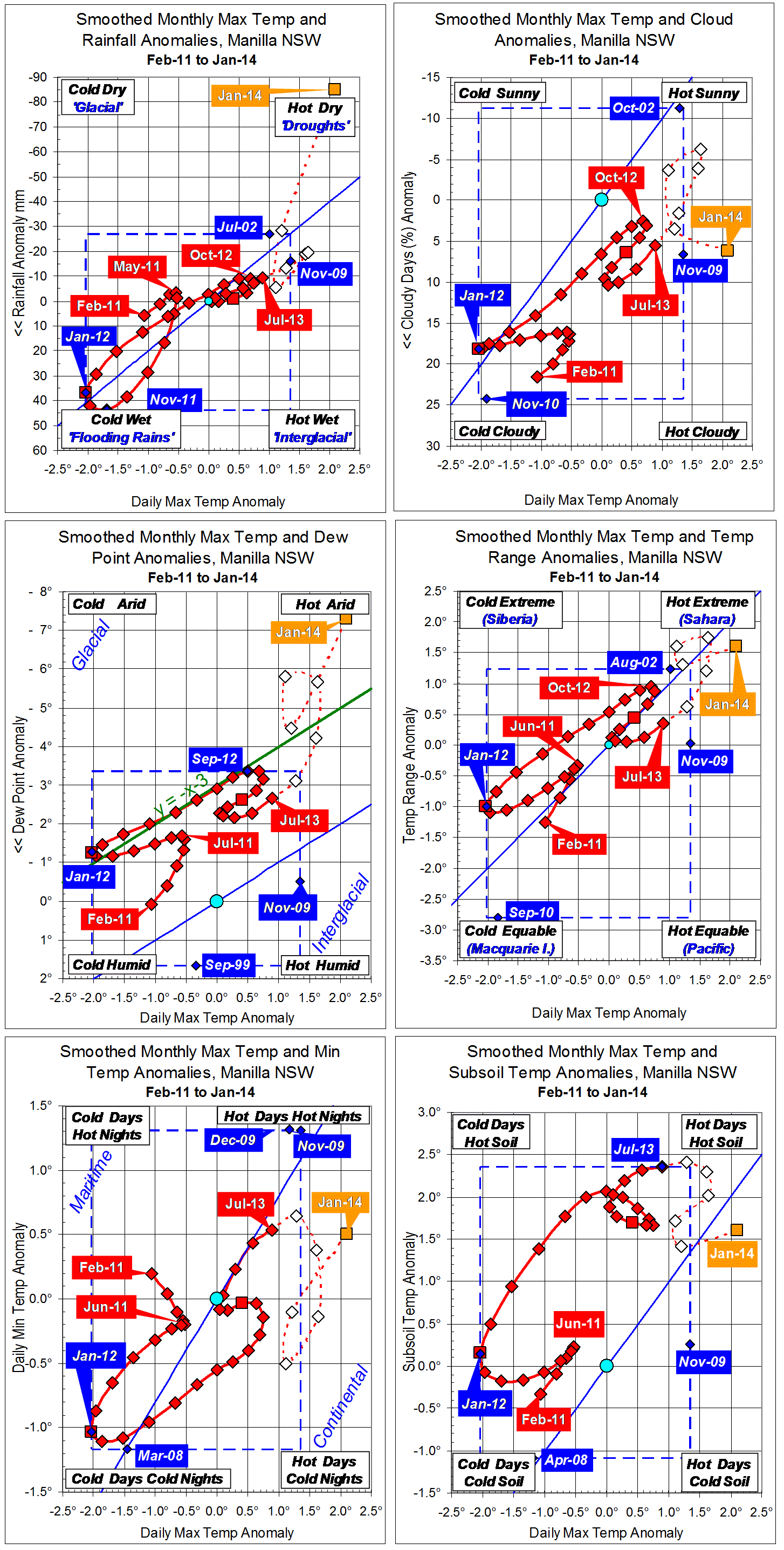
3-year trends to January 2014

Parametric plots of smoothed climate variables at Manilla

“January rain fails”Trends to January 2014

Raw values for several climate anomalies in January 2014 were extreme: daily maximum temperature: plus 2.1°, rainfall: minus 85 mm, dew point: minus 7.3°, and temperature range: plus 1.5°.
Fully-smoothed values for July 2013 move in the direction of “droughts”.
Subsoil temperature reaches a new record for fully-smoothed data of plus 2.36°, beating the record set a month earlier.

Note: Fully smoothed data – Gaussian smoothing with half-width 6 months – are plotted in red, partly smoothed data uncoloured, and raw data for the last data point in orange. January data points are marked by squares. Blue diamonds and the dashed blue rectangle show the extreme values in the fully smoothed data record since September 1999.

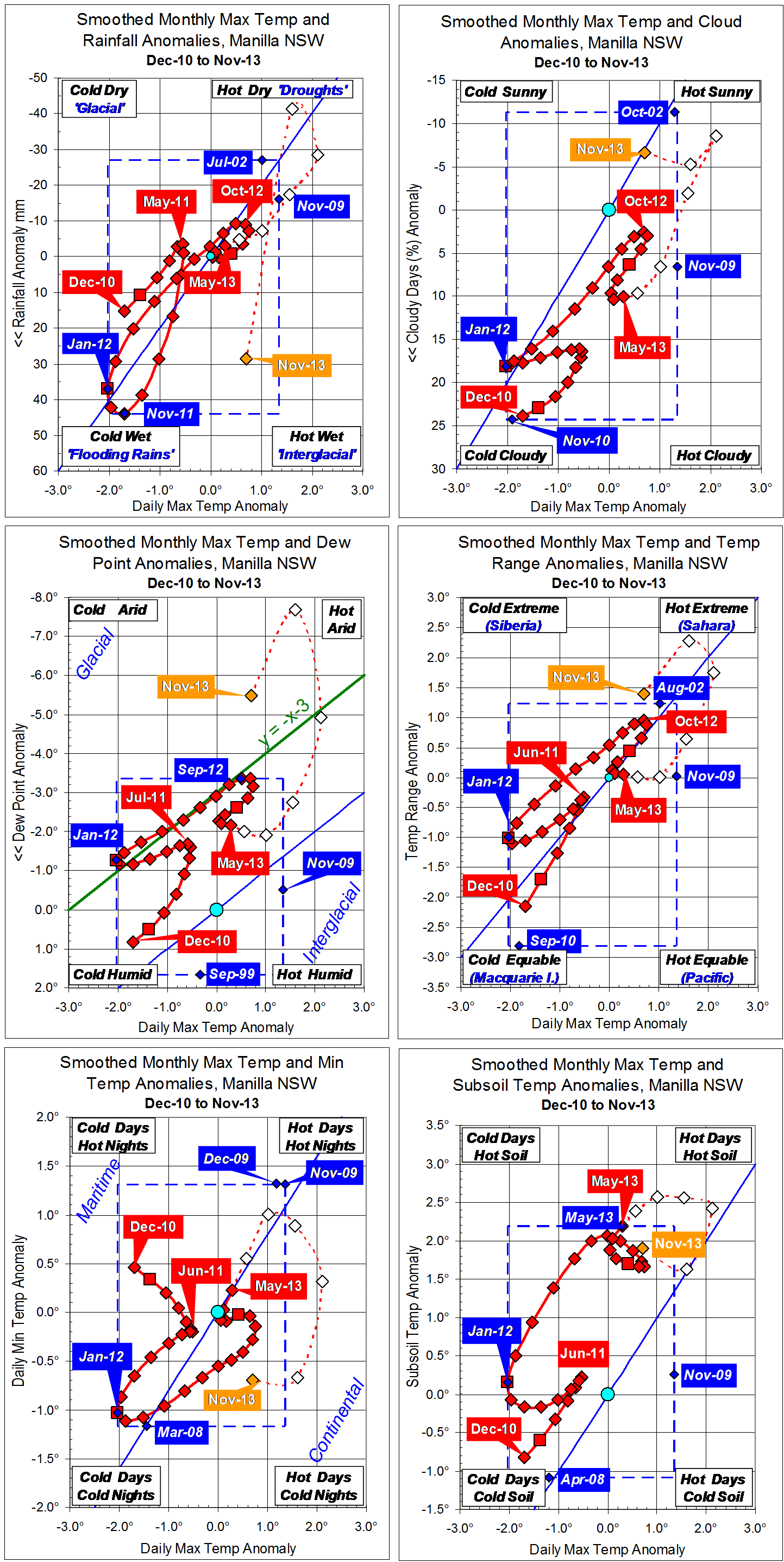
3-year trends to December 2013

Parametric plots of smoothed climate variables at Manilla
“Still in drought”Trends to December 2013.

Raw anomaly values for climate variables for December 2013 are nearly all in the top right “droughts” corner.

Six months earlier, the fully-smoothed data point for June 2013 also moved towards drought. The value for subsoil anomaly reached a new record of 2.31 degrees.

Note:
Fully smoothed data – Gaussian smoothing with half-width 6 months – are plotted in red, partly smoothed data uncoloured, and raw data for the last data point in orange. January data points are marked by squares.
Blue diamonds and the dashed blue rectangle show the extreme values in the fully smoothed data record since September 1999.
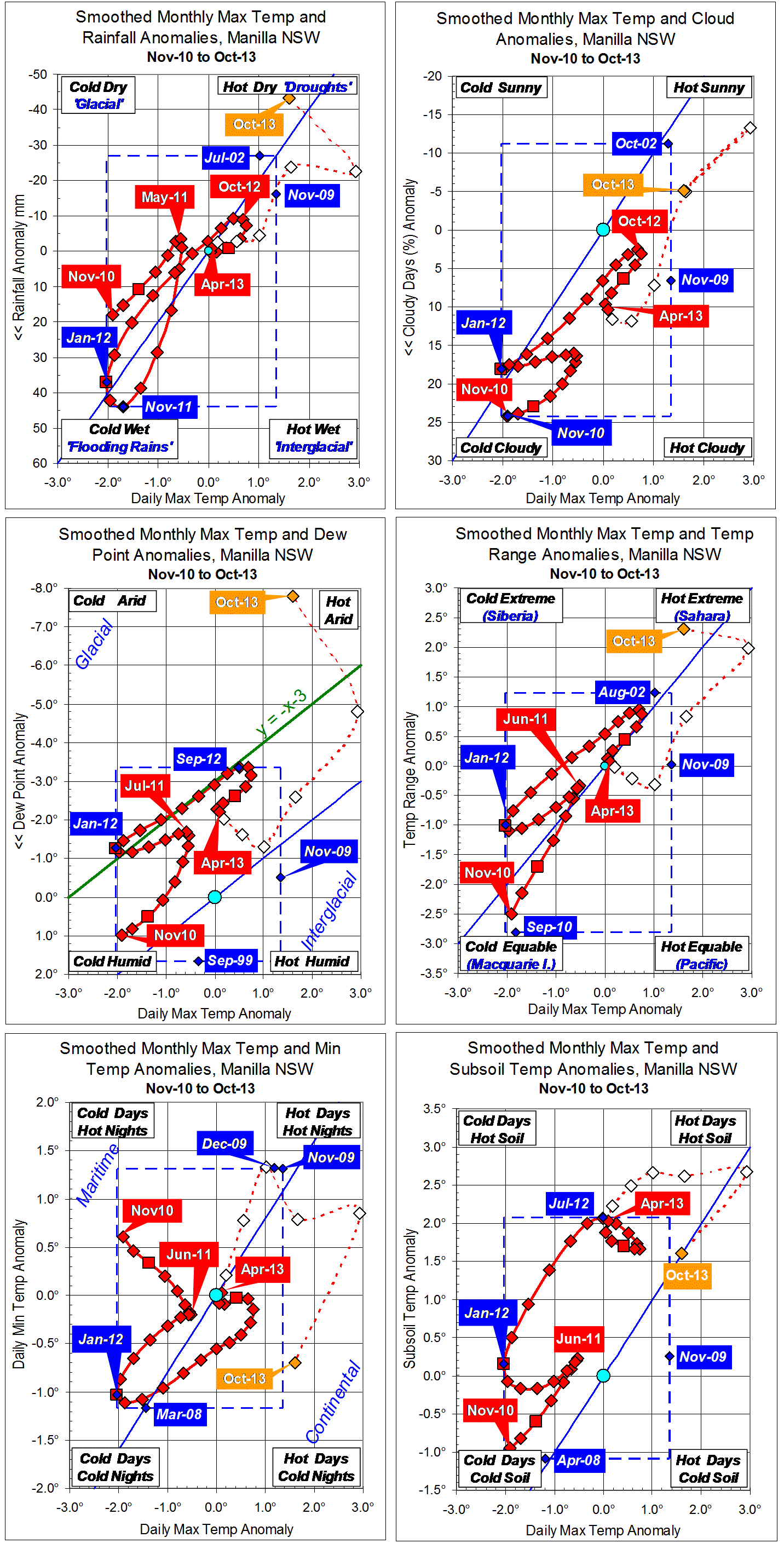
3-year trends to November 2013

Parametric plots of smoothed climate variables at Manilla
“Less droughty”

Trends to November 2013.

Most raw anomaly values (orange) for November climate variables remained on the “drought” side of normal, but less extreme than in October. As an exception, rainfall was very high.

Fully-smoothed data points (red) for autumn (MAM) of 2013 show a climate that was normal in the context of the decade beginning April 1999. Anomalies were high cloudiness, low dew point and warm subsoil. The last fully-smoothed data point, for May 2013, moved towards drought.

Note:
Fully smoothed data – Gaussian smoothing with half-width 6 months – are plotted in red, partly smoothed data uncoloured, and raw data for the last data point in orange. January data points are marked by squares.
Blue diamonds and the dashed blue rectangle show the extreme values in the fully smoothed data record since September 1999.

3-year trends to October 2013

Parametric plots of smoothed climate variables at Manilla
“Even more arid”Trends to October 2013.

Of the raw values of climate anomalies in October 2013, daily maximum temperature, among others, fell back from the extreme high reached in September. However, rainfall and dew point became extremely low, and temperature range extremely wide, suggesting extreme drought.

Anomalies of fully-smoothed points for April 2013 were mainly near zero, like those of March. That is, the climate was quite normal.

Note:
Fully smoothed data – Gaussian smoothing with half-width 6 months – are plotted in red, partly smoothed data uncoloured, and raw data for the last data point in orange. January data points are marked by squares.
Blue diamonds and the dashed blue rectangle show the extreme values in the fully smoothed data record since September 1999.

3-year trends to September 2013

Parametric plots of smoothed climate variables at Manilla
“Desert-like climate”Trend to September 2013.

Raw values of climate anomalies for September 2013 all show extreme aridity: they are in the top right corner of the graphs.
The latest fully-smoothed data point, March 2013, continues a trend towards normalcy and away from the mild drought seen in spring 2012.

Note:
Fully smoothed data – Gaussian smoothing with half-width 6 months – are plotted in red, partly smoothed data uncoloured, and raw data for the last data point in orange. January data points are marked by squares.
Blue diamonds and the dashed blue rectangle show the extreme values in the fully smoothed data record since September 1999.