3-year trends to November 2013

Parametric plots of smoothed climate variables at Manilla
“Less droughty”
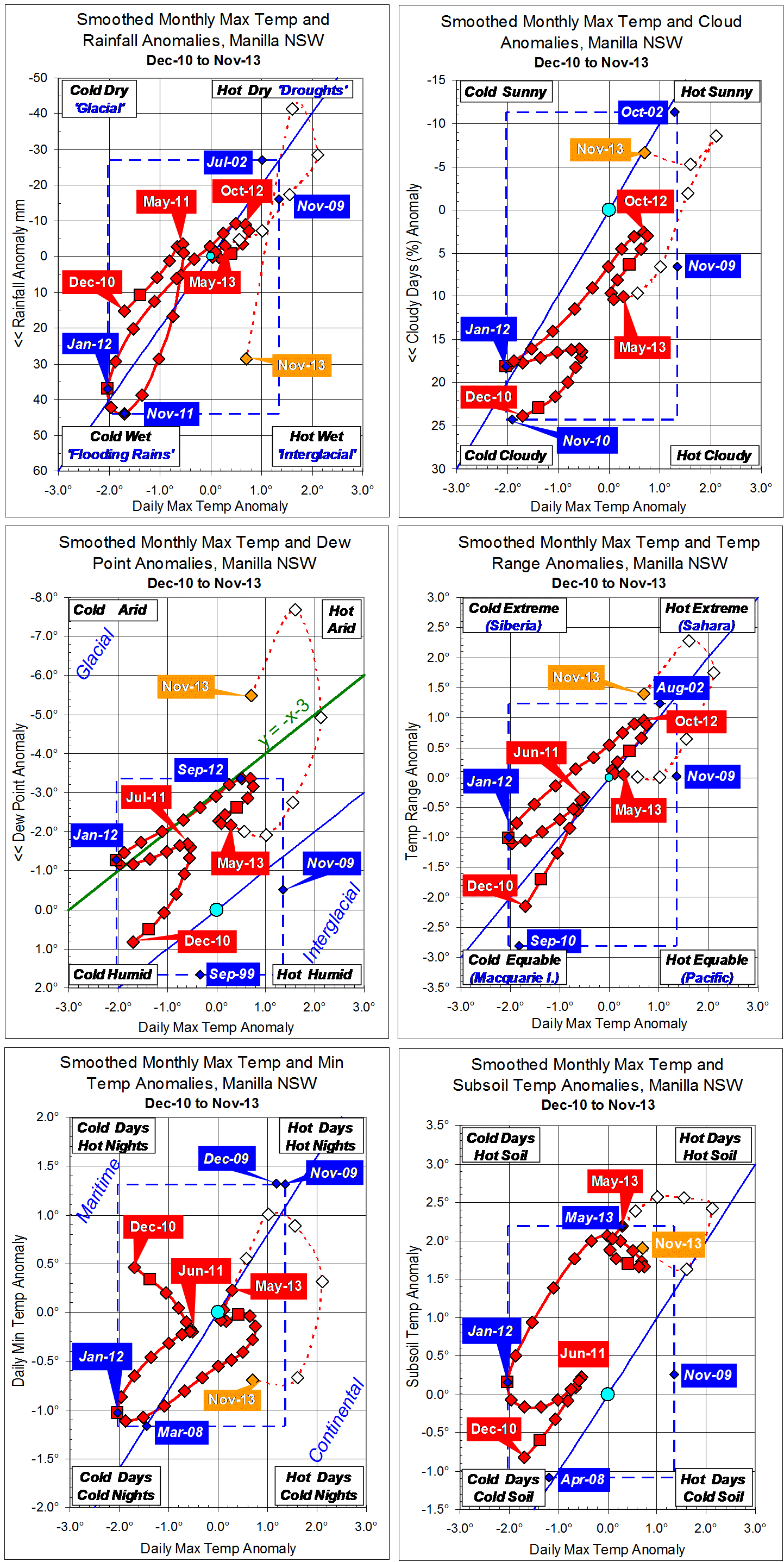
Trends to November 2013.

Most raw anomaly values (orange) for November climate variables remained on the “drought” side of normal, but less extreme than in October. As an exception, rainfall was very high.

Fully-smoothed data points (red) for autumn (MAM) of 2013 show a climate that was normal in the context of the decade beginning April 1999. Anomalies were high cloudiness, low dew point and warm subsoil. The last fully-smoothed data point, for May 2013, moved towards drought.

Note:
Fully smoothed data – Gaussian smoothing with half-width 6 months – are plotted in red, partly smoothed data uncoloured, and raw data for the last data point in orange. January data points are marked by squares.
Blue diamonds and the dashed blue rectangle show the extreme values in the fully smoothed data record since September 1999.

Rain came back in November 2013

The daily weather logWeather log November 2013

By November the 11th, there had been only 70 mm of rain since the deluge in June. The humidity had been getting lower by the month. From that day, rain and high humidity returned. Days and nights became cooler than normal, with more cloudy skies. Most of the seven wet days were showery, but the 29th had steady rain.

Comparing November monthsClimate November 2013.

The weather change on the 11th returned most monthly average values closer to normal. However, despite the rain, this was still an “Arid” month, with a record low November mean morning dew point, a wide daily temperature range, and few cloudy mornings. The mean subsoil temperature (23.8°) was 1.9° above normal, exceeded (in the 21st century) only by 24.7° in November 2002.
The total rainfall of 95.6 mm was in the 80th percentile, well above the average of 67 mm. This disposes of all serious shortages in rainfall totals. The worst figure now is the 5-month total of 166 mm, which is 56 mm below normal (19th percentile).


Data. Rainfall data is from Manilla Post Office, courtesy of Phil Pinch. Temperatures, including subsoil at 750 mm, and other data are from 3 Monash Street, Manilla.

3-year trends to October 2013

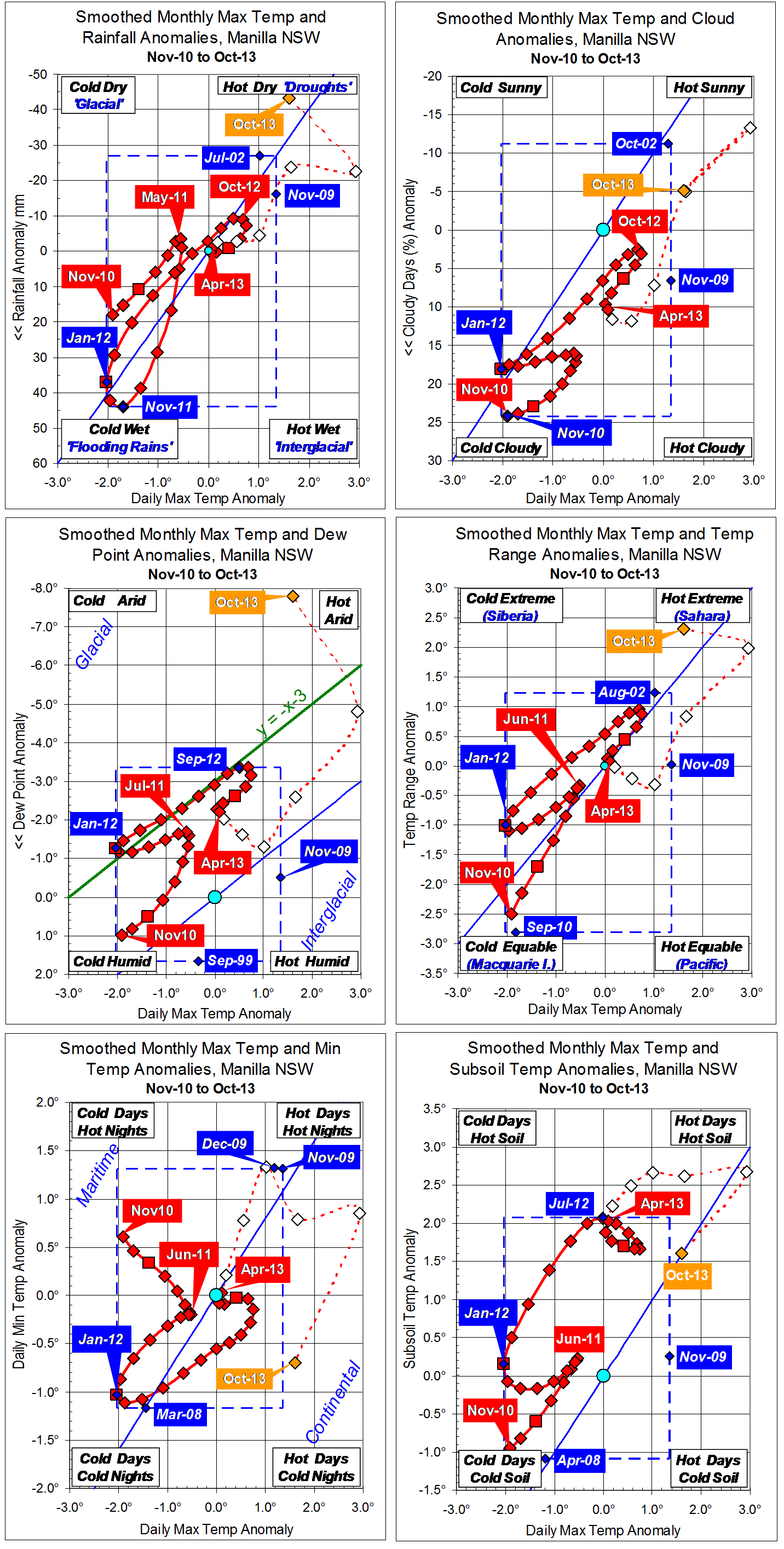
Parametric plots of smoothed climate variables at Manilla
“Even more arid”Trends to October 2013.

Of the raw values of climate anomalies in October 2013, daily maximum temperature, among others, fell back from the extreme high reached in September. However, rainfall and dew point became extremely low, and temperature range extremely wide, suggesting extreme drought.

Anomalies of fully-smoothed points for April 2013 were mainly near zero, like those of March. That is, the climate was quite normal.

Note:
Fully smoothed data – Gaussian smoothing with half-width 6 months – are plotted in red, partly smoothed data uncoloured, and raw data for the last data point in orange. January data points are marked by squares.
Blue diamonds and the dashed blue rectangle show the extreme values in the fully smoothed data record since September 1999.
Extremely Arid October 2013

October’s climate was even more desert-like than this September or October last year. Afternoon humidity (normally 30%) was only 13.1%, which is the lowest value in ANY month in the last eight years. The early morning dew point of 0.5° was the lowest October value this century, and 7.8° below normal, a record anomaly value for any month. This very dry air often came with strong winds. Most of north-west NSW was affected.

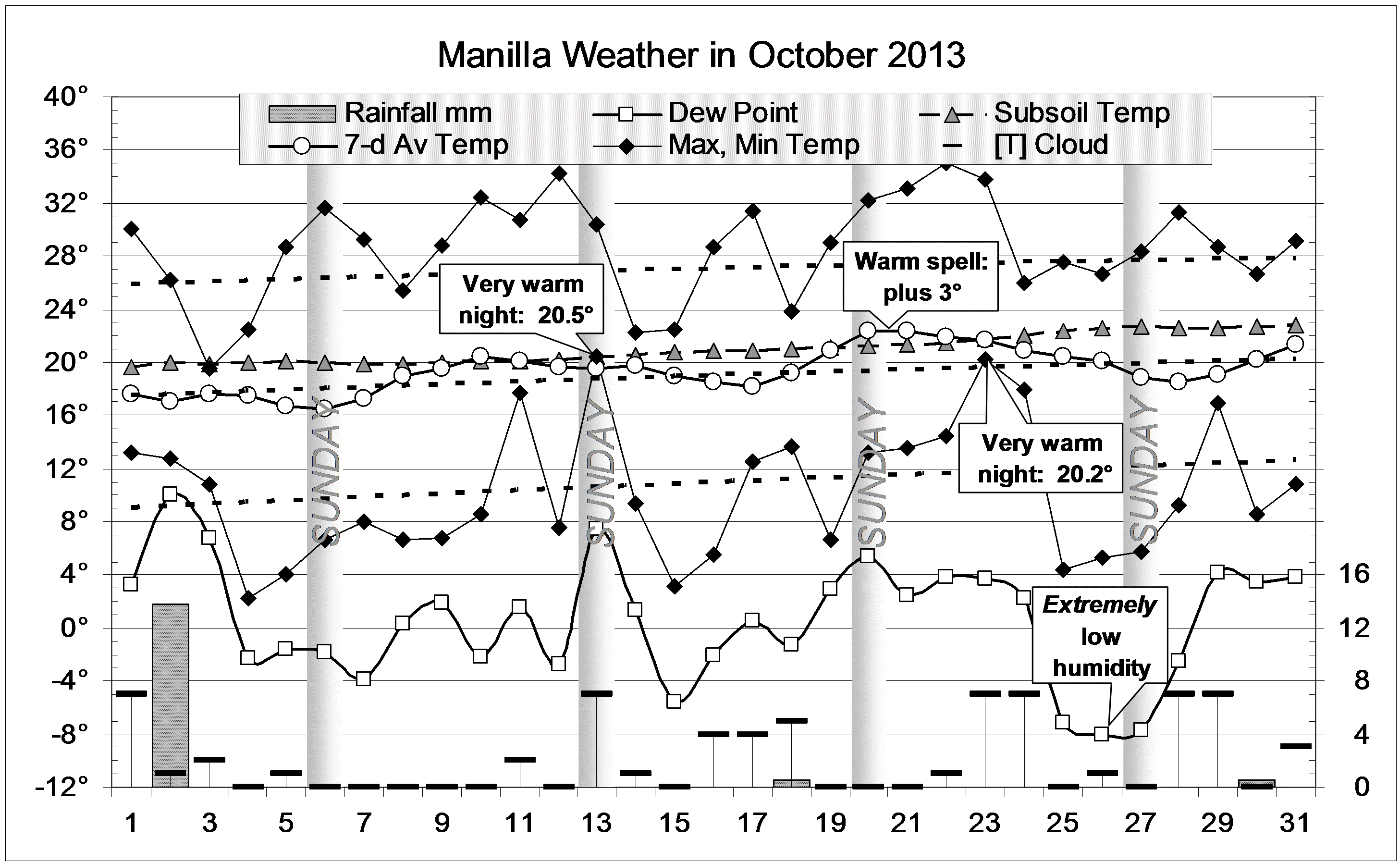
The daily weather logWeather log October 2013.

The second of two warm spells brought weekly temperatures three degrees above normal. Each warm spell ended with a night above 20°. Three mornings from the 25th were exceptionally dry, having dew points of minus 7.2°, minus 8.0°, and minus 7.6°. (The record: minus 9.3° on 17/5/11.)
There were three rain days: the 2nd with 13.8 mm, and the 18th and 30th with 0.6 mm each.

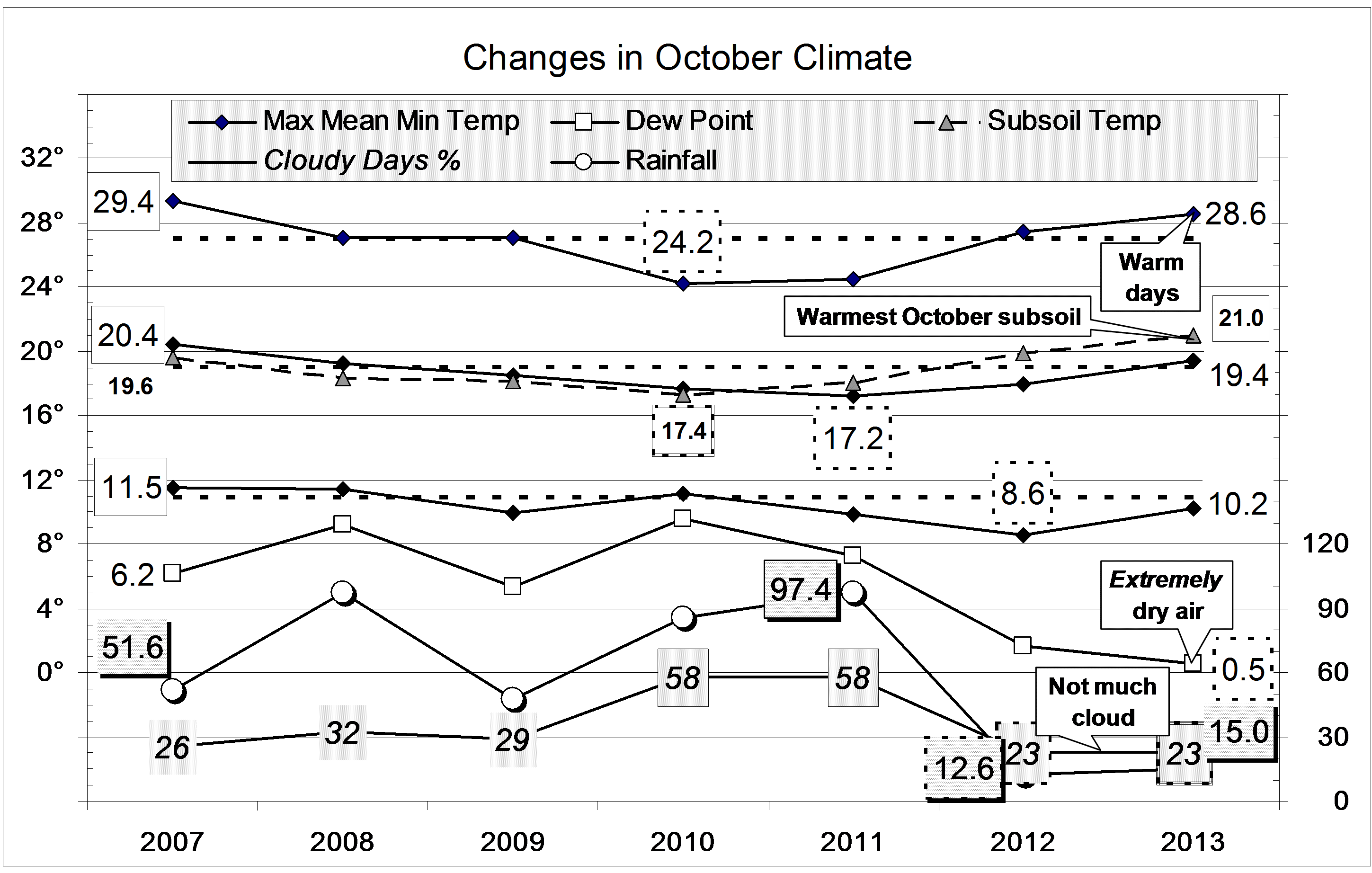
Comparing October monthsClimate October 2013.

October’s days were not quite as warm as in 2007. Dryness was marked by low rainfall, little cloud, and wide daily temperature range, but most remarkably by the record low dew point and relative humidity.
At 21.0°, the subsoil was warmer than in any other October month. It was 1.6° above normal.
The total rainfall of 15.0 mm was in only the 12th percentile, far below the average of 58 mm. The three and four month rainfall totals (41 mm; 71 mm) are now severe shortages, in the 3rd and 4th percentiles.


Data. Rainfall data is from Manilla Post Office, courtesy of Phil Pinch. Temperatures, including subsoil at 750 mm, and other data are from 3 Monash Street, Manilla.

3-year trends to September 2013

Parametric plots of smoothed climate variables at Manilla
“Desert-like climate”Trend to September 2013.

Raw values of climate anomalies for September 2013 all show extreme aridity: they are in the top right corner of the graphs.
The latest fully-smoothed data point, March 2013, continues a trend towards normalcy and away from the mild drought seen in spring 2012.

Note:
Fully smoothed data – Gaussian smoothing with half-width 6 months – are plotted in red, partly smoothed data uncoloured, and raw data for the last data point in orange. January data points are marked by squares.
Blue diamonds and the dashed blue rectangle show the extreme values in the fully smoothed data record since September 1999.