3-year trends to January 2017

Parametric plots of smoothed climate variables at Manilla
“January 2017 very hot”
3-year trends to January 2017

January raw anomaly data (orange)

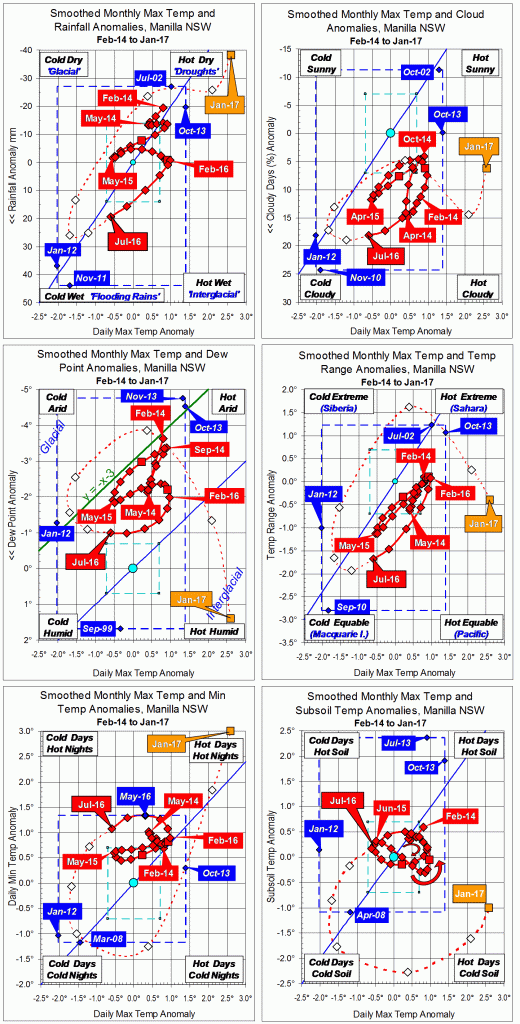
In January 2017 both days and nights became even hotter. While rainfall was low, dew point was high.

 Fully smoothed data (red)

At the time of the latest fully-smoothed anomalies, in July 2016, most variables were still moving towards towards cool and moist.


Note:

Fully smoothed data – Gaussian smoothing with half-width 6 months – are plotted in red, partly smoothed data uncoloured, and raw data for the last data point in orange. January data points are marked by squares.
Blue diamonds and the dashed blue rectangle show the extreme values in the fully smoothed data record since September 1999.

Normal values are based on averages for the decade from March 1999.* They appear on these graphs as a turquoise (turquoise) circle at the origin (0,0). A range of anomalies called “normal” is shown by a dashed rectangle in aqua (aqua). For values in degrees, the assigned normal range is +/-0.7°; for cloudiness, +/-7%; for monthly rainfall, +/-14 mm.

 * Normal values for rainfall are based on averages for the 125 years beginning 1883.
January 2016: moist again

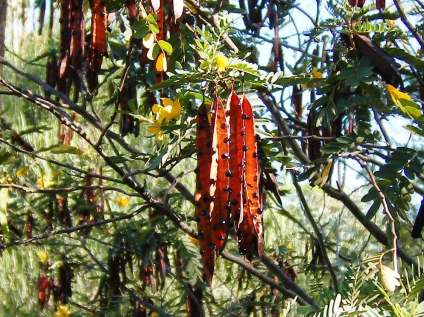
Photo of Senna-bush

Jewel-box Cassia

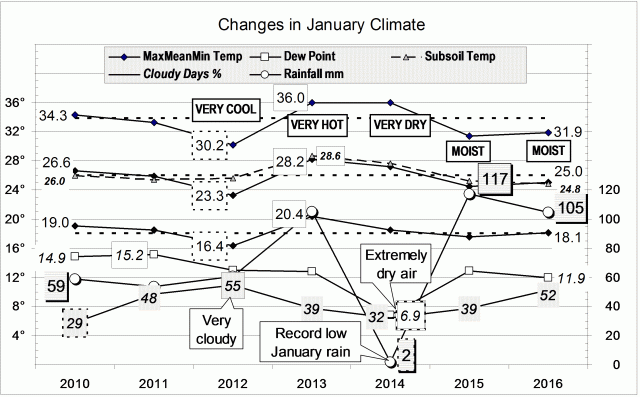
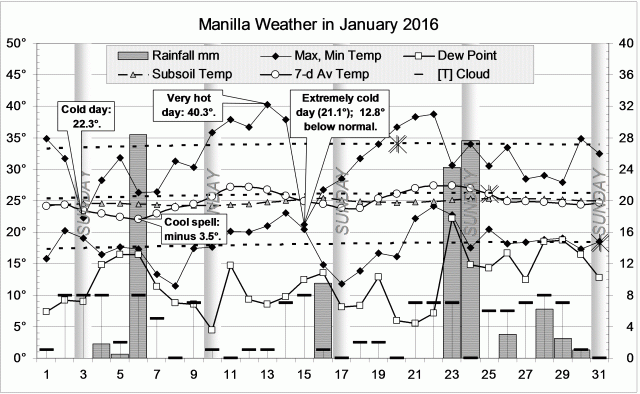
Unlike December, this month saw varying temperatures. The week around the 7th was quite cool. The maximum on the 3rd reached only 22.3°, but worse was to come. The 15th reached only 21.1°: equal coldest January day in the new century (with 31/1/2001). It was more than 12° below normal, and that happens less than once in a year. There was also one very hot day above 40°, which is the normal number for January.
Rain fell, mainly as showers, on ten days spaced through the month. The higher readings were 28.4 mm on the 6th, 24.2 mm on the 23rd, and 27.6 mm on the 24th.

Weather log January 2016.

Comparing January months

Like January last year, this month could be called “moist”. It was cloudy, and the rather cool days were only 14° warmer than the nights.
The total rainfall of 104.7 mm was well above the average of 87 mm, and in the 72nd percentile. Again, there are no serious rainfall shortages for totals for any number of months. In fact, totals for 2-, 3-, 4-, 5-, and 6-months are very high.

El Niño

Manilla’s climate is now out of step with the El Niño – Southern Oscillation (ENSO). This “super” El Niño has not brought dryness here, and the dryness in January 2014 (for example) came at a time without an El Niño.

Climate for January 2016


Data. All data, including subsoil at 750 mm, are from 3 Monash Street, Manilla. Rainfall data up to 26/3/15 is from Manilla Post Office, Station 055031.

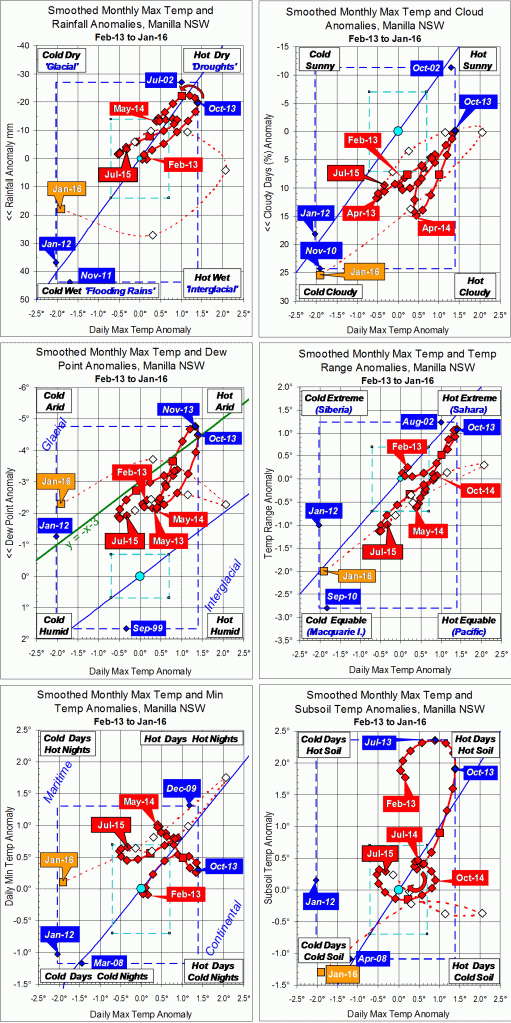
3-year trends to January 2016

Parametric plots of smoothed climate variables at Manilla
“January 2016: moist again”

Trends to January 2016

January raw anomaly data (orange)

In January 2016, raw values for nearly all anomalies moved well towards the cool and moist corner of the graphs.

 Fully smoothed data (red)

In the latest month with fully smoothed data (July 2015) anomalies were quite small, but were moving towards warm and dry. Partially smoothed data points for more recent months show that the warm and dry “El Nino” influence on values around October and November was smaller than it seemed at first. In particular, rainfall did not go below the “normal” range, but the anomaly of daily minimum temperature rose quite high.


Note:

Fully smoothed data – Gaussian smoothing with half-width 6 months – are plotted in red, partly smoothed data uncoloured, and raw data for the last data point in orange. January data points are marked by squares.
Blue diamonds and the dashed blue rectangle show the extreme values in the fully smoothed data record since September 1999.

Normal values are based on averages for the decade from March 1999.* They appear on these graphs as a turquoise (turquoise) circle at the origin (0,0). A range of anomalies called “normal” is shown by a dashed rectangle in aqua (aqua). For values in degrees, the assigned normal range is +/-0.7°; for cloudiness, +/-7%; for monthly rainfall, +/-14 mm.

 * Normal values for rainfall are based on averages for the 125 years beginning 1883.
January 2015: cool rainy days

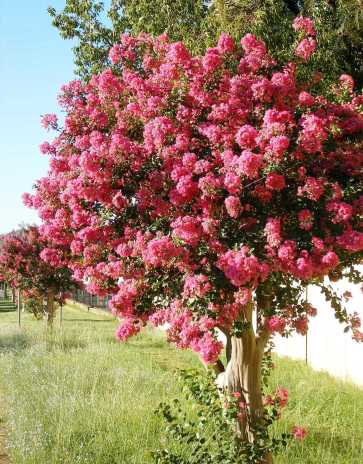
Crepe myrtle shrubs

Crepe Myrtles in Arthur Street

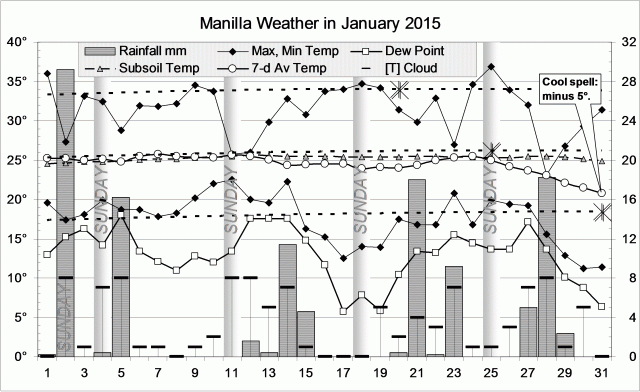
Only five days were warmer than average. The final five days and four nights were very cool, taking the weekly average (normally the hottest of the year) down to five degrees below normal. (This would be normal for the end of March, not January!) There were fifteen rain days, equalling the 125-year record number for January, set in 1941. Rain was spread evenly through the month, with the highest reading 29.2 mm on the 2nd.

Weather log January 2015

Comparing January months

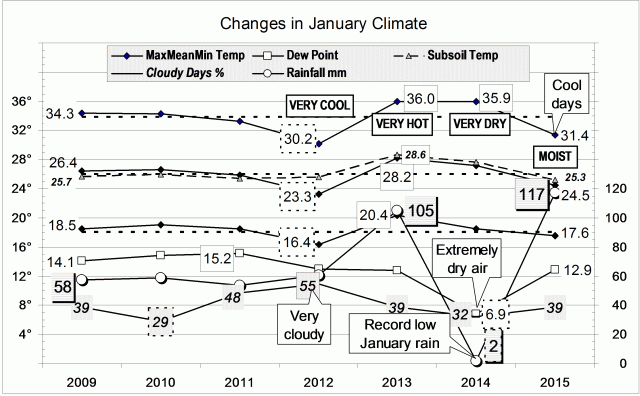
The mean daily maximum temperature (31.4°) was well below the average of 33.8°. Since nights, at 17.6°, were near normal, the daily temperature range was the record narrow value for January of 13.8°.
The dew point (humidity) returned to a normal value of 12.9°, after last January’s arid 6.9°. Subsoil temperature (25.3°) fell to normal after two January months above normal.
The total rainfall of 117.4 mm was in the 75th percentile, well above the average of 87 mm. This clears all shortages in rainfall totals for groups of months. The lowest percentile value remaining (15th) is for the 18 month total of 746 mm.

Climate for January 2015


Data. Rainfall data is from Manilla Post Office, courtesy of Phil Pinch. Temperatures, including subsoil at 750 mm, and other data are from 3 Monash  Street, Manilla.

January Climate Anomalies Log

Heat indicators log for January

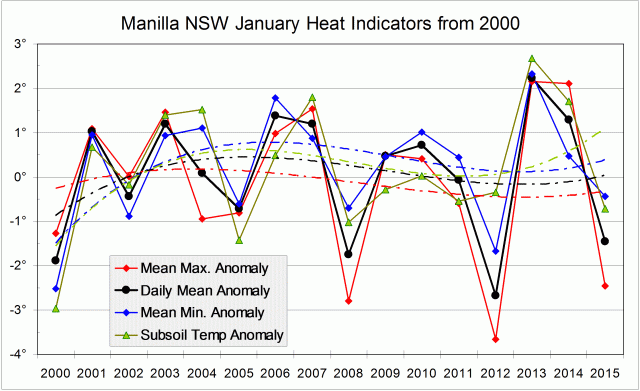
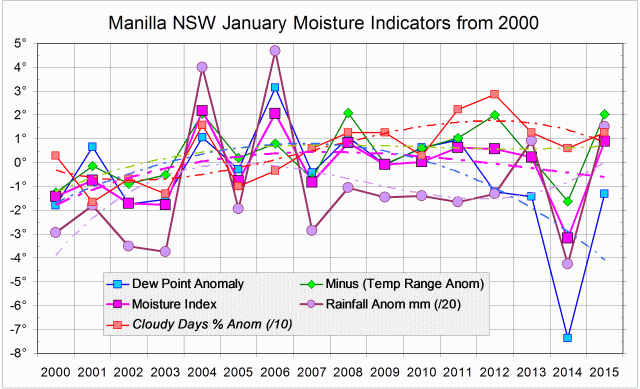
This post is the eleventh in a set for the 12 calendar months that began with March. Graphs are sixteen-year logs of the monthly mean anomaly values of nine climate variables for Manilla, NSW, with fitted trend lines. I have explained the method in notes at the foot of the page.

Raw anomaly values for January

Extreme values of January anomalies were as follows:

Daily Maximum Temperature Anomalies (1) -3.7 deg: January 2012;
Rainfall Anomalies (5) -70 mm: January 2002; -75 mm: January 2003; +80 mm: January 2004; +94 mm: January 2006; -85 mm: January 2014;
Dew Point Anomalies (2) +3.1 deg: January 2006; -7.4 deg: January 2014.

Trend lines for January

Heat Indicators

All heat indicator quartic trends began low and ended slightly high, and had a low peak in 2003, -05, or -06, and a shallow trough about 2012.

Moisture indicators log for January

Continue reading