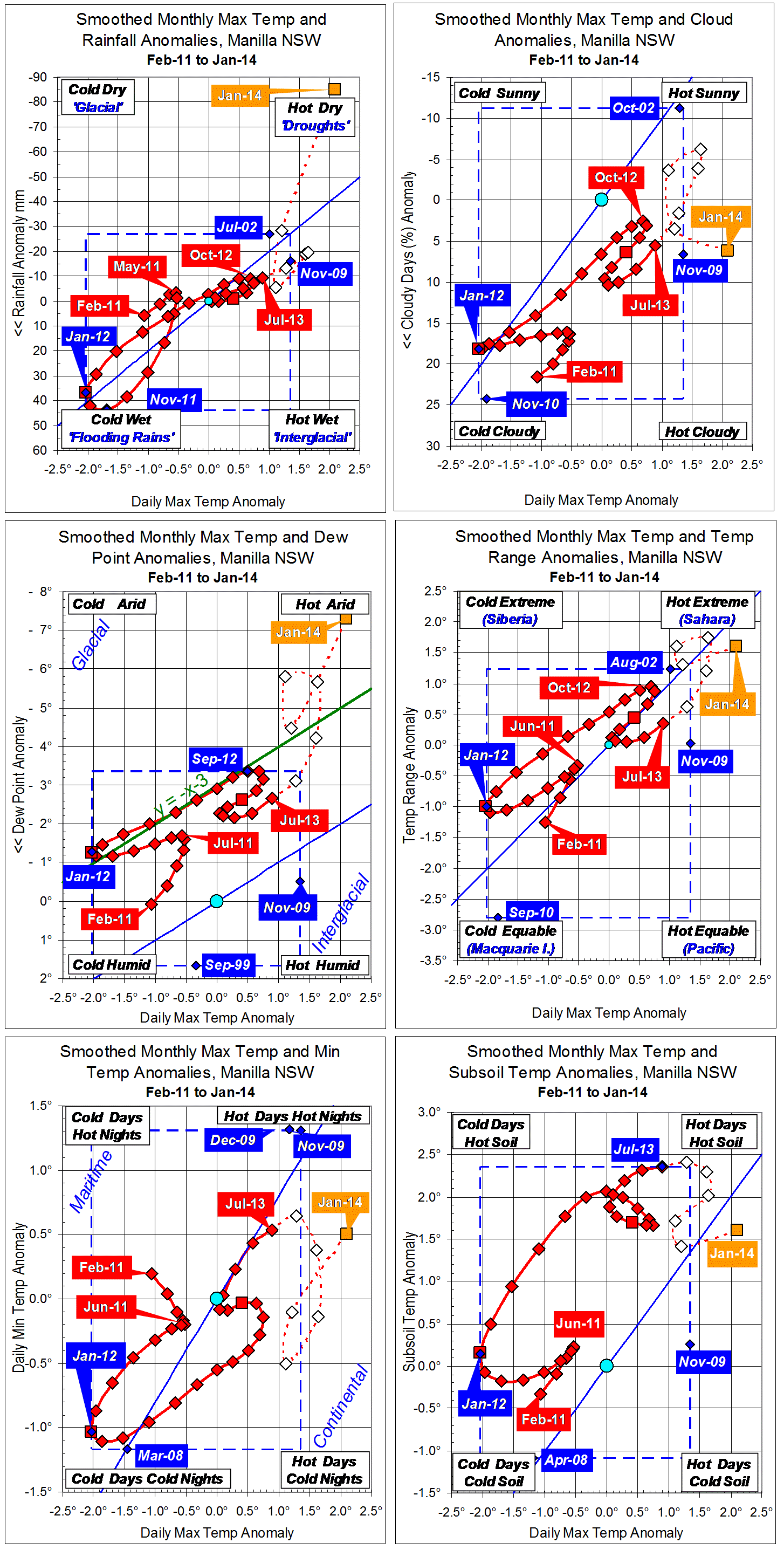
3-year trends to January 2014

Parametric plots of smoothed climate variables at Manilla

“January rain fails”Trends to January 2014

Raw values for several climate anomalies in January 2014 were extreme: daily maximum temperature: plus 2.1°, rainfall: minus 85 mm, dew point: minus 7.3°, and temperature range: plus 1.5°.
Fully-smoothed values for July 2013 move in the direction of “droughts”.
Subsoil temperature reaches a new record for fully-smoothed data of plus 2.36°, beating the record set a month earlier.

Note: Fully smoothed data – Gaussian smoothing with half-width 6 months – are plotted in red, partly smoothed data uncoloured, and raw data for the last data point in orange. January data points are marked by squares. Blue diamonds and the dashed blue rectangle show the extreme values in the fully smoothed data record since September 1999.

3-year trends to December 2013

Parametric plots of smoothed climate variables at Manilla
“Still in drought”Trends to December 2013.

Raw anomaly values for climate variables for December 2013 are nearly all in the top right “droughts” corner.

Six months earlier, the fully-smoothed data point for June 2013 also moved towards drought. The value for subsoil anomaly reached a new record of 2.31 degrees.

Note:
Fully smoothed data – Gaussian smoothing with half-width 6 months – are plotted in red, partly smoothed data uncoloured, and raw data for the last data point in orange. January data points are marked by squares.
Blue diamonds and the dashed blue rectangle show the extreme values in the fully smoothed data record since September 1999.

Spring 2013 hot and dry


Weather log spring 2013.Through most of this spring season, days were hot and sunny, and the humidity and dew point were very low. This changed for the final three weeks, when two-thirds of the season’s rain fell, and the weather was cool and humid.
Along with 2002 and 2009, this was one of three hot springs this century. However, this spring had cooler nights. The springs of 2002, 2012 and 2013 were the driest, counting humidity and cloud as well as rainfall. This spring had the lowest humidity by far, and last spring the second lowest. Low humidity means crops and animals (and people) need more water.
The total rainfall (130 mm) was in the 36th percentile for springs. Rain fell on only 13 days: more than in spring of 2002 (9 days), but fewer than in 2003 (15) or 2012 (16).Climate spring 2013

Data. Rainfall data is from Manilla Post Office, courtesy of Phil Pinch. Temperatures, including subsoil at 750 mm, and other data are from 3 Monash Street, Manilla.

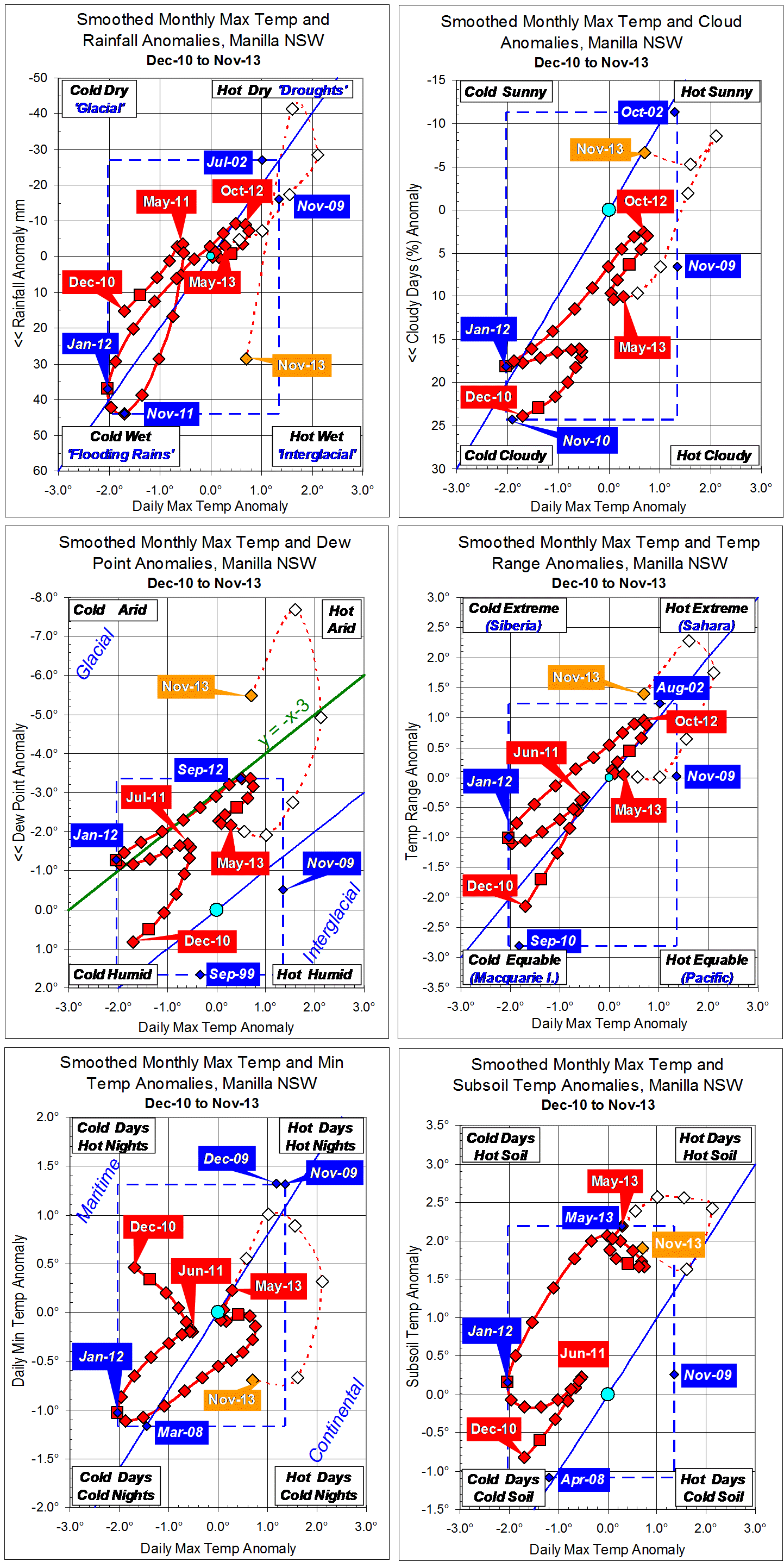
3-year trends to November 2013

Parametric plots of smoothed climate variables at Manilla
“Less droughty”

Trends to November 2013.

Most raw anomaly values (orange) for November climate variables remained on the “drought” side of normal, but less extreme than in October. As an exception, rainfall was very high.

Fully-smoothed data points (red) for autumn (MAM) of 2013 show a climate that was normal in the context of the decade beginning April 1999. Anomalies were high cloudiness, low dew point and warm subsoil. The last fully-smoothed data point, for May 2013, moved towards drought.

Note:
Fully smoothed data – Gaussian smoothing with half-width 6 months – are plotted in red, partly smoothed data uncoloured, and raw data for the last data point in orange. January data points are marked by squares.
Blue diamonds and the dashed blue rectangle show the extreme values in the fully smoothed data record since September 1999.
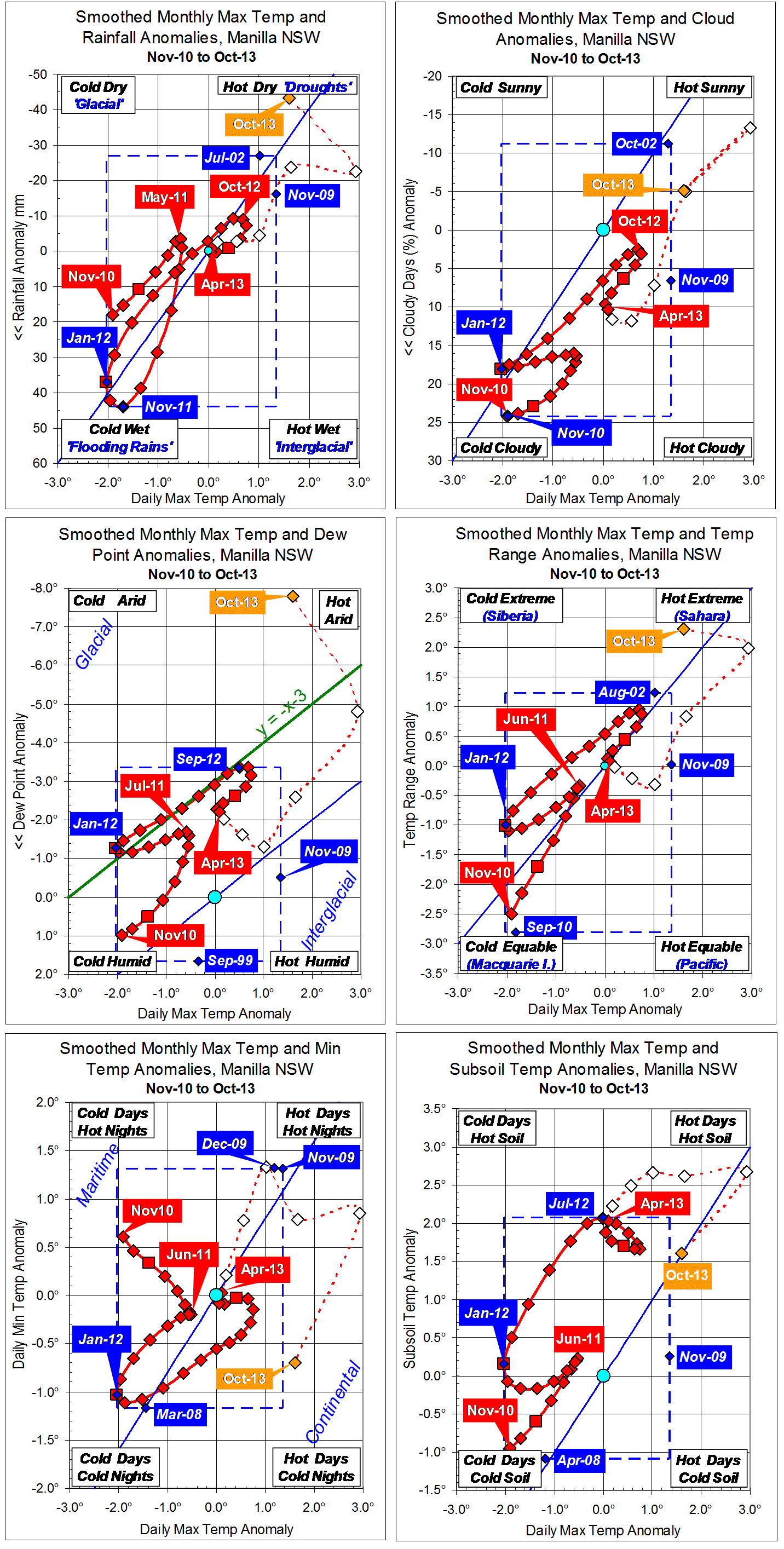
3-year trends to October 2013

Parametric plots of smoothed climate variables at Manilla
“Even more arid”Trends to October 2013.

Of the raw values of climate anomalies in October 2013, daily maximum temperature, among others, fell back from the extreme high reached in September. However, rainfall and dew point became extremely low, and temperature range extremely wide, suggesting extreme drought.

Anomalies of fully-smoothed points for April 2013 were mainly near zero, like those of March. That is, the climate was quite normal.

Note:
Fully smoothed data – Gaussian smoothing with half-width 6 months – are plotted in red, partly smoothed data uncoloured, and raw data for the last data point in orange. January data points are marked by squares.
Blue diamonds and the dashed blue rectangle show the extreme values in the fully smoothed data record since September 1999.