Warm, Dry November 2012

The daily weather logWeather log November 2012
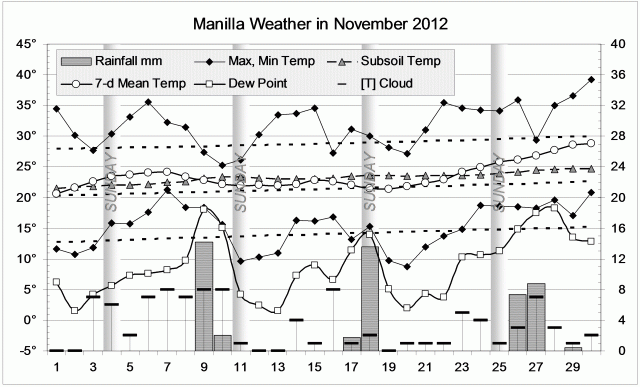
Most days this month were warmer than normal. As last seen in 2002, no November daily maxima were below 25°. The month ended with a weekly average temperature nearly seven degrees above normal.
Seven afternoons had extra-ordinarily low humidities below 10 percent, and eight mornings had very low dew points (below 5°).
Rain came mainly as showers, totalling only 48.2 mm in seven rain days.

 Comparing November monthsClimate November 2012.

Warm temperatures this month were far lower than in November 2009, when Manilla and other places suffered a heat wave.

Very dry air is shown by the low mean early morning dew point of 8.8°. This is the lowest November value in 14 years, below the 1999 value of 9.6°. However, October’s value of 1.7° was very much lower.
The rainfall of 48.2 mm is in the 35th percentile for November, well below the average of 67 mm. The four-month rainfall total (92 mm) and the nine-month rainfall total (317 mm) are serious shortages, in the 8th and 9th percentiles. The 15-month total is still over a metre, which is keeping pools of water in the bed of Greenhatch Creek.


Data. Rainfall data is from Manilla Post Office, courtesy of Phil Pinch. Temperatures, including subsoil at 750 mm, and other data are from 3 Monash Street, Manilla.
 

Arid October 2012

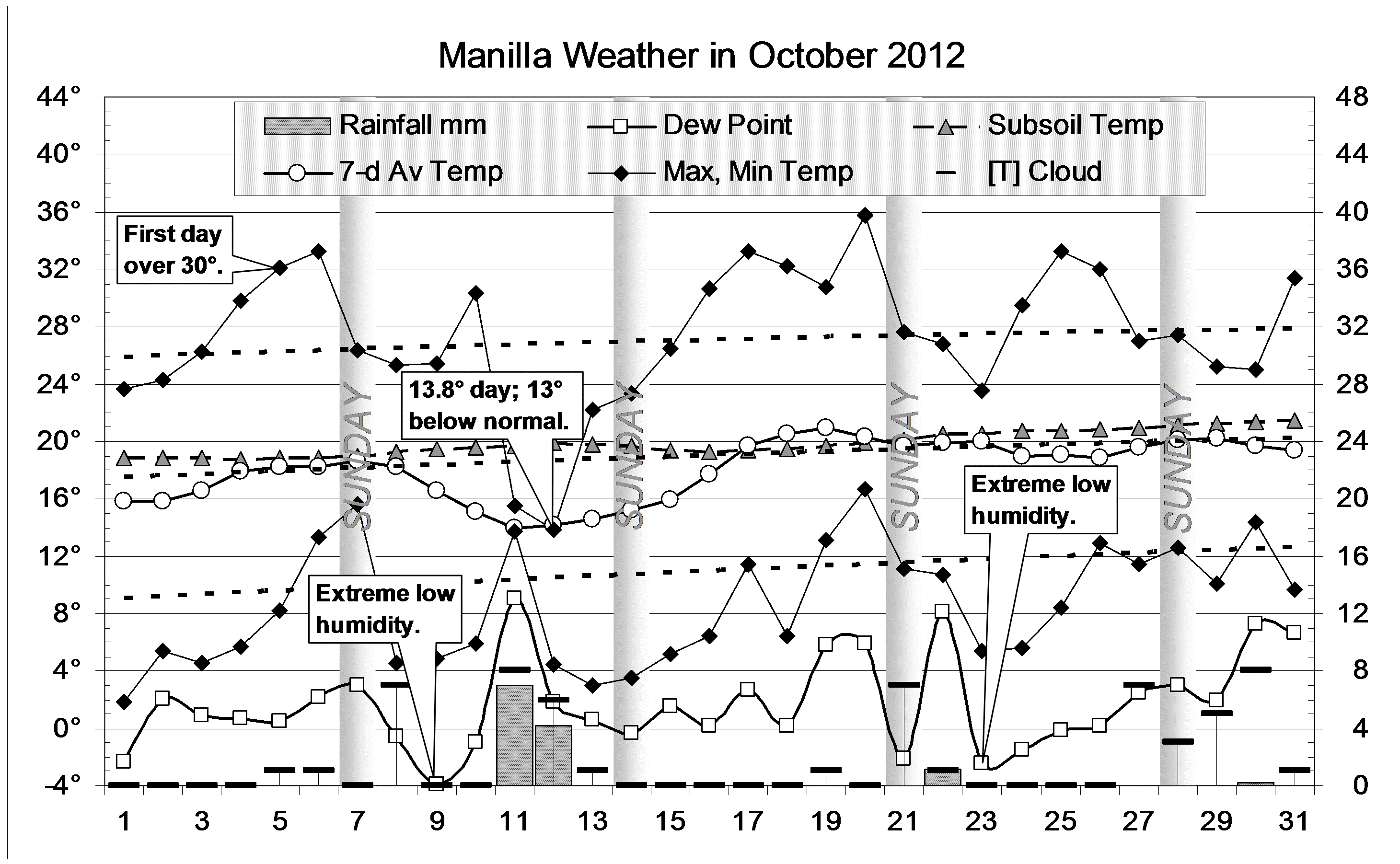
The daily weather logWeather log October 2012.

Many days this month had weather you might expect in a desert. Cold nights and warm days made the temperature range very wide. Very dry air sent morning dew points below zero several times.
Very cold cloudy weather on the 11th and 12th brought 11.2 mm of rain, but two cool cloudy spells later brought little more.

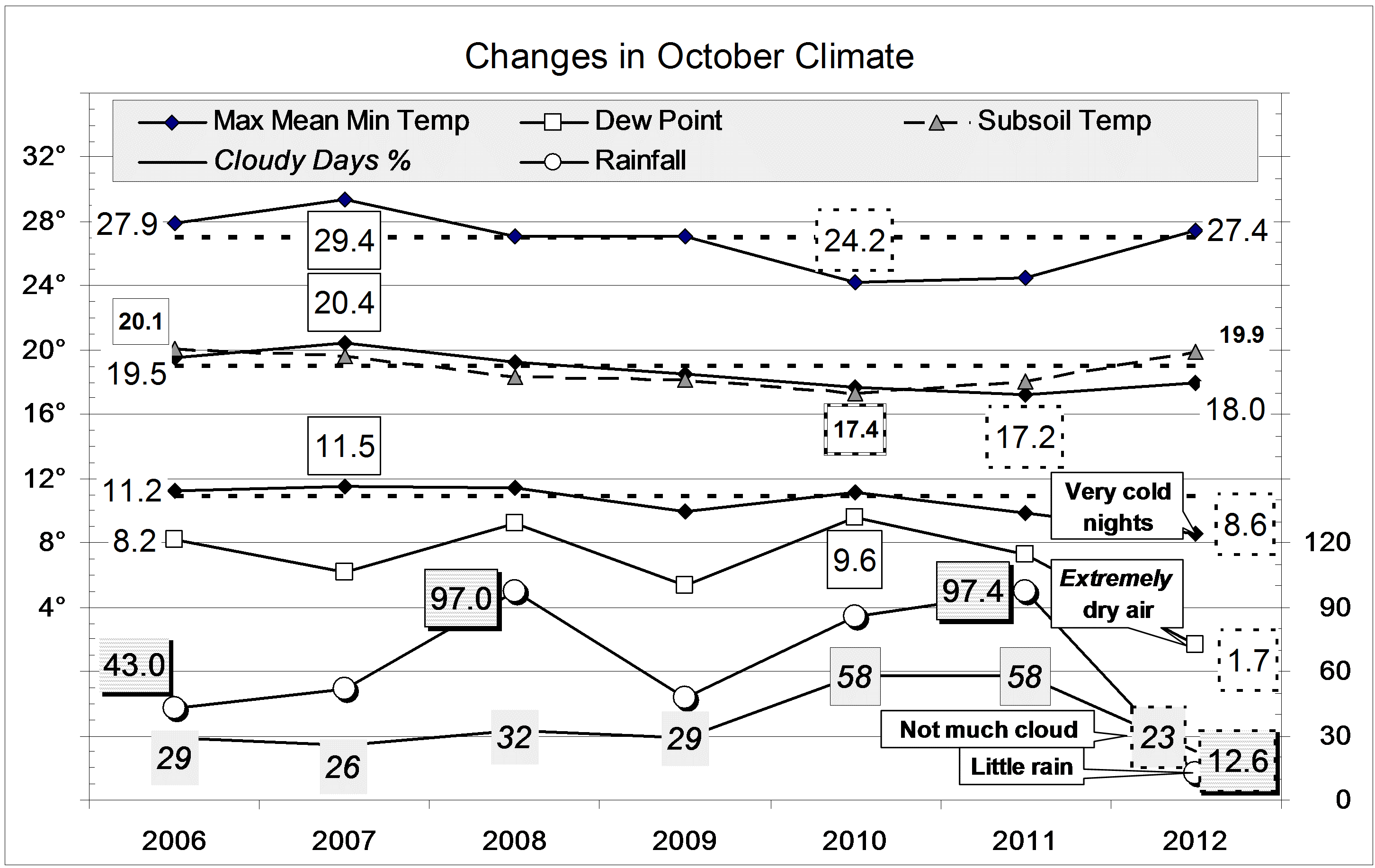
 Comparing October monthsClimate October 2012.

Nights, at 8.6°, were the coldest for October, 2.3° colder than average.
The mean morning Dew Point of 1.7° is an amazing low-humidity value for October, 6.6° below average! Low humidity brought less October cloud than seen since 2004.
The very low rainfall of 12.6 mm is in the 11th percentile for October. While rainfall totals for 12 months or more are all above normal, there has been little recent rain. The 2-month total (33 mm) is a serious rainfall shortage (9th percentile) and the 3-month total (44 mm) is a severe rainfall shortage (3rd percentile). Similar shortages of rainfall have developed in a broad band from Sydney to Perth.


Data. Rainfall data is from Manilla Post Office, courtesy of Phil Pinch. Temperatures, including subsoil at 750 mm, and other data are from 3 Monash Street, Manilla.
 

Frosty Dry September 2012

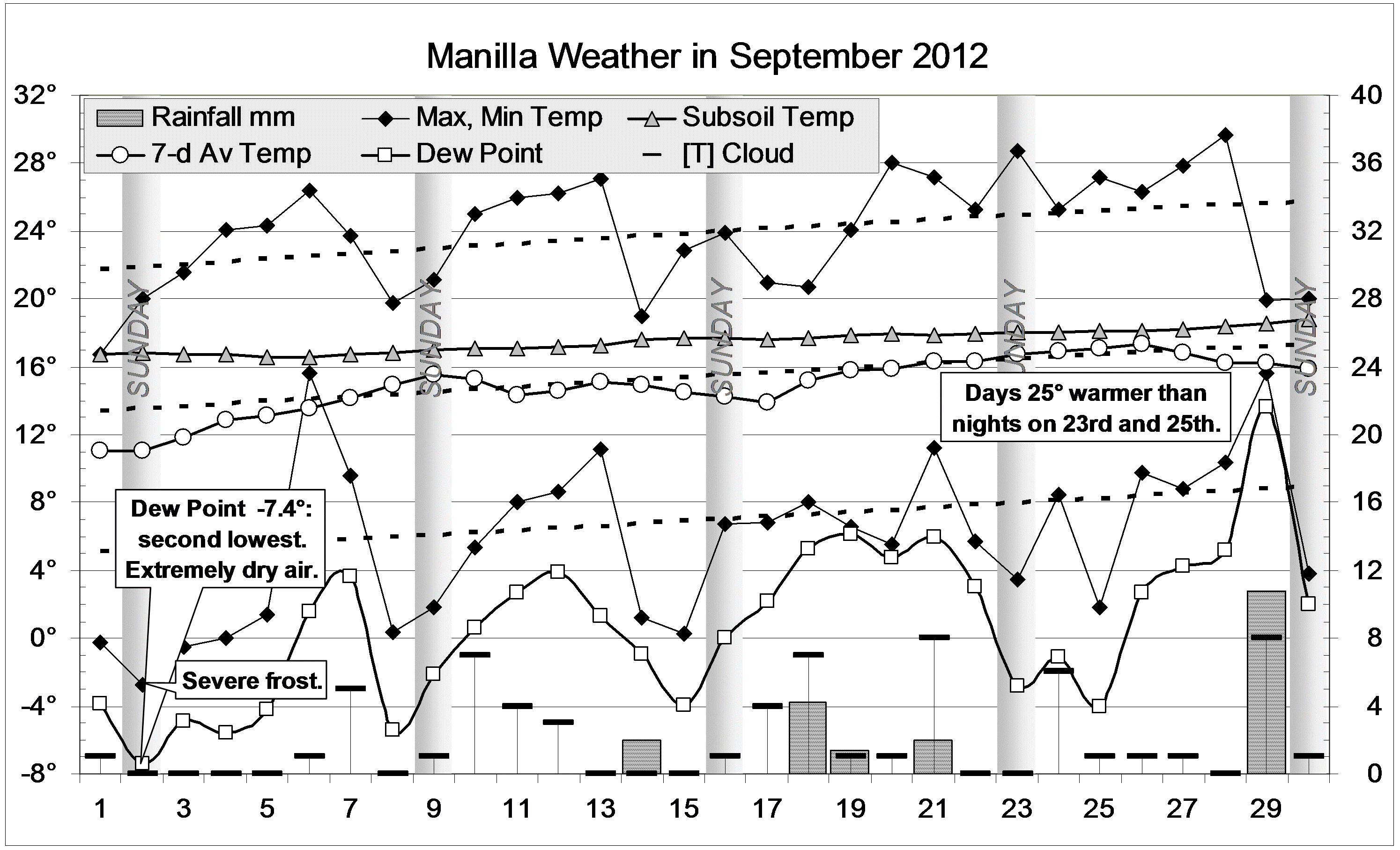
The daily weather logWeather log September 2012.

The severe frost of -2.7° on the 2nd was the coldest September night on this 14-year record. Having ten frosts in the month had not happened before, either. Most were “black frosts” because there was no dew to freeze. The extremely low Dew Point of minus 7.4° on the 2nd has been exceeded only once: minus 9.3 on 17/5/11.
With such dry air, two of the sunniest days had maximum temperatures more than 25° above the night-time minima.
Rain showers occurred on 5 days (normal), but the total was only 20.4 mm.

 Comparing September monthsClimate September 2012.

Days (24.0°) were 0.2° warmer than average, and nights (5.8°) were 1.2° colder than average.
The mean Dew Point of 0.8° is a new record low-humidity value for September, beating last year’s value of 1.7°. Low humidity brought less September cloud than in the last four years.
The low rainfall of 20.4 mm is in the 29th percentile for September. While the 12-month rainfall total to date is still extremely high (over 900 mm), the 2-month total (31 mm) is now a serious rainfall shortage, in the 9th percentile of 2-month totals.


Data. Rainfall data is from Manilla Post Office, courtesy of Phil Pinch. Temperatures, including subsoil at 750 mm, and other data are from 3 Monash Street, Manilla.


Extremely Dry Air in August 2012

The air in August was drier than in any month on this 14-year record. Relative humidity in the afternoons was only about 25%, well below the usual 37%. The air has been very dry here for more than a year. The record rainfall last spring may have prevented serious bush-fires, but this year could be different.

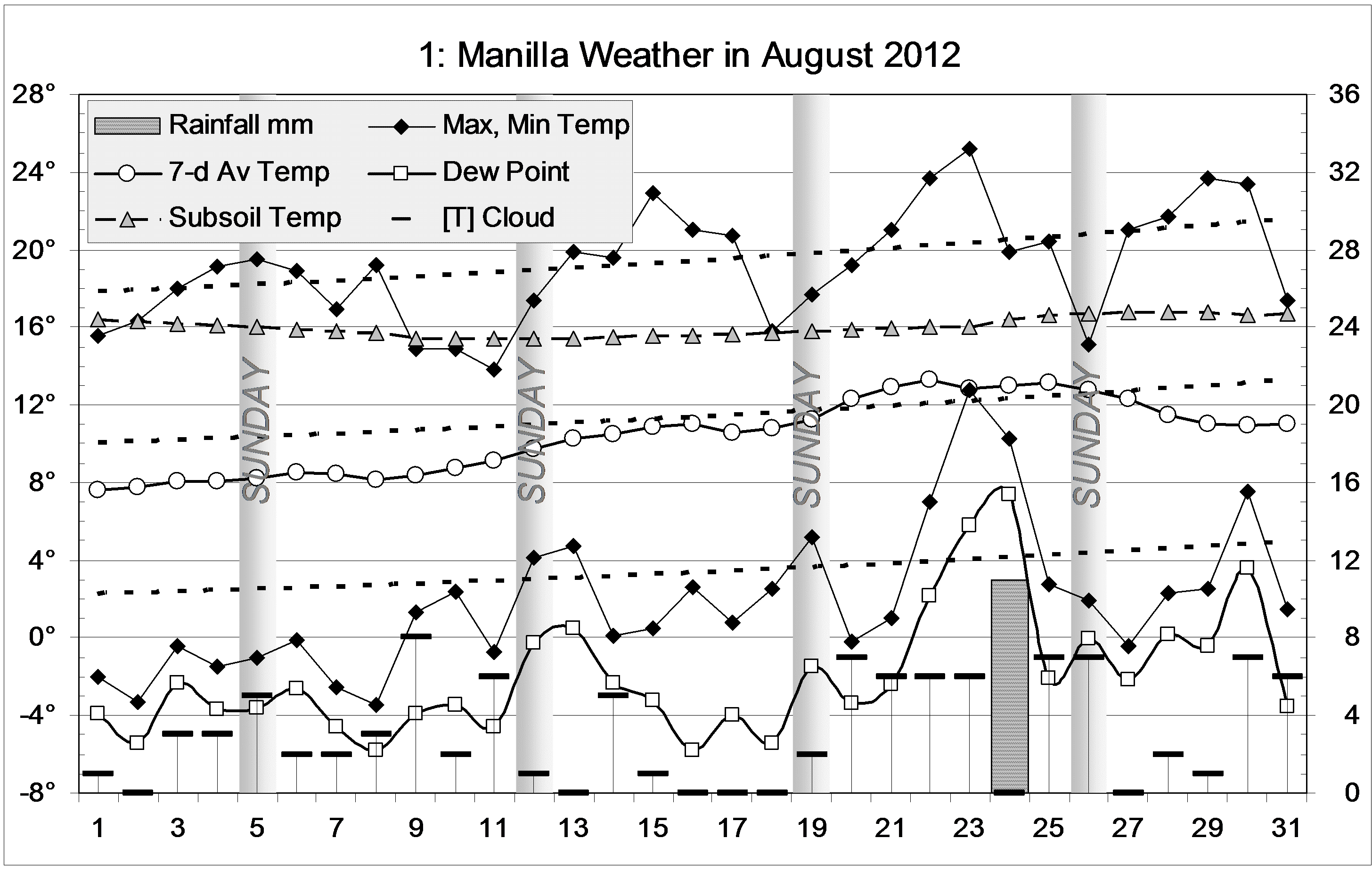
The daily weather logWeather log August 2012.

Days were not very warm or cold. Most nights were cold, with 18 frosts (usually 15). Two frosts were severe (below minus 3°), but there was also one night as warm as 12.8°.
Extremely low Dew Points (dry air) of minus 5.8° were recorded on the mornings of the 8th and 16th. Only seven lower values have occurred in 14 years.
The only rainfall (11.0 mm) was recorded on the 24th.

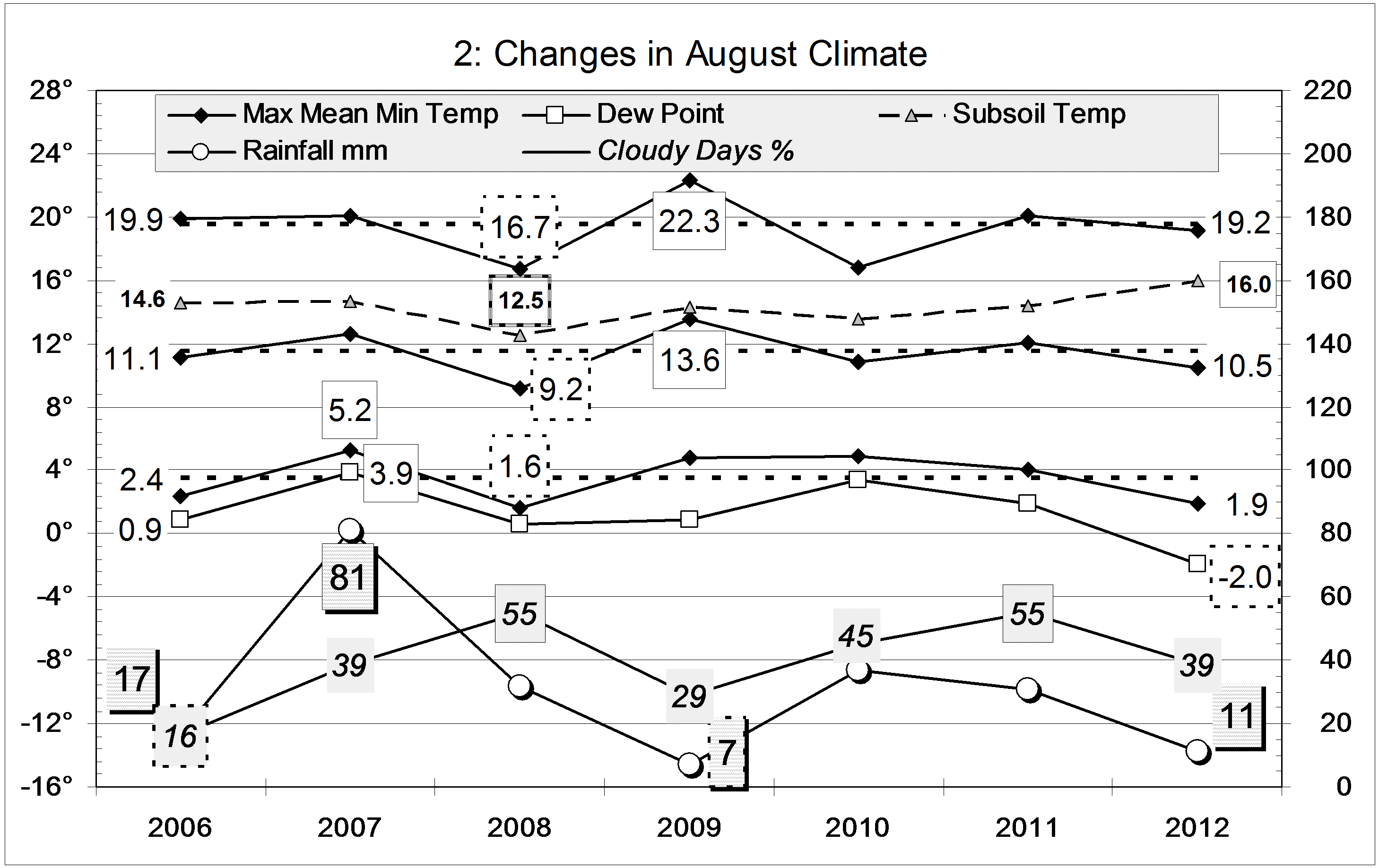
 Comparing August monthsClimate August 2012.

The monthly mean temperature was a bit low, while the mean night-time minimum was very low: 1.9°, not quite as low as the 1.6° of August 2008. The mean early morning Dew Point (-2.0°) was a new record low humidity for any month, beating easily the drought month of July 2002 (-1.4°).
Thirty-nine percent cloudy mornings is a retreat from the August record of 55%, set in 2008 and 2011.
The rainfall of 11.0 mm is very low, in the 15th percentile for August. While the 12-month rainfall total to date is still extremely high (1 metre), the 6-month total is now low (236 mm).


Data. Rainfall data is from Manilla Post Office, courtesy of Phil Pinch. Temperatures, including subsoil at 750 mm, and other data are from 3 Monash Street, Manilla.
 

Very dry air in May 2012

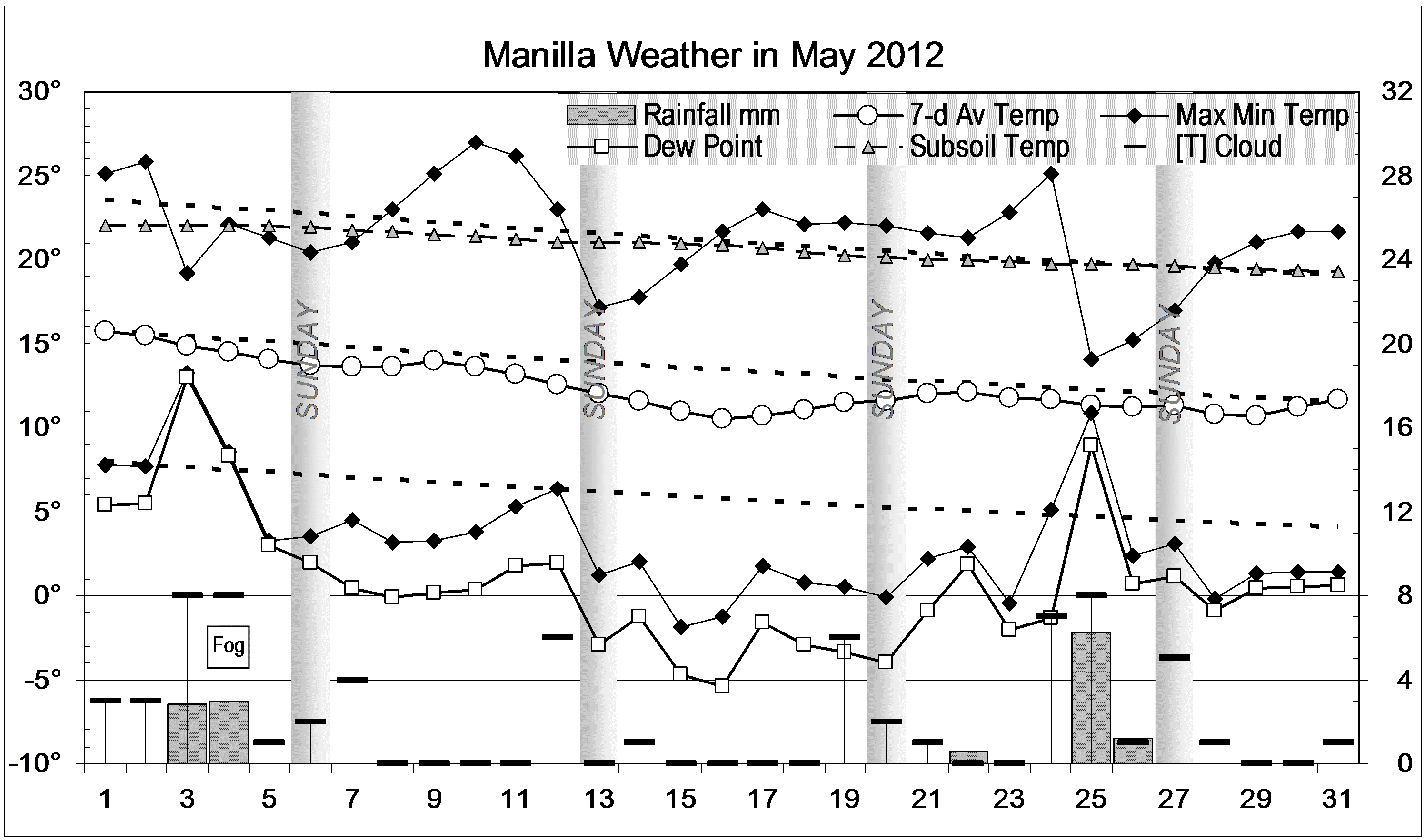
The daily weather logWeather log May 2012.

Most days were fine, and only two or three were cool and overcast. There were 13 frosts, twice the usual number, but May 2006 had 14. Rain totalling 13.8 mm fell on five rain days, with a maximum reading of 6.2 mm on the 25th.

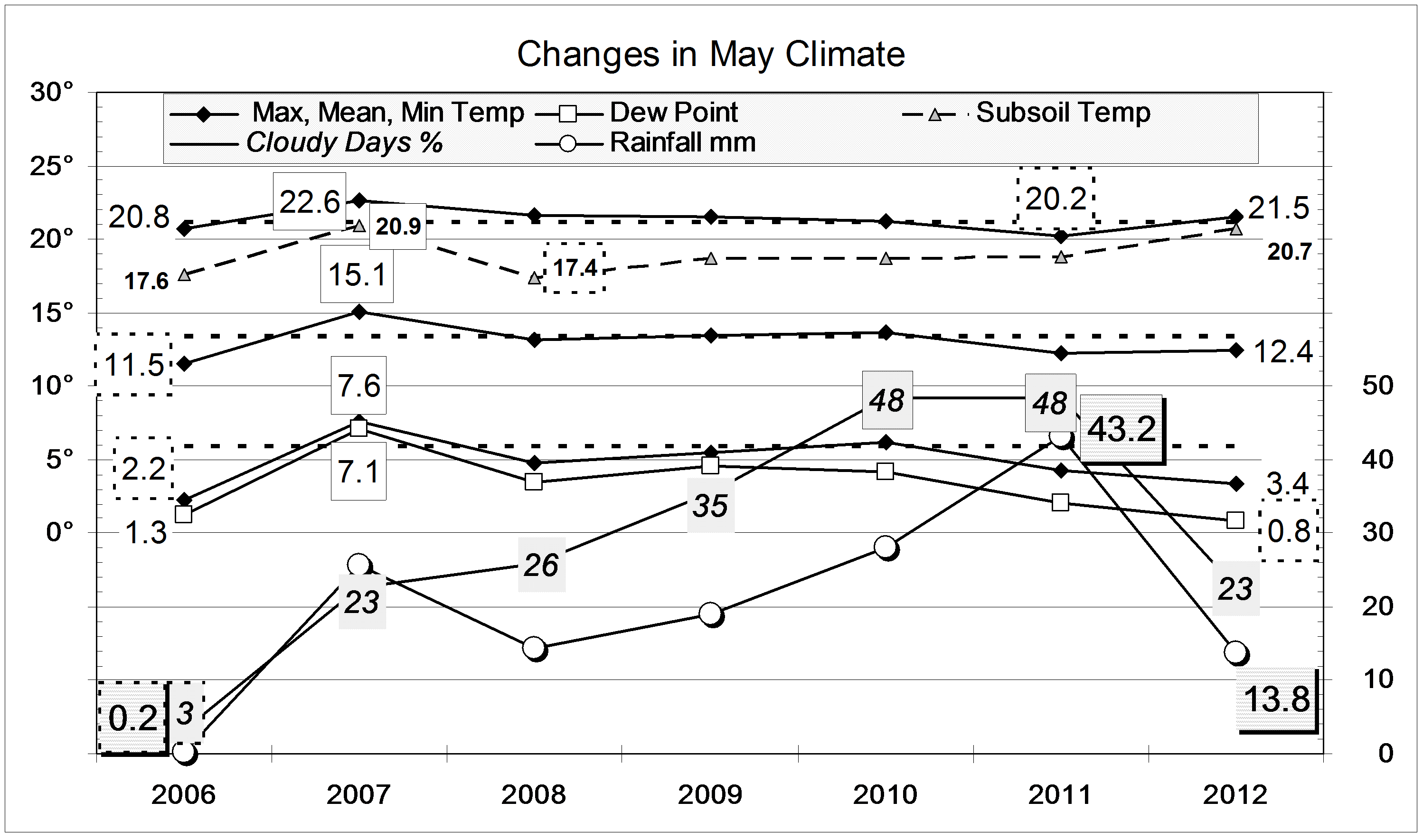
 Comparing May monthsClimate May 2012.

This was a very dry month, marked by dew points four degrees below normal, but it was not as dry as May 2006, as is clear from the graph.
The rainfall total is well below the May average of 40.3 mm: it is in the 24th percentile (3/4 of May months have been wetter). In extreme contrast, the nine-month rainfall total of 852 mm is extra-ordinarily high. Only 13 nine-month totals have been higher, and then only in the four years 1890, 1928, 1956 and 2012 (April). The record for a nine-month rainfall total was 1030 mm, set in June 1956.


Data. Rainfall data is from Manilla Post Office, courtesy of Phil Pinch. Temperatures, including subsoil at 750 mm, and other data are from 3 Monash Street, Manilla.