May Climate Anomalies Log

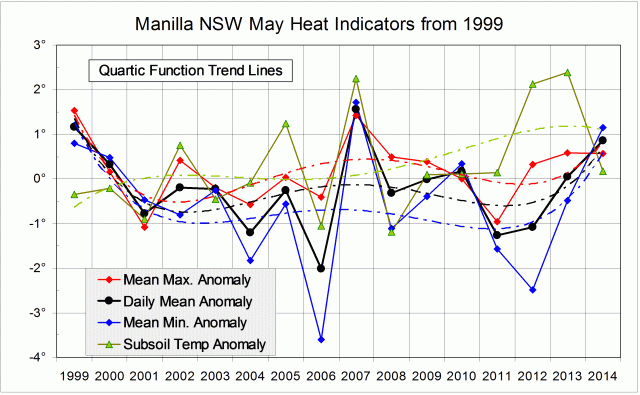
Heat Indicators log for May months

This post is the third in a set for the 12 calendar months. Graphs are sixteen-year logs of the monthly mean anomaly values of nine climate variables for Manilla, NSW, with fitted trend lines. I have explained the method in notes at the foot of the page.

Raw anomaly values for May

Extreme values of May anomalies in this period were:
Daily Minimum Temperature anomaly -3.6 deg: May 2006;
Morning Dew Point Anomaly +3.6 deg: May 1999;
Morning Dew Point Anomaly -3.9 deg: May 2006;
Morning Dew Point Anomaly -3.2 deg: May 2011;
Morning Dew Point Anomaly -4.4 deg: May 2012;
Temperature range anomaly (minus) -3.2 deg: May 2006.

Trend lines for May

Heat Indicators

The trends of all three air temperature anomalies were almost the same, except that anomalies of daily minimum temperature were more negative. All began high in 1999, reached a minimum in 2002, a maximum in 2007, and a minimum in 2011-12. The trend of subsoil temperature was contrary, and generally increasing.
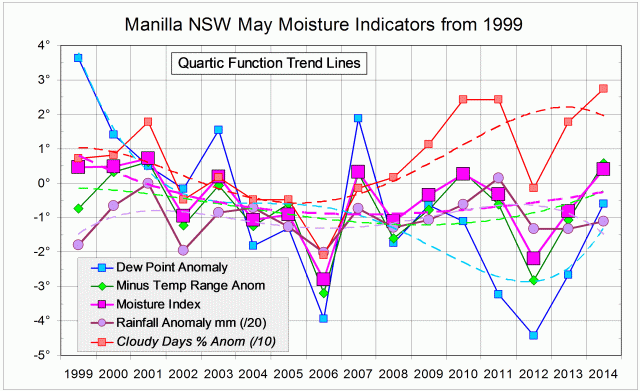
Moisture Indicators log for May months Continue reading

3-year trends to June 2014

Parametric plots of smoothed climate variables at Manilla
“Climate normal for now”

Trends to June 2014

 June data (orange)

Raw anomaly values for June 2014 have nothing in common with the droughty conditions at the end of 2013. Daily maximum temperature and rainfall (top left graph) are both normal. A return to a moist climate, like that in spring 2011, shows as cloudy skies (top right), high dew point (mid left), and narrow temperature range (mid right). Daily minimum temperature (lower left) has moved independently to a high value (that is, very warm nights). Only subsoil temperature (lower right) has jumped back to warm 2013 values, after a period of normalcy.

Fully smoothed data (red)

December 2013 is now the latest fully-smoothed data point. It seems to mark the point of lowest rainfall and dew point anomalies in recent months. In other variables (except daily minimum temperature) December continued a retreat from recent extreme (drought) values.

Note:
Fully smoothed data – Gaussian smoothing with half-width 6 months – are plotted in red, partly smoothed data uncoloured, and raw data for the last data point in orange. January data points are marked by squares.
Blue diamonds and the dashed blue rectangle show the extreme values in the fully smoothed data record since September 1999.

Normal values are based on averages for the decade from March 1999. They appear on these graphs as a turquoise (turquoise) circle at the origin (0,0). A range of anomalies called “normal” is shown by a dashed rectangle in aqua (aqua). For values in degrees, the assigned normal range is +/-0.7°; for cloudiness, +/-7%; for monthly rainfall, +/-14 mm.


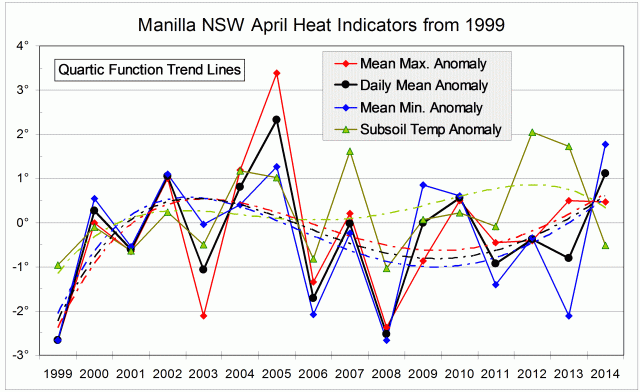
April Climate Anomalies Log

Heat Indicators log for April months

This post is the second in a set for the 12 calendar months. Graphs are sixteen-year logs of the monthly mean anomaly values of nine climate variables for Manilla, NSW, with fitted trend lines. I have explained the method in notes at the foot of the page.

Raw anomaly values for April

April anomalies had few extreme values in this period:
Daily Maximum Temperature anomaly +3.4°: April 2005;
Morning Dew Point Anomaly -3.3°: April 2008;
Morning Dew Point Anomaly -4.8°: April 2013;
Rainfall anomaly +79 mm: April 2003.

Trend lines for April

Heat Indicators

The trends of all three air temperature anomalies were almost the same. They began very low in 1999, reached a maximum in 2002-3 and a minimum in 2009-10. The trend of subsoil temperature began similarly, but with much less variation, and peaked in 2012.

Moisture Indicators log for April months

Continue reading

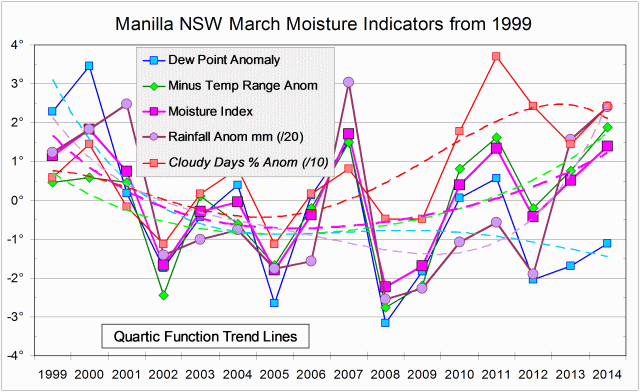
March Climate Anomalies Log

Heat Indicators log for March months

This post is the first in a set for the 12 calendar months. Graphs are sixteen-year logs of the monthly mean anomaly values of nine climate variables for Manilla, NSW, with fitted trend lines. I have explained the method in notes at the foot of the page.

Raw anomaly values for March

Extreme values for March anomalies in this period were:
Daily Minimum Temperature anomaly -2.9°: March 2008;
Morning Dew Point Anomaly +3.5°: March 2000;
Morning Dew Point Anomaly -3.2°: March 2008;
Rainfall anomaly +61 mm: March 2007;
Percent cloudy mornings anomaly +37%: March 2011.

Trend lines for March

Heat Indicators

Daily maximum temperature showed minima about -1 deg in 2001 and 2014, and a maximum about zero in 2007.
Daily minimum showed a minimum two years later, about 2003, then rose in parallel with daily maximum, but ended very high.
Subsoil temperature did not agree, and varied less. It had maxima in 2002 and 2012. It may show a lag of five years behind daily maximum.

Moisture Indicators log for March months

Continue reading

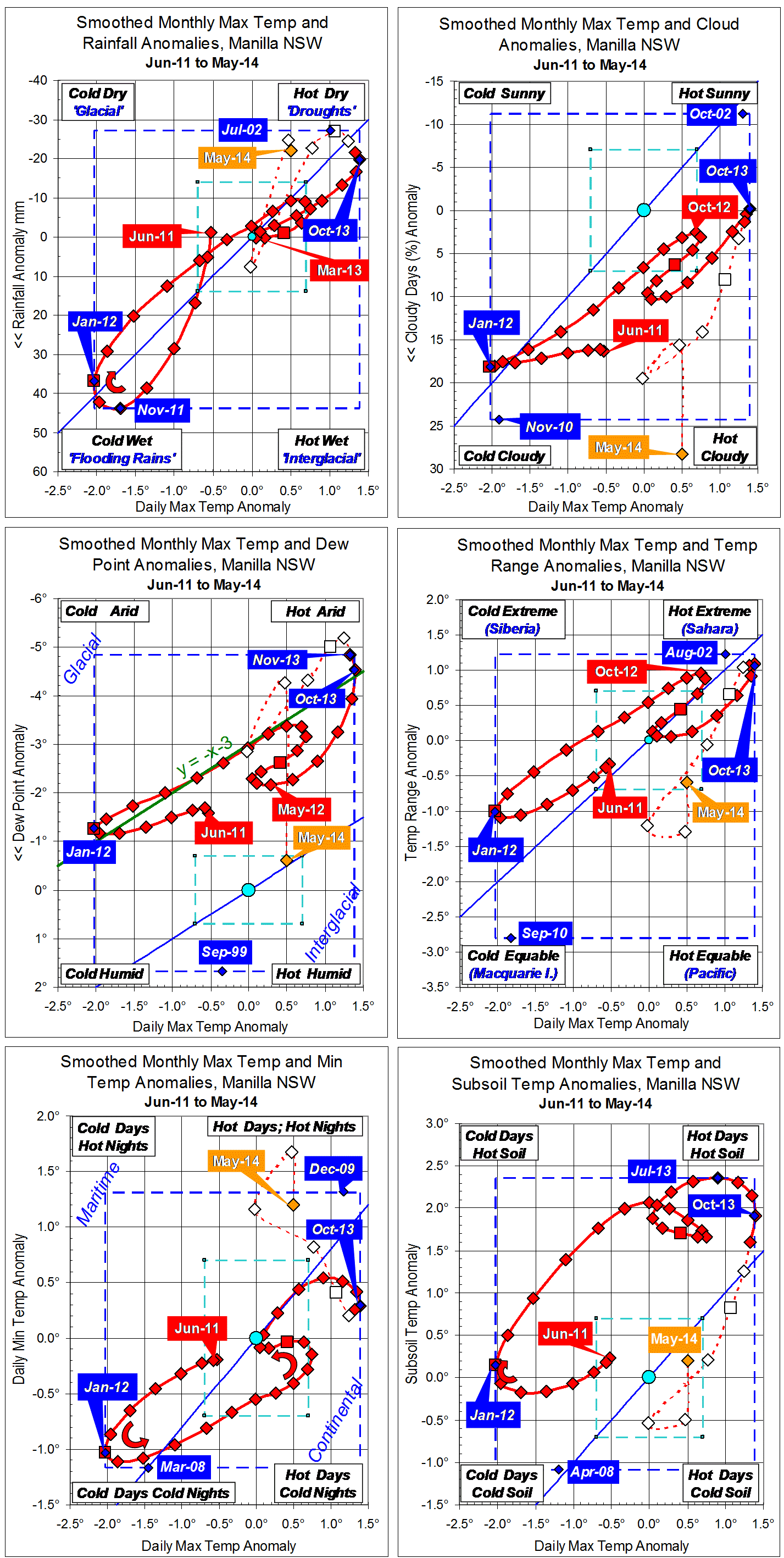
3-year trends to May 2014

Parametric plots of smoothed climate variables at Manilla
“Drought status not clear”

Trends to May 2014

May data (orange)

Raw data for May 2014 give mixed signals on whether the drought is fading. Daily maximum temperature is now on the high limit of the normal range and rainfall again well into the “drought” range. However, other variables do not agree: skies were very cloudy, and dew point and daily temperature range were back to normal.

Fully smoothed data (red)

The spring months (SON) of 2013 are now fully smoothed, with some variables showing a drought peak in that season.
Smoothed daily maximum temperature anomaly peaked in October, reaching a record high of +1.39°, beating +1.34° in November 2009 and +1.30° in September-October 2002. Through spring the smoothed rainfall anomaly decreased; it may have reached a minimum in January. Dew point also decreased, the smoothed anomaly reaching a new record low of -4.85° in November, and likely to reach a minimum in December.
Cloudiness reached a minimum in October, and daily minimum temperature and subsoil temperature anomalies had reached maximum values earlier, in July.

Note:
Fully smoothed data – Gaussian smoothing with half-width 6 months – are plotted in red, partly smoothed data uncoloured, and raw data for the last data point in orange. January data points are marked by squares.
Blue diamonds and the dashed blue rectangle show the extreme values in the fully smoothed data record since September 1999.

Normal values are based on averages for the decade from March 1999. They appear on these graphs as a turquoise (turquoise) circle at the origin (0,0). A range of anomalies called “normal” is shown by a dashed rectangle in aqua (aqua). For values in degrees, the assigned normal range is +/-0.7°; for cloudiness, +/-7%; for monthly rainfall, +/-14 mm.